
Sheet Mulching
Sheet mulching is a no-till method that builds healthy soil by layering organic materials directly onto the ground. This process suppresses weeds, conserves moisture, and feeds soil life as the mat decomposes, creating a rich, fertile environment for plants to grow. It's a foundational regenerative practice that mimics natural processes to improve soil structure and fertility without disturbing the soil.
Read More: Complete Description
Sheet mulching, also known as lasagna gardening or decomposition mulching, is a powerful regenerative practice that involves building soil fertility and structure by layering diverse organic materials directly onto the soil surface. This technique eschews conventional tillage entirely, instead focusing on decomposition to create a rich, living soil medium. It's a foundational regenerative practice because it directly supports multiple core principles: minimizing soil disturbance, maximizing plant and microbial diversity, keeping soil covered year-round, and fostering a healthy soil food web.
The process typically begins by identifying the area to be mulched. If weeds are present, the first layer might be cardboard or newspaper. This acts as a biodegradable barrier, suppressing existing vegetation and accelerating decomposition. Crucially, these materials should be free of glossy inks and adhesive tape. Following this base layer, organic matter is applied in alternating, distinct layers. These layers can include a wide variety of materials:
- Nitrogen-rich "greens": Grass clippings, food scraps (vegetable peels, coffee grounds), manure (aged), plant trimmings.
- Carbon-rich "browns": Shredded leaves, straw, wood chips, sawdust, paper, cardboard.
- Other beneficials: Compost, worm castings, biochar, crushed eggshells, seaweed.
The key is diversity and alternating layers to provide a balanced diet for the soil biology. A common approach is to use a nitrogen-rich layer followed by a carbon-rich layer, then another green, and so on. The thickness of the mulch layer can vary, but it's often built up to 30-60 cm (12-24 inches) or more, as it will consolidate significantly during decomposition. Watering each layer as it's applied helps it settle and encourages microbial activity.
Sheet mulching directly embodies regenerative principles. Minimizing soil disturbance (Principle 1) is its hallmark; by layering materials on the surface, the existing soil structure, fungal networks, and microbial communities remain largely intact. This contrasts sharply with tillage, which disrupts soil aggregates, destroys fungal hyphae, and exposes soil organic matter to oxidation.
Maximizing crop diversity (Principle 2) is supported by the diverse organic materials used, which feed a wide array of bacteria, fungi, earthworms, and other soil organisms. This biological diversity is the engine of nutrient cycling and soil building. Furthermore, once the mulch has decomposed into a rich soil, it becomes an ideal substrate for planting diverse crops, vegetables, or cover crops.
Keeping soil covered (Principle 3) is inherent to sheet mulching. The thick mulch layer acts as a protective blanket, shielding the soil from erosion by wind and rain, conserving moisture by reducing evaporation, and moderating soil temperature fluctuations. This stable environment allows soil life to thrive year-round.
Maintaining living roots (Principle 4) is achieved once plants are established in the newly formed soil. The rich organic matter provides a nutrient-dense environment that supports vigorous root growth, extending the period of photosynthetic activity and nutrient uptake.
Integrating livestock (Principle 5) can be complementary to sheet mulching. While direct integration is less common than with other practices, manure from livestock can be a valuable "green" layer. In rotational grazing systems, animals can be temporarily confined to an area after it has been sheet mulched to help trample and incorporate the materials, accelerating decomposition and nutrient distribution. Alternatively, finished compost from livestock manure can be incorporated as a layer.
Common misconceptions about sheet mulching include the idea that it's slow to create usable soil; however, while full decomposition takes 3-12 months depending on materials and climate, planting can occur into the upper layers sooner, or into the decomposed soil once beds are established (e.g., in spring for fall application). Another misconception is that it's only for gardening; sheet mulching is scalable to larger areas for creating new beds, restoring degraded land, or transitioning fields to perennial systems. It can be used to convert grass pastures to no-till vegetable plots, establish orchards, or create new flower beds.
The practice is largely context-dependent in terms of material availability but universally applicable across climates and soil types. The decomposition rate will vary based on temperature and moisture, but the benefits of soil building and improvement are consistent.
Sources behind this view
Sources behind this view
 Videos & Podcasts
-
Daily Acts promotes mimicking nature through sheet mulching with recycled materials to build soil and organic matter, and planting diverse, multi-layered food forests to enhance fertility and water ca

-
Sheet mulching a garden bed involves applying dehydrated food waste, cardboard for weed suppression, and wood mulch. This method aims to build soil health and organic matter, with an experiment compar
-
Utilize the 'deep mulch' method by applying thick layers of straw, hay, or leaves over vegetation to create weed-free, water-retentive garden beds with increased organic matter, eliminating the need f
-
Explains the importance of keeping soil covered using mulch as a core conservation agriculture principle. Discusses benefits like water retention, erosion control, and soil health, alongside potential

 Community
-
Sheet mulching is a permaculture technique to build soil health by layering organic matter, including compost, manure, straw, and cardboard, to create garden beds without tilling. It involves loosenin
Read more (opens in new window) permies.com -
Provides detailed, experience-based guidance on sheet mulching for fruit trees in the Pacific Northwest, emphasizing soil health, weed suppression, and the role of materials like cardboard, horse manu
Read more (opens in new window) permies.com -
Mulching is a simple yet highly beneficial garden practice that reduces water evaporation by up to 50%, suppresses weeds, improves soil health, and regulates soil temperature. Organic mulches like str
Read more (opens in new window) ucanr.edu -
Sheet composting involves layering cardboard/newspaper with compost/leaves on soil in fall/winter to improve soil health and smother weeds/lawns. Keep materials damp, overlap well, and layer up to six
Read more (opens in new window) ucanr.edu
 Research
-
Mulching as a Sustainable Water and Soil Saving Practice in Agriculture: A Review (opens in new window)
This study found: Mulching, using natural or synthetic covers, significantly conserves soil moisture and prevents erosion, especially in dry climates. It improves soil health, nutrient availability, and reduces irrigat
-
Mulching Practices for Sustainable Agriculture: Enhancing Yield, Soil Moisture, and Environmental Benefits in Field and Fruit Crops (opens in new window)
This study found: Mulching protects soil, increasing crop yield and water retention while suppressing weeds. Organic mulches improve long-term soil fertility, while biodegradable options reduce plastic waste. Tailoring
-
Enhancing crop yield and conserving soil moisture through mulching practices in dryland agriculture (opens in new window)
This study found: Mulching in dryland farming conserves soil moisture, improves soil health, and increases nutrient availability. Organic and plastic mulches reduce evaporation, erosion, and weed growth, enhancing sust
-
Effects of soil cover practices on soil health and agroecological functions (opens in new window)
This study found: Cover crops and mulching consistently increase soil organic matter, improving soil structure, water infiltration, and microbial activity. These regenerative practices enhance overall soil health and f
Key Points
What It Is
- Layering organic materials on soil surface
- No-till method for soil building
- Uses diverse greens and browns
- Creates rich, no-dig soil beds
Why Do It
- Builds soil fertility and structure naturally
- Suppresses weeds effectively and sustainably
- Conserves soil moisture, reducing watering needs
- Supports soil biology and ecological health
Know the Debate
- Decomposition varies by climate: 3-12+ months
- Weed suppression effectiveness depends on weed type
- Fertility comes from combined chemical/biological processes
- Cost varies greatly with material availability
Benefits - Financial
- Reduces annual herbicide expenditures by $150–$300 per acre ($371–$741 per hectare).
- Lowers irrigation water utility costs by 20–40% annually.
- Enhances crop yields by 10–25% through improved hydration.
- Capture $15–$30 per acre ($37–$74 per hectare) annually via verified carbon credits.
Benefits - System
- Minimizes soil disturbance (Principle 1)
- Maximizes biological diversity (Principle 2)
- Keeps soil covered consistently (Principle 3)
- Rebuilds soil organic matter 2-5% annually
Risks - Financial
- Setup costs vary widely from $400 to $2,500 per acre ($988–$6,178 per hectare).
- Potential 10–15% yield dip during the first year of decomposition.
- Logistics can account for 40% of total establishment expenditures.
Risks - System
- Improper material balance can attract pests
- Wet climate can lead to anaerobic decomposition
- Requires access to diverse organic materials
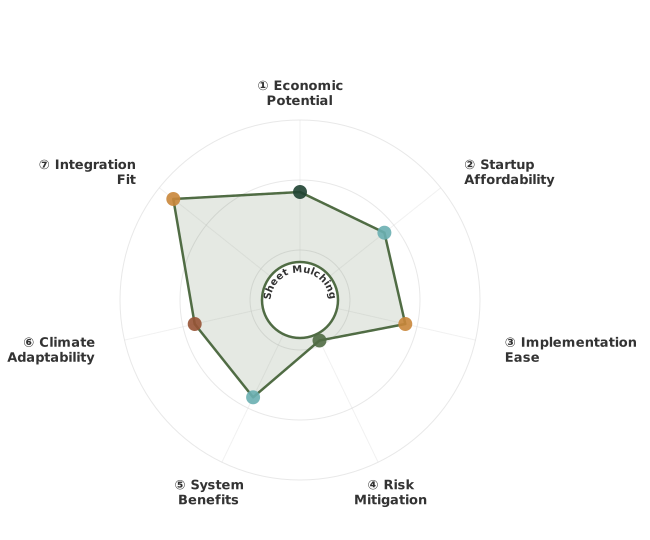
How These Traits Are Calculated
Trait dimensions are ordered clockwise starting from the top of the chart (12 o'clock position):
1. Economic Potential
Financial returns, annual value, and break-even timeline
WHAT: Evaluates financial viability by combining net annual value ($/ha from savings, income, and amortized harvests) with break-even timeline showing when practices pay for themselves.
WHY: Farmers need clear ROI understanding before committing resources. Fast payback (≤3 years) with strong returns (≥$300/ha) enables confident adoption, while long timelines (>10 years) restrict adoption to well-funded operations willing to wait for returns.
HOW: Calculated from net annual value in $/ha and break-even years. Exceptional (≥2.6): fast ROI ≤3 years + high value ≥$300/ha. Typical (1.8-2.5): moderate returns or longer timelines. Limited (<1.8): marginal economics or very long payback >10 years.
2. Startup Affordability
Initial investment costs and financial barrier to entry
WHAT: Measures financial barrier to entry through startup costs for equipment, infrastructure, consulting, and materials. Inverted scoring: lower costs = higher scores = more accessible adoption.
WHY: Affordability determines who can adopt. Low-cost practices (<$250/ha) enable widespread adoption across diverse scales, while high costs (>$2,500/ha) limit adoption to well-capitalized operations, creating barriers that slow regenerative transition.
HOW: Calculated from initial investment parsed from practice content. Inverted scoring: Exceptional (≥2.6): minimal investment <$250/ha. Typical (1.8-2.5): moderate costs $250-2,500/ha. Limited (<1.8): high barrier >$2,500/ha.
3. Implementation Ease
Learning curve and specialized knowledge required
WHAT: Measures how much learning, planning, and specialized knowledge a practice requires. Simpler practices with fewer steps score higher, while complex practices requiring extensive training or specialized resources score lower.
WHY: Complex practices create adoption barriers even when economically viable. Straightforward practices enable faster adoption and broader participation, while those requiring extensive training, timing precision, or specialized equipment limit who can succeed.
HOW: Evaluated by measuring documentation length and identifying complexity markers like location-specific requirements, seasonal timing windows, specialized skills, and dedicated equipment needs. Exceptional (≥2.6): straightforward practices with minimal prerequisites. Typical (1.8-2.5): moderate learning curve with some specialized needs. Limited (<1.8): steep learning curve requiring significant training or resources.
4. Risk Mitigation
Identified financial and ecological risk assessment
WHAT: Evaluates documented risks across financial (investment loss, market volatility) and ecological (crop failure, pest outbreaks) domains. Inverted scoring: fewer risks = higher scores.
WHY: Understanding risk exposure helps farmers make informed decisions. Low-risk practices allow confident implementation, while high-risk practices require careful planning and contingency resources. Risk transparency prevents costly failures.
HOW: Calculated from identified risks in practice content. Inverted scoring: Exceptional (≥2.6): ≤2 risks with manageable severity. Typical (1.8-2.5): 3-5 moderate risks. Limited (<1.8): 6+ risks or severe exposure.
5. System Benefits
How many ways the practice improves your land simultaneously
WHAT: Measures how many aspects of land health improve at once—carbon storage, soil quality, erosion control, water absorption, and biodiversity. Practices that improve multiple areas simultaneously create compounding benefits where each improvement reinforces the others.
WHY: The best practices solve multiple problems at once. For example, addressing erosion simultaneously builds carbon and improves water infiltration, creating a resilient system with positive feedback loops. Single-benefit approaches miss these compound transformation opportunities.
HOW: Evaluated across five key outcomes: carbon sequestration, soil organic matter increase, erosion reduction, water infiltration improvement, and biodiversity enhancement. Exceptional (≥2.6): high carbon storage (>8 t/ha/yr), improvements across 4-5 areas, transformative outcomes. Typical (1.8-2.5): moderate carbon (3-8 t/ha/yr), improvements across 2-3 areas. Limited (<1.8): modest impact (<3 t/ha/yr), single-area focus only.
6. Climate Adaptability
Geographic applicability across Köppen climate zones
WHAT: Evaluates geographic applicability by assessing how many Köppen climate zones successfully support a practice and what adaptation requirements are needed. Measures breadth of climates where farmers can implement with minimal to moderate modifications.
WHY: Universal practices working across diverse climates enable more farmers to adopt regenerative approaches. Practices limited to single climate types (only Mediterranean, only tropical) restrict adoption and slow global transition. Adaptability determines whether a practice serves niche regions or offers broad transformation.
HOW: LLM evaluation of regional success stories, Köppen zone coverage, and adaptation needs. Exceptional (≥2.6): 5+ zones or 4+ climate types, 3+ continents, minimal adaptation. Typical (1.8-2.5): 3-4 zones or 2-3 types, 2 continents, moderate adaptation. Limited (<1.8): 1-2 zones, single region, significant adaptation or highly specialized.
7. Integration Fit
How well this practice combines with others you're doing
WHAT: Measures how well a practice combines with other regenerative practices you might be doing. Some practices work as building blocks that make many other practices easier or more effective, while others work best on their own.
WHY: Practices that combine well with many others create more value on your farm. For example, cover cropping enables no-till, improves grazing, supports crop diversity, and helps water management—making all of them work better together. This helps you build a coherent system rather than juggling disconnected practices.
HOW: Evaluated by identifying which practices combine well and how strong those combinations are. 'Ideally Suited' means strong combinations where practices reinforce each other (practice A makes B easier, while B makes A more effective). 'Adequate' means complementary benefits that work well together. Exceptional (≥2.6): combines well with 6+ practices, serves as a building block. Typical (1.8-2.5): combines with 3-5 practices. Limited (<1.8): 1-2 practices or works best alone.
Going Deeper
1
WHY - The Benefits
Sheet mulching is a cornerstone regenerative practice that offers a suite of profound benefits for soil health, economic resilience, and overall ecosystem function. By mimicking natural processes like forest floor decomposition, it transforms potentially inert surfaces...
Sheet mulching is a cornerstone regenerative practice that offers a suite of profound benefits for soil health, economic resilience, and overall ecosystem function. By mimicking natural processes like forest floor decomposition, it transforms potentially inert surfaces into vibrant, living soil ecosystems without the disruptive impact of tillage. Its effectiveness is rooted in the fundamental regenerative principles it upholds.
WHY - The Benefits
Sheet mulching is a cornerstone regenerative practice that offers a suite of profound benefits for soil health, economic resilience, and overall ecosystem function. By mimicking natural processes like forest floor decomposition, it transforms potentially inert surfaces...
Sheet mulching is a cornerstone regenerative practice that offers a suite of profound benefits for soil health, economic resilience, and overall ecosystem function. By mimicking natural processes like forest floor decomposition, it transforms potentially inert surfaces into vibrant, living soil ecosystems without the disruptive impact of tillage. Its effectiveness is rooted in the fundamental regenerative principles it upholds.
Soil Health Benefits
The primary benefit of sheet mulching is the rapid enhancement of soil health. The continuous layering of diverse organic materials directly feeds the soil food web. Microorganisms, fungi, earthworms, and other beneficial soil inhabitants thrive on this readily available food source, leading to an explosion of biological activity. This activity breaks down organic matter, releases nutrients in plant-available forms, and stimulates the production of soil-binding glues like glomalin.
Over time, this biological action transforms the soil profile. Soil organic matter content can increase by 0.5-1.5% per year in actively managed sheet mulched areas, reaching levels of 5-10% or higher in mature systems. This increase in organic matter dramatically improves soil structure, creating a crumbly, friable texture that enhances aeration and water infiltration. Water holding capacity can increase by 40-70% or more as organic matter acts like a sponge, making soils more resilient to drought and reducing runoff and erosion.
By creating a protective mulch layer, sheet mulching conserves soil moisture, reducing the need for irrigation by 30-60% in many climates. This moisture conservation is critical for plant survival during dry spells and for maintaining soil biological activity. The mulch also moderates soil temperatures, preventing extreme heat buildup in summer and insulation from cold in winter, further supporting a stable and active soil ecosystem. The smothering effect of the mulch layer effectively suppresses perennial weeds, reducing competition for nutrients and water for desired plants.
Economic Benefits
From an economic standpoint, sheet mulching offers a pathway to reduced input costs and increased long-term productivity. While there can be an initial investment in gathering materials or purchasing compost, the practice significantly reduces or eliminates the need for synthetic fertilizers, pesticides, and herbicides. This translates to direct savings in input purchases, which can be substantial over the years.
Labor requirements are also re-prioritized. Instead of intensive tillage, weeding, and irrigation, the labor shifts towards material gathering, layering, and planting. In established systems, the time spent on weeding and watering decreases dramatically. For gardeners, this means less back-breaking work. For commercial operations, it translates to more efficient land use and reduced labor costs per unit of production.
Equipment costs are also minimized. Sheet mulching is a no-till practice, eliminating the need for plows, rototillers, and other fuel-intensive, soil-compacting machinery. This not only saves on purchase and maintenance costs but also prevents soil compaction, further improving long-term soil health and productivity. The reduced wear and tear on machinery can be a significant saving for farm operations.
Ultimately, the economic benefits are amplified by improved yields and crop quality. As soil health improves, plants are better nourished, more resilient to pests and diseases, and produce higher quality crops. This leads to increased profitability and a more sustainable, resilient farming enterprise. For land restoration projects, sheet mulching can transform unproductive land into valuable agricultural or ecological assets at a fraction of the cost of conventional methods.
Regenerative Systems Fit
Sheet mulching is a foundational practice that underpins many other regenerative agriculture goals. Its direct support for the five regenerative principles makes it highly synergistic with other practices.
Principle 1: Minimize Soil Disturbance Sheet mulching is inherently no-till. By layering organic matter on the surface, the existing soil structure, fungal networks (mycelium), root channels, and microbial communities are preserved and even enhanced. This avoids the destruction of soil aggregates, loss of organic carbon, and disruption of delicate soil ecosystems caused by tillage.
Principle 2: Maximize Crop Diversity The diversity of organic materials used in sheet mulching directly feeds a diverse soil food web. This biological diversity is crucial for nutrient cycling, disease suppression, and soil structure development. Once decomposed, the resulting rich soil provides an ideal environment for planting a wide variety of plant species, from vegetables and fruits to cover crops and native plants, further enhancing above- and below-ground diversity.
Principle 3: Keep Soil Covered The thick layer of organic mulch applied in sheet mulching ensures that the soil surface is continuously protected. This cover shields the soil from the erosive forces of rain and wind, reduces water evaporation, moderates soil temperatures, and smothers existing weed growth. This constant cover is vital for maintaining soil moisture, preventing erosion, and fostering a stable environment for soil organisms.
Principle 4: Maintain Living Roots While sheet mulching itself is an inert layer initially, its purpose is to create a medium for growth. Once plants are established in the decomposed mulch layers, they maintain living roots in the soil for extended periods. These roots continuously feed soil biology, contribute organic matter, hold soil particles together, and cycle nutrients, extending photosynthesis and biological activity throughout the year, especially when diverse cover crops are integrated.
Principle 5: Integrate Livestock While not a direct animal integration practice, livestock can be valuable contributors. Aged manure is an excellent nitrogen-rich layer. In larger-scale operations, livestock can be used to trample the new mulch layers, accelerating decomposition and incorporation. Finished compost from livestock manure can also serve as a premium soil amendment layer.
Sheet mulching is an ideal preparatory step for many other regenerative systems. It can be used to establish no-till vegetable gardens, convert sod or degraded land into productive perennial systems (like orchards or vineyards), and create resilient garden beds that require minimal inputs. For farms transitioning from conventional agriculture, sheet mulching offers a tangible way to begin rebuilding soil health and reducing reliance on external inputs, laying a strong foundation for broader regenerative adoption.
Sources behind this view
Videos & Podcasts
-
Explains the importance of keeping soil covered using mulch as a core conservation agriculture principle. Discusses benefits like water retention, erosion control, and soil health, alongside potential
-
Sheet mulching a garden bed involves applying dehydrated food waste, cardboard for weed suppression, and wood mulch. This method aims to build soil health and organic matter, with an experiment compar
-
Apply mulch (straw, wood chips, leaves) immediately to protect soil from sun and erosion, enhance moisture retention, and add organic matter. Avoid harsh chemicals to support beneficial soil microbes.

-
Emphasizes keeping soil covered with materials like compost, cardboard, straw, or cover crops to protect soil biology and conserve resources. The speaker is lenient on soil disturbance, prioritizing e

Community
-
Mulching is a simple yet highly beneficial garden practice that reduces water evaporation by up to 50%, suppresses weeds, improves soil health, and regulates soil temperature. Organic mulches like str
Read more (opens in new window) ucanr.edu -
Provides detailed, experience-based guidance on sheet mulching for fruit trees in the Pacific Northwest, emphasizing soil health, weed suppression, and the role of materials like cardboard, horse manu
Read more (opens in new window) permies.com -
Sheet mulching is a permaculture technique to build soil health by layering organic matter, including compost, manure, straw, and cardboard, to create garden beds without tilling. It involves loosenin
Read more (opens in new window) permies.com -
Recommends sheet mulching for lawn removal, citing benefits like improved soil health, weed suppression, and water retention. Other methods like sod cutting and solarization are also discussed with th
Read more (opens in new window) ucanr.edu
Research
-
Mulching as a Sustainable Water and Soil Saving Practice in Agriculture: A Review (opens in new window)
This study found: Mulching, using natural or synthetic covers, significantly conserves soil moisture and prevents erosion, especially in dry climates. It improves soil health, nutrient availability, and reduces irrigat
-
Mulching Practices for Sustainable Agriculture: Enhancing Yield, Soil Moisture, and Environmental Benefits in Field and Fruit Crops (opens in new window)
This study found: Mulching protects soil, increasing crop yield and water retention while suppressing weeds. Organic mulches improve long-term soil fertility, while biodegradable options reduce plastic waste. Tailoring
-
Enhancing crop yield and conserving soil moisture through mulching practices in dryland agriculture (opens in new window)
This study found: Mulching in dryland farming conserves soil moisture, improves soil health, and increases nutrient availability. Organic and plastic mulches reduce evaporation, erosion, and weed growth, enhancing sust
-
Natural Farming and Mulching Synergies: Enhancing Soil Health and Crop Productivity in Indian Agroecosystems (opens in new window)
This study found: Mulching combined with Indian natural farming practices significantly enhances soil health by conserving moisture, building organic matter, and boosting beneficial microbes, reducing reliance on exter
2
WHERE - Regional Considerations
Sheet mulching is an adaptable practice that can be implemented in virtually any climate zone by adjusting material sourcing and management. The core principles of layering organic matter and allowing decomposition remain constant, but specific material choices and...
Sheet mulching is an adaptable practice that can be implemented in virtually any climate zone by adjusting material sourcing and management. The core principles of layering organic matter and allowing decomposition remain constant, but specific material choices and decomposition rates will vary.
WHERE - Regional Considerations
Sheet mulching is an adaptable practice that can be implemented in virtually any climate zone by adjusting material sourcing and management. The core principles of layering organic matter and allowing decomposition remain constant, but specific material choices and...
Sheet mulching is an adaptable practice that can be implemented in virtually any climate zone by adjusting material sourcing and management. The core principles of layering organic matter and allowing decomposition remain constant, but specific material choices and decomposition rates will vary.
Click Here to Look up your Region if you don't already know it
Humid Temperate Regions
Representative Locations: Eastern United States, northern Europe, eastern China, Japan, New Zealand
Climate Context: Warm to hot summers and cool to cold winters with moderate to high annual precipitation (75-150 cm or 30-60 inches) distributed relatively evenly. USDA Zones 6-8, Köppen Cfb/Cfa.
In humid temperate climates, decomposition is generally robust due to consistent moisture and favorable temperatures for much of the year. Abundant plant material like fallen leaves in autumn, grass clippings from frequent mowing in summer, and crop residues provide ample "brown" and "green" materials. The primary challenge can be managing excessive moisture to prevent anaerobic conditions if drainage is poor. Materials break down relatively quickly, allowing planting within 3-6 months for materials placed in spring, or ready for planting the following spring if applied in autumn.
Mediterranean Regions
Representative Locations: California, Mediterranean basin (Spain, Italy, Greece), central Chile, southwestern Australia
Climate Context: Hot, dry summers and mild, wet winters. Annual precipitation 40-90 cm (15-35 inches), highly seasonal. USDA Zones 8-10, Köppen Csa/Csb.
Mediterranean regions present a unique context. The dry summers mean that decomposition can slow considerably without added moisture. However, mild winters with ample rainfall can promote decomposition. Materials like straw from grain crops, olive pomace and pruned branches from olive groves, and seasonal cover crops provide excellent layering components. It's crucial to incorporate moisture-retaining materials (like compost or partially decomposed manure) and consider supplemental watering if establishing mulch in the dry season. Decomposition may be slower, taking 6-12 months for full breakdown, making autumn application for spring planting ideal.
Arid/Semi-Arid Regions
Representative Locations: Western USA, North Africa, Central Asia, Interior Australia
Climate Context: Low annual precipitation (<40 cm or 15 inches), high temperatures, short and often unpredictable growing season. USDA Zones 7-9, Köppen BSh/BSk.
Arid and semi-arid regions require careful management due to limited moisture. Decomposition will be significantly slower without supplemental watering. Sourcing adequate green materials can also be a challenge. Materials with high water-holding capacity, such as compost, aged manure, and straw, are invaluable. Cardboard or newspaper as a base layer is highly effective for weed suppression and moisture retention. If supplemental water is available, it can be applied judiciously to stimulate decomposition. Otherwise, decomposition may take 12+ months, and the mulch may be more suitable for direct planting into the upper, less decomposed layers, with plants accessing deeper moisture. Biochar can also be a beneficial additive, improving water and nutrient retention.
Cold Continental Regions
Representative Locations: Northern USA and Canada, Northern Europe, Northern Asia
Climate Context: Very short growing seasons, extreme summer heat, severe winter cold. USDA Zones 3-5, Köppen Dfa/Dfb.
Cold climates present challenges due to short growing seasons and prolonged periods of frozen ground. Decomposition will be minimal during winter and will primarily occur during the warmer summer months. Materials like sawdust, wood chips, and straw break down slowly even in optimal conditions and will take longer in colder regions, potentially 12-18 months or more. Green materials like grass clippings and food scraps will decompose faster during the summer "hot periods." Autumn application is ideal, allowing materials to settle over winter, and then rapid decomposition can begin in the spring. Planting into the upper layers will be possible sooner, but the full transition to rich soil takes longer.
Subtropical Regions
Representative Locations: Southeastern USA, Southern China, Southern Brazil, Eastern Australia
Climate Context: Hot, humid summers and mild winters with generally ample rainfall. USDA Zones 9-11, Köppen Cfa/Cwa.
Subtropical regions offer excellent conditions for rapid decomposition due to high temperatures and consistent moisture. This means sheet mulching can create fertile soil very quickly, often within 3-6 months. Abundant plant growth means plenty of green materials (grass clippings, plant trimmings) are available year-round. Composting is highly effective and rapid. The main concerns are potential anaerobic decomposition if drainage is poor and managing weed growth which can be aggressive year-round. Materials like wood chips can be used for durability as top layers helping to prevent excessive weed growth.
Tropical Regions
Representative Locations: Central America, Southeast Asia, East Africa, Northern Australia, Northern South America
Climate Context: High temperatures year-round, with distinct wet and dry seasons or consistent high rainfall. Köppen Af/Am/Aw.
Tropical climates boast extremely rapid decomposition rates due to high heat and humidity, often completing the process within 2-4 months. This makes sheet mulching an extremely efficient method for rapid soil building. Abundant plant growth provides an endless supply of green materials. Care must be taken to balance nitrogen and carbon layers, as an overabundance of "greens" can lead to overly rapid, potentially anaerobic decomposition or attract nuisance pests. Using woody materials for top layers can help manage nitrogen levels and provide a more stable mulch. The speed of decomposition can be so rapid that new layers can be added cyclically throughout the year.
3
HOW - Implementation Process
Sheet mulching is a straightforward yet highly effective process that can be scaled from a small garden bed to larger land restoration projects. Its success hinges on careful material selection, proper layering, and patience.
Sheet mulching is a straightforward yet highly effective process that can be scaled from a small garden bed to larger land restoration projects. Its success hinges on careful material selection, proper layering, and patience.
HOW - Implementation Process
Sheet mulching is a straightforward yet highly effective process that can be scaled from a small garden bed to larger land restoration projects. Its success hinges on careful material selection, proper layering, and patience.
Sheet mulching is a straightforward yet highly effective process that can be scaled from a small garden bed to larger land restoration projects. Its success hinges on careful material selection, proper layering, and patience.
Prerequisites
- Site Selection: Choose the area for your sheet mulch project. This can be an existing lawn, a weedy patch, or even compacted soil. The goal is to improve or build soil.
-
Material Sourcing: Gather a diverse range of organic materials. Aim for a balance of "green" (nitrogen-rich) and "brown" (carbon-rich) materials. Availability will dictate specific choices.
- Greens: Grass clippings, kitchen scraps (no meat/dairy/oily foods), coffee grounds, tea leaves, aged manure, green plant trimmings.
- Browns: Shredded leaves, straw, wood chips, sawdust, cardboard, newspaper, shredded paper, pine needles.
-
Water Access: Ensure you have a water source handy to moisten layers as you build them.
- Tools: Shovel, wheelbarrow, hose or watering can, scissors or a utility knife (for cutting cardboard).
Phase 1: Preparation and Base Layer
Timing: Can be done any time of year, but autumn application is often ideal, allowing materials to decompose over winter and be ready for spring planting. Spring or summer application will lead to faster decomposition in warmer climates.
Weed Suppression (if needed): If the area has established weeds or grass, lay down a layer of plain brown cardboard or several layers of newspaper (at least 5-10 sheets thick). Overlap edges generously by at least 15-20 cm (6-8 inches) to prevent weeds from growing through gaps. Ensure all tape and labels are removed from cardboard. This layer smothers existing vegetation and starts to decompose, adding carbon to the soil.
Moisten the Base: Lightly water the cardboard or newspaper layer to help it settle and begin decomposition.
Phase 2: Layering Organic Materials
This phase involves building the "lasagna" of organic matter. The goal is to alternate layers of green and brown materials, creating a diverse food source for soil microbes and providing a balanced carbon-to-nitrogen ratio for optimal decomposition.
Layering Strategy: 1. Green Layer: Add a 5-10 cm (2-4 inch) layer of nitrogen-rich materials. Examples: grass clippings, food scraps, coffee grounds, aged manure. 2. Brown Layer: Add a 10-15 cm (4-6 inch) layer of carbon-rich materials. Examples: straw, shredded leaves, wood chips, shredded newspaper/cardboard. 3. Moisten: Lightly water the brown layer. This helps it settle and encourages microbial activity. 4. Repeat: Continue alternating green and brown layers until you reach a desired height. A typical finished height is 30-60 cm (12-24 inches), but it will compact significantly. Thicker layers decompose more effectively and build more soil over time. 5. Top Layer: A final layer of compost or finely shredded leaves can provide an excellent planting medium and a good aesthetic finish.
Material Balancing: A general guideline for decomposition is a ratio of approximately 2 parts "brown" to 1 part "green" by volume. However, this is flexible; the goal is diversity in nutrient content. If materials are breaking down too slowly, add more green materials. If they are becoming slimy or smelly (anaerobic), add more brown materials and ensure adequate aeration.
Phase 3: Decomposition and Planting
Decomposition Time: The exact time for decomposition varies greatly depending on climate, material type, and layer thickness.
- Fast Decomposition: In warm, moist climates with high-nitrogen materials (like kitchen scraps and grass clippings), significant decomposition can occur in 2-4 months.
- Moderate Decomposition: In temperate climates or with a better brown-green balance, 3-6 months is typical.
- Slow Decomposition: In cool climates or with a high proportion of woody materials (like wood chips), decomposition can take 6-12 months or longer.
Planting:
- Direct Planting: Once the mulch has decomposed significantly and the top layers are becoming soil-like (usually after 3-6 months), you can often plant directly into it. Dig through the upper, decomposed layers to place plants or seeds. The roots will grow down into the decomposing layers below.
- Established Beds: For best results, allow 6-12 months for full decomposition. The resulting layer will be rich, dark, and crumbly soil, ready for any type of planting.
Transition Timeline & Phase-Out Strategy
Sheet mulching is a foundational regenerative practice, so there isn't a "phase-out" strategy in the traditional sense. Instead, focus is on integration and expansion.
Year 1-2: Establishment and Initial Planting
- Apply sheet mulch in targeted areas (garden beds, new orchard sites).
- Plant into the upper layers as they become suitable, or wait for full decomposition.
- Begin observing soil improvements: increased moisture retention, fewer weeds, thriving plants.
- Continuously source and add new organic materials to maintain/expand mulched areas.
Year 2-5: Expansion and System Integration
- Expand sheet mulching to cover larger areas, including converting lawn or pasture.
- Integrate with other regenerative practices: cover cropping in newly mulched areas, no-till annual crops in established beds, introducing perennial fruits or nitrogen-fixing shrubs.
- Observe dramatic improvements in soil structure, earthworm activity, and overall soil fertility.
Year 5+: Mature Regenerative System
- Sheet mulching becomes a routine maintenance practice (e.g., annual top-dressing of compost or organic matter) rather than a primary soil-building phase.
- The soil is rich, self-maintaining, and requires minimal external inputs.
- Focus shifts to managing diverse plant communities, optimizing water cycles, and integrating livestock or other ecosystem services.
Graduation to Fully Regenerative Approach: Success is measured not by phasing out sheet mulching, but by its seamless integration into a continually improving agricultural system. The practice becomes a cornerstone that enables other regenerative goals by providing the healthy soil foundation. As soil health metrics improve (organic matter, water infiltration, biological activity), the initial intensive application of sheet mulching may lessen, becoming more of an ongoing organic matter amendment strategy.
Sources behind this view
Videos & Podcasts
-
Sheet mulching a garden bed involves applying dehydrated food waste, cardboard for weed suppression, and wood mulch. This method aims to build soil health and organic matter, with an experiment compar
-
Daily Acts promotes mimicking nature through sheet mulching with recycled materials to build soil and organic matter, and planting diverse, multi-layered food forests to enhance fertility and water ca
-
Utilize the 'deep mulch' method by applying thick layers of straw, hay, or leaves over vegetation to create weed-free, water-retentive garden beds with increased organic matter, eliminating the need f
-
Mulching is crucial for soil health, erosion control, and weed suppression, especially in areas with poor soil. Organic materials like woodchips, leaves, straw, and hay are recommended. While organic

Community
-
Provides detailed, experience-based guidance on sheet mulching for fruit trees in the Pacific Northwest, emphasizing soil health, weed suppression, and the role of materials like cardboard, horse manu
Read more (opens in new window) permies.com -
Sheet mulching is a permaculture technique to build soil health by layering organic matter, including compost, manure, straw, and cardboard, to create garden beds without tilling. It involves loosenin
Read more (opens in new window) permies.com -
Mulching is a simple yet highly beneficial garden practice that reduces water evaporation by up to 50%, suppresses weeds, improves soil health, and regulates soil temperature. Organic mulches like str
Read more (opens in new window) ucanr.edu -
Sheet composting involves layering cardboard/newspaper with compost/leaves on soil in fall/winter to improve soil health and smother weeds/lawns. Keep materials damp, overlap well, and layer up to six
Read more (opens in new window) ucanr.edu
Research
-
Mulching Practices for Sustainable Agriculture: Enhancing Yield, Soil Moisture, and Environmental Benefits in Field and Fruit Crops (opens in new window)
This study found: Mulching protects soil, increasing crop yield and water retention while suppressing weeds. Organic mulches improve long-term soil fertility, while biodegradable options reduce plastic waste. Tailoring
4
Know the Debate
Sheet mulching's effectiveness varies significantly by region and scale. In humid temperate zones, decomposition is rapid (3-6 months), supporting ...
Know the Debate
Sheet mulching's effectiveness varies significantly by region and scale. In humid temperate zones, decomposition is rapid (3-6 months), supporting ...
Sheet mulching's effectiveness varies significantly by region and scale. In humid temperate zones, decomposition is rapid (3-6 months), supporting immediate planting. Arid regions require longer decomposition times (12+ months) and careful moisture management. Cost per hectare ranges from $100-$3,500, heavily influenced by material sourcing and scale, with labor primarily for material application. While perennial weeds may need a thicker base layer, the core principle of soil building through organic matter decomposition is universally applicable.
How long does sheet mulching take to decompose?
Faster decomposition (3-6 months)
Research suggests balanced layers in temperate, humid climates can decompose sufficiently for planting within 3-6 months, allowing for subsequent growth seasons after autumn application.
Sources behind this view
Sources behind this view
Videos & Podcasts
-
Provides instructions for making simple mulching compost using carbon sources (hay, wood chips) and nitrogen, emphasizing consistent moisture. Two methods are offered: intensive layering (6-12 months) and simpler addition of kitchen scraps to wood chips. Goal is functional mulch, not refined compost.
Research
-
Organic Mulching- A Water Saving Technique to Increase the Production of Fruits and Vegetables (opens in new window)
This study found: This paper reviews how using organic materials as ground cover, like straw or plant residues, can significantly help farmers grow more and better fruits and vegetables. Organic mulching is a great way to save water by reducing evaporation from the soil surface and also helps control weeds and prevent soil erosion. It also improves soil health by adding nutrients and keeping the soil temperature just right. Because organic mulches are often cheap, they offer an economical solution for farmers dealing with water shortages and changing weather patterns.
 From the Web
-
Explains natural mulching with organic materials (straw, leaves, compost) for soil enrichment and synthetic mulching (plastic) for moisture retention and weed control. Recommends application in late autumn/early spring or any time for pest prevention, with mulch depth of 3-4 inches.
Slower decomposition (6-12+ months)
Field reports indicate decomposition can take longer (6-12+ months), especially in arid or cooler climates, or when using high-carbon materials. This may necessitate planting into less decomposed layers or waiting a full year.
Sources behind this view
Sources behind this view
Videos & Podcasts
-
Guidance on using organic mulches for weed control, moisture retention, and soil health. Recommends materials like grass clippings, straw, and cardboard, with application depths of 1-2 inches, and specific timing for autumn/winter application.

-
Lasagna gardening involves layering carbon materials (straw, cardboard, leaves) with compost to create a self-fertilizing mulch. It can be scaled up and requires a breakdown period, though compost quality allows for immediate planting. Water penetration and contaminant risks are considerations.

From the Web
-
Apply a 2-4 inch layer of organic mulch (wood chips, bark) over at least a 2-foot diameter to conserve moisture, insulate roots, and prevent mechanical damage. Avoid excessive depth (>4 inches) to prevent rodent issues and root problems. Keep mulch 6+ feet from home structures to avoid termite concerns.
Making Sense of the Differences
Decomposition speed varies with climate, material type, and moisture. Humid regions with balanced materials decompose faster (3-6 months). Arid zones or those with high-carbon inputs may take 12+ months. Farmers should look for signs of breakdown (softening, reduced height) and adjust planting timelines, potentially planting into upper layers sooner if needed, rather than waiting for full decomposition.
Is a barrier layer (cardboard/newspaper) always needed to suppress weeds?
Barrier layer highly recommended for all weed types
Academic and Extension sources often present a cardboard or newspaper layer as a standard, effective weed barrier. This is presented as a crucial first step for successful sheet mulching and weed suppression.
Sources behind this view
Sources behind this view
Videos & Podcasts
-
Details on applying grass clippings thinly and using overlapped cardboard (min 1ft/30cm) to suppress weeds over winter, applied in autumn/early winter after adding organic matter. Planting through mulch is also explained.
Research
-
Influence of film mulching on soil microbial community in a rainfed region of northeastern China. (opens in new window)
This study found: In a rainfed area of northeastern China, researchers studied how plastic sheeting (mulching) affected soil microbes, comparing fields with no mulch, mulch applied in spring, and mulch applied in autumn. They found that plastic mulching improved soil conditions by increasing soil temperature and moisture, and enhancing soil nutrients. This led to a significant increase in the variety and number of beneficial bacteria and fungi in the soil, especially with autumn mulching. The study suggests that autumn plastic mulching is a good practice for growing corn in this region, as it benefits soil health and microbial life.
From the Web
-
Explains natural mulching with organic materials (straw, leaves, compost) for soil enrichment and synthetic mulching (plastic) for moisture retention and weed control. Recommends application in late autumn/early spring or any time for pest prevention, with mulch depth of 3-4 inches.
Barrier layer may need enhancement for aggressive weeds
Field practitioners report that aggressive perennial weeds may require supplemental nitrogen or thicker/multiple cardboard layers to effectively suppress them long-term, suggesting the base layer might not always be sufficient alone.
Sources behind this view
Sources behind this view
Videos & Podcasts
-
Sheet mulching a garden bed involves applying dehydrated food waste, cardboard for weed suppression, and wood mulch. This method aims to build soil health and organic matter, with an experiment comparing the food waste's impact. Cardboard prevents fresh wood chips from harming soil until they age.
-
Sheet mulching involves layering composted manure, newspaper/cardboard, and organic mulch (straw, wood chips) to create a garden bed, smother weeds, and compost in place. Seeds are planted in the top compost layer.
![Thumbnail for Chapter 7: Soil pt 6 | The Permaculture Student 2 by Matt Powers [FULL AUDIOBOOK]](/static/thumbnails/J3cKZHKOLbE.jpg)
-
In-ground garden methods include no-till (deep compost mulching, tarping) and low-till approaches for compacted soils (initial tillage followed by covering). Other options are double digging, hugelkultur, and lasagna beds, all aiming for long-term soil health and minimal disturbance.
Making Sense of the Differences
While a cardboard or newspaper layer is widely recommended for weed suppression, its effectiveness can depend on the type and vigor of weeds present. Standard layers are generally adequate. However, for highly aggressive perennial weeds, practitioners suggest enhancing the barrier with additional layers of cardboard, incorporating nitrogen-rich materials to speed decomposition, or supplementing with other weed control methods if necessary. Farmers should assess their specific weed pressure before assuming a basic barrier will suffice for all situations.
What is the primary driver of fertility improvement in sheet mulching?
Fertility driven by chemical nutrient release
Academic research highlights that as organic materials decompose, they release essential nutrients directly into the soil, improving plant-available fertilizer and boosting crop growth. This chemical transformation is seen as the main driver of fertility.
Sources behind this view
Sources behind this view
Research
-
Mulching Practices for Sustainable Agriculture: Enhancing Yield, Soil Moisture, and Environmental Benefits in Field and Fruit Crops (opens in new window)
This study found: This review summarizes how covering the soil with mulch helps make farming more sustainable. Mulching acts like a protective blanket for the soil, helping to control temperature, keep weeds down, and prevent water from evaporating. This leads to better plant growth and higher yields. Organic mulches, like straw or compost, break down over time, adding nutrients and improving soil health for the long run. Other types of mulch, including biodegradable ones, can immediately help retain soil moisture and stop weeds. Mulching also helps prevent soil erosion and improves soil structure, which is vital for keeping land productive. Using new types of biodegradable mulches can also help reduce plastic waste. To get the best results, farmers need to choose the right mulch for their specific crops, soil, and climate, with support from good policies and advice.
-
Enhancing crop yield and conserving soil moisture through mulching practices in dryland agriculture (opens in new window)
This study found: Farming in dry areas needs smart ways to save water. This review highlights how using ground cover, called mulching, is a key practice. Mulching helps keep soil moist, reduces evaporation, and can improve soil health. Organic mulches, like composted yard waste, can increase soil organic matter and its ability to hold water. They also boost soil nutrients like phosphorus and potassium. Plastic mulches can help release nutrients as they break down. Overall, mulching helps conserve water, reduce soil erosion, control weeds, and lessen competition for water and nutrients, making farming more sustainable in dry, hot regions.
-
Mulching as a Sustainable Water and Soil Saving Practice in Agriculture: A Review (opens in new window)
This study found: Covering the soil, known as mulching, is a key practice for saving water and protecting soil, especially in dry areas where water is scarce and drought is a risk. By reducing evaporation from the soil surface, mulching helps keep the ground moist, which is vital for growing crops. Farmers can use natural materials like straw, composted manure, or wood chips, or synthetic materials like plastic sheeting. Mulching helps prevent soil from washing away, improves the soil's structure, and supports beneficial soil organisms. It can also make nutrients more available to plants and reduce the need for irrigation. This review highlights that using mulch is a highly beneficial sustainable practice for farmers compared to relying on synthetic inputs.
-
Long‐term ground cover affects soil bacterial community and carbon metabolism in the Loess Plateau, China (opens in new window)
This study found: A long-term study in China's Loess Plateau looked at how different ways of covering the soil affected soil microbes and carbon cycling. They compared leaving fields bare, using plastic sheeting, and using different amounts of straw mulch throughout the growing season or just during harvest months. The results showed that covering the soil, especially with plastic film or straw, changed the types and numbers of bacteria in the soil. Key soil conditions like phosphorus, nitrogen, and moisture were important drivers of these changes. Plastic film mulching led to the highest activity of soil bacteria in breaking down carbon. The study concludes that using the right kind of soil cover can help make farming systems more sustainable in dry regions.
Fertility driven by building soil biology
Field practitioners emphasize that diverse organic materials create habitat and food for soil organisms, which in turn break down matter, create soil structure, and release nutrients through their life cycles, making biology the primary driver.
Sources behind this view
Sources behind this view
Videos & Podcasts
-
Employs 'in situ' mulch gardening and sheet mulching by chopping and dropping diverse cover crops (greens and browns) to feed soil life, support pollinators, and build organic matter, with broadforks for aeration in compacted soils.
-
Sheet mulching a garden bed involves applying dehydrated food waste, cardboard for weed suppression, and wood mulch. This method aims to build soil health and organic matter, with an experiment comparing the food waste's impact. Cardboard prevents fresh wood chips from harming soil until they age.
-
Sheet mulching involves layering composted manure, newspaper/cardboard, and organic mulch (straw, wood chips) to create a garden bed, smother weeds, and compost in place. Seeds are planted in the top compost layer.
-
Daily Acts promotes mimicking nature through sheet mulching with recycled materials to build soil and organic matter, and planting diverse, multi-layered food forests to enhance fertility and water capture.
Making Sense of the Differences
Fertility in sheet mulching arises from the interplay of chemical breakdown and biological activity. Decomposing organic matter provides the essential nutrients and carbon. Simultaneously, the diverse materials within the mulch create a rich habitat supporting a complex soil food web. This biology then efficiently cycles nutrients, improves soil structure, and makes them plant-available. The most effective approach leverages both factors: using diverse materials balanced for decomposition to feed a thriving soil food web.
5
HOW MUCH - Costs & Investment
Note: Costs shown in USD; multiply by local labor and material cost indices for your region. Labor costs vary significantly internationally.
Note: Costs shown in USD; multiply by local labor and material cost indices for your region. Labor costs vary significantly internationally.
HOW MUCH - Costs & Investment
Note: Costs shown in USD; multiply by local labor and material cost indices for your region. Labor costs vary significantly internationally.
Note: Costs shown in USD; multiply by local labor and material cost indices for your region. Labor costs vary significantly internationally.
Note: All costs are based on recent US economic data (2024–2026) and may vary substantially by region based on local labor rates, material costs, and regulatory requirements.
Material Gathering & Equipment Logistics
For small-scale operations under 50 acres (20 ha), setup is primarily manual or utilizes small-engine machinery. Initial procurement and handling costs range from $200–$800 per acre ($494–$1,977/ha). At this scale, farmers typically allocate $15–$25 per hour for manual labor or $45–$65 per hour for standard equipment rentals like tractors equipped with front-end loaders. Mid-size operations ranging from 50–500 acres (20–202 ha) leverage bulk aggregation strategies, reducing logistic overhead to $120–$600 per acre ($297–$1,483/ha). These operators often utilize specialized bulk material spreaders, which command rental or custom application rates of $80–$120 per hour. Large-scale farming entities exceeding 500 acres (202 ha) exploit economies of scale, driving logistics and equipment costs down to $40–$300 per acre ($99–$741/ha), contingent on high-capacity machinery like pneumatic blowers or commercial-grade wood-chip spreaders capable of moving 20–30 tons (18–27 tonnes) of material per hour.
Purchased Bulk Materials & Supply Chain
Procurement strategy is the most significant variable in total project cost. Small-scale farmers purchasing premium compost at $35–$60 per cubic yard alongside processed cardboard at $0.15–$0.25 per square foot typically face total material expenses of $120–$400 per acre ($297–$988/ha). Mid-size operations negotiate bulk contracts, often sourcing municipal leaf mulch or aged stable bedding, resulting in net material expenditures of $80–$320 per acre ($198–$791/ha), with transport fees of $3–$8 per ton-mile representing the primary variable. Large-scale projects, often integrating sheet mulching into agroforestry or buffer strips, achieve the lowest input costs of $40–$240 per acre ($99–$593/ha). These entities frequently partner with municipal food waste processors to secure free or negative-cost materials, though they must budget an additional $20–$50 per acre ($49–$124/ha) for legal compliance and land-application management.
Labor & Long-term Infrastructure
Initial labor remains a high variable. Small-scale setups require intensive input, ranging from 15–40 labor hours per acre, resulting in $300–$800 in total labor expense at base hourly rates. Mid-size mechanized operations require 8–20 labor hours per acre, costing $150–$400. High-efficiency large-scale mechanization minimizes labor intensity to 2–6 hours per acre, or $40–$120. Post-establishment, recurring maintenance via annual top-dressing requires $50–$150 per acre ($124–$371/ha). Over a 5-year outlook, the investment realizes operational relief, as improved soil structure reduces irrigation energy costs by 20–40%, capturing $60–$150 per acre ($148–$371/ha) in annual utility savings within peak heat seasons.
Most Spend: The majority of farm operations fall within the $450–$1,100 per acre ($1,112–$2,718/ha) range, representing the typical intersection of mid-scale material logistics and moderate manual labor inputs required to successfully establish soil integrity without full enterprise automation.
Why the Range?: Costs fluctuate primarily due to regional availability of organic waste streams and distance to processing facilities, which dictate transport logistics. Additionally, the choice between manual, semi-mechanized, or fully-automated application equipment creates significant divergence in upfront labor expenses.
Sources behind this view
Videos & Podcasts
-
Details on implementing the hay mulching system: specialized planters, scalability (1-120 acres), forage production needs (1:1 acre ratio with 3 cuttings), preference for haage over hay, and fertility

-
Transitioned a two-acre Denver flower farm from plastic mulch to cover crops and woodchips over eight years, significantly improving soil health, reducing pest pressure, and eliminating the need for e
-
Explains the importance of keeping soil covered using mulch as a core conservation agriculture principle. Discusses benefits like water retention, erosion control, and soil health, alongside potential
-
A specialized machine lays plastic mulch gently on permanent raised beds for weed control without tilling, preserving soil structure. The speaker also discusses intercropping cover crops (rye in traff
Community
-
Permaculture approach emphasizes building soil fertility with mulch and organic matter, growing crops like corn, pulses, and pumpkins into existing grass, and utilizing weeds as biomass. This no-till
Read more (opens in new window) permies.com -
Discusses sheet mulching with cardboard and organic matter (wood chips, topsoil) for weed suppression, noting challenges with chickens and the importance of late summer/fall timing for effectiveness.
Read more (opens in new window) permies.com -
Quaker Oaks Farm in Visalia, CA, saw soil organic matter increase to 2% and water use halved after 3 years of cover cropping, mulching, and hedgerows. While yields temporarily dipped, insect diversity
Read more (opens in new window) ucanr.edu -
Explores no-till and mulching techniques for soil improvement, especially in dry climates, by permanently covering soil with plants and using mulch to suppress weeds and build organic matter. It sugge
Read more (opens in new window) permies.com
Research
-
Tarping and mulching effects on crop yields, profitability, and soil nutrients in a continuous no-till organic vegetable production system (opens in new window)
This study found: Four-year study in NY found compost mulch boosted organic vegetable yields and soil carbon (+49%), while tarping improved no-till profitability. Rye mulch reduced yields and profits.
-
Economic feasibility of use soil cover in organic lettuce crops in the semiarid region of the state of Alagoas, Brazil (opens in new window)
This study found: Organic lettuce study in Brazil found geotextile and plastic mulches economically feasible by the second growing season, reducing weeding costs compared to bare soil.
-
Shifting Long-Term Tillage to Geotextile Mulching for Weed Control Improves Soil Quality and Yield of Orange Orchards (opens in new window)
This study found: 15-year study in Italy found fabric mulching in orange orchards significantly boosted soil organic matter (+65%), microbial carbon (+120%), and orange yields compared to tilling.
-
Organic material mulching regulated core microbial groups to promote soil carbon and nitrogen cycling and improve faba bean productivity under a triple-cropping system in purple soil hilly region of southwest China (opens in new window)
This study found: Organic mulching in a triple-cropping system (faba bean, corn, sweet potato) in China improved soil carbon and nitrogen cycling by regulating beneficial microbes, leading to higher faba bean yields.
6
REWARDS AND RISKS - Economics & Risk Factors
Economic Scenarios
Economic Scenarios
REWARDS AND RISKS - Economics & Risk Factors
Economic Scenarios
Economic Scenarios
In the Best Case Scenario, a farmer leverages pre-existing wood-chip and manure streams to keep total setup costs at $400 per acre ($988/ha). Within 12 months, the mulch layer displaces $250 per acre ($618/ha) in annual herbicide costs and reduces synthetic fertilizer demand by $180 per acre ($445/ha). With a 25% yield increase contributing an additional $400 in gross revenue, the operation achieves ROI within 18 months. Conversely, the Typical Scenario involves a $1,200 per acre ($2,965/ha) investment using commercial vendors. Here, the practice reduces cultivation labor by 40%—providing $300 in annual labor savings—while soil organic matter increases by 1–2% over 3 years. Payback is achieved at the 4-year mark. In the Worst Case Scenario, improper material selection (carbon-to-nitrogen imbalance) causes anaerobic conditions, leading to a 15% yield dip in year one. Reworking the site with supplemental nitrogen costs an additional $200 per acre ($494/ha), inflating total investment to $2,500 per acre ($6,178/ha) and pushing ROI beyond 6 years.
Profitability is heavily tethered to carbon market access and regional water policy. Farms that verify soil organic matter accumulation can leverage regenerative agriculture carbon credits, generating $15–$30 per acre ($37–$74/ha) annually. However, volatility in fossil fuel prices impacts heavy equipment operation costs, shifting the "large-scale" profitability threshold by 10–15% annually, incentivizing long-term shifts toward electric-assist material handling.
Transition Period Risks are concentrated in the first 6–12 months. The "Biological Lag"—where microorganisms immobilize nitrogen during initial decomposition—can trigger crop yellowing. Mitigation involves applying a legume-based compost tea, costing $15–$25 per acre ($37–$62/ha). Additionally, failure to establish at least a 3-inch barrier allows weed pressure to compromise the bed, requiring $50–$100 per acre ($124–$247/ha) for remediation. Progressive farmers mitigate these risks by integrating a double-layer corrugated cardboard barrier, which adds $100 per acre ($247/ha) to initial budgets but ensures reliable weed suppression, effectively protecting against the most common technical failures of the transition phase.
Sources behind this view
Videos & Podcasts
-
Transitioning to regenerative farming costs $75k-$140k over two years but saves money compared to conventional nitrogen expenses ($195k/year). Start small (50-100 acres) with cover crops (hairy vetch,
-
Transitioning to regenerative agriculture can avoid the 'J curve' by first optimizing agrochemical use and reducing tillage intensity to generate savings. These freed-up funds are then reinvested grad
-
Restoring rototilled soil requires 2-4 years of no-till practices, mulch, and composted manure. Observing a property for a year before development is crucial for effective farm design, prioritizing pe
-
Details the labor-intensive but effective application of compost (2 inches) for weed suppression (90% reduction) and fertility, costing ~$25/bed. Early crop growth is promising despite significant wee

Community
-
A commercial farm trial on 250 acres of soybeans and wheat showed regenerative methods (cover crops, compost tea, no-till) increased yields by 5-25 bu/acre and saved $9,000 in the first year compared
Read more (opens in new window) permies.com -
Permaculture approach emphasizes building soil fertility with mulch and organic matter, growing crops like corn, pulses, and pumpkins into existing grass, and utilizing weeds as biomass. This no-till
Read more (opens in new window) permies.com -
Start no-dig gardens with significant compost, tarping, or deep mulching. For year one, focus on shallow-rooted crops like herbs and salad greens; direct seed wheat and corn in subsequent years. Use s
Read more (opens in new window) permies.com
Research
-
Tarping and mulching effects on crop yields, profitability, and soil nutrients in a continuous no-till organic vegetable production system (opens in new window)
This study found: Four-year study in NY found compost mulch boosted organic vegetable yields and soil carbon (+49%), while tarping improved no-till profitability. Rye mulch reduced yields and profits.
-
Effects of input management and crop diversity on economic returns and riskiness of cropping systems in the semi-arid Canadian Prairie (opens in new window)
This study found: Organic farming in the Canadian Prairies was more profitable and less risky than conventional methods over 12 years, especially with a less diverse rotation, but relied on organic price premiums.
7
COMPATIBLE PRACTICES - Integration Opportunities
Sheet mulching is a foundational practice that enhances and integrates seamlessly with numerous other regenerative agriculture techniques, creating a synergistic system of soil building and ecological restoration.
Sheet mulching is a foundational practice that enhances and integrates seamlessly with numerous other regenerative agriculture techniques, creating a synergistic system of soil building and ecological restoration.
COMPATIBLE PRACTICES - Integration Opportunities
Sheet mulching is a foundational practice that enhances and integrates seamlessly with numerous other regenerative agriculture techniques, creating a synergistic system of soil building and ecological restoration.
Sheet mulching is a foundational practice that enhances and integrates seamlessly with numerous other regenerative agriculture techniques, creating a synergistic system of soil building and ecological restoration.
No-Till Farming
- Sheet mulching is inherently no-till. It lays the groundwork for subsequent no-till crop production by building a healthy, friable soil structure without disturbance.
- Integration benefit: Eliminates annual tillage, preserving soil structure, carbon, and biology.
Cover Cropping
- Cover crops can be planted into partially decomposed mulch layers or into established sheet-mulched beds.
- Integration benefit: Adds more diverse organic matter, feeds soil biology year-round, captures nutrients, improves soil structure with living roots.
Composting
- Finished compost is an ideal "green" layer or top dressing for sheet mulching, providing readily available nutrients and beneficial microbes.
- Integration benefit: Improves nutrient cycling, enhances soil microbial populations, provides a high-quality planting medium.
Perennial Systems (Orchards, Berry Patches, Silvopasture)
- Sheet mulching is an excellent method for establishing new perennial plantings without disturbing existing soil or relying on herbicides.
- Integration benefit: Creates a fertile, weed-suppressed start for trees, shrubs, and other perennials, leading to faster establishment and better long-term health.
Applying Livestock Manure
- Aged manure is a valuable "green" layer, providing nitrogen and beneficial microbes.
- Integration benefit: Adds fertility, accelerates decomposition, improves soil microbial diversity.
Mulching with Wood Chips/Straw
- Larger woody materials or straw can form durable top layers in sheet mulching.
- Integration benefit: Suppresses weeds, conserves moisture, moderates soil temperature, provides long-term carbon input and habitat for beneficial soil organisms.
Keyline Design / Water Harvesting
- Sheet mulched areas can be designed to capture and infiltrate water, especially on slopes.
- Integration benefit: Enhances water infiltration and retention, reducing runoff and drought stress, supporting plant growth and soil biology.
Sheet mulching is often the first step in land restoration or creating new garden/agricultural spaces. It provides a fertile, weed-suppressed soil medium that is ideal for planting a wide diversity of crops. As the soil builds health and organic matter, it becomes more resilient, requires fewer inputs, and can support more complex ecosystems, setting the stage for successful integration with other regenerative practices.
Sources behind this view
Videos & Podcasts
-
Cover crops attract beneficial insects and pollinators, suppress pests, and improve soil biology. Mimicking nature's integration of animals and plants, alongside practices like no-till and diversity,

-
Daily Acts promotes mimicking nature through sheet mulching with recycled materials to build soil and organic matter, and planting diverse, multi-layered food forests to enhance fertility and water ca
-
Explains the importance of keeping soil covered using mulch as a core conservation agriculture principle. Discusses benefits like water retention, erosion control, and soil health, alongside potential
-
Sheet mulching a garden bed involves applying dehydrated food waste, cardboard for weed suppression, and wood mulch. This method aims to build soil health and organic matter, with an experiment compar
Community
-
Provides detailed, experience-based guidance on sheet mulching for fruit trees in the Pacific Northwest, emphasizing soil health, weed suppression, and the role of materials like cardboard, horse manu
Read more (opens in new window) permies.com -
Sheet mulching is a permaculture technique to build soil health by layering organic matter, including compost, manure, straw, and cardboard, to create garden beds without tilling. It involves loosenin
Read more (opens in new window) permies.com -
Recommends sheet mulching for lawn removal, citing benefits like improved soil health, weed suppression, and water retention. Other methods like sod cutting and solarization are also discussed with th
Read more (opens in new window) ucanr.edu -
Mulching improves soil health by reducing erosion and increasing organic matter. It enhances water infiltration, reduces nutrient and pesticide loss to surface water, and boosts plant productivity and
Read more (pp. 1-2) (opens PDF, pp. 1-2) efotg.sc.egov.usda.gov
Research
-
Building Soil Health and Fertility through Organic Amendments and Practices: A Review (opens in new window)
This study found: Review of organic amendments (manures, compost, cover crops) and regenerative practices (no-till, crop diversity, agroecology) shows they restore soil health by increasing organic matter and beneficia
-
Natural Farming and Mulching Synergies: Enhancing Soil Health and Crop Productivity in Indian Agroecosystems (opens in new window)
This study found: Mulching combined with Indian natural farming practices significantly enhances soil health by conserving moisture, building organic matter, and boosting beneficial microbes, reducing reliance on exter
-
Building Soil Health and Fertility through Organic Amendments and Practices: A Review (opens in new window)
This study found: Using organic amendments (manures, composts, cover crops) and regenerative practices (no-till, crop diversity) restores soil health by increasing organic matter and beneficial microbes, leading to mor
-
Effects of soil cover practices on soil health and agroecological functions (opens in new window)
This study found: Cover crops and mulching consistently increase soil organic matter, improving soil structure, water infiltration, and microbial activity. These regenerative practices enhance overall soil health and f