
Building Soil Aggregates
Soil aggregation is the process where individual soil particles (sand, silt, clay) bind together to form stable clumps called aggregates. These aggregates create pore spaces crucial for water infiltration, aeration, and healthy root growth. Building soil aggregates is a key goal of regenerative agriculture as it directly enhances soil structure, fertility, and resilience.
Read More: Complete Description
Soil aggregation is the naturally occurring process by which individual soil particles—sand, silt, and clay—adhere to one another to form stable, porous structures called aggregates. These aggregates are the building blocks of healthy soil structure, dictating its physical integrity, water-holding capacity, aeration, and root penetrability. A well-aggregated soil is friable (crumbly), allowing for easy root penetration, good water infiltration, and sufficient air exchange, while resisting compaction and erosion.
The formation of soil aggregates is driven by a combination of physical, chemical, and biological factors. Physically, the wetting and drying cycles and the freeze-thaw cycles in temperate climates can help break down large clumps and reform them. Chemically, positively charged ions like calcium (Ca²⁺), magnesium (Mg²⁺), and aluminum (Al³⁺) can act as bridges, binding negatively charged clay particles together. However, the most significant drivers of stable aggregate formation are biological. Organic matter, in the form of decomposing plant material, animal residues, and microbial byproducts, acts as a binding agent. Fungal hyphae (thread-like structures) physically entangle soil particles, creating a network that holds aggregates together. Bacterial polysaccharides (sticky substances produced by bacteria) act like a glue, binding particles and creating stable micro-aggregates. Earthworm activity is also critical; their castings (excrement) are rich in organic matter and biological glues that form highly stable macro-aggregates.
From a regenerative agriculture perspective, building soil aggregates is not just a benefit but a foundational objective that directly supports several key principles.
Principle 1: Minimize Soil Disturbance Regenerative practices like reduced tillage and no-till farming are inherently supportive of aggregation. Tillage, especially excessive or poorly timed tillage, can break apart existing aggregates, disrupt fungal networks, and expose organic matter to rapid decomposition, thus degrading soil structure. By minimizing disturbance, we allow biological processes to build and maintain aggregates naturally over time. Practices that cover the soil also protect aggregates from the erosive forces of rain and wind.
Principle 2: Maximize Crop Diversity Diverse crop rotations, intercropping, and the use of cover crops are exceptionally effective at promoting aggregation. Different plant species have different root structures and depths, contributing to aggregation at various soil levels. Deep-rooted species can create channels that allow air and water to penetrate deeper, while fibrous root systems create a dense network that binds soil particles. The organic matter contribution from diverse plant residues, including those from cover crops, provides the food source for the microbes and fungi essential for binding aggregates. This diversity also means a wider array of root exudates, feeding a more complex and resilient soil microbial community.
Principle 3: Keep Soil Covered Maintaining a continuous cover of living plants or mulch year-round is crucial for protecting soil aggregates. Bare soil is vulnerable to surface crusting from raindrop impact, leading to reduced infiltration and increased runoff. Cover crops, crop residues, or mulch act as a physical barrier, dissipating the energy of raindrops and preventing surface sealing. This protection allows water to infiltrate into the soil, supporting biological activity and the continuous processes of aggregate formation. Mulch also moderates soil temperature and moisture, creating a more stable environment for microbes responsible for aggregation.
Principle 4: Maintain Living Roots The presence of living roots is vital for long-term soil aggregation. Roots continuously exude carbon compounds that feed soil microbes and fungi. These organisms, in turn, produce sticky substances and fungal hyphae that bind soil particles. The physical presence of the root system itself helps to hold aggregates together and create pore spaces. Extending the growing season with cover crops and perennial forages ensures that living roots are in the soil for as much of the year as possible, continuously contributing to aggregate stability.
Principle 5: Integrate Livestock When managed appropriately, livestock can be powerful allies in soil aggregation. Grazing animals distribute manure, a rich source of organic matter and microbial food. Their trampling action, when managed to avoid over-compaction, can help incorporate surface organic material into the soil and encourage the growth of diverse pasture species. Rotational grazing, with adequate rest periods for forages, ensures that a healthy root system develops, contributing to aggregate formation. The integration of livestock can cycle nutrients and organic matter more efficiently, fueling the biological processes that build stable soil aggregates.
Addressing soil aggregation is a long-term endeavor that requires consistent application of regenerative principles. It is not achieved overnight, particularly on degraded lands. However, by focusing on adding organic matter, feeding soil biology, protecting the soil surface, and minimizing disturbance, farmers and ranchers worldwide can significantly improve soil structure, leading to increased resilience, fertility, and productivity. Common misconceptions include believing that simply adding amendments like compost will suffice without considering the underlying biological processes or that tillage is a necessary tool for creating good soil structure. In reality, tillage is often the cause of poor structure, and regeneration focuses on its biological antidote.
Sources behind this view
Sources behind this view
 Videos & Podcasts
-
Soil aggregates, stabilized by microbial products like glomalin, are crucial for soil structure and water infiltration. Moderately grazed pastures show the highest aggregate stability (93%) due to opt

-
Provides actionable steps for regenerative agronomy: balanced N:C inputs (molasses, humates), microbial teas, yeast metabolites, calcium, and effective seed treatments. Emphasizes scalability, systems
-
Soil aggregation, driven by plant-fed microbes, creates pore space crucial for soil health. A water test showed soil with continuous plant cover (David's) held aggregates well, while high-tillage soil
-
Soil aggregates, formed by microbial 'biotic glues', are critical for pore space, water infiltration, retention, and nutrient holding. Fungal-dominant soils with aggregates are superior to bacteria-do
 Community
-
Soil structure and fertility are built by soil biology (microbes, fungi), not just mineral particles. Healthy soil life makes nutrients available, improves structure, and prevents disease, contrasting
Read more (opens in new window) permies.com -
Tillage depletes soil carbon and destroys mycorrhizal fungi, hindering soil aggregation. Continuous glomalin production from living roots and fungi is key; therefore, avoid tillage and establish cover
Read more (opens in new window) permies.com -
Soil health relies on organic matter and soil aggregation, where microorganisms bind particles into clumps. This improves soil structure, increases water retention, and reduces erosion.
Read more (opens in new window) ucanr.edu -
Avoid tilling to maintain soil aggregation via glomalin. Plant perennials, trees, and intercrop to keep roots in the ground year-round, protecting soil health and preventing erosion.
Read more (opens in new window) ucanr.edu
 Research
-
Impact of agricultural management on soil aggregates and associated organic carbon fractions: analysis of long-term experiments in Europe (opens in new window)
This study found: Long-term European trials show reduced tillage and organic inputs (manure, compost) significantly improve soil structure and organic carbon by up to 51%, mitigating negative impacts of plowing.
-
The Changes in Soil Microorganisms and Soil Chemical Properties Affect the Heterogeneity and Stability of Soil Aggregates before and after Grassland Conversion (opens in new window)
This study found: Converting grasslands to cropland initially harms soil structure and microbes. While soil nutrients and microbes recover after ~50 years, soil aggregate stability may not fully rebound, highlighting t
-
A Review of Soil Organic Carbon Dynamics under Regenerative Agricultural Practices (opens in new window)
This study found: Regenerative agriculture practices like cover crops and reduced tillage significantly increase soil organic carbon (0.2-1.5 Mg C ha⁻¹ yr⁻¹), improving soil health and resilience. Challenges include co
-
Soil Aggregate Dynamics and Stability: Natural and Anthropogenic Drivers (opens in new window)
This study found: Soil clumps (aggregates) are vital for soil health. This review covers natural and human factors (like tillage, organic matter, roots, microbes) that build and stabilize them, offering a framework for
 From the Web
-
Regenerative agriculture focuses on ecosystem management, with soil aggregation being key to healthy water and carbon cycles. Landstream project quantifies dramatic increases in topsoil depth and aggr
-
Soil structure, formed by aggregation, is vital for protecting soil resources and enabling water/air movement. It's a biological process driven by plants and soil organisms, stabilized by roots, mycor
Key Points
What It Is
- Particles bind into stable clumps (aggregates)
- Creates pore space for air & water
- Foundation of good soil structure
- Organic matter and biology are key drivers
Why Do It
- Enhances water infiltration & retention
- Improves soil aeration for roots
- Increases soil organic matter (SOM)
- Boosts plant nutrient availability
Know the Debate
- Aggregation takes 1-5 years to show improvement
- Practices differ by climate, soil type, and system
- Biodiversity fuels aggregation; disturbance destroys it
Benefits - Financial
- Yield increases of 10–25% realized within 3–7 years of implementation
- Annual irrigation energy savings of $15–45 per acre ($37–$111 per hectare) for operators
- Avoidance of soil erosion losses valued at $150–500 per acre ($371–$1,236 per hectare)
Benefits - System
- Soil organic matter increase: 0.5-1.5% over 5-10 years
- Water infiltration: +40-70%
- Erosion reduction: 60-85% decrease
- Supports four of five regenerative principles
Risks - Financial
- Capital investment needs can range from $20,000–150,000 annually for equipment
- Potential 5–10% short-term yield loss during initial 24-month transition
Risks - System
- Poor structure: Compaction, slaking, surface crusting
- Reduced infiltration, increased runoff & erosion
- Anaerobic conditions, root growth restriction
- Poor seed-to-soil contact, patchy germination
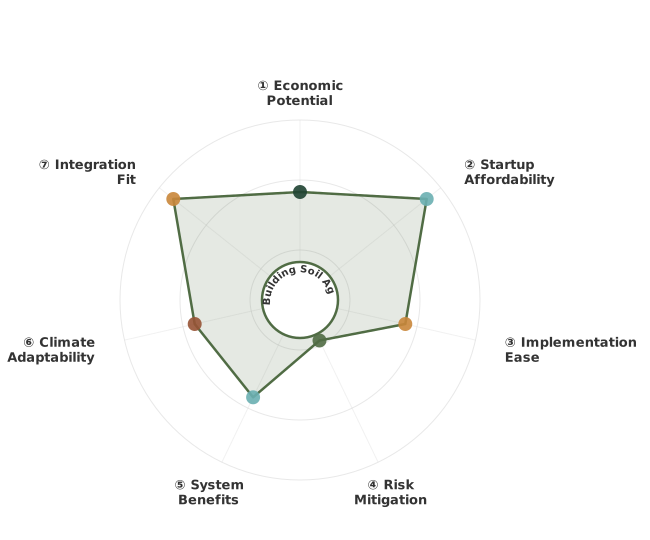
How These Traits Are Calculated
Trait dimensions are ordered clockwise starting from the top of the chart (12 o'clock position):
1. Economic Potential
Financial returns, annual value, and break-even timeline
WHAT: Evaluates financial viability by combining net annual value ($/ha from savings, income, and amortized harvests) with break-even timeline showing when practices pay for themselves.
WHY: Farmers need clear ROI understanding before committing resources. Fast payback (≤3 years) with strong returns (≥$300/ha) enables confident adoption, while long timelines (>10 years) restrict adoption to well-funded operations willing to wait for returns.
HOW: Calculated from net annual value in $/ha and break-even years. Exceptional (≥2.6): fast ROI ≤3 years + high value ≥$300/ha. Typical (1.8-2.5): moderate returns or longer timelines. Limited (<1.8): marginal economics or very long payback >10 years.
2. Startup Affordability
Initial investment costs and financial barrier to entry
WHAT: Measures financial barrier to entry through startup costs for equipment, infrastructure, consulting, and materials. Inverted scoring: lower costs = higher scores = more accessible adoption.
WHY: Affordability determines who can adopt. Low-cost practices (<$250/ha) enable widespread adoption across diverse scales, while high costs (>$2,500/ha) limit adoption to well-capitalized operations, creating barriers that slow regenerative transition.
HOW: Calculated from initial investment parsed from practice content. Inverted scoring: Exceptional (≥2.6): minimal investment <$250/ha. Typical (1.8-2.5): moderate costs $250-2,500/ha. Limited (<1.8): high barrier >$2,500/ha.
3. Implementation Ease
Learning curve and specialized knowledge required
WHAT: Measures how much learning, planning, and specialized knowledge a practice requires. Simpler practices with fewer steps score higher, while complex practices requiring extensive training or specialized resources score lower.
WHY: Complex practices create adoption barriers even when economically viable. Straightforward practices enable faster adoption and broader participation, while those requiring extensive training, timing precision, or specialized equipment limit who can succeed.
HOW: Evaluated by measuring documentation length and identifying complexity markers like location-specific requirements, seasonal timing windows, specialized skills, and dedicated equipment needs. Exceptional (≥2.6): straightforward practices with minimal prerequisites. Typical (1.8-2.5): moderate learning curve with some specialized needs. Limited (<1.8): steep learning curve requiring significant training or resources.
4. Risk Mitigation
Identified financial and ecological risk assessment
WHAT: Evaluates documented risks across financial (investment loss, market volatility) and ecological (crop failure, pest outbreaks) domains. Inverted scoring: fewer risks = higher scores.
WHY: Understanding risk exposure helps farmers make informed decisions. Low-risk practices allow confident implementation, while high-risk practices require careful planning and contingency resources. Risk transparency prevents costly failures.
HOW: Calculated from identified risks in practice content. Inverted scoring: Exceptional (≥2.6): ≤2 risks with manageable severity. Typical (1.8-2.5): 3-5 moderate risks. Limited (<1.8): 6+ risks or severe exposure.
5. System Benefits
How many ways the practice improves your land simultaneously
WHAT: Measures how many aspects of land health improve at once—carbon storage, soil quality, erosion control, water absorption, and biodiversity. Practices that improve multiple areas simultaneously create compounding benefits where each improvement reinforces the others.
WHY: The best practices solve multiple problems at once. For example, addressing erosion simultaneously builds carbon and improves water infiltration, creating a resilient system with positive feedback loops. Single-benefit approaches miss these compound transformation opportunities.
HOW: Evaluated across five key outcomes: carbon sequestration, soil organic matter increase, erosion reduction, water infiltration improvement, and biodiversity enhancement. Exceptional (≥2.6): high carbon storage (>8 t/ha/yr), improvements across 4-5 areas, transformative outcomes. Typical (1.8-2.5): moderate carbon (3-8 t/ha/yr), improvements across 2-3 areas. Limited (<1.8): modest impact (<3 t/ha/yr), single-area focus only.
6. Climate Adaptability
Geographic applicability across Köppen climate zones
WHAT: Evaluates geographic applicability by assessing how many Köppen climate zones successfully support a practice and what adaptation requirements are needed. Measures breadth of climates where farmers can implement with minimal to moderate modifications.
WHY: Universal practices working across diverse climates enable more farmers to adopt regenerative approaches. Practices limited to single climate types (only Mediterranean, only tropical) restrict adoption and slow global transition. Adaptability determines whether a practice serves niche regions or offers broad transformation.
HOW: LLM evaluation of regional success stories, Köppen zone coverage, and adaptation needs. Exceptional (≥2.6): 5+ zones or 4+ climate types, 3+ continents, minimal adaptation. Typical (1.8-2.5): 3-4 zones or 2-3 types, 2 continents, moderate adaptation. Limited (<1.8): 1-2 zones, single region, significant adaptation or highly specialized.
7. Integration Fit
How well this practice combines with others you're doing
WHAT: Measures how well a practice combines with other regenerative practices you might be doing. Some practices work as building blocks that make many other practices easier or more effective, while others work best on their own.
WHY: Practices that combine well with many others create more value on your farm. For example, cover cropping enables no-till, improves grazing, supports crop diversity, and helps water management—making all of them work better together. This helps you build a coherent system rather than juggling disconnected practices.
HOW: Evaluated by identifying which practices combine well and how strong those combinations are. 'Ideally Suited' means strong combinations where practices reinforce each other (practice A makes B easier, while B makes A more effective). 'Adequate' means complementary benefits that work well together. Exceptional (≥2.6): combines well with 6+ practices, serves as a building block. Typical (1.8-2.5): combines with 3-5 practices. Limited (<1.8): 1-2 practices or works best alone.
Going Deeper
1
WHY - The Benefits
Building soil aggregates is fundamental to establishing a healthy, functioning soil ecosystem that can support productive agriculture while regenerating natural resources. The benefits are interconnected, creating a positive feedback loop of soil improvement.
Building soil aggregates is fundamental to establishing a healthy, functioning soil ecosystem that can support productive agriculture while regenerating natural resources. The benefits are interconnected, creating a positive feedback loop of soil improvement.
WHY - The Benefits
Building soil aggregates is fundamental to establishing a healthy, functioning soil ecosystem that can support productive agriculture while regenerating natural resources. The benefits are interconnected, creating a positive feedback loop of soil improvement.
Building soil aggregates is fundamental to establishing a healthy, functioning soil ecosystem that can support productive agriculture while regenerating natural resources. The benefits are interconnected, creating a positive feedback loop of soil improvement.
Soil Health Benefits
Healthy soil aggregation is characterized by the formation of stable, porous crumbs (aggregates) that are resilient to forces like tillage, raindrop impact, and compaction. These aggregates are crucial for creating and maintaining pore spaces within the soil matrix. These pores facilitate essential processes:
- Water Infiltration and Retention: Aggregated soils allow water to penetrate rapidly, reducing surface runoff and erosion. The increased pore space acts like a sponge, absorbing and holding moisture for plant use, which is particularly critical during dry periods. Studies have shown that soils with good aggregation can improve water infiltration rates by 40-70% compared to degraded, structureless soils. This enhanced water storage directly translates to improved drought resilience.
- Aeration: The macro-pores created by good aggregation allow for the exchange of gases, particularly oxygen, which is vital for the respiration of plant roots and soil microorganisms. Without adequate aeration, roots can suffocate, leading to stunted growth and increased susceptibility to root diseases. Compacted soils, lacking macro-pores, suffer from poor aeration, creating anaerobic zones where beneficial aerobic microbes cannot survive.
- Root Growth and Penetration: Aggregated soils are friable and easy for plant roots to penetrate. This allows plants to establish deeper, more extensive root systems, accessing a larger volume of soil for water and nutrients. Conversely, compacted layers or degraded soils restrict root growth, limiting plant potential and making them more vulnerable to stresses.
- Nutrient Cycling and Availability: The increased biological activity within aggregated soils, fueled by organic matter and diverse microbial communities, enhances nutrient cycling. Microbes mineralize organic matter, releasing essential nutrients like nitrogen, phosphorus, and sulfur in plant-available forms. Stable aggregates also protect nutrients from leaching by holding them within their structure and within the organic matter they contain.
- Reduced Erosion: Stable aggregates, especially those bound by organic matter and fungal hyphae, are highly resistant to detachment by water or wind. This significantly reduces soil loss from erosion, preserving topsoil and protecting water quality downstream by minimizing sediment and nutrient runoff.
Economic Benefits
The improvements in soil health translate directly into economic advantages for farmers and ranchers.
- Reduced Irrigation Costs: Enhanced water infiltration and retention in aggregated soils mean less reliance on supplemental irrigation. This can lead to significant savings on water usage, energy for pumping, and associated labor. Savings of 15-25% on irrigation costs are achievable in systems with greatly improved water holding capacity.
- Improved Crop Yields and Quality: Deeper rooting, better aeration, and improved nutrient availability lead to healthier, more robust crops. This often results in higher yields per hectare (or acre) and improved crop quality, fetching better market prices. Yield increases of 10-30% are commonly observed as soil structure improves.
- Avoided Land Degradation Costs: Preventing significant topsoil loss through erosion avoids costly remediation efforts and the long-term loss of soil fertility. The cost of replacing lost topsoil or restoring degraded land can be orders of magnitude higher than proactive investment in soil health. Avoiding $150-500 per hectare ($60-200 per acre) of erosion losses per year is a tangible economic benefit.
- Extended Grazing Season: For livestock operations, improved soil aggregation under pasture or rangeland supports more productive perennial forage growth. This can extend the grazing season by 2-4 weeks, reducing the need for costly supplemental feed.
- Resilience to Extreme Weather: The ability of aggregated soils to absorb heavy rainfall and retain moisture during dry spells makes the farming system more resilient to extreme weather events, reducing the risk of crop failure or livestock stress.
Regenerative Systems Fit
Building soil aggregates is a cornerstone practice that directly embodies and supports the five regenerative agriculture principles. Its integration across these principles highlights its foundational role in creating truly regenerative systems.
Principle 1: Minimize Soil Disturbance Practices like reduced tillage, no-till farming, and direct seeding are crucial for protecting existing aggregates and allowing new ones to form. Tillage physically breaks apart aggregates, disrupts fungal networks, and exposes organic matter to rapid oxidation, effectively undoing the work of soil biology. By minimizing disturbance, we allow the natural binding agents—organic matter, microbial exudates, and fungal hyphae—to build and maintain soil structure.
Principle 2: Maximize Crop Diversity A diverse plant community is fundamental to building soil aggregates. Different plant species have varying root architectures (taproots, fibrous roots) and depths, contributing to aggregation at multiple soil levels. The varied root exudates feed a diverse soil microbial community, which in turn produces more binding agents. Cover crops, intercropping, and complex pasture mixes provide a continuous supply of organic matter and root activity, consistently fostering aggregate formation throughout the year. For instance, a mix of grasses (fibrous roots), legumes (nitrogen fixers), and deep-rooted forbs can create pore spaces and bind particles at different depths.
Principle 3: Keep Soil Covered A constant layer of living root systems or mulch on the soil surface protects developing aggregates from the destructive forces of rain and wind. Raindrop impact can break apart fragile aggregates, leading to surface crusting and sealing, which hinders water infiltration and aeration. Cover crops, crop residues, and compost act as buffer layers, absorbing the impact and allowing water to infiltrate gently, thus preserving soil aggregates. This constant cover also moderates soil temperature and moisture, creating an ideal environment for the soil life responsible for aggregation.
Principle 4: Maintain Living Roots Living roots are the power source for aggregate formation. They continuously exude carbon-rich compounds that nourish soil microbes and fungi. These organisms are the primary "glues" that bind soil particles together. The physical entanglement by fungal hyphae and the sticky substances produced by bacteria are essential for forming stable aggregates. Maintaining living roots for as long as possible throughout the year, through perennial crops, cover crops, and perennial pastures, ensures a continuous supply of energy for aggregate-building biology.
Principle 5: Integrate Livestock When strategically managed, livestock actively contribute to soil aggregation. Their manure provides organic matter and nutrients that fuel microbial activity. The grazing action, particularly rotational grazing, stimulates plant growth and root development, which in turn increases the production of binding agents. While excessive trampling can cause compaction, judicious grazing can help incorporate organic residues into the soil and stimulate soil biology, leading to improved aggregate stability. The key is balancing the benefits of manure and plant stimulation with the risk of over-compaction by managing grazing intensity and duration.
By understanding how each regenerative principle contributes to the formation and stability of soil aggregates, farmers and ranchers can design management systems that enhance soil structure, leading to a more resilient, fertile, and productive agricultural landscape.
Sources behind this view
Videos & Podcasts
-
Soil aggregates, stabilized by microbial products like glomalin, are crucial for soil structure and water infiltration. Moderately grazed pastures show the highest aggregate stability (93%) due to opt
-
Soil aggregates, formed by microbial 'biotic glues', are critical for pore space, water infiltration, retention, and nutrient holding. Fungal-dominant soils with aggregates are superior to bacteria-do
-
Soil aggregation, driven by plant-fed microbes, creates pore space crucial for soil health. A water test showed soil with continuous plant cover (David's) held aggregates well, while high-tillage soil
-
Maintain 'cover armor' on soil with residue or living plants to protect it, regulate temperature, and build soil aggregates. Biology and glomalin are key to aggregate formation, which improves water i

Community
-
Ten principles for healthy soil: use compost and biomass mulch, keep living roots year-round, minimize tillage, capture sunlight and water, promote plant diversity, and integrate animals for fertility
Read more (opens in new window) permies.com -
Soil structure and fertility are built by soil biology (microbes, fungi), not just mineral particles. Healthy soil life makes nutrients available, improves structure, and prevents disease, contrasting
Read more (opens in new window) permies.com -
Healthy soil is a living ecosystem requiring organic matter, microbes, and minimal disturbance. Practices like adding compost, leaving roots in the ground, mulching, diverse planting, crop rotation, a
Read more (opens in new window) ucanr.edu -
Soil health relies on organic matter and soil aggregation, where microorganisms bind particles into clumps. This improves soil structure, increases water retention, and reduces erosion.
Read more (opens in new window) ucanr.edu
Research
-
Soil Aggregate Dynamics and Stability: Natural and Anthropogenic Drivers (opens in new window)
This study found: Soil clumps (aggregates) are vital for soil health. This review covers natural and human factors (like tillage, organic matter, roots, microbes) that build and stabilize them, offering a framework for
-
The Influence of Organic Matter on Soil Aggregation and Water Infiltration (opens in new window)
This study found: Adding organic matter improves soil structure by binding particles into aggregates, which enhances water infiltration. This review discusses mechanisms and management options for better water penetrat
-
The Changes in Soil Microorganisms and Soil Chemical Properties Affect the Heterogeneity and Stability of Soil Aggregates before and after Grassland Conversion (opens in new window)
This study found: Converting grasslands to cropland initially harms soil structure and microbes. While soil nutrients and microbes recover after ~50 years, soil aggregate stability may not fully rebound, highlighting t
-
Impacts of Conservation Agriculture on Soil Aggregates and Its Implications for Sustainable Agriculture (opens in new window)
This study found: Conservation Agriculture (CA) improves soil structure by enhancing soil aggregates, their formation, and stability, linking them to soil carbon and microbes. Future research should focus on long-term
From the Web
-
Repair the water cycle and build soil aggregation by following the six principles of soil health and three rules of adaptive stewardship, reducing reliance on purchased fertility and improving resilie
-
Regenerative agriculture focuses on ecosystem management, with soil aggregation being key to healthy water and carbon cycles. Landstream project quantifies dramatic increases in topsoil depth and aggr
-
Soil microbes, particularly bacteria and fungi, build soil structure by forming aggregates using glues like EPS and nets like fungal hyphae. This process is crucial for soil health, nutrient retention
-
Healthy soil structure, formed by microbial aggregation, creates pores essential for water infiltration and gas exchange, supporting soil life and plant growth. Disturbances like tillage can collapse
2
WHERE - Regional Considerations
The processes of soil aggregation are universal, but the methods and timeline for achieving them can vary significantly based on climate, soil type, and existing land use history. Understanding these regional nuances is critical for effective implementation.
The processes of soil aggregation are universal, but the methods and timeline for achieving them can vary significantly based on climate, soil type, and existing land use history. Understanding these regional nuances is critical for effective implementation.
WHERE - Regional Considerations
The processes of soil aggregation are universal, but the methods and timeline for achieving them can vary significantly based on climate, soil type, and existing land use history. Understanding these regional nuances is critical for effective implementation.
The processes of soil aggregation are universal, but the methods and timeline for achieving them can vary significantly based on climate, soil type, and existing land use history. Understanding these regional nuances is critical for effective implementation.
Click Here to Look up your Region if you don't already know it
Temperate Humid Regions
Representative Locations: Midwestern United States, Western Europe (e.g., France, Germany, UK), Eastern China, Southern Brazil, Southeast Australia.
Climate Context: Moderate temperatures with distinct seasons (warm summers, cold winters) and ample precipitation (75-150 cm or 30-60 inches annually), often distributed relatively evenly. USDA Zones 4-7, Köppen Cfa/Cfb/Cfc.
Relevance to Aggregation: These regions benefit from natural freeze-thaw cycles and wetting-drought cycles that promote aggregate formation. Extended growing seasons, especially with cover cropping, allow for substantial root development and organic matter input. However, intensive agriculture can lead to soil compaction and loss of organic matter. The consistent moisture can also exacerbate erosion if soil is left bare. Implementation Focus: Emphasize diverse cover crop mixes that overwinter or provide early spring growth. Focus on reducing tillage to protect aggregates formed by freeze-thaw and biological activity. Livestock integration is highly beneficial, especially in pastures, but careful management is needed to prevent compaction in wet periods.
Mediterranean Regions
Representative Locations: California (USA), Mediterranean Basin (e.g., Spain, Italy, Greece), Central Chile, Southwestern Australia, Cape Province (South Africa).
Climate Context: Hot, dry summers and mild, wet winters with highly seasonal rainfall (40-90 cm or 15-35 inches annually). USDA Zones 8-10, Köppen Csa/Csb.
Relevance to Aggregation: The dry summers pose a challenge, as soil moisture is a key driver for biological activity and aggregate formation. Bare soil in summer exacerbates wind and water erosion. The wet winters, however, offer a crucial window for infiltration and root growth. Implementation Focus: Maintaining soil cover year-round is paramount. Drought-tolerant cover crops, winter annuals, and perennial forages are essential. Minimizing tillage is vital to protect fragile aggregates from wind erosion during dry periods and water erosion during intense winter rains. Organic matter additions (compost, manure) are crucial for enhancing water-holding capacity.
Arid and Semi-Arid Regions
Representative Locations: Western United States, North Africa, Central Asia, Interior Australia, parts of the Middle East.
Climate Context: Low annual precipitation (<40 cm or 15 inches), high temperatures, and often unpredictable rainfall patterns. USDA Zones 6-9 (highly variable), Köppen BSh/BSk.
Relevance to Aggregation: Water scarcity is the primary limiting factor. Biological activity is slow and sporadic, occurring mainly during brief wet periods. Soil organic matter levels are typically low. Wind erosion is a major concern. Implementation Focus: Maximizing water infiltration and retention is key. Deep-rooted perennial forages, drought-tolerant cover crops, and strategic water harvesting techniques (e.g., contouring, swales) are critical. Maintaining soil cover with residue or perennial cover is essential to combat wind and water erosion. Building soil organic matter through compost, manure, and cover cropping is a long-term goal, focusing on plants that can thrive in low-moisture conditions and contribute to stable aggregates. Livestock integration, managed carefully to avoid overgrazing, can help cycle nutrients through manure.
Cold Continental Regions
Representative Locations: Northern USA and Canada, Northern Europe, Northern Asia (Siberia).
Climate Context: Very short growing seasons, hot summers, and severe winter cold with prolonged freezing periods. USDA Zones 3-5, Köppen Dfa/Dfb.
Relevance to Aggregation: The short growing season limits the time for root development and organic matter input from annual crops. Winter freezing and thawing can be beneficial for aggregate formation but also create a vulnerable surface after snowmelt. Implementation Focus: Maximizing the growing season is key. Utilizing fast-growing cover crops, including winter-hardy species that can survive mild winters, helps maintain living roots and add organic matter. Protecting the soil surface from erosion through residue management and cover crops is vital, especially during spring thaw. Perennial forages and tree crops can be very effective if adapted to the climate, providing consistent root activity and organic matter input.
Subtropical and Tropical Regions
Representative Locations: Southeastern USA, Southern China, Africa (e.g., West Africa, East Africa), India, Southeast Asia, Northern Australia, South America (e.g., Brazil, Colombia).
Climate Context: High temperatures year-round, with either high consistent rainfall (tropical humid) or distinct wet and dry seasons (subtropical). Köppen Cfa/Cwa/Cfb (subtropical) and Af/Am/Aw (tropical).
Relevance to Aggregation: High temperatures and ample moisture can accelerate organic matter decomposition, making it challenging to build soil organic matter and maintain aggregates. Heavy rainfall can cause significant erosion if soil is not covered. In regions with dry seasons, maintaining cover and moisture becomes critical. Implementation Focus: Preventing soil erosion is paramount, especially in regions with intense rainfall. Keeping soils covered with living plants or mulch year-round is essential. Diverse cover crop mixes that thrive in warm conditions are highly beneficial. Integrating perennials (pastures, trees, multi-strata farming) helps maintain continuous root activity and organic matter contribution. Livestock integration, managed to avoid overgrazing and compaction, can be very effective in nutrient cycling and stimulating forage growth. In regions with dry seasons, water harvesting and drought-tolerant species are key.
Regardless of the region, the common thread for building soil aggregates is fostering a thriving soil biology. This is achieved through consistent application of regenerative principles: keeping soil biologically active with living roots and organic matter, protecting it from disturbance and erosion, and allowing diverse biological communities to flourish.
3
HOW - Implementation Process
Building stable soil aggregates is an ongoing process that involves strategic management practices aimed at fostering soil biology and protecting soil structure. The approach will vary based on current soil conditions and land use, but the fundamental components remain...
Building stable soil aggregates is an ongoing process that involves strategic management practices aimed at fostering soil biology and protecting soil structure. The approach will vary based on current soil conditions and land use, but the fundamental components remain consistent.
HOW - Implementation Process
Building stable soil aggregates is an ongoing process that involves strategic management practices aimed at fostering soil biology and protecting soil structure. The approach will vary based on current soil conditions and land use, but the fundamental components remain...
Building stable soil aggregates is an ongoing process that involves strategic management practices aimed at fostering soil biology and protecting soil structure. The approach will vary based on current soil conditions and land use, but the fundamental components remain consistent.
Prerequisites
Before starting, assess your current soil situation:
- Soil Test: Understand your current soil type, organic matter content (%), pH, and nutrient levels.
- Visual Assessment: Observe soil structure. Is it a hard, dense plowpan? Does it form clods or dust when dry? Does water pond on the surface after rain? This indicates poor aggregation.
- Infiltration Test: Perform a simple infiltration test (e.g., a double-ring infiltrometer or even a simple bucket test) to measure how quickly water penetrates the soil. Low infiltration rates (<1.2 cm/hour or 0.5 inches/hour) indicate poor structure and aggregation.
- History: Understand past management practices (tillage frequency, chemical input use, crop history) as they inform the degree of degradation.
Phase 1: Minimize Disturbance & Maximize Cover (Years 1-3)
This phase is about stopping the degradation of existing structure and establishing a base for rebuilding.
- Tillage Reduction: Immediately begin reducing tillage frequency. Transitioning to reduced tillage or strip-tillage (if necessary for establishment) is a significant step if currently practicing conventional tillage. Aim to eliminate annual plowing, disking, and harrowing.
-
Year-Round Soil Cover: Implement strategies to keep soil covered at all times.
- Cash Crop Residue Management: Leave as much crop residue on the surface as possible after harvest.
- Cover Cropping: Plant diverse cover crops immediately after cash crop harvest or during fallow periods. Aim for mixes of 4-6 species, including grasses (e.g., rye, oats), legumes (e.g., vetch, clover), and brassicas (e.g., radish, turnip). This maintains living roots and adds organic matter.
- Mulching: In some systems (e.g., horticulture), use organic mulches like straw, wood chips, or compost.
-
Introduce Perennials (if feasible): Incorporate perennial forages into rotations or establish new pasture land. Perennial root systems are highly effective at building stable aggregates.
Phase 2: Feed the Biology & Enhance Diversity (Years 2-5)
Once soil is consistently covered and disturbance is minimized, focus on actively feeding the soil organisms responsible for aggregation.
-
Increase Organic Matter Inputs:
- Cover Crop Biomass: Select cover crops known for producing significant biomass.
- Manure and Compost: Apply composted manure or other organic amendments based on soil test recommendations. This provides readily available food for microbes and binding agents.
- Animal Integration (if applicable): Integrate livestock through rotational grazing. Ensure adequate rest periods for forages to allow root development and organic matter accumulation. Avoid overgrazing and compaction by managing stocking densities and duration.
-
Maximize Plant Diversity:
- Cover Crop Mixes: Increase the diversity of cover crop mixes (aim for 8-10+ species). Include deep tap-rooted plants (e.g., daikon radish, chicory) to penetrate deeper soil layers and fibrous-rooted plants (e.g., rye, ryegrass) to create surface stability.
- Crop Rotation: Implement complex crop rotations that include varied species (grains, legumes, oilseeds, root crops).
- Intercropping/Companion Planting: Where practical, intercrop different species to increase diversity above and below ground.
-
Soil Biological Amendments (Optional but supportive): Consider applying granular humic substances or microbial inoculants (e.g., mycorrhizal fungi) to further stimulate biological activity, especially on severely degraded soils.
Phase 3: Refine and Maintain (Years 5+)
Continue applying regenerative principles, monitoring soil health, and adapting management as needed.
-
Continuous Monitoring: Regularly assess soil health indicators:
- Structure: Spade test for friability, root penetration, and aggregate stability.
- Infiltration: Perform infiltration tests annually.
- Organic Matter: Soil tests every 2-3 years.
- Earthworm Counts: Monitor earthworm populations as an indicator of biological health.
-
Adaptation: Based on monitoring, adjust cover crop mixes, grazing management, or organic matter application rates. For example, if infiltration is still low, increase the diversity of deep-rooted cover crops or adjust grazing rest periods.
- Address Specific Issues: If specific compaction issues persist, consider targeted interventions like one-time deep ripping only if biological methods have been applied for 2-3 years without sufficient improvement (see Transition Practices section for details).
Transition Timeline & Phase-Out Strategy (If applicable to specific farm)
For farms heavily reliant on conventional practices that degrade structure (e.g., annual tillage, synthetic fertilizers that suppress biology):
- Years 1-2: Substantially reduce tillage intensity and frequency. Implement full-season cover cropping. Begin gradual reduction of synthetic nitrogen fertilizer (typically by 20-30%) as soil biology begins to contribute. Monitor soil health indicators closely.
- Years 3-5: Transition to full no-till or permanent pasture. Increase cover crop diversity and biomass. Reduce synthetic N further (another 30-50%) and eliminate synthetic pesticides/herbicides as living roots and diverse biology enhance natural pest and weed suppression. Start building soil organic matter through integrated organic sources.
- Years 5+: Aim for zero synthetic inputs. Soil should exhibit significant improvement in aggregation, infiltration, and organic matter content, making it resilient and self-sustaining.
The timeline for noticeable improvements in aggregation varies based on starting conditions and management intensity. It typically takes 1-3 years to see initial signs and 5-10 years for significant, measurable changes in soil organic matter and structure.
Sources behind this view
Videos & Podcasts
-
Provides actionable steps for regenerative agronomy: balanced N:C inputs (molasses, humates), microbial teas, yeast metabolites, calcium, and effective seed treatments. Emphasizes scalability, systems
-
Implementing the six soil health principles (living root, cover crops, diversity, minimize disturbance) over 3-5 years can dramatically improve soil function, aggregation, and water cycles, reducing t

-
Demonstrates improved soil structure, aggregation, and organic matter from no-till, strip-till, and cover crops (alfalfa, radish, rye). Benefits include increased water infiltration, reduced erosion,

-
Details regenerative practices for soil health, including using herbal ferments to manage cover crop decomposition, specific shallow incorporation techniques for improved soil structure, and the shift

Community
-
Build healthy pasture soils by minimizing tillage, maintaining living roots and species diversity, and implementing proper grazing management. Livestock are essential for nutrient cycling and stimulat
Read more (opens in new window) smallfarms.cornell.edu -
Enhance soil health through plant diversity, continuous soil cover (living plants/residues), and livestock integration. Manage carbon-to-nitrogen ratios of residues and adopt no-till practices to impr
Read more (opens in new window) permies.com -
Adopt regenerative principles: keep living roots, cover soil, minimize disturbance, and avoid tillage. Integrate livestock carefully (mob grazing), use biomass (wood chips, mulch) for carbon and humus
Read more (opens in new window) permies.com -
Building healthy soil involves minimizing tillage (no-till) and keeping it covered year-round with living plants and cover crops. These practices enhance water retention, nutrient cycling, and soil re
Read more (opens in new window) smallfarms.cornell.edu
Research
-
Building Soil Health and Fertility through Organic Amendments and Practices: A Review (opens in new window)
This study found: Review of organic amendments (manures, compost, cover crops) and regenerative practices (no-till, crop diversity, agroecology) shows they restore soil health by increasing organic matter and beneficia
-
Building Soil Health and Fertility through Organic Amendments and Practices: A Review (opens in new window)
This study found: Using organic amendments (manures, composts, cover crops) and regenerative practices (no-till, crop diversity) restores soil health by increasing organic matter and beneficial microbes, leading to mor
-
Microbial Community Traits and Necromass Dynamics Shape Soil Carbon Accumulation. (opens in new window)
This study found: Organic fertilizers boost soil carbon 160% over 180 years vs. 26% for synthetic, by supporting beneficial soil microbes and building both labile and stable carbon pools. Long-term studies confirm orga
-
Substantial and Rapid Increase in Soil Health across Crops with Conversion from Conventional to Regenerative Practices (opens in new window)
This study found: Switching to regenerative practices like cover cropping and compost rapidly improved soil organic matter, soil structure, and beneficial soil microbes on a working farm over nine years.
From the Web
-
Provides a practical guide to measuring soil health using field indicators and lab tests, emphasizing consistency, context-specific interpretation, and tracking functional improvements over time. Link
-
Soil restoration hinges on year-round green cover for photosynthesis, enhancing soil carbon and nutrient density. Practices like multi-species cover crops, strategic grazing, and promoting microbial d
-
To build healthy soil, keep it covered, maximize plant diversity, and minimize synthetic inputs. Transition slowly by reducing fertilizers and supporting soil biology with cover crops and experimentat
-
Key regenerative agriculture methods include no-till farming, cover cropping, agroforestry, perennial crops, planned rotational grazing (Holistic Management), and compost application, all aimed at imp
4
Know the Debate
Building soil aggregates is a foundational regenerative practice that enhances water infiltration, aeration, and nutrient cycling. While beneficial...
Know the Debate
Building soil aggregates is a foundational regenerative practice that enhances water infiltration, aeration, and nutrient cycling. While beneficial...
Building soil aggregates is a foundational regenerative practice that enhances water infiltration, aeration, and nutrient cycling. While beneficial everywhere, the approach and timeline vary significantly based on climate and existing conditions. Arid regions require a strong focus on water harvesting and drought-tolerant covers, while humid areas can capitalize on more biological activity and diverse pasture potential. Entry costs range from minimal for cover crops to substantial for new equipment, and noticeable improvements in structure typically appear within 1-5 years with consistent regenerative management.
How long to build soil aggregation?
Visible improvement in 1-3 years
With consistent application of reduced tillage, diverse cover crops, and organic matter, initial improvements in soil structure and infiltration can be observed within 1-3 years, primarily due to rapid biological response to reduced disturbance.
Sources behind this view
Sources behind this view
From the Web
-
Good soil structure, formed by microbial byproducts creating aggregates, is key for water retention and root growth, leading to better crop yields. Poor structure from tillage or compaction reduces harvests.
-
Repair the water cycle and build soil aggregation by following the six principles of soil health and three rules of adaptive stewardship, reducing reliance on purchased fertility and improving resilience to moisture extremes.
Significant change takes 5-10 years
Measurable increases in soil organic matter and robust aggregate stability typically require 5-10 years of sustained regenerative practices, especially on degraded soils, due to the slow nature of biological processes and soil organic matter accumulation.
Sources behind this view
Sources behind this view
Research
-
Soil aggregation dynamics and carbon sequestration (opens in new window)
This study found: Healthy soil structure, or aggregation, is key to storing carbon in the soil. Plant roots and crop residues act like glue, holding soil particles together to form larger clumps (aggregates). These aggregates protect soil carbon, with smaller clumps holding older carbon and larger clumps holding newer material. While we know that organic matter, plant roots, and microbial byproducts are important for this clumping, the exact ways soil carbon gets stored, stays stable, and its lifespan within these aggregates are still complex and not fully understood. Researchers use various methods to study this, but more work is needed to create a complete picture of how soil structure and carbon storage work together.
From the Web
-
Improving soil health requires focusing on aggregate size, driven by soil organic matter and carbon inputs. Macroaggregates enhance water retention and aeration, while microaggregates hinder them. Proper soil testing is crucial for identifying and addressing these physical properties.
-
Soil biology improves soil aggregation via organic matter and fungi (producing glomalin), creating pore space for better water infiltration. Earthworms also aid aggregation, enhancing water holding capacity.
Making Sense of the Differences
The timeline for seeing improvements in soil aggregation varies based on initial soil health, climate, and management intensity. Degraded soils in humid climates with consistent organic matter inputs and minimal disturbance will show faster responses (1-3 years) due to accelerated biological activity. Soils initially low in organic matter, in drier climates, or those subjected to past heavy tillage may require 5-10 years of sustained regenerative practices to build the fundamental biological and organic matter foundation for stable aggregation.
How crucial is livestock integration for soil aggregation?
Livestock enhance aggregation when managed
Well-managed livestock, through manure deposition and stimulating plant growth, significantly contribute to soil aggregation by fueling biology and cycling nutrients. Their role is particularly strong in perennial systems.
Sources behind this view
Sources behind this view
Videos & Podcasts
-
Soil aggregation, driven by plant-fed microbes, creates pore space crucial for soil health. A water test showed soil with continuous plant cover (David's) held aggregates well, while high-tillage soil (neighbor's) disintegrated, highlighting the importance of keeping soil green.
From the Web
-
Soil biology improves soil aggregation via organic matter and fungi (producing glomalin), creating pore space for better water infiltration. Earthworms also aid aggregation, enhancing water holding capacity.
-
Improving soil health requires focusing on aggregate size, driven by soil organic matter and carbon inputs. Macroaggregates enhance water retention and aeration, while microaggregates hinder them. Proper soil testing is crucial for identifying and addressing these physical properties.
Livestock not essential; soil biology sufficient
While livestock can be beneficial, robust soil aggregation can be achieved through other regenerative practices like cover cropping, reduced tillage, and compost application, which directly feed soil biology without animal intervention.
Sources behind this view
Sources behind this view
Research
-
Soil aggregation dynamics and carbon sequestration (opens in new window)
This study found: Healthy soil structure, or aggregation, is key to storing carbon in the soil. Plant roots and crop residues act like glue, holding soil particles together to form larger clumps (aggregates). These aggregates protect soil carbon, with smaller clumps holding older carbon and larger clumps holding newer material. While we know that organic matter, plant roots, and microbial byproducts are important for this clumping, the exact ways soil carbon gets stored, stays stable, and its lifespan within these aggregates are still complex and not fully understood. Researchers use various methods to study this, but more work is needed to create a complete picture of how soil structure and carbon storage work together.
-
Soil Aggregate Dynamics and Stability: Natural and Anthropogenic Drivers (opens in new window)
This study found: This review explains how soil clumps (aggregates) form and stay stable, which is crucial for healthy soil. Healthy soil structure helps water soak in, nutrients cycle, carbon get stored, and prevents erosion. The review looks at natural factors like soil type and climate, and human activities like plowing, changing land use, and adding organic matter (like compost or manure). It emphasizes that plant roots, diverse soil microbes, and soil organic matter are key to building and maintaining good soil structure. Understanding these factors can help farmers manage their land better for productive and sustainable agriculture, especially as the climate changes.
From the Web
-
Soil microbes, particularly bacteria and fungi, build soil structure by forming aggregates using glues like EPS and nets like fungal hyphae. This process is crucial for soil health, nutrient retention, and water management, and is often degraded by intensive farming.
Making Sense of the Differences
While livestock integration, particularly through well-managed rotational grazing, can significantly accelerate soil aggregation by providing organic matter, stimulating plant growth, and cycling nutrients, it is not the sole pathway. Systems that prioritize plant diversity, cover cropping, reduced tillage, and organic amendments can also effectively build soil structure by feeding the soil biology responsible for binding soil particles. The choice depends on farm context, existing infrastructure, economic goals, and philosophical alignment.
Does diversity of soil biology directly impact aggregation?
High biodiversity essential for strong aggregation
A diverse soil microbial community, fueled by a variety of plant roots and organic matter inputs, produces a wider array of binding agents and supports more complex soil structuring processes.
Sources behind this view
Sources behind this view
Videos & Podcasts
-
Improving soil structure through aggregation is key. Fungi build aggregates, stabilized by lipids from plants and fungi. Compaction and bacterial dominance reduce structure. Increasing carbon, promoting rest, and diverse plants, especially via root exudates, are vital.

Research
-
Soil aggregation dynamics and carbon sequestration (opens in new window)
This study found: Healthy soil structure, or aggregation, is key to storing carbon in the soil. Plant roots and crop residues act like glue, holding soil particles together to form larger clumps (aggregates). These aggregates protect soil carbon, with smaller clumps holding older carbon and larger clumps holding newer material. While we know that organic matter, plant roots, and microbial byproducts are important for this clumping, the exact ways soil carbon gets stored, stays stable, and its lifespan within these aggregates are still complex and not fully understood. Researchers use various methods to study this, but more work is needed to create a complete picture of how soil structure and carbon storage work together.
-
Soil Aggregate Dynamics and Stability: Natural and Anthropogenic Drivers (opens in new window)
This study found: This review explains how soil clumps (aggregates) form and stay stable, which is crucial for healthy soil. Healthy soil structure helps water soak in, nutrients cycle, carbon get stored, and prevents erosion. The review looks at natural factors like soil type and climate, and human activities like plowing, changing land use, and adding organic matter (like compost or manure). It emphasizes that plant roots, diverse soil microbes, and soil organic matter are key to building and maintaining good soil structure. Understanding these factors can help farmers manage their land better for productive and sustainable agriculture, especially as the climate changes.
From the Web
-
Soil microbes, particularly bacteria and fungi, build soil structure by forming aggregates using glues like EPS and nets like fungal hyphae. This process is crucial for soil health, nutrient retention, and water management, and is often degraded by intensive farming.
Functional diversity matters more than species count
While biodiversity is important, the presence of key functional groups (e.g., mycorrhizal fungi, diverse bacteria yielding different glues) is more critical for effective aggregation than simply having a high number of species.
Sources behind this view
Sources behind this view
Videos & Podcasts
-
Soil aggregation, driven by mycorrhizal fungi producing glomalin, improves soil structure, water infiltration, and the water cycle. Tillage disrupts this process, leading to negative effects.

Research
-
The influence of plant residues on soil aggregation and carbon content: A meta‐analysis (opens in new window)
This study found: A review of 50 studies found that adding plant residues, like crop leftovers, to soil can improve its structure (how well soil particles clump together) and increase the amount of carbon stored. The benefits were greatest in soils that started with low carbon and a neutral pH. Both fresh plant material and charred residues (like biochar) helped build soil structure, with charred residues being particularly good at increasing overall soil carbon. While better soil structure is important, this study also suggests other factors are at play in how much carbon the soil can hold.
From the Web
-
Healthy soil structure, formed by microbial activity and plant roots, is vital for water infiltration, gas exchange, and resilience. Practices like reduced tillage, diverse cover crops, and perennial grazing improve structure, creating a 'house of life' for soil organisms and plants.
Making Sense of the Differences
The consensus is that soil biology is fundamental to building soil aggregates. While a high number of species provides functional redundancy and resilience, the presence of key microorganisms like mycorrhizal fungi and bacteria capable of producing binding agents (glues and hyphae) is paramount. Diverse plant roots and ample organic matter are essential for feeding this varied and functional soil food web, ensuring the continuous production of these binding substances necessary for robust aggregate formation.
5
HOW MUCH - Costs & Investment
The costs associated with building soil aggregates are primarily related to practices that enhance organic matter, cover the soil, and minimize disturbance. These are often investments rather than expenditures, as they lead to long-term improvements in soil health,...
The costs associated with building soil aggregates are primarily related to practices that enhance organic matter, cover the soil, and minimize disturbance. These are often investments rather than expenditures, as they lead to long-term improvements in soil health, productivity, and resilience.
HOW MUCH - Costs & Investment
The costs associated with building soil aggregates are primarily related to practices that enhance organic matter, cover the soil, and minimize disturbance. These are often investments rather than expenditures, as they lead to long-term improvements in soil health,...
The costs associated with building soil aggregates are primarily related to practices that enhance organic matter, cover the soil, and minimize disturbance. These are often investments rather than expenditures, as they lead to long-term improvements in soil health, productivity, and resilience.
Note: All costs are based on recent US economic data (2024–2026) and may vary substantially by region based on local labor rates, material costs, and regulatory requirements.
Cover Cropping and Biological Inputs
Cover cropping acts as the foundation for microbial support and aggregate formation. For small operations (under 50 acres (20 ha)), seed costs range from $60–120 per acre ($148–$297/ha). Smaller producers often prioritize high-diversity multi-species mixes to maximize soil biology, which elevates input costs compared to larger operations. Mid-size farms (50–500 acres (20–202 ha)) typically leverage bulk purchasing and standardized planting, resulting in costs between $30–75 per acre ($74–$185/ha). Large operations (500+ acres) optimize for procurement at scale, often securing commodity-priced cereal rye or clover mixes for $20–50 per acre ($49–$124/ha).
Adding external biological amendments, such as compost or humic acid, further accelerates aggregation. Small farms frequently face high logistics and transportation surcharges on limited-quantity shipments, resulting in expenditures of $150–200 per acre ($371–$494/ha). Mid-size farms may source from regional suppliers or smaller independent dairies, landing in the $40–150 per acre ($99–$371/ha) range. Large operations benefit from proprietary sourcing or direct-to-farm deliveries from industrial-scale poultry or dairy facilities, allowing them to scale applications at $40–90 per acre ($99–$222/ha).
Reduced Tillage and Equipment Infrastructure
Transitioning to no-till systems entails significant capital and operational shifts. Small farms often mitigate heavy capital expenditure by utilizing custom hire services for planting, costing $35–65 per acre ($86–$161/ha) annually, which allows them to bypass expensive equipment ownership. Mid-size farms often pivot toward purchasing refurbished no-till drills. A reliable used unit costs $25,000–60,000; when amortized over a 7–10 year depreciation schedule, this equates to $40–90 per acre ($99–$222/ha) per year. Large operations justify the purchase of $150,000–350,000 new high-clearance no-till planters or air seeders. Because these machines cover extensive acreage, the effective annual depreciation cost drops to $15–40 per acre ($37–$99/ha). While these equipment costs exist, fuel and labor savings from reducing tilling passes typically provide an offset of $30–80 per acre ($74–$198/ha) per season, provided the farmer effectively manages weed pressure through timing and crop competition.
Rotational Grazing and Infrastructure
Accelerating the soil building process through livestock integration requires targeted fencing and water infrastructure. Small operations requiring high-density, daily paddock rotations invest $200–500 per acre ($494–$1,236/ha) in portable solar energizers, high-tensile poly-wire, and distributed water trough systems. Mid-size operations utilize larger management blocks to reduce the need for intensive fencing, resulting in costs of $80–250 per acre ($198–$618/ha) by relying on a mix of permanent perimeter fencing and single-strand poly-wire internal divisions. Large-scale ranching operations achieve significant cost dilution, spending $20–60 per acre ($49–$148/ha) by managing expansive pastures with minimal permanent subdividing and utilizing natural water sources or limited centralized trough hubs.
Most Spend: The majority of operations (the middle 60%) fall within the $80–220 per acre ($198–$544/ha) range for combined biological amendments and infrastructure deployment. This middle ground represents producers who have moved past early-stage manual setups but have not yet fully optimized logistics for industrial-scale purchasing.
Why the Range?: The primary drivers of cost variance include local access to organic matter, site-specific soil compaction levels (which dictate the intensity of equipment requirements), and farm scale. Smaller operations lack the leverage to command volume discounts, while larger operations balance high initial capital outlays with significantly lower per-acre maintenance costs.
Sources behind this view
Videos & Podcasts
-
Adopting soil health practices like reduced tillage and cover crops can be economically neutral or beneficial by offsetting costs of fuel, machinery, and erosion-related nutrient loss, with potential

Research
-
Precision Agriculture Practices Improves Soil Aggregation, Aggregate Associated Organic Carbon Fractions and Nutrient Dynamics in Cereal-based Systems of North-West India: An Overview (opens in new window)
This study found: Precision agriculture and manure application improve soil structure and carbon in Indian grain systems. Tillage affects soil carbon and microbial activity, with macro-aggregates being key carbon holde
6
REWARDS AND RISKS - Economics & Risk Factors
Investing in soil aggregation is a commitment to long-term farm sustainability, balancing immediate costs and potential risks with substantial future rewards.
Investing in soil aggregation is a commitment to long-term farm sustainability, balancing immediate costs and potential risks with substantial future rewards.
REWARDS AND RISKS - Economics & Risk Factors
Investing in soil aggregation is a commitment to long-term farm sustainability, balancing immediate costs and potential risks with substantial future rewards.
Investing in soil aggregation is a commitment to long-term farm sustainability, balancing immediate costs and potential risks with substantial future rewards.
Economic Scenarios
In a best-case scenario, consistent soil aggregation efforts result in a 15–25% yield increase over 3–5 years as improved soil structure enhances water infiltration and nutrient cycling. A 500-acre (202 ha) corn and soybean operation could realize a revenue uplift of $25,000–60,000 annually by year 5, with supplemental savings of $4,000–8,000 in annual irrigation pumping costs due to increased soil moisture retention. Typical scenarios see a 10–15% productivity increase within 5–7 years, achieving a full return on investment by years 7–10. In the worst-case scenario—characterized by extreme drought or unseasonable rainfall leading to cover crop failure—a producer might lose $50–120 per acre ($124–$297/ha) in sunk seed and labor costs, stalling soil health progress and creating a negative net ROI until the management cycle is reset and successfully re-established.
Market Factors and Profitability
Profitability remains tied to regional commodity pricing and the availability of regenerative-based premiums. Currently, "regenerative" or "soil-certified" premiums can add $0.25–0.75 per bushel, though markets remain localized. Farmers must carefully weigh the opportunity cost of land; converting land that previously hosted high-value intensive vegetables to soil-building grasses can initially result in short-term revenue losses of $1,000–3,000 per acre ($2,471–$7,413/ha). Without long-term government cost-share support, such as EQIP or CSP, this shift is often commercially challenging in the short term.
Transition Period Risks
The "Transition Dip" occurs during the initial 1–2 years as soil microbiology adjusts. This period frequently sees nitrogen immobilization, where the soil ties up nutrients for microbial decomposition rather than crop growth. This can lead to temporary yield losses of 5–10%, representing a hit of $40–150 per acre ($99–$371/ha) in revenue. To mitigate this, producers should implement "staged transitions," limiting the change to only 10–20% of the farm acreage at a time. This approach stabilizes total farm revenue while allowing the operator to gain technical expertise in managing the biological system.
Risk Mitigation Strategies
Farmers should utilize comprehensive soil testing—costing $15–30 per acre ($37–$74/ha)—to track nutrient shift and prevent excessive fertilization during the transition. By adjusting conventional fertilizer rates in alignment with increased biological efficiency, producers can recover part of the transition cost. Additionally, investing in multi-risk crop insurance that explicitly protects cover-cropped land is a critical safeguard. While these policies carry a 5–10% premium increase, they protect against total loss in the event of extreme weather-related crop failures, ensuring the capital investment in improved soil health is not lost in a single anomalous season.
Sources behind this view
Videos & Podcasts
-
Case studies of farmers like Duane Beck, Kofi Boa, David Brandt, and Gabe Brown demonstrate that regenerative agriculture (no-till, cover crops, diverse rotations) significantly increases soil health,

-
Transitioning to regenerative agriculture is a human/psychological process requiring trials to reduce risk and build trust. Increased consumer awareness of ecology and health would drive demand for re

-
Provides actionable steps for regenerative agronomy: balanced N:C inputs (molasses, humates), microbial teas, yeast metabolites, calcium, and effective seed treatments. Emphasizes scalability, systems
-
Advocates for a gradual transition to regenerative practices, emphasizing soil health, diverse crop rotations, livestock integration, and smart nutrient management. Stresses the need for farmers to 'e

Community
-
A commercial farm trial on 250 acres of soybeans and wheat showed regenerative methods (cover crops, compost tea, no-till) increased yields by 5-25 bu/acre and saved $9,000 in the first year compared
Read more (opens in new window) permies.com -
Enhance soil health through plant diversity, continuous soil cover (living plants/residues), and livestock integration. Manage carbon-to-nitrogen ratios of residues and adopt no-till practices to impr
Read more (opens in new window) permies.com -
Explains regenerative agriculture principles: no-till gardening to support soil microbiome and sequester carbon; using compost to reduce erosion and compaction; and planting diverse cover crops (grass
Read more (opens in new window) ucanr.edu -
Promoting soil health involves an incremental adoption of conservation agriculture, with cover crops showing significant benefits for soil carbon and water retention. Research also clarifies cover cro
Read more (opens in new window) ucanr.edu
Research
-
Regenerative Agriculture: Restoring Ecosystems¢ Resilience and Productivity: A Review (opens in new window)
This study found: Regenerative agriculture builds soil health and ecosystem services through practices like no-till, cover crops, and diverse rotations. It increases soil organic matter, improves water infiltration, bo
-
Systematic review of regenerative farming: Addressing agricultural sustainability challenges (opens in new window)
This study found: Systematic review of 31 studies shows regenerative farming improves soil health, biodiversity, and carbon capture, aiding sustainability. Technology is key for adoption, but policy, farmer understandi
-
Transition to Regenerative Farming (opens in new window)
This study found: A 5-year case study shows a farm successfully transitioned to regenerative practices, reducing soil erosion and increasing wildlife by using cover crops, diversified rotations, and reduced tillage. Pr
-
Soil Microbial Dynamics in Regenerative Agriculture Systems: A Data-Driven Synthesis for Soil Health, Pest Suppression, and Yield Sustainability in the Western Canadian Prairies (opens in new window)
This study found: Regenerative farming in Western Canada boosts soil microbes (up to 86%), fungi (up to 60%), and carbon, improving soil health and water retention. This leads to more stable yields and reduced syntheti
From the Web
-
Regenerative farming combines no-till, cover crops, and complex rotations, often with livestock grazing, to boost profitability by reducing input costs and increasing soil organic matter. Studies show
-
Five steps to regenerative agriculture: Holistic Planned Grazing, no-till farming, planting diverse cover crops/interseeding, using compost/inoculants (with caution), and incorporating silvopasture/wo
-
Regenerative agriculture aligns environmental and financial goals by improving soil health, leading to cost savings and better plant nutrition. This approach demonstrates economic viability, encouragi
-
Soil Capital's regenerative approach optimizes agro-chemicals for cost savings, reinvesting in trials for composting, cover crops, and no-till. Key principles include minimal disturbance, soil cover,
7
WHO - Labor & Expertise
Successfully building soil aggregates requires a shift in management philosophy and some learning, but it does not necessarily demand specialized or highly technical labor in the way some intensive or novel practices might.
Successfully building soil aggregates requires a shift in management philosophy and some learning, but it does not necessarily demand specialized or highly technical labor in the way some intensive or novel practices might.
WHO - Labor & Expertise
Successfully building soil aggregates requires a shift in management philosophy and some learning, but it does not necessarily demand specialized or highly technical labor in the way some intensive or novel practices might.
Successfully building soil aggregates requires a shift in management philosophy and some learning, but it does not necessarily demand specialized or highly technical labor in the way some intensive or novel practices might.
Skill Requirements
- Observation and Patience: The primary skill is the ability to observe soil and plant health, and exercise patience. Building soil biology is a biological process that takes time and cannot be rushed. This requires a willingness to trust ecological processes.
- Basic Agronomy/Animal Husbandry: Understanding plant growth cycles, nutrient needs, and especially cover crop selection and performance is crucial. For livestock integration, knowledge of pasture management, rotational grazing principles, and animal welfare is essential.
- Machinery Operation: If adopting reduced tillage, operating equipment like no-till drills or strip-till equipment requires training and competency. Familiarity with basic maintenance is also useful. For farms transitioning from intensive tillage, a key skill is learning to not till unnecessarily.
- Record Keeping: Documenting practices, observations, inputs, and yields helps in tracking progress, identifying what works, and making informed adjustments.
- Adaptability: Soil conditions vary, and weather is unpredictable. The ability to adapt plans and management based on real-time observations is vital.
Labor Intensity
- Initial Transition: May see an increase in labor for tasks like cover crop management, residue management, or setting up rotational grazing infrastructure.
- Ongoing Management: Once systems are established, labor requirements can stabilize or even decrease compared to conventional systems that involve frequent tillage, higher synthetic input application, and more intensive weed/pest control. For example, reduced tillage means fewer tractor passes. Permanent pasture systems can be less labor-intensive than annual cropping.
- International Labor Cost Variations: In regions with high labor costs, investing in efficient machinery and technology (e.g., automated irrigation, well-designed grazing layouts) is more economical. In regions with lower labor costs, more labor-intensive approaches like manual planting or mulching might be feasible.
- Cover Crop Management: Planting and managing diverse cover crops can add tasks compared to leaving land fallow but are often less labor-intensive than full tillage. Termination methods (roller-crimping, mowing) require specific timing and equipment.
Expertise Development
-
Learning Curve: Farmers new to regenerative practices will have a learning curve. This can be addressed through:
- Workshops and Field Days: Attending events hosted by regenerative agriculture organizations, research institutions (e.g., Rodale Institute, local extension services), or experienced practitioners.
- Peer-to-Peer Learning: Connecting with other regenerative farmers (locally or online) to share experiences and advice. Farmer networks are invaluable.
- Reading and Research: Accessing publications from organizations like the Savory Institute, IFOAM, CSIRO (Australia), Rothamsted (UK), INRA (France), and various universities.
- Consultants: Hiring an agricultural consultant specializing in regenerative systems can provide tailored guidance, especially during the transition phase.
-
Shifting Mindset: Perhaps the most critical "expertise" is a shift in mindset from controlling nature to working with it. Understanding soil as a living ecosystem, not just a medium for plant growth, is fundamental. This shift can be the most challenging but also the most rewarding aspect of adopting regenerative soil aggregation practices.
Sources behind this view
Videos & Podcasts
-
Provides actionable steps for regenerative agronomy: balanced N:C inputs (molasses, humates), microbial teas, yeast metabolites, calcium, and effective seed treatments. Emphasizes scalability, systems
-
Regenerative agriculture provides solutions for climate change, human health, and soil degradation, contrasting with industrial agriculture's harmful impacts, including glyphosate use. Practices like
-
Transitioning to regenerative agriculture is a human/psychological process requiring trials to reduce risk and build trust. Increased consumer awareness of ecology and health would drive demand for re
-
Advocates for a gradual transition to regenerative practices, emphasizing soil health, diverse crop rotations, livestock integration, and smart nutrient management. Stresses the need for farmers to 'e
Community
-
Build healthy pasture soils by minimizing tillage, maintaining living roots and species diversity, and implementing proper grazing management. Livestock are essential for nutrient cycling and stimulat
Read more (opens in new window) smallfarms.cornell.edu -
Explains regenerative agriculture principles: no-till gardening to support soil microbiome and sequester carbon; using compost to reduce erosion and compaction; and planting diverse cover crops (grass
Read more (opens in new window) ucanr.edu -
Advocates for converting conventional land to permaculture, recommending a gradual transition with cover crops and farmer collaboration, aiming to reduce chemical inputs over 3 years as soil heals.
Read more (opens in new window) permies.com -
Strategic use of one-time tillage on dense cover crops can accelerate soil regeneration to achieve 12 inches of rich soil in two years or less, enhancing microbial activity and organic matter, and can
Read more (opens in new window) permies.com
Research
-
The Indigenous Roots of Regenerative Agriculture (opens in new window)
This study found: Modern regenerative agriculture practices are rooted in millennia of Indigenous land stewardship, offering profound knowledge and a crucial value system of respect and reciprocity for true transformat
-
Regenerative Agriculture: Restoring Ecosystems¢ Resilience and Productivity: A Review (opens in new window)
This study found: Regenerative agriculture builds soil health and ecosystem services through practices like no-till, cover crops, and diverse rotations. It increases soil organic matter, improves water infiltration, bo
-
Building Soil Health and Fertility through Organic Amendments and Practices: A Review (opens in new window)
This study found: Review of organic amendments (manures, compost, cover crops) and regenerative practices (no-till, crop diversity, agroecology) shows they restore soil health by increasing organic matter and beneficia
-
Systematic review of regenerative farming: Addressing agricultural sustainability challenges (opens in new window)
This study found: Systematic review of 31 studies shows regenerative farming improves soil health, biodiversity, and carbon capture, aiding sustainability. Technology is key for adoption, but policy, farmer understandi
From the Web
-
Five steps to regenerative agriculture: Holistic Planned Grazing, no-till farming, planting diverse cover crops/interseeding, using compost/inoculants (with caution), and incorporating silvopasture/wo
-
Key regenerative agriculture methods include no-till farming, cover cropping, agroforestry, perennial crops, planned rotational grazing (Holistic Management), and compost application, all aimed at imp
8
COMPATIBLE PRACTICES - Integration Opportunities
Building soil aggregates is enhanced by synergistic integration with other regenerative practices. These practices work together to create a resilient, self-sustaining system.
Building soil aggregates is enhanced by synergistic integration with other regenerative practices. These practices work together to create a resilient, self-sustaining system.
COMPATIBLE PRACTICES - Integration Opportunities
Building soil aggregates is enhanced by synergistic integration with other regenerative practices. These practices work together to create a resilient, self-sustaining system.
Building soil aggregates is enhanced by synergistic integration with other regenerative practices. These practices work together to create a resilient, self-sustaining system.
Diverse Cover Cropping
- Synergy: Provides continuous living roots, adds organic matter, feeds soil biology, and improves soil structure through root penetration. Diverse mixes offer varied benefits (deep roots, fibrous roots, nitrogen fixation).
- Integration Benefit: The primary driver of biological activity that binds soil particles. Maximizes organic inputs and root channels.
Rotational Grazing/Adaptive Multi-Paddock Grazing
- Synergy: Distributes manure, stimulates forage growth and root development, and allows adequate rest periods for soil and plants to recover. When managed well, it avoids compaction.
- Integration Benefit: Enhances organic matter, improves root systems contributing to aggregation, and cycles nutrients effectively. Livestock manure provides direct binding agents and food for microbes.
Composting and Organic Amendments
- Synergy: Directly adds stable organic matter, providing food for soil microbes and fungi and acting as a physical binding agent for soil particles.
- Integration Benefit: Accelerates the rate of soil organic matter increase, which is fundamentally linked to aggregate stability. Addresses nutrient deficiencies and improves water retention.
Perennial Pastures and Forages
- Synergy: Maintains living roots and organic matter inputs year-round, creating robust root systems and undisturbed soil structure over long periods.
- Integration Benefit: Excellent for building deep, stable aggregates due to continuous root life and the absence of tillage. Perennial systems are inherently aggregation-promoting.
Water Harvesting and Conservation Techniques (e.g., Keyline, swales)
- Synergy: Improves water infiltration and distribution across the landscape, ensuring adequate moisture for biological activity necessary for aggregation, especially in drier climates.
- Integration Benefit: Ensures the moisture availability needed for soil biology to function effectively, maximizing the benefits of other aggregation practices.
Integrated Pest Management (IPM) & Reduced Synthetic Inputs
- Synergy: Minimizes disruption of beneficial soil organisms (like fungi and microbes) that are crucial for aggregate formation.
- Integration Benefit: Allows beneficial soil life to thrive without suppression from harsh chemicals, leading to more robust biological binding of soil particles.
The practice of building soil aggregates is not a standalone intervention but a result of implementing a holistic regenerative system. These complementary practices create an environment where soil biology can flourish, leading to the natural formation and stabilization of soil aggregates.
Sources behind this view
Videos & Podcasts
-
Provides actionable steps for regenerative agronomy: balanced N:C inputs (molasses, humates), microbial teas, yeast metabolites, calcium, and effective seed treatments. Emphasizes scalability, systems
-
Demonstrates improved soil structure, aggregation, and organic matter from no-till, strip-till, and cover crops (alfalfa, radish, rye). Benefits include increased water infiltration, reduced erosion,
-
Regenerative agriculture is crucial for environmental resilience. It focuses on understanding soil microbiology, carbon and water cycles, and building aggregate structure. Healthy soil acts like a spo

-
Regenerative agriculture's hallmark is soil habitat management ('build it and they will come') fostering microbial abundance through minimal disturbance, cover crops, and grazing. Liquid biological am
Research
-
Building Soil Health and Fertility through Organic Amendments and Practices: A Review (opens in new window)
This study found: Review of organic amendments (manures, compost, cover crops) and regenerative practices (no-till, crop diversity, agroecology) shows they restore soil health by increasing organic matter and beneficia
-
Regenerative Agriculture: Restoring Ecosystems¢ Resilience and Productivity: A Review (opens in new window)
This study found: Regenerative agriculture builds soil health and ecosystem services through practices like no-till, cover crops, and diverse rotations. It increases soil organic matter, improves water infiltration, bo
-
A Review of Soil Organic Carbon Dynamics under Regenerative Agricultural Practices (opens in new window)
This study found: Regenerative agriculture practices like cover crops and reduced tillage significantly increase soil organic carbon (0.2-1.5 Mg C ha⁻¹ yr⁻¹), improving soil health and resilience. Challenges include co
-
Building Soil Health and Fertility through Organic Amendments and Practices: A Review (opens in new window)
This study found: Using organic amendments (manures, composts, cover crops) and regenerative practices (no-till, crop diversity) restores soil health by increasing organic matter and beneficial microbes, leading to mor
From the Web
-
Repair the water cycle and build soil aggregation by following the six principles of soil health and three rules of adaptive stewardship, reducing reliance on purchased fertility and improving resilie