
Soil Food Web Building
Soil food web building is a diagnostic methodology for cultivating locally-adapted soil biology through composting, extract-making, and habitat management. It uses microscopy analysis to guide management decisions and emphasizes growing your own biology based on what your specific soil needs, not purchasing commercial products. This practice diverges from simply applying biological inoculants; it focuses on nurturing the entire living community within your soil through targeted interventions like compost teas and compost applications, verified by observation and microscopy.
Read More: Complete Description
Soil food web building is a systematic approach to understanding and actively cultivating the complex, living ecosystem within your soil. It's not about adding a single, commercially produced biology product, but about creating conditions that allow the existing, native soil organisms—bacteria, fungi, protozoa, nematodes, microarthropods, and earthworms—to thrive and diversify. The core philosophy, championed by experts like Elaine Ingham, is that a healthy, functioning soil food web is the engine of soil fertility, disease suppression, and nutrient cycling, rendering many conventional inputs unnecessary.
The practice is deeply rooted in soil science and observation. It begins with understanding what organisms are present in your soil and their functional roles. Using a microscope, practitioners can identify bacteria, fungi, protozoa (like amoebae and flagellates), and nematodes. Different types of bacteria and fungi are beneficial or detrimental depending on the plant's needs. For example, certain fungi are crucial for plant nutrient uptake, while others can be pathogenic. Protozoa and nematodes graze on bacteria and fungi, regulating their populations and releasing nutrients in a form plants can readily absorb.
The primary tools for building the soil food web are compost, compost teas, and managing the soil's physical habitat. High-quality compost, made and managed correctly (e.g., thermophilic composting to kill pathogens and weed seeds, but with mindful aeration to preserve beneficial microbes), is a rich source of diverse beneficial organisms and food for them. Compost teas, brewed from high-quality compost, create a concentrated liquid suspension of beneficial microbes and their enzymes. When applied to soil or foliage, these teas rapidly colonize the soil surface or plant tissues, outcompeting or suppressing negative organisms.
Crucially, soil food web building emphasizes growing your own biology locally adapted to your specific farm or ranch conditions, climate, and soil type. This is a direct counterpoint to relying on commercially produced biological inoculants, which are often standardized, generic products lacking the nuanced adaptations of native soil communities. The practice uses microscopy not just to identify what's missing, but to verify the success of interventions. If brewing compost tea, a practitioner would analyze the brew under a microscope to ensure a high population of beneficial bacteria, fungi, protozoa, and nematodes before application. If populations are low or skewed, the brewing process or compost source is adjusted.
This practice aligns powerfully with regenerative agriculture principles. By fostering a robust soil food web, it intrinsically minimizes soil disturbance (Principle 1) because healthy soil structure, built by biology, resists compaction and the need for tillage. It maximizes crop diversity (Principle 2) above and below ground; a diverse plant community provides varied food sources for a diverse soil food web, and vice-versa. It aims to keep soil covered (Principle 3) with living plants or mulch, which provides constant food and habitat for soil organisms. It inherently maintains living roots (Principle 4) as diverse plants are the primary food source driving the web. Finally, when integrated with livestock, it capitalizes on the immense power of animals to cycle nutrients and stimulate soil biology, fulfilling Principle 5 (Integrate Livestock).
Successful soil food web building requires patience, observation, and a willingness to learn and adapt. It's a shift from input-based agriculture to biology-based agriculture, where the farmer or rancher becomes an active steward of the soil's living inhabitants. The ultimate goal is a self-sustaining, resilient soil ecosystem that drives fertility, plant health, and environmental resilience.
Sources behind this view
Sources behind this view
 Videos & Podcasts
-
Provides actionable steps for regenerative agronomy: balanced N:C inputs (molasses, humates), microbial teas, yeast metabolites, calcium, and effective seed treatments. Emphasizes scalability, systems
-
Regenerative agriculture provides solutions for climate change, human health, and soil degradation, contrasting with industrial agriculture's harmful impacts, including glyphosate use. Practices like
-
Tom Fairfax uses the soil food web and ecological succession as frameworks for regenerative farming on marginal land. He employs various composts and microbial applications to mine soil nutrients, imp

-
Adopts regenerative agriculture principles: minimize disturbance, keep living roots, use soil armor, integrate animals (livestock grazing, multi-species), and increase biodiversity. These practices bu

 Community
-
Advocates for simpler regenerative methods based on Soil Foodweb and Holistic Management, emphasizing soil restructuring for water retention and reducing reliance on inputs like biochar. Promotes holi
Read more (opens in new window) permies.com -
Build healthy pasture soils by minimizing tillage, maintaining living roots and species diversity, and implementing proper grazing management. Livestock are essential for nutrient cycling and stimulat
Read more (opens in new window) smallfarms.cornell.edu -
Advocates for Soil Foodweb principles and Holistic Management, emphasizing land leasing and custom grazing/growing over labor-intensive methods. Focuses on soil restructuring for water availability an
Read more (opens in new window) permies.com -
Jon from Wild Roots Farm in Vermont advocates for regenerative practices like limited tillage, crop rotations, and rotational grazing to build resilience in food systems. He explains how these methods
Read more (opens in new window) smallfarms.cornell.edu
 Research
-
The Indigenous Roots of Regenerative Agriculture (opens in new window)
This study found: Modern regenerative agriculture practices are rooted in millennia of Indigenous land stewardship, offering profound knowledge and a crucial value system of respect and reciprocity for true transformat
-
Regenerative Agriculture: Restoring Ecosystems¢ Resilience and Productivity: A Review (opens in new window)
This study found: Regenerative agriculture builds soil health and ecosystem services through practices like no-till, cover crops, and diverse rotations. It increases soil organic matter, improves water infiltration, bo
-
Building Soil Health and Fertility through Organic Amendments and Practices: A Review (opens in new window)
This study found: Review of organic amendments (manures, compost, cover crops) and regenerative practices (no-till, crop diversity, agroecology) shows they restore soil health by increasing organic matter and beneficia
-
Systematic review of regenerative farming: Addressing agricultural sustainability challenges (opens in new window)
This study found: Systematic review of 31 studies shows regenerative farming improves soil health, biodiversity, and carbon capture, aiding sustainability. Technology is key for adoption, but policy, farmer understandi
 From the Web
-
Five steps to regenerative agriculture: Holistic Planned Grazing, no-till farming, planting diverse cover crops/interseeding, using compost/inoculants (with caution), and incorporating silvopasture/wo
-
Regenerative practices like no-till, cover crops, crop rotations, compost, and well-managed grazing build soil fertility and biodiversity, enhance carbon sequestration, and improve ecosystem health, c
-
Regenerative agriculture principles focus on enhancing soil health and carbon sequestration through biodiversity above and below ground. Key practices include diverse crop rotations, cover cropping, i
-
Regenerative agriculture, guided by the 6-3-4 TM framework, builds phytonutrient-rich food by revitalizing soil health and ecosystem function, directly benefiting human health.
Key Points
What It Is
- Cultivate soil biology with compost & teas
- Microscopy verifies soil life populations
- Grow locally adapted organisms, not purchase
- Focus on enhancing native soil community
How This Differs
- Uses soil biology analysis to guide management decisions
- Grow locally-adapted biology, don't purchase it
- Composting, extract-making, and habitat management
- Biological independence from commercial inputs
Why Do It
- Builds fertility and nutrient cycling directly
- Suppresses pests and diseases naturally
- Reduces need for synthetic inputs
- Enhances soil structure and water infiltration
Know the Debate
- Soil biology drives fertility and resilience.
- Compost, teas, and habitat management are key.
- Microscopy verifies interventions and guides decisions.
- Results vary by climate, soil, and management.
Benefits - Financial
- Synthetic fertilizer costs reduced by 40-80% annually
- Pesticide and fungicide expenditures decreased by 50-90%
- Potential for 10-25% crop yield increases over 3-5 years
Benefits - System
- Increases soil organic matter 0.5-1.5% per year
- Enhances soil aggregate stability by 50-70%
- Fully supports all 5 regenerative principles
- Increases biodiversity above and below ground
Risks - Financial
- Initial capital expenditure of $500-2,000 for microscopy equipment
- 5-15 hours per week time investment for brewing and testing
- Potential $1,500-5,000 loss if brewing management results in failure
Risks - System
- Misidentification of soil organisms
- Improper compost tea brewing (anaerobic kills life)
- Inadequate habitat management (tillage, bare soil)
- Over-reliance on single intervention methods
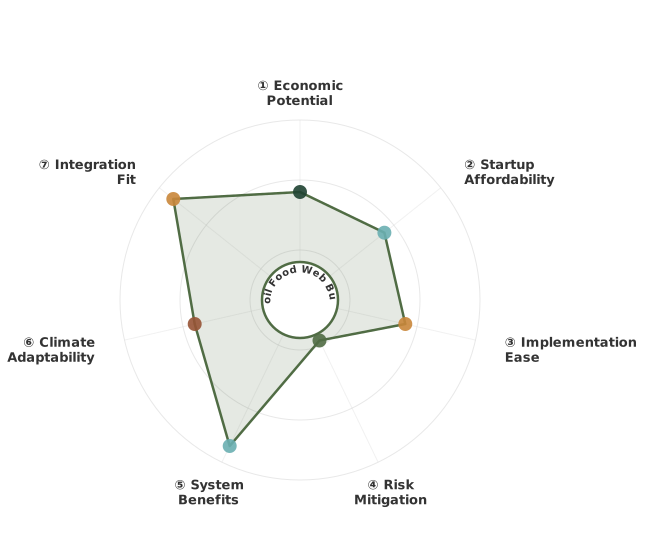
How These Traits Are Calculated
Trait dimensions are ordered clockwise starting from the top of the chart (12 o'clock position):
1. Economic Potential
Financial returns, annual value, and break-even timeline
WHAT: Evaluates financial viability by combining net annual value ($/ha from savings, income, and amortized harvests) with break-even timeline showing when practices pay for themselves.
WHY: Farmers need clear ROI understanding before committing resources. Fast payback (≤3 years) with strong returns (≥$300/ha) enables confident adoption, while long timelines (>10 years) restrict adoption to well-funded operations willing to wait for returns.
HOW: Calculated from net annual value in $/ha and break-even years. Exceptional (≥2.6): fast ROI ≤3 years + high value ≥$300/ha. Typical (1.8-2.5): moderate returns or longer timelines. Limited (<1.8): marginal economics or very long payback >10 years.
2. Startup Affordability
Initial investment costs and financial barrier to entry
WHAT: Measures financial barrier to entry through startup costs for equipment, infrastructure, consulting, and materials. Inverted scoring: lower costs = higher scores = more accessible adoption.
WHY: Affordability determines who can adopt. Low-cost practices (<$250/ha) enable widespread adoption across diverse scales, while high costs (>$2,500/ha) limit adoption to well-capitalized operations, creating barriers that slow regenerative transition.
HOW: Calculated from initial investment parsed from practice content. Inverted scoring: Exceptional (≥2.6): minimal investment <$250/ha. Typical (1.8-2.5): moderate costs $250-2,500/ha. Limited (<1.8): high barrier >$2,500/ha.
3. Implementation Ease
Learning curve and specialized knowledge required
WHAT: Measures how much learning, planning, and specialized knowledge a practice requires. Simpler practices with fewer steps score higher, while complex practices requiring extensive training or specialized resources score lower.
WHY: Complex practices create adoption barriers even when economically viable. Straightforward practices enable faster adoption and broader participation, while those requiring extensive training, timing precision, or specialized equipment limit who can succeed.
HOW: Evaluated by measuring documentation length and identifying complexity markers like location-specific requirements, seasonal timing windows, specialized skills, and dedicated equipment needs. Exceptional (≥2.6): straightforward practices with minimal prerequisites. Typical (1.8-2.5): moderate learning curve with some specialized needs. Limited (<1.8): steep learning curve requiring significant training or resources.
4. Risk Mitigation
Identified financial and ecological risk assessment
WHAT: Evaluates documented risks across financial (investment loss, market volatility) and ecological (crop failure, pest outbreaks) domains. Inverted scoring: fewer risks = higher scores.
WHY: Understanding risk exposure helps farmers make informed decisions. Low-risk practices allow confident implementation, while high-risk practices require careful planning and contingency resources. Risk transparency prevents costly failures.
HOW: Calculated from identified risks in practice content. Inverted scoring: Exceptional (≥2.6): ≤2 risks with manageable severity. Typical (1.8-2.5): 3-5 moderate risks. Limited (<1.8): 6+ risks or severe exposure.
5. System Benefits
How many ways the practice improves your land simultaneously
WHAT: Measures how many aspects of land health improve at once—carbon storage, soil quality, erosion control, water absorption, and biodiversity. Practices that improve multiple areas simultaneously create compounding benefits where each improvement reinforces the others.
WHY: The best practices solve multiple problems at once. For example, addressing erosion simultaneously builds carbon and improves water infiltration, creating a resilient system with positive feedback loops. Single-benefit approaches miss these compound transformation opportunities.
HOW: Evaluated across five key outcomes: carbon sequestration, soil organic matter increase, erosion reduction, water infiltration improvement, and biodiversity enhancement. Exceptional (≥2.6): high carbon storage (>8 t/ha/yr), improvements across 4-5 areas, transformative outcomes. Typical (1.8-2.5): moderate carbon (3-8 t/ha/yr), improvements across 2-3 areas. Limited (<1.8): modest impact (<3 t/ha/yr), single-area focus only.
6. Climate Adaptability
Geographic applicability across Köppen climate zones
WHAT: Evaluates geographic applicability by assessing how many Köppen climate zones successfully support a practice and what adaptation requirements are needed. Measures breadth of climates where farmers can implement with minimal to moderate modifications.
WHY: Universal practices working across diverse climates enable more farmers to adopt regenerative approaches. Practices limited to single climate types (only Mediterranean, only tropical) restrict adoption and slow global transition. Adaptability determines whether a practice serves niche regions or offers broad transformation.
HOW: LLM evaluation of regional success stories, Köppen zone coverage, and adaptation needs. Exceptional (≥2.6): 5+ zones or 4+ climate types, 3+ continents, minimal adaptation. Typical (1.8-2.5): 3-4 zones or 2-3 types, 2 continents, moderate adaptation. Limited (<1.8): 1-2 zones, single region, significant adaptation or highly specialized.
7. Integration Fit
How well this practice combines with others you're doing
WHAT: Measures how well a practice combines with other regenerative practices you might be doing. Some practices work as building blocks that make many other practices easier or more effective, while others work best on their own.
WHY: Practices that combine well with many others create more value on your farm. For example, cover cropping enables no-till, improves grazing, supports crop diversity, and helps water management—making all of them work better together. This helps you build a coherent system rather than juggling disconnected practices.
HOW: Evaluated by identifying which practices combine well and how strong those combinations are. 'Ideally Suited' means strong combinations where practices reinforce each other (practice A makes B easier, while B makes A more effective). 'Adequate' means complementary benefits that work well together. Exceptional (≥2.6): combines well with 6+ practices, serves as a building block. Typical (1.8-2.5): combines with 3-5 practices. Limited (<1.8): 1-2 practices or works best alone.
Going Deeper
1
WHY - The Benefits
Building a vibrant soil food web transforms a farm or ranch from a system reliant on external inputs to one that generates its own fertility and resilience. The benefits are multi-faceted, impacting soil health, economics, and the broader ecosystem services provided by the land.
Building a vibrant soil food web transforms a farm or ranch from a system reliant on external inputs to one that generates its own fertility and resilience. The benefits are multi-faceted, impacting soil health, economics, and the broader ecosystem services provided by the land.
WHY - The Benefits
Building a vibrant soil food web transforms a farm or ranch from a system reliant on external inputs to one that generates its own fertility and resilience. The benefits are multi-faceted, impacting soil health, economics, and the broader ecosystem services provided by the land.
Building a vibrant soil food web transforms a farm or ranch from a system reliant on external inputs to one that generates its own fertility and resilience. The benefits are multi-faceted, impacting soil health, economics, and the broader ecosystem services provided by the land.
Soil Health Benefits
A thriving soil food web is the foundation of healthy soil. Bacteria and fungi form the base, breaking down organic matter and making nutrients available. Protozoa and nematodes graze on these microbes, releasing nutrients in plant-available forms (e.g., nitrogen, phosphorus) through a process called the "microbial loop." This directly enhances soil fertility, reducing the need for synthetic fertilizers.
The activity of these organisms also builds soil structure. Fungi secrete sticky substances like glomalin, which bind soil particles together into stable aggregates. Earthworms ingest soil, creating stable burrow systems that improve aeration and water infiltration. This improved structure leads to better root penetration, increased water-holding capacity, and reduced erosion. Studies have shown that soils managed for soil food web health can increase soil organic matter by 0.5-1.5% annually, and improve aggregate stability by 50-70% within 5 years.
A balanced soil food web also acts as a natural defense against plant diseases and pests. Beneficial microbes can outcompete pathogens on plant roots and foliage, or actively suppress them. Certain beneficial nematodes can prey on plant-parasitic nematodes. This biological control reduces the reliance on synthetic pesticides and fungicides, leading to healthier crops and a safer environment.
Economic Benefits
The economic benefits of soil food web building are substantial and accrue over time. The most immediate impact is typically a reduction in input costs. By fostering natural fertility, farmers can often reduce synthetic fertilizer applications by 40-80% within 3-5 years. Similarly, enhanced biological disease and pest suppression can lead to reductions in pesticide and fungicide use of 50-90%.
Improved soil health translates to better crop performance. Enhanced nutrient cycling leads to healthier, more vigorous plants that are more resilient to stress, potentially increasing yields by 10-25% in established systems. In pastoral settings, improved soil biology leads to better forage quality and quantity, resulting in improved animal growth rates, better wool quality, or increased milk production.
Over the long term, the investment in building soil biology pays dividends through increased land productivity and resilience. Soils with high organic matter and good structure are more drought-tolerant, requiring less irrigation and performing better during dry spells. They are also more resilient to extreme weather events like heavy rainfall, reducing crop losses due to flooding or erosion. This enhanced resilience translates to greater economic stability.
Regenerative Systems Fit
Soil food web building is a foundational regenerative practice that underpins and amplifies the success of other regenerative techniques.
Principle 1 (Minimize Soil Disturbance): A healthy soil food web thrives in undisturbed soils. Its activities—root growth, burrowing, aggregation—actively build and maintain soil structure, eliminating the need for tillage meant to break up compaction or aerate the soil. By fostering this biological structure, the practice directly supports the minimization of soil disturbance, preserving soil biology and carbon.
Principle 2 (Maximize Crop Diversity): The diversity of the soil food web is directly proportional to the diversity of food sources available to it, primarily from plants. Different plant species, with their unique root exudates and residue compositions, feed different microbial communities. Conversely, a diverse soil food web provides enhanced nutrient availability, disease suppression, and pest control that supports a wider range of plant species. This creates a synergistic relationship: diverse plants foster diverse soil life, and diverse soil life supports diverse plants.
Principle 3 (Keep Soil Covered): Living plants and their residues provide essential food and habitat for soil organisms. A covered soil surface protects delicate microbes from UV radiation, temperature extremes, and physical disturbance. Bare soil rapidly degrades, starving the soil food web. Practices that maintain continuous living cover, whether perennial pastures, cover crops, or crop residues, provide the essential inputs needed for a functioning soil food web.
Principle 4 (Maintain Living Roots): Living roots are the primary engine of the soil food web. They provide energy through root exudates and carbon through sloughed-off root material. The longer roots are actively growing and exuding, the more food is available for soil organisms. Continuous plant presence, facilitated by diverse perennial crops or year-round cover cropping, ensures a constant supply of food for the soil food web, driving nutrient cycling and structure development.
Principle 5 (Integrate Livestock): Livestock grazing and manure deposition are powerful tools for stimulating soil biology. Animals selectively graze, influencing plant community composition and stimulating regrowth. Their manure provides concentrated organic matter and nutrients, feeding microbial populations. When managed properly through rotational or adaptive grazing, livestock can significantly enhance the health and activity of the soil food web, further accelerating soil regeneration.
For farmers and ranchers actively transitioning to regenerative agriculture, soil food web building is often one of the first practices to implement or focus on. It provides tangible, observable improvements in soil health that validate further regenerative changes. It's a practice that empowers growers to become more self-reliant by unlocking the biological potential already present in their land.
Sources behind this view
Videos & Podcasts
-
Provides actionable steps for regenerative agronomy: balanced N:C inputs (molasses, humates), microbial teas, yeast metabolites, calcium, and effective seed treatments. Emphasizes scalability, systems
-
Biological farming eliminates synthetic toxins, relying on microbial translocation for natural fertilization. Plants feed microbes sugar, and microbes provide nutrients. This system is vulnerable to c

-
Regenerative agriculture provides solutions for climate change, human health, and soil degradation, contrasting with industrial agriculture's harmful impacts, including glyphosate use. Practices like
-
Reducing chemical and mechanical disturbance is key to soil health. Adding compost inoculates soil with diverse microorganisms, improving aggregation, water infiltration, and plant resilience via myco
Community
-
Focuses on managing the soil food web by feeding microbes with inputs like compost tea, worm castings, biochar, and cover crops. Key practices include minimal disturbance, consistent watering, mulchin
Read more (opens in new window) permies.com -
Build healthy pasture soils by minimizing tillage, maintaining living roots and species diversity, and implementing proper grazing management. Livestock are essential for nutrient cycling and stimulat
Read more (opens in new window) smallfarms.cornell.edu -
Ten principles for healthy soil: use compost and biomass mulch, keep living roots year-round, minimize tillage, capture sunlight and water, promote plant diversity, and integrate animals for fertility
Read more (opens in new window) permies.com -
The soil food web, driven by microbial life, cycles nutrients, builds structure, and holds water. Keep soil covered with mulch/plants, avoid tilling, and feed microbes with organic matter to maintain
Read more (opens in new window) ucanr.edu
Research
-
Building Soil Health and Fertility through Organic Amendments and Practices: A Review (opens in new window)
This study found: Review of organic amendments (manures, compost, cover crops) and regenerative practices (no-till, crop diversity, agroecology) shows they restore soil health by increasing organic matter and beneficia
-
Building Soil Health and Fertility through Organic Amendments and Practices: A Review (opens in new window)
This study found: Using organic amendments (manures, composts, cover crops) and regenerative practices (no-till, crop diversity) restores soil health by increasing organic matter and beneficial microbes, leading to mor
-
Regenerative Agriculture: Restoring Ecosystems¢ Resilience and Productivity: A Review (opens in new window)
This study found: Regenerative agriculture builds soil health and ecosystem services through practices like no-till, cover crops, and diverse rotations. It increases soil organic matter, improves water infiltration, bo
-
The Indigenous Roots of Regenerative Agriculture (opens in new window)
This study found: Modern regenerative agriculture practices are rooted in millennia of Indigenous land stewardship, offering profound knowledge and a crucial value system of respect and reciprocity for true transformat
From the Web
-
Soil restoration hinges on year-round green cover for photosynthesis, enhancing soil carbon and nutrient density. Practices like multi-species cover crops, strategic grazing, and promoting microbial d
2
WHERE - Regional Considerations
Soil food web building is universally applicable across all climates and soil types, as all terrestrial ecosystems depend on soil biology. However, the specific management strategies and dominant microbial communities can vary significantly, influencing the methods that...
Soil food web building is universally applicable across all climates and soil types, as all terrestrial ecosystems depend on soil biology. However, the specific management strategies and dominant microbial communities can vary significantly, influencing the methods that are most effective. Understanding regional nuances helps optimize outcomes.
WHERE - Regional Considerations
Soil food web building is universally applicable across all climates and soil types, as all terrestrial ecosystems depend on soil biology. However, the specific management strategies and dominant microbial communities can vary significantly, influencing the methods that...
Soil food web building is universally applicable across all climates and soil types, as all terrestrial ecosystems depend on soil biology. However, the specific management strategies and dominant microbial communities can vary significantly, influencing the methods that are most effective. Understanding regional nuances helps optimize outcomes.
Click Here to Look up your Region if you don't already know it
Humid Temperate Regions
Representative Locations: Northeastern United States, Northern Europe (UK, Germany, Poland), Eastern China, Japan, New Zealand, southeastern Australia
Climate Context: Warm to hot summers and cool to cold winters with moderate to high annual precipitation (75-150 cm or 30-60 inches) distributed relatively evenly. USDA Zones 4-7, Köppen Cfb/Cfa. Soils typically rich in organic matter with good potential for fungal development.
Regional Adaptations: In these regions, fungal-dominated soil food webs often thrive, especially under perennial pastures and forests. Managing for increased fungal biomass through compost teas made from compost rich in fungal inoculum and reduced soil disturbance is highly effective. Cover crops are typically easy to establish and can provide continuous food source year-round. Focus on managing livestock grazing to prevent soil compaction, as this can disrupt the beneficial fungal networks. Compost production is generally straightforward due to ample moisture and moderate temperatures.
Mediterranean Regions
Representative Locations: California, Mediterranean basin (Spain, Italy, Greece), central Chile, southwestern Australia, Western Cape South Africa
Climate Context: Hot, dry summers and mild, wet winters. Annual precipitation 40-90 cm (15-35 inches), highly seasonal. USDA Zones 8-10, Köppen Csa/Csb. Soils can be prone to compaction and erosion due to dry spells and intense winter rains.
Regional Adaptations: The challenge here is maintaining soil life and function through hot, dry summers. Building soil organic matter with compost and cover crops that tolerate dry conditions is crucial. Emphasis should be placed on fostering bacterial-dominant soil food webs, as they are more resilient to dry periods and can rapidly decompose organic matter when moisture returns. Using cover crops that can provide surface mulch through dry periods helps retain moisture and protect soil life. Compost teas may need additives to increase water retention and microbial survival. Longer rest periods for pastures are essential to allow soil biology to recover between dry spells.
Arid and Semi-Arid Regions
Representative Locations: Western USA, North Africa, Central Asia, Interior Australia, parts of the Middle East, Sahel region of Africa
Climate Context: Low annual precipitation (<40 cm or 15 inches), high temperatures, short and often unpredictable growing seasons. USDA Zones 6-9, Köppen BSh/BSk. Soils are often low in organic matter and prone to rapid degradation.
Regional Adaptations: Building soil biology in arid regions requires careful management of limited water resources. Focus on techniques that maximize water infiltration and retention, such as contour ripping, improving soil structure with compost, and using drought-tolerant cover crops or perennial pastures. Maximizing the carbon content of compost and the soil is paramount. Compost teas should be brewed with resilient microbial strains and applied during periods of potential moisture. Protecting soil from wind and water erosion through permanent cover and tillage avoidance is critical. The goal is to foster hardy bacterial communities capable of long periods of dormancy and rapid activation when moisture becomes available.
Cold Continental Regions
Representative Locations: Northern USA and Canada, Northern Europe, Northern Asia (Siberia), mountainous regions globally
Climate Context: Very short growing seasons, extreme summer heat, severe winter cold. USDA Zones 2-5, Köppen Dfa/Dfb. Soils can be mineral-heavy and microbial activity is highly seasonal.
Regional Adaptations: In cold climates, the key is maximizing microbial activity during the short growing season and ensuring survival through winter. Thermophilic composting is highly effective here, quickly breaking down organic matter before winter sets in. Using winter-hardy cover crops that can survive freezing and resume growth in spring is vital for maintaining living roots and feeding soil life year-round. Compost teas are best applied during the active growing season. Fungal development may be slower to establish, so focusing on compost rich in bacteria and protozoa capable of rapid nutrient cycling during warm periods is beneficial. Building soil organic matter is critical to increase thermal mass and insulate soil biology from extreme cold.
Tropical Regions
Representative Locations: Central America, Southeast Asia, East Africa, Northern Australia, Northern South America
Climate Context: High temperatures year-round, with distinct wet and dry seasons or consistent high rainfall. Köppen Af/Am/Aw. Soils can be prone to rapid nutrient leaching and decomposition.
Regional Adaptations: The challenge in tropical regions is managing rapid decomposition and preventing nutrient leaching. Building soil organic matter is critical to act as a nutrient reservoir. Compost quality and application methods are paramount; compost that is fully humified (mature) will release nutrients more slowly and resist leaching. Intensive composting using thermophilic methods can quickly produce stable compost before beneficial microbes are lost to high temperatures. Focus on building robust bacterial and protozoan populations that can quickly mineralize organic matter when conditions are moist. Utilizing perennial crops and cover crops that provide continuous root exudates is essential to feed the active and rapid soil food web. Managing rainfall impact to prevent erosion and nutrient loss is paramount.
3
HOW - Implementation Process
Building a healthy soil food web is a journey, not a destination. It requires consistent effort, observation, and adaptation. The process generally involves understanding your current biology, creating better habitat and food sources, and verifying improvements.
Building a healthy soil food web is a journey, not a destination. It requires consistent effort, observation, and adaptation. The process generally involves understanding your current biology, creating better habitat and food sources, and verifying improvements.
HOW - Implementation Process
Building a healthy soil food web is a journey, not a destination. It requires consistent effort, observation, and adaptation. The process generally involves understanding your current biology, creating better habitat and food sources, and verifying improvements.
Building a healthy soil food web is a journey, not a destination. It requires consistent effort, observation, and adaptation. The process generally involves understanding your current biology, creating better habitat and food sources, and verifying improvements.
Prerequisites
Before starting, gather these basic tools and resources:
- Microscope: A compound light microscope capable of 400x magnification is essential for identifying bacteria, fungi, protozoa (amoebae, flagellates, ciliates), and nematodes.
- Supplies for observation: Glass slides, cover slips, a Pasteur pipette or dropper, and a small amount of distilled water.
- Source of compost: Either purchase high-quality, mature compost or learn to make your own.
- Source of cover crop seeds: A diverse mix is ideal.
- Basic understanding of soil biology: Familiarize yourself with the roles of different organisms.
Phase 1: Assessment and Baseline Analysis
Objective: Understand the current state of your soil biology and identify what's missing or in excess.
- Collect Soil Samples: Obtain a soil sample from a representative area of your farm or ranch. Dig down 10-15 cm (4-6 inches) in an area that has been managed as typical for your operation. Avoid areas with recent disturbance if possible. Sample from the root zone of healthy plants.
- Prepare Soil for Observation: Mix a small amount of soil (about a teaspoon) with a small amount of distilled water to create a slurry.
- Microscopic Observation: Place a drop of the slurry on a glass slide, add a cover slip, and observe under 400x magnification.
- Look for Bacteria: Bacteria appear as tiny dots, often moving rapidly. You'll see clouds of them. If you see very few, your soil may be low in organic matter or healthy biology.
- Look for Fungi: Fungi appear as hyphae (thread-like structures), sometimes with spores. They can look like fine hairs. Seeing a good amount of "free" fungal hyphae (not encased within aggregates) suggests potential issues with soil structure or grazing.
- Look for Protozoa:
- Flagellates: Small, tadpole-shaped, fast-moving. Indicate bacterial populations are present but might be quickly consumed.
- Amoebae: Slow-moving, blob-like. If abundant, indicates a healthy bacterial population.
- Ciliates: Larger, slipper-shaped, often moving with cilia. Indicate a very healthy, biologically active soil with abundant food.
- Look for Nematodes: Small worms. Some are beneficial plant feeders, others are predatory. Their presence indicates a complex food web.
- Analyze Findings:
- Too many bacteria, too few fungi: Suggests over-tilling, bare soil, or over-application of synthetic nitrogen, which favors bacteria but can harm fungi. Plant roots and compost additions are needed.
- Too many fungi, too few bacteria: Can occur in undisturbed grassland or forest systems, but may also indicate anaerobic conditions or lack of grazers (protozoa/nematodes).
- Lack of protozoa: Indicates low bacterial populations or unfavorable conditions for them.
- Dominance of anaerobic bacteria (smelly soil): Indicates compaction and lack of oxygen.
Phase 2: Application of Biology-Building Inputs
Objective: Introduce beneficial organisms and food sources to initiate or enhance the soil food web.
- Compost Application:
- When: Apply compost in fall after cash crops are removed, or in spring before planting. Frequency: 1-2 times per year.
- How Much: 2.5-10 tonnes per hectare (1-4 tons per acre), depending on soil condition and compost quality. Lighter applications more frequently are often better than heavy applications infrequently.
- Type: Use mature, thermophilic compost. Avoid raw manure or unfinished compost, which can harm existing biology or contain pathogens.
- Compost Tea Brewing and Application:
- Brewing: Use a high-quality compost, non-chlorinated water, and an aerator. Brew for 24-48 hours. Add humic acids or fish hydrolysate as food sources.
- Analysis: Analyze the brewed tea under the microscope to ensure a diverse population of beneficial bacteria, fungi, protozoa, and nematodes. Adjust brewing time, aeration, or ingredients if populations are skewed.
- Application: Apply to soil or foliage within 4-6 hours of brewing. The goal is to colonize. For soil application, drench the soil surface. For foliar application, spray early morning or late evening to protect microbes. Frequency: every 2-4 weeks during active growing seasons.
Phase 3: Habitat Management for Biology
Objective: Create and maintain conditions conducive to soil life.
- Minimize Soil Disturbance:
- Tillage: Reduce or eliminate tillage. Tillage destroys fungal networks, disrupts soil structure, and exposes biology to the elements.
- Compaction: Avoid heavy machinery on wet soils. Use wider tires or controlled traffic farming. Improve soil structure with compost and cover crops to naturally resist compaction.
- Keep Soil Covered:
- Living Plants: Maintain living roots in the soil for as long as possible. Use cover crops between cash crops, implement perennial pastures, or incorporate trees and shrubs (silvopasture, agroforestry).
- Mulch: Leave crop residues on the surface or add organic mulches to protect soil and feed decomposers.
- Maximize Crop Diversity:
- Aboveground: Plant diverse crop rotations, mixtures of cover crops, and forage species.
- Belowground: Diverse root structures provide varied food sources for different soil organisms.
- Integrate Livestock:
- Use rotational grazing to distribute manure, stimulate plant growth, and manage plant residue, providing food for soil life. Ensure adequate rest periods for pastures.
Phase 4: Ongoing Monitoring and Adaptation
Objective: Continuously assess soil biology and adjust management practices.
- Regular Microscopic Analysis: Periodically (e.g., monthly or quarterly) analyze soil samples and compost teas. Track changes in microbial populations.
- Observe Soil Indicators: Look for improved soil structure, increased earthworm activity, better water infiltration and retention, and plant health.
- Adapt Management: If you see a consistently low population of protozoa, it might indicate insufficient bacteria (add humic substances or more mature compost). If fungal hyphae are abundant but appear short and stubby, it might indicate anaerobic conditions or excessive nitrates. Adjust compost brewing, compost application, or habitat management based on observations.
Transition Timeline & Phase-Out Strategy
Soil food web building is typically a foundational practice, meaning it doesn't involve phasing out non-regenerative inputs directly. Instead, it enables the phase-out of those inputs by building natural fertility and resilience.
- Years 1-2: Begin analysis and introducing compost/compost teas. Observe initial changes in soil biology. Reduce synthetic nitrogen by 10-20% if applicable, relying on compost and legumes.
- Years 3-5: Soil test results show increased organic matter and improved microbial populations. Reduce synthetic nitrogen and phosphorus applications by 30-60% as compost and biological activity provide nutrients. Monitor for pest/disease resistance, reducing pesticides accordingly.
- Years 5+: Soil food web is likely well-established. Reliance on synthetic inputs is minimal to none. Fertility is primarily driven by biological processes. Compost application and habitat management are ongoing practices.
Graduating to a fully regenerative approach means that soil food web building becomes a primary management strategy, guiding decisions about soil disturbance, diversity, cover, and livestock integration. The need for synthetic inputs naturally diminishes as the soil's biological engine takes over.
Sources behind this view
Videos & Podcasts
-
Provides actionable steps for regenerative agronomy: balanced N:C inputs (molasses, humates), microbial teas, yeast metabolites, calcium, and effective seed treatments. Emphasizes scalability, systems
-
Reducing chemical and mechanical disturbance is key to soil health. Adding compost inoculates soil with diverse microorganisms, improving aggregation, water infiltration, and plant resilience via myco
-
Implementing the six soil health principles (living root, cover crops, diversity, minimize disturbance) over 3-5 years can dramatically improve soil function, aggregation, and water cycles, reducing t
-
Biological farming eliminates synthetic toxins, relying on microbial translocation for natural fertilization. Plants feed microbes sugar, and microbes provide nutrients. This system is vulnerable to c
Community
-
Focuses on managing the soil food web by feeding microbes with inputs like compost tea, worm castings, biochar, and cover crops. Key practices include minimal disturbance, consistent watering, mulchin
Read more (opens in new window) permies.com -
Build healthy pasture soils by minimizing tillage, maintaining living roots and species diversity, and implementing proper grazing management. Livestock are essential for nutrient cycling and stimulat
Read more (opens in new window) smallfarms.cornell.edu -
Enhance soil health through plant diversity, continuous soil cover (living plants/residues), and livestock integration. Manage carbon-to-nitrogen ratios of residues and adopt no-till practices to impr
Read more (opens in new window) permies.com -
Andrés Cruz advocates for building soil fertility through 'biological capital'—interconnected systems of plants, organic matter, and soil organisms—instead of external inputs. Recommended techniques i
Read more (opens in new window) www.permaculture.org.uk
Research
-
Building Soil Health and Fertility through Organic Amendments and Practices: A Review (opens in new window)
This study found: Using organic amendments (manures, composts, cover crops) and regenerative practices (no-till, crop diversity) restores soil health by increasing organic matter and beneficial microbes, leading to mor
-
Building Soil Health and Fertility through Organic Amendments and Practices: A Review (opens in new window)
This study found: Review of organic amendments (manures, compost, cover crops) and regenerative practices (no-till, crop diversity, agroecology) shows they restore soil health by increasing organic matter and beneficia
-
Substantial and Rapid Increase in Soil Health across Crops with Conversion from Conventional to Regenerative Practices (opens in new window)
This study found: Switching to regenerative practices like cover cropping and compost rapidly improved soil organic matter, soil structure, and beneficial soil microbes on a working farm over nine years.
-
Sustainable Agriculture and Soil Health: A Comprehensive Review of Bio-Inputs (opens in new window)
This study found: Sustainable farming with natural biological inputs (biofertilizers, compost) is key to restoring soil health, reducing chemical use, and increasing soil carbon. These inputs improve nutrient uptake an
From the Web
-
Soil restoration hinges on year-round green cover for photosynthesis, enhancing soil carbon and nutrient density. Practices like multi-species cover crops, strategic grazing, and promoting microbial d
4
Know the Debate
Building a robust soil food web is a foundational regenerative practice that enhances soil fertility and reduces input reliance, but its implementa...
Know the Debate
Building a robust soil food web is a foundational regenerative practice that enhances soil fertility and reduces input reliance, but its implementa...
Building a robust soil food web is a foundational regenerative practice that enhances soil fertility and reduces input reliance, but its implementation and perceived effectiveness vary based on regional conditions. In humid temperate and tropical climates with reliable rainfall, fungal and bacterial communities thrive, leading to rapid improvements in soil organic matter and nutrient cycling within 3-5 years. Arid and semi-arid regions require greater focus on water management and drought-resilient biology, often leading to slower but significant soil improvements over 5-7 years. Cold continental zones maximize activity during short growing seasons, prioritizing hardy organisms and active compost production. Initial investments range from $1,800-$2,500 for small DIY operations to $10,000-$40,000+ for large commercial systems, with ongoing annual costs and substantial potential savings on synthetic inputs as the soil ecosystem matures.
How effective is soil food web building?
Validated framework with tangible benefits
Academic and institute sources confirm the soil food web's importance for nutrient cycling and plant health, with practitioners reporting significant reductions in synthetic inputs and improved soil function within 3-5 years.
Sources behind this view
Sources behind this view
Videos & Podcasts
-
The soil food web, comprised of bacteria, fungi, protozoa, and nematodes, is nature's system for nutrient cycling and plant health, eliminating the need for synthetic inputs and mitigating environmental issues like erosion and climate change.
Research
-
Mycobiota - Role in Soil Health and as Biocontrol Agent (opens in new window)
This study found: Healthy soil depends on the constant interaction between tiny soil organisms (microbes), plants, and animals. This is key for farming that can last and keep the environment healthy. Fungi in the soil are especially important. They break down dead plants and other organic matter, turning it into nutrients that other living things can use. This process also helps build good soil structure, making it a better home for plants and other organisms. Fungi can also naturally control plant diseases and pests, meaning farmers can use fewer chemicals. Encouraging a variety of helpful fungi in the soil makes it more fertile and supports growing healthy crops sustainably.
From the Web
-
The soil food web, comprising bacteria, fungi, protozoa, and nematodes, is crucial for soil health, nutrient cycling, and plant vitality. Agricultural chemicals and tillage damage this web, leading to nutrient loss, increased pathogens, and poor soil structure.
Context-dependent progress and observational science
Field practitioners, including Elaine Ingham, emphasize growing locally adapted biology and use microscopy for verification, reporting significant soil health improvements and input reductions. While academic and institute sources support the framework's principles, practical outcomes are context-dependent.
Sources behind this view
Sources behind this view
Videos & Podcasts
-
The Soil Food Web builds soil structure via bacteria and fungi producing glues, forming aggregates. This improves water retention, root growth, and yields. In clay soils, it promotes flocculation. Benefits include water purification and climate change mitigation. Visit soilfoodweb.com for more.

-
Restoring the soil food web by reintroducing missing microorganisms is crucial for soil health. Monitoring practices with microscopy and fostering plant-microbe symbiosis are key to a thriving soil ecosystem.
Research
-
Applying Soil Health Indicators to Encourage Sustainable Soil Use: The Transition from Scientific Study to Practical Application (opens in new window)
This study found: Healthy soil is the foundation of sustainable farming, leading to fewer inputs, less pollution, easier field work, and better water management. While soil health includes physical, chemical, and biological aspects, measuring soil life is still developing. This article explains how the soil's food web contributes to healthy soil and reviews studies using biological measures. It uses an example showing how counting earthworms can indicate how well water infiltrates the soil, highlighting the practical difficulties of setting up soil monitoring programs. The authors also discuss what's needed to start new soil health monitoring services in the UK and continue existing ones in the Netherlands.
From the Web
-
Explains the soil food web concept by Elaine Ingham, detailing specific fungi-to-bacteria ratios needed for different crops and highlighting the vital roles of various soil organisms in nutrient cycling, pest control, and overall crop production.
Making Sense of the Differences
The effectiveness of soil food web building hinges on local context and diligent application. Academic and institute sources validate the underlying biological principles, while field practitioners report significant practical benefits, especially when using microscopy to guide interventions. Success is amplified in humid climates with consistent moisture, ample organic matter, and well-managed grazing; arid regions require more careful water management and a focus on drought-resilient microbes.
5
HOW MUCH - Costs & Investment
Note: Costs shown in USD; multiply by local labor and material cost indices for your region. Labor costs vary significantly internationally.
Note: Costs shown in USD; multiply by local labor and material cost indices for your region. Labor costs vary significantly internationally.
HOW MUCH - Costs & Investment
Note: Costs shown in USD; multiply by local labor and material cost indices for your region. Labor costs vary significantly internationally.
Note: Costs shown in USD; multiply by local labor and material cost indices for your region. Labor costs vary significantly internationally.
Note: All costs are based on recent US economic data (2024–2026) and may vary substantially by region based on local labor rates, material costs, and regulatory requirements.
Initial Setup & Monitoring Equipment
Establishing a soil food web monitoring protocol requires specific laboratory-grade equipment. For small farms (under 50 acres (20 ha)), a standard trinocular microscope with phase contrast and a digital camera setup typically costs $500–$1,000. Mid-sized operations (50–500 acres (20–202 ha)) often invest in higher-resolution optics and integrated software for data tracking, ranging from $1,000–$2,000. Large-scale commercial operations (500+ acres) prioritize automated diagnostic tools or professional-grade imaging equipment, often spending $1,500–$2,500+ to support frequent, high-volume testing of compost extracts and site-wide soil samples. Consumable supplies such as slides, cover slips, and pipettes add $100–$500 annually across these scales.
Biological Brewing Infrastructure
Brewing systems are the core of biological application. Small farms often utilize DIY aeration bucket systems or basic 5–10 gallon (19–38 L) brewers, costing $200–$500. Mid-sized operators usually transition to 50–100 gallon (189–379 L) professional brewers with dedicated pump and aeration assemblies, priced at $750–$1,500. Large-scale producers require 250–500 gallon (946–1,893 L) capacity aeration tanks, complex plumbing, and industrial-grade air compressors, driving costs to $1,500–$3,000+. These investments are offset by the ability to brew biological inoculants at $0.05–$0.20 per gallon compared to commercial microbial prices of $2.00–$5.00 per gallon.
Compost and Biological Amendments
The largest variable cost for new practitioners is the procurement or production of high-quality, biologically active thermophilic compost. Small farms purchasing high-quality finished compost typically budget $500–$2,000 for initial applications. Mid-sized farms, integrating biological management across larger acreage, spend $2,000–$10,000 on high-grade inputs or internal production equipment. Large farming operations, particularly those building on-farm centralized compost bays and windrow turning machinery, face initial investments of $10,000–$50,000+. Cover crop seed for supplemental biological food sources is an additional annual line item ranging from $100–$500 for small plots to $1,000–$5,000+ for broad-acre management.
Most Spend: Most small-scale operations invest $1,800–$2,500; mid-size operations invest $6,000–$10,000; and large-scale commercial farms invest $20,000–$40,000. These figures account for the initial purchase of mid-tier aeration equipment, moderate compost volumes, and initial testing hardware.
Why the Range?: Costs fluctuate primarily based on the decision to build versus buy. Producers who manufacture their own compost on-farm incur higher upfront equipment costs (loaders, turning machinery) but lower annual material expenses. Conversely, small-to-mid operations that source premium off-farm compost experience higher annual operating costs but lower capital infrastructure requirements. Regional proximity to high-quality compost sources acts as the secondary driver, as shipping bulk organic matter frequently exceeds $50–$100 per ton.
Sources behind this view
Videos & Podcasts
-
Provides actionable steps for regenerative agronomy: balanced N:C inputs (molasses, humates), microbial teas, yeast metabolites, calcium, and effective seed treatments. Emphasizes scalability, systems
-
Transitioning to regenerative agriculture and biodynamics shifts costs from synthetic inputs to compost and labor, requiring a long-term view but ultimately improving soil health, carbon sequestration
-
Regenerative farming, using no-till, cover crops, and diverse rotations, rapidly rebuilds soil organic matter and soil life. Examples from Ohio and Ghana show these practices increase profitability by

Research
-
Regenerative Agriculture: Restoring Ecosystems¢ Resilience and Productivity: A Review (opens in new window)
This study found: Regenerative agriculture builds soil health and ecosystem services through practices like no-till, cover crops, and diverse rotations. It increases soil organic matter, improves water infiltration, bo
-
Impact of Organic Farming Practices on Crop Productivity and Soil Health: A Review (opens in new window)
This study found: Organic farming practices boost soil health, increase crop resilience to drought, and enhance nutritional quality, though initial yields may be lower. Long-term benefits include carbon sequestration a
-
Substantial and Rapid Increase in Soil Health across Crops with Conversion from Conventional to Regenerative Practices (opens in new window)
This study found: Switching to regenerative practices like cover cropping and compost rapidly improved soil organic matter, soil structure, and beneficial soil microbes on a working farm over nine years.
-
Building Soil Health and Fertility through Organic Amendments and Practices: A Review (opens in new window)
This study found: Review of organic amendments (manures, compost, cover crops) and regenerative practices (no-till, crop diversity, agroecology) shows they restore soil health by increasing organic matter and beneficia
6
REWARDS AND RISKS - Economics & Risk Factors
Economic Outcomes and Scenarios
Economic Outcomes and Scenarios
REWARDS AND RISKS - Economics & Risk Factors
Economic Outcomes and Scenarios
Economic Outcomes and Scenarios
Economic Scenarios In a Best Case scenario, operations achieve significant input independence within 3–5 years, realizing a 50–80% reduction in synthetic nitrogen fertilizer costs and a 60–90% reduction in pesticide expenditures. With consistent management, soil organic matter increases by 1–1.5%, capturing moisture and reducing irrigation costs by an estimated $50–$150 per acre ($124–$371/ha) annually. Yields typically climb by 10–25% as nutrient cycling increases efficiency. The capital investment in microscopy and brewing infrastructure is fully recovered through savings and yield gains within 2–4 years.
In a Typical scenario, producers see a 30–50% reduction in synthetic inputs over a 5–7 year horizon. Soil organic matter improvement is slower, accumulating at 0.5–1.0%. Profitability is driven by consistent 5–10% yield bumps and lower variable input purchasing. The initial capital outlay of $5,000–$15,000 for equipment is amortized over 5–7 years, making the practice revenue-positive by the middle of the second cycle.
In a Worst Case scenario, improper brewing protocols result in anaerobic, pathogen-rich tea applications. This can lead to crop damage, localized disease outbreaks, and immediate financial losses of $1,000–$5,000 plus potential yield reduction if sensitive crops are affected. Should the management lack consistent habitat support (e.g., bare soil, intensive tillage), the biological population fails to colonize, rendering the $1,500–$3,000 microscopy and hardware investment a sunk cost with no return on investment.
Transition Period Risks Transitioning to soil food web management often involves a "biological bottleneck" in years 1–2, where synthetic fertilizers are withdrawn before the soil microbial community has fully established nutrient cycling networks. Farms may experience temporary yield dips of 5–15% during this period. Mitigation involves a gradual, tiered reduction approach: lowering synthetic inputs by 20% annually to allow root systems to acclimate to biological nutrient delivery. Farmers should budget an extra 5–15 hours weekly for monitoring and testing to ensure shifts are not negatively impacting crop development.
Market Factors Profitability is highly sensitive to the cost of synthetic fertilizers. In periods of volatile nitrogen prices (e.g., exceeding $600–$900 per ton), the ROI for biological brewing increases significantly. Conversely, in low-input commodity markets, the margin for error narrows, making precise microscopy-led management critical to avoid wasteful expenditure on redundant extract applications.
Sources behind this view
Videos & Podcasts
-
Provides actionable steps for regenerative agronomy: balanced N:C inputs (molasses, humates), microbial teas, yeast metabolites, calcium, and effective seed treatments. Emphasizes scalability, systems
-
Soil Capital's strategy for regenerative transition: 1) Optimize agrochemical/pesticide use for 10-40% savings. 2) Invest savings in multi-species cover crops and crop rotation diversification (oats,
-
Details regenerative practices for soil health, including using herbal ferments to manage cover crop decomposition, specific shallow incorporation techniques for improved soil structure, and the shift

-
Case studies of farmers like Duane Beck, Kofi Boa, David Brandt, and Gabe Brown demonstrate that regenerative agriculture (no-till, cover crops, diverse rotations) significantly increases soil health,

Community
-
Advocates for converting conventional land to permaculture, recommending a gradual transition with cover crops and farmer collaboration, aiming to reduce chemical inputs over 3 years as soil heals.
Read more (opens in new window) permies.com
Research
-
Transition to Regenerative Farming (opens in new window)
This study found: A 5-year case study shows a farm successfully transitioned to regenerative practices, reducing soil erosion and increasing wildlife by using cover crops, diversified rotations, and reduced tillage. Pr
-
Building Soil Health and Fertility through Organic Amendments and Practices: A Review (opens in new window)
This study found: Review of organic amendments (manures, compost, cover crops) and regenerative practices (no-till, crop diversity, agroecology) shows they restore soil health by increasing organic matter and beneficia
-
Building Soil Health and Fertility through Organic Amendments and Practices: A Review (opens in new window)
This study found: Using organic amendments (manures, composts, cover crops) and regenerative practices (no-till, crop diversity) restores soil health by increasing organic matter and beneficial microbes, leading to mor
-
Substantial and Rapid Increase in Soil Health across Crops with Conversion from Conventional to Regenerative Practices (opens in new window)
This study found: Switching to regenerative practices like cover cropping and compost rapidly improved soil organic matter, soil structure, and beneficial soil microbes on a working farm over nine years.
7
COMPATIBLE PRACTICES - Integration Opportunities
Soil food web building is a foundational practice that synergizes powerfully with virtually all regenerative agriculture techniques, amplifying their benefits and accelerating the transition to resilient systems.
Soil food web building is a foundational practice that synergizes powerfully with virtually all regenerative agriculture techniques, amplifying their benefits and accelerating the transition to resilient systems.
COMPATIBLE PRACTICES - Integration Opportunities
Soil food web building is a foundational practice that synergizes powerfully with virtually all regenerative agriculture techniques, amplifying their benefits and accelerating the transition to resilient systems.
Soil food web building is a foundational practice that synergizes powerfully with virtually all regenerative agriculture techniques, amplifying their benefits and accelerating the transition to resilient systems.
Composting (On-Farm or Sourced)
- Integration: The core of soil food web building relies on high-quality compost as a source of diverse microbes and food for soil life. Producing your own compost allows for tailored production based on observed soil needs.
- Synergy: High-quality compost provides the inoculum and food source for beneficial soil organisms. It directly enhances soil organic matter, attracting and feeding the soil food web.
Cover Cropping
- Integration: Cover crops provide continuous food (root exudates, living roots) and habitat for the soil food web, preventing bare soil periods.
- Synergy: Diverse cover crop mixes provide varied root exudates, feeding a wider range of soil microbes. Their decaying biomass becomes food for decomposers. Healthy soil biology allows cover crops to establish better and grow more vigorously, creating a positive feedback loop.
Reduced or No-Till Farming
- Integration: Minimizing soil disturbance is critical for preserving delicate fungal networks, earthworm burrows, and the overall structure built by the soil food web.
- Synergy: A healthy soil food web naturally builds soil structure, making no-till farming more feasible and effective. Tillage would destroy the very ecosystem being cultivated.
Diverse Crop Rotations & Polycultures
- Integration: Different plants feed different soil microbial communities. A diverse above-ground plant community supports a diverse below-ground soil food web.
- Synergy: The soil food web, in turn, provides enhanced nutrient availability and disease suppression that supports more diverse cropping systems.
Rotational Grazing & Integrated Livestock
- Integration: Livestock manure is a rich source of organic matter and microbial inoculants. Selective grazing manages plant residue, providing varied food inputs for soil life. Animal movement can help incorporate OM into the soil.
- Synergy: A thriving soil food web leads to healthier, more nutritious forages for livestock. Animal impact, when managed correctly, stimulates plant growth and stimulates soil microbial activity.
Agroforestry & Silvopasture
- Integration: Trees and shrubs provide perennial, deep-rooting systems that continuously feed the soil food web year-round, especially in winter. Their litter improves soil structure and feeds decomposition cycles.
- Synergy: The soil food web under trees enhances their nutrient uptake and resilience. It also supports the understory forage in silvopasture systems.
Mulching and Crop Residue Management
- Integration: Leaving crop residues on the surface provides food for decomposers and protects soil from erosion and temperature extremes, creating a stable habitat for soil life.
- Synergy: The soil food web breaks down residues efficiently, releasing nutrients and creating more organic matter, further enhancing soil health and fertility.
By integrating soil food web building with these other regenerative practices, farmers and ranchers can accelerate the transition to highly productive, resilient, and self-sustaining agricultural systems. The synergy among these practices creates a powerful, virtuous cycle of ecological and economic regeneration.
Sources behind this view
Videos & Podcasts
-
Provides actionable steps for regenerative agronomy: balanced N:C inputs (molasses, humates), microbial teas, yeast metabolites, calcium, and effective seed treatments. Emphasizes scalability, systems
-
Regenerative agriculture provides solutions for climate change, human health, and soil degradation, contrasting with industrial agriculture's harmful impacts, including glyphosate use. Practices like
-
Tom Fairfax uses the soil food web and ecological succession as frameworks for regenerative farming on marginal land. He employs various composts and microbial applications to mine soil nutrients, imp
-
Dr. Elaine Ingham explains the soil food web, emphasizing the critical role of diverse soil microorganisms and organic matter for plant health and nutrient cycling, contrasting this with the damaging

Community
-
Focuses on managing the soil food web by feeding microbes with inputs like compost tea, worm castings, biochar, and cover crops. Key practices include minimal disturbance, consistent watering, mulchin
Read more (opens in new window) permies.com -
Enhance soil health through plant diversity, continuous soil cover (living plants/residues), and livestock integration. Manage carbon-to-nitrogen ratios of residues and adopt no-till practices to impr
Read more (opens in new window) permies.com -
Build healthy pasture soils by minimizing tillage, maintaining living roots and species diversity, and implementing proper grazing management. Livestock are essential for nutrient cycling and stimulat
Read more (opens in new window) smallfarms.cornell.edu -
Jon from Wild Roots Farm in Vermont advocates for regenerative practices like limited tillage, crop rotations, and rotational grazing to build resilience in food systems. He explains how these methods
Read more (opens in new window) smallfarms.cornell.edu
Research
-
Building Soil Health and Fertility through Organic Amendments and Practices: A Review (opens in new window)
This study found: Review of organic amendments (manures, compost, cover crops) and regenerative practices (no-till, crop diversity, agroecology) shows they restore soil health by increasing organic matter and beneficia
-
Building Soil Health and Fertility through Organic Amendments and Practices: A Review (opens in new window)
This study found: Using organic amendments (manures, composts, cover crops) and regenerative practices (no-till, crop diversity) restores soil health by increasing organic matter and beneficial microbes, leading to mor
-
Sustainable Agriculture and Soil Health: A Comprehensive Review of Bio-Inputs (opens in new window)
This study found: Sustainable farming with natural biological inputs (biofertilizers, compost) is key to restoring soil health, reducing chemical use, and increasing soil carbon. These inputs improve nutrient uptake an
-
Regenerative Agriculture: Restoring Ecosystems¢ Resilience and Productivity: A Review (opens in new window)
This study found: Regenerative agriculture builds soil health and ecosystem services through practices like no-till, cover crops, and diverse rotations. It increases soil organic matter, improves water infiltration, bo