
Swath Grazing
Swath grazing is a winter feeding technique where you cut forage, leave it in windrows (swaths) on the field, and then allow livestock to graze it over several months. It offers an alternative to stored feed by enabling animals to harvest standing or windrowed forage directly, reducing labor and infrastructure costs while still providing nutrition.
Read More: Complete Description
Swath grazing, also known as windrow grazing or forage harvesting, is a strategic winter feeding practice that allows livestock to harvest their own feed directly from the field. Instead of cutting forage, storing it as hay or silage, and then feeding it out, the forage is cut and windrowed in place. Livestock are then moved through these windrows over a period of months, typically from late autumn through winter into early spring. This practice is particularly well-suited for regions with cold, dry winters where snow accumulation is moderate enough to allow animal access to the windrows, or where forage has been desiccated and cured into a harvestable form without significant nutrient loss.
The fundamental appeal of swath grazing lies in its labor and infrastructure savings. By eliminating the need for baling, wrapping, transporting, and feeding stored forages, farmers and ranchers can significantly reduce time, fuel, and equipment wear. Animals become their own harvesters, negating a substantial portion of winter feeding chores. Furthermore, it reduces the need for expensive feed storage facilities. The nutrients in the manure are also deposited directly onto the land where the feed was consumed, facilitating nutrient cycling and adding value to the soil, aligning with regenerative principles.
From a regenerative agriculture standpoint, swath grazing can be viewed as a context-dependent practice. When managed properly, it can uphold several regenerative principles. It integrates livestock strategically (Principle 5) by allowing them to harvest and redistribute nutrients across the landscape. Keeping soil covered (Principle 3) is partially addressed, as the residue from the cut forage in the swath provides a protective layer, and living roots are ideally maintained in the soil underneath. By minimizing the need for heavy machinery for feed transportation and feeding, it can also help minimize soil disturbance (Principle 1). Maximizing crop diversity (Principle 2) is less directly addressed by the act of swath grazing itself, but the practice relies on establishing diverse forages in the first place that perform well under this system.
However, if not managed carefully, swath grazing can also be extractive. Overgrazing or allowing animals to trample and waste excessive amounts of forage can deplete soil organic matter and leave the ground vulnerable. If the swaths are too large or concentrated, they can lead to over-fertilization in some areas and nutrient depletion in others when the animals move on. The practice demands careful planning regarding the quality and quantity of forage, expected winter conditions, and animal nutrient requirements to ensure it’s a net positive for the land and the operation.
Successfully implementing swath grazing requires a deep understanding of forage types, plant physiology in winter conditions, and animal nutrition. Forages selected for swath grazing should be capable of standing well through the winter, resisting shattering and lodging, and retaining nutritional value after being cut. Species like certain varieties of crested wheatgrass, smooth bromegrass, forage sorghum, or mixed annual cover crops, depending on climate, are often suitable. The timing of cutting is critical; it must happen when the forage has reached maturity and sufficient dry matter accumulation, allowing it to cure adequately in the windrow for preservation. The goal is to cut and leave a swath that is palatable and contains sufficient nutrients to sustain livestock through the intended grazing period without excessive spoilage or trampling loss.
Transitioning to swath grazing means moving from conventional feeding systems. This transition typically involves a shift in management philosophy, from a focus on stored feed quantity to a focus on managing standing or windrowed forage quality and availability. It requires adapting animal health monitoring to account for potential dietary challenges in winter forage, such as toxins from mold or reduced protein levels. The economic benefits are primarily derived from reduced labor, fuel, and infrastructure costs associated with feeding. However, potential risks include forage spoilage, nutrient loss if not properly managed, and potential underestimation of animal nutritional needs which could lead to reduced performance or require supplemental feeding.
Global adoption of swath grazing varies by region and agricultural system. In the Canadian prairies and the northern United States, it's a common practice for cattle ranchers managing large acreages of perennial pastures and annual forages. In parts of Australia, similar practices are used for sheep and cattle on dryland pastures, especially during dry spells. In South America, particularly in extensive cattle operations in Brazil and Argentina, similar winter grazing strategies exist, often focused on managing drought-prone pastures or crop residues. The practice's adaptability to different climates and forage types makes it a viable regenerative tool where appropriate conditions exist. The key to success is aligning the practice with the specific environmental and economic context of the farm or ranch.
Sources behind this view
Sources behind this view
 Videos & Podcasts
-
Swath grazing in Alberta involves swathing cereal crops (oats, barley) before frost to prevent nitrate poisoning, creating windrows for winter strip grazing. This method allows cattle to forage even t

-
Winter swath grazing in Manning, Alberta, Canada, is a cost-effective method compared to hay feeding. Daily movement of cattle improves utilization, and animals can dig through deep snow. This practic
-
Swath grazing significantly reduces winter feed and machinery costs for cattle. Utilizing warm-season cereals with waxy leaves helps maintain feed quality in the swath for longer periods, improving ut
![Thumbnail for [S3E2] Farmer Panel: Evolution of Swath Grazing](/static/thumbnails/agdrYmnBolY.jpg)
-
Kevin Booth (Milo, AB) details his successful swath grazing strategy using irrigated sorghum sedan regrowth. Cows grazed for 35 days (Dec 27 - Jan 30) on 20-acre paddocks, with minimal supplementation
![Thumbnail for [S5E6] Farmer Panel: Alternative Winter Feeding Strategies](/static/thumbnails/Y3lEkfKxIG8.jpg)
 Community
-
Holistic Planned Grazing is recommended for large farms to regenerate land and reduce costs, emphasizing strategic water management with swales and portable fencing. In cold climates, moving cattle is
Read more (opens in new window) permies.com
 Research
-
Swath-grazing in Western Canada: a survey of practices, motivations, and challenges among cow–calf producers (opens in new window)
This study found: Western Canadian ranchers use swath-grazing to cut fuel/labor costs, with common crops including oats, peas, hairy vetch, and turnips. Challenges include waste, weather, and wildlife.
-
An integrated approach to crop/livestock systems: Forage and grain production for swath grazing (opens in new window)
This study found: Winter grazing of crop residues by beef cows in a no-till system showed potential to enhance forage/grain production and improve water use efficiency, with corn being the most water-efficient crop and
 From the Web
-
Windrow grazing significantly reduces hay feeding costs by eliminating baling and hauling, with research showing comparable or better animal performance than baled hay. Key practices include swathing
-
Windrow grazing reduces hay feeding costs by swathing forage in early fall for winter grazing. Research shows comparable or better cattle performance than baled hay, with significant cost savings ($35
-
TomKat Ranch adapted swath grazing for California's Mediterranean climate, using Harding Grass cut in late spring/early summer and fed to cattle in late summer/fall. The trial achieved nearly 100% swa
Key Points
What It Is
- Cut forage left in windrows for grazing
- Winter feeding strategy, reduces stored feed
- Harvested by livestock directly on field
- Relies on standing, cured forage
Why Do It
- Significantly reduces labor & infrastructure costs
- Eliminates need for feed storage facilities
- Redistributes nutrients directly to pasture
- Allows livestock to harvest their own feed
Know the Debate
- Feed quality varies with climate and forage choice.
- Infrastructure costs reduced, but equipment needs exist.
- Transition takes 1-3 years for full benefit.
- Labor and savings are significant with management.
Benefits - Financial
- Reduces annual winter feed labor costs by $52-156 per animal year.
- Consistently lowers annual fuel and equipment maintenance by 25-40% annually.
- Eliminates 5-15% of traditional storage-related feed spoilage and shrink losses.
Benefits - System
- Nutrient cycling on pasture (Principle 5)
- Soil cover maintained by residue (Principle 3)
- Reduced disturbance vs. feedout operations (Principle 1)
- Potentially extends grazing season
Risks - Financial
- Spoilage risks in wet years can increase annual feed waste 10-30%.
- Supplemental feed costs may balloon by $83-208 per animal during extremes.
- Initial equipment setup costs range from $8,350 to $156,300 depending scale.
Risks - System
- Forage spoilage risk from rain/snow
- Potential over-fertilization/under-fertilization if not managed
- Requires good animal access to windrows
- Animal health risks from moldy forage
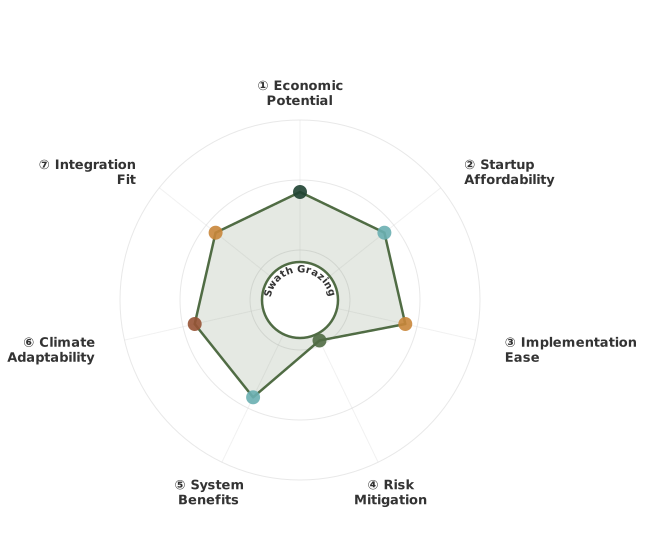
How These Traits Are Calculated
Trait dimensions are ordered clockwise starting from the top of the chart (12 o'clock position):
1. Economic Potential
Financial returns, annual value, and break-even timeline
WHAT: Evaluates financial viability by combining net annual value ($/ha from savings, income, and amortized harvests) with break-even timeline showing when practices pay for themselves.
WHY: Farmers need clear ROI understanding before committing resources. Fast payback (≤3 years) with strong returns (≥$300/ha) enables confident adoption, while long timelines (>10 years) restrict adoption to well-funded operations willing to wait for returns.
HOW: Calculated from net annual value in $/ha and break-even years. Exceptional (≥2.6): fast ROI ≤3 years + high value ≥$300/ha. Typical (1.8-2.5): moderate returns or longer timelines. Limited (<1.8): marginal economics or very long payback >10 years.
2. Startup Affordability
Initial investment costs and financial barrier to entry
WHAT: Measures financial barrier to entry through startup costs for equipment, infrastructure, consulting, and materials. Inverted scoring: lower costs = higher scores = more accessible adoption.
WHY: Affordability determines who can adopt. Low-cost practices (<$250/ha) enable widespread adoption across diverse scales, while high costs (>$2,500/ha) limit adoption to well-capitalized operations, creating barriers that slow regenerative transition.
HOW: Calculated from initial investment parsed from practice content. Inverted scoring: Exceptional (≥2.6): minimal investment <$250/ha. Typical (1.8-2.5): moderate costs $250-2,500/ha. Limited (<1.8): high barrier >$2,500/ha.
3. Implementation Ease
Learning curve and specialized knowledge required
WHAT: Measures how much learning, planning, and specialized knowledge a practice requires. Simpler practices with fewer steps score higher, while complex practices requiring extensive training or specialized resources score lower.
WHY: Complex practices create adoption barriers even when economically viable. Straightforward practices enable faster adoption and broader participation, while those requiring extensive training, timing precision, or specialized equipment limit who can succeed.
HOW: Evaluated by measuring documentation length and identifying complexity markers like location-specific requirements, seasonal timing windows, specialized skills, and dedicated equipment needs. Exceptional (≥2.6): straightforward practices with minimal prerequisites. Typical (1.8-2.5): moderate learning curve with some specialized needs. Limited (<1.8): steep learning curve requiring significant training or resources.
4. Risk Mitigation
Identified financial and ecological risk assessment
WHAT: Evaluates documented risks across financial (investment loss, market volatility) and ecological (crop failure, pest outbreaks) domains. Inverted scoring: fewer risks = higher scores.
WHY: Understanding risk exposure helps farmers make informed decisions. Low-risk practices allow confident implementation, while high-risk practices require careful planning and contingency resources. Risk transparency prevents costly failures.
HOW: Calculated from identified risks in practice content. Inverted scoring: Exceptional (≥2.6): ≤2 risks with manageable severity. Typical (1.8-2.5): 3-5 moderate risks. Limited (<1.8): 6+ risks or severe exposure.
5. System Benefits
How many ways the practice improves your land simultaneously
WHAT: Measures how many aspects of land health improve at once—carbon storage, soil quality, erosion control, water absorption, and biodiversity. Practices that improve multiple areas simultaneously create compounding benefits where each improvement reinforces the others.
WHY: The best practices solve multiple problems at once. For example, addressing erosion simultaneously builds carbon and improves water infiltration, creating a resilient system with positive feedback loops. Single-benefit approaches miss these compound transformation opportunities.
HOW: Evaluated across five key outcomes: carbon sequestration, soil organic matter increase, erosion reduction, water infiltration improvement, and biodiversity enhancement. Exceptional (≥2.6): high carbon storage (>8 t/ha/yr), improvements across 4-5 areas, transformative outcomes. Typical (1.8-2.5): moderate carbon (3-8 t/ha/yr), improvements across 2-3 areas. Limited (<1.8): modest impact (<3 t/ha/yr), single-area focus only.
6. Climate Adaptability
Geographic applicability across Köppen climate zones
WHAT: Evaluates geographic applicability by assessing how many Köppen climate zones successfully support a practice and what adaptation requirements are needed. Measures breadth of climates where farmers can implement with minimal to moderate modifications.
WHY: Universal practices working across diverse climates enable more farmers to adopt regenerative approaches. Practices limited to single climate types (only Mediterranean, only tropical) restrict adoption and slow global transition. Adaptability determines whether a practice serves niche regions or offers broad transformation.
HOW: LLM evaluation of regional success stories, Köppen zone coverage, and adaptation needs. Exceptional (≥2.6): 5+ zones or 4+ climate types, 3+ continents, minimal adaptation. Typical (1.8-2.5): 3-4 zones or 2-3 types, 2 continents, moderate adaptation. Limited (<1.8): 1-2 zones, single region, significant adaptation or highly specialized.
7. Integration Fit
How well this practice combines with others you're doing
WHAT: Measures how well a practice combines with other regenerative practices you might be doing. Some practices work as building blocks that make many other practices easier or more effective, while others work best on their own.
WHY: Practices that combine well with many others create more value on your farm. For example, cover cropping enables no-till, improves grazing, supports crop diversity, and helps water management—making all of them work better together. This helps you build a coherent system rather than juggling disconnected practices.
HOW: Evaluated by identifying which practices combine well and how strong those combinations are. 'Ideally Suited' means strong combinations where practices reinforce each other (practice A makes B easier, while B makes A more effective). 'Adequate' means complementary benefits that work well together. Exceptional (≥2.6): combines well with 6+ practices, serves as a building block. Typical (1.8-2.5): combines with 3-5 practices. Limited (<1.8): 1-2 practices or works best alone.
Going Deeper
1
WHY - The Benefits
Swath grazing offers a compelling economic and operational advantage primarily by minimizing the costly and labor-intensive aspects of stored feed management. When implemented thoughtfully, it also contributes positively to nutrient cycling and soil health, aligning with...
Swath grazing offers a compelling economic and operational advantage primarily by minimizing the costly and labor-intensive aspects of stored feed management. When implemented thoughtfully, it also contributes positively to nutrient cycling and soil health, aligning with...
WHY - The Benefits
Swath grazing offers a compelling economic and operational advantage primarily by minimizing the costly and labor-intensive aspects of stored feed management. When implemented thoughtfully, it also contributes positively to nutrient cycling and soil health, aligning with...
Swath grazing offers a compelling economic and operational advantage primarily by minimizing the costly and labor-intensive aspects of stored feed management. When implemented thoughtfully, it also contributes positively to nutrient cycling and soil health, aligning with...
Soil Health Benefits
By allowing livestock to graze directly on the field where forage was cut, swath grazing facilitates direct nutrient cycling. Animal excreta (urine and feces) are deposited across the landscape, returning nitrogen, phosphorus, potassium, and other essential nutrients to the soil. This natural fertilization reduces or eliminates the need for external fertilizer inputs, especially if the forage base for swathing was itself produced regeneratively. The manure also contributes organic matter to the soil surface, feeding soil microbes and contributing to long-term soil fertility.
The residue left from the cut forage in the swath, along with the animals' trampling action, contributes to maintaining soil cover (Principle 3). This layer of organic matter protects the soil from erosion caused by wind and rain, conserves soil moisture by reducing evaporation, and moderates soil temperatures. Keeping the soil surface covered is crucial for protecting soil biology, as many beneficial organisms, including earthworms and fungal networks, thrive in a protected, moist environment.
Compared to traditional hay feeding operations, where large amounts of feed might be transported and consumed in specific sacrifice areas or around bunks, swath grazing distributes nutrient deposition more evenly across pastures. This can help to prevent the over-fertilization and degradation of dedicated feeding sites and spread fertility benefits over a wider area. If the forage species used are perennial and diverse, their root systems will continue to live and exudate nutrients throughout the winter, further contributing to soil ecosystem function (Principle 4).
While swath grazing itself doesn't inherently increase crop diversity (Principle 2), it relies on the proactive establishment of diverse and resilient forage species that can withstand winter conditions and provide adequate nutrition when swathed. Thus, a well-planned swath grazing system is often preceded by efforts to build a diverse pasture or cover crop stand that can serve as the forage base. Regenerative systems prioritize this diversity, meaning the forage used for swathing is already contributing to a more resilient ecosystem.
Economic Benefits
The primary economic driver for swath grazing is the significant reduction in labor and infrastructure costs associated with winter feeding. Custom hiring of baling services can cost $30-70 per tonne (or $10-25 per acre/ton DM). Transporting and feeding hay or silage requires dedicated equipment (tractors, loaders, feeders), fuel, and significant labor time daily. Daily feeding chores can take 2-4 hours for an average-sized operation. Swath grazing shifts this labor from daily feeding to occasional fence moving and monitoring, often reducing daily labor by 80-90%.
For a typical mixed livestock operation, this can translate to annual savings of $50-150 per animal unit (AU) in labor costs alone. Fuel savings from not operating feeding equipment can add another $10-25 per AU. Beyond operational savings, the need for feed storage facilities—bunkers, barns, hay sheds—can be drastically reduced or eliminated, saving capital investment and maintenance costs. This could represent savings of $1,000 to $5,000+ for an operation, depending on its size and existing infrastructure.
Furthermore, swath grazing minimizes feed waste that occurs with conventional feeding methods. When hay or silage is fed in bunks or rings, a significant amount (5-15% for hay, more for silage) can be trampled, soiled, and wasted by animals. Swath grazing, where animals harvest directly, minimizes this spoilage, meaning more of the harvested forage is actually consumed by the livestock. This improved feed conversion efficiency can increase the economic return of the forage.
The practice can also extend the effective grazing season, capitalizing on late-season forage growth that might otherwise be lost to winter damage. By carefully managing the swaths and animal movement, farmers can make the most of available forage, potentially reducing the need for purchased supplemental feed, which is a major expense in winter feeding. If the total gathered forage in swaths is well-estimated and the animal requirements are accurately calculated, supplemental feed costs can be reduced, potentially saving an additional $50-100 per animal per year.
Regenerative Systems Fit
Swath grazing's role in a regenerative system is complex and dependent on its management. When executed with care and foresight, it can be a valuable component that strengthens the overall system.
Principle 5 (Integrate Livestock): This is the core of swath grazing. Livestock are intimately involved in harvesting and nutrient redistribution. By allowing animals to graze the swathed forage, their manure is deposited directly onto the landscape where the organic matter was produced. This mimics natural grazing cycles and helps build soil fertility across pastures rather than concentrating it in feeding areas.
Principle 3 (Keep Soil Covered): The presence of windrows of cut forage, and the stubble left from the original plants, helps keep the soil surface covered during a period when it might otherwise be bare. This protection is crucial for preventing erosion and maintaining soil moisture and temperature moderation. The organic residue provides habitat and food for soil microbes and invertebrates.
Principle 1 (Minimize Soil Disturbance): Compared to operations that involve extensive machinery for baling, transporting, and feeding feed, swath grazing can reduce soil disturbance. By leaving the forage in place, the need for heavy machinery movement across fields is significantly decreased, especially during the feeding period. This protects soil structure from compaction. However, the act of cutting forage can cause some disturbance, and animal trampling during grazing should be managed.
Principle 4 (Maintain Living Roots): For swath grazing to be most effective and regenerative, it should be implemented on perennial forages or diversified cover crops that maintain living roots throughout the winter. This ensures that the soil ecosystem remains active, with continuous nutrient cycling and soil structure maintenance occurring beneath the swaths. The goal is not to kill the plant by cutting, but to harvest mature forage while allowing the root system to persist.
Transition Pathway: Swath grazing can be a stepping stone toward fully regenerative grazing systems. For farms transitioning from stored feed, it offers immediate economic benefits and a gentler re-integration of livestock harvesting their own food. It encourages managing for forage quality and quantity in the field, a mindset shift fundamental to regenerative grazing. However, it is crucial that the forage base for swath grazing continues to be managed regeneratively—meaning it’s planted with diverse species, ideally without synthetic inputs, and the land is allowed adequate rest periods. The ultimate goal would be to minimize the need for cutting altogether by maximizing year-round grazing, but swath grazing offers a practical intermediary step that provides significant economic advantages while maintaining or improving soil aspects under careful management.
Sources behind this view
Videos & Podcasts
-
Swath grazing diverse polycultures in Saskatchewan enhances farm resilience and flexibility, offering multiple feed options and stimulating vigorous regrowth due to plant reset, contributing to soil h
![Thumbnail for [S1E1] Farmer Panel: Swath Grazing](/static/thumbnails/epZpOH5D9f0.jpg)
-
Laura Payne details how managed grazing enhances soil health, water quality, and wildlife habitat, citing research on reduced erosion, improved stream health, and support for grassland birds. Key prin
-
This cluster details ultra-high stock density grazing (UHSDG) and 'total grazing' for cattle, emphasizing intensive management, long pasture recovery, and increased stocking rates. The speaker advocat
-
Livestock impact, cover crops, and extended grazing are key to soil health and profitability, reducing tillage and hay feeding. Metrics include soil organic matter, infiltration, Brix levels, and stoc
Community
-
Adopts a holistic grazing management approach emphasizing diverse perennial pastures, higher residuals (4"), and longer rest periods (avg. 45 days) to build soil health, increase organic matter (3.4%
Read more (opens in new window) smallfarms.cornell.edu -
Holistic Planned Grazing is recommended for large farms to regenerate land and reduce costs, emphasizing strategic water management with swales and portable fencing. In cold climates, moving cattle is
Read more (opens in new window) permies.com
Research
-
Swath-grazing in Western Canada: a survey of practices, motivations, and challenges among cow–calf producers (opens in new window)
This study found: Western Canadian ranchers use swath-grazing to cut fuel/labor costs, with common crops including oats, peas, hairy vetch, and turnips. Challenges include waste, weather, and wildlife.
-
Managing Grazing to Restore Soil Health, Ecosystem Function, and Ecosystem Services (opens in new window)
This study found: Properly managed grazing animals can reverse environmental damage. Regenerative practices, like Adaptive Multi-Paddock (AMP) grazing, boost soil health, increase soil carbon, reduce erosion, and enhan
-
How Biodiversity-Friendly Is Regenerative Grazing? (opens in new window)
This study found: Regenerative grazing can improve soil health and biodiversity by mimicking natural herd movements, but impacts on plants and animals are mixed and depend on management adaptation.
-
Grassland and managed grazing policy review (opens in new window)
This study found: Policy review shows grasslands and managed grazing are disadvantaged compared to row crops in the U.S. Upper Midwest. Recommendations aim for equitable support to improve soil, water, biodiversity, an
2
WHERE - Regional Considerations
Swath grazing is most successful in regions with a distinct dry winter season where forage can cure and remain accessible, or where snow cover is generally light and intermittent, allowing animals access to the swathed material. It is less suited to areas with prolonged...
Swath grazing is most successful in regions with a distinct dry winter season where forage can cure and remain accessible, or where snow cover is generally light and intermittent, allowing animals access to the swathed material. It is less suited to areas with prolonged...
WHERE - Regional Considerations
Swath grazing is most successful in regions with a distinct dry winter season where forage can cure and remain accessible, or where snow cover is generally light and intermittent, allowing animals access to the swathed material. It is less suited to areas with prolonged...
Swath grazing is most successful in regions with a distinct dry winter season where forage can cure and remain accessible, or where snow cover is generally light and intermittent, allowing animals access to the swathed material. It is less suited to areas with prolonged...
Click Here to Look up your Region if you don't already know it
Cold Continental Regions
Representative Locations: Northern Great Plains of North America (Montana, North Dakota, Saskatchewan), parts of Eastern Europe (Ukraine, Russia), northern China, parts of New Zealand’s South Island.
Climate Context: Characterized by cold, dry winters with moderate to heavy snow accumulation, and relatively short growing seasons. USDA Zones 3-5, Köppen Dfb/Dfc. Temperatures often drop significantly below freezing, aiding in forage preservation and reducing spoilage. However, when snow melts or is intermittent, forage can become waterlogged, increasing spoilage risk. Animal access to swathed forage can be challenged by deep snow or icy conditions, requiring appropriate animal management.
Arid/Semi-Arid Regions
Representative Locations: Western United States (Montana, Wyoming, Colorado), parts of Australia (inland regions), Central Asia, Patagonia (Argentina/Chile).
Climate Context: Low annual precipitation (<40 cm or 15 inches), high temperatures, and often a short, unpredictable growing season. Winters are typically cold but dry. The low humidity and frequent sunny days in these regions are ideal for curing forage in windrows, minimizing spoilage and preserving nutritional value. Animals can usually access swathed material readily. However, forage production can be limited, requiring careful calculation of swath size and stocking density to ensure adequate nutrition without depleting reserves.
Humid Temperate Regions (with caveats)
Representative Locations: Parts of the Midwestern United States, Northern Europe (UK, Ireland), parts of Australia (Victoria, Tasmania).
Climate Context: Warm to hot summers and cool to cold winters with moderate to high annual precipitation (75-150 cm or 30-60 inches) distributed relatively evenly. USDA Zones 6-8, Köppen Cfa/Cfb. These regions present a higher risk for swath grazing due to frequent rain, snowmelt, and higher humidity, which can lead to significant spoilage and mold development in windrows. Swath grazing is only viable here if cutting occurs late in the season when forage is fully mature and dry, and if winters are not excessively wet. Often, cutting must happen in early winter, targeting frost-dried forage.
Subtropical Regions (with caveats)
Representative Locations: Southeastern United States, Southern China, Southern Brazil, Eastern Australia.
Climate Context: Hot, humid summers and mild winters with generally ample rainfall. USDA Zones 9-11, Köppen Cfa/Cwa. Swath grazing is generally not recommended in these regions for typical winter feeding due to high humidity and frequent rainfall, which promote rapid spoilage and mold. If practiced, it would involve early-season drying of frost-killed annual forages just before winter in regions that experience a brief, drier cold period. The practice is more common for utilizing crop residues (not strictly swath grazing cut forage) or managing pastures during temporary dry spells.
Tropical Regions (Rare, specific circumstances)
Representative Locations: Not typical, but may apply to brief dry periods in some transition zones.
Climate Context: High temperatures year-round, with distinct wet and dry seasons or consistent high rainfall. Köppen Af/Am/Aw. Traditional swath grazing of winter-dormant forages is not applicable due to lack of winter dormancy and high humidity. It might be used for harvesting excess growth that would otherwise be lost during a brief dry season, but spoilage is a significant risk if dry conditions are not consistent.
3
HOW - Implementation Process
Implementing swath grazing effectively involves careful planning and execution around forage selection, cutting, and animal management. It's a shift from a feed-storage model to a field-harvest model.
Implementing swath grazing effectively involves careful planning and execution around forage selection, cutting, and animal management. It's a shift from a feed-storage model to a field-harvest model.
HOW - Implementation Process
Implementing swath grazing effectively involves careful planning and execution around forage selection, cutting, and animal management. It's a shift from a feed-storage model to a field-harvest model.
Implementing swath grazing effectively involves careful planning and execution around forage selection, cutting, and animal management. It's a shift from a feed-storage model to a field-harvest model.
Prerequisites
- Forage Type: Select perennial grasses or legumes, or annual cover crops known for standing ability through winter and relative resistance to spoilage. Diverse mixes often perform better. Examples include specific varieties of smooth bromegrass, orchardgrass, timothy, crested wheatgrass, sainfoin, or annuals like cereal rye, oats, forage sorghum, or brassicas.
- Climate Suitability: Winter conditions must allow for forage curing and reasonable animal access. Low humidity, dry air, and moderate snowfall are ideal. Avoid regions with consistent heavy rain or high humidity during the intended swath grazing period.
- Animal Needs: Accurate calculation of the nutritional needs of the specific livestock class (e.g., pregnant cows, finishing steers, ewes) and the nutritional content of the swathed forage.
- Equipment: Access to a mower/imparter conditioner capable of cutting and windrowing forage effectively. A good quality windrower or conditioner can improve drying and preservation.
- Winter Access: Livestock must be able to access swathed forage and water without excessive difficulty. Terrain should allow for safe movement.
Phase 1: Forage Production & Maturity
Timing: The forage must be fully mature and dry before cutting for swathing. This is typically late summer or early autumn, depending on the region and species. For perennial pastures, this might mean grazing them down to a residual height and then cutting subsequent growth for swaths. For annual crops, this is usually at the end of their growth cycle.
Forage Quality Check: Before cutting, test nutritional content (protein, energy, fiber) of the forage. This is critical for determining how long the swathed forage can sustain animals and what supplements, if any, will be needed. Protein levels are often a limiting factor in winter forages.
Cutting Technique: Use a mower-conditioner set to cut at a moderate height (e.g., 7-10 cm or 3-4 inches) to leave adequate stubble and residue for soil protection. The conditioner, especially a flail or roller type, helps crimp the stems to speed up drying. The windrow should be formed to be easily accessible to livestock but not so wide that interior forage cannot cure properly or is excessively exposed to rain. Windrows are typically formed into loaves or rolls rather than flat mats to promote better air circulation within and reduce spoilage.
Phase 2: Swath Formation & Curing
Windrow Management: The goal is to have the forage cure "in situ" within the windrows. This process is facilitated by dry, breezy conditions. If humidity is high or frequent rain is expected, it's best to wait or reconsider swath grazing. Some producers use a "roller-crimper" after cutting to form windrows that have better air circulation and stand up better to weather.
Curing Time: Allow adequate time for the forage to cure within the windrow before animals are introduced. This can take anywhere from a few days to several weeks, depending on weather. Ensure moisture content is sufficiently low (<15%) to minimize mold development.
Swath Size & Placement: Strategically place windrows to allow for planned grazing rotations. Windrows should be large enough to provide a week or more of feed for a group of animals, but not so large that animals can't access the entire windrow efficiently. Consider topography and access for water sources when placing swaths.
Phase 3: Grazing Management
Animal Introduction: When the swathed forage is cured and animals are ready for winter feeding, introduce them to the windrows. Start with a smaller, manageable section of windrow to allow animals to adapt to the feed.
Rotational Grazing: Move animals between different windrows or sections of windrows regularly. This is critical to prevent excessive trampling, waste, and overgrazing of any single area. A typical rotation might involve moving animals every few days to a new section. The goal is to have animals consume the windrow efficiently, leaving behind minimal waste.
Monitoring and Supplementation: Continuously monitor animal health, body condition scores, and intake. Swathed forages, especially if they have been exposed to weather, may require supplementation with protein, energy, or minerals depending on their analyzed nutritional content and the animals' requirements. Water access is paramount during winter.
Winter Conditions: Adapt management to snow and ice. If snow depth becomes too great, animals may not be able to access windrows, requiring early termination of the practice or supplemental feeding. Ice encasement can also make forage inaccessible. Some producers use tools to break ice or move swathed forage if needed.
Transition Timeline & Phase-Out Strategy
Swath grazing is not typically a transition practice itself, but rather a management strategy for an existing forage base. However, transitioning to swath grazing from traditional feed systems involves:
- Phase 1 (Year 1): Focus on identifying and planting suitable forage species that have good winter hardiness and standing ability. Begin cutting and swathing a small portion of your planned winter needs as a trial.
- Phase 2 (Year 2): Expand swath grazing to cover a larger percentage of winter feed needs. Refine cutting and windrowing techniques based on experience. Conduct forage tests and adjust supplemental feeding plans.
- Phase 3 (Year 3+): Swath grazing becomes a standard winter feeding practice. Focus on optimizing forage production and quality, refining rotational grazing plans for swathed material, and ensuring animal health and performance.
If the goal is to transition away from swath grazing towards year-round grazing, the process involves building perennial pasture health and diversity to provide sufficient forage during winter months, reducing the need for cutting and swathing altogether.
Sources behind this view
Videos & Podcasts
-
Swath grazing in Alberta involves swathing cereal crops (oats, barley) before frost to prevent nitrate poisoning, creating windrows for winter strip grazing. This method allows cattle to forage even t
-
Kevin Booth (Milo, AB) details his successful swath grazing strategy using irrigated sorghum sedan regrowth. Cows grazed for 35 days (Dec 27 - Jan 30) on 20-acre paddocks, with minimal supplementation
-
Winter swath/windrow grazing involves leaving mowed hay in windrows for winter cattle feed. The Sims Cattle Company in Wyoming saves costs ($50/ton vs $80/ton), reduces labor (1 hr/3 days for 300 cows

-
Swath grazing diverse polycultures in Saskatchewan enhances farm resilience and flexibility, offering multiple feed options and stimulating vigorous regrowth due to plant reset, contributing to soil h
Research
-
Swath-grazing in Western Canada: a survey of practices, motivations, and challenges among cow–calf producers (opens in new window)
This study found: Western Canadian ranchers use swath-grazing to cut fuel/labor costs, with common crops including oats, peas, hairy vetch, and turnips. Challenges include waste, weather, and wildlife.
From the Web
-
Windrow grazing significantly reduces hay feeding costs by eliminating baling and hauling, with research showing comparable or better animal performance than baled hay. Key practices include swathing
-
Windrow grazing reduces hay feeding costs by swathing forage in early fall for winter grazing. Research shows comparable or better cattle performance than baled hay, with significant cost savings ($35
-
Windrow grazing is presented as a cost-effective alternative to feeding baled hay for cattle, with research showing comparable or better animal performance and significant savings on harvesting, hauli
-
Nebraska Extension details windrow grazing as an economical alternative to baled hay for cattle. Research shows similar or better forage quality and animal performance compared to baled hay, with sign
4
Know the Debate
Swath grazing is most effective in dry, cold climates where forage cures and remains accessible, such as the Canadian Prairies or semi-arid Western...
Know the Debate
Swath grazing is most effective in dry, cold climates where forage cures and remains accessible, such as the Canadian Prairies or semi-arid Western...
Swath grazing is most effective in dry, cold climates where forage cures and remains accessible, such as the Canadian Prairies or semi-arid Western US. Humid regions face significant spoilage risks. Entry costs vary; owning equipment ($10k-$50k+) suits large operations, while custom hiring offers flexibility for smaller farms. Daily labor is drastically reduced post-cutting but requires vigilant water and fence management. Realizing full economic benefits typically takes 1-3 years of learning and refining forage selection, cutting timing, and animal nutrition to match winter conditions.
How does winter feed quality compare with swath grazing?
Comparable or better quality in dry winters
In dry, cold climates, swath grazing can preserve forage quality and palatability comparable to or better than baled hay. Careful cutting and windrowing, alongside diverse forages, maintain nutritional value and animal performance.
Sources behind this view
Sources behind this view
Videos & Podcasts
-
Winter swath/windrow grazing involves leaving mowed hay in windrows for winter cattle feed. The Sims Cattle Company in Wyoming saves costs ($50/ton vs $80/ton), reduces labor (1 hr/3 days for 300 cows), improves manure spread, and enhances cow welfare.
-
Swath grazing in Alberta involves swathing cereal crops (oats, barley) before frost to prevent nitrate poisoning, creating windrows for winter strip grazing. This method allows cattle to forage even through deep snow.
Research
-
Swath-grazing in Western Canada: a survey of practices, motivations, and challenges among cow–calf producers (opens in new window)
This study found: A survey of 220 cattle ranchers in Western Canada revealed that 70% use or have used swath-grazing (leaving cut forage in the field for winter grazing). The main reasons for doing so are saving on fuel (94%) and labor (60%). However, ranchers who stopped swath-grazing cited issues like forage waste (24%), bad weather (22%), wildlife interference (19%), and concerns about animal health and weight gain (19%). Many ranchers (43%) use a mix of crops for swath-grazing, including oats, peas, hairy vetch, and turnips. On average, they graze swaths for 70 days, moving to new sections every 4.5 days. After grazing, most cattle (56%) clean up leftover forage, or farmers use equipment to incorporate residue into the soil (21%). Ranchers with spring calving, cultivated land, and cattle feeding operations were more likely to adopt swath-grazing.
From the Web
-
Windrow grazing is presented as a cost-effective alternative to feeding baled hay for cattle, with research showing comparable or better animal performance and significant savings on harvesting, hauling, and feeding costs. Key practices include early fall swathing of forages at higher stubble heights, using temporary electric fencing for rationing, and testing forage quality. This method also returns nutrients to the soil.
Higher spoilage risk and variable quality in wet winters
Humid or wet winter conditions increase spoilage and mold development in swathed forages, reducing nutritional quality and potentially animal performance. This necessitates careful management and higher supplementation.
Sources behind this view
Sources behind this view
Videos & Podcasts
-
Compares standing vs. swath grazing of cover crops, highlighting benefits for soil health, nutritional value, and snow capture. Decision depends on whether the primary goal is soil building or livestock feed.
Research
-
Evaluation of Nitrogen and Cropping System Management in Continuous Winter Wheat Forage Production Systems (opens in new window)
This study found: In the central US Great Plains, a multi-year study looked at how adding summer crops to winter wheat fields, used for grazing cattle and sheep, affects overall forage production. The research found that planting summer crops did increase the total amount of feed (dry matter) and its protein content. However, these summer crops seemed to negatively impact the winter wheat yield. This negative effect could be reduced by splitting the nitrogen fertilizer application, rather than applying it all at once before planting, even when using the same total amount of fertilizer.
-
Farming with reduced winter cropping in southern New Zealand: the risks and practicalities (opens in new window)
This study found: A ten-year trial in southern New Zealand looked at reducing winter forage crops for sheep by 25%, relying more on year-round pasture. The study found that this 'less-crop' system could increase farm profits (EBITDA) by about 6% while maintaining similar overall earnings, even with variations in weather and pasture growth. The key to success was careful long-term planning, actively managing both the pasture and the animals, and crucially, getting the farm team involved and committed. Using farm modeling software helped build confidence to try these changes. The researchers emphasize that successful shifts to less winter cropping require a whole-farm approach and a willingness to adapt and learn.
Making Sense of the Differences
Winter feed quality in swath grazing significantly depends on prevailing climate. Dry, cold regions with moderate snow preserve swaths well, often matching baled hay quality. Conversely, humid or wet winters increase spoilage, reducing nutritional value and animal performance, potentially requiring more supplements. Success relies on selecting winter-hardy forages and considering local weather patterns when implementing this practice.
What are the infrastructure and equipment needs for swath grazing?
Reduced infrastructure, basic equipment needed
Swath grazing significantly cuts the need for feed storage facilities and traditional feeding equipment. Primary needs are a mower-conditioner and electric fencing, with optional windrowers for larger scales. This represents a lower capital investment than storing hay.
Sources behind this view
Sources behind this view
Videos & Podcasts
-
Windrow grazing involves mowing hay into windrows for winter feeding, significantly reducing costs ($30/ton savings), labor (1 hr/3 days per 300 head), and improving manure spread and plant diversity. Controlled access with poly wire manages consumption and waste.
-
Kevin Booth (Milo, AB) details his successful swath grazing strategy using irrigated sorghum sedan regrowth. Cows grazed for 35 days (Dec 27 - Jan 30) on 20-acre paddocks, with minimal supplementation. He uses efficient fencing with steel cable reels and emphasizes cost savings and the value of crop residues for soil fertility.
From the Web
-
Windrow grazing reduces hay feeding costs by swathing forage in early fall for winter grazing. Research shows comparable or better cattle performance than baled hay, with significant cost savings ($35/ton). Key practices include selecting appropriate forages, proper swathing techniques, testing forage quality, and using electric fencing for rationing.
-
Windrow grazing is presented as a cost-effective alternative to feeding baled hay for cattle, with research showing comparable or better animal performance and significant savings on harvesting, hauling, and feeding costs. Key practices include early fall swathing of forages at higher stubble heights, using temporary electric fencing for rationing, and testing forage quality. This method also returns nutrients to the soil.
-
Addresses windrow grazing concerns: minimize deterioration by swathing high off the ground, cattle can graze through snow if not crusted, strip-grazing controls waste, and use specialized tools for electric fencing in frozen ground.
Requires specialized investment in harvesting & water systems
Effective swath grazing often requires specialized equipment like mower-conditioners and windrowers for optimal curing, alongside reliable winter water systems and robust fencing for paddock management, representing a significant capital investment.
Sources behind this view
Sources behind this view
Videos & Podcasts
-
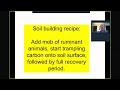
Greg Judy details winter grazing with stockpiled Fescue, using ATVs for hay distribution and avoiding heavy machinery. He emphasizes quality water, riparian zone grazing, and the benefits of trees. He also discusses native grass resurgence, dung beetles, and managing overgrazing by leaving significant forage residue.
-
Swath grazing in Alberta involves swathing cereal crops (oats, barley) before frost to prevent nitrate poisoning, creating windrows for winter strip grazing. This method allows cattle to forage even through deep snow.
-
A sound grazing plan, especially bale grazing, is crucial for winter feeding efficiency and cost savings. Bale grazing imports nutrients, enhances land value, and reduces winter feed costs by allowing for more summer cover crops. Specific feeding details include using slough hay and a corn/split pea mix for a daily cost of $2.30 per cow.
Research
-
The LTAR Integrated Common Experiment at Southern Plains. (opens in new window)
This study found: At the Southern Plains research site, scientists are studying how different farming methods affect soil, water, and livestock. One common practice is growing winter wheat that is then grazed, cut for hay, or harvested for grain. An alternative approach uses annual cover crops planted in fall and spring, managed with less tillage, to provide year-round forage for cattle. The goal is to find ways to manage resources better, especially with changing weather. Planting cover crops helps fill gaps in forage availability, keeps the ground covered to reduce soil erosion and nutrient runoff into water, and improves soil health and its ability to hold water. Researchers are developing tools to help farmers and land managers understand how climate and different conservation practices impact water use, greenhouse gas emissions, and soil resources.
Making Sense of the Differences
The infrastructure needs for swath grazing vary with scale and ownership choices. While reducing the need for large feed storage facilities, the practice demands investment in harvesting equipment (mower-conditioner, windrower) if not custom hiring, and reliable systems for winter water access and adaptable electric fencing for grazing management. The scale of operations and decision to own or hire equipment significantly influence the initial capital outlay.
How long does it take to realize benefits from swath grazing?
Immediate savings with initial trial
Farmers can realize immediate labor and significant cost savings in the first year by adopting swath grazing, with minimal setup if existing equipment is used and forage is suitable.
Sources behind this view
Sources behind this view
Videos & Podcasts
-
Winter swath/windrow grazing involves leaving mowed hay in windrows for winter cattle feed. The Sims Cattle Company in Wyoming saves costs ($50/ton vs $80/ton), reduces labor (1 hr/3 days for 300 cows), improves manure spread, and enhances cow welfare.
-
Windrow grazing involves mowing hay into windrows for winter feeding, significantly reducing costs ($30/ton savings), labor (1 hr/3 days per 300 head), and improving manure spread and plant diversity. Controlled access with poly wire manages consumption and waste.
-
Kevin Booth (Milo, AB) details his successful swath grazing strategy using irrigated sorghum sedan regrowth. Cows grazed for 35 days (Dec 27 - Jan 30) on 20-acre paddocks, with minimal supplementation. He uses efficient fencing with steel cable reels and emphasizes cost savings and the value of crop residues for soil fertility.
Research
-
Grazing Management of Ruminant Animals in Sustainable Agriculture (opens in new window)
This study found: When managed well, grazing animals like cattle and sheep are a highly efficient and sustainable way to produce protein. Unlike humans, these animals can digest tough plant fibers (roughage) that would otherwise go to waste. This grazing practice helps farms use sunlight better, recycle nutrients in the soil naturally, use resources that don't compete with human food, protect soil and water, and make farming operations more adaptable. By carefully managing how animals interact with the land, we can make food production more economically and environmentally sound, with ruminants offering a more sustainable option than some other livestock.
2-3 years to refine management and maximize benefits
Achieving maximum economic and operational benefits requires 2-3 years of refining forage selection, cutting timing, animal nutrition planning, and grazing management protocols.
Sources behind this view
Sources behind this view
Videos & Podcasts
-
Advanced grazing strategies like strip grazing corn stalks and daily moves in rotational grazing prevent acidosis, double cow days per acre, and improve pasture productivity. Incorporating legumes and cover crops, and matching forage types to seasons, further enhances efficiency and animal performance.
Research
-
Swath-grazing in Western Canada: a survey of practices, motivations, and challenges among cow–calf producers (opens in new window)
This study found: A survey of 220 cattle ranchers in Western Canada revealed that 70% use or have used swath-grazing (leaving cut forage in the field for winter grazing). The main reasons for doing so are saving on fuel (94%) and labor (60%). However, ranchers who stopped swath-grazing cited issues like forage waste (24%), bad weather (22%), wildlife interference (19%), and concerns about animal health and weight gain (19%). Many ranchers (43%) use a mix of crops for swath-grazing, including oats, peas, hairy vetch, and turnips. On average, they graze swaths for 70 days, moving to new sections every 4.5 days. After grazing, most cattle (56%) clean up leftover forage, or farmers use equipment to incorporate residue into the soil (21%). Ranchers with spring calving, cultivated land, and cattle feeding operations were more likely to adopt swath-grazing.
-
Farming with reduced winter cropping in southern New Zealand: the risks and practicalities (opens in new window)
This study found: A ten-year trial in southern New Zealand looked at reducing winter forage crops for sheep by 25%, relying more on year-round pasture. The study found that this 'less-crop' system could increase farm profits (EBITDA) by about 6% while maintaining similar overall earnings, even with variations in weather and pasture growth. The key to success was careful long-term planning, actively managing both the pasture and the animals, and crucially, getting the farm team involved and committed. Using farm modeling software helped build confidence to try these changes. The researchers emphasize that successful shifts to less winter cropping require a whole-farm approach and a willingness to adapt and learn.
From the Web
-
Windrow grazing is presented as a cost-effective alternative to feeding baled hay for cattle, with research showing comparable or better animal performance and significant savings on harvesting, hauling, and feeding costs. Key practices include early fall swathing of forages at higher stubble heights, using temporary electric fencing for rationing, and testing forage quality. This method also returns nutrients to the soil.
Making Sense of the Differences
While initial labor and infrastructure savings can be realized in the first year of adopting swath grazing, fully maximizing its economic and operational benefits typically takes 1-3 years. This period involves refining forage selection, mastering cutting and swathing techniques, fine-tuning animal nutrition plans based on local conditions and forage tests, and adapting grazing management protocols. Farms that incrementally transition and focus on continuous learning often achieve smoother and more profitable outcomes.
5
HOW MUCH - Costs & Investment
Note: Costs shown in USD; multiply by local labor and material cost indices for your region. Labor costs vary significantly internationally.
Note: Costs shown in USD; multiply by local labor and material cost indices for your region. Labor costs vary significantly internationally.
HOW MUCH - Costs & Investment
Note: Costs shown in USD; multiply by local labor and material cost indices for your region. Labor costs vary significantly internationally.
Note: Costs shown in USD; multiply by local labor and material cost indices for your region. Labor costs vary significantly internationally.
Note: All costs are based on recent US economic data (2024–2026) and may vary substantially by region based on local labor rates, material costs, and regulatory requirements. Estimates include a 4.2% inflation adjustment applied to standard baseline operational figures.
Initial Capital Outlay (Equipment)
For producers entering swath grazing, the primary capital expenditure is securing reliable mowing and windrowing equipment. Small operations under 50 acres (20 ha) typically leverage pre-owned machinery, requiring an investment of $8,350 to $20,850 to ensure reliable performance. These producers often seek out used disc mowers or compact pull-behind windrowers that match their current tractor capability. Mid-size operations managing 50 to 500 acres (20–202 ha) generally require newer, high-uptime machinery to complete cutting during short weather windows; consequently, their capital investment increases to $26,050 to $67,750. For large-scale operations exceeding 500 acres (202 ha), the requirement shifts toward high-capacity swathers and specialized disc mowers, with total capital expenditures frequently reaching $72,950 to $156,300. Additionally, maintaining a consistent 100-horsepower tractor fleet to manage these implements adds an annual depreciation and maintenance burden of $5,210 to $12,500, depending on engine hours and machine age. These figures represent a long-term capital reallocation, as many producers are able to retire expensive stationary storage equipment like hay barns or silage bunkers over time.
Operational and Variable Costs
Swath grazing significantly reduces the high energy costs associated with mechanical feeding, such as baling, wrapping, and hauling. Custom harvesting services illustrate the economy of scale: small operators often pay $62.50 to $125.00 per acre ($154–$309/ha) for custom swathing, reflecting the higher mobilization costs per acre for smaller footprints. Mid-sized producers negotiate lower rates ranging from $41.50 to $93.75 per acre ($103–$232/ha), while large-scale operations leveraging site aggregation typically secure rates of $26.00 to $52.00 per acre ($64–$128/ha). Forage establishment is a recurring annual cost; small holders utilizing premium blends for nutritional density spend $41.50 to $125.00 per acre ($103–$309/ha) on seed. Large-scale producers, leveraging bulk procurement efficiencies, typically spend $20.80 to $62.50 per acre ($51–$154/ha). Fuel utility is perhaps the most striking efficiency, with swathing operations consuming 0.8 to 1.5 gallons (5.7 L) of diesel per acre. This is substantially lower than conventional systems, which often incur $15.65 to $36.50 per acre ($39–$90/ha) in cumulative fuel and labor costs involved in harvesting, storing, and daily distribution of hay.
Supplemental Feeding and Infrastructure
The financial backbone of a swath grazing system is the "fail-safe" supplemental feed budget, which covers nutritional shortfalls during adverse winter weather or prolonged snow cover. Producers must budget $83.50 to $208.50 per animal per year for supplemental energy blocks or emergency hay. Infrastructure is relatively lightweight; investment is concentrated in portable electric fencing, which averages $500 to $1,500 per mile depending on the gauge of wire and the complexity of the fence chargers. Winterized water infrastructure—critical to ensuring livestock stay hydrated and continue to graze—can range from $1,000 to $5,000 for mobile, solar-powered trough systems that prevent supply lines from freezing in high-latitude environments.
Most Spend: Most agricultural operations (the middle 60% of cases) fall into an annual operational expenditure range of $105 to $165 per acre ($259–$408/ha). This covers the typical combination of moderate custom swathing rates for mid-sized fields and standard annual seed costs for high-quality pasture mixes, alongside base-level supplemental feed requirements.
Why the Range?: Cost variation is driven primarily by existing infrastructure and site topography. Producers with existing tractors can drastically lower entry costs compared to those needing new machinery. Additionally, local fuel prices, regional humidity impacting forage quality, and the diversity of the seed mix significantly shift the annual variable budget.
Sources behind this view
Videos & Podcasts
-
Reduces winter feed costs by optimizing calving to May, utilizing corn grazing (175-200 days/acre) with forage soybeans (no synthetic fertilizer), and shoulder-season grazing. This system offers signi
![Thumbnail for [S5E7] Farmer Panel: Reducing Feed Costs in 2025](/static/thumbnails/mLddNZ2w7mU.jpg)
-
Rotational grazing drastically reduced hay needs (from 300-400 rolls to 13) and fertilizer costs ($20k to $4k). Winter stockpiling involves applying nitrogen by late August, grazing dormant grass afte
-
Explains stockpiling forage for winter grazing as a profitable strategy to reduce costs ($1.25/day vs. $2.25-$2.60/day for hay). Highlights the opportunity to create a year-round forage chain, reducin
-
Delta Dairy LLC in NE Louisiana uses a windrower to unroll hay bales, creating 'spot bio-carpeting' for sustainable winter feeding. This method minimizes hay waste, improves cow nutrition and herd uni
Community
-
Holistic Planned Grazing is recommended for large farms to regenerate land and reduce costs, emphasizing strategic water management with swales and portable fencing. In cold climates, moving cattle is
Read more (opens in new window) permies.com -
Discusses reducing hay waste through year-round grazing, bale grazing (placing bales in pasture for controlled access), and viewing wasted hay as fertilizer, with options for composting and strategic
Read more (opens in new window) permies.com -
Extend grazing periods by fencing land and implementing rotational grazing to significantly reduce livestock feed costs, potentially enabling year-round grazing.
Read more (opens in new window) permies.com
Research
-
Swath-grazing in Western Canada: a survey of practices, motivations, and challenges among cow–calf producers (opens in new window)
This study found: Western Canadian ranchers use swath-grazing to cut fuel/labor costs, with common crops including oats, peas, hairy vetch, and turnips. Challenges include waste, weather, and wildlife.
-
192 Towards Year-Round Grazing in the Southeastern U.S (opens in new window)
This study found: Southeastern U.S. sheep/goat farmers can boost profits by reducing winter feed costs through better grazing management, diverse forages, improved infrastructure, and proper hay storage, enabling year-
-
Farming with reduced winter cropping in southern New Zealand: the risks and practicalities (opens in new window)
This study found: Reducing winter crops by 25% in southern NZ increased farm profits by 6% over 10 years, with staff engagement and planning being key to success.
-
An integrated approach to crop/livestock systems: Forage and grain production for swath grazing (opens in new window)
This study found: Winter grazing of crop residues by beef cows in a no-till system showed potential to enhance forage/grain production and improve water use efficiency, with corn being the most water-efficient crop and
From the Web
-
Windrow grazing significantly reduces hay feeding costs by eliminating baling and hauling, with research showing comparable or better animal performance than baled hay. Key practices include swathing
-
Windrow grazing reduces hay feeding costs by swathing forage in early fall for winter grazing. Research shows comparable or better cattle performance than baled hay, with significant cost savings ($35
-
Nebraska Extension details windrow grazing as an economical alternative to baled hay for cattle. Research shows similar or better forage quality and animal performance compared to baled hay, with sign
-
Windrow grazing is presented as a cost-effective alternative to feeding baled hay for cattle, with research showing comparable or better animal performance and significant savings on harvesting, hauli
6
REWARDS AND RISKS - Economics & Risk Factors
The success of swath grazing hinges on a delicate balance between maximizing its economic and operational benefits and mitigating the inherent risks associated with winter forage management.
The success of swath grazing hinges on a delicate balance between maximizing its economic and operational benefits and mitigating the inherent risks associated with winter forage management.
REWARDS AND RISKS - Economics & Risk Factors
The success of swath grazing hinges on a delicate balance between maximizing its economic and operational benefits and mitigating the inherent risks associated with winter forage management.
The success of swath grazing hinges on a delicate balance between maximizing its economic and operational benefits and mitigating the inherent risks associated with winter forage management.
Successful swath grazing requires a shift in fiscal focus from hardware-intensive feeding to biological management of standing forage. In a best-case scenario—defined by a mild, dry winter—producers can ensure herd consumption of 85–95% of the windrows. At this level of efficiency, labor savings represent a reduction of 75% compared to traditional daily mechanical feeding, resulting in a net profit increase of $125–$187 per animal unit due to recaptured labor and reduced machinery wear. Supplemental costs remain lean here, averaging $31–$52 per animal.
The typical scenario reflects standard regional volatility, where 10–20% of windrows are lost to winter precipitation and trampling. Supplemental feed budgets must rise to $83–$125 per animal to maintain target weight gains. Despite the higher supplement cost, the reduction in labor and stationary equipment maintenance keeps the operation on a more favorable footing than traditional feeding, yielding a net positive return of $52–$93 per animal unit relative to conventional methods.
The worst-case scenario involves high-humidity regions experiencing extreme freeze-thaw cycles. Here, forage degradation can jump to 30–40%, with significant spoilage and mold development. Producers likely face emergency supplemental feed costs of $156–$260+ per animal. In these instances, the high cost of nutrition and the potential for poor animal performance can lead to a negative profit margin compared to purchasing steady-state hay, emphasizing that swath grazing is highly sensitive to local climatic risks.
Market profitability is inherently tied to the spread between the internal "feed value" and the regional market price of hay. If local market hay prices surge to $200–$312 per ton, the swath grazing strategy becomes highly profitable by neutralizing purchase and transport expenses. To mitigate these risks, producers should prioritize forage analysis. Spending $208–$520 on laboratory NIR testing allows producers to accurately bridge protein gaps, preventing the catastrophic losses—potentially exceeding $2,000—associated with herd under-nourishment.
For producers new to the practice, the transition period presents specific risks, including a 1–2 year "learning curve" during which herd grazing patterns stabilize. Expect a temporary yield dip of 10–15% as the manager learns to match forage species (such as winter-hardy cereals like triticale or hybrid fall rye) to the specific winter micro-climate. Sunk costs in legacy feeding infrastructure can also create short-term cash flow friction. To mitigate this, a 3-year phased transition—starting with only 25% of the herd on swath grazing—is standard. This allows for the iterative upgrade of water and fencing infrastructure without over-leveraging the balance sheet, typically reaching full equipment recovery and profitability by year 4 or 5.
Sources behind this view
Videos & Podcasts
-
Reduces winter feed costs by optimizing calving to May, utilizing corn grazing (175-200 days/acre) with forage soybeans (no synthetic fertilizer), and shoulder-season grazing. This system offers signi
-
Rotational grazing drastically reduced hay needs (from 300-400 rolls to 13) and fertilizer costs ($20k to $4k). Winter stockpiling involves applying nitrogen by late August, grazing dormant grass afte
-
Explains stockpiling forage for winter grazing as a profitable strategy to reduce costs ($1.25/day vs. $2.25-$2.60/day for hay). Highlights the opportunity to create a year-round forage chain, reducin
-
Windrow grazing involves mowing hay into windrows for winter feeding, significantly reducing costs ($30/ton savings), labor (1 hr/3 days per 300 head), and improving manure spread and plant diversity.
Community
-
Successful winter grazing requires adjusting calving to June, developing tall, accessible winter pastures, and using monthly forage analysis with a nutritionist for tailored supplements. Daily pasture
Read more (opens in new window) permies.com -
Holistic Planned Grazing is recommended for large farms to regenerate land and reduce costs, emphasizing strategic water management with swales and portable fencing. In cold climates, moving cattle is
Read more (opens in new window) permies.com
Research
-
Swath-grazing in Western Canada: a survey of practices, motivations, and challenges among cow–calf producers (opens in new window)
This study found: Western Canadian ranchers use swath-grazing to cut fuel/labor costs, with common crops including oats, peas, hairy vetch, and turnips. Challenges include waste, weather, and wildlife.
-
192 Towards Year-Round Grazing in the Southeastern U.S (opens in new window)
This study found: Southeastern U.S. sheep/goat farmers can boost profits by reducing winter feed costs through better grazing management, diverse forages, improved infrastructure, and proper hay storage, enabling year-
-
Farming with reduced winter cropping in southern New Zealand: the risks and practicalities (opens in new window)
This study found: Reducing winter crops by 25% in southern NZ increased farm profits by 6% over 10 years, with staff engagement and planning being key to success.
-
An integrated approach to crop/livestock systems: Forage and grain production for swath grazing (opens in new window)
This study found: Winter grazing of crop residues by beef cows in a no-till system showed potential to enhance forage/grain production and improve water use efficiency, with corn being the most water-efficient crop and
From the Web
-
Windrow grazing significantly reduces hay feeding costs by eliminating baling and hauling, with research showing comparable or better animal performance than baled hay. Key practices include swathing
-
Windrow grazing reduces hay feeding costs by swathing forage in early fall for winter grazing. Research shows comparable or better cattle performance than baled hay, with significant cost savings ($35
-
Nebraska Extension details windrow grazing as an economical alternative to baled hay for cattle. Research shows similar or better forage quality and animal performance compared to baled hay, with sign
-
Windrow grazing is presented as a cost-effective alternative to feeding baled hay for cattle, with research showing comparable or better animal performance and significant savings on harvesting, hauli
7
WHO - Labor & Expertise
Swath grazing requires a shift in the type of expertise needed compared to conventional winter feeding. The focus moves from feed handling to forage management and animal observation. Labor Requirements:
Swath grazing requires a shift in the type of expertise needed compared to conventional winter feeding. The focus moves from feed handling to forage management and animal observation. Labor Requirements:
WHO - Labor & Expertise
Swath grazing requires a shift in the type of expertise needed compared to conventional winter feeding. The focus moves from feed handling to forage management and animal observation. Labor Requirements:
Swath grazing requires a shift in the type of expertise needed compared to conventional winter feeding. The focus moves from feed handling to forage management and animal observation. Labor Requirements:
Labor Requirements:
- Reduced Daily Labor: The most significant benefit is the drastic reduction in daily feeding chores. Instead of feeding twice a day, labor shifts to checking water, monitoring animal health, moving fences for grazing rotation, and potentially moving animals between different swath blocks. This can reduce daily labor by 2-3 hours per day for many operations.
- Seasonal Labor Increase: There is a concentrated period of labor requirement during the cutting and swathing phase. This requires timely operation of mowing and windrowing equipment, which can be labor-intensive if done with smaller-scale equipment or custom hired.
- Fence Management: Setting up temporary electric fences to manage grazing access to windrows requires regular attention, especially with frequent moves.
- Observation and Monitoring: Increased emphasis on observing animal behavior, body condition, and pasture conditions rather than simply checking feed bunks.
Expertise Needed:
- Forage Agronomy: Understanding forage species, their winter persistence, nutritional value when cured, and optimal cutting/curing times. Knowledge of soil health principles is beneficial for managing the forage base itself.
- Animal Nutrition: Crucial for accurately assessing the nutritional content of swathed forages and formulating appropriate supplemental feeding strategies. This expertise is vital for preventing performance losses.
- Grazing Management: Implementing effective rotational grazing for windrows is key to efficiency and nutrient distribution. This involves understanding how much forage is available, how quickly it's consumed, and how animal impact affects the soil.
- Equipment Operation & Maintenance: If owning mowing/windrowing equipment, basic mechanical skills are needed. If custom hiring, understanding the operation's requirements is important for effective contracting.
- Weather Forecasting & Interpretation: Ability to read weather patterns to optimize cutting, curing, and to anticipate potential issues with snow or ice during the grazing period.
International Labor Cost Context:
- In regions with high labor costs (e.g., North America, Western Europe, Australia), the labor savings from swath grazing are a major economic driver. The shift from daily feeding to less frequent tasks can free up labor for more strategic management or other enterprises.
- In regions with lower labor costs (e.g., parts of South America, Africa, Asia), the labor savings might be less impactful financially, but the reduction in capital investment for feed storage and processing equipment can still be significant. The primary benefit might shift towards operational efficiency and reduced reliance on stored feed which can be prone to spoilage or theft.
- Custom hiring is a viable option in many regions. The cost-effectiveness of custom hiring vs. owning equipment depends heavily on local custom rates, farm size, and frequency of use.
Sources behind this view
Videos & Podcasts
-
Windrow grazing involves mowing hay into windrows for winter feeding, significantly reducing costs ($30/ton savings), labor (1 hr/3 days per 300 head), and improving manure spread and plant diversity.
-
Swath grazing significantly reduces winter feed and machinery costs for cattle. Utilizing warm-season cereals with waxy leaves helps maintain feed quality in the swath for longer periods, improving ut
-
Kevin Booth (Milo, AB) details his successful swath grazing strategy using irrigated sorghum sedan regrowth. Cows grazed for 35 days (Dec 27 - Jan 30) on 20-acre paddocks, with minimal supplementation
-
Rotational grazing drastically reduced hay needs (from 300-400 rolls to 13) and fertilizer costs ($20k to $4k). Winter stockpiling involves applying nitrogen by late August, grazing dormant grass afte
Research
-
Swath-grazing in Western Canada: a survey of practices, motivations, and challenges among cow–calf producers (opens in new window)
This study found: Western Canadian ranchers use swath-grazing to cut fuel/labor costs, with common crops including oats, peas, hairy vetch, and turnips. Challenges include waste, weather, and wildlife.
From the Web
-
Windrow grazing significantly reduces hay feeding costs by eliminating baling and hauling, with research showing comparable or better animal performance than baled hay. Key practices include swathing
-
Windrow grazing reduces hay feeding costs by swathing forage in early fall for winter grazing. Research shows comparable or better cattle performance than baled hay, with significant cost savings ($35
-
Nebraska Extension details windrow grazing as an economical alternative to baled hay for cattle. Research shows similar or better forage quality and animal performance compared to baled hay, with sign
-
Windrow grazing is presented as a cost-effective alternative to feeding baled hay for cattle, with research showing comparable or better animal performance and significant savings on harvesting, hauli
8
EQUIPMENT - Tools & Infrastructure
Successful swath grazing requires specific equipment for harvesting and managing the forage, as well as infrastructure for winter water and animal management.
Successful swath grazing requires specific equipment for harvesting and managing the forage, as well as infrastructure for winter water and animal management.
EQUIPMENT - Tools & Infrastructure
Successful swath grazing requires specific equipment for harvesting and managing the forage, as well as infrastructure for winter water and animal management.
Successful swath grazing requires specific equipment for harvesting and managing the forage, as well as infrastructure for winter water and animal management.
Harvesting & Curing Equipment
- Mower/Cutter Bar: Traditional bar mowers are common for cutting grasses. Disc mowers offer faster cutting and require less power, often preferred for larger operations.
- Imparter Conditioner: Critical for speeding up drying.
- Flail Conditioners: Use tines to beat the plants, roughening stems for faster drying. Requires more power than roller types.
- Roller Conditioners: Use two rollers (rubber or steel) to crimp stems. Generally provides gentler conditioning, better for legumes, and faster drying with less leaf shatter.
- Windrower/Haybine: Some machines combine cutting, conditioning, and forming a windrow. For larger operations, dedicated windrowers can create more consistent windrows.
- Swather/Draper Header: For very large scale operations, especially with annual crops, wider draper headers on combines or dedicated swathers are used to efficiently cut and form large windrows.
- Roller-Crimper: While not strictly for harvesting, a roller-crimper can be used after cutting to form into a dense, well-aerated windrow, promoting faster curing. It's also used for terminating cover crops in no-till systems prior to planting cash crops.
Infrastructure for Winter Grazing
- Water Sources: Reliable access to unfrozen water is non-negotiable. This may involve:
- Lined Ponds/Troughs: Insulated or heated tanks, or systems that can be kept ice-free.
- Portable Water Tanks/Lines: Temporary pipelines or towed water tanks moved with grazing rotations.
- Natural Sources: Rivers, streams, or unfrozen springs, if available and accessible.
- Fencing:
- Portable Electric Fencing: Essential for managing access to windrows and rotating animals through different sections. This allows for precise control of animal impact and forage utilization.
- Permanent Fencing: May be used to define overall grazing areas or protect critical infrastructure.
- Shelter: While not always strictly necessary, providing some form of windbreak or shelter (natural or constructed) can help animals conserve energy during extreme weather.
Management Tools
- Forage Testing Kits: For on-farm analysis of crude protein, NDF, ADF, etc., or for collecting samples to send to a lab.
- Animal Scale: For monitoring weight gains or losses.
- Calving/Lambing Equipment: If swath grazing during breeding or lambing seasons.
- Nutritional Supplements: Storage for mineral supplements, protein blocks, or energy sources.
International Sourcing & Cost Notes
- Equipment Availability: Specialized mowers, conditioners, and windrowers are generally available internationally through agricultural machinery dealers. Brands like John Deere, New Holland, Claas, and Kuhn are globally recognized.
- Cost Variability: New equipment prices are highest in developed economies. Used equipment markets exist globally but vary greatly in availability and condition. In regions with lower capital availability, custom hiring harvesting services is often the most economical approach to access the necessary technology without large upfront investment.
- DIY & Local Solutions: In some regions with lower machinery costs or traditional practices, modified equipment or simpler harvesting methods might be employed. The key is to create a windrow that allows for curing and animal access.
Sources behind this view
Videos & Podcasts
-
Windrow grazing involves mowing hay into windrows for winter feeding, significantly reducing costs ($30/ton savings), labor (1 hr/3 days per 300 head), and improving manure spread and plant diversity.
-
Kevin Booth (Milo, AB) details his successful swath grazing strategy using irrigated sorghum sedan regrowth. Cows grazed for 35 days (Dec 27 - Jan 30) on 20-acre paddocks, with minimal supplementation
-
Rob Wonder from Foam Lake, Saskatchewan, details using diverse cover crop mixes with oat straw for swath grazing, enhancing palatability and providing cost-effective feed for cattle. This practice upc
Community
-
Offers low-cost, small-scale strategies for harvesting animal forage using older equipment like swathers and balers, or hand tools such as scythes, while noting challenges with weed pressure and seed
Read more (opens in new window) permies.com
Research
-
Swath-grazing in Western Canada: a survey of practices, motivations, and challenges among cow–calf producers (opens in new window)
This study found: Western Canadian ranchers use swath-grazing to cut fuel/labor costs, with common crops including oats, peas, hairy vetch, and turnips. Challenges include waste, weather, and wildlife.
From the Web
-
Windrow grazing significantly reduces hay feeding costs by eliminating baling and hauling, with research showing comparable or better animal performance than baled hay. Key practices include swathing
-
Windrow grazing reduces hay feeding costs by swathing forage in early fall for winter grazing. Research shows comparable or better cattle performance than baled hay, with significant cost savings ($35
-
Nebraska Extension details windrow grazing as an economical alternative to baled hay for cattle. Research shows similar or better forage quality and animal performance compared to baled hay, with sign
-
Windrow grazing is presented as a cost-effective alternative to feeding baled hay for cattle, with research showing comparable or better animal performance and significant savings on harvesting, hauli
9
COMPATIBLE PRACTICES - Integration Opportunities
Swath grazing, while a feeding strategy, integrates well with other regenerative practices that enhance its sustainability and effectiveness.
Swath grazing, while a feeding strategy, integrates well with other regenerative practices that enhance its sustainability and effectiveness.
COMPATIBLE PRACTICES - Integration Opportunities
Swath grazing, while a feeding strategy, integrates well with other regenerative practices that enhance its sustainability and effectiveness.
Swath grazing, while a feeding strategy, integrates well with other regenerative practices that enhance its sustainability and effectiveness.
Diverse Perennial Forages / Cover Crops
- The foundation of successful swath grazing. Plant species that are winter-hardy, stand well, are nutritious, and cure relatively well in your climate.
- Integration benefit: Optimizes forage production, provides a resilient feed base, enhances soil health year-round with living roots, and maximizes nutrient use efficiency.
Reduced Feed Storage Infrastructure
- Swath grazing inherently reduces the need for expensive feed storage facilities and associated infrastructure.
- Integration benefit: Frees up capital for investment in land-based improvements (e.g., fencing, water systems, forage development) or reduces overall farm overhead.
Adaptive Multi-Paddock Grazing
- When managing grazing access to swathed material, use principles of adaptive grazing. Rotate animals between windrows to prevent over-trampling and allow some forage recovery (if live plants are under swathed material).
- Integration benefit: Maximizes utilization of swathed forage, distributes manure more evenly, minimizes waste, and maintains soil cover.
Soil Fertility Management
- Relying on manure deposition from grazing livestock and the residue from swathed forage to build soil fertility. Regular soil testing informs any supplementary nutrient needs.
- Integration benefit: Reduces reliance on synthetic fertilizers, builds soil organic matter and biological activity, creating a more self-sustaining nutrient cycle.
Water Management
- Ensuring consistent access to unfrozen water is critical. Integrating with on-farm water infrastructure or planning for temporary water delivery systems is key.
- Integration benefit: Livestock health and performance during winter are directly tied to water availability. Proper planning prevents lost production.
Nutritional Supplementation Strategies
- Understanding the nutritional limitations of swathed forages and strategically supplementing with minerals, protein, or energy sources based on forage tests and animal requirements.
- Integration benefit: Ensures optimal animal health and performance, preventing costly losses due to malnutrition. This complements the bulk feed provided by swaths.
Swath grazing's success is amplified when the underlying forage is managed regeneratively. This means creating a diverse, healthy pasture that can provide high-quality forage for swathing, and then managing the land under the windrows to maximize nutrient cycling and soil health benefits. The practice encourages a holistic view of feed production and livestock management, where the field becomes the primary feed processing plant.
Sources behind this view
Videos & Podcasts
-
Swath grazing diverse polycultures in Saskatchewan enhances farm resilience and flexibility, offering multiple feed options and stimulating vigorous regrowth due to plant reset, contributing to soil h
-
Kevin Booth (Milo, AB) details his successful swath grazing strategy using irrigated sorghum sedan regrowth. Cows grazed for 35 days (Dec 27 - Jan 30) on 20-acre paddocks, with minimal supplementation
-
Advanced grazing strategies like strip grazing corn stalks and daily moves in rotational grazing prevent acidosis, double cow days per acre, and improve pasture productivity. Incorporating legumes and
-
Rob Wonder from Foam Lake, Saskatchewan, details using diverse cover crop mixes with oat straw for swath grazing, enhancing palatability and providing cost-effective feed for cattle. This practice upc
Community
-
Holistic Planned Grazing is recommended for large farms to regenerate land and reduce costs, emphasizing strategic water management with swales and portable fencing. In cold climates, moving cattle is
Read more (opens in new window) permies.com -
Investigates integrating swales with Greg Judy-style strip grazing for cattle, proposing alley access to swales to prevent damage. Considers swales for drought resilience in Eastern Ontario, Canada, a
Read more (opens in new window) permies.com
Research
-
Swath-grazing in Western Canada: a survey of practices, motivations, and challenges among cow–calf producers (opens in new window)
This study found: Western Canadian ranchers use swath-grazing to cut fuel/labor costs, with common crops including oats, peas, hairy vetch, and turnips. Challenges include waste, weather, and wildlife.
-
Potential of Forages to Diversify Cropping Systems in the Northern Great Plains (opens in new window)
This study found: Forage crops in the Northern Great Plains can boost grain yields, improve soil health, and add nitrogen. They also offer environmental benefits like carbon storage but can impact soil moisture. Innova
-
An integrated approach to crop/livestock systems: Forage and grain production for swath grazing (opens in new window)
This study found: Winter grazing of crop residues by beef cows in a no-till system showed potential to enhance forage/grain production and improve water use efficiency, with corn being the most water-efficient crop and
-
Effect of a Long-Term Integrated Multi-Crop Rotation and Cattle Grazing on No-Till Hard Red Spring Wheat (Triticum aestivum L.) Production, Soil Health, and Economics (opens in new window)
This study found: A 12-year North Dakota study found a five-crop rotation with cattle grazing improved soil health and reduced input costs for spring wheat, but did not increase yields or financial returns due to weath
From the Web
-
Windrow grazing significantly reduces hay feeding costs by eliminating baling and hauling, with research showing comparable or better animal performance than baled hay. Key practices include swathing
-
Windrow grazing reduces hay feeding costs by swathing forage in early fall for winter grazing. Research shows comparable or better cattle performance than baled hay, with significant cost savings ($35
-
Windrow grazing is presented as a cost-effective alternative to feeding baled hay for cattle, with research showing comparable or better animal performance and significant savings on harvesting, hauli