
Syntropic Agriculture
Syntropic agriculture is a specific, protocol-driven agronomic methodology focused on managing ecological succession through high-density planting, intensive biomass cycling, and precise management of forest-like ecosystems. It's defined by Ernst Götsch's system for accelerating natural succession, distinct from broader design frameworks like permaculture or general agroforestry by its rigorous, measurable protocols for creating self-producing agricultural landscapes.
Read More: Complete Description
Syntropic agriculture, pioneered by Ernst Götsch, is a sophisticated land management system that deliberately organizes agricultural landscapes to mimic and accelerate natural forest succession. Unlike permaculture, which offers a broad design philosophy, syntropic agriculture is a specific, intensive agronomic methodology. It is also distinct from general agroforestry, which encompasses any system integrating trees and agriculture; syntropic agriculture is defined by its unique protocols for managing ecological succession. The core tenet is creating highly diverse, layered planting systems that are designed to produce biomass, cycle nutrients, and improve soil health rapidly, becoming increasingly self-sustaining over time.
The practice simulates natural forest ecosystems by planting a diverse array of species—from fast-growing pioneer trees and shrubs to slower-growing fruit and timber species, complemented by shade-tolerant understory plants like vegetables, herbs, and medicinal species—in close proximity. These diverse elements are arranged in specific spatial configurations and planted in staggered successional stages. The defining characteristic is intensive management of biomass: pruning and chop-and-drop techniques are used to continuously return organic matter to the soil surface, feeding soil biology and driving rapid nutrient cycling. This constant input of fresh organic matter fuels microbial communities, enhances soil structure, and promotes the growth of living roots year-round.
Syntropic agriculture directly supports four of the five regenerative agriculture principles in its mature state. It maximizes crop diversity (Principle 2) by integrating dozens, sometimes hundreds, of species in a single planting area. It keeps soil covered (Principle 3) through dense planting, ground covers, and abundant mulch. It maintains living roots year-round (Principle 4) via the perennial nature of most trees and understory crops. While it doesn't inherently integrate livestock, its intensive biomass production and nutrient cycling can, in later stages, create conditions supportive of integration, indirectly aligning with Principle 5. Minimizing soil disturbance (Principle 1) is achieved through its perennial nature, avoiding annual plowing. However, the initial site preparation and intensive planting can involve significant mechanical intervention, representing a transitionary challenge from conventional systems.
The practice is defined by its aggressive approach to accelerating ecological processes. While natural succession can take decades or centuries to build rich forest ecosystems, syntropic agriculture aims to compress these timelines significantly, often achieving forest-like productivity and soil health within 5-10 years. This acceleration is achieved through a deep understanding of plant interactions, nutrient flows, and successional dynamics. Species are chosen not just for their individual yield potential but for their complementary roles: nitrogen fixers prepare soil, fast-growing biomass producers generate mulch, deep-rooted species access lower nutrients, and fruit/nut species provide harvestable products.
A key aspect of syntropic agriculture is its emphasis on management through pruning and biomass redistribution. Pruning is not merely for plant health or yield manipulation; it is a primary tool for biomass generation, creating a continuous mulch layer. This mulch protects the soil from erosion and UV radiation, conserves moisture, suppresses weeds, and provides a constant food source for decomposers. The intensity of biomass cycling is a hallmark differentiating it from less intensive agroforestry or permaculture designs.
The methodology is highly structured, often involving planting in parallel rows or "lanes" with specific species compositions and spacing determined by Götsch's protocols. These lanes are managed to move through successional stages, from initial pioneer species to later successional, more complex ecological profiles. The success of the system depends on precise timing of planting, pruning, and species selection. For instance, pruning must occur at the right moment to maximize biomass production without harming desired fruit or timber trees.
Syntropic agriculture requires a shift in perspective from managing individual crops to managing a dynamic, complex ecosystem. Farmers become ecological managers, orchestrating species interactions and succession. While the initial setup can be labor-intensive and require specialized knowledge, mature syntropic systems are designed to become increasingly self-sustaining, requiring less external input and management over time. This high-input, high-management approach during establishment is geared towards achieving high productivity and ecological function much faster than conventional agriculture or less intensive regenerative systems.
This practice is particularly applicable in tropical and subtropical regions with reliable rainfall and long growing seasons, where its intensive management and biomass production can be most effective. However, principles can be adapted to temperate climates with modifications in species selection and management intensity. The practice demands significant learning and adaptation from farmers, as it deviates sharply from conventional agricultural paradigms of monoculture and standardized inputs. It embodies a philosophy of active ecosystem engineering, using biological principles to achieve agricultural goals at an accelerated pace.
Sources behind this view
Sources behind this view
 Videos & Podcasts
-
Syntropic agriculture accelerates natural succession by using biomass and soil exudates from diverse species, maintaining 100% soil coverage to feed soil life and make nutrients available for crops, m

-
Syntropic agriculture, developed by Ernest Gosh, uses densely planted, heavily pruned trees and intercropped annuals to build soil fertility in situ. Pruning stimulates growth and biomass, regeneratin

-
Syntropic agroforestry mimics natural ecosystems using diverse species (apple, pear, plum, chestnut, hazelnut, birch, poplar) at different heights, promoting biomass production, soil moisture, and ris

-
Syntropic agriculture is an agroforestry system involving high-density planting and heavy annual pruning (40-60%) of trees. Pruned biomass builds soil fertility in situ, and pruning signals encourage
 Research
-
Contributions to the Neganthropology (opens in new window)
This study found: Syntropic agriculture mimics forest growth using biodiversity and ecological succession, with roots in indigenous knowledge, and is conceptually linked to the 'Neganthropocene' idea of positive human
 From the Web
-
Felipe Pasini at Amadeco Syntropic farm in Salento, Puglia, Italy, uses syntropic agroforestry to transform dry, rocky land into a productive ecosystem. Key practices include strategic planting of com
Key Points
What It Is
- Manages ecological succession through intensive planting
- Mimics natural forest dynamics at compressed timescales
- High-density planting, diverse species mixes
- Defined by Ernst Götsch's rigorous protocols
How This Differs
- High-density planting with intensive pruning protocols
- Manages ecological succession through biomass cycling
- Specific agronomic methodology, not a design framework
- Defined by Götsch's protocols, not broad principles
Why Do It
- Accelerates ecosystem regeneration and productivity
- Creates highly diverse, productive food forests
- Enhances soil health and nutrient cycling rapidly
- Aims for increasing self-sustainability
Know the Debate
- Prerequisites include local knowledge and intensive management.
- Self-sustainability timeline varies by climate and management.
- SOM increase driven by biomass cycling and root exudates.
- Ideal for humid tropics; adaptable to temperate climates.
Benefits - Financial
- Diversified crop yields generate stable revenue across 3–4 distinct seasonal cycles.
- Annual input cost reductions reach 40-60% once the biological system matures.
- Long-term asset appreciation of topsoil carbon value grows at 5-15% annually.
Benefits - System
- Maximizes crop diversity (Principle 2)
- Keeps soil covered year-round (Principle 3)
- Maintains living roots continuously (Principle 4)
- Accelerates soil organic matter buildup
Risks - Financial
- Initial capital expenditure of $396–$3,043 per acre ($979–$7,519 per hectare) poses significant liquidity strain.
- Early transition years show net losses of $200–$600 per acre ($494–$1,483 per hectare) annually.
Risks - System
- Intensive pruning requires skill and timing
- Susceptible to pest/disease if diversity is low
- Can become complex to manage without clear protocols
- Initial land preparation can be resource-intensive
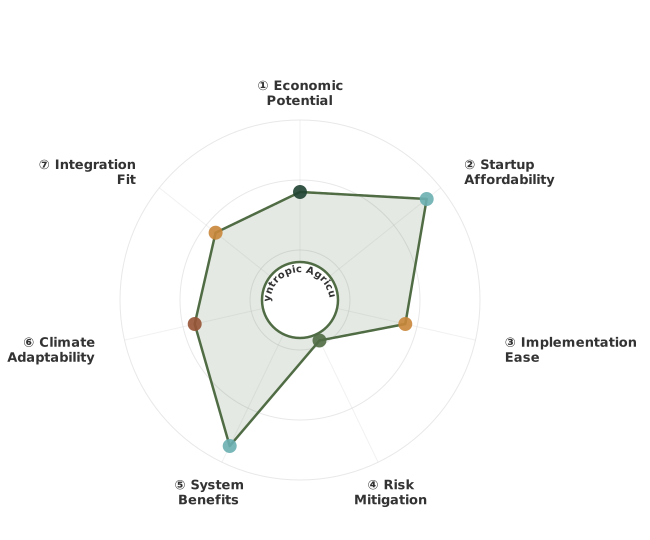
How These Traits Are Calculated
Trait dimensions are ordered clockwise starting from the top of the chart (12 o'clock position):
1. Economic Potential
Financial returns, annual value, and break-even timeline
WHAT: Evaluates financial viability by combining net annual value ($/ha from savings, income, and amortized harvests) with break-even timeline showing when practices pay for themselves.
WHY: Farmers need clear ROI understanding before committing resources. Fast payback (≤3 years) with strong returns (≥$300/ha) enables confident adoption, while long timelines (>10 years) restrict adoption to well-funded operations willing to wait for returns.
HOW: Calculated from net annual value in $/ha and break-even years. Exceptional (≥2.6): fast ROI ≤3 years + high value ≥$300/ha. Typical (1.8-2.5): moderate returns or longer timelines. Limited (<1.8): marginal economics or very long payback >10 years.
2. Startup Affordability
Initial investment costs and financial barrier to entry
WHAT: Measures financial barrier to entry through startup costs for equipment, infrastructure, consulting, and materials. Inverted scoring: lower costs = higher scores = more accessible adoption.
WHY: Affordability determines who can adopt. Low-cost practices (<$250/ha) enable widespread adoption across diverse scales, while high costs (>$2,500/ha) limit adoption to well-capitalized operations, creating barriers that slow regenerative transition.
HOW: Calculated from initial investment parsed from practice content. Inverted scoring: Exceptional (≥2.6): minimal investment <$250/ha. Typical (1.8-2.5): moderate costs $250-2,500/ha. Limited (<1.8): high barrier >$2,500/ha.
3. Implementation Ease
Learning curve and specialized knowledge required
WHAT: Measures how much learning, planning, and specialized knowledge a practice requires. Simpler practices with fewer steps score higher, while complex practices requiring extensive training or specialized resources score lower.
WHY: Complex practices create adoption barriers even when economically viable. Straightforward practices enable faster adoption and broader participation, while those requiring extensive training, timing precision, or specialized equipment limit who can succeed.
HOW: Evaluated by measuring documentation length and identifying complexity markers like location-specific requirements, seasonal timing windows, specialized skills, and dedicated equipment needs. Exceptional (≥2.6): straightforward practices with minimal prerequisites. Typical (1.8-2.5): moderate learning curve with some specialized needs. Limited (<1.8): steep learning curve requiring significant training or resources.
4. Risk Mitigation
Identified financial and ecological risk assessment
WHAT: Evaluates documented risks across financial (investment loss, market volatility) and ecological (crop failure, pest outbreaks) domains. Inverted scoring: fewer risks = higher scores.
WHY: Understanding risk exposure helps farmers make informed decisions. Low-risk practices allow confident implementation, while high-risk practices require careful planning and contingency resources. Risk transparency prevents costly failures.
HOW: Calculated from identified risks in practice content. Inverted scoring: Exceptional (≥2.6): ≤2 risks with manageable severity. Typical (1.8-2.5): 3-5 moderate risks. Limited (<1.8): 6+ risks or severe exposure.
5. System Benefits
How many ways the practice improves your land simultaneously
WHAT: Measures how many aspects of land health improve at once—carbon storage, soil quality, erosion control, water absorption, and biodiversity. Practices that improve multiple areas simultaneously create compounding benefits where each improvement reinforces the others.
WHY: The best practices solve multiple problems at once. For example, addressing erosion simultaneously builds carbon and improves water infiltration, creating a resilient system with positive feedback loops. Single-benefit approaches miss these compound transformation opportunities.
HOW: Evaluated across five key outcomes: carbon sequestration, soil organic matter increase, erosion reduction, water infiltration improvement, and biodiversity enhancement. Exceptional (≥2.6): high carbon storage (>8 t/ha/yr), improvements across 4-5 areas, transformative outcomes. Typical (1.8-2.5): moderate carbon (3-8 t/ha/yr), improvements across 2-3 areas. Limited (<1.8): modest impact (<3 t/ha/yr), single-area focus only.
6. Climate Adaptability
Geographic applicability across Köppen climate zones
WHAT: Evaluates geographic applicability by assessing how many Köppen climate zones successfully support a practice and what adaptation requirements are needed. Measures breadth of climates where farmers can implement with minimal to moderate modifications.
WHY: Universal practices working across diverse climates enable more farmers to adopt regenerative approaches. Practices limited to single climate types (only Mediterranean, only tropical) restrict adoption and slow global transition. Adaptability determines whether a practice serves niche regions or offers broad transformation.
HOW: LLM evaluation of regional success stories, Köppen zone coverage, and adaptation needs. Exceptional (≥2.6): 5+ zones or 4+ climate types, 3+ continents, minimal adaptation. Typical (1.8-2.5): 3-4 zones or 2-3 types, 2 continents, moderate adaptation. Limited (<1.8): 1-2 zones, single region, significant adaptation or highly specialized.
7. Integration Fit
How well this practice combines with others you're doing
WHAT: Measures how well a practice combines with other regenerative practices you might be doing. Some practices work as building blocks that make many other practices easier or more effective, while others work best on their own.
WHY: Practices that combine well with many others create more value on your farm. For example, cover cropping enables no-till, improves grazing, supports crop diversity, and helps water management—making all of them work better together. This helps you build a coherent system rather than juggling disconnected practices.
HOW: Evaluated by identifying which practices combine well and how strong those combinations are. 'Ideally Suited' means strong combinations where practices reinforce each other (practice A makes B easier, while B makes A more effective). 'Adequate' means complementary benefits that work well together. Exceptional (≥2.6): combines well with 6+ practices, serves as a building block. Typical (1.8-2.5): combines with 3-5 practices. Limited (<1.8): 1-2 practices or works best alone.
Going Deeper
1
WHY - The Benefits
Syntropic agriculture is a system designed to create highly productive, self-sustaining agricultural ecosystems by actively managing ecological succession. It aims to build soil health, enhance biodiversity, and diversify income streams by mimicking the processes of...
Syntropic agriculture is a system designed to create highly productive, self-sustaining agricultural ecosystems by actively managing ecological succession. It aims to build soil health, enhance biodiversity, and diversify income streams by mimicking the processes of natural forests, but at an accelerated pace. Its benefits span soil functions, economic returns, and the broader regenerative capacity of the land.
WHY - The Benefits
Syntropic agriculture is a system designed to create highly productive, self-sustaining agricultural ecosystems by actively managing ecological succession. It aims to build soil health, enhance biodiversity, and diversify income streams by mimicking the processes of...
Syntropic agriculture is a system designed to create highly productive, self-sustaining agricultural ecosystems by actively managing ecological succession. It aims to build soil health, enhance biodiversity, and diversify income streams by mimicking the processes of natural forests, but at an accelerated pace. Its benefits span soil functions, economic returns, and the broader regenerative capacity of the land.
Soil Health Benefits
Syntropic agriculture profoundly enhances soil health through continuous biomass production and cycling. The dense planting and intensive chop-and-drop pruning generates substantial organic matter input, often exceeding 15-30 tonnes per hectare per year (6-12+ tons per acre) in mature systems. This organic matter feeds a vast array of soil microorganisms, leading to rapid increases in soil organic matter content, typically by 0.5-1.5% per year in the top 15 cm (6 inches) during the first decade. This leads to improved soil structure, aggregation, and water-holding capacity.
The diverse root systems of multiple species planted in close proximity create a complex network throughout the soil profile, enhancing aeration and water infiltration. Roots of different depths access water and nutrients from various layers, bringing them to the surface through litterfall and decomposition, effectively reducing reliance on deep soil reserves. The constant presence of living roots and the continuous mulch layer prevent soil erosion, protecting topsoil from wind and water damage. This leads to a significant reduction in runoff and sediment loss, often by 50-80% compared to degraded agricultural lands.
The diverse microbial communities supported by varied organic inputs and root exudates play crucial roles in nutrient cycling, nitrogen fixation, and disease suppression. The fungal networks (mycorrhizae) that develop in healthy syntropic systems help plants access nutrients and water, and contribute to soil aggregation. This biological activity leads to increased availability of macro and micronutrients, reducing the need for synthetic fertilizers. Studies in established syntropic systems in Brazil have shown soil nitrogen levels increasing by 0.3-0.5% and available phosphorus by 15-25% over a decade of intensive management.
Economic Benefits
The economic value of syntropic agriculture lies in its diversified production and reduced input costs over time. While initial investment and labor can be high, mature systems offer multiple harvest streams and increasing self-sufficiency.
Initial planting costs and intensive labor for pruning and management can range from $3,000 to $10,000 USD per hectare depending on scale, species complexity, and labor rates. However, early harvests of fast-growing vegetables, herbs, or short-cycle fruits can begin to offset costs within 1-3 years. For example, integrated vegetable plots within the system might yield $2,000-5,000 USD per hectare annually within 2-4 years.
As perennial components mature, income diversifies. Fruit and nut trees typically begin producing within 3-7 years, with commercial yields achieved within 7-15 years. Harvests of timber or firewood can occur after 10-20 years, depending on species. A well-designed system might yield $1,500-4,000 USD per hectare annually from fruit and nut production by year 10, plus additional income from harvested biomass if managed for short-rotation timber or fuelwood.
Longer-term economic benefits include reduced expenditure on synthetic fertilizers, pesticides, and herbicides, as the system builds intrinsic fertility and ecological balance. Input costs can decrease by 50-80% in mature systems compared to conventional equivalents. The increased resilience to climate variability (drought, heavy rains) also protects against catastrophic income losses. Mature syntropic systems can achieve profit margins 20-50% higher than conventional monocultures on comparable land, combining diversified yields with reduced operational costs.
Regenerative Systems Fit
Syntropic agriculture, when implemented following its core principles, strongly aligns with and promotes the regenerative agriculture framework, particularly in its mature stages. It acts as a powerful method for rapid ecosystem restoration and intensification of biological processes.
Principle 1 (Minimize Soil Disturbance): Syntropic agriculture is inherently perennial; once established, there is no annual tillage. The dense planting and multilayered canopy naturally protect the soil surface. While initial land preparation may involve some mechanical intervention to install the system, the focus is on creating a stable, perennial structure that prevents future disturbance. The intensive biomass input creates a surface mulch that further shields the soil.
Principle 2 (Maximize Crop Diversity): This is a cornerstone of syntropic agriculture. Systems are designed with dozens, if not hundreds, of species—trees, shrubs, herbaceous plants, ground covers, and root crops—arranged in complex spatial and temporal patterns. This biodiversity above ground directly translates to diverse root structures and microbial communities below ground, building resilience and ecosystem function.
Principle 3 (Keep Soil Covered): Year-round and multi-layered soil coverage is a defining feature. The canopy of trees and shrubs, the understory plants and vegetables, and the constant mulch layer generated from pruning ensure that the soil is protected from sun, wind, and rain impact at all times. This continuous coverage is critical for moisture retention, erosion prevention, and maintaining soil biological activity.
Principle 4 (Maintain Living Roots): The system is built upon perennial species, ensuring living roots are present and active throughout the soil profile for as long as the system exists. This continuous root exudation fuels soil biology, supports nutrient cycling, and maintains soil structure year-round. The diversity of root depths and types further enhances soil health and water infiltration.
Principle 5 (Integrate Livestock): While not a primary component of Götsch's core protocols, mature syntropic systems can be readily integrated with livestock. The abundant biomass production provides fodder, and the diverse planting can offer varied foraging opportunities. Managed grazing can be introduced between tree rows or in specific zones without compromising the system's integrity, adding another layer of nutrient cycling and economic diversification. Integration is often a subsequent step after the agroforestry structure is well-established.
Syntropic agriculture can be seen as a method to rapidly build the foundational elements of a regenerative system, especially in degraded or challenging environments. It accelerates the development of a functioning ecosystem that naturally supports other regenerative practices. While the initial intensity requires significant management, the long-term goal is a highly productive, ecologically balanced system that requires fewer external interventions and generates resilient, diversified yields, embodying the spirit of regenerative agriculture. Transitioning to syntropic agriculture from conventional systems involves a steep learning curve and can be seen as a proactive transition practice, creating the conditions for long-term regenerative sustainability.
Sources behind this view
Videos & Podcasts
-
Regenerative agriculture provides solutions for climate change, human health, and soil degradation, contrasting with industrial agriculture's harmful impacts, including glyphosate use. Practices like
-
Syntropic agriculture (Copic systems) uses diverse, layered plant species, 100% on-site organic matter recycling, and biomass management to create a resilient, self-sustaining ecosystem that builds so

-
Syntropic agriculture is an agroforestry system involving high-density planting and heavy annual pruning (40-60%) of trees. Pruned biomass builds soil fertility in situ, and pruning signals encourage
-
Syntropic agriculture accelerates natural succession by using biomass and soil exudates from diverse species, maintaining 100% soil coverage to feed soil life and make nutrients available for crops, m
Research
-
Regenerative Agriculture: Restoring Ecosystems¢ Resilience and Productivity: A Review (opens in new window)
This study found: Regenerative agriculture builds soil health and ecosystem services through practices like no-till, cover crops, and diverse rotations. It increases soil organic matter, improves water infiltration, bo
-
Systematic review of regenerative farming: Addressing agricultural sustainability challenges (opens in new window)
This study found: Systematic review of 31 studies shows regenerative farming improves soil health, biodiversity, and carbon capture, aiding sustainability. Technology is key for adoption, but policy, farmer understandi
-
Building Soil Health and Fertility through Organic Amendments and Practices: A Review (opens in new window)
This study found: Review of organic amendments (manures, compost, cover crops) and regenerative practices (no-till, crop diversity, agroecology) shows they restore soil health by increasing organic matter and beneficia
-
A Review of Soil Organic Carbon Dynamics under Regenerative Agricultural Practices (opens in new window)
This study found: Regenerative agriculture practices like cover crops and reduced tillage significantly increase soil organic carbon (0.2-1.5 Mg C ha⁻¹ yr⁻¹), improving soil health and resilience. Challenges include co
2
WHERE - Regional Considerations
Syntropic agriculture's success is deeply tied to regional climate and soil conditions, primarily influencing species selection, planting density, and management intensity. While adaptable, its core protocols are optimized for environments that support rapid biomass...
Syntropic agriculture's success is deeply tied to regional climate and soil conditions, primarily influencing species selection, planting density, and management intensity. While adaptable, its core protocols are optimized for environments that support rapid biomass growth and continuous biological activity.
WHERE - Regional Considerations
Syntropic agriculture's success is deeply tied to regional climate and soil conditions, primarily influencing species selection, planting density, and management intensity. While adaptable, its core protocols are optimized for environments that support rapid biomass...
Syntropic agriculture's success is deeply tied to regional climate and soil conditions, primarily influencing species selection, planting density, and management intensity. While adaptable, its core protocols are optimized for environments that support rapid biomass growth and continuous biological activity.
Click Here to Look up your Region if you don't already know it
Tropical Rainforest Regions
Representative Locations: Amazon Basin (Brazil, Peru), Southeast Asia (Indonesia, Malaysia), Central Africa (Republic of Congo, Gabon)
Climate Context: High temperatures year-round (25-30°C or 77-86°F), abundant rainfall (>200 cm or 80 inches annually) with short dry spells or no distinct dry season. Köppen Af/Am.
Application: Ideal conditions for syntropic agriculture. Rapid biomass accumulation, continuous growth. High diversity of species adapted to warm, humid conditions (e.g., banana, papaya, cacao, coffee, various timber species like teak, fast-growing legumes). Management must focus on managing rapid growth and decomposition. High potential for early establishment of complex systems.
Tropical Monsoon Regions
Representative Locations: India, Southeast Asia (Thailand, Vietnam), Northern Australia
Climate Context: High temperatures year-round, distinct wet season (monsoon) and dry season. Annual rainfall 100-250 cm (40-100 inches), concentrated in wet months. Köppen Am/Aw.
Application: Highly suitable, but dry season management is critical. Selection of drought-tolerant species or species capable of deep root systems is important. Mulching is paramount to conserve moisture during dry periods. Fast-growing biomass species are key for building soil organic matter during the wet season to sustain the system through dry spells.
Tropical Savanna Regions
Representative Locations: Eastern Africa (Kenya, Tanzania), Brazil (Cerrado), Northern Australia
Climate Context: High temperatures, distinct wet and dry seasons. Rainfall 75-150 cm (30-60 inches), with a pronounced dry season of 4-7 months. Köppen Aw/As.
Application: More challenging due to longer dry seasons. Requires careful selection of drought-resistant trees and understory species. Water harvesting techniques (e.g., swales, Keyline design) become essential to capture and store water during the wet season. Focus on species that can withstand drought or have deep root systems. Pioneer species that quickly build organic matter are crucial.
Humid Subtropical Regions
Representative Locations: Southeastern USA (Florida, Georgia), Southern China, Japan, Southern Brazil
Climate Context: Hot, humid summers and mild winters. Moderate to high rainfall (100-150 cm or 40-60 inches) distributed fairly evenly. USDA Zones 8-10, Köppen Cfa/Cwa.
Application: Very suitable. Long growing seasons allow for high biomass production. A wide array of tropical and subtropical fruit trees, timber species, and vegetables can be integrated. Winter cold is mild enough for many perennials to maintain some activity or for quick-growing cover crops to utilize frost-killed remnants of tropical species. Intensive management is key to harness the productive potential.
Mediterranean Regions
Representative Locations: California, Mediterranean Basin, Central Chile, Southwestern Australia
Climate Context: Hot, dry summers and mild, wet winters. Rainfall 40-90 cm (15-35 inches), highly seasonal. USDA Zones 8-10, Köppen Csa/Csb.
Application: Requires significant adaptation and water management. Species selection must focus on drought tolerance and fire resistance. Irrigation may be necessary for establishment and during dry periods, making water conservation strategies vital. Focus on hardy fruit trees (olives, figs), nut trees, and drought-tolerant shrubs. Intensive mulching and water retention techniques are critical. Lower biomass accumulation than tropical regions.
Humid Temperate Regions
Representative Locations: Northern Europe, Northeastern USA, Canada, parts of Australia and New Zealand
Climate Context: Warm summers and cool to cold winters. Moderate to high rainfall (75-150 cm or 30-60 inches). USDA Zones 5-7, Köppen Cfb/Cfa.
Application: Possible but requires careful species selection for cold hardiness. Focus on temperate fruit trees, nut trees, and fast-growing pioneer species that can tolerate frost. Shorter growing seasons mean biomass production is lower than in tropical/subtropical zones. Management of winter dormancy and early spring growth is important. Intensifying planting density and using cover crops can help maximize productivity within the shorter window.
3
HOW - Implementation Process
Syntropic agriculture is an intensive methodology that requires careful planning and execution, particularly during the establishment phase. The process involves site preparation, species selection based on ecological roles, high-density planting, and continuous...
Syntropic agriculture is an intensive methodology that requires careful planning and execution, particularly during the establishment phase. The process involves site preparation, species selection based on ecological roles, high-density planting, and continuous management of biomass.
HOW - Implementation Process
Syntropic agriculture is an intensive methodology that requires careful planning and execution, particularly during the establishment phase. The process involves site preparation, species selection based on ecological roles, high-density planting, and continuous...
Syntropic agriculture is an intensive methodology that requires careful planning and execution, particularly during the establishment phase. The process involves site preparation, species selection based on ecological roles, high-density planting, and continuous management of biomass.
Prerequisites
- Site Assessment: Understand your climate (rainfall, temperature, growing season), soil type, drainage, topography, and existing vegetation. Identify microclimates and potential challenges (e.g., wind, frost pockets, waterlogged areas).
- Goal Definition: What do you want to produce? Timber, fruit, nuts, vegetables, fibers, medicinal plants, or a combination? What are your ecological goals (soil building, biodiversity, water retention)?
- Species Selection: Based on site assessment and goals, identify a diverse palette of plants that fulfill specific ecological roles:
- Fast-growing pioneer species: Nitrogen fixers, quick biomass producers (e.g., Sesbania, Flemingia, Crotalaria, Guazuma ulmifolia).
- Fruit and nut trees: Medium-term producers that tolerate some shade.
- Shade-tolerant perennials: Vegetables, herbs, medicinal plants that can grow under canopy.
- Timber species: Slow-growing, high-value wood for long-term production.
- Ground covers: For weed suppression and soil protection.
- Tool Availability: Access to tools for planting, pruning (loppers, saws, machetes), and potentially biomass shredding/transportation.
Phase 1: Site Preparation and Planting Layout
Timing: Begin planting at the start of the rainy season or the most favorable growing period for your region.
Lane/Block Design: Götsch's protocols often involve planting in parallel dense bands or "lanes" with specific species compositions. Rows are typically oriented to capture prevailing winds or sun exposure optimally. Spacing between plants within a lane is very close (0.5-2 meters or 1.5-6 feet), while spacing between lanes can vary from 5-15 meters (15-50 feet) depending on the intended succession and management access needs.
Soil Preparation: Minimize disturbance where possible. Remove excessive weeds or invasive species. If land is severely degraded or compacted, light ripping or tilling may be necessary to establish initial root channels for pioneer species, but the goal is to create a perennial system that avoids future tillage. Incorporating compost or biochar can boost initial establishment.
Initial Planting: Plant a high density of diverse species. Pioneer species and nitrogen-fixers should be abundant in the initial planting. Ensure species are placed according to their successional role (e.g., faster-growing plants may initially be placed to provide shade or structure for slower-growing understory species). Planting can be done in staggered arrangements within and between rows to maximize space utilization and inter-species interaction.
Phase 2: Intensive Management and Biomass Cycling
Pruning and Biomass Application: This is the defining characteristic of syntropic agriculture. Regular pruning is essential, typically starting within 6-12 months after planting. Fast-growing pioneer species provide the bulk of early biomass. Prune branches and leaves and immediately apply them as mulch around desirable plants (especially fruit and timber trees, and sensitive understory crops). This practice is done multiple times a year.
Water Management: In regions with consistent rainfall, natural precipitation is sufficient. In drier climates, supplemental irrigation may be necessary during establishment, and water harvesting techniques (swales, contour farming) can be integrated to capture and store rainfall. Mulching significantly reduces water evaporation from the soil surface.
Weeding: While dense planting suppresses weeds, initial weeding may be necessary, especially for young fruit and timber trees. However, the goal is for the system to outcompete weeds naturally as it matures.
Phase 3: Succession and Maturation
Species Succession: Over years 2-5, pioneer species will have served their purpose (providing biomass, fixing nitrogen, improving soil) and will be pruned back or removed to allow light and space for slower-growing, more valuable fruit, nut, and timber species to thrive. The understory is managed to encourage shade-tolerant crops.
Ecological Development: Soil organic matter increases, microbial communities diversify, and the system becomes more resilient. The canopy structure develops, creating distinct microclimates that support a wider variety of plants and animals.
Harvesting Products: Begin harvesting fruits, vegetables, herbs, and medicinal plants as they mature. This provides early economic returns. Plan for timber harvests in later years (10-30+ years depending on species).
Phase 4: Ongoing Management and Integration
Continuous Pruning: Even in mature systems, strategic pruning remains important for biomass production, managing light penetration, and ensuring the health and productivity of desirable species. Nutrient Balancing: Monitor plant health and soil indicators. Adjust species composition or pruning strategies if nutrient deficiencies become apparent. Pest and Disease Management: High biodiversity generally leads to a balanced ecosystem that self-regulates pests and diseases. Focus on maintaining this diversity and ecological balance. Livestock Integration: Once the perennial structure is established (typically after 5-10 years), controlled integration of livestock can be introduced if desired, ensuring they do not damage young trees or disrupt the mulch layer excessively. Animals can graze on lush cover crops in the alleys or specific zones.
Transition Timeline & Phase-Out Strategy (for Conventional Farmers): Syntropic agriculture often requires a significant transition from conventional, monoculture farming.
- Years 1-3 (Foundation): Begin by dedicating a small plot (0.5-2 hectares or 1-5 acres) to a syntropic system. This allows learning the protocols without jeopardizing entire farm production. Continue conventional farming on other areas. Gradually scale up the syntropic plot as expertise grows. Reduce synthetic input use by 10-20% annually in conventional areas as soil health begins to improve from surrounding regenerative practices.
- Years 3-7 (Integration): Expand syntropic planting to 20-40% of the farm. Phase out synthetic fertilizers entirely in conventional areas, replacing with compost or cover crops. Gradually reduce synthetic pesticides as ecological balance improves. Harvest early products from syntropic plots to demonstrate economic viability.
- Years 7-15 (Maturity & Full Transition): Syntropic systems begin yielding significant harvests of fruits, nuts, or value-added products. Conventional areas (if still managed separately) should be fully regenerative, with no synthetic inputs. The farm structure shifts towards predominantly perennial, diverse systems. Livestock may be integrated into established syntropic zones.
- Phase-out goal: Complete transition away from synthetic inputs and annual tillage within 10-15 years. The phase-out is gradual, enabled by the increasing productivity and resilience of syntropic systems. Success is measured by reduced input costs, increased biodiversity, improved soil health indicators, and stable or increased net farm income.
Sources behind this view
Videos & Podcasts
-
Syntropic agriculture views ecosystems as 'composting organisms,' not collections of individuals, challenging human-centric interpretations of nature. Practices like adding nitrogen increase water dem

-
Syntropic agriculture accelerates natural succession by using biomass and soil exudates from diverse species, maintaining 100% soil coverage to feed soil life and make nutrients available for crops, m
-
Syntropic agriculture (Copic systems) uses diverse, layered plant species, 100% on-site organic matter recycling, and biomass management to create a resilient, self-sustaining ecosystem that builds so
-
Syntropic farming focuses on life energy flow and plant-microbe interactions, applicable across climates. Success requires understanding principles, adapting to local context, and careful consideratio

Research
-
Contributions to the Neganthropology (opens in new window)
This study found: Syntropic agriculture mimics forest growth using biodiversity and ecological succession, with roots in indigenous knowledge, and is conceptually linked to the 'Neganthropocene' idea of positive human
4
Know the Debate
Syntropic agriculture's success is deeply tied to its environment and management. In humid tropical regions with reliable rainfall, systems flouris...
Know the Debate
Syntropic agriculture's success is deeply tied to its environment and management. In humid tropical regions with reliable rainfall, systems flouris...
Syntropic agriculture's success is deeply tied to its environment and management. In humid tropical regions with reliable rainfall, systems flourish rapidly with high biodiversity. Semiarid and temperate climates require more careful species selection and water management for slower but still effective soil building. Typical establishment costs range from $1,500-$5,000/ha, with annual labor peaking at $500-$2,500/ha in early years. Expect 5-15 years for full productivity, though early harvests begin sooner. Intensive management, particularly pruning and biomass cycling, is key to driving soil organic matter increases.
What are the essential prerequisites for successful syntropic agriculture?
Adaptable Principles
Syntropic principles are universally applicable and adaptable, requiring only understanding of forest succession and biomass management for effective implementation in diverse climates.
Sources behind this view
Sources behind this view
Research
-
Sustainable Soil Utilization and Agriculture Production: Recommendations towards Achieving Sustainability (opens in new window)
This study found: Current farming methods harm natural cycles, lead to soil loss, and reduce carbon storage. Organic farming is presented as a way to lessen these environmental problems by using more organic matter, which helps maintain nature's processes and can improve food quality. Organic farming also seeks to avoid synthetic fertilizers, pesticides, growth hormones, and animal feed additives. Combining organic practices with new technology is important to make farming more sustainable and productive. Soil is a vital, non-renewable resource that takes a very long time to form. Keeping soil healthy—meaning it has good fertility, natural carbon, and biodiversity, and isn't degraded by erosion or pollution—is essential for sustainable farming. The goal is to farm in a way that meets our needs today without making it harder for future generations to meet theirs.
From the Web
-
Restoration agriculture designs diverse, synergistic farm ecosystems mimicking natural succession, evolving through stages like alley cropping and silvopasture, requiring system management rather than single-crop techniques.
Context-Specific Knowledge
Successful syntropic systems require deep local knowledge of plant guilds, specific soil types, and intensive pruning, making broad applicability challenging without significant foundational prerequisites.
Sources behind this view
Sources behind this view
Videos & Podcasts
-
Syntropic agriculture integrates diverse plant species to create a self-sustaining ecosystem, enhancing biodiversity, regenerating soil health, and promoting carbon sequestration to combat climate change.

-
Syntropic farming focuses on life energy flow and plant-microbe interactions, applicable across climates. Success requires understanding principles, adapting to local context, and careful consideration of practices like fire management.
From the Web
-
Felipe Pasini at Amadeco Syntropic farm in Salento, Puglia, Italy, uses syntropic agroforestry to transform dry, rocky land into a productive ecosystem. Key practices include strategic planting of complementary species, pruning, and mechanization to maximize biomass and minimize water use.
Making Sense of the Differences
Syntropic agriculture's success hinges on adapting its core principles to local conditions. While the fundamental concepts of succession and biomass cycling are universal, successful implementation requires specific knowledge of native species, regional soil types, and intensive management. Field practitioners emphasize that a deep understanding of local ecological interactions and a willingness to adapt protocols to site-specific conditions, rather than a one-size-fits-all approach, are critical for establishing resilient and productive systems.
How long until syntropic systems are self-sustaining?
Rapid Self-Sustainability (5-10 years)
In ideal climates with skilled management, syntropic systems can achieve self-sustainability and high productivity within 5-10 years, mimicking natural forest development.
Sources behind this view
Sources behind this view
Videos & Podcasts
-
Forest Foods aims to integrate arable crops like maize, beans, and cereals into syntropic agroforestry systems in Kenya, moving beyond monocultures to enhance resilience and productivity across various agroecological zones.

Research
-
Regenerative Agriculture: Restoring Ecosystems¢ Resilience and Productivity: A Review (opens in new window)
This study found: Regenerative agriculture is a farming approach that views farms as living ecosystems, moving away from the 'take-make-dispose' model of conventional farming. Instead of relying heavily on outside inputs, it focuses on building up the farm's natural resources and services. Key practices include disturbing the soil as little as possible (like no-till or reduced tillage), planting cover crops, rotating different crops, integrating livestock in a managed way, using compost, reducing synthetic fertilizers and pesticides, and incorporating trees. The approach is tailored to each farm's specific conditions. Farmers monitor soil health indicators like organic matter, how well soil holds water, and the amount of life in the soil. Studies show that regenerative practices can significantly increase soil organic matter (by 0.5-2% in 3-5 years), improve water infiltration (2-10 times better), boost soil microbial life (30-50% more), and increase beneficial insects (60-80% more). Farms can also capture 0.5 to 3 tons of carbon per hectare annually. Economically, these farms often have 20-40% lower input costs and can be more profitable in the long run, becoming more productive and stable over time.
From the Web
-
Syntropic farming imitates forest ecology with specific design principles, offering an alternative to input-based agriculture. It was adopted at Finca Luna Nueva, Costa Rica, after crop failures, to revitalize soil health and create diverse, forest-like systems.
Extended Self-Sustainability (10-15+ years)
Field reports suggest that true self-sustainability and full productivity, particularly in less ideal climates or with less intensive initial management, may take 10-15 years or longer.
Sources behind this view
Sources behind this view
Videos & Podcasts
-
In Kenya, syntropic farming was implemented on degraded land starting in 2020, involving local farmers through practical training. Despite a severe drought, the system proved resilient after drilling a borehole, leading to visible landscape regeneration and inspiring widespread adoption by neighboring farmers within four years.

-
Syntropic agriculture is an agroforestry system involving high-density planting and heavy annual pruning (40-60%) of trees. Pruned biomass builds soil fertility in situ, and pruning signals encourage plant growth. It regenerates degraded land through diverse species and microbial connections.
Making Sense of the Differences
The timeline to achieve a self-sustaining syntropic system varies significantly based on climate, management, and initial soil conditions. While proponents aim for rapid forest-like development within 5-10 years, field reports indicate that achieving true self-sustainability and full productivity, especially in less ideal climates or with less intensive early management, may take 10-15 years or more. Farmers should anticipate a significant learning curve and labor investment during the initial establishment phase, with gradual shifts towards reduced input needs as the system matures.
What drives soil organic matter increase in syntropic systems?
Root Exudates & Soil Biology
Dense root systems from diverse species continuously fuel soil biology through exudates, enhancing soil structure and nutrient cycling.
Sources behind this view
Sources behind this view
Videos & Podcasts
-
Syntropic Agriculture emphasizes high-density tree planting to produce lignin for stable humus and fungal-rich soil, mimicking forest ecosystems. Inter-tree spaces are used for annual crops until canopy closure, with shredded wood as mulch and grasses managed for continuous soil cover and fertility.
Research
-
Regenerative Agriculture: Restoring Ecosystems¢ Resilience and Productivity: A Review (opens in new window)
This study found: Regenerative agriculture is a farming approach that views farms as living ecosystems, moving away from the 'take-make-dispose' model of conventional farming. Instead of relying heavily on outside inputs, it focuses on building up the farm's natural resources and services. Key practices include disturbing the soil as little as possible (like no-till or reduced tillage), planting cover crops, rotating different crops, integrating livestock in a managed way, using compost, reducing synthetic fertilizers and pesticides, and incorporating trees. The approach is tailored to each farm's specific conditions. Farmers monitor soil health indicators like organic matter, how well soil holds water, and the amount of life in the soil. Studies show that regenerative practices can significantly increase soil organic matter (by 0.5-2% in 3-5 years), improve water infiltration (2-10 times better), boost soil microbial life (30-50% more), and increase beneficial insects (60-80% more). Farms can also capture 0.5 to 3 tons of carbon per hectare annually. Economically, these farms often have 20-40% lower input costs and can be more profitable in the long run, becoming more productive and stable over time.
Biomass Cycling & Decomposition
Intensive chop-and-drop biomass recycling from diverse above-ground vegetation is the primary accelerator, feeding decomposers and building stable soil carbon.
Sources behind this view
Sources behind this view
Videos & Podcasts
-
Syntropic agriculture accelerates natural succession by using biomass and soil exudates from diverse species, maintaining 100% soil coverage to feed soil life and make nutrients available for crops, mimicking self-sustaining forest ecosystems.
-
Syntropic agriculture (Copic systems) uses diverse, layered plant species, 100% on-site organic matter recycling, and biomass management to create a resilient, self-sustaining ecosystem that builds soil and regulates temperature.
-
Syntropic agriculture is an agroforestry system involving high-density planting and heavy annual pruning (40-60%) of trees. Pruned biomass builds soil fertility in situ, and pruning signals encourage plant growth. It regenerates degraded land through diverse species and microbial connections.
From the Web
-
Felipe Pasini at Amadeco Syntropic farm in Salento, Puglia, Italy, uses syntropic agroforestry to transform dry, rocky land into a productive ecosystem. Key practices include strategic planting of complementary species, pruning, and mechanization to maximize biomass and minimize water use.
Making Sense of the Differences
The rapid increase in soil organic matter in syntropic systems is attributed to multiple biological processes. While root exudates provide a continuous food source for soil microbes, the primary accelerator appears to be the large volume of above-ground biomass generated and continuously recycled through pruning. This intensive chop-and-drop strategy feeds decomposers, builds fungal networks, and creates stable humus, leading to significant SOM gains across the soil profile, a process intensified by dense planting and perennial root structures.
5
HOW MUCH - Costs & Investment
Note: All costs are in USD equivalent and may vary substantially based on local labor rates, material availability, soil conditions, and regional climate. Research local pricing for accurate budgeting.
Note: All costs are in USD equivalent and may vary substantially based on local labor rates, material availability, soil conditions, and regional climate. Research local pricing for accurate budgeting.
HOW MUCH - Costs & Investment
Note: All costs are in USD equivalent and may vary substantially based on local labor rates, material availability, soil conditions, and regional climate. Research local pricing for accurate budgeting.
Note: All costs are in USD equivalent and may vary substantially based on local labor rates, material availability, soil conditions, and regional climate. Research local pricing for accurate budgeting.
Note: All costs are based on recent US economic data adjusted by 4.2% for 2024–2026 market conditions and may vary substantially by region based on local labor availability, land quality, and irrigation requirements.
Site Preparation and Initial Infrastructure
Developing a syntropic system requires an upfront investment in land modification and water security. On a small-scale plot (under 50 acres (20 ha)), site clearing, ripping to address soil compaction, and installing dedicated irrigation leads to costs between $300 and $1,217 per acre ($741–$3,007/ha). Mid-size operations (50–500 acres (20–202 ha)) benefit from collective purchasing of machinery, resulting in costs of $230 to $950 per acre ($568–$2,347/ha). For large-scale operations (500+ acres), economies of scale in land management and infrastructure installation drive costs down to $158 to $717 per acre ($390–$1,772/ha). These figures assume standard conversion from existing pasture or degraded row-crop land.
Planting Material and Organic Inputs
Syntropic agriculture relies on high-density seeding and seedling planting to drive ecological succession. Small-scale growers spend between $200 and $800 per acre ($494–$1,977/ha) on diverse seeds, native nursery stock, and fruit-bearing tree varieties. Mid-size farms, often sourcing in bulk, see costs ranging from $160 to $600 per acre ($395–$1,483/ha). Large-scale farms spend between $120 and $400 per acre ($297–$988/ha), leveraging nursery partnerships. Mulching inputs—requiring significant organic matter to trigger initial nutrient cycling—add $80 to $320 per acre ($198–$791/ha) for small scale, $60 to $240 per acre ($148–$593/ha) for mid-size, and $40 to $200 per acre ($99–$494/ha) for large-scale operations, assuming local biomass sourcing strategies are employed.
Initial Labor and Labor Management
Labor is the single highest cost component due to the intensive nature of syntropic pruning and density management. For small-scale projects, labor input for initial planting and system layout runs $320 to $1,217 per acre ($791–$3,007/ha). Mid-size operations, using more efficient crew deployment, range from $240 to $960 per acre ($593–$2,372/ha). For large-scale operations, labor is managed through mechanized biomass handling and specialized succession-phase workflows, costing $160 to $720 per acre ($395–$1,779/ha). These ranges reflect variable local labor rates, with DIY-focused smallholders on the lower end and custom-managed systems on the higher end of the spectrum.
Most Spend: Most small-scale operations invest approximately $1,000–$2,000 per acre ($2,471–$4,942/ha), mid-size operations align with $830–$1,660 per acre ($2,051–$4,102/ha), and large-scale operations hover between $625–$1,250 per acre ($1,544–$3,089/ha). These ranges capture the middle 60% of expenditures, specifically focusing on systems that prioritize high-density fruit species and mechanized pruning tools to offset long-term manual labor costs.
Why the Range?: Costs vary significantly based on the baseline ecological state of the land; severely degraded soil requires higher upfront capital for compost and intensive ripping. Furthermore, the selection of plant material drives price volatility, as choosing rare varieties or advanced-age nursery stock can effectively double the plant budget compared to using localized seed starting or propagation nurseries.
Sources behind this view
Videos & Podcasts
-
Transitioning to regenerative farming costs $75k-$140k over two years but saves money compared to conventional nitrogen expenses ($195k/year). Start small (50-100 acres) with cover crops (hairy vetch,
6
REWARDS AND RISKS - Economics & Risk Factors
Syntropic agriculture offers high long-term rewards in terms of productivity, ecological health, and diversified income but comes with significant upfront investment and management intensity. Understanding these economic and systemic risks is crucial for successful...
Syntropic agriculture offers high long-term rewards in terms of productivity, ecological health, and diversified income but comes with significant upfront investment and management intensity. Understanding these economic and systemic risks is crucial for successful implementation.
REWARDS AND RISKS - Economics & Risk Factors
Syntropic agriculture offers high long-term rewards in terms of productivity, ecological health, and diversified income but comes with significant upfront investment and management intensity. Understanding these economic and systemic risks is crucial for successful...
Syntropic agriculture offers high long-term rewards in terms of productivity, ecological health, and diversified income but comes with significant upfront investment and management intensity. Understanding these economic and systemic risks is crucial for successful implementation.
Economic Scenario Analysis
In a best-case scenario, where land is situated in a high-growth climate and optimized for niche markets, a 1-acre (0.4 ha) syntropic system can generate $1,000 to $1,500 in early harvest revenue (vegetables and berries) by year 3. As the system achieves structural maturity by year 7, specialized fruit, nut, and timber harvests can yield $3,200 to $4,800 per acre ($7,907–$11,861/ha) annually. In a typical scenario, systemic returns focus on steady production, reaching annual income of $1,000 to $1,800 per acre ($2,471–$4,448/ha) by year 10, with break-even points on initial establishment usually occurring between years 7 and 12. In a conservative, shade-dominant scenario, the focus shifts to indirect profitability—livestock performance improvements or reduced input reliance—saving operators $40 to $120 per acre ($99–$297/ha) annually in fertilizer and supplemental feed costs, though cash-on-cash payback may extend beyond 15 years.
Market Factors and Risk Mitigation
Profitability for syntropic growers is heavily contingent on market access to diverse product streams. Producers relying on a single commodity often fail to capture the value of the syntropic system’s biological yields. To mitigate market risk, operators should implement "harvest stacking," where short-term crops (vegetables) bridge the cash flow gap during the 3–5 year development period of mid-term crops (fruits/herbs). Risk mitigation strategies include the use of community-supported agriculture (CSA) models to stabilize revenue, which generally requires an additional marketing labor cost of $50–$150 per acre ($124–$371/ha) annually. Producers should also allocate $100 per acre ($247/ha) into an emergency "biomass backup" fund, ensuring that if localized nutrient cycling is delayed due to drought or pest pressure, imported organic inputs can sustain the vegetation structure.
Transition Period Risks
Transitioning land to syntropic practices involves a pronounced "investment phase" characterized by high labor demand and low immediate commodity yields. During years 1–3, operators often face a "yield dip" where productive capacity in legacy crops is withdrawn to make space for long-term canopy development. Expected losses during this period can range from $200 to $600 per acre ($494–$1,483/ha) in forgone net revenue. Mitigation requires a staged approach: rather than converting the entire acreage simultaneously, farmers should adopt a modular transition—replacing 10–20% of land per annum. This staggers the cash flow dip and allows labor crews to master the complex pruning protocols of the system on a smaller, more manageable footprint before full-scale implementation.
Sources behind this view
Videos & Podcasts
-
Syntropic agriculture accelerates natural succession by using biomass and soil exudates from diverse species, maintaining 100% soil coverage to feed soil life and make nutrients available for crops, m
-
Syntropic agriculture (Copic systems) uses diverse, layered plant species, 100% on-site organic matter recycling, and biomass management to create a resilient, self-sustaining ecosystem that builds so
-
Syntropic farming focuses on life energy flow and plant-microbe interactions, applicable across climates. Success requires understanding principles, adapting to local context, and careful consideratio
-
Syntropic farming mimics forest cycles to build soil biodiversity and fertility, focusing on trace elements. It excels at water management through dense planting and mulching, reducing irrigation need

Research
-
Contributions to the Neganthropology (opens in new window)
This study found: Syntropic agriculture mimics forest growth using biodiversity and ecological succession, with roots in indigenous knowledge, and is conceptually linked to the 'Neganthropocene' idea of positive human
7
COMPATIBLE PRACTICES - Integration Opportunities
Syntropic agriculture's high-diversity, perennial structure creates synergistic opportunities with a range of other regenerative practices, amplifying ecological benefits and economic resilience.
Syntropic agriculture's high-diversity, perennial structure creates synergistic opportunities with a range of other regenerative practices, amplifying ecological benefits and economic resilience.
COMPATIBLE PRACTICES - Integration Opportunities
Syntropic agriculture's high-diversity, perennial structure creates synergistic opportunities with a range of other regenerative practices, amplifying ecological benefits and economic resilience.
Syntropic agriculture's high-diversity, perennial structure creates synergistic opportunities with a range of other regenerative practices, amplifying ecological benefits and economic resilience.
Silvopasture
- Integration: Introduce livestock grazing between established syntropic lanes after trees have reached sufficient height and protection. Choose species compatible with pruning benefits (e.g., goats for browsing, sheep for grazing understory).
- Synergy: Syntropic systems provide fodder and shade for livestock. Livestock manure can add fertility and help cycle nutrients. The forest-like structure offers protection from elements and predators. This combination maximizes land use efficiency and economic diversification.
Agroforestry (General)
- Integration: Syntropic agriculture can be viewed as an intensive form of agroforestry. It integrates well with less intensive alley cropping, windbreaks, or boundary plantings by extending the diverse, productive landscape.
- Synergy: Syntropic principles can inform the design of other agroforestry components, and components of general agroforestry (e.g., specific timber species) can be incorporated into syntropic designs.
Multi-Layered Cover Cropping
- Integration: While syntropic systems inherently include ground covers, specific cover crops can be used in alleys or during establishment phases to boost biomass, improve soil structure, or attract beneficial insects.
- Synergy: Syntropic planting designs often mimic successional cover cropping, using fast-growing pioneers to build soil. Integrating well-chosen cover crop species can further enhance nutrient cycling, pest control, and soil biology.
Biochar Applications
- Integration: Biochar can be incorporated during initial site preparation or mixed into compost used for initial soil amendment.
- Synergy: Biochar enhances soil water retention, nutrient holding capacity, and provides habitat for beneficial microbes, complementing the soil-building effects of syntropic biomass cycling.
Keyline Design / Water Harvesting
- Integration: Implementing on-contour swales, ponds, or mulched channels to capture and retain rainfall, especially in regions with distinct dry seasons.
- Synergy: Syntropic systems thrive on moisture. Water harvesting techniques ensure adequate water availability during dry spells, supporting rapid biomass growth and perennial survival, thus enhancing the productivity and resilience of the syntropic design.
No-Till Farming (in adjacent areas)
- Integration: Syntropic agriculture inherently avoids tillage in its perennial structure. Adjacent areas transitioning to regenerative perennial crops or pasture can benefit from the neighboring syntropic ecosystem's contribution to soil biology and nutrient flows.
- Synergy: The diverse biology and improved soil health in syntropic systems can have a beneficial spillover effect on adjacent lands, potentially improving soil microbial connectivity and resilience.
Integrated Pest Management (IPM)
- Integration: The high biodiversity of syntropic systems naturally attracts beneficial insects and predators that help manage pests. Focus on understanding and fostering this ecological balance.
- Synergy: Mimicking natural ecosystems reduces reliance on external pesticides. Syntropic systems provide diverse habitats and continuous food sources for beneficials, making IPM highly effective.
Syntropic agriculture's design inherently fosters many regenerative processes. Integrating it with practices like silvopasture or targeted water management allows for enhanced economic returns and ecological services, creating a robust, multi-functional landscape. For farmers transitioning, starting with syntropic agriculture can rapidly build the fertile, biologically active soil needed for many other regenerative practices to thrive.
Sources behind this view
Videos & Podcasts
-
Syntropic agriculture (Copic systems) uses diverse, layered plant species, 100% on-site organic matter recycling, and biomass management to create a resilient, self-sustaining ecosystem that builds so
-
Syntropic agriculture accelerates natural succession by using biomass and soil exudates from diverse species, maintaining 100% soil coverage to feed soil life and make nutrients available for crops, m
-
Syntropic farming, by Ernst Gotsch in Brazil, is a process-based, successional agriculture focused on reforestation and reducing water demand, though it could improve integration with topography and w
-
Syntropic farming focuses on life energy flow and plant-microbe interactions, applicable across climates. Success requires understanding principles, adapting to local context, and careful consideratio
Research
-
Synergizing Agroforestry and Permaculture for Sustainable Organic Farming (opens in new window)
This study found: Agroforestry and permaculture enhance organic farming by integrating trees, crops, and livestock, improving soil health, biodiversity, and resilience. Challenges include funding, knowledge, and policy
-
Systematic review of regenerative farming: Addressing agricultural sustainability challenges (opens in new window)
This study found: Systematic review of 31 studies shows regenerative farming improves soil health, biodiversity, and carbon capture, aiding sustainability. Technology is key for adoption, but policy, farmer understandi
-
Regenerative Agriculture: Restoring Ecosystems¢ Resilience and Productivity: A Review (opens in new window)
This study found: Regenerative agriculture builds soil health and ecosystem services through practices like no-till, cover crops, and diverse rotations. It increases soil organic matter, improves water infiltration, bo
-
Exploring the Evolution of Agroforestry: Comparing Traditional and Modern Practices for Sustainable Agriculture (opens in new window)
This study found: Agroforestry has evolved from traditional, nature-focused systems to modern, tech-driven ones. Combining both can boost food production, environmental health, and resilience using traditional wisdom a