
Techno-Grazing
Techno-grazing integrates advanced technology with livestock management to precisely control grazing duration, intensity, and location. It uses tools like GPS-enabled collars, drones, virtual fencing, and data analytics to monitor animal behavior, pasture health, and nutrient cycling, optimizing forage utilization while regenerating soil health. This data-driven approach allows for adaptive management to build soil organic matter, improve water infiltration, and increase biodiversity.
Read More: Complete Description
Techno-grazing is a sophisticated form of adaptive grazing management that leverages modern technology to refine the principles of holistic planned grazing. At its core, it aims to maximize the positive impacts of livestock on the land while minimizing any potential negative consequences by applying data-driven precision. This differentiates it from traditional or even basic rotational grazing, which often rely on visual assessment and predetermined schedules. Techno-grazing introduces a layer of real-time monitoring and control, enabling managers to respond dynamically to pasture conditions, animal needs, and soil responses.
The practice represents a transitionary step towards fully regenerative systems. While it explicitly aligns with Principle 5 (Integrate Livestock) by using animals strategically, its reliance on technology can sometimes create an illusion of detachment from natural ecological processes. However, when implemented with a clear regenerative goal, techno-grazing becomes a powerful tool for achieving Principles 1 (Minimize Soil Disturbance) and 3 (Keep Soil Covered) and 4 (Maintain Living Roots) by ensuring pastures are not overgrazed and remain productive for extended periods. It can also support Principle 2 (Maximize Crop Diversity) by allowing for targeted grazing to manage invasive species or promote specific forage plants.
The core components of techno-grazing typically include:
- Precision Livestock Tracking: GPS-enabled ear tags or collars on animals provide real-time location data. This allows for precise monitoring of herd movement, pasture utilization, and can map grazing patterns. This data helps understand herd behavior and identify areas of high or low impact.
- Pasture Monitoring: Drones equipped with multispectral cameras or satellite imagery can assess pasture biomass, forage quality, and plant health across large areas. This provides objective data on forage availability and growth rates, crucial for adjusting grazing plans.
- Virtual Fencing: While not strictly "techno-grazing" on its own, virtual fencing (e.g., using GPS collars that emit audio cues or mild electrical stimuli to keep animals within designated areas) is a common technological enabler. It allows for rapid paddock subdivision and rotation without physical fences, offering immense flexibility.
- Data Analytics and Decision Support: Sophisticated software platforms integrate animal tracking, pasture data, historical weather information, and soil health metrics. These platforms analyze the data to provide recommendations for grazing duration, timing, and paddock selection, often optimizing for specific regenerative outcomes like increased soil organic matter or improved water infiltration.
- Automated Water Delivery: Smart water troughs can monitor water levels, initiate pumping, and even analyze water quality. This ensures animals have access to water in their current grazing location, reducing stress and encouraging them to utilize remote pasture areas.
From a regenerative perspective, techno-grazing is often classified as a foundational practice with transition potential. Its primary strength lies in its ability to optimize the integration and impact of livestock, a cornerstone of regenerative agriculture. By providing granular data on grazing pressure and impact, techno-grazing allows managers to achieve the very fine-tuned grazing intensity and duration ideal for ecosystem regeneration. This precision can prevent overgrazing, ensure adequate rest periods for forage regrowth, and optimize nutrient distribution through manure deposition.
However, like any tool, techno-grazing can be used extractively. If the technology is employed simply to maximize animal output without regard for ecological principles—for example, to push animal numbers beyond regenerative capacity or to manage land in a way that still degrades soil—it fails to be truly regenerative. The regenerative aspect hinges on the intent and application: is the technology used to achieve ecological resilience, soil health, and biodiversity, or merely to boost short-term economic efficiency?
For farms transitioning to regenerative systems, techno-grazing can be an invaluable bridge. Many conventional operations struggle with precise grazing management because it's difficult to achieve consistently without data. Implementing techno-grazing tools can provide the objective feedback needed to learn adaptive grazing principles effectively. For example, monitoring herd movement can reveal that animals are not grazing as evenly as assumed, prompting adjustments to paddock size or shape. Real-time pasture data can show when forage is becoming too mature and needs grazing to maintain nutritional quality and prevent wastage.
The transition involves learning to interpret the data and translate it into ecological action. This requires a shift from intuition-based management to data-informed, adaptive decisions. A key phase-out strategy for any non-regenerative aspects would involve gradually reducing reliance on synthetic inputs (fertilizers, pesticides) as soil health improves through better grazing management, and ensuring that the technology supports, rather than dictates, ecological outcomes. The ultimate goal of transitioning would be to reach a point where the land's biological capacity is so well understood and managed that the technology becomes an enhancement, not a crutch. Abruptly adopting techno-grazing without understanding regenerative principles can lead to over-reliance on technology and a missed opportunity to truly rebuild ecosystem function. Conversely, integrating it thoughtfully with a regenerative mindset allows for enhanced precision in building healthy soil and resilient landscapes.
Sources behind this view
Sources behind this view
 Research
-
Managing Grazing to Restore Soil Health, Ecosystem Function, and Ecosystem Services (opens in new window)
This study found: Properly managed grazing animals can reverse environmental damage. Regenerative practices, like Adaptive Multi-Paddock (AMP) grazing, boost soil health, increase soil carbon, reduce erosion, and enhan
-
Precision Tools for Forage Assessment and Nutritional Decision Support in Grazing-Ruminant Systems: A Narrative Review (opens in new window)
This study found: New precision tools can help manage grazing animal nutrition by assessing pasture quality, but face challenges in calibration, cost, and farm-level adoption for practical decision-making.
-
FORAGES AND PASTURES SYMPOSIUM: COVER CROPS IN LIVESTOCK PRODUCTION: WHOLE-SYSTEM APPROACH: Managing grazing to restore soil health and farm livelihoods1 (opens in new window)
This study found: Regenerative grazing management is key to sustainable, climate-resilient farms. It restores soil health, enhances ecosystem services like carbon capture and water infiltration, and improves farm profi
-
381 Smart Farming for Extensive Grazing Ruminant Production Systems (opens in new window)
This study found: Smart farming technologies like remote sensing, AI, and virtual fencing can significantly improve extensive grazing systems for ruminants by monitoring animals, pastures, and soils for better manageme
Key Points
What It Is
- Precision livestock management using technology
- GPS tracking, virtual fencing, data analytics
- Optimizes forage utilization and animal impact
- Dynamic and adaptive grazing control
Why Do It
- Enhance soil biological activity
- Improve pasture health and resilience
- Maximize livestock performance sustainably
- Builds ecological function and farm profit
Know the Debate
- Carrying capacity gains vary: 10-25% vs. up to 50%+
- Tech costs range from $1k to $100k+ by scale
- Effective monitoring requires both tech and observation
- Scalable from basic fencing to advanced AI
Benefits - Financial
- Carrying capacity increases of 10-25% add +$50-200 per acre ($124–$494 per hectare) annually.
- Supplemental feed input costs decrease by 5-15%, saving $20-100 per acre ($49–$247 per hectare) annually.
- Improved livestock health outcomes reduce annual veterinary costs $10-50 per head.
Benefits - System
- Soil organic matter increase: 0.5-2% per year
- Water infiltration +50-80% in 3-5 years
- Increased plant diversity and vigor
- Enhanced ecosystem resilience (Principle 3, 4, 5)
Risks - Financial
- Upfront hardware investment ranges from $4,500 to $320,000 based on scale.
- Annual data and software subscription fees represent 10-20% of equipment cost.
- Poor implementation causes 5-10% yield reduction during 6-18 month transition.
Risks - System
- Overgrazing if data is misinterpreted or ignored
- Weakened soil biology if tech dictates management
- Potential for technology failure or data loss
- Can mask underlying land degradation if not regenerative
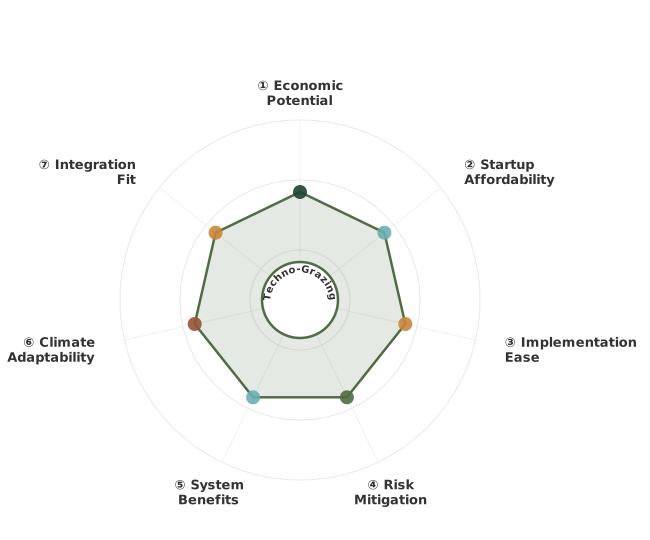
How These Traits Are Calculated
Trait dimensions are ordered clockwise starting from the top of the chart (12 o'clock position):
1. Economic Potential
Financial returns, annual value, and break-even timeline
WHAT: Evaluates financial viability by combining net annual value ($/ha from savings, income, and amortized harvests) with break-even timeline showing when practices pay for themselves.
WHY: Farmers need clear ROI understanding before committing resources. Fast payback (≤3 years) with strong returns (≥$300/ha) enables confident adoption, while long timelines (>10 years) restrict adoption to well-funded operations willing to wait for returns.
HOW: Calculated from net annual value in $/ha and break-even years. Exceptional (≥2.6): fast ROI ≤3 years + high value ≥$300/ha. Typical (1.8-2.5): moderate returns or longer timelines. Limited (<1.8): marginal economics or very long payback >10 years.
2. Startup Affordability
Initial investment costs and financial barrier to entry
WHAT: Measures financial barrier to entry through startup costs for equipment, infrastructure, consulting, and materials. Inverted scoring: lower costs = higher scores = more accessible adoption.
WHY: Affordability determines who can adopt. Low-cost practices (<$250/ha) enable widespread adoption across diverse scales, while high costs (>$2,500/ha) limit adoption to well-capitalized operations, creating barriers that slow regenerative transition.
HOW: Calculated from initial investment parsed from practice content. Inverted scoring: Exceptional (≥2.6): minimal investment <$250/ha. Typical (1.8-2.5): moderate costs $250-2,500/ha. Limited (<1.8): high barrier >$2,500/ha.
3. Implementation Ease
Learning curve and specialized knowledge required
WHAT: Measures how much learning, planning, and specialized knowledge a practice requires. Simpler practices with fewer steps score higher, while complex practices requiring extensive training or specialized resources score lower.
WHY: Complex practices create adoption barriers even when economically viable. Straightforward practices enable faster adoption and broader participation, while those requiring extensive training, timing precision, or specialized equipment limit who can succeed.
HOW: Evaluated by measuring documentation length and identifying complexity markers like location-specific requirements, seasonal timing windows, specialized skills, and dedicated equipment needs. Exceptional (≥2.6): straightforward practices with minimal prerequisites. Typical (1.8-2.5): moderate learning curve with some specialized needs. Limited (<1.8): steep learning curve requiring significant training or resources.
4. Risk Mitigation
Identified financial and ecological risk assessment
WHAT: Evaluates documented risks across financial (investment loss, market volatility) and ecological (crop failure, pest outbreaks) domains. Inverted scoring: fewer risks = higher scores.
WHY: Understanding risk exposure helps farmers make informed decisions. Low-risk practices allow confident implementation, while high-risk practices require careful planning and contingency resources. Risk transparency prevents costly failures.
HOW: Calculated from identified risks in practice content. Inverted scoring: Exceptional (≥2.6): ≤2 risks with manageable severity. Typical (1.8-2.5): 3-5 moderate risks. Limited (<1.8): 6+ risks or severe exposure.
5. System Benefits
How many ways the practice improves your land simultaneously
WHAT: Measures how many aspects of land health improve at once—carbon storage, soil quality, erosion control, water absorption, and biodiversity. Practices that improve multiple areas simultaneously create compounding benefits where each improvement reinforces the others.
WHY: The best practices solve multiple problems at once. For example, addressing erosion simultaneously builds carbon and improves water infiltration, creating a resilient system with positive feedback loops. Single-benefit approaches miss these compound transformation opportunities.
HOW: Evaluated across five key outcomes: carbon sequestration, soil organic matter increase, erosion reduction, water infiltration improvement, and biodiversity enhancement. Exceptional (≥2.6): high carbon storage (>8 t/ha/yr), improvements across 4-5 areas, transformative outcomes. Typical (1.8-2.5): moderate carbon (3-8 t/ha/yr), improvements across 2-3 areas. Limited (<1.8): modest impact (<3 t/ha/yr), single-area focus only.
6. Climate Adaptability
Geographic applicability across Köppen climate zones
WHAT: Evaluates geographic applicability by assessing how many Köppen climate zones successfully support a practice and what adaptation requirements are needed. Measures breadth of climates where farmers can implement with minimal to moderate modifications.
WHY: Universal practices working across diverse climates enable more farmers to adopt regenerative approaches. Practices limited to single climate types (only Mediterranean, only tropical) restrict adoption and slow global transition. Adaptability determines whether a practice serves niche regions or offers broad transformation.
HOW: LLM evaluation of regional success stories, Köppen zone coverage, and adaptation needs. Exceptional (≥2.6): 5+ zones or 4+ climate types, 3+ continents, minimal adaptation. Typical (1.8-2.5): 3-4 zones or 2-3 types, 2 continents, moderate adaptation. Limited (<1.8): 1-2 zones, single region, significant adaptation or highly specialized.
7. Integration Fit
How well this practice combines with others you're doing
WHAT: Measures how well a practice combines with other regenerative practices you might be doing. Some practices work as building blocks that make many other practices easier or more effective, while others work best on their own.
WHY: Practices that combine well with many others create more value on your farm. For example, cover cropping enables no-till, improves grazing, supports crop diversity, and helps water management—making all of them work better together. This helps you build a coherent system rather than juggling disconnected practices.
HOW: Evaluated by identifying which practices combine well and how strong those combinations are. 'Ideally Suited' means strong combinations where practices reinforce each other (practice A makes B easier, while B makes A more effective). 'Adequate' means complementary benefits that work well together. Exceptional (≥2.6): combines well with 6+ practices, serves as a building block. Typical (1.8-2.5): combines with 3-5 practices. Limited (<1.8): 1-2 practices or works best alone.
Going Deeper
1
WHY - The Benefits
Techno-grazing offers a suite of benefits that directly support the goals of regenerative agriculture by enhancing precision in livestock management. These benefits span soil health, economic returns, ecological resilience, and carbon sequestration, all achieved through...
Techno-grazing offers a suite of benefits that directly support the goals of regenerative agriculture by enhancing precision in livestock management. These benefits span soil health, economic returns, ecological resilience, and carbon sequestration, all achieved through a data-informed approach.
WHY - The Benefits
Techno-grazing offers a suite of benefits that directly support the goals of regenerative agriculture by enhancing precision in livestock management. These benefits span soil health, economic returns, ecological resilience, and carbon sequestration, all achieved through...
Techno-grazing offers a suite of benefits that directly support the goals of regenerative agriculture by enhancing precision in livestock management. These benefits span soil health, economic returns, ecological resilience, and carbon sequestration, all achieved through a data-informed approach.
Soil Health Benefits
The primary soil health benefit of techno-grazing stems from its ability to optimize the impact of livestock on pasture. By precisely controlling grazing duration and intensity, managers can ensure forage plants receive adequate rest periods for root regeneration and regrowth. This prevents overgrazing, which can lead to bare soil, erosion, and reduced soil organic matter. Studies indicate that well-managed rotational or adaptive grazing, which techno-grazing refines, can increase soil organic matter by 0.5-2% per year in degraded systems. The more uniform distribution of manure and urine, facilitated by controlled herd movement, also enhances nutrient cycling and soil fertility without the need for synthetic fertilizers.
Improved water infiltration is another critical soil health outcome. By keeping pastures covered with living plants and residue, and by increasing soil structure through organic matter accumulation and root channels, techno-grazing systems can improve water infiltration rates by 50-80% within 3-5 years. This reduces surface runoff, minimizes erosion, and recharges groundwater. The increased soil porosity also leads to better aeration, which is vital for the aerobic microorganisms that drive soil health.
Techno-grazing supports the maintenance of living roots (Principle 4) and keeping soil covered (Principle 3) by ensuring pastures are never completely stripped bare. The controlled grazing prevents animals from repeatedly grazing the same areas before plants can recover, allowing for continuous photosynthetic activity and root maintenance throughout the growing season. This also maximizes the effectiveness of cover cropping and forage diversity strategies (Principle 2) as the soil environment is consistently healthier and more conducive to a wider range of plant species.
Economic Benefits
Techno-grazing can lead to significant economic advantages for farmers and ranchers. Increased pasture productivity and health directly translate to an enhanced carrying capacity, often by 10-25%, meaning more livestock can be supported on the same acreage. Better forage quality and extended grazing seasons mean reduced reliance on costly supplemental feeding, lowering input costs. Improved livestock health, a common outcome of better nutrition and reduced stress from optimal grazing conditions, can lead to lower veterinary bills and higher fertility rates.
The enhanced soil health and ecological resilience built through techno-grazing also contribute to long-term economic stability. Healthier soils are more resilient to drought and extreme weather events, reducing the risk of catastrophic losses. Furthermore, farms demonstrating strong environmental stewardship, often evidenced by improved soil health metrics, are increasingly finding access to premium markets, cost-share programs, and improved public perception, which can translate to higher product prices and better market access. The increased productivity and reduced inputs contribute to higher net farm income and, over time, can increase land value.
Carbon Sequestration and Climate Resilience
A significant benefit of techno-grazing is its contribution to carbon sequestration. By promoting plant growth and organic matter accumulation in the soil, these systems effectively draw down atmospheric carbon dioxide and store it in the soil carbon pool. Estimates suggest that regenerative grazing practices, as optimized by techno-grazing, can sequester 2-5 tonnes of carbon dioxide per hectare per year. This not only helps mitigate climate change but also builds soil carbon, which contributes to improved soil structure, water-holding capacity, and nutrient availability.
The increased soil organic matter and improved water infiltration also enhance the farm's resilience to climate change. Healthier soils act like sponges, absorbing more water during heavy rainfall events, thus mitigating flood risk, and retaining it longer during dry periods, buffering against drought. This dual benefit is critical in regions experiencing more erratic weather patterns.
Biodiversity Enhancement
The regenerative practices facilitated by techno-grazing actively promote biodiversity above and below ground. By managing grazing pressure, managers can create diverse pasture swards, encouraging a greater variety of grasses, forbs, and legumes. This increased plant diversity supports a wider range of insect pollinators, beneficial predators, and wildlife. The enhanced soil health also fosters a more robust and diverse soil microbial community, which is fundamental to ecosystem function.
The integration of livestock, when managed precisely, also contributes to nutrient cycling and disturbance regimes that can favor certain native plant species, further increasing overall biodiversity. The creation of varied microhabitats within the pasture through managed grazing can attract different species of birds, insects, and small mammals, contributing to the ecological health of the broader landscape.
Regenerative Systems Fit
Techno-grazing is a powerful tool for integrating Principle 5 (Integrate Livestock) with the other four regenerative principles.
- Principle 1 (Minimize Soil Disturbance): By preventing overgrazing and controlling compaction through precise herd management, techno-grazing significantly reduces soil disturbance compared to continuous or poorly managed grazing.
- Principle 2 (Maximize Crop Diversity): Data from techno-grazing can inform decisions to introduce or manage diversity in forage species, whether by strategic grazing to favor certain plants or by integrating them into cover crop mixes.
- Principle 3 (Keep Soil Covered): Precise rotational grazing ensures that pastures are not left bare, with living plants or sufficient residue always present, protecting the soil from erosion and temperature extremes.
- Principle 4 (Maintain Living Roots): By ensuring adequate rest periods for pastures, techno-grazing allows plants to regenerate their root systems, ensuring continuous living roots throughout the growing season.
For farms transitioning to regenerative agriculture, techno-grazing can be a bridge. It provides the data and control needed to practice adaptive grazing effectively. As soil health improves, the reliance on technology may lessen as ecological processes become more robust and predictable. The ultimate aim is to use technology to enhance, not replace, the understanding and management of natural ecological functions.
Sources behind this view
 Videos & Podcasts
-
Regenerative grazing (adaptive multi-paddock) uses high-density, short-duration grazing with long recovery to stimulate soil health, increase biomass, and improve water infiltration, mimicking natural
-
Holistic management with cattle is key to improving soil health, water cycles, and carbon sequestration. Maximize animal impact (hooves, dung, urine) for diversity and plant growth, while breeding cat
-
Laura Payne details how managed grazing enhances soil health, water quality, and wildlife habitat, citing research on reduced erosion, improved stream health, and support for grassland birds. Key prin
-
Holistic management and planned grazing are foundational for 100% grass-fed dairy, improving soil health, nutrient cycling, and economic viability by reducing feed costs. This regenerative approach be
 Community
-
Adopts a holistic grazing management approach emphasizing diverse perennial pastures, higher residuals (4"), and longer rest periods (avg. 45 days) to build soil health, increase organic matter (3.4%
Read more (opens in new window) smallfarms.cornell.edu -
Build healthy pasture soils by minimizing tillage, maintaining living roots and species diversity, and implementing proper grazing management. Livestock are essential for nutrient cycling and stimulat
Read more (opens in new window) smallfarms.cornell.edu -
Manage rotational grazing by setting recovery (15-40+ days, adapting to region/season) and grazing periods (2-3 days). Aim to 'take half, leave half' for livestock and soil microbes. High stocking den
Read more (opens in new window) smallfarms.cornell.edu -
Advocates for sustainable grazing by leaving over half of pasture plants after grazing for regrowth and soil health, contrasting it with overgrazing which depletes reserves and degrades soil. This app
Read more (opens in new window) smallfarms.cornell.edu
Research
-
Managing Grazing to Restore Soil Health, Ecosystem Function, and Ecosystem Services (opens in new window)
This study found: Properly managed grazing animals can reverse environmental damage. Regenerative practices, like Adaptive Multi-Paddock (AMP) grazing, boost soil health, increase soil carbon, reduce erosion, and enhan
-
Systematic review of regenerative farming: Addressing agricultural sustainability challenges (opens in new window)
This study found: Systematic review of 31 studies shows regenerative farming improves soil health, biodiversity, and carbon capture, aiding sustainability. Technology is key for adoption, but policy, farmer understandi
-
FORAGES AND PASTURES SYMPOSIUM: COVER CROPS IN LIVESTOCK PRODUCTION: WHOLE-SYSTEM APPROACH: Managing grazing to restore soil health and farm livelihoods1 (opens in new window)
This study found: Regenerative grazing management is key to sustainable, climate-resilient farms. It restores soil health, enhances ecosystem services like carbon capture and water infiltration, and improves farm profi
-
Review: Precision Livestock Farming technologies in pasture-based livestock systems. (opens in new window)
This study found: Smart farming tech (GPS, drones, virtual fencing) can improve livestock management on pasture for cattle, sheep, goats, pigs, and poultry, despite challenges like battery life and cost.
 From the Web
-
Six soil health principles (context, cover, minimize disturbance, diversity, living roots, integrate livestock) guide regenerative agriculture within four ecosystem processes (energy, water, nutrient
-
Five steps to regenerative agriculture: Holistic Planned Grazing, no-till farming, planting diverse cover crops/interseeding, using compost/inoculants (with caution), and incorporating silvopasture/wo
-
Regenerative grazing, especially adaptive multi-paddock (AMP) grazing, enhances farm profitability, ecosystem health, and food system resiliency. Studies show AMP grazing increases soil carbon by 13%
-
Regenerative ranching benefits include increased soil organic matter, reduced erosion, improved water retention, enhanced profitability, carbon sequestration, and increased wildlife habitat, achieved
2
WHERE - Regional Considerations
Techno-grazing, while technologically driven, is deeply influenced by regional environmental factors. success and implementation details vary significantly across different climates and landscapes.
Techno-grazing, while technologically driven, is deeply influenced by regional environmental factors. success and implementation details vary significantly across different climates and landscapes.
WHERE - Regional Considerations
Techno-grazing, while technologically driven, is deeply influenced by regional environmental factors. success and implementation details vary significantly across different climates and landscapes.
Techno-grazing, while technologically driven, is deeply influenced by regional environmental factors. success and implementation details vary significantly across different climates and landscapes.
Click Here to Look up your Region if you don't already know it
Arid and Semi-Arid Climates
Representative Locations: Western USA, Australia, North Africa, Central Asia, parts of South America (e.g., Patagonia)
Climate Context: Low annual precipitation (<40 cm or 15 inches), high evaporation rates, often large diurnal temperature fluctuations, and potentially short, unpredictable growing seasons. Köppen BWh/BSh/BWk/BSk.
Considerations: Water scarcity is the primary constraint. Techno-grazing tools are invaluable here for maximizing the utilization of scarce forage. Precision monitoring helps ensure livestock are concentrated on productive areas and do not overgraze fragile arid or semi-arid rangelands. Virtual fencing can be used to move animals efficiently to remote water sources or to manage grazing pressure on highly sensitive areas requiring long rest periods. Drone imagery is crucial for monitoring forage growth and making rapid adjustments to grazing plans in response to rainfall events. Systems must be adapted for efficient water delivery, ensuring livestock water access without creating localized overgrazing around water points.
Hot Arid and Semi-Arid Climates
Representative Locations: Southwestern USA, North Africa, Middle East, parts of Australia and South America.
Climate Context: Hot summers typical, minimal rainfall, often extreme temperatures. Köppen BWh/BSh.
Considerations: Managing heat stress on livestock is paramount. Techno-grazing technology can help monitor animal behavior to identify heat stress indicators, prompting moves to shaded areas or water. Predictive analytics can forecast heat events, allowing for proactive grazing adjustments. Efficient water access is critical, and technology can ensure animals are moved to areas where water is available, minimizing their travel stress and maintaining forage utilization.
Mediterranean Climates
Representative Locations: California, Mediterranean Basin, Chile, SW Australia, South Africa.
Climate Context: Hot, dry summers and mild, wet winters. Precipitation is seasonal and can be variable. USDA Zones 8-10, Köppen Csa/Csb.
Considerations: The distinct wet and dry seasons require careful management. Techno-grazing can help optimize grazing during the wet season for maximum forage production and during the dry season to manage risk, ensuring that fragile pastures are not overgrazed and that perennials are allowed sufficient recovery. Virtual fencing can be used to manage grazing on areas with limited water access during dry spells, or to protect riparian zones during wetter periods. Drones are useful for monitoring pasture senescence and planning for winter grazing of dormant annuals.
Temperate Climates (Humid and Dry)
Representative Locations: Much of North America, Europe, Asia (e.g., Ukraine, parts of China), parts of South America (e.g., Argentina), and Oceania.
Climate Context: Differentiated by rainfall: humid temperate has evenly distributed rainfall (Köppen Cfa/Cfb/Cfc), while dry temperate has more seasonal rainfall or lower overall amounts (Köppen Csa/Csb/Dfa/Dfb with dry summers).
Considerations: Techno-grazing is highly applicable here due to longer growing seasons and generally more predictable forage growth. The technology allows for fine-tuning of grazing rotations to take full advantage of peak forage production, manage seasonal growth spurts, and extend the grazing season into fall and winter. Data analytics can optimize stocking rates and paddock sequencing based on detailed pasture growth models and weather forecasts. Virtual fencing can be particularly effective for subdividing large pastures into smaller, more manageable grazing cells, crucial for maximizing regenerative benefits.
Tropical and Subtropical Climates
Representative Locations: Southeast Asia, Central and South America, Africa, Northern Australia.
Climate Context: High temperatures year-round, with distinct wet and dry seasons or consistent high rainfall. Köppen Af/Am/Aw/As/Cfa/Cwa.
Considerations: Managing heat stress, high humidity, and intense rainfall events are key challenges. Techno-grazing can help monitor animal comfort and adjust grazing to shade or cooler microclimates. Precise pasture monitoring is essential to avoid overgrazing during dry periods or soil degradation during intense rainy seasons. Virtual fencing can be used to keep animals away from sensitive riparian areas during heavy rains or to concentrate them on higher ground. Technology aids in optimizing grazing for tropical forages, which can grow rapidly but also become coarse or indigestible if not managed properly.
Cold Climates
Representative Locations: Northern USA/Canada, Northern Europe, Siberia.
Climate Context: Short growing seasons, significant winter freeze, and periods of snow cover. USDA Zones 1-5, Köppen Dwc/Dfb/Dfc.
Considerations: Techno-grazing must adapt to the seasonal limitations. Technology can be used to maximize grazing during the short growing season, ensuring optimal utilization of abundant but short-lived forage. Winter grazing strategies can be enhanced by monitoring snow depth and forage availability remotely (e.g., via satellite imagery or drones with specialized sensors). Virtual fencing can help manage livestock on winter pastures, perhaps by guiding them to accessible forage patches beneath snow cover or to areas where supplemental feed can be efficiently delivered. The focus shifts to maximizing efficient use of short productive windows and extending the grazing season as much as possible to reduce winter feed costs.
3
HOW - Implementation Process
Prerequisites
Prerequisites
HOW - Implementation Process
Prerequisites
Prerequisites
- Clear Regenerative Goals: Define what you aim to achieve (e.g., increase soil organic matter by X%, improve water infiltration, boost biodiversity, reduce synthetic inputs). Techno-grazing must serve these goals.
- Existing Livestock Operation: Techno-grazing is an advanced management system for livestock. You need a functioning herd or flock.
- Basic Infrastructure: Access to electricity for charging devices and potentially internet connectivity for data upload/download in remote areas.
- Commitment to Data Acquisition: Willingness to consistently collect and analyze data from technology.
- Adaptive Management Mindset: Readiness to adjust plans based on data, rather than sticking rigidly to a schedule.
Phase 1: Technology Assessment and Selection
- Identify Needs: Based on your goals and farm layout, determine which technologies are most critical. Do you primarily need pasture monitoring, animal tracking, or flexible paddock subdivision?
- Research Options: Evaluate GPS collar providers, drone services (or purchase/rental options), virtual fencing systems, and data analytics software. Consider durability, battery life, data accuracy, software usability, and cost. Look for systems designed for agricultural environments and rugged use.
- Pilot Program: For large investments, consider a pilot program on a portion of your land or with a subset of your herd. This allows you to test system compatibility, data flow, and user-friendliness before full-scale adoption.
- Budgeting: Factor in initial purchase costs, subscription fees for software and data, potential repair costs, and training. Costs vary significantly internationally.
Phase 2: Infrastructure Setup and Training
- Deploy Hardware: Install GPS collars on animals, set up base stations or communication hubs, calibrate drones if purchasing, and ensure water infrastructure is integrated if using smart troughs.
- Software Installation & Configuration: Set up the data platform on computers or mobile devices. Import farm maps, paddock boundaries, and initial paddock data. Configure herd/flock and pasture parameters.
- User Training: All key personnel must be trained on operating the technology and understanding the data outputs. This often involves vendor-provided training, online tutorials, and field practice. Understanding the limitations and potential error sources of the technology is crucial.
Phase 3: Data Collection and Initial Grazing Plan
- Gather Baseline Data: Before major management changes, collect data on current pasture conditions (biomass, species composition), soil health metrics (organic matter, infiltration), and animal performance.
- Map and Define Paddock Layouts: Use farm maps within the software to delineate current or planned paddocks. For virtual fencing, define virtual boundaries.
- Input Pasture Growth Models: If your chosen software includes pasture growth modeling, input local weather data, soil types, and forage species information to get initial estimates of carrying capacity.
- Develop First Grazing Plan: Based on initial data and technology outputs (e.g., estimated forage availability, animal location data), create a preliminary grazing plan. This might involve short-duration, high-density grazing in specific paddocks to mimic desired impact levels.
Phase 4: Adaptive Grazing and Refinement
- Real-time Monitoring: Daily or every few days, check GPS data for animal location, monitor pasture health via drones or imagery, and review data analytics outputs.
- Adjust Rotations: Based on the data, make timely decisions about moving animals. For example, if animals are spending too long in one area or if forage is depleted, move them to the next paddock. Virtual fencing provides the flexibility to implement these moves rapidly.
- Observe and Record: Document observations about animal behavior, forage response, and soil conditions. Correlate these observations with the data collected by the technology.
- Regular Data Analysis: Periodically (weekly to monthly), conduct deeper analysis of the data to identify trends, assess the effectiveness of grazings, and refine future plans. This might involve adjusting paddock rest periods, stocking densities, or grazing sequences.
- Integration of Other Management Practices: Ensure Techno-grazing complements other regenerative practices like cover cropping, reduced tillage, and diverse forage planting. Data can help determine optimal timing for these activities based on pasture condition and animal impact.
Transition Timeline & Phase-Out Strategy (If applicable)
The transition in techno-grazing is less about phasing out a practice and more about phasing out reliance on dated or less precise management and optimizing the technology's regenerative impact.
- Year 1-2: Focus on learning the technology and understanding its data. Implement basic adaptive grazing based on initial insights. This phase might still involve some conventional inputs or less than optimal grazing patterns as you learn. Gain proficiency with data interpretation.
- Year 2-4: As comfort and understanding grow, begin integrating techno-grazing with other regenerative practices. Use data to actively manage for soil health outcomes (e.g., ensuring adequate rest for soil biology, maximizing nutrient cycling). Begin reducing synthetic inputs as soil fertility and resilience increase.
- Year 4-6+: Technology becomes an integral tool for refining regenerative outcomes. Goals shift from simply managing livestock to actively building ecosystem function. Reliance on technology should support, not dictate, ecological principles. Data is used to verify regenerative progress and make fine-tuned adjustments for continuous improvement. If the technology was initially used for short-term economic gains without ecological consideration, the transition involves re-orienting its use towards long-term soil health and biodiversity.
The "phase-out" here is of less precise or potentially extractive uses of the technology, replacing them with data-informed regenerative applications that support all five principles and contribute to ecological resilience.
Sources behind this view
Research
-
Review: Precision Livestock Farming technologies in pasture-based livestock systems. (opens in new window)
This study found: Smart farming tech (GPS, drones, virtual fencing) can improve livestock management on pasture for cattle, sheep, goats, pigs, and poultry, despite challenges like battery life and cost.
-
Managing Grazing to Restore Soil Health, Ecosystem Function, and Ecosystem Services (opens in new window)
This study found: Properly managed grazing animals can reverse environmental damage. Regenerative practices, like Adaptive Multi-Paddock (AMP) grazing, boost soil health, increase soil carbon, reduce erosion, and enhan
-
381 Smart Farming for Extensive Grazing Ruminant Production Systems (opens in new window)
This study found: Smart farming technologies like remote sensing, AI, and virtual fencing can significantly improve extensive grazing systems for ruminants by monitoring animals, pastures, and soils for better manageme
-
May the Extensive Farming System of Small Ruminants Be Smart? (opens in new window)
This study found: Smart farming tech for grazing sheep/goats faces cost and infrastructure hurdles. Review explores wearable/non-wearable tech to improve animal welfare and pasture management, aiming for sustainability
4
Know the Debate
Techno-grazing offers precise control over livestock placement and pasture impact, promising increased carrying capacity and enhanced soil health. ...
Know the Debate
Techno-grazing offers precise control over livestock placement and pasture impact, promising increased carrying capacity and enhanced soil health. ...
Techno-grazing offers precise control over livestock placement and pasture impact, promising increased carrying capacity and enhanced soil health. However, the extent of these benefits varies significantly depending on the scale of adoption, the specific technologies implemented, and the farm's environment. While some farmers see moderate gains of 10-25% with standard equipment, others report higher capacity increases, particularly from severely degraded lands. The initial investment can range from a few thousand dollars for basic systems to over $100,000 for large-scale operations, significantly impacting accessibility and the return on investment. Successful implementation requires more than just technology; it demands a commitment to adaptive management informed by both data and direct observation of ecological responses.
How much can techno-grazing increase carrying capacity?
Modest Gains (10-25%)
Academic and institute sources indicate that technologically enhanced grazing management typically leads to carrying capacity increases of 10-25%. This is due to more precise control over rotation, better pasture utilization, and optimized grazing duration, as demonstrated in various controlled and professionally managed systems.
Sources behind this view
Sources behind this view
Research
-
Precision Tools for Forage Assessment and Nutritional Decision Support in Grazing-Ruminant Systems: A Narrative Review (opens in new window)
This study found: This review looks at how new 'precision' farming technologies can help farmers better manage the nutrition of grazing animals like cattle and sheep. Pastures change a lot in how much food they offer and its quality, making it hard to feed animals just right. The review discusses tools like portable NIRS (which uses light to quickly test feed), satellite and drone imagery, and sensors worn by animals. These tools can help farmers make better decisions about how many animals to put on a pasture (stocking rate), when to move them, and how to supplement their diet. However, the review points out that these technologies still face challenges, such as needing accurate calibration for different farms, being affordable, and being easy for farmers to use regularly. The key takeaway is that these tools can be valuable, but only if they are proven to work well in real-world farm conditions and are integrated into practical decision-making.
-
A review of precision technologies in pasture-based dairying systems (opens in new window)
This study found: This review looks at how 'smart farming' tools, like sensors and computer programs, are used less in dairy farms that rely on grazing compared to other types of farming. Challenges like animals roaming freely and connectivity issues make it harder to use these technologies. While some tools exist for measuring pasture growth, they are still being developed. However, technologies that help detect when cows are ready to breed have been more successful and offer real value. The main issue is that these tools are good at collecting data but not always great at explaining what it means for farmers. This makes it unclear if the investment in these technologies is truly improving farm management enough for widespread use. Developing tools that farmers actually need and understanding their cost-effectiveness are key for them to be useful.
From the Web
-
Practical advice for regenerative grazing from Noble Ranches, including winter calf grazing, water management, using digital maps, plant ID, electric fencing, and strategic planning.
-
A 10-step plan for regenerative grazing emphasizes adaptive management, goal setting, mapping, infrastructure assessment, and proper stocking rates. It advises starting small to gain experience before scaling up, aiming to improve soil health, plant diversity, and livestock production.
Significant Gains (up to 50%+)
Field practitioners and some regenerative advocates report higher carrying capacity increases, sometimes exceeding 50%, particularly when transitioning from severely degraded land. This is attributed to maximizing animal impact for rapid soil biological stimulus and utilizing previously inaccessible forage.
Sources behind this view
Sources behind this view
Videos & Podcasts
-
Implemented mob grazing by moving cattle daily to fresh pasture, resulting in thousands saved annually, a 30% increase in stocking rate, and improved soil organic matter (up to 9%) by feeding soil microbiology and sequestering carbon. Overcame mental challenges to adopt the practice.
-
Regenerative grazing (adaptive multi-paddock) uses high-density, short-duration grazing with long recovery to stimulate soil health, increase biomass, and improve water infiltration, mimicking natural systems.
-
Adaptive Multi-Paddock Grazing (AMPG) involves flexible, short-duration grazing and long rest periods, replacing conventional inputs with animal manure. Research metrics include soil health, water infiltration, and animal/farmer well-being. Farmers report reduced medical costs and operating expenses, and improved water absorption by soils.

Making Sense of the Differences
The range of reported carrying capacity increases with techno-grazing stems from variations in initial land condition, the intensiveness of management, and the specific technologies employed. Degraded lands offer more potential for rapid improvement, while established pastures see more incremental gains. Practitioner-reported higher figures often reflect ambitious transitions, while academic studies typically focus on controlled, moderate improvements. The quality of data interpretation and adaptive management plays a critical role in realizing potential benefits.
What are the key technology investments for techno-grazing?
Scalable Investment (Low to Mid)
Practical field implementation suggests starting with adaptable tools like portable electric fencing, smartphones for plant ID and pasture mapping, and basic digital record-keeping. This allows for gradual adoption, managing costs and integrating technology with existing resources as experience grows.
Sources behind this view
Sources behind this view
Videos & Podcasts
-
Explains animal impact (hooves, manure, urine) and grazing (affecting root systems, water infiltration) as distinct ecosystem management tools. Demonstrates efficient temporary fencing setup using an ATV, poly reel holder, and specific post types (pigtail for cattle, step-in for sheep).
-
Utilizing electric fencing and water systems for precise rotational grazing allows for efficient herd management, significantly saving time and optimizing grass utilization by moving animals daily, ideally around 4 PM.

-
Pasture Map supports global users in regenerative grazing, conservation, and business decisions, with features for multi-species grazing, EID integration, and profitability analysis, fostering mentorship and knowledge sharing.
From the Web
-
Use adaptable tools like wire reels and portable solar chargers for grazing management, starting small and leveraging existing resources. Utilize smartphones for plant ID and pasture capacity calculations, emphasizing deep observation of soil organisms.
Comprehensive Investment (Mid to High)
Academic and some field perspectives point to substantial initial investments in integrated systems: GPS collars, virtual fencing, drones, and advanced data analytics platforms. These require significant upfront capital and ongoing subscription fees but offer detailed monitoring and control.
Sources behind this view
Sources behind this view
Videos & Podcasts
-
Overcoming ultra-high-density grazing challenges requires education, adapted genetics, and technology like AI dashboards and virtual fence collars to reduce labor and risk.

-
Technology in regenerative agriculture supports soil health, ecosystem health, and farm prosperity through tools like satellite imagery, drones, AI, and SaaS platforms. These technologies aid in farm planning, direct-to-consumer sales, traceability, livestock monitoring, and tasks like weeding, augmenting human capabilities.
Research
-
Review: Precision Livestock Farming technologies in pasture-based livestock systems. (opens in new window)
This study found: This review looks at 'smart farming' technologies that can help farmers manage livestock on pasture, covering cattle, sheep, goats, pigs, and chickens. Tools like GPS trackers and motion sensors can monitor where animals are, how active they are, and even help track breeding cycles. Drones can assess pasture growth and help manage herds. A new technology called 'virtual fencing' uses sound cues and mild electric shocks to guide animals without physical fences. While these technologies offer great potential for improving animal welfare, optimizing grazing, and reducing labor, farmers face challenges like short battery life, limited signal coverage, and the cost of the equipment. However, interest in these tools is growing, promising better rangeland management and animal care.
-
Developments in monitoring grazing behaviour and automated grazing management in extensive systems (opens in new window)
This study found: This review explores how technology is improving the management and welfare of livestock on large ranches and pastures. It covers new tools that track where animals are, how much they eat, and their health, including 'virtual fencing' systems that use GPS to manage livestock without physical fences. The Australian beef industry is noted as a leader in adopting these 'smart farming' technologies for animals. A real-world example of the eShepherd virtual fencing system being used to protect a sensitive natural area is also featured. The chapter looks at what's been achieved and what research is coming next.
Making Sense of the Differences
The investment required for techno-grazing is highly scalable, ranging from affordable smartphone apps and portable fencing to significant capital outlays for advanced GPS systems, virtual fencing collars, and drones. Field experience suggests a gradual approach, starting with simpler tools and scaling up as management confidence and expected returns grow. Academic and professional sources often focus on more integrated and advanced systems, highlighting the higher costs and infrastructure needs associated with comprehensive solutions.
5
HOW MUCH - Costs & Investment
Note: All costs are in USD equivalent. Local pricing for equipment, labor, and subscription services will vary significantly by country and region. Labor costs vary substantially internationally.
Note: All costs are in USD equivalent. Local pricing for equipment, labor, and subscription services will vary significantly by country and region. Labor costs vary substantially internationally.
HOW MUCH - Costs & Investment
Note: All costs are in USD equivalent. Local pricing for equipment, labor, and subscription services will vary significantly by country and region. Labor costs vary substantially internationally.
Note: All costs are in USD equivalent. Local pricing for equipment, labor, and subscription services will vary significantly by country and region. Labor costs vary substantially internationally.
Note: All costs are based on recent US economic data (2024–2026) and may vary substantially by region based on local labor rates, material costs, and regulatory requirements.
IoT Infrastructure: GPS Collars and Virtual Fencing
The primary capital expenditure for techno-grazing revolves around livestock tracking and perimeter control. For small operations (under 50 acres (20 ha)), the initial entry point ranges from $3,000 to $9,000, which covers basic GPS collar sets and a central hub for a small, confined herd. Mid-size operations (50–500 acres (20–202 ha)) typically scale their investment significantly, requiring $15,000 to $45,000 to support expanded herd numbers and more robust signal transmission infrastructure; this level of investment is necessary to reliably manage virtual fencing across diverse topographic features. Large-scale ranches (500+ acres) face substantial capital outlays that frequently range from $60,000 to $200,000+. This investment ensures that virtual boundaries cover expansive terrain, utilizing repeaters and specialized receivers to prevent signal blind spots. Additionally, these systems carry ongoing operational costs, with per-animal subscription fees ranging from $20 to $80 per head annually, depending on the frequency of satellite telemetry and cloud-based alert capabilities.
Remote Sensing and Aerial Monitoring
Drones provide the visual and multispectral oversight necessary for modern pasture management. Small-scale operators often begin with entry-level, prosumer-grade units ranging from $1,200 to $4,500. These systems perform routine pasture checks that would otherwise require manual labor for physical fence inspections. Mid-size farms, prioritizing reliability and extended flight time to cover 500 acres (202 ha), invest between $6,000 and $18,000 for high-end multispectral sensor-equipped units designed to measure biomass density and soil health markers. Large-scale operations budget $20,000 to $60,000 for industrial-grade autonomous drone fleets. These systems feature automated flight paths and advanced spatial data processing that drastically reduce labor costs by identifying grazing hotspots without boots-on-the-ground presence. Operators must also account for maintenance, including battery management and sensor re-calibration, which typically adds $1,500–$6,000 in annual recurring costs per site.
Digital Intelligence and Analytics Platforms
The software environment serves as the central processing unit for techno-grazing decisions. For small operations, basic software license tiers cost between $500 and $2,500 per year, providing the interface needed for basic rotation logic. Mid-size commercial operations utilize specialized analytics suites, costing between $3,000 and $10,000 annually, which allow for the integration of soil carbon, biomass density, and livestock movement data. These platforms replace manual journals with predictive modeling to optimize forage intake. Enterprise-grade operations scale their digital architecture at costs ranging from $12,000 to $40,000+ per year. This tier allows for multi-user coordination and complex modeling of multi-pasture ecosystems. These costs are fixed annual obligations that must be integrated into the operating margin immediately upon launch to ensure accurate data inflow.
Most Spend: Most operations (the middle 60%) fall within the following tiers: $8,000–$14,000 for small layouts, $35,000–$65,000 for mid-size commercial systems, and $160,000–$250,000 for large-scale enterprise integration. These ranges reflect the typical selection of mid-tier hardware components and standardized subscription packages common in the 2024–2026 market.
Why the Range?: Costs vary primarily due to terrain topography, which forces investments in additional cellular or satellite repeaters to maintain connectivity in remote valleys. Furthermore, the intensity of the grazing plan—defined by move frequency and herd density—drives the cost of peripheral hardware and data subscription complexity, as higher frequency telemetry requires more expensive cloud processing tiers.
Sources behind this view
Research
-
Review: Precision Livestock Farming technologies in pasture-based livestock systems. (opens in new window)
This study found: Smart farming tech (GPS, drones, virtual fencing) can improve livestock management on pasture for cattle, sheep, goats, pigs, and poultry, despite challenges like battery life and cost.
-
Precision Livestock Farming Applications (PLF) for Grazing Animals (opens in new window)
This study found: Precision Livestock Farming (PLF) uses sensors and software to monitor grazing animals, improving health and management. Adoption is limited by cost, tradition, and poor infrastructure, despite availa
-
Precision Livestock Farming Applications (PLF) for Grazing Animals (opens in new window)
This study found: Precision Livestock Farming (PLF) uses sensors and smart tech to monitor grazing animals in real-time, improving individual care and early problem detection. Adoption is limited by cost and infrastruc
-
Precision Tools for Forage Assessment and Nutritional Decision Support in Grazing-Ruminant Systems: A Narrative Review (opens in new window)
This study found: New precision tools can help manage grazing animal nutrition by assessing pasture quality, but face challenges in calibration, cost, and farm-level adoption for practical decision-making.
6
REWARDS AND RISKS - Economics & Risk Factors
Economic Scenarios
Economic Scenarios
REWARDS AND RISKS - Economics & Risk Factors
Economic Scenarios
Economic Scenarios
In the Best Case Scenario, a producer managing 500 acres (202 ha) makes a $200,000 investment to optimize their operation. By utilizing real-time sensor data to accelerate rotation cycles and mitigate overgrazing losses, the operation achieves a 25% increase in carrying capacity, generating an additional $100 per acre ($247/ha) in annual gross revenue. When compounded by a $60 per acre ($148/ha) reduction in supplemental feed costs, the operation nets $80,000 in annual profit, reaching full ROI within 2.5 to 3 years. The Typical Case Scenario involves a mid-sized 200-acre (81 ha) operation spending $50,000 on infrastructure. By realizing a 12% improvement in biomass utilization and a $30 per acre ($74/ha) reduction in annual feed expenditures, this producer nets $12,000 in added yearly profit, achieving a breakeven point at year 4.5. The Worst Case Scenario involves a high-cost failure where poor staff training and connectivity issues render $150,000 in equipment ineffective. Without proper implementation, the operation realizes an annual loss against the amortized asset cost, failing to see ROI within an 8-year horizon and eventually liquidating hardware at only 30% of its original purchase price.
Profitability is heavily influenced by live cattle prices and the cost of debt. When live cattle prices exceed $1.80/lb, the return on recovered forage is significantly amplified, allowing for shorter recovery periods on capital equipment. However, high interest rates on agricultural loans inflate the cost of financing complex IoT infrastructure. Additionally, "subscription creep," where software providers increase annual fees by 4-7% each year, can erode the long-term margin gains if not properly accounted for in the initial five-year budget.
Risk management is centered on physical and digital redundancy. To mitigate the risk of technical failure, producers should implement a "dual-fencing" period for the first 12 months, where physical fences remain as a secondary barrier; this limits potential loss to equipment depreciation alone. Additionally, allocating 5% of total system costs to professional vendor training and onsite consultation reduces the human error factor, which is the leading cause of poor grazing decisions. Finally, engaging in USDA-funded programs like the Environmental Quality Incentives Program (EQIP) can offset 25-50% of the initial hardware investment, serving as a critical financial floor that mitigates downside risk.
Transition Period Risks: During the 6-18 month transition phase, operations often experience a "productivity dip" as staff learn to navigate new interfaces. This includes a 5-10% decrease in grazing intensity as managers adjust to high-frequency data streams. Mitigation requires hiring an experienced independent technician for the first two seasons to ensure data-driven decisions translate correctly into physical animal moves, preventing the exhaustion commonly referred to as "data fatigue."
Sources behind this view
Videos & Podcasts
-
Increase grazing frequency (e.g., twice daily) for better pasture utilization and animal performance. Invest heavily in water infrastructure and use temporary fencing in long, narrow paddocks to maxim
-
Livestock impact, cover crops, and extended grazing are key to soil health and profitability, reducing tillage and hay feeding. Metrics include soil organic matter, infiltration, Brix levels, and stoc
-
This cluster details ultra-high stock density grazing (UHSDG) and 'total grazing' for cattle, emphasizing intensive management, long pasture recovery, and increased stocking rates. The speaker advocat
-
Implemented mob grazing by moving cattle daily to fresh pasture, resulting in thousands saved annually, a 30% increase in stocking rate, and improved soil organic matter (up to 9%) by feeding soil mic
Research
-
Review: Precision Livestock Farming technologies in pasture-based livestock systems. (opens in new window)
This study found: Smart farming tech (GPS, drones, virtual fencing) can improve livestock management on pasture for cattle, sheep, goats, pigs, and poultry, despite challenges like battery life and cost.
-
Precision Tools for Forage Assessment and Nutritional Decision Support in Grazing-Ruminant Systems: A Narrative Review (opens in new window)
This study found: New precision tools can help manage grazing animal nutrition by assessing pasture quality, but face challenges in calibration, cost, and farm-level adoption for practical decision-making.
-
Precision Livestock Farming Applications (PLF) for Grazing Animals (opens in new window)
This study found: Precision Livestock Farming (PLF) uses sensors and software to monitor grazing animals, improving health and management. Adoption is limited by cost, tradition, and poor infrastructure, despite availa
-
381 Smart Farming for Extensive Grazing Ruminant Production Systems (opens in new window)
This study found: Smart farming technologies like remote sensing, AI, and virtual fencing can significantly improve extensive grazing systems for ruminants by monitoring animals, pastures, and soils for better manageme
7
COMPATIBLE PRACTICES - Integration Opportunities
Techno-grazing is not a standalone solution but an enhancement to a broader regenerative management system. Its effectiveness is amplified when integrated with other complementary practices.
Techno-grazing is not a standalone solution but an enhancement to a broader regenerative management system. Its effectiveness is amplified when integrated with other complementary practices.
COMPATIBLE PRACTICES - Integration Opportunities
Techno-grazing is not a standalone solution but an enhancement to a broader regenerative management system. Its effectiveness is amplified when integrated with other complementary practices.
Techno-grazing is not a standalone solution but an enhancement to a broader regenerative management system. Its effectiveness is amplified when integrated with other complementary practices.
Holistic Planned Grazing
- Techno-grazing provides the precision control needed to execute planned grazing cycles effectively. Data informs decisions about paddock sequencing, rest periods, and stocking density.
- Integration Benefit: Ensures livestock impact is managed precisely to promote plant regrowth, nutrient cycling, and soil health, rather than simply reacting to pasture conditions.
Virtual Fencing with Livestock Health Monitoring
- When combined, GPS collars can provide both location data for fencing and health/activity data. This allows for proactive management of animal well-being and grazing patterns simultaneously.
- Integration Benefit: Enhanced animal welfare and precise control over grazing pressure, leading to better ecological outcomes and reduced stress on animals.
Diverse Cover Cropping & Pasture Species
- Techno-grazing data can identify underutilized or overgrazed areas, informing decisions about where to plant diverse cover crops or introduce new pasture species to improve forage quality and resilience.
- Integration Benefit: Technology helps manage livestock to benefit from and promote diverse plant communities, maximizing nutrient cycling and soil building potential.
No-Till/Minimum Tillage Farming (when applicable in silvopasture or integrated crop-livestock systems)
- If integrated with crop production, techno-grazing principles can extend to livestock management on cover-cropped fields. Precise grazing can prepare fields for no-till seeding and manage residue.
- Integration Benefit: Minimizes soil disturbance and keeps soil covered by aligning livestock impact with crop cycles.
Soil Health Monitoring
- Techno-grazing data on grazing impact, animal distribution, and pasture growth provides context for interpreting soil health metrics (organic matter, infiltration rates, aggregate stability).
- Integration Benefit: Enables farmers to see direct correlations between grazing management and soil improvements, leading to faster learning and more effective regenerative strategies.
Water Management Techniques (e.g., Keyline, Swales)
- Techno-grazing can help optimize livestock placement to utilize water-harvested areas or to manage grazing pressure near restored water sources, ensuring these investments are effectively integrated into the managed landscape.
- Integration Benefit: Livestock impact can be strategically directed to improve the function of water infrastructure and spread nutrients from manure more effectively.
Transition Goal: In a regenerative system, the aim is to use techno-grazing to gain a sophisticated understanding of ecosystem dynamics. As soil health and pasture resilience improve, the farm may find itself less reliant on constant technological intervention and more guided by observed ecological principles, with technology serving as a tool for refinement and verification rather than primary control.
Sources behind this view
Videos & Podcasts
-
Regenerative grazing (adaptive multi-paddock) uses high-density, short-duration grazing with long recovery to stimulate soil health, increase biomass, and improve water infiltration, mimicking natural
-
Holistic management and planned grazing are foundational for 100% grass-fed dairy, improving soil health, nutrient cycling, and economic viability by reducing feed costs. This regenerative approach be
-
Holistic planned grazing (HPG), also called adaptive multi-paddock grazing, significantly improves soil carbon (3 tons/ha/yr more than continuous grazing), water infiltration, and ecological function
-
Holistic management with cattle is key to improving soil health, water cycles, and carbon sequestration. Maximize animal impact (hooves, dung, urine) for diversity and plant growth, while breeding cat
Community
-
Adopts a holistic grazing management approach emphasizing diverse perennial pastures, higher residuals (4"), and longer rest periods (avg. 45 days) to build soil health, increase organic matter (3.4%
Read more (opens in new window) smallfarms.cornell.edu -
Advocates for Soil Foodweb principles and Holistic Management, emphasizing land leasing and custom grazing/growing over labor-intensive methods. Focuses on soil restructuring for water availability an
Read more (opens in new window) permies.com -
Advocates for simpler regenerative methods based on Soil Foodweb and Holistic Management, emphasizing soil restructuring for water retention and reducing reliance on inputs like biochar. Promotes holi
Read more (opens in new window) permies.com -
Manage rotational grazing by setting recovery (15-40+ days, adapting to region/season) and grazing periods (2-3 days). Aim to 'take half, leave half' for livestock and soil microbes. High stocking den
Read more (opens in new window) smallfarms.cornell.edu
Research
-
Managing Grazing to Restore Soil Health, Ecosystem Function, and Ecosystem Services (opens in new window)
This study found: Properly managed grazing animals can reverse environmental damage. Regenerative practices, like Adaptive Multi-Paddock (AMP) grazing, boost soil health, increase soil carbon, reduce erosion, and enhan
-
Review: Precision Livestock Farming technologies in pasture-based livestock systems. (opens in new window)
This study found: Smart farming tech (GPS, drones, virtual fencing) can improve livestock management on pasture for cattle, sheep, goats, pigs, and poultry, despite challenges like battery life and cost.
-
Principle, technique and application of grassland improvement. (opens in new window)
This study found: Grassland improvement strategies, combining techniques like managed grazing and overseeding, significantly boost plant growth (17-38%) and diversity (2-24%) in pastures, enhancing ecosystem services.
-
Regenerative Livestock Farming as a Socioeconomic Model for Sustainable Agribusiness in Latin America (opens in new window)
This study found: Regenerative livestock farming in Latin America improved soil carbon, biodiversity, and water quality, while boosting farmer income and quality of life. Government support is key for wider adoption.
From the Web
-
Five steps to regenerative agriculture: Holistic Planned Grazing, no-till farming, planting diverse cover crops/interseeding, using compost/inoculants (with caution), and incorporating silvopasture/wo
-
Six soil health principles (context, cover, minimize disturbance, diversity, living roots, integrate livestock) guide regenerative agriculture within four ecosystem processes (energy, water, nutrient
-
Regenerative grazing, especially adaptive multi-paddock (AMP) grazing, enhances farm profitability, ecosystem health, and food system resiliency. Studies show AMP grazing increases soil carbon by 13%
-
A 10-step plan for regenerative grazing emphasizes adaptive management, goal setting, mapping, infrastructure assessment, and proper stocking rates. It advises starting small to gain experience before