
Time Controlled Grazing
Time-controlled grazing is a strategy for managing livestock that involves moving animals frequently between small paddocks. This technique allows for very short grazing periods followed by long rest periods for the pasture, aiming to mimic natural grazing patterns. The goal is to improve soil health, enhance pasture productivity, and increase biodiversity within grazing systems.
Read More: Complete Description
Time-controlled grazing, also known as planned grazing, adaptive grazing, or high-density, short-duration grazing, is a system of livestock management designed to mimic the natural behavior of grazing herbivores. Instead of allowing animals to graze large areas continuously, they are moved frequently between small, intensively managed paddocks. This frequent rotation is the defining characteristic, differentiating it from less intensive pasture management. The core principle is to provide animals with high-quality forage for a very short period and then give the pastureland a long recovery (rest) period, often 30 to 60 days or more, depending on the season and climate.
This practice directly supports regenerative agriculture principles. By intensively grazing a small area and then moving animals, it minimizes prolonged hoof impact and soil disturbance in any single location (Principle 1). The short grazing duration means plants are not continuously over-grazed, allowing them to regrow vigorously and maintain living roots for extended periods (Principle 4). The frequent rotation ensures that all plants within the grazing area get adequate rest and time to photosynthesize, leading to increased biomass and better soil cover over time (Principle 3). Furthermore, managed grazing with livestock is a cornerstone of regenerative agriculture (Principle 5), cycling nutrients, stimulating plant growth through selective defoliation, and building soil organic matter. The focus on diverse pastures, which is essential for effective time-controlled grazing, also supports maximizing crop diversity (Principle 2).
The effectiveness of time-controlled grazing relies on careful planning and observation. The grazing duration in a paddock is typically short, ranging from a few hours to a few days, to prevent selective grazing and over-consumption of preferred species. The primary objective is to allow animals to harvest the most nutritious parts of the plants without damaging the plant's ability to regrow. Rest periods are crucial; they allow plants to regrow, replenish root reserves, and rebuild photosynthetic capacity. Longer rest periods enable a greater diversity of plant species to flourish, promoting a more resilient and productive pasture ecosystem. This is especially important in humid temperate regions (USDA Zones 6-8, Köppen Cfa/Cfb, like parts of Europe, Eastern China, or the US Northeast) where plant growth can be rapid, but also in Mediterranean climates (USDA Zones 8-10, Köppen Csa/Csb) where extended dry periods necessitate careful pasture management.
Globally, various systems employ time-controlled grazing. The Savory Institute's Holistic Management framework is perhaps the most well-known proponent, emphasizing the ecological benefits derived from mimicking natural herd behavior. Such systems are implemented on cattle ranches in the American West, sheep farms in Australia, dairy operations in Europe, and even in pastoral systems in East Africa where nomadic herders have historically practiced forms of adaptive grazing. The specific paddock sizes, rest periods, and stocking densities are adapted to local conditions, including rainfall patterns (e.g., monsoon regions in India), soil types (e.g., sandy soils in South Africa), and the types of livestock (cattle, sheep, goats, horses).
Common misconceptions about time-controlled grazing include the belief that it requires complex technology or that it is simply "rotational grazing" without nuance. While technology like electric fencing and water systems can facilitate the practice, the core is observational planning. It's not just about moving animals, but about understanding how the animals' impact and the plants' recovery interact, and adjusting management based on real-time ecological indicators. The goal is not to artificially "force" plant growth, but to create conditions where natural growth and recovery are optimized, leading to significant improvements in soil organic matter, water infiltration, and biodiversity.
Transitioning to time-controlled grazing often involves an initial investment in fencing and water infrastructure. However, the long-term economic benefits can be substantial, stemming from increased forage production, improved animal performance due to better nutrition, reduced reliance on supplemental feed, and enhanced land value. Moreover, the ecological benefits, such as improved soil health and carbon sequestration, are increasingly recognized for their environmental and financial value. While the practice can be implemented on farms of any scale, success hinges on consistent observation and adaptation to the specific land and livestock.
Sources behind this view
Sources behind this view
 Videos & Podcasts
-
Holistic grazing, with high-density short grazing (2-3 days) and long rest periods (3-4 months), dramatically increases pasture diversity, eliminates pests like grasshoppers, and boosts livestock prod
-
Laura Payne details how managed grazing enhances soil health, water quality, and wildlife habitat, citing research on reduced erosion, improved stream health, and support for grassland birds. Key prin
-
This cluster details ultra-high stock density grazing (UHSDG) and 'total grazing' for cattle, emphasizing intensive management, long pasture recovery, and increased stocking rates. The speaker advocat
-
Holistic management and planned grazing are foundational for 100% grass-fed dairy, improving soil health, nutrient cycling, and economic viability by reducing feed costs. This regenerative approach be
 Community
-
Adopts a holistic grazing management approach emphasizing diverse perennial pastures, higher residuals (4"), and longer rest periods (avg. 45 days) to build soil health, increase organic matter (3.4%
Read more (opens in new window) smallfarms.cornell.edu -
Manage rotational grazing by setting recovery (15-40+ days, adapting to region/season) and grazing periods (2-3 days). Aim to 'take half, leave half' for livestock and soil microbes. High stocking den
Read more (opens in new window) smallfarms.cornell.edu -
Discusses regenerative grazing with cattle, sheep, and goats, emphasizing high-density impact and long recovery periods for soil health and ecosystem restoration in arid regions. Debates overgrazing,
Read more (opens in new window) permies.com -
Allan Savory explains holistic management prevents desertification by using livestock to mimic nature, replacing prescriptive grazing systems. Holistic Planned Grazing, with decisions guided by a holi
Read more (opens in new window) permies.com
 Research
-
Managing Grazing to Restore Soil Health, Ecosystem Function, and Ecosystem Services (opens in new window)
This study found: Properly managed grazing animals can reverse environmental damage. Regenerative practices, like Adaptive Multi-Paddock (AMP) grazing, boost soil health, increase soil carbon, reduce erosion, and enhan
-
Transitioning from conventional continuous grazing to planned rest-rotation grazing: A beef cattle case study from central Texas (opens in new window)
This study found: A 5-year Texas case study found planned rest-rotation grazing showed potential for more forage and better soil health on cultivated paddocks compared to continuous grazing, with similar overall profit
-
Impacts of holistic planned grazing with bison compared to continuous grazing with cattle in South Dakota shortgrass prairie (opens in new window)
This study found: Managed grazing with bison in South Dakota's shortgrass prairie significantly improved soil health, water infiltration, forage, and plant composition compared to continuous cattle grazing over a decad
-
Multi-paddock grazing on rangelands: why the perceptual dichotomy between research results and rancher experience? (opens in new window)
This study found: Ranchers often see benefits from multi-paddock grazing that scientific studies don't always confirm. This review explores the gap, highlighting rancher-led adaptive management principles and suggestin
 From the Web
-
Adaptive grazing, emphasizing longer paddock rest periods, promotes pasture diversity and soil health. This leads to improved livestock nutrition, milk/meat quality, and extended grazing seasons, as d
-
Adaptive grazing (AMP, ASG, RG) with high stock densities and flexible management improves vegetation, soil health, soil carbon, and animal production over continuous grazing. Research shows short gra
-
This section details paddock setup, fencing, and water systems for rotational grazing. It provides seasonal adjustment guidelines for cool-season and warm-season grasses, emphasizing plant recovery pe
-
Adaptive grazing enhances soil and water cycles through diversity and resilience. Dr. Allen Williams advocates for extended pasture rest between high stock-density grazing periods to boost forage and
Key Points
What It Is
- Frequent movement of livestock between paddocks
- Short grazing periods, long rest periods
- Mimics natural herd behavior and impact
- Requires adaptive planning and observation
Why Do It
- Improves pasture health and productivity
- Enhances soil organic matter and structure
- Boosts livestock performance and lowers costs
- Supports biodiversity and ecosystem function
Know the Debate
- Carbon sequestration varies widely: 0.5-4% annual gains observed.
- Optimal stocking density depends on climate, forage, and management.
- Tillage may be needed for severely degraded land transition.
- Initial infrastructure costs range $1,000-$20,000+ per 2.5 acres.
Benefits - Financial
- Increases annual carrying capacity by 20–40% via improved forage utilization
- Reduces annual supplemental feed expenditure by 15–30% on average
- Improves net farm income by 20–35% within 5–7 years
Benefits - System
- Soil organic matter increase: 0.5-2% per year
- Water infiltration improvement: 40-70%
- Erosion reduction: 60-85% decrease
- Supports five regenerative principles
Risks - Financial
- Initial infrastructure costs of $125–521 per acre ($309–$1,287 per hectare) before cost-share
- Potential 10–20% yield decline during the 24-month transition recovery period
- Requires 10–20% additional labor time for daily livestock movement operations
Risks - System
- Overgrazing if rest periods too short
- Incorrect paddock size leading to under/overgrazing
- Establishment failure without diverse forage
- Requires continuous learning and adaptation
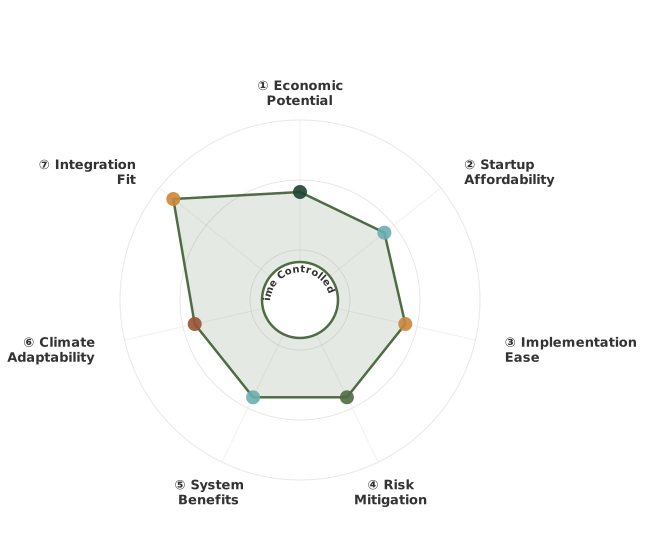
How These Traits Are Calculated
Trait dimensions are ordered clockwise starting from the top of the chart (12 o'clock position):
1. Economic Potential
Financial returns, annual value, and break-even timeline
WHAT: Evaluates financial viability by combining net annual value ($/ha from savings, income, and amortized harvests) with break-even timeline showing when practices pay for themselves.
WHY: Farmers need clear ROI understanding before committing resources. Fast payback (≤3 years) with strong returns (≥$300/ha) enables confident adoption, while long timelines (>10 years) restrict adoption to well-funded operations willing to wait for returns.
HOW: Calculated from net annual value in $/ha and break-even years. Exceptional (≥2.6): fast ROI ≤3 years + high value ≥$300/ha. Typical (1.8-2.5): moderate returns or longer timelines. Limited (<1.8): marginal economics or very long payback >10 years.
2. Startup Affordability
Initial investment costs and financial barrier to entry
WHAT: Measures financial barrier to entry through startup costs for equipment, infrastructure, consulting, and materials. Inverted scoring: lower costs = higher scores = more accessible adoption.
WHY: Affordability determines who can adopt. Low-cost practices (<$250/ha) enable widespread adoption across diverse scales, while high costs (>$2,500/ha) limit adoption to well-capitalized operations, creating barriers that slow regenerative transition.
HOW: Calculated from initial investment parsed from practice content. Inverted scoring: Exceptional (≥2.6): minimal investment <$250/ha. Typical (1.8-2.5): moderate costs $250-2,500/ha. Limited (<1.8): high barrier >$2,500/ha.
3. Implementation Ease
Learning curve and specialized knowledge required
WHAT: Measures how much learning, planning, and specialized knowledge a practice requires. Simpler practices with fewer steps score higher, while complex practices requiring extensive training or specialized resources score lower.
WHY: Complex practices create adoption barriers even when economically viable. Straightforward practices enable faster adoption and broader participation, while those requiring extensive training, timing precision, or specialized equipment limit who can succeed.
HOW: Evaluated by measuring documentation length and identifying complexity markers like location-specific requirements, seasonal timing windows, specialized skills, and dedicated equipment needs. Exceptional (≥2.6): straightforward practices with minimal prerequisites. Typical (1.8-2.5): moderate learning curve with some specialized needs. Limited (<1.8): steep learning curve requiring significant training or resources.
4. Risk Mitigation
Identified financial and ecological risk assessment
WHAT: Evaluates documented risks across financial (investment loss, market volatility) and ecological (crop failure, pest outbreaks) domains. Inverted scoring: fewer risks = higher scores.
WHY: Understanding risk exposure helps farmers make informed decisions. Low-risk practices allow confident implementation, while high-risk practices require careful planning and contingency resources. Risk transparency prevents costly failures.
HOW: Calculated from identified risks in practice content. Inverted scoring: Exceptional (≥2.6): ≤2 risks with manageable severity. Typical (1.8-2.5): 3-5 moderate risks. Limited (<1.8): 6+ risks or severe exposure.
5. System Benefits
How many ways the practice improves your land simultaneously
WHAT: Measures how many aspects of land health improve at once—carbon storage, soil quality, erosion control, water absorption, and biodiversity. Practices that improve multiple areas simultaneously create compounding benefits where each improvement reinforces the others.
WHY: The best practices solve multiple problems at once. For example, addressing erosion simultaneously builds carbon and improves water infiltration, creating a resilient system with positive feedback loops. Single-benefit approaches miss these compound transformation opportunities.
HOW: Evaluated across five key outcomes: carbon sequestration, soil organic matter increase, erosion reduction, water infiltration improvement, and biodiversity enhancement. Exceptional (≥2.6): high carbon storage (>8 t/ha/yr), improvements across 4-5 areas, transformative outcomes. Typical (1.8-2.5): moderate carbon (3-8 t/ha/yr), improvements across 2-3 areas. Limited (<1.8): modest impact (<3 t/ha/yr), single-area focus only.
6. Climate Adaptability
Geographic applicability across Köppen climate zones
WHAT: Evaluates geographic applicability by assessing how many Köppen climate zones successfully support a practice and what adaptation requirements are needed. Measures breadth of climates where farmers can implement with minimal to moderate modifications.
WHY: Universal practices working across diverse climates enable more farmers to adopt regenerative approaches. Practices limited to single climate types (only Mediterranean, only tropical) restrict adoption and slow global transition. Adaptability determines whether a practice serves niche regions or offers broad transformation.
HOW: LLM evaluation of regional success stories, Köppen zone coverage, and adaptation needs. Exceptional (≥2.6): 5+ zones or 4+ climate types, 3+ continents, minimal adaptation. Typical (1.8-2.5): 3-4 zones or 2-3 types, 2 continents, moderate adaptation. Limited (<1.8): 1-2 zones, single region, significant adaptation or highly specialized.
7. Integration Fit
How well this practice combines with others you're doing
WHAT: Measures how well a practice combines with other regenerative practices you might be doing. Some practices work as building blocks that make many other practices easier or more effective, while others work best on their own.
WHY: Practices that combine well with many others create more value on your farm. For example, cover cropping enables no-till, improves grazing, supports crop diversity, and helps water management—making all of them work better together. This helps you build a coherent system rather than juggling disconnected practices.
HOW: Evaluated by identifying which practices combine well and how strong those combinations are. 'Ideally Suited' means strong combinations where practices reinforce each other (practice A makes B easier, while B makes A more effective). 'Adequate' means complementary benefits that work well together. Exceptional (≥2.6): combines well with 6+ practices, serves as a building block. Typical (1.8-2.5): combines with 3-5 practices. Limited (<1.8): 1-2 practices or works best alone.
Going Deeper
1
WHY - The Benefits
Time-controlled grazing offers a suite of cascading benefits for soil health, economic viability, water cycles, carbon sequestration, and biodiversity. By intentionally managing the interaction between livestock and forage, farms can establish a more resilient and...
Time-controlled grazing offers a suite of cascading benefits for soil health, economic viability, water cycles, carbon sequestration, and biodiversity. By intentionally managing the interaction between livestock and forage, farms can establish a more resilient and...
WHY - The Benefits
Time-controlled grazing offers a suite of cascading benefits for soil health, economic viability, water cycles, carbon sequestration, and biodiversity. By intentionally managing the interaction between livestock and forage, farms can establish a more resilient and...
Time-controlled grazing offers a suite of cascading benefits for soil health, economic viability, water cycles, carbon sequestration, and biodiversity. By intentionally managing the interaction between livestock and forage, farms can establish a more resilient and...
Soil Health Benefits
The most significant impact of time-controlled grazing is on soil health. By allowing plants extended rest periods, they can regrow fully and replenish root reserves. This continuous cycle of growth and recovery translates to increased root biomass, which forms stable soil aggregates and improves soil structure. Studies have shown that properly managed time-controlled grazing systems can increase soil organic matter by 0.1-0.5 percentage points per year under typical conditions. Rates of SOM accumulation are variable and depend on climate and management, but higher rates up to 1.0% are possible in high-biomass systems. This leads to improved water-holding capacity and nutrient cycling.
Water infiltration rates often increase dramatically, by 40-70% in many systems, as soil porosity improves and surface cover is maintained. This reduces surface runoff, decreases soil erosion by 60-85%, and makes the land more resilient to drought. The presence of diverse plant species, encouraged by varied grazing and rest, leads to a more robust soil microbial community that is essential for nutrient cycling and disease suppression. Earthworm populations can increase significantly, acting as natural tillers and improving soil aeration.
Economic Benefits
Economically, time-controlled grazing can lead to substantial improvements. Increased pasture productivity means farms can carry more livestock per hectare, or achieve better performance from the same number of animals. This leads to a 20-50% increase in grazing capacity and a 5-15% improvement in animal performance (weight gain, milk production) due to better forage quality and reduced heat stress from shade. Reduced reliance on supplemental feed—often by 15-30%—directly lowers input costs.
Over time, improved soil health and pasture productivity can also lead to higher land values. The system fosters a more resilient operation that is less susceptible to drought or market volatility, enhancing long-term financial stability. For many farmers, the transition to time-controlled grazing provides a pathway to profitability that doesn't depend on relying solely on high yields from synthetic inputs.
Regenerative Systems Fit
Time-controlled grazing is a foundational regenerative practice that directly embodies and supports all five regenerative principles:
Principle 1 (Minimize Soil Disturbance): By intensively grazing small paddocks and then moving, it avoids prolonged hoof impact and pugging in any single area. The focus on maintaining healthy root systems and living cover minimizes erosion, which is a form of soil disturbance. Systems often incorporate fencing that further delineates grazing areas, reducing conflict and unnecessary trampling.
Principle 2 (Maximize Crop Diversity): Effective time-controlled grazing requires and promotes diverse pasture species—a mix of grasses, legumes, and forbs. Varied rest periods and grazing impacts create niches for different plants to thrive. This plant diversity below ground supports a correspondingly diverse soil microbial community, enhancing ecosystem resilience.
Principle 3 (Keep Soil Covered): The primary objective of adequate rest periods is to allow plants to regrow and maintain strong root systems. This ensures that soil is continuously covered by living vegetation year-round, preventing erosion from wind and water, retaining moisture, and providing habitat for soil organisms. The increased biomass generated also contributes to a healthy layer of surface mulch.
Principle 4 (Maintain Living Roots): By preventing overgrazing and ensuring sufficient rest for regrowth, time-controlled grazing keeps living roots in the soil for as long as possible throughout the year. This continuous photosynthetic activity fuels soil biology, cycles nutrients, and builds soil organic matter, creating a vibrant subterranean ecosystem.
Principle 5 (Integrate Livestock): This practice is a direct application of integrating livestock strategically. Animals are managed not just for their direct products (meat, milk, fiber) but as a tool to improve the land. Their grazing impact, managed through controlled movement and rest, stimulates plant growth, cycles nutrients via manure, and contributes to building soil organic matter.
For farms transitioning to regenerative agriculture, time-controlled grazing is often one of the first practices implemented, especially for those with existing livestock. It provides immediate ecological benefits and can deliver economic returns relatively quickly, building confidence for further changes. It can be integrated with cover cropping, agroforestry, and reduced tillage to create a highly resilient and productive farming system. It prepares the land by improving soil health, making it more receptive to other regenerative techniques.
Sources behind this view
Videos & Podcasts
-
Regenerative grazing (adaptive multi-paddock) uses high-density, short-duration grazing with long recovery to stimulate soil health, increase biomass, and improve water infiltration, mimicking natural
-
Holistic management with cattle is key to improving soil health, water cycles, and carbon sequestration. Maximize animal impact (hooves, dung, urine) for diversity and plant growth, while breeding cat
-
Laura Payne details how managed grazing enhances soil health, water quality, and wildlife habitat, citing research on reduced erosion, improved stream health, and support for grassland birds. Key prin
-
A 5-year case study in Mississippi transformed a degraded farm using adaptive grazing, bale grazing, and plant diversity. Soil organic matter, water infiltration, and forage species increased dramatic

Community
-
Adopts a holistic grazing management approach emphasizing diverse perennial pastures, higher residuals (4"), and longer rest periods (avg. 45 days) to build soil health, increase organic matter (3.4%
Read more (opens in new window) smallfarms.cornell.edu -
Manage rotational grazing by setting recovery (15-40+ days, adapting to region/season) and grazing periods (2-3 days). Aim to 'take half, leave half' for livestock and soil microbes. High stocking den
Read more (opens in new window) smallfarms.cornell.edu -
Discusses regenerative grazing with cattle, sheep, and goats, emphasizing high-density impact and long recovery periods for soil health and ecosystem restoration in arid regions. Debates overgrazing,
Read more (opens in new window) permies.com -
Advocates for simpler regenerative methods based on Soil Foodweb and Holistic Management, emphasizing soil restructuring for water retention and reducing reliance on inputs like biochar. Promotes holi
Read more (opens in new window) permies.com
Research
-
Managing Grazing to Restore Soil Health, Ecosystem Function, and Ecosystem Services (opens in new window)
This study found: Properly managed grazing animals can reverse environmental damage. Regenerative practices, like Adaptive Multi-Paddock (AMP) grazing, boost soil health, increase soil carbon, reduce erosion, and enhan
-
Regenerative Livestock Farming as a Socioeconomic Model for Sustainable Agribusiness in Latin America (opens in new window)
This study found: Regenerative livestock farming in Latin America improved soil carbon, biodiversity, and water quality, while boosting farmer income and quality of life. Government support is key for wider adoption.
-
FORAGES AND PASTURES SYMPOSIUM: COVER CROPS IN LIVESTOCK PRODUCTION: WHOLE-SYSTEM APPROACH: Managing grazing to restore soil health and farm livelihoods1 (opens in new window)
This study found: Regenerative grazing management is key to sustainable, climate-resilient farms. It restores soil health, enhances ecosystem services like carbon capture and water infiltration, and improves farm profi
-
The Indigenous Roots of Regenerative Agriculture (opens in new window)
This study found: Modern regenerative agriculture practices are rooted in millennia of Indigenous land stewardship, offering profound knowledge and a crucial value system of respect and reciprocity for true transformat
From the Web
-
Adaptive grazing, emphasizing longer paddock rest periods, promotes pasture diversity and soil health. This leads to improved livestock nutrition, milk/meat quality, and extended grazing seasons, as d
-
Key regenerative agriculture methods include no-till farming, cover cropping, agroforestry, perennial crops, planned rotational grazing (Holistic Management), and compost application, all aimed at imp
-
Six soil health principles (context, cover, minimize disturbance, diversity, living roots, integrate livestock) guide regenerative agriculture within four ecosystem processes (energy, water, nutrient
-
Adaptive grazing (AMP, ASG, RG) with high stock densities and flexible management improves vegetation, soil health, soil carbon, and animal production over continuous grazing. Research shows short gra
2
WHERE - Regional Considerations
Time-controlled grazing is highly adaptable across a wide range of climates and regions, but its implementation must be tailored to local environmental conditions and plant growth rates. Successful application hinges on understanding the specific growing season, rainfall...
Time-controlled grazing is highly adaptable across a wide range of climates and regions, but its implementation must be tailored to local environmental conditions and plant growth rates. Successful application hinges on understanding the specific growing season, rainfall...
WHERE - Regional Considerations
Time-controlled grazing is highly adaptable across a wide range of climates and regions, but its implementation must be tailored to local environmental conditions and plant growth rates. Successful application hinges on understanding the specific growing season, rainfall...
Time-controlled grazing is highly adaptable across a wide range of climates and regions, but its implementation must be tailored to local environmental conditions and plant growth rates. Successful application hinges on understanding the specific growing season, rainfall...
Click Here to Look up your Region if you don't already know it
Humid Temperate Regions
Representative Locations: Southeastern United States, northern Europe (UK, Germany, Poland), eastern China, Japan, New Zealand
Climate Context: Warm to hot summers and cool to cold winters with moderate to high annual precipitation (75-150 cm or 30-60 inches) distributed relatively evenly. USDA Zones 6-8, Köppen Cfb/Cfa.
In these regions, plant growth can be very rapid, especially during spring and early summer. This allows for shorter grazing durations and potentially longer rest periods, or the ability to carry more animals. The challenge can be managing pasture during peak growth to prevent plants from becoming too mature and less palatable, or conversely, managing through summer slump when growth slows but rest periods must still be adequate. Implementing time-controlled grazing allows farmers to harvest forage at its peak nutritional value. Dense, diverse pastures are common, and intensive rotational systems can significantly increase stocking density. For example, dairy farmers in Ireland and the UK use intensive paddock systems to maximize milk production from grass for extended grazing seasons.
Mediterranean Regions
Representative Locations: California, Mediterranean basin (Spain, Italy, Greece), central Chile, southwestern Australia, Western Cape South Africa
Climate Context: Hot, dry summers and mild, wet winters. Annual precipitation 40-90 cm (15-35 inches), highly seasonal. USDA Zones 8-10, Köppen Csa/Csb.
The critical factor here is the distinct dry summer period. Pasture growth is concentrated in the cool, wet winter and spring months. Time-controlled grazing must be adapted to this seasonality. During the wet season, short grazing durations and long rest periods are key to building significant pasture biomass and preventing overgrazing. As the dry season approaches, management shifts to conserving the accumulated pasture, potentially moving animals to drought-hardy perennial pastures or supplemental feeding areas. The ability to store forage as standing hay, preserved under a managed rest, is a significant benefit in these climates. Australian sheep farmers extensively use rotational grazing principles to manage pastures through variable rainfall and dry summers.
Arid/Semi-Arid Regions
Representative Locations: Western USA, North Africa, Central Asia, Interior Australia
Climate Context: Low annual precipitation (<40 cm or 15 inches), high temperatures, short and often unpredictable growing season. USDA Zones 7-9, Köppen BSh/BSk.
Time-controlled grazing in arid and semi-arid regions focuses heavily on ecosystem resilience and drought management. Rest periods can be very long, often 90 days or more, to allow plants in water-limited environments to recover. The goal is to maintain plant vigor to withstand periods of drought and to promote plant diversity that can utilize sparse rainfall effectively. Careful monitoring of plant recovery and soil moisture is paramount. Overgrazing can quickly lead to desertification. Traditional nomadic herding systems in places like East Africa and Mongolia are ancient forms of adaptive grazing that demonstrate successful principles in these challenging environments, focusing on moving herds to follow rainfall and utilize ephemeral growth.
Cold Continental Regions
Representative Locations: Northern USA and Canada, Northern Europe, Northern Asia
Climate Context: Very short growing seasons, extreme summer heat, severe winter cold. USDA Zones 3-5, Köppen Dfa/Dfb.
In these regions, the grazing season is compressed. Time-controlled grazing focuses on maximizing utilization of the intense, but short, growth period. Paddocks may be grazed for longer durations (several days) initially to utilize the flush of spring growth, but then require very long rest periods to recover before the next grazing cycle. Managing livestock through harsh winters can be a significant challenge, often requiring significant supplemental feeding. However, improved pasture base built during the growing season can reduce the quantity and duration of supplemental feeding required. For example, cattle ranchers in the Canadian Prairies use strategic grazing to improve the resilience of native grasslands against drought and to prepare them for winter dormancy.
Subtropical Regions
Representative Locations: Southeastern USA, Southern China, Southern Brazil, Eastern Australia
Climate Context: Hot, humid summers and mild winters with generally ample rainfall. USDA Zones 9-11, Köppen Cfa/Cwa.
These regions offer long potential growing seasons but can suffer from intense heat stress during summers, which slows forage growth. Time-controlled grazing helps manage around this heat slump by ensuring animals have access to rested, higher-quality forage, and by providing shade if silvopasture elements are integrated. The significant rainfall can lead to very rapid forage growth, requiring precise paddock management to harvest pasture at its peak quality before it becomes too mature. This is particularly true for dairy operations in states like Florida or Queensland, Australia, where consistent high-quality forage is key to production.
Tropical Regions
Representative Locations: Central America, Southeast Asia, East Africa, Northern Australia, Northern South America
Climate Context: High temperatures year-round, with distinct wet and dry seasons or consistent high rainfall. Köppen Af/Am/Aw.
Tropical regions present unique challenges and opportunities. While growth can be rapid during the wet season, heat and intense rainfall can accelerate nutrient leaching and soil degradation. Time-controlled grazing helps manage nutrient cycling and prevents overgrazing during flush growth periods. During dry seasons, careful planning is essential to manage limited forage resources and prevent soil degradation. The practice aids in building soil health that can better withstand the intense tropical conditions. For instance, cattle producers in northern Brazil utilize intense rotational grazing to manage tropical grasses that grow rapidly in the wet season but require long rest periods to tiller and regenerate in subsequent years.
3
HOW - Implementation Process
Implementing time-controlled grazing involves a structured approach, focusing on planning, observation, adaptive management, and appropriate infrastructure. The process can be broken down into several key phases.
Implementing time-controlled grazing involves a structured approach, focusing on planning, observation, adaptive management, and appropriate infrastructure. The process can be broken down into several key phases.
HOW - Implementation Process
Implementing time-controlled grazing involves a structured approach, focusing on planning, observation, adaptive management, and appropriate infrastructure. The process can be broken down into several key phases.
Implementing time-controlled grazing involves a structured approach, focusing on planning, observation, adaptive management, and appropriate infrastructure. The process can be broken down into several key phases.
Prerequisites
Before starting, assess your land's current state:
- Forage Inventory: Understand your dominant plant species (grasses, legumes, forbs), their growth habits (cool-season vs. warm-season), and their palatability. This informs paddock design and rest periods.
- Water Availability: Identify reliable water sources or the potential to establish them. Water is often the limiting factor for paddock subdivision.
- Soil Health Baseline: Conduct basic soil tests to understand organic matter, pH, and nutrient levels. Note any signs of compaction or erosion.
- Farm Goals: Define your objectives—increased stocking rate, improved pasture health, soil carbon sequestration, reduced input costs.
Phase 1: Planning and Infrastructure Development
Paddock Design: Based on your forage inventory and goals, design a paddock system.
- Paddock Size: Size paddocks to match your herd size and desired grazing duration. A common rule of thumb is that the herd stays in a paddock for 1-3 days. Paddock size can range from 0.1 to 2 hectares (0.25 to 5 acres) for cattle, and smaller for sheep or goats, depending on pasture productivity.
- Number of Paddocks: The number of paddocks determines the length of rest periods. A common target is a 30-60 day rest period. If your herd grazes a paddock for 2 days, you'd need 15-30 paddocks for a 30-60 day rest.
- Water Access: Ensure each paddock (or a cluster of paddocks) has access to clean water. This might involve installing watering troughs, pipelines, or utilizing natural water sources.
- Fencing: Invest in robust fencing. High-tensile electric fencing is popular for its flexibility and cost-effectiveness in creating temporary paddocks. Permanent fencing will be needed for outer boundaries and key internal divisions.
Timeline: This phase can take 3-12 months, depending on existing infrastructure and budget.
International Context: In regions with lower labor costs, DIY fencing and water systems may be more economical to install. In areas with higher labor costs, investing in more durable, permanent infrastructure may offer better long-term labor savings. Source local materials and consult with local agricultural extension services or experienced farmers.
Phase 2: Establishing Grazing Cycles
Animal Integration: Once infrastructure is in place, introduce animals into the planned system.
- Load-out/First Graze: Begin with a planned entry into the first paddock. Allow animals to graze for the predetermined short period (e.g., 1-3 days). Observe their grazing behavior – are they selectively eating preferred plants, or consuming a more diverse range?
- Frequent Moves: Move animals to the next paddock as planned. This requires discipline and regular checks. The goal is to remove them before they overgraze key species or begin grazing less desirable plants.
- Rest Period Management: Ensure paddocks are not re-entered until they have recovered. Monitor plant height, regrowth, and overall vigor. This rest period is critical for plant and soil health.
Timeline: This phase involves ongoing daily/weekly management.
Phase 3: Monitoring and Adaptive Management
Observation is Key: Regularly observe the following:
- Pasture Growth & Recovery: Are plants regrowing vigorously after rest? Are there bare patches? Is there evidence of overgrazing or undergrazing?
- Animal Performance: Are animals gaining weight or producing milk as expected? Are they exhibiting signs of heat stress or poor nutrition?
- Soil Health Indicators: Monitor soil moisture, look for earthworms, signs of erosion, and compaction.
- Plant Diversity: Has the diversity of forage species increased or decreased? Are less desirable weed species increasing?
Adaptation: Based on your observations, adjust your grazing plan.
- Shorten/Lengthen Grazing: If animals are overgrazing, shorten grazing duration or reduce herd size in the paddock. If they are undertutilized, extend the grazing period or increase herd size.
- Adjust Rest Periods: If pastures aren't recovering, lengthen rest periods. If growth is exceptionally fast, you may be able to shorten rests slightly or increase stocking density in paddocks.
- Paddock Modifications: If a section consistently struggles, consider its size, water access, or forage composition.
Timeline: This is a continuous, ongoing process throughout the grazing season.
Transition Timeline & Phase-Out Strategy
Time-controlled grazing itself is a regenerative practice, so there are no non-regenerative inputs to phase out, per se. However, the transition to effective time-controlled grazing may involve phasing out less effective grazing strategies and potentially reducing reliance on supplemental feeds or synthetic fertilizers if your pasture health improves significantly.
- Years 1-2: Focus on establishing the infrastructure and management routine. There might be an initial learning curve, and pasture response may be variable. You might still rely on some supplemental feed if pasture quality is not yet optimized.
- Years 3-5 (Ecological Stabilization & Input-Cost Breakeven): Pasture ecosystems should begin showing significant improvement, marking the phase of ecological stabilization. Reduced need for supplemental feed becomes evident, indicating progress towards input-cost breakeven. Biodiversity in pastures should increase, reducing dependence on broad-spectrum herbicides if previously used.
- Year 5+ (Peak Sustained Profitability): The system should be well-established and entering the phase of peak sustained profitability, with improved carrying capacity, resilience to drought, and reduced input costs. The focus shifts to continuous optimization and maintaining ecosystem health.
Graduation: You have "graduated" to a fully regenerative time-controlled grazing system when:
- Your pastures consistently support higher stocking rates with improved animal performance.
- Soil health indicators (organic matter, infiltration, earthworm activity) have significantly improved.
- Reliance on supplemental feeds and synthetic inputs has been substantially reduced or eliminated.
- The grazing plan is responsive to ecological cues (plant growth, weather) rather than rigid adherence to a calendar.
- Biodiversity of desirable forage species has increased.
Sources behind this view
Videos & Podcasts
-
Seven grazing principles are detailed: maintain stocking below capacity, leave ample forage, allow full plant recovery, rest pastures, top graze, increase pasture numbers (30+), and use high stock den
-
Implement adaptive multi-paddock (AMP) grazing with short (1-3 day) grazing periods and long recovery (90-120+ days) to prevent overgrazing. Focus on plant recovery, soil health, and consistent livest

-
Holistic grazing, with high-density short grazing (2-3 days) and long rest periods (3-4 months), dramatically increases pasture diversity, eliminates pests like grasshoppers, and boosts livestock prod
-
Adaptive grazing, emphasizing high stock density, flexibility, and frequent movement/rest, rapidly builds soil organic matter and microbial populations. A Mississippi case study showed dramatic improv

Community
-
Adopts a holistic grazing management approach emphasizing diverse perennial pastures, higher residuals (4"), and longer rest periods (avg. 45 days) to build soil health, increase organic matter (3.4%
Read more (opens in new window) smallfarms.cornell.edu -
Manage rotational grazing by setting recovery (15-40+ days, adapting to region/season) and grazing periods (2-3 days). Aim to 'take half, leave half' for livestock and soil microbes. High stocking den
Read more (opens in new window) smallfarms.cornell.edu -
Prescribed grazing is a controlled harvest of vegetation by animals to improve plant health, animal productivity, water quality, and soil conditions. Key components include resource inventory, balanci
Read more (pp. 1-2) (opens PDF, pp. 1-2) efotg.sc.egov.usda.gov -
Explains core grazing management principles: timing, intensity, duration, and frequency, with specific recommendations for rest periods, stubble heights, utilization, and management of diverse vegetat
Read more (pp. 17-32) (opens PDF, pp. 17-32) efotg.sc.egov.usda.gov
Research
-
Managing Grazing to Restore Soil Health, Ecosystem Function, and Ecosystem Services (opens in new window)
This study found: Properly managed grazing animals can reverse environmental damage. Regenerative practices, like Adaptive Multi-Paddock (AMP) grazing, boost soil health, increase soil carbon, reduce erosion, and enhan
-
Impacts of holistic planned grazing with bison compared to continuous grazing with cattle in South Dakota shortgrass prairie (opens in new window)
This study found: Managed grazing with bison in South Dakota's shortgrass prairie significantly improved soil health, water infiltration, forage, and plant composition compared to continuous cattle grazing over a decad
-
Multi-paddock grazing on rangelands: why the perceptual dichotomy between research results and rancher experience? (opens in new window)
This study found: Ranchers often see benefits from multi-paddock grazing that scientific studies don't always confirm. This review explores the gap, highlighting rancher-led adaptive management principles and suggestin
-
The effect of Holistic Planned Grazing™ on African rangelands: a case study from Zimbabwe (opens in new window)
This study found: Holistic Planned Grazing™ in Zimbabwe improved rangeland health, soil, and vegetation with higher animal density. Temporary animal enclosures also boosted crop yields, suggesting HPG enhances ecosyste
From the Web
-
A 10-step plan for regenerative grazing emphasizes adaptive management, goal setting, mapping, infrastructure assessment, and proper stocking rates. It advises starting small to gain experience before
-
Adaptive grazing (AMP, ASG, RG) with high stock densities and flexible management improves vegetation, soil health, soil carbon, and animal production over continuous grazing. Research shows short gra
-
This manual guides farmers through developing a grazing plan using a five-step process: goal setting, resource inventory, matching forage to animal needs, creating a schedule, and monitoring. It empha
-
This section details paddock setup, fencing, and water systems for rotational grazing. It provides seasonal adjustment guidelines for cool-season and warm-season grasses, emphasizing plant recovery pe
4
Know the Debate
Time-controlled grazing impacts are deeply tied to environmental conditions and management intensity. In humid regions with reliable rainfall, soil...
Know the Debate
Time-controlled grazing impacts are deeply tied to environmental conditions and management intensity. In humid regions with reliable rainfall, soil...
Time-controlled grazing impacts are deeply tied to environmental conditions and management intensity. In humid regions with reliable rainfall, soil biology responds quickly, showing measurable gains within two years. In semi-arid rangeland, slower decomposition means patience—plan for five to seven years for visible soil tests. Entry costs vary from $1,000-$7,000 for temporary fencing on small farms to $20,000+ for permanent infrastructure on larger operations. Daily labor of 1-2 hours for moves is necessary at any scale.
How much carbon does time-controlled grazing sequester?
Modest gains (0.3-2% annual)
Academic studies and professional guides suggest conservative carbon sequestration rates of 0.3-2 tons CO2e/acre/year, contingent on climate, soil type, and long-term management.
Sources behind this view
Sources behind this view
Research
-
Do regenerative grazing management practices improve vegetation and soil health in grazed rangelands? Preliminary insights from a space-for-time study in the Great Barrier Reef catchments, Australia (opens in new window)
This study found: A study in Queensland, Australia, looked at how regenerative grazing practices (like rotating cattle and giving pastures rest) affected rangelands over time. By comparing farms that have used these methods for 5 to 20 years with nearby farms using traditional continuous grazing, researchers found that regenerative grazing can lead to better plant growth, more ground cover, and increased organic matter. These improvements, which can take 3 to 20 years to become statistically noticeable, resulted in higher levels of soil nitrogen and carbon. While regenerative grazing shows promise for improving land health, the study suggests it may take longer to see benefits compared to other good grazing methods, and more research is needed on the economic and social aspects.
From the Web
-
Provides practical guidance on regenerative soil management through minimizing tillage, maintaining living roots, diverse species, and strategic grazing. Emphasizes cover crops, perennial pastures, and animal impact for soil health, with specific advice on grazing periods and paddock management.
Significant gains (3-8%+ annual)
Practitioners and advocates claim very high sequestration rates of 3-8+ tons CO2e/acre/year are achievable, particularly on degraded lands with intensive grazing.
Sources behind this view
Sources behind this view
Videos & Podcasts
-
Regenerative grazing (adaptive multi-paddock) uses high-density, short-duration grazing with long recovery to stimulate soil health, increase biomass, and improve water infiltration, mimicking natural systems.
Making Sense of the Differences
The wide range in carbon sequestration claims stems from differing measurement methods, baseline soil conditions, and climate. Academic studies are often more conservative, while practitioner results can vary based on site-specific improvements. Farmers should expect results influenced by their climate and starting soil health, focusing on visible soil improvements and patiently monitoring long-term trends.
What is the optimal stocking density for regenerative grazing?
Moderate density, adaptive approach
Balancing animal impact with forage availability, moderate densities and adaptive management are key, varying with climate and soil moisture.
Sources behind this view
Sources behind this view
Videos & Podcasts
-
Moving from continuous to intensive grazing (rotational, strip, forward) improves forage productivity, grazing efficiency, and stocking rates, leading to economic benefits. Continuous grazing hinders plant and root recovery due to lack of rest.
Research
-
Impacts of grazing management on hill country pastures: principles and practices (opens in new window)
This study found: Managing livestock on hilly pastures is about finding the right balance between how much grass is available and how much animals need to eat. This balance is affected by the weather and environment. By using smart grazing practices, like choosing the right number and type of animals (e.g., cattle, sheep) and managing how many are in a specific area, farmers can improve both the amount and the nutritional value of their pastures. The goal is to graze enough to prevent plants from flowering too much, which keeps the grass high in quality. The best approach changes throughout the year and from one pasture to another, requiring farmers to make smart decisions and understand the natural processes at play to make their farms more profitable and sustainable.
High density for maximum impact
Very high stocking densities are advocated to maximize hoof action, nutrient cycling, and soil disturbance for rapid improvements.
Sources behind this view
Sources behind this view
Videos & Podcasts
-
Regenerative grazing (adaptive multi-paddock) uses high-density, short-duration grazing with long recovery to stimulate soil health, increase biomass, and improve water infiltration, mimicking natural systems.
From the Web
-
Mob grazing involves moving livestock like cattle and sheep to fresh, small paddocks daily or every few days, promoting even grazing, soil health, drought tolerance, and increased stocking capacity. This contrasts with set stocking and benefits soil microbiology, water retention, and biodiversity.
Making Sense of the Differences
Optimal stocking density is highly context-dependent, balancing animal impact with forage availability and climate. Arid regions require lower densities and longer rests, while humid regions may support higher numbers. Farmers should monitor pasture response and animal health to adjust density and grazing duration for their specific environment.
Should tillage be used when transitioning to time-controlled grazing?
Avoid tillage entirely
Zero tillage is preferred to protect soil biology, fungal networks, and structure. Alternative methods like overseeding or intensive grazing are favored for land transition.
Sources behind this view
Sources behind this view
Videos & Podcasts
-
Learn rotational grazing through resources from experts like Greg Judy. Move cattle daily, assessing grass height to avoid overgrazing (leave ~10% standing). A rule of thumb is graze 60%, trample 30%. Frequent movement and adequate rest (30-50 days) improve pasture and double carrying capacity.
From the Web
-
Provides practical guidance on regenerative soil management through minimizing tillage, maintaining living roots, diverse species, and strategic grazing. Emphasizes cover crops, perennial pastures, and animal impact for soil health, with specific advice on grazing periods and paddock management.
Strategic, limited tillage acceptable
In severely degraded or compacted soils, a single, shallow tillage event can enable pasture establishment where purely biological methods fail.
Sources behind this view
Sources behind this view
Research
-
Controlled Grazing of Maize Residues Increased Carbon Sequestration in No-Tillage System: A Case of a Smallholder Farm in South Africa (opens in new window)
This study found: A two-year study on a small farm in South Africa found that combining no-till farming with controlled grazing of corn stalks after harvest significantly improved soil health. This approach, called NTCG, reduced soil carbon dioxide emissions by over half compared to conventional tillage with free grazing. Crucially, the NTCG system increased soil organic matter by 3.5 times compared to no-till with free grazing, while other methods led to soil carbon loss. The researchers believe this is due to more carbon being added to the soil and lower temperatures slowing down decomposition. However, this method also led to some soil compaction in the top layer, suggesting further long-term studies are needed.
Making Sense of the Differences
The decision on tillage hinges on the land's starting condition. While zero tillage is ideal for protecting soil biology, severe compaction or degraded pastures may benefit from a single, shallow tillage event to enable successful pasture establishment and subsequent biological benefits.
5
HOW MUCH - Costs & Investment
Note: Costs shown in USD; multiply by local labor and material cost indices for your region. Labor costs vary significantly internationally.
Note: Costs shown in USD; multiply by local labor and material cost indices for your region. Labor costs vary significantly internationally.
HOW MUCH - Costs & Investment
Note: Costs shown in USD; multiply by local labor and material cost indices for your region. Labor costs vary significantly internationally.
Note: Costs shown in USD; multiply by local labor and material cost indices for your region. Labor costs vary significantly internationally.
Note: All costs are based on recent US economic data (2024–2026) and may vary substantially by region based on local labor rates, material costs, and regulatory requirements.
Fencing Infrastructure
Fencing forms the backbone of time-controlled grazing, allowing for the precise management of livestock distribution across the landscape. For small-scale operations under 50 acres (20 ha), high-tensile perimeter fencing costs range from $1,875–4,689 per acre ($4,633–$11,587/ha), while movable electric subdivision fencing for paddocks costs $156–417 per acre ($385–$1,030/ha). Mid-size operations ranging from 50–500 acres (20–202 ha) capture economies of scale, with perimeter fencing costs averaging $833–2,084 per acre ($2,058–$5,150/ha) and internal poly-wire systems costing $83–260 per acre ($205–$642/ha). Large-scale operations exceeding 500 acres (202 ha) see costs decrease significantly to $313–938 per acre ($773–$2,318/ha) for perimeter maintenance and $42–156 per acre ($104–$385/ha) for extensive internal electric systems. Regardless of scale, durable poly-wire and fiberglass posts are essential, requiring an initial hardware investment between $1,250 for small plots and $15,630 for large-scale operations.
Water Infrastructure
Water distribution is frequently the most capital-intensive component because it dictates the feasibility of rotation patterns. Small-scale producers operating on fewer than 50 acres (20 ha) typically spend $833–2,605 per acre ($2,058–$6,437/ha), often necessitating the drilling of new wells or the installation of shallow-piped surface water systems. Mid-size producers manage costs by implementing solar-powered pumps and central header tanks that feed gravity-based secondary troughs, resulting in costs of $417–1,250 per acre ($1,030–$3,089/ha). For large-scale operations, total capital outlay ranges from $15,630 to over $67,730, which equates to $156–521 per acre ($385–$1,287/ha), depending on the volume of high-density polyethylene piping required to reach distant pastures. Automated shut-off valves and pressure tanks add $521–2,084 to these systems.
Operating and Labor Costs
Labor constitutes the primary recurring expense, primarily focused on daily livestock movement and routine infrastructure inspection. Small-scale operations report labor costs approximately 15–20% higher than conventional systems, averaging $21–42 per acre ($52–$104/ha) annually. Mid-size operations, often utilizing better equipment integration, see labor costs reduced to $10–26 per acre ($25–$64/ha) annually. Large-scale operations leverage automated gates and centralized handling facilities to minimize daily labor requirements, maintaining costs between $5–16 per acre ($12–$40/ha) annually. Across all farm scales, ongoing maintenance of fencing and water systems adds an additional $5–16 per acre ($12–$40/ha) annually, assuming the use of weather-resistant energizers and UV-stable hose components.
Most Spend: The majority of agricultural operations (the middle 60% of producers) typically invest between $3,650 and $12,750 in total initial infrastructure upgrades, depending on the baseline status of their existing perimeter fencing and water availability.
Why the Range?: Costs vary significantly based on topography and water access; properties with existing reliable well-fed water lines or solid boundary fences face costs on the lower end of the spectrum, while farms requiring extensive underground piping or primary perimeter construction will reach the highest cost thresholds.
Sources behind this view
Videos & Podcasts
-
Increase grazing frequency (e.g., twice daily) for better pasture utilization and animal performance. Invest heavily in water infrastructure and use temporary fencing in long, narrow paddocks to maxim
-
Improved grazing management boosts ranch economics through higher stocking rates, better cows-per-man ratios, extended grazing seasons, and reduced feeding costs. Strategic fencing and water developme
-
Discusses advanced grazing management, emphasizing paddock layout, skipping paddocks for fly control, and the critical role of fencing and water. Highlights how subdivision and shorter grazing periods
-
Details the practical implementation of intensive rotational grazing, including infrastructure (fencing, water points) and management strategies for large Australian properties. This approach signific
Community
-
Details an integrated system of Managed Intensive Rotational Grazing and rotational cropping using holistic management. It emphasizes increasing forage availability, integrating livestock (cattle, chi
Read more (opens in new window) permies.com -
Recommends permanent rotational pastures using high tensile fencing and cattle panels for goats and sheep, with advice on water lines, pallet-built shelters, and cost-effective handling systems.
Read more (opens in new window) permies.com -
Manage rotational grazing by setting recovery (15-40+ days, adapting to region/season) and grazing periods (2-3 days). Aim to 'take half, leave half' for livestock and soil microbes. High stocking den
Read more (opens in new window) smallfarms.cornell.edu -
Investigates financial benefits of rotational grazing, including extended grazing season and cattle weight gains, while detailing the use of portable electric fences and HDPE water hoses due to infras
Read more (opens in new window) ucanr.edu
Research
-
Increasing Intensity of Pasture Use with Dairy Cattle: An Economic Analysis (opens in new window)
This study found: Intensive grazing on Pennsylvania dairy farms was more profitable than hay/corn silage, returning $129/acre. High debt and poor cash flow motivated increased grazing intensity, which lowered feed cost
-
A 100-Year Review: A century of change in temperate grazing dairy systems. (opens in new window)
This study found: Dairy grazing systems evolved over 100 years from random grazing to intensive, high-output systems driven by research, technology, and breeding. Managed grazing, better genetics, and supplementary fee
-
Economic benefits of sustainable, forage-based cattle systems in Colombia and Nicaragua (opens in new window)
This study found: Using improved pasture plants and sustainable practices in cattle systems in Colombia and Nicaragua significantly boosted profitability and reduced costs, making them economically viable despite highe
-
192 Towards Year-Round Grazing in the Southeastern U.S (opens in new window)
This study found: Southeastern U.S. sheep/goat farmers can boost profits by reducing winter feed costs through better grazing management, diverse forages, improved infrastructure, and proper hay storage, enabling year-
From the Web
-
Minimize capital for grass-fed beef by using temporary electric fences, avoiding barns (cattle thrive outdoors), and questioning the need for tractors/haymaking equipment. Focus on extending grazing s
-
In the Northern Plains, cattle and sheep can significantly improve small grain production by enhancing soil structure, managing weeds/pests, and reducing costs. Options include grazing fees ($0.10/hea
-
Integrating portable heifers and dry cows via adaptive grazing in crop systems offers substantial cost savings ($0.56/head/day vs. $4/head/day) and soil health benefits. Practices like Bud Williams' m
-
Analyzes ROI for high stock density grazing, detailing infrastructure costs ($3,250 with grant), labor ($3600 estimate), and a 257% carrying capacity increase. Discusses scaling challenges and lists k
6
REWARDS AND RISKS - Economics & Risk Factors
REWARDS AND RISKS - Economics & Risk Factors
In a Best Case scenario, meticulous management of paddock rotation results in a 40% increase in stocking rate and a 30% reduction in supplemental feed costs, generating a net profit increase of 25–35% within 3–4 years. For a 200-acre (81 ha) operation, this translates to an annual revenue lift of $12,500–26,050. A Typical Case involves a 20–25% improvement in carrying capacity and a 15–20% decrease in overhead feed expenses, allowing producers to recover core infrastructure investments in 5–7 years. Conversely, in a Worst Case scenario—usually driven by failure to rotate livestock before overgrazing occurs—the operation may experience a 10–15% decline in forage vigor. This forces an unintended 20% increase in feed purchase costs, leading to a net income loss of $5,210–10,420 annually until management protocols are corrected.
Profitability is heavily influenced by livestock market volatility; high beef prices amplify the financial benefits of increased weight gain, while periods of low pricing make the initial $125–521 per acre ($309–$1,287/ha) capital investment more challenging to service. Producers frequently mitigate market risk by stacking enterprises—such as integrating sheep or poultry—which can generate an additional $104–313 per acre ($257–$773/ha) in supplemental revenue. Operational risks, such as equipment failure, are mitigated by maintaining a 10% contingency budget of $521–2,084 for rapid repair of energizers or water lines.
Transition Period Risks: Producers often encounter a yield dip during the first 18–24 months as the pasture ecosystem adapts. Forage production may initially decline by 10–20% while root structures establish deeper, more resilient networks. Recovery typically begins in year 3, with biomass accumulation increasing by 10–15% annually thereafter. Mitigation is best achieved through "phased paddock subdivision," where producers transition only 25% of their total acreage in the first year to preserve overall cash flow during the establishment phase. Low-cost soil nutrient monitoring allows for precise, targeted mineral amendments at $26–52 per acre ($64–$128/ha), which is significantly more cost-effective than blanket fertilization during the transition window.
Sources behind this view
Videos & Podcasts
-
A 5-year case study in Mississippi transformed a degraded farm using adaptive grazing, bale grazing, and plant diversity. Soil organic matter, water infiltration, and forage species increased dramatic
-
Transitioned to regenerative grazing with more paddocks for longer rest periods, focusing on the ecological value of cattle. This increased herd size by 32% despite less rain, improved breeding succes
-
This cluster details ultra-high stock density grazing (UHSDG) and 'total grazing' for cattle, emphasizing intensive management, long pasture recovery, and increased stocking rates. The speaker advocat
-
Laura Payne details how managed grazing enhances soil health, water quality, and wildlife habitat, citing research on reduced erosion, improved stream health, and support for grassland birds. Key prin
Community
-
Adopts a holistic grazing management approach emphasizing diverse perennial pastures, higher residuals (4"), and longer rest periods (avg. 45 days) to build soil health, increase organic matter (3.4%
Read more (opens in new window) smallfarms.cornell.edu -
Manage rotational grazing by setting recovery (15-40+ days, adapting to region/season) and grazing periods (2-3 days). Aim to 'take half, leave half' for livestock and soil microbes. High stocking den
Read more (opens in new window) smallfarms.cornell.edu -
Advocates for rotational/mob grazing by dividing 12.5 acres into 30 sub-pastures for daily moves, promoting a 40% legume, 40% grass, 10% medicinal, 10% weed pasture mix for soil health and parasite co
Read more (opens in new window) permies.com -
Practical rotational grazing advice for small acreage with goats, sheep, and chickens, emphasizing frequent moves, sacrificial paddocks, and specific forage types (fescue, rye, Bermuda) for Zone 8b. M
Read more (opens in new window) permies.com
Research
-
Managing Grazing to Restore Soil Health, Ecosystem Function, and Ecosystem Services (opens in new window)
This study found: Properly managed grazing animals can reverse environmental damage. Regenerative practices, like Adaptive Multi-Paddock (AMP) grazing, boost soil health, increase soil carbon, reduce erosion, and enhan
-
Regenerative Livestock Farming as a Socioeconomic Model for Sustainable Agribusiness in Latin America (opens in new window)
This study found: Regenerative livestock farming in Latin America improved soil carbon, biodiversity, and water quality, while boosting farmer income and quality of life. Government support is key for wider adoption.
-
A 100-Year Review: A century of change in temperate grazing dairy systems. (opens in new window)
This study found: Dairy grazing systems evolved over 100 years from random grazing to intensive, high-output systems driven by research, technology, and breeding. Managed grazing, better genetics, and supplementary fee
-
Transitioning from conventional continuous grazing to planned rest-rotation grazing: A beef cattle case study from central Texas (opens in new window)
This study found: A 5-year Texas case study found planned rest-rotation grazing showed potential for more forage and better soil health on cultivated paddocks compared to continuous grazing, with similar overall profit
From the Web
-
Daily grazing management involves pasture moves based on animal needs and behavior, adapting to ranch conditions. Observations of animal restlessness signal moves, while diverse forages and cover crop
-
Transition to adaptive grazing with a three-step approach: inventory land/animals/infrastructure, start small using existing resources to increase stock density gradually, and observe/measure progress
-
Dr. Allen Williams offers 10 tips for successful grazing: avoid early spring grazing, prepare for worst-case conditions, prevent overgrazing by managing plant exposure, utilize livestock for weed cont
-
Adaptive grazing (AMP, ASG, RG) with high stock densities and flexible management improves vegetation, soil health, soil carbon, and animal production over continuous grazing. Research shows short gra
7
WHO - Labor & Expertise
WHO - Labor & Expertise
Implementing time-controlled grazing requires a shift in management focus, emphasizing observation and adaptability over rigid adherence to a schedule. Key skills include:
- Observational Skills: The ability to accurately assess pasture condition, monitor animal grazing behavior, and interpret plant recovery cues is paramount. This includes noticing plant height, leafiness, species composition changes, and signs of stress.
- Planning and Spatial Reasoning: Designing paddock layouts, estimating herd movement times, and calculating rest periods based on forage growth requires planning ability. Understanding how water sources dictate paddock subdivision is crucial.
- Animal Husbandry: While the primary focus is pasture management, understanding animal nutrition, health, and behavior is essential to ensure they are performing well within the system.
- Fencing and Water System Maintenance: Basic skills in setting up, maintaining, and repairing electric fencing, water troughs, and distribution lines are necessary for system functionality.
- Adaptability and Problem-Solving: No two years or seasons are identical. Farmers must be willing to adjust their plans based on weather, plant growth, and animal needs.
Labor Demands
- Daily/Weekly Moves: This is the most significant increase in labor. Moving animals between paddocks requires time for checking fences, opening gates, and ensuring animals move efficiently. This can add anywhere from 30 minutes to 2 hours per day, depending on the farm's scale and complexity.
- Monitoring and Observation: Regular checks of pasture condition, water supplies, and animal health are required, which can add a variable amount of time.
- Infrastructure Maintenance: Periodic checks and repairs of fences and water systems are necessary.
International Labor Cost Considerations
- Regions with High Labor Costs: In countries like the United States, Canada, Australia, and many European nations, labor is a significant cost. For these regions, investing in more robust, automated water systems, well-designed gate layouts, and potentially using larger herds moved as a single unit (if appropriate) can help manage labor intensity. Utilizing technologies like remote monitoring for water levels or solar-powered fence chargers can also reduce physical labor.
- Regions with Lower Labor Costs: In many parts of Africa, Asia, and South America, labor may be more readily available and less expensive. This can make the daily moves more feasible and less of a financial burden. In these contexts, manual moves and less automated infrastructure might be economically viable. However, it's crucial to ensure that labor is well-trained and understands the ecological principles behind the movements to avoid errors.
Expertise Development
- Formal Training: Workshops, courses, and certifications in rotational grazing and regenerative agriculture practices are available globally (e.g., through organizations like the Savory Institute, local agricultural extension services, or private consultants).
- Mentorship and Peer Learning: Connecting with experienced regenerative graziers is invaluable. Visiting their farms, discussing challenges, and learning from their successes provides practical, context-specific knowledge.
- On-Farm Experimentation: The best expertise is often gained through direct experience. Start small, observe closely, and learn from your land's response.
Sources behind this view
Videos & Podcasts
-
This cluster details ultra-high stock density grazing (UHSDG) and 'total grazing' for cattle, emphasizing intensive management, long pasture recovery, and increased stocking rates. The speaker advocat
-
Increase grazing frequency (e.g., twice daily) for better pasture utilization and animal performance. Invest heavily in water infrastructure and use temporary fencing in long, narrow paddocks to maxim
-
Laura Payne details how managed grazing enhances soil health, water quality, and wildlife habitat, citing research on reduced erosion, improved stream health, and support for grassland birds. Key prin
-
Holistic grazing, with high-density short grazing (2-3 days) and long rest periods (3-4 months), dramatically increases pasture diversity, eliminates pests like grasshoppers, and boosts livestock prod
Community
-
Adopts a holistic grazing management approach emphasizing diverse perennial pastures, higher residuals (4"), and longer rest periods (avg. 45 days) to build soil health, increase organic matter (3.4%
Read more (opens in new window) smallfarms.cornell.edu -
Manage rotational grazing by setting recovery (15-40+ days, adapting to region/season) and grazing periods (2-3 days). Aim to 'take half, leave half' for livestock and soil microbes. High stocking den
Read more (opens in new window) smallfarms.cornell.edu -
Advocates for rotational/mob grazing by dividing 12.5 acres into 30 sub-pastures for daily moves, promoting a 40% legume, 40% grass, 10% medicinal, 10% weed pasture mix for soil health and parasite co
Read more (opens in new window) permies.com -
Practical rotational grazing advice for small acreage with goats, sheep, and chickens, emphasizing frequent moves, sacrificial paddocks, and specific forage types (fescue, rye, Bermuda) for Zone 8b. M
Read more (opens in new window) permies.com
Research
-
Managing Grazing to Restore Soil Health, Ecosystem Function, and Ecosystem Services (opens in new window)
This study found: Properly managed grazing animals can reverse environmental damage. Regenerative practices, like Adaptive Multi-Paddock (AMP) grazing, boost soil health, increase soil carbon, reduce erosion, and enhan
-
Impacts of holistic planned grazing with bison compared to continuous grazing with cattle in South Dakota shortgrass prairie (opens in new window)
This study found: Managed grazing with bison in South Dakota's shortgrass prairie significantly improved soil health, water infiltration, forage, and plant composition compared to continuous cattle grazing over a decad
-
A 100-Year Review: A century of change in temperate grazing dairy systems. (opens in new window)
This study found: Dairy grazing systems evolved over 100 years from random grazing to intensive, high-output systems driven by research, technology, and breeding. Managed grazing, better genetics, and supplementary fee
-
Regenerative Livestock Farming as a Socioeconomic Model for Sustainable Agribusiness in Latin America (opens in new window)
This study found: Regenerative livestock farming in Latin America improved soil carbon, biodiversity, and water quality, while boosting farmer income and quality of life. Government support is key for wider adoption.
From the Web
-
Daily grazing management involves pasture moves based on animal needs and behavior, adapting to ranch conditions. Observations of animal restlessness signal moves, while diverse forages and cover crop
-
This section details paddock setup, fencing, and water systems for rotational grazing. It provides seasonal adjustment guidelines for cool-season and warm-season grasses, emphasizing plant recovery pe
-
Adaptive grazing, emphasizing longer paddock rest periods, promotes pasture diversity and soil health. This leads to improved livestock nutrition, milk/meat quality, and extended grazing seasons, as d
-
A 10-step plan for regenerative grazing emphasizes adaptive management, goal setting, mapping, infrastructure assessment, and proper stocking rates. It advises starting small to gain experience before
8
EQUIPMENT - Tools & Infrastructure
Effective time-controlled grazing relies on a combination of fencing, water systems, and potentially, specialized equipment for pasture management.
Effective time-controlled grazing relies on a combination of fencing, water systems, and potentially, specialized equipment for pasture management.
EQUIPMENT - Tools & Infrastructure
Effective time-controlled grazing relies on a combination of fencing, water systems, and potentially, specialized equipment for pasture management.
Effective time-controlled grazing relies on a combination of fencing, water systems, and potentially, specialized equipment for pasture management.
Fencing
- Perimeter Fencing: High-tensile wire fencing (steel or polywire) is recommended for boundary fences to withstand pressure and last longer. For regions with wildlife pressure, consider heavier gauge wire or electric wire top strands.
- Internal (Subdivision) Fencing:
- Electric Fencing: The most versatile and cost-effective for creating temporary or semi-permanent paddocks. This includes:
- Reels of Polywire/Polytapes: For quick setup of interior fences.
- Insulators: To attach wires to posts without losing charge.
- Posts: Fiberglass, steel, or treated wood posts for temporary lines. Step-in posts are excellent for rapid deployment.
- Energizers/Chargers: Solar-powered chargers are ideal for remote paddocks without electricity, while mains-powered units are suitable near farm buildings. Ensure sufficient voltage for the length of fence.
- Permanent Fencing: For high-traffic areas, lane ways, and critical internal divisions, consider permanent woven wire or barbed wire fences, often combined with an electric wire offset for extra deterrence.
- Electric Fencing: The most versatile and cost-effective for creating temporary or semi-permanent paddocks. This includes:
Water Systems
Water is often the limiting factor in paddock subdivision. Ensuring reliable access to clean water within each paddock (or a small group of paddocks) is crucial.
- Troughs: Concrete or poly troughs are common. Size depends on herd size and watering frequency. Self-filling troughs connected to a water source are more labor-efficient.
- Piping:
- Above-ground: Poly pipe is flexible and can be moved. Best for temporary systems or pasture areas where frost is not a major concern.
- Below-ground: Buried pipes (e.g., HDPE, PVC) are more durable, protected from damage and frost, but are permanent installations. Water lines should be sized appropriately for flow rate and pressure needs.
- Water Sources:
- Wells: May require pumps (electric, solar, or wind-powered) and pressure tanks.
- Ponds/Dams: Can be used for gravity feed or with solar pumps. Ensure they are fenced off from direct livestock access to prevent bank erosion and contamination.
- Municipal/Bore Water: Requires piping and pressure management.
- Natural Springs/Creeks: May require protection and channeling.
- Water Meters and Valves: Allow for flow control and shut-off for maintenance.
Pasture Management Equipment
- Weigh Scale: For accurately weighing livestock to monitor performance.
- Pasture Meters/Plate Meters: Devices that estimate pasture biomass and height, aiding in decision-making for paddock moves.
- Soil Probes/Penetrometers: To assess soil compaction and health.
- ATV/UTV (All-Terrain Vehicle/Utility Vehicle): For efficient transport of fencing supplies, water, and animals across larger properties.
- Mowers/Roller-Crimpers: Can be used for managing pasture height, terminating cover crops, or managing invasive species, though the goal is to minimize mechanical disturbance.
International Sourcing
- Local Suppliers: Prioritize sourcing fencing materials, posts, water troughs, and piping from local agricultural suppliers. This often ensures better availability, more competitive pricing, and easier access to product support.
- Specialized Equipment: For pumps, solar chargers, or water delivery systems, research international manufacturers and their distributors in your region. Check for availability of spare parts.
- DIY vs. Professional Installation: In regions with high labor costs, investing in robust, permanent infrastructure (e.g., buried pipelines) might be more cost-effective long-term. In regions with lower labor costs, manual installation of temporary electric fencing and above-ground pipes might be more economical initially.
Sources behind this view
Videos & Podcasts
-
Increase grazing frequency (e.g., twice daily) for better pasture utilization and animal performance. Invest heavily in water infrastructure and use temporary fencing in long, narrow paddocks to maxim
-
Intensive rotational grazing with electric fencing improves soil and animal performance. Smaller cattle (1000-1100 lbs) are preferred for reduced pasture impact and higher fertility. Proper electric f
-
Details the practical implementation of intensive rotational grazing, including infrastructure (fencing, water points) and management strategies for large Australian properties. This approach signific
-
Discusses advanced grazing management, emphasizing paddock layout, skipping paddocks for fly control, and the critical role of fencing and water. Highlights how subdivision and shorter grazing periods
Community
-
Practical rotational grazing advice for small acreage with goats, sheep, and chickens, emphasizing frequent moves, sacrificial paddocks, and specific forage types (fescue, rye, Bermuda) for Zone 8b. M
Read more (opens in new window) permies.com -
Practical guide to rotational grazing for sheep/goats in BC mountains: durable electric netting, high-voltage predator fencing, movable shelters, efficient water systems, and a 4-day pasture rotation
Read more (opens in new window) permies.com -
Manage rotational grazing by setting recovery (15-40+ days, adapting to region/season) and grazing periods (2-3 days). Aim to 'take half, leave half' for livestock and soil microbes. High stocking den
Read more (opens in new window) smallfarms.cornell.edu -
Implement rotational grazing with strong perimeter and interior fencing (high tensile electric recommended, focus on grounding) and reliable water systems, using resources like 'The Art and Science of
Read more (opens in new window) smallfarms.cornell.edu
Research
-
Review: Precision Livestock Farming technologies in pasture-based livestock systems. (opens in new window)
This study found: Smart farming tech (GPS, drones, virtual fencing) can improve livestock management on pasture for cattle, sheep, goats, pigs, and poultry, despite challenges like battery life and cost.
-
Precision Livestock Farming Applications (PLF) for Grazing Animals (opens in new window)
This study found: Precision Livestock Farming (PLF) uses sensors and software to monitor grazing animals, improving health and management. Adoption is limited by cost, tradition, and poor infrastructure, despite availa
-
Precision Tools for Forage Assessment and Nutritional Decision Support in Grazing-Ruminant Systems: A Narrative Review (opens in new window)
This study found: New precision tools can help manage grazing animal nutrition by assessing pasture quality, but face challenges in calibration, cost, and farm-level adoption for practical decision-making.
-
456 Allocating distribution of pasture utilization across the grazing landscape in grazing steers equipped with virtual fencing collars (opens in new window)
This study found: GPS collars on steers showed cattle graze less far from water, with rotational grazing concentrating use near water. Technology can help manage pasture distribution.
9
COMPATIBLE PRACTICES - Integration Opportunities
Time-controlled grazing is often the nexus of a regenerative system, integrating well with numerous other practices to amplify benefits and create a resilient farm ecosystem.
Time-controlled grazing is often the nexus of a regenerative system, integrating well with numerous other practices to amplify benefits and create a resilient farm ecosystem.
COMPATIBLE PRACTICES - Integration Opportunities
Time-controlled grazing is often the nexus of a regenerative system, integrating well with numerous other practices to amplify benefits and create a resilient farm ecosystem.
Time-controlled grazing is often the nexus of a regenerative system, integrating well with numerous other practices to amplify benefits and create a resilient farm ecosystem.
Diverse Cover Cropping
- Synergy: Essential for building pasture resilience and diversity. Cover crops can be integrated into the pasture rotation during periods of low growth or to introduce nutritious species.
- Integration Benefit: Improves soil health, adds nitrogen (if legumes are used), breaks parasite cycles, and increases forage quality and quantity. This directly supports principle 2 (maximize diversity) and principle 4 (maintain living roots).
Reduced Tillage/No-Till
- Synergy: Animals are used to manage crop residue and spread manure in fields planned for cover cropping or future pasture, minimizing mechanical disturbance.
- Integration Benefit: Prevents soil compaction by limiting heavy machinery use, builds soil organic matter through continuous living cover, and protects soil structure. Supports principle 1 (minimize disturbance) and principle 3 (keep soil covered).
Holistic Management/Adaptive Planning
- Synergy: Time-controlled grazing is a core component of Holistic Management frameworks.
- Integration Benefit: Provides a decision-making process that links grazing management to ecological outcomes and social/economic goals, ensuring the farm thrives holistically.
Compost Application/Manure Management
- Synergy: Livestock manure, naturally deposited during grazing, provides fertility. Strategic use of compost can supplement this, especially in areas initially low in organic matter.
- Integration Benefit: Cycles nutrients, builds soil organic matter, improves soil structure and water-holding capacity. Principle 5 (integrate livestock) is enhanced by nutrient cycling.
Agroforestry/Silvopasture
- Synergy: Trees are incorporated into pastures. Livestock are managed within the tree rows.
- Integration Benefit: Combines livestock production with timber, nut, or fruit production. Trees provide shade (improving animal performance and pasture resilience), sequester carbon, enhance biodiversity, and further improve soil health through root action and litterfall. Supports principles 1, 2, 3, 4, and 5.
Keyline Design/Water Management
- Synergy: Paddock design can sometimes be informed by contour mapping and keyline principles to optimize water capture and distribution across the landscape.
- Integration Benefit: Enhances water infiltration and utilization, potentially extending grazing seasons and improving drought resilience. Crucial in regions with variable rainfall to capture and store water.
Predator Livestock Guardian Animals
- Synergy: The use of guard dogs or llamas/alpacas can protect livestock from predation, allowing for more flexible paddock movements and longer grazing periods without requiring confinement near barns.
- Integration Benefit: Reduces livestock losses, allows animals to graze more widely, and can contribute to a more self-sufficient and less labor-intensive system.
For farms seeking to transition to regenerative agriculture, time-controlled grazing offers immediate ecological benefits and can be integrated with existing or new practices to create a highly productive, resilient, and environmentally beneficial system. It's a practice that unlocks the potential of livestock to heal and build land.
Sources behind this view
Videos & Podcasts
-
Regenerative grazing (adaptive multi-paddock) uses high-density, short-duration grazing with long recovery to stimulate soil health, increase biomass, and improve water infiltration, mimicking natural
-
Holistic management with cattle is key to improving soil health, water cycles, and carbon sequestration. Maximize animal impact (hooves, dung, urine) for diversity and plant growth, while breeding cat
-
Regenerative agriculture provides solutions for climate change, human health, and soil degradation, contrasting with industrial agriculture's harmful impacts, including glyphosate use. Practices like
-
A 5-year case study in Mississippi transformed a degraded farm using adaptive grazing, bale grazing, and plant diversity. Soil organic matter, water infiltration, and forage species increased dramatic
Community
-
Adopts a holistic grazing management approach emphasizing diverse perennial pastures, higher residuals (4"), and longer rest periods (avg. 45 days) to build soil health, increase organic matter (3.4%
Read more (opens in new window) smallfarms.cornell.edu -
Advocates for Soil Foodweb principles and Holistic Management, emphasizing land leasing and custom grazing/growing over labor-intensive methods. Focuses on soil restructuring for water availability an
Read more (opens in new window) permies.com -
Advocates for simpler regenerative methods based on Soil Foodweb and Holistic Management, emphasizing soil restructuring for water retention and reducing reliance on inputs like biochar. Promotes holi
Read more (opens in new window) permies.com -
Manage rotational grazing by setting recovery (15-40+ days, adapting to region/season) and grazing periods (2-3 days). Aim to 'take half, leave half' for livestock and soil microbes. High stocking den
Read more (opens in new window) smallfarms.cornell.edu
Research
-
Managing Grazing to Restore Soil Health, Ecosystem Function, and Ecosystem Services (opens in new window)
This study found: Properly managed grazing animals can reverse environmental damage. Regenerative practices, like Adaptive Multi-Paddock (AMP) grazing, boost soil health, increase soil carbon, reduce erosion, and enhan
-
The Indigenous Roots of Regenerative Agriculture (opens in new window)
This study found: Modern regenerative agriculture practices are rooted in millennia of Indigenous land stewardship, offering profound knowledge and a crucial value system of respect and reciprocity for true transformat
-
FORAGES AND PASTURES SYMPOSIUM: COVER CROPS IN LIVESTOCK PRODUCTION: WHOLE-SYSTEM APPROACH: Managing grazing to restore soil health and farm livelihoods1 (opens in new window)
This study found: Regenerative grazing management is key to sustainable, climate-resilient farms. It restores soil health, enhances ecosystem services like carbon capture and water infiltration, and improves farm profi
-
Regenerative Livestock Farming as a Socioeconomic Model for Sustainable Agribusiness in Latin America (opens in new window)
This study found: Regenerative livestock farming in Latin America improved soil carbon, biodiversity, and water quality, while boosting farmer income and quality of life. Government support is key for wider adoption.
From the Web
-
Six soil health principles (context, cover, minimize disturbance, diversity, living roots, integrate livestock) guide regenerative agriculture within four ecosystem processes (energy, water, nutrient
-
Five steps to regenerative agriculture: Holistic Planned Grazing, no-till farming, planting diverse cover crops/interseeding, using compost/inoculants (with caution), and incorporating silvopasture/wo
-
Key regenerative agriculture methods include no-till farming, cover cropping, agroforestry, perennial crops, planned rotational grazing (Holistic Management), and compost application, all aimed at imp
-
Adaptive grazing, emphasizing longer paddock rest periods, promotes pasture diversity and soil health. This leads to improved livestock nutrition, milk/meat quality, and extended grazing seasons, as d