
Trap Crops
Trap cropping involves planting a highly attractive crop around or within a main cash crop to lure away pests. These sacrificial plants absorb pest infestations before they can harm the primary crop, acting as a biological decoy. This practice aims to reduce pesticide use and create healthier ecosystems by focusing pest pressure on a sacrificial plant that is then managed or removed.
Read More: Complete Description
Trap cropping is an ecological pest management strategy that leverages plant-pest relationships to protect valuable crops. It involves strategically planting a specific, highly attractive crop—the "trap crop"—around the perimeter of a main cash crop, in alternating rows, or as a border planting between fields. This trap crop is specifically chosen for its superior attractiveness to target pests, drawing them away from the main crop. Common examples include planting mustard or radish around fields of cabbage or broccoli to attract flea beetles, or planting cowpeas in strips within a maize field to lure away the corn rootworm.
The effectiveness of trap cropping hinges on several biological and ecological principles. Firstly, pest preference plays a crucial role. Pests often have a strong attraction to certain plant species or varieties, whether due to volatile organic compounds released by the plant, specific nutrient profiles, or textural preferences for laying eggs or feeding. By planting a more preferred species, farmers can create a "decoy" that consolidates pest populations onto the trap crop. Secondly, the spatial arrangement is critical. The trap crop must be planted in a way that it is more accessible or attractive to pests than the main crop. This might involve planting earlier, using a more vigorous variety, or simply strategically placing it in the path of pest migration.
From a regenerative agriculture perspective, trap cropping aligns with several core principles, though its classification and implementation require careful consideration. It directly supports Principle 2 (Maximize Crop Diversity) by introducing additional plant species into the farming system. This diversity above ground can, in turn, stimulate diversity below ground by providing different root structures and exudates that feed a wider range of soil microbes and beneficial organisms. When managed appropriately, trap crops can also contribute to Principle 3 (Keep Soil Covered) and Principle 4 (Maintain Living Roots) during shoulder seasons or between cash crop cycles, although this is not their primary function. The practice's relationship with Principle 1 (Minimize Soil Disturbance) is neutral to positive, as it generally does not require tilling and can be incorporated into no-till systems. Finally, its contribution to Principle 5 (Integrate Livestock) is indirect; by reducing the need for synthetic pesticides that can harm beneficial insects and soil organisms, trap cropping helps maintain a healthier ecosystem that can support more diverse beneficial insects and potentially grazing animals if managed as part of a system.
However, trap cropping is not always a foundational regenerative practice. Its classification can shift based on how it's implemented. If the trap crop is simply an annual species that is sacrificed and then tilled under immediately after pest infestation, its long-term regenerative benefit is limited, and it might even contradict Principle 1. A more regenerative approach would involve managing the trap crop after pest attraction—perhaps harvesting it for animal feed, incorporating it into compost, or allowing it to be grazed by beneficial insects, or using it as green manure for subsequent crops—thus cycling nutrients and building soil organic matter. In this context, trap cropping can be considered a transition practice or a context-dependent tool, depending on its integration into broader regenerative strategies and the management of the sacrificial crop.
The economic rationale for trap cropping is primarily cost reduction through decreased reliance on expensive synthetic pesticides. By concentrating pest populations onto a cheaper, sacrificial crop that can be managed separately, farmers can avoid broad-spectrum pesticide applications that harm beneficial insects, soil biology, and the environment. The cost of planting the trap crop is typically less than the cost of pesticides, offering a clear economic incentive. Furthermore, by reducing pest damage to the main cash crop, yields can be maintained or improved, preventing economic losses.
internationally, trap cropping has been adopted in diverse agricultural systems. In rice paddies of Southeast Asia, certain plant species are interplanted to attract planthoppers away from the rice. In fruit orchards of Europe, flowering cover crops are sometimes used as trap crops for specific insect pests, also providing habitat for beneficials. In arid regions of Australia, strategic planting of legumes can lure insect pests away from cereal crops to protect yields. The adaptability of trap cropping to various climates and crops makes it a globally relevant pest management strategy.
The success of trap cropping often depends on understanding local pest dynamics and crop-pest relationships. This requires research and often collaboration with local agricultural extension services or research institutions. Mismanagement, such as planting the trap crop too late, using the wrong species, or failing to manage the infested trap crop effectively, can inadvertently create a reservoir for pests, leading to larger outbreaks than would have occurred without the trap crop. Therefore, thoughtful planning and execution are essential for this practice to deliver its intended benefits.
Sources behind this view
Sources behind this view
 Research
-
CONCEPTS AND APPLICATIONS OF TRAP CROPPING IN PEST MANAGEMENT (opens in new window)
This study found: Trap cropping uses decoy plants to lure pests away from main crops. Success depends on plant traits, planting patterns, pest behavior, and farm economics, making it a knowledge-intensive pest manageme
-
Insect pest management in vegetable crops through trap cropping: Review (opens in new window)
This study found: Trap cropping uses decoy plants to lure pests away from vegetables, protecting crops and attracting beneficial insects. This sustainable method reduces reliance on chemical sprays.
-
Trap Cropping in Insect Pest Management (opens in new window)
This study found: Trap cropping uses border strips to attract pests away from main crops, reducing insecticide use and protecting beneficial insects. More research is needed to fully implement this sustainable pest man
-
TECHNIQUES OF PROTECTING CROPS FROM INSECT PESTS IN INTEGRATED PEST MANAGEMENT – INTERCROPPING AND TRAP CROPPING (opens in new window)
This study found: Intercropping and trap cropping boost crop diversity to naturally suppress insect pests in IPM systems. Understanding crop-pest ecology is key, though weather and sole-technique limitations exist.
 From the Web
-
This cluster details trap cropping strategies (conventional, sequential, push-pull, etc.) for pest control, symbiotic nitrogen fixation by legumes, weed suppression by dense canopies, root-zone enviro
-
Perimeter trap cropping uses a preferred crop around the field edge to intercept pests, which are then eliminated with insecticides or flame weeding. Examples include hot cherry peppers for pepper mag
-
Perimeter trap cropping uses preferred crops (e.g., hot cherry peppers for pepper maggot, blue Hubbard squash for squash vine borers) around the main crop to intercept pests, which are then eliminated
-
Explains companion planting strategies like trap cropping and their role in pest control and biodiversity. Lists companion/incompatible plant relationships and selected botanical pesticides for practi
Key Points
What It Is
- Plant attractive crop to lure pests away
- Sacrificial planting protects main cash crop
- Uses plant preference on pest biology
- Annual or seasonal deployment strategy
Why Do It
- Reduces pesticide use and cost
- Enhances beneficial insect populations
- Builds ecological resilience in crops
- Supports diverse farm ecosystems
Know the Debate
- Trap crops offer pest control, reduce pesticide use.
- Effectiveness varies by species and management.
- Can be a pest reservoir if mismanaged.
- Most effective when integrated with crop rotation/beneficials.
Benefits - Financial
- Pesticide savings of $78–$365 per acre ($193–$902 per hectare) through reduced chemical application
- Yield protection increases revenue between $104–$521 per acre ($257–$1,287 per hectare) annually
- Total net profitability boost of $83–$312 per acre ($205–$771 per hectare) starting year one
Benefits - System
- Supports 3 Regenerative Principles (Diversity, Cover, Living Roots)
- Reductions in broad-spectrum insecticide use
- Supports beneficial insect and soil microbe populations
- Improves farm-level biodiversity index
Risks - Financial
- Poorly timed management leads to $104–$312 per acre ($257–$771 per hectare) in yield loss
- Initial setup and seed costs range from $31–$135 per acre ($77–$334 per hectare)
Risks - System
- Can create pest reservoir if mismanaged
- May require termination after infestation
- Can be complex for certain pest/crop combinations
- May violate no-disturbance if tilled under annually
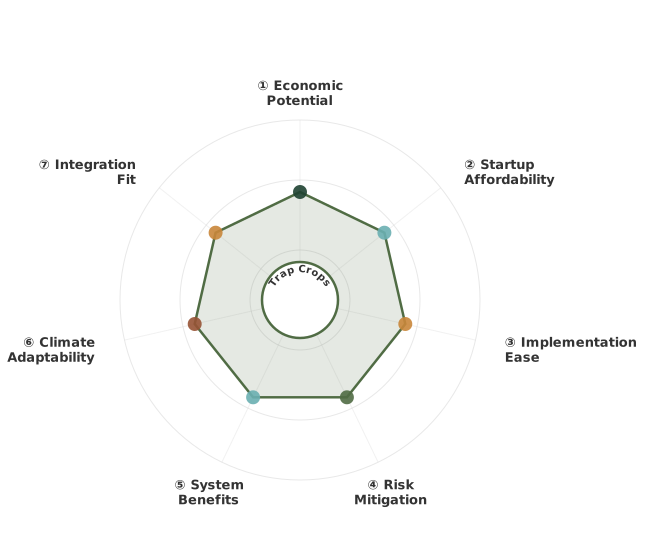
How These Traits Are Calculated
Trait dimensions are ordered clockwise starting from the top of the chart (12 o'clock position):
1. Economic Potential
Financial returns, annual value, and break-even timeline
WHAT: Evaluates financial viability by combining net annual value ($/ha from savings, income, and amortized harvests) with break-even timeline showing when practices pay for themselves.
WHY: Farmers need clear ROI understanding before committing resources. Fast payback (≤3 years) with strong returns (≥$300/ha) enables confident adoption, while long timelines (>10 years) restrict adoption to well-funded operations willing to wait for returns.
HOW: Calculated from net annual value in $/ha and break-even years. Exceptional (≥2.6): fast ROI ≤3 years + high value ≥$300/ha. Typical (1.8-2.5): moderate returns or longer timelines. Limited (<1.8): marginal economics or very long payback >10 years.
2. Startup Affordability
Initial investment costs and financial barrier to entry
WHAT: Measures financial barrier to entry through startup costs for equipment, infrastructure, consulting, and materials. Inverted scoring: lower costs = higher scores = more accessible adoption.
WHY: Affordability determines who can adopt. Low-cost practices (<$250/ha) enable widespread adoption across diverse scales, while high costs (>$2,500/ha) limit adoption to well-capitalized operations, creating barriers that slow regenerative transition.
HOW: Calculated from initial investment parsed from practice content. Inverted scoring: Exceptional (≥2.6): minimal investment <$250/ha. Typical (1.8-2.5): moderate costs $250-2,500/ha. Limited (<1.8): high barrier >$2,500/ha.
3. Implementation Ease
Learning curve and specialized knowledge required
WHAT: Measures how much learning, planning, and specialized knowledge a practice requires. Simpler practices with fewer steps score higher, while complex practices requiring extensive training or specialized resources score lower.
WHY: Complex practices create adoption barriers even when economically viable. Straightforward practices enable faster adoption and broader participation, while those requiring extensive training, timing precision, or specialized equipment limit who can succeed.
HOW: Evaluated by measuring documentation length and identifying complexity markers like location-specific requirements, seasonal timing windows, specialized skills, and dedicated equipment needs. Exceptional (≥2.6): straightforward practices with minimal prerequisites. Typical (1.8-2.5): moderate learning curve with some specialized needs. Limited (<1.8): steep learning curve requiring significant training or resources.
4. Risk Mitigation
Identified financial and ecological risk assessment
WHAT: Evaluates documented risks across financial (investment loss, market volatility) and ecological (crop failure, pest outbreaks) domains. Inverted scoring: fewer risks = higher scores.
WHY: Understanding risk exposure helps farmers make informed decisions. Low-risk practices allow confident implementation, while high-risk practices require careful planning and contingency resources. Risk transparency prevents costly failures.
HOW: Calculated from identified risks in practice content. Inverted scoring: Exceptional (≥2.6): ≤2 risks with manageable severity. Typical (1.8-2.5): 3-5 moderate risks. Limited (<1.8): 6+ risks or severe exposure.
5. System Benefits
How many ways the practice improves your land simultaneously
WHAT: Measures how many aspects of land health improve at once—carbon storage, soil quality, erosion control, water absorption, and biodiversity. Practices that improve multiple areas simultaneously create compounding benefits where each improvement reinforces the others.
WHY: The best practices solve multiple problems at once. For example, addressing erosion simultaneously builds carbon and improves water infiltration, creating a resilient system with positive feedback loops. Single-benefit approaches miss these compound transformation opportunities.
HOW: Evaluated across five key outcomes: carbon sequestration, soil organic matter increase, erosion reduction, water infiltration improvement, and biodiversity enhancement. Exceptional (≥2.6): high carbon storage (>8 t/ha/yr), improvements across 4-5 areas, transformative outcomes. Typical (1.8-2.5): moderate carbon (3-8 t/ha/yr), improvements across 2-3 areas. Limited (<1.8): modest impact (<3 t/ha/yr), single-area focus only.
6. Climate Adaptability
Geographic applicability across Köppen climate zones
WHAT: Evaluates geographic applicability by assessing how many Köppen climate zones successfully support a practice and what adaptation requirements are needed. Measures breadth of climates where farmers can implement with minimal to moderate modifications.
WHY: Universal practices working across diverse climates enable more farmers to adopt regenerative approaches. Practices limited to single climate types (only Mediterranean, only tropical) restrict adoption and slow global transition. Adaptability determines whether a practice serves niche regions or offers broad transformation.
HOW: LLM evaluation of regional success stories, Köppen zone coverage, and adaptation needs. Exceptional (≥2.6): 5+ zones or 4+ climate types, 3+ continents, minimal adaptation. Typical (1.8-2.5): 3-4 zones or 2-3 types, 2 continents, moderate adaptation. Limited (<1.8): 1-2 zones, single region, significant adaptation or highly specialized.
7. Integration Fit
How well this practice combines with others you're doing
WHAT: Measures how well a practice combines with other regenerative practices you might be doing. Some practices work as building blocks that make many other practices easier or more effective, while others work best on their own.
WHY: Practices that combine well with many others create more value on your farm. For example, cover cropping enables no-till, improves grazing, supports crop diversity, and helps water management—making all of them work better together. This helps you build a coherent system rather than juggling disconnected practices.
HOW: Evaluated by identifying which practices combine well and how strong those combinations are. 'Ideally Suited' means strong combinations where practices reinforce each other (practice A makes B easier, while B makes A more effective). 'Adequate' means complementary benefits that work well together. Exceptional (≥2.6): combines well with 6+ practices, serves as a building block. Typical (1.8-2.5): combines with 3-5 practices. Limited (<1.8): 1-2 practices or works best alone.
Going Deeper
1
WHY - The Benefits
Trap cropping is a cornerstone of integrated pest management (IPM) that aligns with regenerative principles by leveraging natural ecological processes. Its benefits span from direct economic savings to the broader health of the agroecosystem, fostering resilience and...
Trap cropping is a cornerstone of integrated pest management (IPM) that aligns with regenerative principles by leveraging natural ecological processes. Its benefits span from direct economic savings to the broader health of the agroecosystem, fostering resilience and reducing reliance on unsustainable inputs.
WHY - The Benefits
Trap cropping is a cornerstone of integrated pest management (IPM) that aligns with regenerative principles by leveraging natural ecological processes. Its benefits span from direct economic savings to the broader health of the agroecosystem, fostering resilience and...
Trap cropping is a cornerstone of integrated pest management (IPM) that aligns with regenerative principles by leveraging natural ecological processes. Its benefits span from direct economic savings to the broader health of the agroecosystem, fostering resilience and reducing reliance on unsustainable inputs.
Soil Health Benefits
While not a primary soil-building practice, trap cropping's ecosystem services indirectly support soil health. By reducing the need for broad-spectrum synthetic pesticides, it protects beneficial soil microorganisms, fungi (like mycorrhizae), and invertebrates such as earthworms and predatory mites. These organisms are vital for nutrient cycling, soil structure formation, and disease suppression. A healthier soil microbiome is more efficient at decomposing organic matter, releasing nutrients for plant uptake, and creating pore spaces that improve water infiltration and aeration.
If the trap crop species are chosen to include deep-rooted plants or legumes, they can contribute to soil structure and fertility. For example, planting a deep-rooted brassica like radish as a trap crop can help break up shallow soil compaction. Leguminous trap crops, such as cowpeas or certain clovers, fix atmospheric nitrogen, adding fertility to the soil that can benefit subsequent cash crops or the main crop itself. When the trap crop biomass is managed sustainably—incorporated as green manure, composted, or grazed by livestock—it adds organic matter to the soil, feeding soil life and improving soil physical properties.
The exclusion or reduction of synthetic inputs, a common outcome of successful trap cropping, means less chemical disruption to the soil food web. This allows natural soil biological processes to strengthen, leading to a more resilient and self-regulating soil ecosystem. Over time, this leads to improved soil aggregation, water-holding capacity, and nutrient availability, laying the foundation for more productive and sustainable agriculture.
Economic Benefits
The most direct economic benefit of trap cropping is the significant reduction in pesticide costs. Synthetic insecticides, herbicides, and fungicides can represent a substantial portion of a farm's operating expenses, particularly in high-value crop production. By concentrating pest populations onto a less valuable crop that is then managed differently (e.g., harvested early, tilled under without necessarily disrupting the main crop's cycle, or grazed), the need for costly and potentially harmful chemical applications to the main crop is greatly diminished. Farmers might save anywhere from USD 50 to USD 300 per hectare per year, depending on the crop, pest pressure, and conventional practices.
Beyond direct savings, trap cropping can also lead to improved crop quality and yield. By protecting the main crop from damaging pest infestations, farmers can achieve higher market yields and better quality produce. This translates to increased revenue and market competitiveness. Furthermore, reduced pesticide use can mean lower labor costs associated with spraying. The reduced environmental impact and improved farm reputation from adopting sustainable pest management can also hold long-term economic value.
The overall economic outcome is improved farm profitability. Many farmers find that the investment in trap crop seeds and potentially additional management for the sacrificial crop is far less than the savings from pesticides and the gains from protected yields. This practice can be particularly beneficial for smallholder farmers or those transitioning to organic or less input-intensive systems, as it provides a cost-effective and ecologically sound method to manage pests. The practice can contribute to break-even and profitability within 1-2 years by making crop production more cost-effective.
Water Cycle Benefits
Trap cropping's impact on the water cycle is primarily indirect but significant. By promoting a healthier soil structure through reduced chemical disruption and enhanced soil biology, trap cropping contributes to improved water infiltration and retention. Healthier soils with better aggregation and higher organic matter content act like sponges, absorbing rainfall more readily and reducing surface runoff and erosion. This means more water is available to plants, reducing drought stress and the need for irrigation, especially in regions prone to dry spells.
When cover crops are used as trap crops, especially those with deep root systems, they can help break up compacted layers within the soil profile. This improves the soil's capacity to absorb and store water deeper in the profile, making it available to plants during dry periods. Leguminous trap crops can also contribute to soil fertility by fixing nitrogen, which can reduce the need for synthetic fertilizers that can sometimes impair soil biological function and, in turn, water infiltration.
In essence, by fostering a more robust and biologically active soil, trap cropping contributes to a more resilient water cycle at the farm level. It enhances the soil's ability to capture, store, and efficiently use water, making the agricultural system less vulnerable to drought and reducing associated irrigation costs and water resource depletion.
Carbon Sequestration
The carbon sequestration benefits of trap cropping are incremental but contribute to the overall regenerative goal. When trap crops are managed as green manure—tilled into the soil after pest infestation or natural termination—they add significant amounts of biomass and nutrients to the soil. This plant material is then decomposed by soil microbes, incorporating carbon into the soil organic matter. Increased soil organic matter is a key indicator of soil health and a crucial reservoir for soil carbon sequestration.
Furthermore, if the trap crop is allowed to decompose in situ, leaving residue on the soil surface, it acts as mulch, protecting the soil from erosion and further incentivizing microbial activity that can lead to carbon fixation. The enhanced diversity from incorporating trap crops can also support plant communities that are more efficient at drawing down atmospheric carbon dioxide through photosynthesis.
While trap cropping alone might not be a major carbon sink, its role in reducing synthetic inputs and fostering soil health creates conditions that amplify other carbon-sequestering practices like cover cropping and no-till farming. By contributing to a more active and healthy soil ecosystem, trap cropping supports the biological processes that are fundamental to drawing down atmospheric carbon and storing it in the soil.
Biodiversity Enhancement
Trap cropping is a powerful tool for enhancing biodiversity within the agricultural landscape. By strategically planting specific species that attract target pests, farmers can also inadvertently create attractive habitats and food sources for beneficial insects. These beneficials include natural predators of the target pest (e.g., ladybugs, lacewings), parasitoids that lay eggs on or in pest insects, and pollinators that are crucial for crop reproduction.
For instance, planting flowering herbs or specific brassicas as trap crops can provide nectar and pollen for beneficial insects, supplementing their diets and encouraging them to reside in or near the fields. This creates a more balanced ecosystem where natural pest control mechanisms are amplified. By reducing the reliance on broad-spectrum pesticides, trap cropping prevents the indiscriminate killing of these beneficial organisms, allowing their populations to grow and effectively regulate pest numbers.
Beyond insects, the increased plant diversity from adding trap crops can also support a wider variety of bird species, amphibians, and other wildlife that benefit from diverse habitats and food sources. This creates a more resilient and biodiverse farm ecosystem, which is a hallmark of regenerative agriculture. This enhanced biodiversity contributes to the overall health and stability of the farm, making it less susceptible to pest outbreaks and promoting sustainable production.
Regenerative Systems Fit
Trap cropping's role in regenerative agriculture varies, but its potential for integration is significant.
Regenerative Principles Supported:
- Principle 2 (Maximize Crop Diversity): Trap cropping directly introduces additional plant species into the cropping system, creating greater botanical diversity. This diversity often translates to increased below-ground diversity and supports a broader range of beneficial organisms.
- Principle 3 (Keep Soil Covered): When trap crops are green manures or cover crops terminated in place, they contribute to maintaining soil cover, preventing erosion, and suppressing weeds.
- Principle 4 (Maintain Living Roots): Depending on the trap crop species and its lifecycle, it can extend periods of living root activity in the soil, feeding soil biology and maintaining soil structure.
Transition Pathway: Trap cropping can be an excellent tool during the transition to regenerative systems. By reducing pesticide reliance, it helps farmers move away from synthetic inputs, which is a critical step in rebuilding soil biology. It provides a practical, economically viable method to manage pests that might otherwise force a return to chemical use.
Integration with Other Practices:
- Cover Cropping & Green Manures: Many trap crops are also excellent cover crops (e.g., daikon radish, various vetches, buckwheat). Using these species for pest management that are then incorporated into the soil as green manure directly builds soil organic matter.
- Insectary Plantings: Trap crops can be integrated with insectary plantings (flowers that attract beneficial insects) to create a more robust pest management and beneficial insect habitat complex.
- Integrated Pest Management (IPM): It is a key component of biological IPM strategies, complementing other methods like habitat manipulation for beneficials and scouting.
- Reduced Tillage: Trap cropping can be implemented in no-till or reduced-till systems, as the trap crop can be planted directly into residue or terminated without disturbing the soil profile.
Limitations and Context:
- Not always Foundational: While beneficial, it might not be a core, daily regenerative practice like cover cropping or adaptive grazing. Its effectiveness is pest-specific and seasonal.
- Requires Management: The trap crop itself needs management (planting synchrony, termination) and can become a pest reservoir if not handled correctly. This could be seen as a step away from minimal disturbance if annually tilled under. For a fully regenerative approach, the trap crop should be managed sustainably after its role is fulfilled.
Overall, trap cropping serves as an ecologically intelligent strategy that reduces reliance on synthetic inputs, diversifies the agricultural landscape, and supports beneficial organisms, thereby contributing to a more resilient and regenerative agroecosystem.
Sources behind this view
Research
-
Insect pest management in vegetable crops through trap cropping: Review (opens in new window)
This study found: Trap cropping uses decoy plants to lure pests away from vegetables, protecting crops and attracting beneficial insects. This sustainable method reduces reliance on chemical sprays.
-
CONCEPTS AND APPLICATIONS OF TRAP CROPPING IN PEST MANAGEMENT (opens in new window)
This study found: Trap cropping uses decoy plants to lure pests away from main crops. Success depends on plant traits, planting patterns, pest behavior, and farm economics, making it a knowledge-intensive pest manageme
-
TECHNIQUES OF PROTECTING CROPS FROM INSECT PESTS IN INTEGRATED PEST MANAGEMENT – INTERCROPPING AND TRAP CROPPING (opens in new window)
This study found: Intercropping and trap cropping boost crop diversity to naturally suppress insect pests in IPM systems. Understanding crop-pest ecology is key, though weather and sole-technique limitations exist.
-
Benefits and Risks of Intercropping for Crop Resilience and Pest Management. (opens in new window)
This study found: Intercropping (growing multiple crops together) boosts resilience to climate change and improves pest control by enhancing resource use and beneficial insect habitat. While generally profitable, adopt
From the Web
-
This cluster details trap cropping strategies (conventional, sequential, push-pull, etc.) for pest control, symbiotic nitrogen fixation by legumes, weed suppression by dense canopies, root-zone enviro
2
WHERE - Regional Considerations
The effectiveness of trap cropping is highly dependent on climate, pest biology, and the specific cropping systems in place. Its successful implementation requires aligning the chosen trap crop species with local conditions and pest life cycles.
The effectiveness of trap cropping is highly dependent on climate, pest biology, and the specific cropping systems in place. Its successful implementation requires aligning the chosen trap crop species with local conditions and pest life cycles.
WHERE - Regional Considerations
The effectiveness of trap cropping is highly dependent on climate, pest biology, and the specific cropping systems in place. Its successful implementation requires aligning the chosen trap crop species with local conditions and pest life cycles.
The effectiveness of trap cropping is highly dependent on climate, pest biology, and the specific cropping systems in place. Its successful implementation requires aligning the chosen trap crop species with local conditions and pest life cycles.
Click Here to Look up your Region if you don't already know it
Humid Temperate Regions
Representative Locations: Southeastern United States, northern Europe (UK, Germany, Poland), eastern China, Japan, New Zealand
Climate Context: Warm to hot summers and cool to cold winters with moderate to high annual precipitation (75-150 cm or 30-60 inches) distributed relatively evenly. USDA Zones 6-8, Köppen Cfb/Cfa.
Application: These regions support a wide range of annual and perennial trap crops. Fast-growing brassicas (radish, mustard), legumes (vetch, clover), and grains (oats, rye) can be established as trap crops for common pests like aphids, flea beetles, and various moth larvae affecting vegetables and cereals. The longer growing season allows for trap crops to be planted before or after main crops, or interseeded. For example, planting strips of buckwheat between maize rows can attract beneficial insects that prey on corn pests while also flowering to attract pollinators for neighboring crops. Management of the harvested or terminated trap crop is key; incorporating it as green manure can significantly improve soil health.
Mediterranean Regions
Representative Locations: California, Mediterranean basin (Spain, Italy, Greece), central Chile, southwestern Australia, Western Cape South Africa
Climate Context: Hot, dry summers and mild, wet winters. Annual precipitation 40-90 cm (15-35 inches), highly seasonal. USDA Zones 8-10, Köppen Csa/Csb.
Application: Trap cropping in these regions must account for the distinct dry summers and wet winters. Early spring plantings of trap crops like legumes (e.g., crimson clover) or certain grains can attract pests before main crops fully establish, with the trap crop being terminated due to drying conditions or grazed. In orchards, flowering cover crops planted in autumn can attract overwintering pests or their natural enemies, blooming in spring to provide a food source before flowering can harm fruit set. Strategies must focus on moisture-efficient trap crops or those that can utilize winter rainfall, with a plan for their termination or management before summer drought intensifies.
Arid/Semi-Arid Regions
Representative Locations: Western USA, North Africa, Central Asia, Interior Australia, parts of the Sahel
Climate Context: Low annual precipitation (<40 cm or 15 inches), high temperatures, short and often unpredictable growing season. USDA Zones 7-9, Köppen BSh/BSk.
Application: Water scarcity is the primary challenge. Trap cropping must use drought-tolerant species or be timed to take advantage of limited rainfall or irrigation. Legumes that fix nitrogen and survive with minimal water (e.g., certain varieties of cowpea, vetch) can attract pests while also improving soil fertility. Intercropping specific plants that repel pests from main crops (push-pull strategy, related to trap cropping) may be more viable than relying solely on trap crops that require significant moisture. Careful timing of planting and termination, and selection of species that can grow quickly with limited water, are critical for success.
Cold Continental Regions
Representative Locations: Northern USA and Canada, Northern Europe, Northern Asia, Siberia
Climate Context: Very short growing seasons, extreme summer heat, severe winter cold. USDA Zones 3-5, Köppen Dfa/Dfb.
Application: In these regions, trap cropping is often limited to the brief growing season. Fast-maturing annuals that can be planted early or late in the season are ideal. For instance, quick-growing brassicas can be used for early-season pests in vegetable or grain fields. In autumn, planting a winter rye or oat cover crop can serve as a trap crop for overwintering pests or as a source of 'green manure' for early spring cash crop planting. The cold winters typically kill off many pests and their overwintering sites, simplifying management, but careful timing of trap crop planting is essential to intercept pest migrations during the short active period.
Subtropical Regions
Representative Locations: Southeastern USA, Southern China, Southern Brazil, Eastern Australia, parts of India
Climate Context: Hot, humid summers and mild winters with generally ample rainfall. USDA Zones 9-11, Köppen Cfa/Cwa.
Application: The long, warm growing season allows for multiple trap cropping cycles and a wide selection of species. Tropical legumes (e.g., cowpeas) and fast-growing grasses can be effective for a variety of pests found in these regions, such as aphids and various caterpillar species. Planting trap crops around perennial crops like fruit trees can benefit from continuous cover and pest management year-round. The high humidity can also increase the risk of fungal diseases on trap crops, so species selection should consider disease resistance. Integration with other IPM strategies, such as promoting beneficial insects, is highly effective.
Tropical Regions
Representative Locations: Central America, Southeast Asia, East Africa, Northern Australia, Northern South America
Climate Context: High temperatures year-round, with distinct wet and dry seasons or consistent high rainfall. Köppen Af/Am/Aw.
Application: These regions offer the longest potential for living roots and soil cover. Trap cropping can be employed year-round if water availability is consistent or managed through irrigation. Fast-growing, heat-tolerant species like cowpeas, sorghum, or specific flowering plants are highly effective. In areas with distinct wet/dry seasons, trap crops can be timed to intercept pest movements during season changes. The challenge here can be the intense pest pressure and rapid pest life cycles, requiring vigilant monitoring and timely management of the trap crops. Managing the trap crop biomass sustainably (e.g., mulching, composting) is crucial given the rapid decomposition rates in tropical climates.
3
HOW - Implementation Process
Implementing trap cropping effectively requires careful planning, species selection, and strategic timing. It's about creating a more attractive habitat for pests on a sacrificial plant to divert their attention from your main crop.
Implementing trap cropping effectively requires careful planning, species selection, and strategic timing. It's about creating a more attractive habitat for pests on a sacrificial plant to divert their attention from your main crop.
HOW - Implementation Process
Implementing trap cropping effectively requires careful planning, species selection, and strategic timing. It's about creating a more attractive habitat for pests on a sacrificial plant to divert their attention from your main crop.
Implementing trap cropping effectively requires careful planning, species selection, and strategic timing. It's about creating a more attractive habitat for pests on a sacrificial plant to divert their attention from your main crop.
Prerequisites
- Identify Target Pests: Determine which specific pests are problematic for your main cash crop. Different pests have different plant preferences.
- Research Pest Biology: Understand the pest's life cycle, migration patterns, and what plants are most attractive to them at different stages (e.g., for feeding, egg-laying).
- Select Appropriate Trap Crop: Choose a species that is demonstrably more attractive to the target pest than your main crop. Consider vigor, speed of establishment, and attractiveness.
- Understand Main Crop Needs: Ensure the trap crop doesn't compete excessively with the main crop for resources like sunlight, water, or nutrients if planted intercropped.
- Plan for Trap Crop Management: Decide how you will manage the trap crop after it has attracted pests (e.g., terminate, harvest, plow under, graze).
Phase 1: Species Selection and Seed Sourcing
- Specificity is Key: The trap crop must be more attractive than the main crop. For instance, certain varieties of mustard are highly attractive to flea beetles that damage brassicas. Cowpeas are known to attract aphids and stink bugs away from corn. Sorghum can trap corn rootworm.
- Vigor and Speed: Select varieties that grow rapidly and establish quickly, ensuring they are attractive and in place before significant pest migration.
- Regional Suitability: Choose trap crops that perform well in your specific climate and soil conditions. Consult local extension services or experienced farmers for recommendations.
- Seed Availability: Ensure reliable access to quality seeds for your chosen trap crop species. Plan seed sourcing well in advance, especially for specialized varieties.
- Cost-Effectiveness: Compare the cost of trap crop seeds with potential pesticide savings.
Phase 2: Planting and Establishment
- Timing is Crucial: Plant the trap crop before or in synchrony with the main crop's critical pest vulnerability period. For perimeter trap crops, this might be slightly earlier than the main crop. For interplanted trap crops, timing is more precise.
-
Spatial Arrangement:
- Perimeter/Border: Plant a strip 3-10 meters (10-30 feet) wide around the field. This is effective if pests migrate from field edges.
- Intercropping/Alternating Rows: Plant trap crops in alternating rows or strips within the main crop. This is effective for pests that disperse generally within a field. Spacing might be every 3-5 rows of the main crop.
- Companion Planting: Integrate small patches of attractive plants within rows of the main crop for localized pest management.
-
Planting Methods: Use methods appropriate for your system. This can include conventional seeding, direct seeding into residue (no-till), or transplanting. If incorporating into a no-till system, ensure proper seed-to-soil contact without excessive disturbance.
- Seed Treatment (Optional): In some cases, seeds can be treated to enhance attractiveness or germination.
Phase 3: Pest Management and Trap Crop Stewardship
- Monitoring: Regularly scout both the main crop and the trap crop for pest activity. Understand what constitutes an unacceptable level of infestation on the trap crop.
- Pest Consolidation: The goal is for the majority of the pest population to colonize the trap crop.
- Trap Crop Management (The Critical Step): This is where the regenerative aspect is reinforced.
- Harvest: If the trap crop has a harvestable component (e.g., fodder radish, cowpea for forage), harvest it before pests complete their life cycle, removing the pests from the field.
- Termination: If the trap crop is not harvested, terminate it at the appropriate time. This could involve:
- Tillage: Plowing under the infested trap crop (less regenerative) can remove pests but disrupts soil structure. This should only be done if other methods are infeasible or if paired with immediate cover cropping.
- Roller-Crimping/Mowing: For annual trap crops, these methods can terminate the plant by crushing stems, leaving residue as mulch.
- Grazing: Use livestock to graze the infested trap crop heavily. This can remove pests and their eggs, and the manure will then fertilize the soil. This is a highly regenerative option.
- Natural Senescence: Allow the trap crop to die naturally if its lifecycle is shorter than the main crop's vulnerable period and its termination coincides with pest life cycle completion.
- Integrated Control: If pest pressure on the trap crop is extremely high and exceeds its capacity, consider targeted biological controls within the trap crop area rather than resorting to broad-spectrum pesticides.
Transition Timeline & Phase-Out Strategy (If applicable)
If the goal is to transition away from synthetic pesticides, trap cropping can be a stepping stone. The "phase-out" is not of trap cropping itself, but of the reliance on synthetic pesticides.
Transition Timeline:
- Year 1-2: Implement trap cropping as a primary pest management strategy for 1-2 key pests. Begin reducing synthetic pesticide applications by 30-50% on the main crop. Focus on intensive monitoring to manage pest populations on the trap crop.
- Year 3-4: Expand trap cropping to more pest targets or crop types. Aim for a 70-90% reduction in synthetic pesticide use. Integrate other biological controls (beneficial insects, microbial sprays) and habitat enhancement.
- Year 5+: Achieve near-elimination of synthetic pesticides. Trap cropping becomes one component of a sophisticated IPM system, potentially alongside cover cropping, insectary plantings, and on-farm produced biologicals. The trap crop itself is managed regeneratively (green manure, sustainable grazing, compost).
Phase-Out of Non-Regenerative Inputs: The key is gradual reduction and replacement. Trap cropping provides the economic and biological buffer to make these reductions feasible without catastrophic yield loss. Success is measured by the reduction in synthetic input purchases, the increase in beneficial insect populations, and the maintenance or improvement of crop yields and quality.
Sources behind this view
 Community
-
Details IPM prevention and avoidance strategies including banker plants, beetle banks, conservation buffers, trap crops, locally adapted cultivars, polyculture, soil health optimization, and field san
Read more (pp. 1-3) (opens PDF, pp. 1-3) efotg.sc.egov.usda.gov -
Details numerous IPM techniques for pest prevention, avoidance, and monitoring, including land use strategies, before-planting methods (allelopathic crops, polyculture, soil health), growing season pr
Read more (pp. 16-35) (opens PDF, pp. 16-35) efotg.sc.egov.usda.gov
Research
-
Insect pest management in vegetable crops through trap cropping: Review (opens in new window)
This study found: Trap cropping uses decoy plants to lure pests away from vegetables, protecting crops and attracting beneficial insects. This sustainable method reduces reliance on chemical sprays.
-
CONCEPTS AND APPLICATIONS OF TRAP CROPPING IN PEST MANAGEMENT (opens in new window)
This study found: Trap cropping uses decoy plants to lure pests away from main crops. Success depends on plant traits, planting patterns, pest behavior, and farm economics, making it a knowledge-intensive pest manageme
-
TECHNIQUES OF PROTECTING CROPS FROM INSECT PESTS IN INTEGRATED PEST MANAGEMENT – INTERCROPPING AND TRAP CROPPING (opens in new window)
This study found: Intercropping and trap cropping boost crop diversity to naturally suppress insect pests in IPM systems. Understanding crop-pest ecology is key, though weather and sole-technique limitations exist.
-
Trap Cropping in Insect Pest Management (opens in new window)
This study found: Trap cropping uses border strips to attract pests away from main crops, reducing insecticide use and protecting beneficial insects. More research is needed to fully implement this sustainable pest man
From the Web
-
This cluster details trap cropping strategies (conventional, sequential, push-pull, etc.) for pest control, symbiotic nitrogen fixation by legumes, weed suppression by dense canopies, root-zone enviro
-
Perimeter trap cropping uses preferred crops (e.g., hot cherry peppers for pepper maggot, blue Hubbard squash for squash vine borers) around the main crop to intercept pests, which are then eliminated
-
Perimeter trap cropping uses a preferred crop around the field edge to intercept pests, which are then eliminated with insecticides or flame weeding. Examples include hot cherry peppers for pepper mag
-
Explains companion planting strategies like trap cropping and their role in pest control and biodiversity. Lists companion/incompatible plant relationships and selected botanical pesticides for practi
4
Know the Debate
Trap cropping's effectiveness hinges on precise application, as outcomes vary widely with specific pest-plant pairings and management. While some f...
Know the Debate
Trap cropping's effectiveness hinges on precise application, as outcomes vary widely with specific pest-plant pairings and management. While some f...
Trap cropping's effectiveness hinges on precise application, as outcomes vary widely with specific pest-plant pairings and management. While some farmers achieve significant pest reduction and pesticide savings, others find it challenging or even counterproductive if misapplied. Success often depends on adapting specific trap crop species to local pest pressures, climates, and farm scales. Careful monitoring and regenerative management of the sacrificial crop are crucial for realizing the full benefits and avoiding unintended consequences.
How effective are trap crops in practice?
Effectively reduces pest pressure
Research and experienced practitioners find trap crops highly effective when specific plant-pest pairings are used, such as hot cherry peppers for pepper maggot or brassicas for flea beetles. These implementations significantly lure pests away from main crops, reducing pesticide reliance.
Sources behind this view
Sources behind this view
 Videos & Podcasts
-
Use trap crops like nasturtiums and radishes to lure pests away from main crops. Implement beer or yeasty liquid traps for slug control, and practice crop rotation and diversified planting to disrupt pest life cycles.
Research
-
Marigold as a trap crop: Efficacy and mechanism for sustainable pest and nematode management in solanaceous vegetable crops: A review (opens in new window)
This study found: This review highlights how planting marigolds alongside vegetables like tomatoes, potatoes, and peppers can help manage pests and harmful soil worms naturally. Relying too much on chemical pesticides can make soil and plants toxic, harming both the environment and human health. Trap cropping, using marigolds, is a cheaper, eco-friendly way to protect crops. Marigolds attract and trap pests like the tomato fruit borer, whiteflies, and damaging nematodes, keeping their numbers low. The plant's natural compounds also help suppress nematodes and act as a mild herbicide. This practice helps increase the amount of usable produce farmers can harvest.
From the Web
-
Perimeter trap cropping uses a preferred crop around the field edge to intercept pests, which are then eliminated with insecticides or flame weeding. Examples include hot cherry peppers for pepper maggot and blue Hubbard squash for squash vine borers.
-
Perimeter trap cropping uses preferred crops (e.g., hot cherry peppers for pepper maggot, blue Hubbard squash for squash vine borers) around the main crop to intercept pests, which are then eliminated with insecticides or flame weeding.
Effectiveness is inconsistent and context-dependent
Some field practitioners report mixed or negative results, with trap crops acting as pest reservoirs rather than diversions. Success requires expert knowledge of pest behavior and careful management, and failures can lead to increased pest problems.
Sources behind this view
Sources behind this view
Videos & Podcasts
-
Avoid fighting pest pressure like aphids; stop growing the crop for the season and restart later. Trap crops are generally ineffective in commercial settings by potentially increasing pest populations.
-
IPM strategies include planting diverse flowers (marigolds, sunflowers, nasturtiums) to attract beneficial insects, deter pests, and use trap crops like sunflowers for stink bugs, while also managing overwintering pests by removing weeds.

Research
-
Irrigated trap crops impact key hemipteran pests in organic pistachio orchard (opens in new window)
This study found: In a two-year study on organic pistachio farms in California's dry Central Valley, researchers tested planting special 'trap crops' (ground cover plants) between the trees, keeping them watered. The goal was to attract and manage small, sap-sucking insects ('hemipteran pests') that damage the nuts. The study found that these watered trap crops increased the overall variety and number of insects, including beneficial ones that prey on pests, in the orchard trees. While some pest insects were more attracted to the trap crops, others were reduced in the trees. However, the trap crops didn't significantly reduce the actual damage to the pistachio nuts. This suggests that while watered trap crops can influence insect populations, more work is needed to ensure they effectively protect the crop.
Making Sense of the Differences
Trap crop effectiveness varies significantly due to the specificity required; a mismatch between the pest and the trap crop species, or poor timing and subsequent management of the trap crop, can lead to failure or even pest amplification. Successful implementation depends on precise local knowledge of pest biology and ecology, coupled with careful observation and adaptive management.
5
HOW MUCH - Costs & Investment
Note: All costs are based on recent US economic data (2023-2025) and may vary substantially in other regions based on local labor rates, material costs, and regulatory requirements.
Note: All costs are based on recent US economic data (2023-2025) and may vary substantially in other regions based on local labor rates, material costs, and regulatory requirements.
HOW MUCH - Costs & Investment
Note: All costs are based on recent US economic data (2023-2025) and may vary substantially in other regions based on local labor rates, material costs, and regulatory requirements.
Note: All costs are based on recent US economic data (2023-2025) and may vary substantially in other regions based on local labor rates, material costs, and regulatory requirements.
Note: All costs are based on recent US economic data (2024–2026) and may vary substantially by region based on local labor rates, material costs, and regulatory requirements.
Seed Purchase and Procurement
The cost of seeds varies based on whether the producer utilizes inexpensive cover crop species or specialized, high-attractiveness germplasm. Small-scale farmers (under 50 acres (20 ha)) typically pay $15.63–$52.10 per acre ($39–$129/ha) because they lack the volume discounts available to larger operations. Mid-size producers (50–500 acres (20–202 ha)) see costs decline to $12.50–$36.47 per acre ($31–$90/ha) through bulk regional suppliers. Large-scale producers (500+ acres) can source seed at wholesale rates, bringing costs down to $8.34–$29.18 per acre ($21–$72/ha) for commodity-grade trap crop varieties. Specialized heirloom or high-intensity attractant brassicas or legumes intended for high-value vegetable markets can push seed costs upward by 40% across all farm sizes.
Planting and Establishment
Planting costs are largely driven by equipment ownership vs. custom rates. Small producers often incorporate trap crops as a border row, utilizing existing equipment or manual labor, resulting in establishment costs of $0–$26.05 per acre ($0–$64/ha). Mid-size operations utilizing standard drill equipment report costs of $0–$20.84 per acre ($0–$51/ha) for fuel, labor, and maintenance. Large-scale operations prioritize efficiency, often planting trap crop buffers simultaneously with the primary crop using automated, multi-row split-planters, keeping establishment costs tightly constrained between $0–$15.63 per acre ($0–$39/ha). If precision seeding is required to maximize the pest-attractant border density, growers should anticipate an additional 15% increase in labor hours compared to standard field crops.
Management: Termination, Harvesting, and Monitoring
Management is the most variable expense, covering the labor-intensive stages of monitoring pest populations and the physical termination of the sacrificial crop. Small-scale farmers spend $15.63–$72.94 per acre ($39–$180/ha), often managing these plots with walk-behind equipment or light tractor work. Mid-size producers spend $12.50–$57.31 per acre ($31–$142/ha), usually utilizing mowing or selective grazing to manage biomass. Large-scale operations leverage economies of scale in chemical or mechanical termination (e.g., high-speed flail mowing or precision herbicide strips), keeping costs at $8.34–$41.68 per acre ($21–$103/ha). If the trap crop requires early harvest to prevent pests from migrating into the primary crop, producers must factor in the additional fuel and labor for a secondary pass, adding $20.84–$41.68 per acre ($51–$103/ha) to the seasonal expense.
Most Spend: Small-scale producers typically spend $67.73–$145.88 per acre ($167–$360/ha); mid-size producers spend $46.89–$98.99 per acre ($116–$245/ha); and large-scale producers spend $31.26–$72.94 per acre ($77–$180/ha).
Why the Range?: The primary drivers for cost variance include the cost of specialized seed versus commodity cover crop mixes, and the level of mechanical automation deployed for management and termination. Producers using precision-targeted biological controls or high-intensity custom termination methods report costs at the higher end of the spectrum, while those integrating trap crops into standard field operations utilizing existing machinery remain at the lower end.
Sources behind this view
Research
-
Insect pest management in vegetable crops through trap cropping: Review (opens in new window)
This study found: Trap cropping uses decoy plants to lure pests away from vegetables, protecting crops and attracting beneficial insects. This sustainable method reduces reliance on chemical sprays.
-
CONCEPTS AND APPLICATIONS OF TRAP CROPPING IN PEST MANAGEMENT (opens in new window)
This study found: Trap cropping uses decoy plants to lure pests away from main crops. Success depends on plant traits, planting patterns, pest behavior, and farm economics, making it a knowledge-intensive pest manageme
-
Trap Cropping in Insect Pest Management (opens in new window)
This study found: Trap cropping uses border strips to attract pests away from main crops, reducing insecticide use and protecting beneficial insects. More research is needed to fully implement this sustainable pest man
-
TECHNIQUES OF PROTECTING CROPS FROM INSECT PESTS IN INTEGRATED PEST MANAGEMENT – INTERCROPPING AND TRAP CROPPING (opens in new window)
This study found: Intercropping and trap cropping boost crop diversity to naturally suppress insect pests in IPM systems. Understanding crop-pest ecology is key, though weather and sole-technique limitations exist.
6
REWARDS AND RISKS - Economics & Risk Factors
Economic Scenarios
Economic Scenarios
REWARDS AND RISKS - Economics & Risk Factors
Economic Scenarios
Economic Scenarios
In a best-case scenario, such as a high-value brassica crop protected from flea beetles, a farmer invests $104.20 per acre ($257/ha) in specialized seed and precision planting. The trap crop successfully diverts 85% of pest pressure, eliminating the need for two insecticide passes valued at $260.50 per acre ($644/ha). With a 20% gain in marketable yield (worth $468.90 per acre ($1,159/ha)), the net financial gain reaches $625.20 per acre ($1,545/ha). In a typical scenario, a farmer utilizes a low-cost clover border to manage aphids in wheat, spending $52.10 per acre ($129/ha) total. This captures 50% of the pest pressure, saving $125.04 per acre ($309/ha) in pesticide costs and capturing a 10% yield boost worth $156.30 per acre ($386/ha), resulting in a net profit of $229.24 per acre ($566/ha). In a worst-case scenario, the trap crop is planted incorrectly or left too long, acting as a localized pest reservoir. The practice fails to mitigate the pest, resulting in the original $83.36 per acre ($206/ha) investment being lost, plus a 15% reduction in main crop yield (valued at $208.40 per acre ($515/ha)), resulting in a net loss of $291.76 per acre ($721/ha) for the season.
Profitability is heavily indexed to the market value of the primary cash crop. In high-commodity-price years, the cost of implementing a trap crop is negligible compared to the potential loss of a harvest. Risk is mitigated by utilizing "trap-then-kill" protocols, where the sacrificial crop is treated with concentrated biological controls once pests arrive, ensuring the trap crop does not become a permanent pest reservoir. This prevents the "worst-case" scenario of pest migration. Growers should also utilize diverse species mixes; planting a variety of trap crops that mature at different intervals ensures continuous pest distraction, reducing the risk of a "gap" in coverage which usually costs $52.10–$104.20 per acre ($129–$257/ha) in unexpected supplemental pesticide applications.
Transition Period Risks: For farms transitioning to integrated trap-cropping systems, the first 1–2 years represent the highest risk for yield dips. Producers may over-estimate the attractiveness of their trap crop species, leading to inadequate pest diversion. Recovery typically occurs by year 2 once the producer identifies the specific pest phenology for their local soil type. During this period, farmers should expect a transition-related expense of $31.26–$52.10 per acre ($77–$129/ha) for extra management labor and soil testing to refine the planting timing, which should be considered an R&D tax rather than a recurring cost.
Sources behind this view
Research
-
Insect pest management in vegetable crops through trap cropping: Review (opens in new window)
This study found: Trap cropping uses decoy plants to lure pests away from vegetables, protecting crops and attracting beneficial insects. This sustainable method reduces reliance on chemical sprays.
-
CONCEPTS AND APPLICATIONS OF TRAP CROPPING IN PEST MANAGEMENT (opens in new window)
This study found: Trap cropping uses decoy plants to lure pests away from main crops. Success depends on plant traits, planting patterns, pest behavior, and farm economics, making it a knowledge-intensive pest manageme
-
TECHNIQUES OF PROTECTING CROPS FROM INSECT PESTS IN INTEGRATED PEST MANAGEMENT – INTERCROPPING AND TRAP CROPPING (opens in new window)
This study found: Intercropping and trap cropping boost crop diversity to naturally suppress insect pests in IPM systems. Understanding crop-pest ecology is key, though weather and sole-technique limitations exist.
-
Trap Cropping in Insect Pest Management (opens in new window)
This study found: Trap cropping uses border strips to attract pests away from main crops, reducing insecticide use and protecting beneficial insects. More research is needed to fully implement this sustainable pest man
From the Web
-
Perimeter trap cropping uses preferred crops (e.g., hot cherry peppers for pepper maggot, blue Hubbard squash for squash vine borers) around the main crop to intercept pests, which are then eliminated
-
Perimeter trap cropping uses a preferred crop around the field edge to intercept pests, which are then eliminated with insecticides or flame weeding. Examples include hot cherry peppers for pepper mag
-
This cluster details trap cropping strategies (conventional, sequential, push-pull, etc.) for pest control, symbiotic nitrogen fixation by legumes, weed suppression by dense canopies, root-zone enviro
7
COMPATIBLE PRACTICES - Integration Opportunities
Trap cropping is most powerful when integrated into a broader regenerative farming system. It's not a standalone solution but a vital component that supports other practices and enhances overall farm resilience.
Trap cropping is most powerful when integrated into a broader regenerative farming system. It's not a standalone solution but a vital component that supports other practices and enhances overall farm resilience.
COMPATIBLE PRACTICES - Integration Opportunities
Trap cropping is most powerful when integrated into a broader regenerative farming system. It's not a standalone solution but a vital component that supports other practices and enhances overall farm resilience.
Trap cropping is most powerful when integrated into a broader regenerative farming system. It's not a standalone solution but a vital component that supports other practices and enhances overall farm resilience.
Cover Cropping & Green Manures
- Integration: Many effective trap crops (e.g., radishes, vetches, clovers, oats, rye) are also excellent cover crops. Planting them as a trap crop and then terminating them to decompose in situ acts as a robust green manure, adding organic matter and nutrients to the soil.
- Benefit: This synergy directly supports Principle 1 (Minimize Disturbance), Principle 3 (Keep Soil Covered), and Principle 4 (Maintain Living Roots) by establishing living cover and roots, while also achieving pest management goals.
Integrated Pest Management (IPM) Strategies
- Integration: Trap cropping is a critical component of a comprehensive IPM strategy. It should be combined with regular pest scouting, understanding economic thresholds, and using biological or soft pest controls as needed.
- Benefit: Creates a robust, multi-faceted approach to pest management that prioritizes ecological balance and minimizes reliance on synthetic inputs, moving towards fully regenerative pest control.
Insectary Plantings & Beneficial Habitat
- Integration: Planting flowering species (herbs like dill, fennel; flowers like buckwheat, sunflowers) around fields or as border crops can attract and support populations of beneficial insects that are natural predators or parasitoids of the main target pests. This can work in tandem with trap cropping.
- Benefit: Creates a balanced ecosystem where pests are drawn to trap crops while beneficials that prey on them are supported by dedicated insectary plants, promoting natural biological control.
Reduced Tillage / No-Till Farming
- Integration: Trap crops can be planted directly into existing residue using no-till planters or drills. Their eventual termination (roller-crimping, mowing) can also be managed within a no-till system, leaving residue to protect the soil.
- Benefit: Supports Principle 1 (Minimize Soil Disturbance) by avoiding plowing. The healthy soil biology fostered by reduced tillage improves the effectiveness of trap crops, and vice versa.
Crop Rotation
- Integration: Trap cropping should be planned in conjunction with the overall crop rotation. Rotating crops helps break pest cycles naturally. Strategic placement of trap crops within the rotation can further disrupt pest life cycles.
- Benefit: Enhances Principle 2 (Maximize Crop Diversity) by planning multiple plant species' roles over time. It reduces the buildup of specific soil-borne pests and diseases that are associated with continuous cropping.
Composting & Managed Livestock Grazing
- Integration: If the trap crop is harvested or its biomass is collected, it can be added to a compost pile, creating valuable soil amendments. Alternatively, livestock can be strategically grazed on the infested trap crop, removing pests and depositing nutrient-rich manure back onto the field.
- Benefit: Supports Principle 5 (Integrate Livestock) and closes nutrient loops, contributing to soil health and reducing waste. This is a highly regenerative way to manage the trap crop's aftermath.
When trap cropping is implemented in conjunction with these practices, its regenerative benefits are magnified. It moves from being a simple pest diversion tactic to being an integral part of building a healthy, resilient, and biodiverse farming system.
Sources behind this view
Research
-
CONCEPTS AND APPLICATIONS OF TRAP CROPPING IN PEST MANAGEMENT (opens in new window)
This study found: Trap cropping uses decoy plants to lure pests away from main crops. Success depends on plant traits, planting patterns, pest behavior, and farm economics, making it a knowledge-intensive pest manageme
-
Insect pest management in vegetable crops through trap cropping: Review (opens in new window)
This study found: Trap cropping uses decoy plants to lure pests away from vegetables, protecting crops and attracting beneficial insects. This sustainable method reduces reliance on chemical sprays.
-
TECHNIQUES OF PROTECTING CROPS FROM INSECT PESTS IN INTEGRATED PEST MANAGEMENT – INTERCROPPING AND TRAP CROPPING (opens in new window)
This study found: Intercropping and trap cropping boost crop diversity to naturally suppress insect pests in IPM systems. Understanding crop-pest ecology is key, though weather and sole-technique limitations exist.
-
Tritrophic defenses as a central pivot of low-emission, pest-suppressive farming systems (opens in new window)
This study found: Ecological 'tritrophic defenses' can replace pesticides for pest suppression. Strategies include habitat management, resistant varieties, and soil health to build natural resilience and create low-emi
From the Web
-
This cluster details trap cropping strategies (conventional, sequential, push-pull, etc.) for pest control, symbiotic nitrogen fixation by legumes, weed suppression by dense canopies, root-zone enviro
-
Explains companion planting strategies like trap cropping and their role in pest control and biodiversity. Lists companion/incompatible plant relationships and selected botanical pesticides for practi