
Value-Added Processing
Value-added processing transforms raw agricultural products into goods with increased market appeal and value, commonly involving methods like drying, milling, fermenting, or packaging. For regenerative farmers, this means creating higher-margin products from their harvests—like turning surplus wheat into artisanal flour, herbs into essential oils, or milk into cheese—thereby capturing more of the food dollar, extending shelf life, and potentially reducing waste.
Read More: Complete Description
Value-added processing is the practice of taking raw agricultural commodities and transforming them through physical, biological, or chemical means into products that command a higher price, have a longer shelf life, or possess new desirable qualities. This can range from very simple operations like cleaning, drying, and milling grains into flour, to more complex processes such as fermenting fruits into vinegars, extracting oils from herbs, or creating artisanal cheeses from milk. For regenerative farmers and ranchers, engaging in value-added processing is not just about increasing profit margins; it's a strategic approach to enhancing farm resilience, capturing more of the consumer dollar, managing surplus production efficiently, and building stronger connections with their markets.
The decision to invest in value-added processing is often driven by economics. Raw commodities, particularly grains, fruits, or vegetables, are highly susceptible to market price volatility and can often yield meager returns, especially after accounting for the costs of production, harvesting, and storage. By processing these products on-farm or through local cooperatives, producers can bypass some of the traditional supply chain intermediaries, thereby retaining a larger share of the retail price. For instance, freshly harvested vegetables might sell for a low price per kilogram, but if transformed into pickles, dried herbs, or canned goods, their value per unit can increase significantly. This increase in value directly contributes to the financial sustainability of the farm.
From a regenerative agriculture perspective, value-added processing is a context-dependent practice. It can either support or detract from regenerative principles depending on how it is implemented and what inputs are used. If simple, low-energy methods are employed, using locally sourced or minimal additional inputs, and focused on whole-food transformations (e.g., drying fruits, milling grains), it strongly supports regenerative goals. These methods often require minimal soil disturbance (Principle 1), can utilize diverse agricultural outputs (Principle 2), keep land covered through perennial crops or post-processing residue management (Principle 3), and maintain living roots through the continued growth of source products (Principle 4). Furthermore, livestock products transformed into higher-value goods (like cheese, yogurt, or cured meats) can integrate animals strategically (Principle 5).
However, value-added processing can become extractive if it relies heavily on energy-intensive operations, synthetic additives, preservatives, or significant water usage derived from non-renewable sources. For example, a highly industrialized process requiring extensive heating, cooling, or the addition of artificial flavors and preservatives moves away from regenerative ideals. The goal for regenerative enterprises is to find the nexus where processing enhances the inherent value of the product without compromising the ecological integrity of its production. This means prioritizing transparency, minimal processing, and a focus on products that extend the utility or marketability of sustainably grown goods.
The complexity of value-added processing varies widely. Simple drying, grinding, or packaging of produce requires very little specialized equipment and expertise. More involved processes like cheese making, charcuterie, fermentation, or essential oil extraction demand specialized knowledge, hygiene protocols, significant capital investment in equipment and facilities, and adherence to food safety regulations, which differ significantly by country and region. Therefore, the decision to engage in value-added processing needs to be carefully considered based on the farmer's specific products, market access, available resources, and willingness to invest time and capital.
Successful value-added ventures often begin small, perhaps producing a few key products from surplus harvest. This allows farmers to test market demand, refine their processes, and build a customer base before scaling up. Collaboration with other farmers through cooperatives can be an effective strategy for sharing equipment, expertise, and market access, especially for smaller operations. This collective approach can make more complex processing pathways financially and logistically feasible.
Ultimately, value-added processing can be a powerful tool for regenerative farmers to build more resilient, profitable, and sustainable agricultural enterprises. By transforming raw products into desirable goods, they can secure a stronger economic position, reduce reliance on volatile commodity markets, and create products that better align with consumer demand for healthy, sustainably produced food. It represents a move towards capturing more value from the land and labor, fostering a more equitable and enduring agricultural system.
Sources behind this view
Sources behind this view
 Videos & Podcasts
-
Value-adding through food processing (e.g., making salsa from tomatoes, corn, onions) increases income without increasing biomass, leverages customer needs, and allows broader community involvement.

-
Value-adding involves diversifying below (e.g., saving seeds) or above (e.g., processing) production. Listening to customers and offering more products turns them into repeat buyers, increasing income

-
Value-added agriculture captures more of the retail dollar by moving into processing, marketing, and distribution, which are less vulnerable to weather, price, pestilence, and disease. This stabilizes

Key Points
What It Is
- Transforming raw farm products into higher-value goods
- Examples: Flour, cheese, dried herbs, cured meats
- Extends shelf life and market appeal
- Captures more of the consumer dollar
Why Do It
- Increases farm profitability and resilience
- Reduces waste from surplus production
- Creates new market opportunities
- Supports farm-to-consumer connection
Know the Debate
- Profit margins range from 100% to 500%+ with processing.
- Value-added buffers income, reduces waste, expands markets.
- Supports regenerative transition with crucial financial buffer.
- Requires careful planning, market research, and regulatory compliance.
Benefits - Financial
- Captures 150-450% higher margins by bypassing commodity market pricing
- Increases net income potential by $104.2-312.6 per acre ($257–$772 per hectare) annually
- Provides year-round cash flow stability, cushioning against seasonal market volatility
Benefits - System
- Maximizes utilization of harvested crops (Principles 2,3)
- Can extend growing seasons for cover crops (Principle 4)
- Minimal soil disturbance if done with low-impact methods (Principle 1)
- Integrates livestock products strategically (Principle 5)
Risks - Financial
- Total initial investment requirements range from $5,210-625,200
- Regulatory compliance and mandatory insurance add $2,500-15,000 annual costs
- Market-driven break-even timelines typically span 3-5 productive years
Risks - System
- High energy use in some processing methods
- Reliance on non-renewable inputs (packaging, additives)
- Potential for increased water usage
- Quality control to ensure product safety and consistency
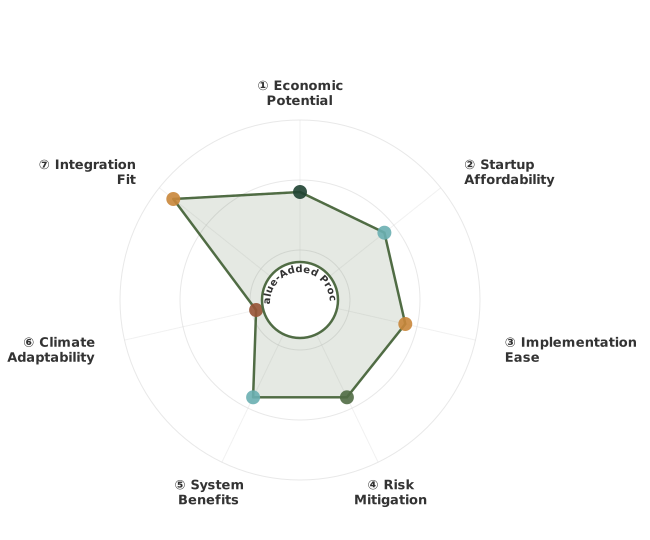
How These Traits Are Calculated
Trait dimensions are ordered clockwise starting from the top of the chart (12 o'clock position):
1. Economic Potential
Financial returns, annual value, and break-even timeline
WHAT: Evaluates financial viability by combining net annual value ($/ha from savings, income, and amortized harvests) with break-even timeline showing when practices pay for themselves.
WHY: Farmers need clear ROI understanding before committing resources. Fast payback (≤3 years) with strong returns (≥$300/ha) enables confident adoption, while long timelines (>10 years) restrict adoption to well-funded operations willing to wait for returns.
HOW: Calculated from net annual value in $/ha and break-even years. Exceptional (≥2.6): fast ROI ≤3 years + high value ≥$300/ha. Typical (1.8-2.5): moderate returns or longer timelines. Limited (<1.8): marginal economics or very long payback >10 years.
2. Startup Affordability
Initial investment costs and financial barrier to entry
WHAT: Measures financial barrier to entry through startup costs for equipment, infrastructure, consulting, and materials. Inverted scoring: lower costs = higher scores = more accessible adoption.
WHY: Affordability determines who can adopt. Low-cost practices (<$250/ha) enable widespread adoption across diverse scales, while high costs (>$2,500/ha) limit adoption to well-capitalized operations, creating barriers that slow regenerative transition.
HOW: Calculated from initial investment parsed from practice content. Inverted scoring: Exceptional (≥2.6): minimal investment <$250/ha. Typical (1.8-2.5): moderate costs $250-2,500/ha. Limited (<1.8): high barrier >$2,500/ha.
3. Implementation Ease
Learning curve and specialized knowledge required
WHAT: Measures how much learning, planning, and specialized knowledge a practice requires. Simpler practices with fewer steps score higher, while complex practices requiring extensive training or specialized resources score lower.
WHY: Complex practices create adoption barriers even when economically viable. Straightforward practices enable faster adoption and broader participation, while those requiring extensive training, timing precision, or specialized equipment limit who can succeed.
HOW: Evaluated by measuring documentation length and identifying complexity markers like location-specific requirements, seasonal timing windows, specialized skills, and dedicated equipment needs. Exceptional (≥2.6): straightforward practices with minimal prerequisites. Typical (1.8-2.5): moderate learning curve with some specialized needs. Limited (<1.8): steep learning curve requiring significant training or resources.
4. Risk Mitigation
Identified financial and ecological risk assessment
WHAT: Evaluates documented risks across financial (investment loss, market volatility) and ecological (crop failure, pest outbreaks) domains. Inverted scoring: fewer risks = higher scores.
WHY: Understanding risk exposure helps farmers make informed decisions. Low-risk practices allow confident implementation, while high-risk practices require careful planning and contingency resources. Risk transparency prevents costly failures.
HOW: Calculated from identified risks in practice content. Inverted scoring: Exceptional (≥2.6): ≤2 risks with manageable severity. Typical (1.8-2.5): 3-5 moderate risks. Limited (<1.8): 6+ risks or severe exposure.
5. System Benefits
How many ways the practice improves your land simultaneously
WHAT: Measures how many aspects of land health improve at once—carbon storage, soil quality, erosion control, water absorption, and biodiversity. Practices that improve multiple areas simultaneously create compounding benefits where each improvement reinforces the others.
WHY: The best practices solve multiple problems at once. For example, addressing erosion simultaneously builds carbon and improves water infiltration, creating a resilient system with positive feedback loops. Single-benefit approaches miss these compound transformation opportunities.
HOW: Evaluated across five key outcomes: carbon sequestration, soil organic matter increase, erosion reduction, water infiltration improvement, and biodiversity enhancement. Exceptional (≥2.6): high carbon storage (>8 t/ha/yr), improvements across 4-5 areas, transformative outcomes. Typical (1.8-2.5): moderate carbon (3-8 t/ha/yr), improvements across 2-3 areas. Limited (<1.8): modest impact (<3 t/ha/yr), single-area focus only.
6. Climate Adaptability
Geographic applicability across Köppen climate zones
WHAT: Evaluates geographic applicability by assessing how many Köppen climate zones successfully support a practice and what adaptation requirements are needed. Measures breadth of climates where farmers can implement with minimal to moderate modifications.
WHY: Universal practices working across diverse climates enable more farmers to adopt regenerative approaches. Practices limited to single climate types (only Mediterranean, only tropical) restrict adoption and slow global transition. Adaptability determines whether a practice serves niche regions or offers broad transformation.
HOW: LLM evaluation of regional success stories, Köppen zone coverage, and adaptation needs. Exceptional (≥2.6): 5+ zones or 4+ climate types, 3+ continents, minimal adaptation. Typical (1.8-2.5): 3-4 zones or 2-3 types, 2 continents, moderate adaptation. Limited (<1.8): 1-2 zones, single region, significant adaptation or highly specialized.
7. Integration Fit
How well this practice combines with others you're doing
WHAT: Measures how well a practice combines with other regenerative practices you might be doing. Some practices work as building blocks that make many other practices easier or more effective, while others work best on their own.
WHY: Practices that combine well with many others create more value on your farm. For example, cover cropping enables no-till, improves grazing, supports crop diversity, and helps water management—making all of them work better together. This helps you build a coherent system rather than juggling disconnected practices.
HOW: Evaluated by identifying which practices combine well and how strong those combinations are. 'Ideally Suited' means strong combinations where practices reinforce each other (practice A makes B easier, while B makes A more effective). 'Adequate' means complementary benefits that work well together. Exceptional (≥2.6): combines well with 6+ practices, serves as a building block. Typical (1.8-2.5): combines with 3-5 practices. Limited (<1.8): 1-2 practices or works best alone.
Going Deeper
1
WHY - The Benefits
Value-added processing offers a compelling economic rationale for farmers and ranchers, creating a pathway to a more robust and resilient farm business. Beyond the immediate financial gains, it plays a crucial role in unlocking the full potential of regenerative...
Value-added processing offers a compelling economic rationale for farmers and ranchers, creating a pathway to a more robust and resilient farm business. Beyond the immediate financial gains, it plays a crucial role in unlocking the full potential of regenerative...
WHY - The Benefits
Value-added processing offers a compelling economic rationale for farmers and ranchers, creating a pathway to a more robust and resilient farm business. Beyond the immediate financial gains, it plays a crucial role in unlocking the full potential of regenerative...
Value-added processing offers a compelling economic rationale for farmers and ranchers, creating a pathway to a more robust and resilient farm business. Beyond the immediate financial gains, it plays a crucial role in unlocking the full potential of regenerative...
Soil Health Benefits
While direct soil health benefits are secondary to economics, value-added processing can indirectly support regenerative soil management. By increasing the profitability of on-farm production, it can provide capital for farmers to invest in soil-building practices like cover cropping, reduced tillage, or improved pasture management. When processing focuses on utilizing the entirety of a harvested crop (e.g., turning fruit pomace into animal feed or compost), it reduces waste that would otherwise decompose or be disposed of, and the nutrients can be recycled back to the soil. Minimal processing methods, such as drying or milling, that consume less energy and fewer inputs contribute to a lower environmental footprint for the farm. Thus, a processing venture that supports profitable regenerative agriculture indirectly supports soil health by making the entire system more economically viable.
Economic Benefits
The primary driver for value-added processing is enhanced economic returns. Raw agricultural commodities are often subject to boom-and-bust cycles and intense price competition from global markets. By transforming a raw product into a finished or semi-finished good, farmers can capture a larger portion of the consumer's dollar.
- Increased Profit Margins: Simple products like dried herbs or jams can achieve profit margins of 100-300% over raw product costs, while more complex products like artisanal cheeses or specialty flours can see margins of 200-500% or more. These higher margins can significantly boost overall farm income.
- Extended Shelf Life & Market Window: Processing methods like drying, canning, fermenting, or freezing can extend the shelf life of perishable products from days or weeks to months or years. This allows farmers to sell products beyond the immediate harvest season, smooth out income throughout the year, and capture premium prices for products available when others are out of season.
- Reduced Waste & Enhanced Resource Utilization: Value-added processing can turn surplus or lower-grade products into marketable goods. For example, slightly misshapen fruits can be used for jams or juices, and crop residues like grain hulls or fruit pulp can be processed into animal feed or compost, reducing on-farm waste and the need for external inputs.
- Diversification of Income: By creating multiple product lines from a single or complementary set of agricultural outputs, farmers diversify their revenue streams. This reduces the farm's overall risk exposure if one product faces market challenges.
- Direct Market Access: Many value-added products are suited for direct-to-consumer sales channels (farmers markets, CSAs, farm shops, online sales), allowing farmers to build stronger relationships with customers and receive direct feedback on their products.
Regenerative Systems Fit
Value-added processing can be a powerful tool for enhancing the integration of regenerative principles across the farm enterprise.
Principle 1 (Minimize Soil Disturbance): When processing methods are low-input and low-energy, they minimize the need for heavy equipment or large infrastructure that could cause soil compaction. For example, simple drying or milling requires far less land disturbance than building elaborate processing plants. Furthermore, by making the farm more profitable, it provides the capital to invest in no-till or reduced-tillage systems for the crops that supply the processing.
Principle 2 (Maximize Crop Diversity): Value-added processing allows farmers to utilize a wider array of their harvested crops, including those that might otherwise be considered surplus or lower-grade. This encourages growing a more diverse range of species and varieties, as having multiple products to process makes diverse cropping systems more economically viable. For instance, a farm might grow several types of herbs for drying, or different fruit varieties for jams, juices, and ciders.
Principle 3 (Keep Soil Covered): By extending the marketability and value of perennial crops (like fruit trees, nut trees, or berry bushes), value-added processing incentivizes their long-term maintenance and expansion, which inherently keeps soil covered year-round. Processing of annual crops can also ensure that any "surplus" biomass is utilized rather than wasted, potentially being composted and returned to the soil or used as animal feed, thereby contributing to soil organic matter.
Principle 4 (Maintain Living Roots): The economic viability of perennial crops is often enhanced by value-added processing. For example, turning apples into cider or dried apple rings extends their market potential, making perennial orchards more profitable and encouraging their conservation or expansion. This directly supports the maintenance of living roots throughout the year. Furthermore, processing of annual crops ensures that the entire plant—or what remains after harvest—is utilized, often feeding back into the farm system and supporting continued biological activity.
Principle 5 (Integrate Livestock): Many value-added products derived from livestock (e.g., cheese, yogurt, butter, cured meats, rendered fats) are high-value goods. This integration can make the livestock component of the farm more profitable, providing the financial means to manage animals regeneratively (adaptive grazing, ample rest periods) rather than solely for sheer output. Waste streams from plant processing (e.g., fruit pomace, grain screenings) can also be fed to livestock, creating a closed-loop nutrient system.
For farms transitioning to regenerative practices, value-added processing can be an enabling strategy. It can provide the necessary cash flow to overcome the economic challenges of transition periods, particularly when transitioning away from synthetic inputs or high-yield monocultures. A farm producing value-added products might be able to absorb slight yield reductions during transition more readily because of the increased margin per unit of product. This practice enables a "stepping stone" approach by creating financial stability that supports the adoption of more regenerative methods.
Sources behind this view
Videos & Podcasts
-
Value-adding through food processing (e.g., making salsa from tomatoes, corn, onions) increases income without increasing biomass, leverages customer needs, and allows broader community involvement.
-
Value-adding allows farmers to capture more of the retail dollar beyond just production, thus stabilizing income and mitigating risks from weather, price, and disease by engaging in processing, market
-
Value-added products and direct-to-consumer sales are key to increasing farm income. The market increasingly prefers prepared foods over raw produce, making value-added items like salsa crucial for pr
-
Value-added agriculture captures more of the retail dollar by moving into processing, marketing, and distribution, which are less vulnerable to weather, price, pestilence, and disease. This stabilizes
 Community
-
Adding value to farm products via processing (e.g., tomatoes to salsa) offers higher profits but incurs significant USDA regulatory burdens. Selling unprocessed items or non-consumables like flowers m
Read more (opens in new window) permies.com
2
WHERE - Regional Considerations
Value-added processing potential is present globally, but the specific products, markets, and processing methods that are most viable vary greatly by region. Factors such as climate, local agricultural specialties, market demand, regulatory environments, and availability...
Value-added processing potential is present globally, but the specific products, markets, and processing methods that are most viable vary greatly by region. Factors such as climate, local agricultural specialties, market demand, regulatory environments, and availability...
WHERE - Regional Considerations
Value-added processing potential is present globally, but the specific products, markets, and processing methods that are most viable vary greatly by region. Factors such as climate, local agricultural specialties, market demand, regulatory environments, and availability...
Value-added processing potential is present globally, but the specific products, markets, and processing methods that are most viable vary greatly by region. Factors such as climate, local agricultural specialties, market demand, regulatory environments, and availability...
Click Here to Look up your Region if you don't already know it
Humid Temperate Regions
Representative Locations: Southeastern United States, Northern Europe (e.g., UK, Germany), Eastern China, Japan, New Zealand
Climate Context: Warm to hot summers and cool to cold winters with moderate to high annual precipitation (75-150 cm or 30-60 inches) distributed relatively evenly. USDA Zones 6-8, Köppen Cfb/Cfa.
Regional Considerations: These regions support diverse crop and livestock production, offering a wide range of value-added opportunities. Dairy, berries, stone fruits, apples, diverse vegetables, herbs, and grains are common. Processing opportunities include artisanal cheeses, yogurts, jams, pickles, dried fruits and herbs, juices, ciders, specialty flours, and cured meats. Access to established domestic markets and potentially international export markets for quality goods is generally good. However, competition can be high, and regulatory compliance for food processing can be stringent. Regional cooperatives for shared processing facilities are often a viable model.
Mediterranean Regions
Representative Locations: California (USA), Mediterranean basin (Spain, Italy, Greece), Central Chile, Southwestern Australia, Western Cape South Africa
Climate Context: Hot, dry summers and mild, wet winters. Annual precipitation 40-90 cm (15-35 inches), highly seasonal. USDA Zones 8-10, Köppen Csa/Csb.
Regional Considerations: These regions are ideal for olives (oil production), grapes (wine, raisins), citrus fruits, tree nuts (almonds, walnuts), figs, and certain herbs. Value-added products include olive oil, wine, dried fruits, nut butters, essential oils, and specialized condiments. The dry climate can be advantageous for natural drying processes for fruits and herbs, reducing energy costs. However, water availability for intensive irrigation can be a limiting factor and a significant cost. Strong existing markets for these products, both domestically and internationally, provide significant export potential. Seasonal production patterns may necessitate diversification into year-round processed goods or integrated livestock enterprises.
Arid/Semi-Arid Regions
Representative Locations: Western USA, North Africa, Central Asia, Interior Australia, parts of the Middle East
Climate Context: Low annual precipitation (<40 cm or 15 inches), high temperatures, short and often unpredictable growing season. USDA Zones 7-9, Köppen BSh/BSk.
Regional Considerations: Value-added opportunities in these regions are often tied to drought-tolerant crops and livestock. This includes dates, figs, certain varieties of melons, hardy grains (e.g., millet), honey production, and livestock products (wool, leather, dried meats like jerky, dairy products). Innovations in water-efficient processing methods are crucial. Opportunities exist in creating shelf-stable products that require minimal water or energy, such as dried fruits, honey products, and dehydrated dairy items. Regional cooperatives can be vital for sharing expensive processing equipment like dehydrators or small-scale dairies. Focus on products with a long shelf life and high market value per unit weight.
Cold Continental Regions
Representative Locations: Northern USA and Canada, Northern Europe, Northern Asia
Climate Context: Very short growing seasons, extreme summer heat, severe winter cold. USDA Zones 3-5, Köppen Dfa/Dfb.
Regional Considerations: Production often focuses on hardy grains, root vegetables, berries, hardy fruits (e.g., Saskatoon berries, certain apples), and livestock adapted to cold. Value-added processing typically involves products that utilize these seasonal gluts and extend their availability through winter. This includes grain milling into flours and cereals, root vegetables into preserved products (sauerkraut, pickled vegetables), berries into jams, juices, and liqueurs, and livestock products into cured meats and dairy. Emphasis on preserving the harvest is key. Many regions have a strong tradition of home-style preserving and a local demand for these authentic products. Processing facility costs may be higher due to the need for robust insulation and heating/cooling controls.
Subtropical Regions
Representative Locations: Southeastern USA, Southern China, Southern Brazil, Eastern Australia
Climate Context: Hot, humid summers and mild winters with generally ample rainfall. USDA Zones 9-11, Köppen Cfa/Cwa.
Regional Considerations: These regions are highly productive for a wide range of fruits (citrus, tropical fruits, berries), vegetables, grains, and livestock. Value-added opportunities are vast, including preserved fruits, juices, essential oils, spices, sauces, pickled vegetables, and processed dairy and meat products. The high humidity and heat can necessitate energy-intensive processing for preservation (e.g., refrigeration, advanced drying), increasing operational costs. However, the long growing season and diverse crops can support year-round processing operations. Strong local demand for prepared foods, coupled with potential for niche export markets, makes this an attractive region for diversified value-added enterprises.
Tropical Regions
Representative Locations: Central America, Southeast Asia, East Africa, Northern Australia, Northern South America
Climate Context: High temperatures year-round, with distinct wet and dry seasons or consistent high rainfall. Köppen Af/Am/Aw.
Regional Considerations: Tropical regions excel in the production of fruits (mangoes, pineapples, bananas, passionfruit), spices (vanilla, pepper, cinnamon), cocoa, coffee, and livestock. Value-added opportunities are abundant and often focus on preservation and enhancing the unique flavors of regional produce. This includes dried fruits, juices, purees, essential oils, spices, chocolate, coffee, and processed dairy/meat products from adapted livestock. Challenges include rapid spoilage of fresh products, humidity requiring careful processing and storage, and potential for intensive energy use for refrigeration and drying. However, the rich biodiversity of crops and the strong global demand for tropical flavors create significant potential for niche markets. Community-based processing initiatives are often successful in these regions, leveraging local knowledge and resources.
3
HOW - Implementation Process
HOW - Implementation Process
Before embarking on value-added processing, thoroughly assess:
- Product Viability: Does the raw product have consistent quality and quantity? Is there a market for the processed product?
- Market Research: Who are the potential customers? What are they willing to pay? What are the unmet needs in the market?
- Regulatory Landscape: Understand local, regional, and national food safety laws, labeling requirements, and licensing/permit processes. This is highly variable by country.
- Resource Assessment: Do you have access to necessary equipment, facilities, technical expertise, energy, and water?
- Financial Capacity: Can you secure the capital for initial investment, operating costs, and potential transition periods?
Phase 1: Product and Market Feasibility Study (Months 1-3)
- Identify Key Products: Based on your existing farm output, identify 1-3 products with high potential for value addition (e.g., surplus berries for jam, wheat for specialty flour, herbs for drying).
- Assess Market Demand: Talk to potential buyers (local restaurants, retailers, consumers, cooperatives). What processed items are they looking for? What price point is acceptable?
- Process Scalability & Simplicity: Initially, target products requiring minimal processing and equipment. Can you start with a drying rack, a basic grinder, or a simple jam station?
- Regulatory Check: Research the specific regulations for your chosen products and region. Some processing requires commercial kitchens or specific certifications. This is often the most critical and complex step internationally. Contact local agricultural extension services or food safety agencies.
- Financial Projections: Create basic cost estimates (ingredients, packaging, utilities, labor) and potential sales revenue.
Phase 2: Simple Processing Setup & Pilot Production (Months 4-9)
- Equipment Acquisition: Purchase or build necessary equipment. Start with basic, user-friendly tools. For example:
- Drying: Dehydrator (cabinet or solar), drying racks.
- Milling: Grain mill (hand-crank or electric, for flours, oats).
- Preserving: Canning equipment (jars, lids, sterilizer), fermentation crocks.
- Liquid Extraction: Basic presses (for juices), small essential oil stills.
- Packaging: Scales, sealing machines, labels.
- Facility Preparation: Ensure a clean, safe workspace. This might be a dedicated corner of a barn, a shed, or a certified commercial kitchen if required. Local regulations will dictate requirements.
- Pilot Production: Produce small batches of your chosen products. Focus on consistently achieving high quality. Document every step: ingredient sources, processing times, temperatures, yields.
- Product Testing: Have trusted individuals taste-test your products. Gather feedback on flavor, texture, appearance. Ensure product safety.
Phase 3: Marketing and Sales Channels (Months 10-15)
- Branding and Labeling: Develop a simple brand identity and compelling labels that communicate the origin and regenerative qualities of your product. Ensure compliance with all labeling laws (ingredient list, nutritional information, origin, net weight).
- Sales Channels:
- Farmers Markets: Direct sales offer high margins and direct customer feedback.
- Community Supported Agriculture (CSA): Offer premium processed items as part of CSA shares or separate add-ons.
- Local Retailers: Approach specialty food stores, health food shops, or independent grocers.
- Restaurants & Cafes: Target chefs who value local, high-quality ingredients.
- Online Sales: Utilize farm websites, social media, or online marketplaces.
- Pricing Strategy: Set prices that reflect the quality, processing effort, and market value, ensuring profitability.
Phase 4: Scaling Up and Efficiency (Year 2 Onwards)
- Evaluate Pilot Success: Review product performance, sales, profitability, and customer feedback. Identify which products were most successful and which need improvement.
- Invest in Better Equipment: If demand warrants, invest in larger or more efficient equipment (e.g., larger dehydrators, commercial mixers, pasteurizers).
- Optimize Processes: Refine recipes, processing times, and techniques to improve quality, yield, and efficiency.
- Explore Cooperatives: If you haven't already, consider collaborating with other farmers for shared processing facilities, bulk purchasing, or joint marketing.
- Expand Product Line: Introduce new products based on market demand and farm output.
- Continuous Improvement: Stay updated on food safety regulations, processing technologies, and market trends.
Transitioning Away from Non-Regenerative Practices (If Applicable): If any aspect of your current processing relies on non-regenerative inputs (e.g., high energy use, synthetic additives, waste generation), develop a plan to phase these out:
- Energy Use: Explore solar dehydration, passive solar drying methods, or biogas digesters for heat generation.
- Additives: Actively seek natural preservatives (e.g., salt, vinegar, fermentation) and flavor enhancers. Ensure labels reflect "minimal ingredients" or "natural."
- Water Usage: Implement water-saving processing techniques, recycle water where safe and feasible, and ensure water sources are sustainably managed.
- Waste: Compost organic byproducts, feed them to livestock, or explore upcycling into new products (e.g., fruit pomace into animal feed). The timeline for phasing out non-regenerative inputs depends on the complexity of the process and available technology. For simpler operations, this can be achieved within 1-2 years. For more complex processes, it might involve a phased upgrade of equipment and a gradual shift in ingredient sourcing, potentially taking 3-5 years. Success looks like products with minimal ingredient lists, energy-efficient processing, and closed-loop waste management.
4
Know the Debate
Value-added processing offers regenerative farmers increased profitability and resilience by transforming raw products into higher-value goods. The...
Know the Debate
Value-added processing offers regenerative farmers increased profitability and resilience by transforming raw products into higher-value goods. The...
Value-added processing offers regenerative farmers increased profitability and resilience by transforming raw products into higher-value goods. The potential profit margins, ranging from 100-500% and beyond, make it an attractive strategy for capturing more of the consumer dollar. However, success hinges on understanding regional market demands, navigating complex regulations, and choosing processing methods that align with regenerative principles. Entry costs can range from simple kitchen setups for small-scale operations to significant investments in commercial facilities for larger volumes, with labor requirements varying from the farmer's own time to dedicated staff depending on scale and complexity.
What are the realistic profit ranges for value-added processing?
High margins with direct sales (100-500%+)
Simple processing (drying, milling, basic preserves) combined with direct-to-consumer sales (farmers markets, CSAs) allows for capturing the majority of the retail dollar, leading to extensive profit margins. This model emphasizes quality, story, and customer relationships.
Sources behind this view
Sources behind this view
Videos & Podcasts
-
Value-adding through food processing (e.g., making salsa from tomatoes, corn, onions) increases income without increasing biomass, leverages customer needs, and allows broader community involvement.
-
Value-adding involves diversifying below (e.g., saving seeds) or above (e.g., processing) production. Listening to customers and offering more products turns them into repeat buyers, increasing income without necessarily increasing labor.
-
Value-added products and direct-to-consumer sales are key to increasing farm income. The market increasingly prefers prepared foods over raw produce, making value-added items like salsa crucial for profitability.
-
Value-added processing, such as making sausages or lamburgers from cull ewes, significantly increases their market value compared to direct sale. USDA processing access is key.

Moderate margins with wholesale and scale (50-200%)
Processing for wholesale markets (e.g., to grocery stores, restaurants) requires higher volumes and efficiency. While margins per unit may be lower than direct sales, scale allows for substantial overall profit. This often necessitates larger equipment and more robust regulatory compliance.
Sources behind this view
Sources behind this view
Videos & Podcasts
-
Value-added grain cleaning using simple equipment significantly increases profitability by enabling sales to specialized markets (distilleries, breweries), capturing more of the consumer dollar and improving farm sustainability.
 Research
-
The profitability of value-added products in dairy farm diversification initiatives (opens in new window)
This study found: To stay competitive, dairy farms are adding value to their products. A study of 49 Spanish farms looked at over 265 different items. They found that making and selling cheese and yogurt brought in significantly more profit per liter than just selling liquid milk. Key factors that boosted profits included having a special regional origin label (PDO), using more sheep milk, having a longer shelf life, and selling directly to customers. Interestingly, 'organic' labels, longer aging times for cheese, or using returnable packaging didn't seem to make a significant difference to profits in this study. Overall, the research suggests that creating more processed dairy products can improve a dairy farm's financial health.
 From the Web
-
Small farms should focus on value-added products like gourmet salad mixes to maximize profitability, transforming humble components into high-value items. Avoid fads and create unique niches based on freshness, taste, and convenience.
-
Focuses on food safety, value-added products for increased income, and the resurgence of small-scale livestock processing. Farm to school programs are also detailed, emphasizing gardens, local sourcing, and agricultural education.
Variable returns with high investment/risk
Complex processing ventures with significant capital investment or reliance on volatile markets carry higher risk. Profitability depends heavily on market demand, operational efficiency, regulatory navigation, and precise cost management.
Sources behind this view
Sources behind this view
Videos & Podcasts
-
Discusses processor access, emphasizing consistency, predictability, and volume; suggests MOUs with partners. Addresses labor management by allocating profits to employees and prioritizing quality of life by working within local processing capabilities.
From the Web
-
Explores non-food value-added options like energy production (biofuels), fiber, woodlot enterprises, personal care products, and farm entertainment/agri-tourism. It also details the complexities of starting a food business, including regulations, labeling, insurance, and business planning.
Making Sense of the Differences
Profitability in value-added processing is not uniform; it's driven by product complexity, market access, and scale. Simple products sold directly can yield very high margins per unit (100-500%+), while larger-scale wholesale operations achieve profitability through volume and efficiency (50-200% margins). Complex ventures with high capital investment face greater risk and require meticulous planning, as market saturation or regulatory hurdles can significantly impact returns.
Can value-added processing support regenerative transition?
Enabling Financial Stability
Value-added processing can provide crucial income buffer during regenerative transitions by utilizing surplus, increasing margins, and reducing reliance on volatile commodity markets. This financial stability allows farms to invest in soil health and other regenerative practices.
Sources behind this view
Sources behind this view
Videos & Podcasts
-
Value-adding through food processing (e.g., making salsa from tomatoes, corn, onions) increases income without increasing biomass, leverages customer needs, and allows broader community involvement.
-
Value-added agriculture captures more of the retail dollar by moving into processing, marketing, and distribution, which are less vulnerable to weather, price, pestilence, and disease. This stabilizes farm income, spreads risk, and can reduce strenuous labor.
From the Web
-
Offers diverse ideas for farm profitability: buy/repair used machinery, grow own fertilizer/seed, utilize renewable energy, add value through processing (meat, dairy, crops), market directly (CSA, stores), raise specialty crops/animals, and refine current operations to cut inputs.
-
Focuses on food safety, value-added products for increased income, and the resurgence of small-scale livestock processing. Farm to school programs are also detailed, emphasizing gardens, local sourcing, and agricultural education.
Potential for Non-Regenerative Entrenchment
Complex processing ventures with high capital investment, energy use, reliance on synthetic additives, or extensive infrastructure can detract from regenerative goals. This requires careful assessment to ensure processing aligns with sustainability principles.
Sources behind this view
Sources behind this view
Videos & Podcasts
-
Discusses processor access, emphasizing consistency, predictability, and volume; suggests MOUs with partners. Addresses labor management by allocating profits to employees and prioritizing quality of life by working within local processing capabilities.
From the Web
-
Explores non-food value-added options like energy production (biofuels), fiber, woodlot enterprises, personal care products, and farm entertainment/agri-tourism. It also details the complexities of starting a food business, including regulations, labeling, insurance, and business planning.
Context-Determined Utility
The utility of value-added processing for regenerative transition depends on the specific product, scale, and market. Simple, low-input processing that utilizes diverse farm outputs is generally beneficial, while resource-intensive or highly regulated ventures require careful planning.
Sources behind this view
Sources behind this view
Videos & Podcasts
-
A UK farmer details how a diverse, mixed 40-acre holding achieves economic and environmental resilience by integrating orchards, livestock, and market gardens. Key strategies include adding value through processing (jams, cider), direct-to-consumer sales, and utilizing waste products cyclically to lower input costs and increase profitability per animal/product.

Research
-
The profitability of value-added products in dairy farm diversification initiatives (opens in new window)
This study found: To stay competitive, dairy farms are adding value to their products. A study of 49 Spanish farms looked at over 265 different items. They found that making and selling cheese and yogurt brought in significantly more profit per liter than just selling liquid milk. Key factors that boosted profits included having a special regional origin label (PDO), using more sheep milk, having a longer shelf life, and selling directly to customers. Interestingly, 'organic' labels, longer aging times for cheese, or using returnable packaging didn't seem to make a significant difference to profits in this study. Overall, the research suggests that creating more processed dairy products can improve a dairy farm's financial health.
From the Web
-
Value is added to agricultural products through processing (e.g., bagged carrots) and by employing production methods like organic farming, which consumers may pay more for due to perceived benefits.
Making Sense of the Differences
Value-added processing can significantly support a regenerative transition by offering financial stability and buffering potential yield dips. Simple, low-input processing methods that utilize diverse farm outputs are most beneficial. However, complex ventures requiring substantial capital, energy, or regulatory hurdles can introduce non-regenerative dependencies, so careful planning and a phased approach are essential to ensure the processing method enhances rather than detracts from farm regeneration.
5
HOW MUCH - Costs & Investment
Note: All costs are based on recent US economic data (2023-2025) and may vary substantially in other regions based on local labor rates, material costs, and regulatory requirements. Multiply USD equivalent by local cost indices for your region. Labor costs vary...
Note: All costs are based on recent US economic data (2023-2025) and may vary substantially in other regions based on local labor rates, material costs, and regulatory requirements. Multiply USD equivalent by local cost indices for your region. Labor costs vary...
HOW MUCH - Costs & Investment
Note: All costs are based on recent US economic data (2023-2025) and may vary substantially in other regions based on local labor rates, material costs, and regulatory requirements. Multiply USD equivalent by local cost indices for your region. Labor costs vary...
Note: All costs are based on recent US economic data (2023-2025) and may vary substantially in other regions based on local labor rates, material costs, and regulatory requirements. Multiply USD equivalent by local cost indices for your region. Labor costs vary...
Note: All costs are based on recent US economic data (2024–2026) and may vary substantially by region based on local labor rates, material costs, and regulatory requirements.
Infrastructure & Facility Development
Infrastructure costs represent the most significant variable expense in value-added processing, dictated primarily by health department mandates and volume throughput requirements. Small-scale operations (under 50 acres (20 ha)) generally utilize "Cottage Food" laws to operate within residential or existing farm kitchens. Initial retrofitting for these spaces typically requires $5,210 – $35,000 to meet compliance standards, focusing on washable surfaces, secondary sinks, and pest proofing. Mid-size producers (50 – 500 acres (20–202 ha)) often outgrow home-based ordinances, requiring a dedicated processing facility. Renovating or custom-building a climate-controlled, pest-resistant processing shed for this size cohort costs between $35,001 – $185,000, covering industrial HVAC systems, epoxy flooring, and dedicated electrical load balancing for heavy-duty machinery. Large-scale operations (500+ acres) necessitate high-throughput, industrial-grade facilities to maintain safety under USDA or FDA inspections. Capital outlays for these facilities range from $185,001 – $625,200, often encompassing complex infrastructure like industrial floor drainage, clean-in-place (CIP) sanitation systems, and dedicated walk-in cold-chain logistics.
Equipment & Specialized Machinery
Your choice of equipment defines your production bottleneck and directly influences labor efficiency. For small-scale, entry-level processing, producers typically invest $6,500 – $42,000 on batch-based equipment, such as tabletop dehydrators, manual grain mills, and domestic-grade induction sealers. These systems are highly flexible but offer lower throughput. Mid-size producers require increased consistency and continuous-run capability to satisfy wholesale accounts, costing $42,001 – $210,000. This investment tier typically features steam-jacketed kettles, hydraulic presses, and semi-automated rotary bottling lines that significantly reduce per-unit labor time. Large-scale operations prioritize high-speed automation to drive down cost-per-unit. Capital requirements for this throughput range from $210,001 – $625,200, including integrated production lines, robotic labeling, pneumatic fillers, and automated palletizing systems that minimize human labor and maximize output volume.
Regulatory, Licensing, & Testing
Ongoing compliance is a fixed overhead cost that scales with your market reach. Small-scale producers operating under local cottage food exemptions face minimal annual expenses, typically $500 – $3,500, covering basic local permits and liability insurance riders. Mid-size enterprises operating broadly must maintain professional HACCP (Hazard Analysis Critical Control Point) plans, annual food processing licenses, and quarterly pathogen testing. These operations should budget $3,501 – $18,000 annually. Large-scale handlers participating in interstate commerce face the highest burden; mandatory third-party audits—such as SQF or GFS—combined with rigorous water-testing and legal reviews for labeling compliance often result in annual regulatory expenditures of $18,001 – $75,000.
Most Spend: $55,000 – $375,000. This middle range represents the vast majority of operations transitioning from home-based processing to dedicated, commercial-standard facilities that meet regional and state health department requirements for consistent retail distribution.
Why the Range?: Cost variation is driven primarily by the existing state of farm facilities and the "path of least regulation" chosen. Producers who choose to retroactively convert existing barns or sheds face lower building costs compared to those constructing new, purpose-built additions, while strictness of local health codes can swing licensing and infrastructure requirements by as much as 40%.
6
REWARDS AND RISKS - Economics & Risk Factors
REWARDS AND RISKS - Economics & Risk Factors
Economic Scenarios
- Best Case Scenario: A 60-acre (24 ha) farm implements an on-site grain milling and artisanal flour packaging facility, investing $55,000. After conquering local retail channels, the brand achieves a 300% markup over bulk grain prices. The operation reaches profitability by year 3, adding $312.60/acre ($772/ha) in net annual income.
- Typical Case Scenario: A 250-acre (101 ha) mixed-crop farm invests $180,000 in a canning line for surplus produce. By capturing the retail margin and selling directly to independent grocers, the farm realizes an average net income of $208.40/acre ($515/ha). The investment reaches break-even status by year 4.
- Worst Case Scenario: A farm invests $500,000 in a high-capacity bottling plant without a signed contract from retail partners. Due to persistent distribution failures and high overhead maintenance costs of $25,000 per year, the operation stays in the red. The farm faces an extended 6+ year break-even period, with machinery depreciation exceeding actual revenue gains.
Market Factors & Competition
Profitability in value-added processing is not a volume play—it is a margin play. In saturated markets such as common sauces or basic dried snacks, price compression is extreme. Successful producers distinguish their output through regenerative-specific labels, which can command a 25–50% price premium over conventional shelf-stable goods. Fixed maintenance costs are the primary silent risk; regardless of output, utilities, sanitation chemicals, and regulatory insurance add $5,000 – $12,000 to the annual budget. Efficient operators survive by maintaining low overhead and focusing on products with high shelf-stability, which allows for broader distribution windows and reduced losses from spoilage.
Risk Mitigation Strategies
- Rent-Before-Build: Utilize regional food hubs or incubator kitchens. Renting space at $25 – $65 per hour allows for market testing of new products before committing to permanent infrastructure.
- Product Phasing: Launch with a single, high-margin item. This minimizes the complexity of inventory and permits, keeping initial investment under $10,000 for the first 12 months.
- Strategic Co-Packing: Contract with an existing processing facility to produce your first 1,000 – 3,000 units. While this may reduce margins by 15–20%, it eliminates the risk of high-capital facility construction during the market validation phase.
Transition Period Risks
Value-added processing relies on the consistency of inputs which can be disrupted during a 3–5 year regenerative soil-health transition. As farms shift away from synthetic inputs, raw product consistency (e.g., grain protein content or produce brix levels) may fluctuate, impacting final product quality. To maintain brand consistency, budget for a "sourcing contingency fund" equal to 10–15% of annual operating costs. This fund allows the farm to procure high-quality, compliant ingredients from nearby regenerative producers, ensuring machinery lines remain active and retail shelf-presence is not lost while on-farm yields stabilize.
Sources behind this view
Videos & Podcasts
-
Profitability is key to regenerative agriculture, requiring a shift from fossil fuel dependence to soil, sunlight, and ingenuity. Challenges in marketing alternative crops and grains necessitate local

-
To transition to regenerative agriculture, start small, increase diversity, reduce expenses, and focus on profit over yield. Avoid product-based 'regenerative' solutions and be wary of conventional mo

-
Transitioning to regenerative agriculture requires incentives, primarily market-driven (e.g., Maker's Mark, Whole Foods) and financial. Profitability and risk management are key. Proven models and int
7
WHO - Labor & Expertise
Value-added processing requires varying levels of labor and expertise depending on the complexity of the product and the scale of operation. For regenerative farmers, integrating this into farm management requires a realistic assessment of available human resources and...
Value-added processing requires varying levels of labor and expertise depending on the complexity of the product and the scale of operation. For regenerative farmers, integrating this into farm management requires a realistic assessment of available human resources and...
WHO - Labor & Expertise
Value-added processing requires varying levels of labor and expertise depending on the complexity of the product and the scale of operation. For regenerative farmers, integrating this into farm management requires a realistic assessment of available human resources and...
Value-added processing requires varying levels of labor and expertise depending on the complexity of the product and the scale of operation. For regenerative farmers, integrating this into farm management requires a realistic assessment of available human resources and...
Labor Requirements
- Small-Scale (DIY): Primarily the farmer's own time, plus potentially family members. Tasks include harvesting, cleaning, processing, packaging, labeling, sales, and accounting. Highly time-intensive, especially for small batches and direct sales. Can be 10-40 hours per week added to farm labor, depending on product volume.
- Medium-Scale (Cooperative or Part-time Help): May involve hiring part-time seasonal labor for peak processing times, or utilizing shared facilities within a cooperative where equipment operation and workflow are managed collectively. This reduces individual owner's direct processing time but requires coordination.
- Larger-Scale (Dedicated Staff): Requires dedicated employees for various roles: processing, quality control, packaging, marketing, sales, and administration. International labor costs vary widely—in regions with lower minimum wages, hiring staff may be more accessible than in high-wage economies. This scale often necessitates a more professional business structure.
Expertise Required
- Food Safety & Hygiene: Essential for all processing. Understanding HACCP (Hazard Analysis and Critical Control Points) principles, sanitation protocols, and safe handling practices is crucial. Regulations vary globally. Knowledge of local food safety authority requirements is paramount.
- Product Development:
- Recipe knowledge: Understanding ingredient proportions, cooking/processing times, temperatures, and methods for optimal flavor, texture, and safety.
- Ingredient Sourcing: Ability to source high-quality, consistent raw materials, ideally from regenerative sources. Understanding ingredient interactions and preservation techniques.
- Technical Skills: Varies by product:
- Drying/Dehydrating: Understanding optimal temperatures, airflow, and time for different products.
- Milling: Knowledge of different grain types, grind sizes, and equipment operation.
- Canning/Preserving: Understanding sterilization, fill weights, and preservation methods (e.g., pH control for jams, brine concentrations for pickles).
- Fermentation: Skill in controlling microbial environments for sauerkraut, kimchi, vinegars, or cultured dairy.
- Dairy Processing: Expertise in pasteurization, culturing, rennet use, curd manipulation, aging, and hygiene.
- Essential Oils: Understanding distillation, extraction methods, and handling of volatile compounds.
- Business & Marketing:
- Cost Analysis: Calculating production costs accurately to set profitable prices.
- Sales & Marketing: Developing branding, labeling, and sales strategies. Understanding consumer preferences and market trends.
- Financial Management: Record-keeping, budgeting, and managing cash flow.
- Regulatory Compliance: Navigating and adhering to complex local, regional, and national food processing regulations. This is a continuous learning process.
Skill Development and Resource Acquisition
- On-Farm Learning: Many regenerative farmers learn by doing, starting with simple processes and gradually acquiring skills.
- Workshops & Courses: Local agricultural extension services, community colleges, or dedicated food business incubators often offer workshops on food safety, specific processing techniques, and business planning. International organizations like IFOAM or regional food hubs may offer similar resources.
- Mentorship: Seek advice from other farmers already engaged in value-added processing.
- Cooperative Expertise: If part of a cooperative, leverage the collective knowledge and shared expertise of members and management.
- Consultants: For complex regulatory or technical challenges (e.g., setting up a commercial kitchen, developing HACCP plans), hiring consultants may be necessary, though costly.
International Labor Cost Context: In regions where labor is less expensive, a greater portion of processing can be manual and labor-intensive. This can make operations that require high amounts of handwork (e.g., fruit picking and sorting for jams, hand-packaging herbs) more economically feasible. Conversely, in high labor cost regions, investing in automated machinery becomes a greater priority to manage expenses.
8
EQUIPMENT - Tools & Infrastructure
The equipment and infrastructure required for value-added processing span a wide spectrum, from simple kitchen tools to sophisticated commercial systems. The choice depends heavily on the type of product, scale of operation, budget, and regulatory requirements.
The equipment and infrastructure required for value-added processing span a wide spectrum, from simple kitchen tools to sophisticated commercial systems. The choice depends heavily on the type of product, scale of operation, budget, and regulatory requirements.
EQUIPMENT - Tools & Infrastructure
The equipment and infrastructure required for value-added processing span a wide spectrum, from simple kitchen tools to sophisticated commercial systems. The choice depends heavily on the type of product, scale of operation, budget, and regulatory requirements.
The equipment and infrastructure required for value-added processing span a wide spectrum, from simple kitchen tools to sophisticated commercial systems. The choice depends heavily on the type of product, scale of operation, budget, and regulatory requirements.
Basic Equipment (Small Scale, Low Investment)
- Harvesting Tools: Baskets, crates, pruning shears, harvesting knives.
- Cleaning & Sorting: Wash basins, brushes, sorting tables, sieves.
- Drying:
- Solar Dehydrators: Can be built inexpensively from wood and screen mesh.
- Electric Cabinet Dehydrators: Home or small commercial units.
- Drying Racks/Trays: For air-drying in a clean, well-ventilated space.
- Milling:
- Hand-Crank Grain Mills: Suitable for small batches of flour or oats.
- Electric Home Mills: More efficient for moderate volumes.
- Preserving (Jams, Pickles, Sauces):
- Large Pots & Pans: For cooking, boiling, or reducing.
- Canning Equipment: Jars, lids, rings, jar lifters, water bath canners or pressure canners.
- pH Meter/Strips: Essential for safe canning of low-acid foods.
- Fermentation Crocks/Jars: For sauerkraut, kimchi, yogurt.
- Liquid Extraction:
- Hand-Crank Presses: For small amounts of juice from berries or grapes.
- Steam Juicers: For larger volumes of fruit juice.
- Packaging:
- Scales: For accurate weighing.
- Sealing equipment: Hand-sealers, impulse sealers.
- Labeling: Printer for labels, potentially a basic label applicator.
- Storage Containers: Food-grade plastic bins, glass jars, sealed bags.
Intermediate Equipment (Mid-Scale, Moderate Investment)
- Commercial Dehydrators: Larger capacity, more precise temperature control.
- Commercial Grain Mills: More powerful, capable of higher volumes and finer grinds.
- Commercial Kitchen Equipment:
- Large Commercial Ranges/Ovens.
- Immersion Circulators/Sous Vide Equipment.
- Homogenizers/Emulsifiers.
- Commercial Mixers: Stand mixers or larger trough mixers.
- Pasteurizers: For dairy, juices (may require regulatory compliance).
- Juicing/Pressing.
- Electric Fruit Presses/Crushers.
- Larger Juice Extractors.
- Essential Oil Extraction.
- Small Stills: For steam distillation of herbs and botanicals.
- Dairy Processing:
- Milk Tanks & Pasteurizers.
- Cheese Vats & Presses.
- Coolers/Aging Rooms.
- Packaging Equipment.
- Semi-automatic Fillers.
- Vacuum Sealers.
- Labeling Machines.
Advanced Equipment (Large Scale, High Investment)
- Automated Processing Lines: For high-volume production of specific products (e.g., automated jam filling, fruit sorting/processing lines).
- Industrial Dehydrators/Freeze Dryers.
- Industrial Ovens & Roasters.
- Automated Milling Systems.
- Large-Scale Dairy Processing Equipment: Bulk pasteurizers, automated cheese makers, butter churns.
- Complex Extraction Equipment: High-pressure extraction, supercritical CO2 extraction for delicate oils.
- Advanced Packaging Solutions: Form-fill-seal machines, automated labeling systems.
Infrastructure Requirements
- Processing Space:
- For DIY/Small-Scale: Clean, well-ventilated area (shed, barn corner), easily sanitized.
- For Commercial: Dedicated food-grade processing facility or certified commercial kitchen. Requirements vary by jurisdiction but typically include washable surfaces, adequate lighting, handwashing stations, pest control, and waste management.
- Storage Facilities:
- Dry Storage: For grains, dried herbs, packaging materials. Must be cool, dry, and pest-proof.
- Cold Storage: Refrigeration for dairy, fruits, vegetables, and intermediate products. Energy efficiency is important here.
- Cool Storage/Aging Rooms: For products like cheese or cured meats requiring specific temperature and humidity control.
- Utilities: Reliable access to clean water (potable quality) and sufficient power (electricity, gas) for processing equipment. Energy efficiency is a key consideration for regenerative operations, favoring solar or other renewable sources where possible. Water recycling systems can be implemented where regulations allow.
- Waste Management: Proper disposal or recycling of processing byproducts (organic waste, water, packaging). Composting facilities or connections to local waste management services are essential.
International Sourcing: Equipment can be sourced globally. While some specialized equipment may be region-specific, general processing tools (pots, scales, mixers, basic mills) are widely available. Online marketplaces for used commercial kitchen equipment can be a cost-effective option. Always verify voltage and frequency compatibility for electrical equipment if sourcing internationally. Local suppliers often provide better support for installation, maintenance, and compliance with local regulations.
Sources behind this view
Videos & Podcasts
-
Processing infrastructure is needed across agricultural sectors like livestock, aquaculture, grains, and hemp to enable value-added products and direct sales, with modular units and shared capacity be

9
COMPATIBLE PRACTICES - Integration Opportunities
Value-added processing integrates powerfully with various regenerative agriculture practices, amplifying benefits across economic, environmental, and social dimensions. It's not an isolated activity but a core component that can enhance the entire farm system.
Value-added processing integrates powerfully with various regenerative agriculture practices, amplifying benefits across economic, environmental, and social dimensions. It's not an isolated activity but a core component that can enhance the entire farm system.
COMPATIBLE PRACTICES - Integration Opportunities
Value-added processing integrates powerfully with various regenerative agriculture practices, amplifying benefits across economic, environmental, and social dimensions. It's not an isolated activity but a core component that can enhance the entire farm system.
Value-added processing integrates powerfully with various regenerative agriculture practices, amplifying benefits across economic, environmental, and social dimensions. It's not an isolated activity but a core component that can enhance the entire farm system.
Rotational Grazing
- Integration: Processing livestock products—cheese, yogurt, cured meats, butter, rendered fats—transforms them into higher-value, shelf-stable goods. This improves the economics of regenerative grazing. Byproducts like hides can be processed into leather goods.
- Synergy: Enhanced profitability from livestock encourages better grazing management, allowing for longer rest periods, higher animal welfare, and improved soil health. Diversified livestock products can buffer income against volatile commodity prices.
Perennial Crop Systems (Orchards, Vineyards, Berry Patches)
- Integration: Turning fresh fruits, nuts, or berries into jams, juices, ciders, dried goods, nut butters, or essential oils creates value and extends shelf life. This makes perennial systems more economically attractive, encouraging their establishment and maintenance.
- Synergy: Preserves living roots year-round, protects soil from erosion, supports biodiversity, and sequesters carbon. Value-added processing provides a crucial economic incentive to maintain and expand these systems.
Direct Marketing (CSAs, Farmers Markets, Farm Shops)
- Integration: Value-added products are ideal for direct sales channels. They offer higher margins than raw produce and can be marketed with a compelling story about their origin, processing, and regenerative qualities.
- Synergy: Strengthens the farm-to-consumer connection, allowing farmers to communicate their values and practices directly. Increased customer loyalty and willingness to pay premium prices for unique, high-quality products.
Cover Cropping
- Integration: By processing surplus cover crop seeds (e.g., millets, certain legumes) into specialty flours or animal feed, it creates value from these soil-building crops. Alternatively, processing cover crops into haylage or silage can supplement livestock feed integrated into the farm.
- Synergy: Makes cover cropping more economically viable, encouraging farmers to plant more diverse and functional cover crops. Reduces reliance on purchased feed for livestock.
Agroforestry/Silvopasture
- Integration: Processing products from trees (nuts, fruits, essential oils from leaves, timber for packaging or smoking meats, medicinal barks) creates additional income streams. For example, walnuts processed into oil or butter, chestnuts into flour, or medicinal herbs into tinctures.
- Synergy: Enhances the economic viability of diversified landscapes, encouraging integration of trees and livestock. Value-added products can often command premium prices due to their unique origin and story.
Reduced or No-Till Farming
- Integration: By increasing overall farm profitability, value-added processing generates capital that can be reinvested into equipment and practices that support no-till (e.g., specialized planters, rollers, better cover crop management).
- Synergy: Financial stability from diversified income streams reduces the pressure to resort to intensive tillage for perceived short-term yield gains. Stronger soil health from no-till can lead to higher quality raw products for processing.
Waste Stream Utilization
- Integration: Processing byproducts from one operation into inputs for another (e.g., fruit pomace to animal feed, whey from cheese to animal feed or fertilizer, crop residues to compost).
- Synergy: Creates a more closed-loop system, reducing waste, cutting input costs, and improving nutrient cycling. This is a cornerstone of regenerative efficiency.
If value-added processing is a transition practice, it can enable the farm to survive periods of reduced raw commodity yields while shifting to fully regenerative production systems. The increased margins from processed goods provide a crucial economic cushion, allowing the farmer to invest in soil health, biodiversity, and animal welfare without facing immediate financial ruin.
Sources behind this view
Videos & Podcasts
-
Farmers are advised to join regenerative farming communities, engage with impact investors, and focus on value-adding and regional food systems. Food and agriculture are presented as key solutions to

-
Regenerative agriculture offers carbon capture and improved food systems by connecting consumers to producers, emphasizing local food and stewardship. It challenges conventional efficiency arguments,

-
Value-adding through food processing (e.g., making salsa from tomatoes, corn, onions) increases income without increasing biomass, leverages customer needs, and allows broader community involvement.
-
A Q&A session explores regenerative agriculture and nutrient density, debating practices vs. outcomes, the role of technology (like refractometers) and branding, challenges in scaling, and the potenti

Research
-
Integration of organic dairy cattle into a whole farm context (opens in new window)
This study found: Integrating organic dairy cattle with other farm enterprises can create synergistic systems, improving resource use, animal welfare, and nutrient recycling through cooperation and circular economy pri
-
Regenerative Agriculture: Restoring Ecosystems¢ Resilience and Productivity: A Review (opens in new window)
This study found: Regenerative agriculture builds soil health and ecosystem services through practices like no-till, cover crops, and diverse rotations. It increases soil organic matter, improves water infiltration, bo
-
Systematic review of regenerative farming: Addressing agricultural sustainability challenges (opens in new window)
This study found: Systematic review of 31 studies shows regenerative farming improves soil health, biodiversity, and carbon capture, aiding sustainability. Technology is key for adoption, but policy, farmer understandi
-
Smart and regenerative agriculture in the function of agricultural entrepreneurship (opens in new window)
This study found: Combining smart farming tech with regenerative practices enhances farm businesses by improving soil health, resilience, and meeting consumer demand for sustainable food.