
Variable Rate Application
Variable Rate Application (VRA) is a precision agriculture technique that uses data from soil maps, yield monitors, or sensors to adjust the amount of inputs (like fertilizer, seed nitrogen, or lime) applied to different zones within a field. Instead of applying one rate for the entire field, VRA tailors applications to match specific soil types, nutrient levels, or yield potential, aiming for optimized resource use and improved outcomes.
Read More: Complete Description
Variable Rate Application (VRA) is a precision agriculture technology that leverages site-specific data to customize the application of inputs across a field. Instead of a uniform application, VRA allows farmers to apply more of an input where it's needed and less where it's not. This is typically achieved by dividing a field into management zones based on variations in soil type, topography, historical yield data, or sensor readings (e.g., NDVI). These zones are then assigned specific input rates—fertilizer, seeds, lime, water, or even pesticides—that are optimized for their unique conditions and production potential.
The foundational technologies behind VRA include GPS guidance systems, which pinpoint the applicator's location with high accuracy, and variable rate controllers integrated into farm machinery (like spreaders, seeders, or sprayers). These controllers receive prescription maps generated from data analysis tools, instructing the equipment to adjust application rates in real-time as it moves across the field. Data sources for prescription maps are diverse: detailed soil sampling showing nutrient gradients, yield maps indicating areas of high and low productivity, remote sensing data revealing plant vigor variations, and even drone imagery capturing subtle differences in crop health.
From a regenerative agriculture perspective, VRA sits in a unique category—it is Context-Dependent. Its regenerative potential is determined entirely by how it is applied and what underlying principles it supports or undermines. When used to reduce overall input use by precisely targeting needs, minimize waste, and avoid over-application in areas that don't require it, VRA can support regenerative goals. For instance, applying only the necessary amount of nitrogen fertilizer to a specific zone based on soil tests and plant uptake models (rather than a blanket application) can reduce nutrient runoff and the risk of nitrogen losses to the environment. This aligns with minimizing chemical disruption and optimizing resource cycling.
However, VRA can also be used in ways that are antithetical to regenerative principles. If VRA is simply used to maximize yield in every zone by pushing high rates of synthetic inputs without regard for soil health or the risk of nutrient imbalances, it can perpetuate an extractive system. For example, applying excessive synthetic nitrogen based on potential yield in a high-productivity zone might lead to soil acidification or microbial imbalance if not managed holistically. The practice itself is a tool; its regenerative character depends on the intention and outcome.
A key path for VRA to become a regenerative tool is by informing more precise management of other regenerative practices. Instead of using VRA to manage synthetic inputs, farmers can use it to manage compost application, manure spreading, or even cover crop seeding rates. For example, a soil map revealing phosphorus-deficient zones could inform a prescription map for targeted compost application in those areas, building soil organic matter and biological activity where it's most needed. Similarly, VRA could guide precise irrigation to cover crops in drought-prone areas, ensuring season-long soil coverage and living roots (Principles 3 and 4).
The transition to using VRA for regenerative outcomes typically involves a shift in mindset and data utilization. Instead of focusing solely on optimizing yield per input unit, the focus shifts to optimizing soil health outcomes and minimizing environmental losses. This means collecting data not just on yield and nutrient levels, but also on soil organic matter trends, water infiltration rates, and the presence of soil biological indicators. The prescription maps then become tools to strategically enhance these regenerative metrics. For instance, applying a specific biological inoculant only to zones identified as having low microbial activity, informed by soil respiration tests.
It is crucial to understand that VRA does not inherently build soil biology or create complex ecosystems. It is a technology for precise application, not for creation of regenerative function. Hence, it's best viewed as a sophisticated tool that can support regenerative goals when guided by regenerative principles and data relevant to those goals. For a farmer transitioning away from heavy synthetic input use, VRA can be a stepping stone. By meticulously documenting where and why inputs were applied and then gradually reducing rates based on improved soil conditions and biological activity, one can use VRA data to confirm that transitions away from higher input levels are successful and sustainable. The ultimate goal remains to build soil health to a point where such precise input management becomes less about high synthetic rates and more about strategic, minimal interventions for specific biological or physical enhancements.
Sources behind this view
Sources behind this view
 Research
-
IMPACTS OF PRECISION FARMING TECHNOLOGIES ON CROP YIELD OPTIMIZATION IN U.S. AGRICULTURE (opens in new window)
This study found: Precision farming tech, especially VRT, boosts U.S. crop yields and profits while cutting inputs. High costs limit adoption, particularly for small farms, highlighting the need for targeted support.
-
Systematic review of regenerative farming: Addressing agricultural sustainability challenges (opens in new window)
This study found: Systematic review of 31 studies shows regenerative farming improves soil health, biodiversity, and carbon capture, aiding sustainability. Technology is key for adoption, but policy, farmer understandi
-
PRECISION AGRICULTURE FOR ENHANCING ECO EFFICIENCY IN CROPPING SYSTEMS (opens in new window)
This study found: Precision Agriculture (PA) enhances farming's environmental efficiency by using technologies like GPS and sensors for site-specific management, reducing waste, pollution, and soil degradation while im
-
Revolutionizing Agriculture: Innovative Techniques, Applications, and Future Prospects in Precision Farming (opens in new window)
This study found: Precision agriculture uses GPS, drones, sensors, and data analysis to optimize farming, boost yields, and improve sustainability. Challenges exist, but future tech like AI promises even smarter operat
Key Points
What It Is
- Site-specific input application technology
- Adjusts rates within field zones
- Utilizes GPS and controller systems
- Can be for conventional or regenerative use
Why Do It
- Optimizes input use efficiency
- Reduces waste and environmental losses
- Supports precise nutrient management
- Can increase profitability by reducing costs
Know the Debate
- VRA optimizes inputs; reduces waste, environmental harm.
- Supports regenerative goals when reducing synthetis.
- Requires data, technology, and agronomic expertise.
- Cost varies; payback in 3-7 years typical.
Benefits - Financial
- 10-15% annual reduction in synthetic input costs via precision application.
- 3-7% yield increase through optimized nutrient zone management.
- 2:1 return on investment achieved within 3-5 years.
Benefits - System
- Minimizes off-farm nutrient losses (Principle 1)
- Supports precise biological inoculant application
- Reduces synthetic input overuse
- Helps manage water use more effectively
Risks - Financial
- $20,840–$98,990 upfront hardware investment per standard operation.
- Technical calibration errors causing 5-10% potential yield loss in early years.
Risks - System
- Can perpetuate high input use if misused
- May mask underlying soil or biological issues
- Requires data management expertise
- Risk of over-application if zones are misdiagnosed
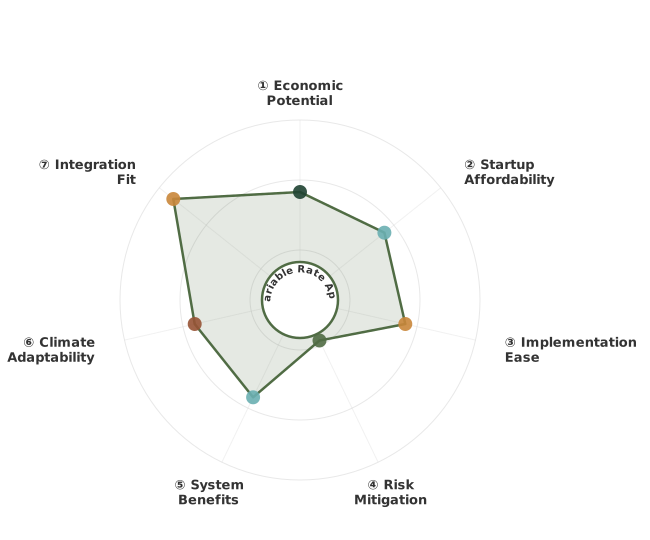
How These Traits Are Calculated
Trait dimensions are ordered clockwise starting from the top of the chart (12 o'clock position):
1. Economic Potential
Financial returns, annual value, and break-even timeline
WHAT: Evaluates financial viability by combining net annual value ($/ha from savings, income, and amortized harvests) with break-even timeline showing when practices pay for themselves.
WHY: Farmers need clear ROI understanding before committing resources. Fast payback (≤3 years) with strong returns (≥$300/ha) enables confident adoption, while long timelines (>10 years) restrict adoption to well-funded operations willing to wait for returns.
HOW: Calculated from net annual value in $/ha and break-even years. Exceptional (≥2.6): fast ROI ≤3 years + high value ≥$300/ha. Typical (1.8-2.5): moderate returns or longer timelines. Limited (<1.8): marginal economics or very long payback >10 years.
2. Startup Affordability
Initial investment costs and financial barrier to entry
WHAT: Measures financial barrier to entry through startup costs for equipment, infrastructure, consulting, and materials. Inverted scoring: lower costs = higher scores = more accessible adoption.
WHY: Affordability determines who can adopt. Low-cost practices (<$250/ha) enable widespread adoption across diverse scales, while high costs (>$2,500/ha) limit adoption to well-capitalized operations, creating barriers that slow regenerative transition.
HOW: Calculated from initial investment parsed from practice content. Inverted scoring: Exceptional (≥2.6): minimal investment <$250/ha. Typical (1.8-2.5): moderate costs $250-2,500/ha. Limited (<1.8): high barrier >$2,500/ha.
3. Implementation Ease
Learning curve and specialized knowledge required
WHAT: Measures how much learning, planning, and specialized knowledge a practice requires. Simpler practices with fewer steps score higher, while complex practices requiring extensive training or specialized resources score lower.
WHY: Complex practices create adoption barriers even when economically viable. Straightforward practices enable faster adoption and broader participation, while those requiring extensive training, timing precision, or specialized equipment limit who can succeed.
HOW: Evaluated by measuring documentation length and identifying complexity markers like location-specific requirements, seasonal timing windows, specialized skills, and dedicated equipment needs. Exceptional (≥2.6): straightforward practices with minimal prerequisites. Typical (1.8-2.5): moderate learning curve with some specialized needs. Limited (<1.8): steep learning curve requiring significant training or resources.
4. Risk Mitigation
Identified financial and ecological risk assessment
WHAT: Evaluates documented risks across financial (investment loss, market volatility) and ecological (crop failure, pest outbreaks) domains. Inverted scoring: fewer risks = higher scores.
WHY: Understanding risk exposure helps farmers make informed decisions. Low-risk practices allow confident implementation, while high-risk practices require careful planning and contingency resources. Risk transparency prevents costly failures.
HOW: Calculated from identified risks in practice content. Inverted scoring: Exceptional (≥2.6): ≤2 risks with manageable severity. Typical (1.8-2.5): 3-5 moderate risks. Limited (<1.8): 6+ risks or severe exposure.
5. System Benefits
How many ways the practice improves your land simultaneously
WHAT: Measures how many aspects of land health improve at once—carbon storage, soil quality, erosion control, water absorption, and biodiversity. Practices that improve multiple areas simultaneously create compounding benefits where each improvement reinforces the others.
WHY: The best practices solve multiple problems at once. For example, addressing erosion simultaneously builds carbon and improves water infiltration, creating a resilient system with positive feedback loops. Single-benefit approaches miss these compound transformation opportunities.
HOW: Evaluated across five key outcomes: carbon sequestration, soil organic matter increase, erosion reduction, water infiltration improvement, and biodiversity enhancement. Exceptional (≥2.6): high carbon storage (>8 t/ha/yr), improvements across 4-5 areas, transformative outcomes. Typical (1.8-2.5): moderate carbon (3-8 t/ha/yr), improvements across 2-3 areas. Limited (<1.8): modest impact (<3 t/ha/yr), single-area focus only.
6. Climate Adaptability
Geographic applicability across Köppen climate zones
WHAT: Evaluates geographic applicability by assessing how many Köppen climate zones successfully support a practice and what adaptation requirements are needed. Measures breadth of climates where farmers can implement with minimal to moderate modifications.
WHY: Universal practices working across diverse climates enable more farmers to adopt regenerative approaches. Practices limited to single climate types (only Mediterranean, only tropical) restrict adoption and slow global transition. Adaptability determines whether a practice serves niche regions or offers broad transformation.
HOW: LLM evaluation of regional success stories, Köppen zone coverage, and adaptation needs. Exceptional (≥2.6): 5+ zones or 4+ climate types, 3+ continents, minimal adaptation. Typical (1.8-2.5): 3-4 zones or 2-3 types, 2 continents, moderate adaptation. Limited (<1.8): 1-2 zones, single region, significant adaptation or highly specialized.
7. Integration Fit
How well this practice combines with others you're doing
WHAT: Measures how well a practice combines with other regenerative practices you might be doing. Some practices work as building blocks that make many other practices easier or more effective, while others work best on their own.
WHY: Practices that combine well with many others create more value on your farm. For example, cover cropping enables no-till, improves grazing, supports crop diversity, and helps water management—making all of them work better together. This helps you build a coherent system rather than juggling disconnected practices.
HOW: Evaluated by identifying which practices combine well and how strong those combinations are. 'Ideally Suited' means strong combinations where practices reinforce each other (practice A makes B easier, while B makes A more effective). 'Adequate' means complementary benefits that work well together. Exceptional (≥2.6): combines well with 6+ practices, serves as a building block. Typical (1.8-2.5): combines with 3-5 practices. Limited (<1.8): 1-2 practices or works best alone.
Going Deeper
1
WHY - The Benefits
Variable Rate Application (VRA) offers significant potential for enhancing both farm economics and environmental stewardship. Its core benefit lies in its ability to precisely match resource application – whether synthetic inputs, biological amendments, or water – to the...
Variable Rate Application (VRA) offers significant potential for enhancing both farm economics and environmental stewardship. Its core benefit lies in its ability to precisely match resource application – whether synthetic inputs, biological amendments, or water – to the...
WHY - The Benefits
Variable Rate Application (VRA) offers significant potential for enhancing both farm economics and environmental stewardship. Its core benefit lies in its ability to precisely match resource application – whether synthetic inputs, biological amendments, or water – to the...
Variable Rate Application (VRA) offers significant potential for enhancing both farm economics and environmental stewardship. Its core benefit lies in its ability to precisely match resource application – whether synthetic inputs, biological amendments, or water – to the...
Soil Health Benefits
When applied with a regenerative mindset, VRA can indirectly contribute to soil health by reducing the overall load of synthetic inputs that can disrupt microbial communities or soil structure. For example, precise application of lime based on soil pH mapping can correct localized acidity without over-liming other areas, preserving optimal conditions for a wide range of soil organisms. Similarly, applying starter fertilizers only where soil tests indicate deficiency prevents the build-up of excess salts and chemicals in the soil profile, safeguarding beneficial microbial populations and nutrient cycling processes.
Precision application of biological amendments also falls under VRA. If soil respiration tests reveal areas with low microbial activity, a prescription map can guide the precise spot-application of compost teas or microbial inoculants in those specific zones. This targeted approach ensures that beneficial organisms are delivered where they are most needed, accelerating the rebuilding of soil biology and organic matter naturally. For farmers transitioning to regenerative systems, VRA can be a tool to strategically support these biological processes, rather than simply managing synthetic nutrient levels.
While VRA itself doesn't directly build soil organic matter or improve soil structure, it can prevent practices that degrade these aspects. By avoiding uniform high-rate applications of synthetic nitrogen, for example, it can discourage the over-stimulation of plant growth that might lead to imbalanced nutrient cycling or increased susceptibility to pests, which in turn could lead to higher pesticide application rates. This reduction in chemical load, facilitated by precision management, indirectly supports the soil's intrinsic health and resilience.
Economic Benefits
The primary economic driver for VRA adoption is typically input cost savings and yield optimization. By matching input applications to zone-specific needs, VRA eliminates the waste associated with applying excess nutrients or seeds to areas that cannot utilize them. This can lead to input cost reductions of 5-20% annually, depending on the prevalence of variability within fields and the type of input being managed. For example, a farm with highly variable soil fertility might see significant savings on fertilizer costs by applying higher rates only where soil tests confirm nutrient deficiencies.
Yield improvements, while often more modest than cost savings, are also a key economic benefit. By ensuring that crop needs are met in all zones without over-supplying in others, VRA can lead to more consistent yield across the entire field. Rather than a few high-yielding zones pulling the average up and many low-yielding zones dragging it down, VRA aims to lift the productivity of underperforming areas and prevent over-saturation in prime zones. This can result in an overall field yield increase of 3-7% over time, as the whole system operates closer to its potential.
Labor savings are another important consideration, particularly for larger operations. Instead of manually adjusting application rates or making multiple passes, a single VRA-equipped pass can accomplish precise application across the entire field. This reduces tractor hours, fuel consumption, and operator fatigue, freeing up resources for other critical tasks. The increased efficiency of input use also translates to a higher return on investment for those inputs; resources are spent only where they are expected to generate the most value.
The integration of VRA with other precision technologies, such as advanced soil mapping and yield monitoring, creates a feedback loop for continuous improvement. Data collected from VRA applications, combined with yield data, can be used to refine prescription maps year after year, leading to increasingly accurate input management. This iterative process can lead to significant economic benefits, with many early adopters reporting a 2:1 or higher return on investment within 3-5 years of implementing VRA.
Regenerative Systems Fit
Variable Rate Application's fit within regenerative agriculture is complex and depends critically on its application. It is not a foundational regenerative practice like cover cropping or adaptive grazing, but rather a Context-Dependent tool that can either support or undermine regenerative goals.
Supporting Principles: When VRA is used to reduce the total application of synthetic inputs (fertilizers, pesticides) by precisely targeting areas of actual need, it directly supports Principle 1: Minimize Soil Disturbance. By avoiding uniform applications of potentially disruptive chemicals across the entire field, VRA helps preserve soil microbial communities and reduce chemical loads. If VRA guides the precise application of composting materials, manure, or biological amendments to specific zones needing fertility or microbial activity, it actively supports Principle 2: Maximize Crop Diversity (by fostering diverse soil biology) and Principle 5: Integrate Livestock (if manure is the source). Furthermore, by optimizing water application in water-scarce areas or ensuring nutrients are available within the root zone, VRA can indirectly support Principle 3: Keep Soil Covered and Principle 4: Maintain Living Roots by ensuring plants have the resources to grow year-round or during critical periods, preventing bare soil.
Transition Pathway: For farms heavily reliant on synthetic inputs, VRA can be a crucial transition tool. Instead of a drastic, potentially yield-crashing elimination of inputs, VRA allows for a gradual, data-driven reduction. A farmer might identify zones where synthetic nitrogen application can be reduced by 20% without significant yield loss, based on soil tests or plant sensor data. Over several years, as soil biology improves and organic matter increases, the need for synthetic inputs diminishes. VRA's data collection capabilities can track this reduction, confirming the success of the transition and informing the next step towards further input elimination. This approach minimizes the economic risk of "cold turkey" transitions, making the move to a regenerative system more feasible. The timeline for phasing out synthetic inputs can be a 3-5 year strategy, using VRA to precisely document and manage gradual reductions while monitoring soil health indicators.
Extractive Use: Conversely, VRA can be used extractively. If the goal is solely to maximize yield in every zone by pushing high rates of synthetic fertilizers and pesticides to the absolute limit, VRA can perpetuate a high-input, high-output system that is detrimental to soil health and ecosystem function. It might mask underlying soil problems (like compaction or low organic matter) by over-compensating with chemicals, rather than addressing the root causes. In this context, VRA simply becomes a sophisticated way to manage an extractive system, offering no regenerative benefit.
Therefore, the regenerative fit of VRA hinges on the farmer's intention: Is it to precisely manage and reduce synthetic inputs while building soil function, or to merely maximize output within a conventional framework? When used to enhance biological processes, minimize chemical loads, and strategically apply resources based on verified soil needs, VRA can be a valuable component of a regenerative farm management system.
Sources behind this view
 Videos & Podcasts
-
Adopting regenerative practices should start small and incrementally, focusing on soil health over short-term yields. Collaboration, strategic nutrient sourcing, and leveraging resources like Continuu
-
Examines the uncertain link between soil health and yield in regenerative agriculture, farmer financial struggles, and government funding for sustainable practices. Critically analyzes laser weeding t

Research
-
Systematic review of regenerative farming: Addressing agricultural sustainability challenges (opens in new window)
This study found: Systematic review of 31 studies shows regenerative farming improves soil health, biodiversity, and carbon capture, aiding sustainability. Technology is key for adoption, but policy, farmer understandi
-
IMPACTS OF PRECISION FARMING TECHNOLOGIES ON CROP YIELD OPTIMIZATION IN U.S. AGRICULTURE (opens in new window)
This study found: Precision farming tech, especially VRT, boosts U.S. crop yields and profits while cutting inputs. High costs limit adoption, particularly for small farms, highlighting the need for targeted support.
-
The Indigenous Roots of Regenerative Agriculture (opens in new window)
This study found: Modern regenerative agriculture practices are rooted in millennia of Indigenous land stewardship, offering profound knowledge and a crucial value system of respect and reciprocity for true transformat
-
Regenerative Agriculture in the 21st Century: A Systematic Review of Environmental, Agronomic, and Socio-Economic Outcomes (opens in new window)
This study found: Systematic review finds Regenerative Agriculture boosts environment but faces yield gaps (16-21%) and socio-economic barriers. Advocates for resilience over maximum yields, needing financial support a
2
WHERE - Regional Considerations
Variable Rate Application (VRA) is applicable across nearly all agricultural regions globally, from temperate to tropical, arid to humid climates. Its effectiveness and focus, however, are shaped by regional environmental and economic factors. The primary drivers for VRA...
Variable Rate Application (VRA) is applicable across nearly all agricultural regions globally, from temperate to tropical, arid to humid climates. Its effectiveness and focus, however, are shaped by regional environmental and economic factors. The primary drivers for VRA...
WHERE - Regional Considerations
Variable Rate Application (VRA) is applicable across nearly all agricultural regions globally, from temperate to tropical, arid to humid climates. Its effectiveness and focus, however, are shaped by regional environmental and economic factors. The primary drivers for VRA...
Variable Rate Application (VRA) is applicable across nearly all agricultural regions globally, from temperate to tropical, arid to humid climates. Its effectiveness and focus, however, are shaped by regional environmental and economic factors. The primary drivers for VRA...
Click Here to Look up your Region if you don't already know it
Humid Temperate Regions
Representative Locations: Midwestern United States, Northern Europe (e.g., Germany, France, UK), Eastern China, parts of Northern Japan and New Zealand.
Climate Context: Moderate temperatures with distinct seasons, ample to high annual precipitation (75-150 cm or 30-60 inches) generally distributed throughout the year. USDA Zones 4-7, Köppen Cfb/Cfa.
In these regions, VRA is often used to manage soil fertility variations, which can be significant due to glacial till or complex geomorphology. Fields may exhibit diverse loam, silt loam, and clay loam textures with varying organic matter content. VRA can optimize the application of fertilizers (N, P, K) and lime to address specific pH or nutrient deficiencies in different zones, reducing overall input use and minimizing nutrient runoff into waterways, a common concern in regions with high rainfall. Seed rate adjustments can also optimize plant population based on soil productivity potential, accounting for variations in soil moisture retention.
Mediterranean Regions
Representative Locations: California (USA), Mediterranean Basin (e.g., Spain, Italy, Greece), Chile, South Africa, Southwestern Australia.
Climate Context: Hot, dry summers and mild, wet winters. Precipitation is seasonal, ranging from 40-90 cm (15-35 inches) annually. USDA Zones 8-10, Köppen Csa/Csb.
Water management is paramount in Mediterranean climates. VRA is critical for precise irrigation scheduling and application, delivering water only where and when crops need it to conserve this precious resource. Prescription maps can be based on soil moisture sensor data or Evapotranspiration (ET) models that account for variations in soil water holding capacity and slope. VRA can also optimize the application of nutrients under limited water conditions, ensuring that applied fertilizers are efficiently utilized by crops and not lost to leaching or surface runoff during infrequent but intense winter rains.
Arid and Semi-Arid Regions
Representative Locations: Western United States (e.g., Great Plains, Mountain West), North Africa, Central Asia, parts of the Middle East, Interior Australia.
Climate Context: Low annual precipitation (<40 cm or 15 inches), high temperatures, and significant temperature fluctuations. Growing seasons are often limited by water availability. USDA Zones 6-9, Köppen BSh/BSk.
Water is the most limiting factor for agricultural productivity in these regions. VRA for irrigation is not just about efficiency; it's about survival. Precisely delivering water to drought-tolerant crops based on field variability can mean the difference between a crop or no crop. VRA can also be used for precise fertilizer application, especially nitrogen, which is critical for plant growth in low-moisture environments. Applying the right amount at the right time and place maximizes uptake and minimizes losses, which are particularly problematic when infrequent rainfall events occur. Using VRA for soil amendments like gypsum can also help manage salinity and sodicity issues common in arid soils.
Cold Continental Regions
Representative Locations: Northern USA and Canada, Northern Europe (e.g., Scandinavia, Russia), Northern Asia.
Climate Context: Very short growing seasons, extreme summer heat, and severe winter cold. Precipitation varies but can be moderate to relatively high. USDA Zones 2-5, Köppen Dfa/Dfb.
In these regions, maximizing the short growing season is key. VRA can optimize seeding rates to achieve target plant populations efficiently, ensuring crops reach maturity within the limited timeframe. Fertilizer management is also crucial, often focusing on early-season nutrient availability. VRA can ensure nutrients are placed where roots can access them quickly, supporting rapid establishment and growth. Precision application of lime can be important for correcting soil acidity on soils that may become acidic due to the decomposition of coniferous litter or high rainfall.
Subtropical Regions
Representative Locations: Southeastern USA, Southern China, Southern Brazil, Eastern Australia.
Climate Context: Hot, humid summers and mild winters with generally ample rainfall. Growing seasons are often long. USDA Zones 9-11, Köppen Cfa/Cwa.
VRA in subtropical regions is often focused on managing high soil organic matter (where present) and optimizing nutrient delivery for long growing seasons. It can help prevent nutrient imbalances, which can be exacerbated by high rainfall and abundant microbial activity leading to rapid nutrient cycling. Precise application of fertilizers, especially nitrogen and potassium, can maximize crop uptake and minimize leaching losses. VRA can also be used for applying nematicides or other soil treatments to specific zones with known pest or disease pressures, reducing overall chemical use.
Tropical Regions
Representative Locations: Central America, Southeast Asia, East Africa, Northern Australia, Northern South America.
Climate Context: High temperatures year-round, with distinct wet and dry seasons or consistent high rainfall. Köppen Af/Am/Aw.
In tropical agriculture, VRA plays a vital role in managing high soil and nutrient variability, often exacerbated by intense rainfall and rapid decomposition. Precise application of fertilizers, especially nitrogen and potassium, is critical for sustained crop production. VRA can help manage nutrient deficiencies and excesses in a timely manner, which is important for high-value tropical crops. Furthermore, VRA for water management can be important in regions with distinct wet and dry seasons, ensuring crops receive adequate moisture during dry spells where irrigation is available. In rice-based systems, VRA can manage nutrient application in different paddy zones, optimizing yields.
3
HOW - Implementation Process
Implementing Variable Rate Application (VRA) involves several key stages, from data acquisition and analysis to prescription map creation and on-farm execution. The process requires technological infrastructure, data management capability, and careful planning.
Implementing Variable Rate Application (VRA) involves several key stages, from data acquisition and analysis to prescription map creation and on-farm execution. The process requires technological infrastructure, data management capability, and careful planning.
HOW - Implementation Process
Implementing Variable Rate Application (VRA) involves several key stages, from data acquisition and analysis to prescription map creation and on-farm execution. The process requires technological infrastructure, data management capability, and careful planning.
Implementing Variable Rate Application (VRA) involves several key stages, from data acquisition and analysis to prescription map creation and on-farm execution. The process requires technological infrastructure, data management capability, and careful planning.
Prerequisites
Before embarking on VRA, ensure your farm has:
- Accurate Field Boundaries: GIS-compatible digital shapefiles for all fields to be managed.
- GPS-Equipped Machinery: A compatible GPS receiver and display unit on tractors or spreaders capable of autosteer and rate control.
- Variable Rate Controller: The machinery (planter, sprayer, spreader) must be equipped with a VRA controller that can communicate with the GPS and hydraulic/electric drives to adjust application rates in real-time.
- Data Management Software: Software capable of processing soil data, yield maps, and generating prescription maps compatible with your VRA controller. This can range from farm management software to specialized agronomy platforms.
- Understanding of Site-Specific Factors: Basic knowledge of your field's soil types, topography, historical performance, and key management challenges.
Phase 1: Data Collection and Analysis
This is the most critical phase for ensuring effective VRA. The quality of your data directly dictates the quality of your prescription maps and the success of your VRA strategy.
1. Soil Mapping & Sampling: - Methods: Grid sampling (50-100m grid points), zone sampling (based on soil type maps or yield variability), or electrical conductivity (EC) mapping followed by targeted sampling. EC mapping can identify variations in soil texture and organic matter. - Parameters: Analyze for soil pH, organic matter, P, K, Ca, Mg, micronutrients (e.g., Zn, Mn), and potentially CEC (Cation Exchange Capacity). - Frequency: Comprehensive soil sampling every 2-4 years, with nutrient levels rechecked annually or bi-annually for key nutrients. - Output: Soil maps with distinct zones or nutrient levels across the field.
2. Yield Monitoring & Mapping: - Method: Utilize yield monitors on harvesters to record yield data at precise GPS locations throughout the harvest. - Data Cleaning: Filter out erroneous data points (e.g., headlands, equipment malfunction). - Output: Yield maps showing historical productivity variations within fields. This helps identify zones of consistently high or low performance.
3. Other Data Sources (Optional but beneficial): - Remote Sensing: Satellite or drone imagery (e.g., NDVI, thermal) to assess plant vigor and stress throughout the growing season. Can help identify areas needing more or less fertility or water. - Topography/Elevation Data: Digital Elevation Models (DEMs) can identify low-lying wet areas or slopes, which influence water and nutrient dynamics. - Historical Management Data: Records of past crop types, input applications, and tillage practices can inform zone creation.
4. Data Analysis: - Software: Use agronomy or farm management software to combine and analyze collected data. - Zone Creation: Identify distinct management zones based on combinations of soil properties, yield history, and sensor data. For example, a zone might be "low organic matter, high sand content, historically low yielding." - Goal Setting: Define the objective for VRA: reduce fertilizer cost, improve yield in specific zones, manage soil acidity, optimize water use, etc.
Phase 2: Prescription Map Generation
Based on data analysis and farm objectives, prescription maps are created. These maps are digital files that tell the VRA controller what rate to apply for each zone.
1. Define Input Rates: - Fertilizer/Nutrients: Use established agronomic recommendations, soil test results, and yield goals. Calculate nutrient needs for each zone based on its specific properties and target yield. For regenerative applications, focus on needs for building soil organic matter (e.g., application of compost or specific organic amendments) or supporting micronutrient availability. - Seed: Adjust seeding rates based on soil productivity, moisture availability, and crop type. Higher rates in productive zones, lower in less productive ones to optimize stand establishment. - Lime/Amendments: Apply lime specifically to acidic zones based on pH mapping and target pH goals. Apply other soil amendments (e.g., gypsum) based on soil test recommendations. - Water: If using VRA for irrigation, base rates on soil moisture sensor data, ET models, and specific crop water requirements for each zone.
2. Create Prescription Maps: - Software: Use farm management software or consult an agronomist to generate the prescription map. The software translates zone data and rate decisions into a format your VRA controller understands (e.g., shapefile, shape format, ISOXML). - Details: Each zone is assigned a specific input rate. For example: Zone A (high fertility) receives 150 kg/ha N; Zone B (medium fertility) receives 100 kg/ha N; Zone C (low fertility) receives 50 kg/ha N. - Calibration: Ensure prescription maps are correctly formatted and compatible with your specific machinery controller.
Phase 3: On-Farm Execution
This phase involves operating the machinery with the VRA system to apply inputs according to the prescription maps.
1. Equipment Setup: - Load Prescription: Upload the prescription map to the VRA controller's display unit in the tractor. - Calibrate Applicator: Ensure the equipment (spreader, seeder, sprayer) is properly calibrated for accurate application rates at different speeds and settings. This is crucial for accurate VRA. - Auto-Steer: Engage GPS auto-steer for precise path following, ensuring accurate application within designated zones.
2. Field Operation: - Follow prescriptions: The VRA system will automatically adjust application rates based on the controller's GPS position and the prescription map data. Operators should monitor application on the display to ensure it's functioning correctly. - Record Keeping: The VRA system usually logs application data (what was applied, where, and when). This data is invaluable for future analysis and refinement.
3. Post-Application: - Data Review: Analyze logged application data to verify that rates were adjusted as intended. - Field Observation: Monitor crop or forage performance in relation to applied rates, noting any unexpected outcomes in specific zones.
Transition Timeline & Phase-Out Strategy
For farms using VRA to transition away from conventional high-input systems:
- Year 1-2: Baseline Data & Gradual Reduction:
- Collect comprehensive soil, yield, and plant sensor data.
- Generate prescription maps but reduce application rates by 10-20% below conventional recommendations in zones where soil health is improving or where inputs are historically excessive.
- Focus on understanding zone variability and confirming that reduced inputs do not cause significant yield penalties in those specific areas.
-
Use VRA precisely for applying biological amendments or micronutrients that support soil biology, rather than solely for synthetic NPK.
-
Year 3-4: Targeted Reductions & Biological Integration:
- Continue gradual reduction of synthetic inputs (another 10-20%) in well-performing zones, using VRA to precisely manage remaining needs.
- Increase precision application of biological products or compost to zones identified as having low soil biology or organic matter.
-
Monitor soil organic matter, earthworm populations, and water infiltration rates. Use VRA data to confirm these indicators are improving, justifying further reduction of synthetics.
-
Year 5+: Minimal Intervention & Soil-Led Management:
- Aim for minimal or zero synthetic input needs, relying on robust soil biology and nutrient cycling.
- VRA might still be used for highly specific nutrient applications (e.g., micronutrients in specific problem zones) or targeted application of beneficial microbes.
- The focus shifts from optimizing synthetic input delivery to maintaining and enhancing a self-sustaining biological system. Prescription maps might guide the application of compost extracts, cover crop mixes, or targeted soil amendments based on advanced biological soil assessments.
Success Indicators for Transition:
- Consistent trend of increasing soil organic matter (0.2-0.5% per year)
- Improved soil structure (aggregate stability, water infiltration)
- Increased earthworm populations and diversity
- Reduced need for synthetic fertilizers and pesticides, confirmed by soil tests and plant tissue analysis
- Stable or increasing yields without reliance on high synthetic input rates
- Resilient crop/forage performance during stress events (drought, heat)
Phasing out synthetic inputs is a gradual process, and VRA provides the data and control necessary to manage this transition effectively, minimizing economic risk and maximizing the precision of regenerative interventions.
Sources behind this view
Research
-
IMPACTS OF PRECISION FARMING TECHNOLOGIES ON CROP YIELD OPTIMIZATION IN U.S. AGRICULTURE (opens in new window)
This study found: Precision farming tech, especially VRT, boosts U.S. crop yields and profits while cutting inputs. High costs limit adoption, particularly for small farms, highlighting the need for targeted support.
-
Concepts of Variable Rate Technology with Considerations for Fertilizer Application (opens in new window)
This study found: Variable Rate Technology (VRT) aims to improve input efficiency and farm profit by adjusting applications within fields. However, high costs, uncertain yield gains, and mapping challenges limit its co
-
Agronomic Basis and Strategies for Precision Water Management: A Review (opens in new window)
This study found: Precision irrigation (VRI) allows site-specific watering to improve water use efficiency, especially in dry regions. Future research needs better field maps, on-farm trials, and sensor data integratio
4
Know the Debate
Variable Rate Application (VRA) technology allows for precise, site-specific management of farm inputs, finding its niche in operations seeking to ...
Know the Debate
Variable Rate Application (VRA) technology allows for precise, site-specific management of farm inputs, finding its niche in operations seeking to ...
Variable Rate Application (VRA) technology allows for precise, site-specific management of farm inputs, finding its niche in operations seeking to optimize efficiency and reduce waste. Its regenerative potential is realized when precision is applied to reduce synthetic inputs and support soil health goals, rather than simply maximizing output. This requires careful data analysis, often drawing from soil tests, yield maps, and sensor data, along with a clear understanding of regenerative principles. While equipment costs can be substantial, the potential for input savings, yield consistency, and improved environmental stewardship makes VRA a compelling, though context-dependent, tool for modern farms, especially during regenerative transitions.
Does VRA reduce synthetic inputs or just optimize their use?
VRA enables input reduction for regenerative goals
When VRA is intentionally used to progressively reduce synthetic inputs by precisely matching applications to verified needs, it acts as a key enabler for regenerative transitions, supporting reduced chemical load and improved soil health outcomes.
Sources behind this view
Sources behind this view
Videos & Podcasts
-
Regenerative agriculture enhances farm resilience against extreme weather, supported by MRV systems. Significant reduction in synthetic fertilizer use is possible in the Global North, while AI aids in unlocking soil health insights.

-
Discusses research validating diverse cover crops for soil health, featuring a sophisticated planter with GPS and variable rate technology. Highlights hairy vetch's nitrogen-fixing nodulation and the planter's residue management capabilities.
-
Key advice: use precise soil sampling, start cover crops simple, manage nitrogen with split applications, stop erosion, and add diversity. Address phosphorus stratification and residue management for better soil health and environmental protection.
VRA primarily optimizes conventional input levels
Academic and industry sources often frame VRA as optimizing input-use efficiency within conventional systems, leading to reduced waste and better economic returns, but not necessarily a fundamental shift away from synthetic reliance.
Sources behind this view
Sources behind this view
Research
-
Concepts of Variable Rate Technology with Considerations for Fertilizer Application (opens in new window)
This study found: Variable Rate Technology (VRT), also known as precision agriculture, means changing how much fertilizer or other inputs you apply within a field based on differences in soil or yield potential. The idea is to use inputs more efficiently, make more money, and be better for the environment. However, VRT isn't always a guaranteed win. Farmers often face high setup costs for equipment and mapping, and sometimes the expected increase in crop yield or savings on inputs doesn't happen. This can be because there isn't much actual variation in the field, the mapping isn't accurate enough, or we don't fully understand how crops respond to different nutrient levels. For VRT to be successful, we need to accurately identify and understand these differences within fields, which requires more research into better ways to map soils and predict crop responses. It's not a one-size-fits-all solution and depends on the specific field, crop, and farmer's ability to manage the technology.
-
Agricultural advantages in soil management practices generated from the use of precision agriculture techniques. Literature review (opens in new window)
This study found: This review looked at research from the last ten years on how precision agriculture (PA) tools help manage soil fertility. PA involves using technologies to apply fertilizers and other inputs exactly where and when they are needed, often at different rates across a field. This approach is becoming very popular for major crops like corn, soybeans, cotton, and sugarcane. The goal is to grow more food on less land, lower farming costs, and reduce harm to the environment by using resources more efficiently.
 From the Web
-
Developing a tractor-mounted prototype for Variable Rate Application of nitrogen fertilizer in durum wheat, integrating optical sensor data with climate forecasts and predictive models to optimize nitrogen rates and potentially reduce inputs by 25%.
-
Precision Agriculture (PA) optimizes resource use through data-driven management, potentially increasing yields, improving NUE, and offering environmental benefits, though adoption faces socioeconomic and technological hurdles.
Making Sense of the Differences
VRA's benefit to input reduction hinges on intent. When guided by regenerative principles like minimizing synthesized inputs and soil health goals, VRA precisely targets needs, facilitating significant input reduction. However, VRA can also optimize conventional maximum-yield strategies, improving efficiency without fundamentally reducing synthetic reliance. The key differentiator is whether VRA supports transition to biologicals or simply refines chemical application.
Is VRA a regenerative practice or a tool supporting it?
VRA is a tool supporting regenerative goals
VRA is best viewed as a sophisticated tool that enables regenerative practices by precisely managing inputs like biologicals or cover crops, or facilitating gradual reduction of synthetics, rather than being regenerative itself.
Sources behind this view
Sources behind this view
Videos & Podcasts
-
In high-cost years, prioritize understanding soil nutrient reserves via comprehensive soil testing. Utilize crop rotation to sustainably draw down built-up fertility, and employ variable rate technology for targeted nutrient application based on spatial variability.

-
Proposes site-specific tillage using precision ag, farmer knowledge, remote sensing, or yield maps to till only necessary areas. This requires planter adjustments for varied soil conditions (no-till vs. tilled) within a field.
-
Discusses research validating diverse cover crops for soil health, featuring a sophisticated planter with GPS and variable rate technology. Highlights hairy vetch's nitrogen-fixing nodulation and the planter's residue management capabilities.
-
Intent uses precision agriculture data (yield monitors, soil zones) to precisely evaluate crop inputs, identifying where they perform best for targeted application and improved farmer retention.

VRA is an enabling technology for regenerative farming
Precision agriculture, including VRA, is a key enabling technology for regenerative outcomes by facilitating better soil health management, optimizing resource use, and supporting the reduction of synthetic inputs over time.
Sources behind this view
Sources behind this view
Research
-
Agricultural advantages in soil management practices generated from the use of precision agriculture techniques. Literature review (opens in new window)
This study found: This review looked at research from the last ten years on how precision agriculture (PA) tools help manage soil fertility. PA involves using technologies to apply fertilizers and other inputs exactly where and when they are needed, often at different rates across a field. This approach is becoming very popular for major crops like corn, soybeans, cotton, and sugarcane. The goal is to grow more food on less land, lower farming costs, and reduce harm to the environment by using resources more efficiently.
-
Precision Agriculture for Sustainable Soil and Crop Management (opens in new window)
This study found: Precision agriculture uses tools like GPS, mapping software, and sensors to understand how conditions vary across a field. This allows farmers to make specific decisions for different areas, rather than treating the whole field the same. For example, it can guide variable rate application of fertilizers, water, or pesticides, and even help identify where deep tillage is needed to break up soil compaction. By using resources more efficiently and managing land in an environmentally sound way, precision agriculture helps improve soil health, boost farm profits, and contribute to sustainable farming.
From the Web
-
Developing a tractor-mounted prototype for Variable Rate Application of nitrogen fertilizer in durum wheat, integrating optical sensor data with climate forecasts and predictive models to optimize nitrogen rates and potentially reduce inputs by 25%.
-
Precision Agriculture (PA) optimizes resource use through data-driven management, potentially increasing yields, improving NUE, and offering environmental benefits, though adoption faces socioeconomic and technological hurdles.
Making Sense of the Differences
VRA is not inherently regenerative but serves as a powerful enabling technology when applied thoughtfully. Its value lies in precisely managing inputs, whether conventional or biological, supporting reduced synthetic use, and facilitating targeted soil health interventions. While core regenerative practices build soil biology, VRA precisely delivers the necessary 'boosts' or manages the 'tapering off' of other inputs, making the transition smoother and more effective.
5
HOW MUCH - Costs & Investment
Note: Costs shown in USD; multiply by local labor and material cost indices for your region. Labor costs vary significantly internationally. These are initial setup and ongoing costs.
Note: Costs shown in USD; multiply by local labor and material cost indices for your region. Labor costs vary significantly internationally. These are initial setup and ongoing costs.
HOW MUCH - Costs & Investment
Note: Costs shown in USD; multiply by local labor and material cost indices for your region. Labor costs vary significantly internationally. These are initial setup and ongoing costs.
Note: Costs shown in USD; multiply by local labor and material cost indices for your region. Labor costs vary significantly internationally. These are initial setup and ongoing costs.
Note: All costs are based on recent US economic data (2024–2026) and may vary substantially by region based on local labor rates, material costs, and regulatory requirements.
Hardware & Technology Retrofitting
The capital investment for Variable Rate Application (VRA) is determined primarily by the generation of the equipment fleet and the required precision level. For small operations (under 50 acres (20 ha)), investment is typically focused on entry-level displays and portable GPS receivers. Initial hardware costs for this scale range from $5,210 to $18,756, as these producers often require aftermarket bolt-on actuators to bridge the gap between legacy machinery and modern digital controllers.
Mid-size operations (50–500 acres (20–202 ha)) generally move toward integrated ISOBUS displays and mid-tier auto-steer systems, which allow for seamless communication between the tractor and the implement. Capital expenditures at this scale range from $22,924 to $67,730. Large-scale producers (500+ acres) necessitate high-speed telematics, multi-product rate controllers capable of managing anhydrous ammonia and liquid fertilizer simultaneously, and RTK base stations for decimeter-level accuracy. For these enterprises, total hardware investment ranges from $72,940 to $166,720+. These figures reflect the transition from manual, non-integrated operation to fully automated, factory-certified precision platforms.
Data Acquisition & Management
Precision agriculture success is contingent upon the quality of the spatial data driving the prescriptions. Small operations typically spend $625 to $2,292 annually to maintain grid-based soil sampling and basic cloud-based management subscriptions. Mid-size operations, which conduct more rigorous zone-based nutrient mapping—often requiring composite samples across 2.5-acre (1.0 ha) grids—incur annual costs ranging from $2,605 to $7,815 to cover laboratory analysis and software licensing.
Large-scale operations face significantly higher recurring costs, ranging from $8,857 to $22,924+ per year. This tier focuses on multi-layered data integration, such as high-density Electrical Conductivity mapping, satellite-derived vegetation indices, and localized weather modeling. Commercial laboratory fees for deep-profile nutrient testing currently average $12.50–$26.00 per sample, adding a direct variable cost based on grid intensity.
Implementation & Operational Labor
Labor requirements represent an often-overlooked variable in the cost-benefit analysis. Small-scale management typically demands 15–40 hours annually for data uploading, file conversion, and prescription generation, equating to a hidden labor cost of $416–$1,250. Mid-size operations require 50–120 hours annually, transitioning more of this labor into the pre-season winter planning window.
Large-scale operations effectively offload these technical demands to professional consultants, paying fees ranging from $3,126 to $12,504 per season for expert calibration and data validation. If equipment retrofitting is required, shop labor for hydraulics and electronics installation runs between $125 and $208 per hour. These retrofits are rarely one-time expenses, as integration complexity frequently surfaces during high-pressure planting or harvest windows, requiring immediate technician support.
Most Spend: The middle 60% of producers, typically representing mid-sized operations, invest between $36,470 and $78,150 into their initial hardware suite, with annual data maintenance fees and software subscriptions falling between $3,126 and $9,378. This cohort represents farmers who have shifted from basic GPS guidance to fully integrated smart-implement controls.
Why the Range?: The primary drivers for cost variance include the existing age of the equipment fleet and the required spatial accuracy. Farms with machinery manufactured post-2015 can often leverage existing CAN-bus ports, while equipment from the 1990s or early 2000s requires extensive physical rewiring, which drastically elevates labor costs. Additionally, purchasing high-tier RTK correction signals versus entry-level satellite correction can account for a $5,000–$10,000 differential in initial hardware budgets.
Sources behind this view
Videos & Podcasts
-
GPS RTK is highly beneficial on level fields for precision agriculture, reducing operator strain and enabling multitasking. Costs have decreased, making it potentially worthwhile for 500-600 acres, th
 Community
-
Key precision agriculture technologies include GPS guidance (auto-steer, light bars), DGPS, RTK, grid/directed sampling, remote sensing, variable rate application, and yield monitoring. Essential syst
Read more (pp. 3-6) (opens PDF, pp. 3-6) efotg.sc.egov.usda.gov
Research
-
IMPACTS OF PRECISION FARMING TECHNOLOGIES ON CROP YIELD OPTIMIZATION IN U.S. AGRICULTURE (opens in new window)
This study found: Precision farming tech, especially VRT, boosts U.S. crop yields and profits while cutting inputs. High costs limit adoption, particularly for small farms, highlighting the need for targeted support.
-
SMART FARMING REVOLUTION: IOT-DRIVEN SOIL ANALYSIS AND AI-POWERED CROP RECOMMENDATION MODELS (opens in new window)
This study found: IoT sensors and AI models provide real-time soil analysis and crop recommendations, boosting yields by 15-20% and cutting input costs by 18% on 50 farms over two years.
-
PRECISION AGRICULTURE FOR ENHANCING ECO EFFICIENCY IN CROPPING SYSTEMS (opens in new window)
This study found: Precision Agriculture (PA) enhances farming's environmental efficiency by using technologies like GPS and sensors for site-specific management, reducing waste, pollution, and soil degradation while im
-
Revolutionizing Agriculture: Innovative Techniques, Applications, and Future Prospects in Precision Farming (opens in new window)
This study found: Precision agriculture uses GPS, drones, sensors, and data analysis to optimize farming, boost yields, and improve sustainability. Challenges exist, but future tech like AI promises even smarter operat
6
REWARDS AND RISKS - Economics & Risk Factors
Variable Rate Application (VRA) presents a complex economic landscape, offering significant potential rewards but also carrying inherent financial and operational risks. Its success is not guaranteed and heavily depends on proper implementation and management.
Variable Rate Application (VRA) presents a complex economic landscape, offering significant potential rewards but also carrying inherent financial and operational risks. Its success is not guaranteed and heavily depends on proper implementation and management.
REWARDS AND RISKS - Economics & Risk Factors
Variable Rate Application (VRA) presents a complex economic landscape, offering significant potential rewards but also carrying inherent financial and operational risks. Its success is not guaranteed and heavily depends on proper implementation and management.
Variable Rate Application (VRA) presents a complex economic landscape, offering significant potential rewards but also carrying inherent financial and operational risks. Its success is not guaranteed and heavily depends on proper implementation and management.
In a best-case scenario, VRA serves as a performance multiplier. By integrating high-resolution soil mapping with topography data, producers target nitrogen applications based on genuine yield potential rather than blanket averages. This can result in a 15–20% reduction in nitrogen costs alongside a 5–8% yield increase. For a 500-acre (202 ha) farm, this translates to $20,840–$41,680 in combined annual net savings and revenue gains, enabling a total capital recovery within 3 years.
Typical performance scenarios see a 7–12% reduction in synthetic input expenditure and a 3% yield improvement, generating an annual net benefit of $8,336–$15,630. At this rate of return, the payback period stretches to 5–7 years, aligning with standard machinery depreciation schedules. Conversely, the worst-case scenario is characterized by "data noise"—poorly calibrated sensors or incorrect prescription zonations that lead to crop stress or over-fertilization. This can result in a 5% yield reduction, creating a net loss of $10,420–$26,050 when accounting for input waste and lost revenue, effectively nullifying the technology’s utility for the season.
Market factors significantly amplify these risks, particularly regarding fertilizer price fluctuations. In periods of high nitrogen or potash prices, VRA acts as an essential hedge; however, when synthetic prices are low, the marginal utility of precision placement decreases, making it harder to justify software and hardware depreciation costs. Furthermore, grain price volatility means that yield gains must be assessed on a marginal-cost basis: if the cost of the final 2% of yield gain exceeds the market price per bushel, VRA inputs effectively act as a drag on profitability.
To mitigate these risks, operators should utilize a "VRA-readiness" audit. Investing $1,042–$2,084 in independent third-party consulting to calibrate sensors and verify soil probe accuracy before the growing season can prevent catastrophic misapplication events. A phased implementation strategy, starting with lime or phosphorus variable rate before attempting complex nitrogen variable rates, allows the operator to build familiarity with the software.
Transition Period Risks
In regenerative agriculture transitions, the dependency on VRA requires careful management of the soil biological profile. Farmers may experience a 5–15% yield dip in the first 1–3 years as the soil ecosystem recovers from long-term synthetic dependence and builds organic matter.
Recovery typically stabilizes by year 4. During this buffer period, the VRA tool must be used to pivot away from "chasing yield" with inputs. Rather than applying higher synthetic rates to low-yielding zones—which are often the result of degraded soil structure or low organic carbon—the producer should use VRA-generated maps to identify areas for cover crop integration or organic amendments. By explicitly using mapping to document that yield gaps are biological rather than mineral, farmers prevent the cycle of input over-application, which preserves long-term profitability while the soil biology restores nutrient cycling capacity.
Sources behind this view
Research
-
IMPACTS OF PRECISION FARMING TECHNOLOGIES ON CROP YIELD OPTIMIZATION IN U.S. AGRICULTURE (opens in new window)
This study found: Precision farming tech, especially VRT, boosts U.S. crop yields and profits while cutting inputs. High costs limit adoption, particularly for small farms, highlighting the need for targeted support.
-
Concepts of Variable Rate Technology with Considerations for Fertilizer Application (opens in new window)
This study found: Variable Rate Technology (VRT) aims to improve input efficiency and farm profit by adjusting applications within fields. However, high costs, uncertain yield gains, and mapping challenges limit its co
-
PRECISION AGRICULTURE FOR ENHANCING ECO EFFICIENCY IN CROPPING SYSTEMS (opens in new window)
This study found: Precision Agriculture (PA) enhances farming's environmental efficiency by using technologies like GPS and sensors for site-specific management, reducing waste, pollution, and soil degradation while im
-
Site-specific nitrogen management in winter wheat supported by low-altitude remote sensing and soil data (opens in new window)
This study found: Drones and soil tests helped farmers apply 5-40% less nitrogen fertilizer to winter wheat, improving nitrogen use efficiency by ~10% over two years in small fields.
7
WHO - Labor & Expertise
Implementing Variable Rate Application (VRA) requires a blend of technical, data management, and agronomic expertise. The level of expertise needed depends on the farm's scale, chosen technology, and the individual's willingness to learn and adapt. International cost...
Implementing Variable Rate Application (VRA) requires a blend of technical, data management, and agronomic expertise. The level of expertise needed depends on the farm's scale, chosen technology, and the individual's willingness to learn and adapt. International cost...
WHO - Labor & Expertise
Implementing Variable Rate Application (VRA) requires a blend of technical, data management, and agronomic expertise. The level of expertise needed depends on the farm's scale, chosen technology, and the individual's willingness to learn and adapt. International cost...
Implementing Variable Rate Application (VRA) requires a blend of technical, data management, and agronomic expertise. The level of expertise needed depends on the farm's scale, chosen technology, and the individual's willingness to learn and adapt. International cost...
Skill Requirements
-
Technical Proficiency:
- Equipment Operation & Maintenance: Farmers and operators need to learn how to operate GPS guidance systems, VRA controllers, and compatible application equipment. This includes calibration, setup, and basic troubleshooting.
- Data Navigation: Familiarity with digital displays, software interfaces, and uploading/downloading prescription maps.
- Data Management: Basic computer literacy is required for managing digital files, understanding GIS principles (even at a user level), and potentially interacting with farm management software.
-
Agronomic & Soil Science Knowledge:
- Understanding of Soil Variability: Interpreting soil test results, yield maps, and sensor data to understand why different zones perform differently.
- Nutrient Management Principles: Understanding how different nutrients behave in the soil, plant uptake, and the risks of deficiency or excess. This is crucial for setting appropriate VRA rates.
- Regenerative Principles (for regenerative application): Understanding how VRA can support goals like reducing synthetic input use, precisely applying organic amendments, or enabling biological solutions. This includes knowledge of soil biology, cover cropping, and adaptive grazing.
-
Data Analysis & Interpretation:
- Prescription Map Creation: While often supported by agronomists or software, understanding the principles behind creating prescription maps is key to making informed decisions.
- Performance Analysis: Reviewing post-application data and yield maps to assess the effectiveness of VRA and refine future strategies. This involves understanding correlations between applied rates and outcomes.
Labor Needs & International Context
-
Initial Setup & Training: A significant time investment is required upfront for installing technology, learning software, and attending training sessions. This can take 5-20 hours for initial setup and 20-40 hours for comprehensive training.
-
Daily Operation: During the application season, operators need to be comfortable loading maps, monitoring system performance, and documenting applications. This adds maybe 1-2 hours per application day.
-
Data Management & Planning: Year-round, time is needed for collecting and analyzing data, generating new prescription maps, and planning VRA strategies. This can range from 50-150 hours per year for small to medium farms, increasing for larger operations.
-
Cost of Expertise:
- Developed Regions (e.g., North America, Western Europe, Australia): Skilled technicians for installation and support are readily available, but professional data analysis and prescription map generation can cost $10-50/acre ($25-125/ha) annually, depending on service level. Local labor costs for operators are higher.
- Developing Regions (e.g., parts of South America, Africa, Asia): Access to advanced VRA technology and skilled support technicians may be limited. Costs for technology might be higher relative to farm income. Local labor costs are generally lower, which can make hiring skilled operators more feasible, but finding them might be challenging. Farmers might rely more on DIY approaches or community sharing of expertise.
Accessing Expertise
- Equipment Dealerships: Often provide initial setup, training, and basic support for the hardware they sell.
- Agronomy Consultants/Service Providers: Offer data analysis, prescription map creation, and strategic advice. Some specialize in precision agriculture, others in regenerative systems.
- Software Providers: Many farm management software platforms offer online tutorials, support forums, and dedicated customer service.
- Peer-to-Peer Networks: Learning from other farmers who have implemented VRA can be invaluable, especially for practical troubleshooting and real-world insights.
- University Extension Services / Agricultural Research Institutes: Offer unbiased research and extension programs on precision agriculture and soil management, often tailored to local conditions.
Sources behind this view
Research
-
IMPACTS OF PRECISION FARMING TECHNOLOGIES ON CROP YIELD OPTIMIZATION IN U.S. AGRICULTURE (opens in new window)
This study found: Precision farming tech, especially VRT, boosts U.S. crop yields and profits while cutting inputs. High costs limit adoption, particularly for small farms, highlighting the need for targeted support.
-
PRECISION AGRICULTURE FOR ENHANCING ECO EFFICIENCY IN CROPPING SYSTEMS (opens in new window)
This study found: Precision Agriculture (PA) enhances farming's environmental efficiency by using technologies like GPS and sensors for site-specific management, reducing waste, pollution, and soil degradation while im
-
Revolutionizing Agriculture: Innovative Techniques, Applications, and Future Prospects in Precision Farming (opens in new window)
This study found: Precision agriculture uses GPS, drones, sensors, and data analysis to optimize farming, boost yields, and improve sustainability. Challenges exist, but future tech like AI promises even smarter operat
-
Agronomic Basis and Strategies for Precision Water Management: A Review (opens in new window)
This study found: Precision irrigation (VRI) allows site-specific watering to improve water use efficiency, especially in dry regions. Future research needs better field maps, on-farm trials, and sensor data integratio
8
EQUIPMENT - Tools & Infrastructure
Implementing Variable Rate Application (VRA) requires specific technological investments in machinery and data management tools. The exact equipment and its cost vary significantly based on the type of application (fertilizer, seed, lime, liquid), the farm's scale, and...
Implementing Variable Rate Application (VRA) requires specific technological investments in machinery and data management tools. The exact equipment and its cost vary significantly based on the type of application (fertilizer, seed, lime, liquid), the farm's scale, and...
EQUIPMENT - Tools & Infrastructure
Implementing Variable Rate Application (VRA) requires specific technological investments in machinery and data management tools. The exact equipment and its cost vary significantly based on the type of application (fertilizer, seed, lime, liquid), the farm's scale, and...
Implementing Variable Rate Application (VRA) requires specific technological investments in machinery and data management tools. The exact equipment and its cost vary significantly based on the type of application (fertilizer, seed, lime, liquid), the farm's scale, and...
Application Equipment
VRA is integrated into various farm machinery:
-
Spreaders (Dry Inputs - Fertilizer, Lime, Granular Materials):
- VRA-Enabled Spreaders: These have hydraulic or electric drives that can precisely control spinner speed and/or gate opening based on signals from the VRA controller. They are equipped with swath control for precise overlap.
- Sensors: Often include load cells or weigh-bars to accurately measure the rate being applied, feeding this information back to the controller.
- Cost: A new VRA-capable spreader can range from $30,000 to $100,000+ USD equivalent. Retrofitting older spreaders with VRA kits is possible for $5,000 to $20,000 USD equivalent.
-
Sprayers (Liquid Inputs - Fertilizers, Pesticides, Biologics):
- VRA-Enabled Sprayers: Feature section control (turning off individual boom sections) and individual nozzle control for highly precise application based on prescription maps.
- Boom Control: Automatic boom height control and section control are essential for accurate VRA.
- Cost: New VRA sprayers equipped with advanced controllers and GPS autosteer can range from $50,000 to $200,000+ USD equivalent. Retrofit kits for existing sprayers offer a more economical option, costing $10,000 to $30,000 USD equivalent.
-
Planters/Seeders (Seed & Granular Inputs):
- VRA Metering Systems: Specialized planters with individual row hydraulic or electric drives that can adjust seed singulation and spacing on the go.
- Variable Rate Drive: Allows for changing seed population based on ground speed and the prescription map.
- Cost: New VRA-enabled planters can add $10,000 to $30,000+ USD equivalent per row unit or planter, depending on features and scale. Retrofitting existing planters might cost $8,000 to $20,000 USD equivalent per planter.
Guidance and Control Systems
These components are central to VRA and often purchased as integrated packages.
-
GPS Receivers & Displays:
- Accuracy: Ranges from basic WAAS correction (decent accuracy) to RTK (Real-Time Kinematic) or PPP (Precise Point Positioning) correction for sub-inch accuracy. Higher accuracy is crucial for precise planting or boom section control.
- Cost: $3,000 - $25,000+ USD equivalent, depending on accuracy level and brand.
-
Autosteer Systems:
- Functionality: Uses GPS data to automatically steer the tractor or self-propelled machine along pre-defined paths or guidance lines. Essential for precise VRA execution.
- Cost: $5,000 - $30,000+ USD equivalent, depending on motor type, accuracy, and integration with display/VRA controller.
-
VRA Controllers & Software:
- In-Cab Displays: Provide the interface for loading prescription maps, monitoring application rates, and managing VRA functions.
- On-Machine Controllers: The hardware that directly communicates with the GPS and the application machinery's drives to control rates.
- Cost: Integrated systems can range from $5,000 to $20,000+ USD equivalent, often bundled with GPS and autosteer. Isolation of just the VRA controller might be less, but integration is key.
Data Management Tools
-
Farm Management Software (FMS):
- Function: Organizes farm data, including field boundaries, soil tests, yield maps, prescription maps, and application logs.
- Cost: Varies widely from free basic versions to subscription-based platforms costing $100 - $3,000+ USD equivalent annually.
-
Agronomy/GIS Software:
- Function: Advanced software for creating management zones, generating prescription maps, and analyzing complex spatial data.
- Cost: Can be integrated into FMS, or standalone professional software can cost $1,000 - $5,000+ USD equivalent for a license or annual subscription.
-
Soil EC Mapping Devices:
- Function: Measure the soil's electrical conductivity to infer variations in soil texture and organic matter.
- Cost: Hiring a service can cost $3-25/ha (approx. $1.20-$10.10/ac). Purchasing a push-probe or tow-behind unit can cost $5,000 to $15,000 USD equivalent.
International Sourcing Considerations
- Availability: Advanced precision ag equipment is more readily available in North America, Europe, and Australia. Farmers in other regions might need to import technology, adding shipping and customs costs.
- Service & Support: Local dealerships and technicians are crucial for installation, calibration, and troubleshooting. Farms in regions with limited service networks may face higher downtime risk.
- Cost Variance: USD is used as a baseline. Local currency, taxes, import duties, and regional market competition significantly affect final prices. In regions with higher labor costs, higher-spec VRA equipment with greater automation may be more cost-effective than manual rate adjustments. Conversely, in regions with lower labor costs, highly sophisticated systems might have a longer payback period.
Sources behind this view
Research
-
IMPACTS OF PRECISION FARMING TECHNOLOGIES ON CROP YIELD OPTIMIZATION IN U.S. AGRICULTURE (opens in new window)
This study found: Precision farming tech, especially VRT, boosts U.S. crop yields and profits while cutting inputs. High costs limit adoption, particularly for small farms, highlighting the need for targeted support.
-
Concepts of Variable Rate Technology with Considerations for Fertilizer Application (opens in new window)
This study found: Variable Rate Technology (VRT) aims to improve input efficiency and farm profit by adjusting applications within fields. However, high costs, uncertain yield gains, and mapping challenges limit its co
-
Agronomic Basis and Strategies for Precision Water Management: A Review (opens in new window)
This study found: Precision irrigation (VRI) allows site-specific watering to improve water use efficiency, especially in dry regions. Future research needs better field maps, on-farm trials, and sensor data integratio
9
COMPATIBLE PRACTICES - Integration Opportunities
Variable Rate Application (VRA), being a context-dependent technology, thrives when integrated with other practices that enhance its regenerative potential. Its effectiveness is magnified when used to support, rather than replace, core regenerative principles and...
Variable Rate Application (VRA), being a context-dependent technology, thrives when integrated with other practices that enhance its regenerative potential. Its effectiveness is magnified when used to support, rather than replace, core regenerative principles and...
COMPATIBLE PRACTICES - Integration Opportunities
Variable Rate Application (VRA), being a context-dependent technology, thrives when integrated with other practices that enhance its regenerative potential. Its effectiveness is magnified when used to support, rather than replace, core regenerative principles and...
Variable Rate Application (VRA), being a context-dependent technology, thrives when integrated with other practices that enhance its regenerative potential. Its effectiveness is magnified when used to support, rather than replace, core regenerative principles and...
Diverse Cover Cropping
- Integration: Use VRA to precisely apply cover crop seed mixes to zones needing the most soil building effort. Map areas with low organic matter or poor water infiltration and apply a higher seed rate or more diverse mix there. VRA can also guide precise application of biological amendments to enhance cover crop establishment in challenging zones.
- Synergy: VRA helps ensure cover crops are established effectively where they are needed most, maximizing their benefits in improving soil structure, retaining nutrients, and feeding soil biology. This directly supports Principles 2, 3, and 4.
Soil-Based Nutrient Management (Building Soil Health)
- Integration: This is VRA's strongest alignment with regenerative goals. Instead of based on yield potential alone, VRA prescription maps are informed by comprehensive soil health testing (organic matter, total nitrogen, microbial activity, CEC, pH, micronutrients). VRA targets applications of organic amendments (compost, manures), biological inoculants, or specific nutrients only where soil tests confirm deficiencies, minimizing over-application.
- Synergy: VRA becomes a tool to precisely build soil health rather than just manage synthetic input delivery. It supports Principle 1 by minimizing chemical disruption and Principle 2 by fostering diverse soil biology.
Adaptive Grazing/Rotational Grazing
- Integration: For pastoral systems, VRA can manage the precise application of manure or composted fertilizers to paddocks following grazing periods, or to specific areas that require nutrient replenishment for forage growth. It can also guide the application of trace minerals or soil conditioners to specific grazing zones based on soil tests.
- Synergy: Adaptive grazing (Principle 5) naturally distributes manure, but VRA can supplement this by adding critical nutrients or biologicals to lagging areas, ensuring balanced fertility and consistent forage production beneath the grazing animals.
No-Till/Minimum Tillage Farming
- Integration: VRA in no-till systems can optimize seed placement and fertility for direct seeding into crop residue. It can precisely apply starter fertilizers or biologicals in the furrow to support seedling establishment without disturbing the soil surface.
- Synergy: VRA supports Principle 1 by working with the undisturbed soil structure, ensuring inputs are applied precisely where they will benefit plant roots without disrupting the soil profile. It helps optimize the success of a no-till system by ensuring timely and accurate nutrient and seed placement in challenging residue conditions.
Keyline Design / Water Management
- Integration: VRA can be used in conjunction with contour farming or keyline plowing to guide precise irrigation or nutrient application in specific zones that have been designed to capture and retain water. This can involve variable rate irrigation for row crops or precise application of soluble nutrients in areas with enhanced soil moisture retention.
- Synergy: VRA can optimize water and nutrient use in systems designed for improved water infiltration and storage (Principles 3 and 4), ensuring that applied resources are used most effectively where water is managed for maximum benefit.
Regenerative Core Practices:
When VRA plays a transitional role:
The ultimate regenerative goal is to build soil health to a point where VRA is used minimally, primarily for strategic interventions or to manage the final stages of input reduction. By aligning VRA with regenerative principles, it becomes an enabler of soil health and economic resilience, rather than just a tool for input optimization.
Sources behind this view
Videos & Podcasts
-
Adopting regenerative practices should start small and incrementally, focusing on soil health over short-term yields. Collaboration, strategic nutrient sourcing, and leveraging resources like Continuu
Research
-
The Indigenous Roots of Regenerative Agriculture (opens in new window)
This study found: Modern regenerative agriculture practices are rooted in millennia of Indigenous land stewardship, offering profound knowledge and a crucial value system of respect and reciprocity for true transformat
-
Soil Microbial Dynamics in Regenerative Agriculture Systems: A Data-Driven Synthesis for Soil Health, Pest Suppression, and Yield Sustainability in the Western Canadian Prairies (opens in new window)
This study found: Regenerative farming in Western Canada boosts soil microbes (up to 86%), fungi (up to 60%), and carbon, improving soil health and water retention. This leads to more stable yields and reduced syntheti
-
Systematic review of regenerative farming: Addressing agricultural sustainability challenges (opens in new window)
This study found: Systematic review of 31 studies shows regenerative farming improves soil health, biodiversity, and carbon capture, aiding sustainability. Technology is key for adoption, but policy, farmer understandi
-
Regenerative Agriculture and Soil Conservation: A Comprehensive Review (opens in new window)
This study found: Regenerative Agriculture and soil conservation practices significantly improve soil health, carbon sequestration, and farm resilience by minimizing disturbance, using organic inputs, and integrating d