
Vermicomposting
Vermicomposting is a method of producing nutrient-rich compost using specific earthworm species to break down organic materials. It transforms food scraps and other organic waste into highly beneficial soil amendments called worm castings or vermicompost, enhancing soil health and fertility.
Read More: Complete Description
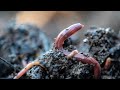
Vermicomposting, also known as worm farming or vermiculture, is a biological process utilizing various species of earthworms, particularly red wigglers (Eisenia fetida) and European nightcrawlers (Eisenia hortensis), to decompose organic matter into a nutrient-dense soil amendment called vermicompost. Unlike traditional composting, which relies on microbial decomposition assisted by aeration and temperature control, vermicomposting integrates the digestive action of earthworms, which also aerates the material. The earthworms consume organic waste, breaking it down through their digestive tracts, and excrete nutrient-rich castings.
This practice is classified as a context-dependent regenerative agriculture practice. It becomes regenerative when it helps close nutrient loops, reduces reliance on synthetic inputs, builds soil organic matter, and enhances soil biology. However, if it involves large-scale, energy-intensive water usage without consideration for local water tables, or if the organic inputs are contaminated with synthetic chemicals that could harm soil life or end up in the final product, it could be considered extractive. For most small- to medium-scale operations focused on on-farm waste recycling, vermicomposting aligns well with regenerative goals.
Vermicomposting directly supports Principle 2: Maximize Crop Diversity. By creating a diverse community of beneficial soil organisms (earthworms, bacteria, fungi) and producing a rich soil amendment that supports a wide array of plant species, it enhances the overall biological diversity both above and below ground. It also indirectly supports Principle 3: Keep Soil Covered and Principle 4: Maintain Living Roots by producing a high-quality compost that, when applied to the soil, improves soil structure, water-holding capacity, and nutrient availability, enabling continuous plant growth and cover. While it doesn't directly involve livestock or minimize disturbance in its setup phase (e.g., building bins), its primary function of recycling nutrients and building soil health contributes to the health of the entire agroecosystem.
The process is remarkably efficient at transforming kitchen scraps, agricultural residues, and manure into a valuable product. Earthworm castings are a potent natural fertilizer and soil conditioner. They are rich in readily available plant nutrients such as nitrogen, phosphorus, and potassium, as well as essential micronutrients. Furthermore, vermicompost contains beneficial microorganisms that enhance soil health, improve soil structure, increase water retention, and boost plant disease resistance. Its humic and fulvic acid content chelates nutrients, making them more available to plants, and improves soil aeration and drainage.
Economically, vermicomposting can be a cost-effective way to manage organic waste, reducing disposal fees and creating a valuable soil amendment that can be used on-farm or sold as a premium product. This creates a closed-loop system, aligning with the regenerative principle of cycling resources. For farmers and ranchers looking to transition away from synthetic fertilizers and soil amendments, vermicompost offers a tangible, biological alternative that actively builds soil health over time. While not a direct replacement for all conventional inputs immediately, it is a powerful stepping stone towards greater input independence and agroecosystem resilience.
Implementing vermicomposting requires understanding the specific needs of earthworms. They thrive in dark, moist, aerated environments with a balanced carbon-to-nitrogen ratio in their food source. The substrate should be kept consistently moist but not waterlogged, and protected from extreme temperatures and direct sunlight. Managing the pH is also important, as earthworms prefer a neutral to slightly acidic environment (pH 6.0-7.0). Overfeeding can lead to anaerobic conditions, which are detrimental to earthworms. Balancing the type and quantity of organic matter is key to successful vermicomposting.
This practice aligns with building a more circular economy in agriculture. Instead of discarding organic waste, it's transformed into a vital resource. For example, a dairy farm can use manure to feed worms, and then use the resulting vermicompost to fertilize their pastures or cash crops, reducing the need for purchased fertilizers. Similarly, horticultural operations or households generating significant food waste can convert this otherwise-discarded material into a potent soil enhancer. The potential for scaling vermicomposting ranges from small backyard bins to large, commercial operations, making it adaptable to various farm sizes and types across different international contexts.
Sources behind this view
Sources behind this view
 Videos & Podcasts
-
Instructions for building a DIY worm farm using layers of lucerne hay, grassy hay, and cow manure. The process involves moistening layers, allowing the pile to cool after initial composting, adding ea
-
Details a DIY vermicomposting system using red wiggler worms to process food and paper waste into compost and liquid fertilizer. Key inputs include coffee grounds and shredded paper; avoid citrus and
-
Vermicomposting provides nutrient-rich vermicast, a vital soil amendment for vegetable production, containing plant growth enzymes and beneficial microbes. It can be applied as a solid or liquid, supp

-
Explains vermicomposting using wormeries, highlighting that it does not generate high heat and worms indicate compost readiness. Produces high-value, soft, fluffy compost ideal for propagation mixes.
 Community
-
This guide details vermicomposting using red wiggler worms to create nutrient-rich worm castings from food scraps. It covers bin construction, bedding, feeding guidelines, temperature control (55-77°F
Read more (opens in new window) ucanr.edu -
Learn how to vermicompost with red wiggler worms (*Eisenia fetida*) by creating a layered bin with organic matter and kitchen scraps (excluding dairy/meat). Worms process waste into nutrient-rich cast
Read more (opens in new window) ucanr.edu -
The core value of composting, manure, and organic matter decomposition is feeding soil microbes. All methods release carbon and nitrogen, but the key is microbial inoculation for soil health, with ani
Read more (opens in new window) permies.com -
Vermicomposting with red worms can significantly reduce pathogens like E. coli and Salmonella in humanure and biosolids, potentially achieving EPA Class A standards. A precautionary step of hot compos
Read more (opens in new window) permies.com
 Research
-
Vermicompost in Organic Agriculture: Processes, Properties, and Agronomic Benefits (opens in new window)
This study found: Worm castings (vermicompost) enhance soil health and crop performance in organic farming by improving soil structure, boosting microbes, and increasing nutrient use. They also help crops tolerate stre
-
Vermicomposting, a key to sustainable agriculture: A review (opens in new window)
This study found: Worm composting turns organic waste into nutrient-rich vermicast, boosting plant growth, disease resistance, and soil health. It's a sustainable solution for waste management and improving crop yields
-
A critical review on the vermicomposting of organic wastes as a strategy in circular bioeconomy: mechanism, performance, and future perspectives. (opens in new window)
This study found: Worm composting (vermicomposting) turns organic waste into valuable soil amendments and protein sources, fitting a circular economy. It cuts farming costs, reduces water use, boosts crop yields, and l
-
Vermicomposting: An Effective Option for Recycling Organic Wastes (opens in new window)
This study found: Worm composting (vermicomposting) effectively recycles organic waste into nutrient-rich vermicast, a beneficial alternative to chemical fertilizers for sustainable organic agriculture.
 From the Web
-
Vermiculture using Perionyx excavatus converts manure and crop residues into nutrient-rich compost and animal feed. It enhances soil health, reduces GHG emissions, offers diversified income, and requi
-
Vermiculture using red wigglers creates vermicast, a soil amendment that improves water retention, reduces pests, and boosts microbial biodiversity. Methods like windrow and wedge systems are efficien
-
Vermiculture, using earthworms to create nutrient-rich vermicompost from manure and crop residues, offers significant economic and environmental benefits for farms. It improves soil health, reduces wa
-
Vermicomposting diverts food and yard waste from landfills, creating a nutrient-rich soil amendment teeming with beneficial microbes that promotes plant growth.
Key Points
What It Is
- Uses earthworms to process organic waste
- Produces nutrient-rich worm castings
- Enhances soil biology and structure
- Context-dependent regenerative practice
Why Do It
- Closes nutrient loops on-farm
- Reduces waste disposal costs
- Creates premium soil amendment product
- Supports soil health and crop vitality
Know the Debate
- Soil health benefits emerge over 2-3 years of consistent application.
- Use on-farm waste for truly closed-loop regenerative outcomes.
- Initial setup costs range from low DIY to higher commercial investment.
- Requires consistent moisture, temperature, and feeding management.
Benefits - Financial
- Increases crop yields 5–15% annually, adding $500–$2,000 net revenue
- Reduces synthetic fertilizer expenditures by $150–$500 per acre ($371–$1,236 per hectare) annually
- Premium product sales generate $400–$800 per ton in supplemental revenue
Benefits - System
- Increases soil organic matter: 0.5-2% annually
- Improves water infiltration: 40-70%
- Enhances soil biological diversity (Principle 2)
- Boosts plant nutrient uptake efficiency
Risks - Financial
- High infrastructure investment of $3,000–$65,000 based on operational scale
- Management failure leads to 50–100% worm population mortality annually
- Market development requires $500–$2,000 annually for testing and branding
Risks - System
- Requires careful moisture and temperature control
- Worms can die from inappropriate pH or feed
- Risk of pest and odor if not managed well
- Over-reliance on single soil amendment type
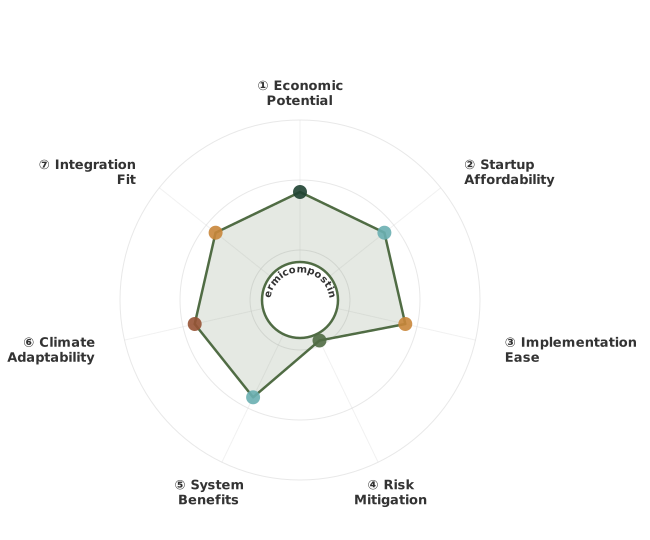
How These Traits Are Calculated
Trait dimensions are ordered clockwise starting from the top of the chart (12 o'clock position):
1. Economic Potential
Financial returns, annual value, and break-even timeline
WHAT: Evaluates financial viability by combining net annual value ($/ha from savings, income, and amortized harvests) with break-even timeline showing when practices pay for themselves.
WHY: Farmers need clear ROI understanding before committing resources. Fast payback (≤3 years) with strong returns (≥$300/ha) enables confident adoption, while long timelines (>10 years) restrict adoption to well-funded operations willing to wait for returns.
HOW: Calculated from net annual value in $/ha and break-even years. Exceptional (≥2.6): fast ROI ≤3 years + high value ≥$300/ha. Typical (1.8-2.5): moderate returns or longer timelines. Limited (<1.8): marginal economics or very long payback >10 years.
2. Startup Affordability
Initial investment costs and financial barrier to entry
WHAT: Measures financial barrier to entry through startup costs for equipment, infrastructure, consulting, and materials. Inverted scoring: lower costs = higher scores = more accessible adoption.
WHY: Affordability determines who can adopt. Low-cost practices (<$250/ha) enable widespread adoption across diverse scales, while high costs (>$2,500/ha) limit adoption to well-capitalized operations, creating barriers that slow regenerative transition.
HOW: Calculated from initial investment parsed from practice content. Inverted scoring: Exceptional (≥2.6): minimal investment <$250/ha. Typical (1.8-2.5): moderate costs $250-2,500/ha. Limited (<1.8): high barrier >$2,500/ha.
3. Implementation Ease
Learning curve and specialized knowledge required
WHAT: Measures how much learning, planning, and specialized knowledge a practice requires. Simpler practices with fewer steps score higher, while complex practices requiring extensive training or specialized resources score lower.
WHY: Complex practices create adoption barriers even when economically viable. Straightforward practices enable faster adoption and broader participation, while those requiring extensive training, timing precision, or specialized equipment limit who can succeed.
HOW: Evaluated by measuring documentation length and identifying complexity markers like location-specific requirements, seasonal timing windows, specialized skills, and dedicated equipment needs. Exceptional (≥2.6): straightforward practices with minimal prerequisites. Typical (1.8-2.5): moderate learning curve with some specialized needs. Limited (<1.8): steep learning curve requiring significant training or resources.
4. Risk Mitigation
Identified financial and ecological risk assessment
WHAT: Evaluates documented risks across financial (investment loss, market volatility) and ecological (crop failure, pest outbreaks) domains. Inverted scoring: fewer risks = higher scores.
WHY: Understanding risk exposure helps farmers make informed decisions. Low-risk practices allow confident implementation, while high-risk practices require careful planning and contingency resources. Risk transparency prevents costly failures.
HOW: Calculated from identified risks in practice content. Inverted scoring: Exceptional (≥2.6): ≤2 risks with manageable severity. Typical (1.8-2.5): 3-5 moderate risks. Limited (<1.8): 6+ risks or severe exposure.
5. System Benefits
How many ways the practice improves your land simultaneously
WHAT: Measures how many aspects of land health improve at once—carbon storage, soil quality, erosion control, water absorption, and biodiversity. Practices that improve multiple areas simultaneously create compounding benefits where each improvement reinforces the others.
WHY: The best practices solve multiple problems at once. For example, addressing erosion simultaneously builds carbon and improves water infiltration, creating a resilient system with positive feedback loops. Single-benefit approaches miss these compound transformation opportunities.
HOW: Evaluated across five key outcomes: carbon sequestration, soil organic matter increase, erosion reduction, water infiltration improvement, and biodiversity enhancement. Exceptional (≥2.6): high carbon storage (>8 t/ha/yr), improvements across 4-5 areas, transformative outcomes. Typical (1.8-2.5): moderate carbon (3-8 t/ha/yr), improvements across 2-3 areas. Limited (<1.8): modest impact (<3 t/ha/yr), single-area focus only.
6. Climate Adaptability
Geographic applicability across Köppen climate zones
WHAT: Evaluates geographic applicability by assessing how many Köppen climate zones successfully support a practice and what adaptation requirements are needed. Measures breadth of climates where farmers can implement with minimal to moderate modifications.
WHY: Universal practices working across diverse climates enable more farmers to adopt regenerative approaches. Practices limited to single climate types (only Mediterranean, only tropical) restrict adoption and slow global transition. Adaptability determines whether a practice serves niche regions or offers broad transformation.
HOW: LLM evaluation of regional success stories, Köppen zone coverage, and adaptation needs. Exceptional (≥2.6): 5+ zones or 4+ climate types, 3+ continents, minimal adaptation. Typical (1.8-2.5): 3-4 zones or 2-3 types, 2 continents, moderate adaptation. Limited (<1.8): 1-2 zones, single region, significant adaptation or highly specialized.
7. Integration Fit
How well this practice combines with others you're doing
WHAT: Measures how well a practice combines with other regenerative practices you might be doing. Some practices work as building blocks that make many other practices easier or more effective, while others work best on their own.
WHY: Practices that combine well with many others create more value on your farm. For example, cover cropping enables no-till, improves grazing, supports crop diversity, and helps water management—making all of them work better together. This helps you build a coherent system rather than juggling disconnected practices.
HOW: Evaluated by identifying which practices combine well and how strong those combinations are. 'Ideally Suited' means strong combinations where practices reinforce each other (practice A makes B easier, while B makes A more effective). 'Adequate' means complementary benefits that work well together. Exceptional (≥2.6): combines well with 6+ practices, serves as a building block. Typical (1.8-2.5): combines with 3-5 practices. Limited (<1.8): 1-2 practices or works best alone.
Going Deeper
1
WHY - The Benefits
Vermicomposting offers a unique blend of waste management and soil enhancement, making it a valuable practice within regenerative agriculture frameworks. Its benefits span from direct economic savings and revenue generation to profound improvements in soil health and...
Vermicomposting offers a unique blend of waste management and soil enhancement, making it a valuable practice within regenerative agriculture frameworks. Its benefits span from direct economic savings and revenue generation to profound improvements in soil health and...
WHY - The Benefits
Vermicomposting offers a unique blend of waste management and soil enhancement, making it a valuable practice within regenerative agriculture frameworks. Its benefits span from direct economic savings and revenue generation to profound improvements in soil health and...
Vermicomposting offers a unique blend of waste management and soil enhancement, making it a valuable practice within regenerative agriculture frameworks. Its benefits span from direct economic savings and revenue generation to profound improvements in soil health and...
Soil Health Benefits
The primary soil health benefit of vermicompost stems from its exceptional biological activity and nutrient profile. When applied to soil, vermicompost introduces a diverse population of beneficial microorganisms (bacteria, fungi, protozoa) and enzymes that enhance nutrient cycling, suppress plant pathogens, and improve soil structure. The earthworm castings themselves are rich in humic and fulvic acids, which are crucial for soil aggregation, water retention, and nutrient availability.
Application of vermicompost can increase soil organic matter content by 0.5-2% annually in the topsoil layer where it is applied, a rapid rate reflecting the direct addition of stabilized organic matter. This is distinct from slower, in-situ soil building. This increase in organic matter improves soil structure, making it more friable and easier for roots to penetrate. It also enhances the soil's cation exchange capacity (CEC), allowing it to hold onto and supply more essential plant nutrients. The improved soil structure leads to better aeration and drainage, reducing the risk of waterlogging and promoting healthy root development.
Water infiltration rates can increase by 40-70% in soils treated with vermicompost. The humic substances bind soil particles into stable aggregates, creating larger pore spaces that allow water to enter the soil more readily, reducing surface runoff and erosion. This improved water management is critical in regions prone to drought or heavy rainfall, enhancing plant resilience and reducing the need for supplemental irrigation.
Furthermore, vermicompost acts as a slow-release fertilizer. The nutrients within castings are in forms that plants can readily absorb, and their microbial breakdown releases nutrients gradually over time, preventing nutrient leaching and providing a steady supply to plants throughout the growing season. This balanced supply of macro- and micronutrients contributes to healthier, more vigorous plant growth, which in turn supports greater biodiversity (Principle 2) above and below ground.
Economic Benefits
Vermicomposting presents several economic advantages for farmers, ranchers, and land managers, primarily through cost reduction, revenue generation, and improved productivity. The most immediate economic benefit is the reduction in waste disposal costs. Many agricultural operations generate significant amounts of organic waste (e.g., crop residues, manure, cull products) that would otherwise incur tipping fees at landfills or require extensive on-site management.
By converting this waste into vermicompost, these disposal costs are eliminated. The resulting vermicompost is a high-value soil amendment. On-farm application can significantly reduce or eliminate the need for purchased synthetic fertilizers and soil conditioners. A typical application rate of 2-5 tonnes per hectare (equivalent to 1-2 tons per acre) can provide a substantial portion of a crop's nutrient needs and improve soil structure, potentially saving $100-300 per hectare ($40-120 per acre) in annual fertilizer expenses.
Vermicompost can also be sold as a premium product. In domestic markets, bagged vermicompost for gardening and horticulture can fetch prices ranging from $400 to $1,000 per tonne (USD equivalent), depending on quality, branding, and local market demand. Larger operations can supply wholesale markets or sell in bulk to commercial growers, landscapers, and nurseries. This creates a new revenue stream from materials that were previously considered waste.
Improved crop yields and quality are another economic benefit. The enhanced soil health, balanced nutrition, and increased water availability promoted by vermicompost application typically lead to 5-15% yield increases over 3-5 years, alongside improved crop resilience to pests and diseases. This improved productivity contributes to greater profitability and reduced risk in agricultural enterprises. The combination of reduced input costs, potential for product sales, and increased yields makes vermicomposting a financially attractive practice.
Regenerative Systems Fit
Vermicomposting is a Context-Dependent practice within regenerative agriculture, meaning its regenerative value depends heavily on how it's implemented and what organic materials are used. When managed appropriately, it significantly contributes to the core principles of regenerative agriculture.
Principle 1: Minimize Soil Disturbance: Vermicomposting itself doesn't involve tillage. Its production process occurs in bins or beds separate from the field. The end product, vermicompost, is applied to fields, usually through surface spreading or incorporation with light tillage during the transition phase. However, if the goal is to move towards no-till systems, vermicompost application can be done with minimal surface disturbance, and its use can help build soil structure that negates the need for future tillage.
Principle 2: Maximize Crop Diversity: Vermicomposting directly supports this principle by fostering a rich and diverse soil microbial community. The castings are teeming with billions of beneficial bacteria, fungi, protozoa, and nematodes, as well as earthworms themselves. This biological diversity increases the resilience of the soil ecosystem and enhances nutrient cycling and plant health. Furthermore, by improving soil fertility and structure, vermicompost enables farmers to grow a wider range of diverse cover crops and cash crops, contributing to greater botanical diversity above ground.
Principle 3: Keep Soil Covered: Vermicompost is a direct soil amendment. When applied, it increases the soil's organic matter content, which helps to improve soil structure and water retention. This improved structure, along with the residual organic matter, helps keep the soil surface protected. While not a mulch itself, it creates a more hospitable environment for living plants and mulch layers to establish and persist, thus indirectly supporting the principle of keeping soil covered year-round.
Principle 4: Maintain Living Roots: By enhancing soil health, vermicompost promotes vigorous root growth. Healthier, deeper root systems mean that living roots are present in the soil for longer periods and at greater depths. This continuous biological activity feeds soil microbes and contributes to ongoing soil structure formation, embodying the spirit of maintaining living roots to foster a healthy soil ecosystem.
Principle 5: Integrate Livestock: Vermicomposting is often a key component of integrating livestock and cropping systems. Manure from grazing animals (cattle, sheep, poultry) is a prime feedstock for vermicomposting. This practice closes the nutrient loop by returning nutrients from animal waste back to the soil to grow feed for those same animals or to fertilize other crops. This symbiotic relationship enhances the efficiency and sustainability of mixed farming systems.
Transition Pathway: For farms transitioning from conventional practices, vermicomposting allows for a gradual reduction in synthetic fertilizer use. It provides a biological alternative that actively builds soil health rather than depleting it. Over time, as soil biology becomes more robust and nutrient cycling improves through vermicompost application and other regenerative practices, the farm can become less reliant on purchased inputs. The timeline for this transition varies but typically involves 3-5 years of consistent application and integration with other soil-building practices to see significant shifts in soil health and reduced input needs.
Sources behind this view
Videos & Podcasts
-
Agro Bios Systems details compost extract applications: seed treatment, in-furrow, foliar, and residue digestion. Emphasizes economic benefits over synthetic starters, improved soil health (structure,
-
Details regenerative tobacco farming practices: lower-cost compost use, improved fertilization and pest management leading to fewer pests (7 vs 11 incidents) and reduced costs. Highlights ecosystem de
-
Vermicomposting provides nutrient-rich vermicast, a vital soil amendment for vegetable production, containing plant growth enzymes and beneficial microbes. It can be applied as a solid or liquid, supp
-
Practical guidance on using vermicompost leachate for soil biology enhancement in gardening and cropping, emphasizing local sourcing, application methods, and monitoring soil health indicators like ag
Community
-
This guide details vermicomposting using red wiggler worms to create nutrient-rich worm castings from food scraps. It covers bin construction, bedding, feeding guidelines, temperature control (55-77°F
Read more (opens in new window) ucanr.edu -
Learn how to vermicompost with red wiggler worms (*Eisenia fetida*) by creating a layered bin with organic matter and kitchen scraps (excluding dairy/meat). Worms process waste into nutrient-rich cast
Read more (opens in new window) ucanr.edu -
Vermicomposting with red worms can significantly reduce pathogens like E. coli and Salmonella in humanure and biosolids, potentially achieving EPA Class A standards. A precautionary step of hot compos
Read more (opens in new window) permies.com -
Composting garden waste is a core permaculture practice that enriches soil with nutrients, boosts biodiversity, improves water retention, controls erosion, cleanses contaminated soil, and significantl
Read more (opens in new window) www.permaculture.org.uk
Research
-
Vermicompost in Organic Agriculture: Processes, Properties, and Agronomic Benefits (opens in new window)
This study found: Worm castings (vermicompost) enhance soil health and crop performance in organic farming by improving soil structure, boosting microbes, and increasing nutrient use. They also help crops tolerate stre
-
Vermicomposting, a key to sustainable agriculture: A review (opens in new window)
This study found: Worm composting turns organic waste into nutrient-rich vermicast, boosting plant growth, disease resistance, and soil health. It's a sustainable solution for waste management and improving crop yields
-
A critical review on the vermicomposting of organic wastes as a strategy in circular bioeconomy: mechanism, performance, and future perspectives. (opens in new window)
This study found: Worm composting (vermicomposting) turns organic waste into valuable soil amendments and protein sources, fitting a circular economy. It cuts farming costs, reduces water use, boosts crop yields, and l
-
Effects of vermicomposting on the nutrient quality of organic fertilizers derived from organic waste: A systematic review (opens in new window)
This study found: Worm composting (vermicomposting) creates superior organic fertilizers, boosting soil fertility and reducing environmental impacts compared to traditional composting. Red wiggler worms are highly effe
From the Web
-
Vermiculture using red wigglers creates vermicast, a soil amendment that improves water retention, reduces pests, and boosts microbial biodiversity. Methods like windrow and wedge systems are efficien
-
Vermiculture using Perionyx excavatus converts manure and crop residues into nutrient-rich compost and animal feed. It enhances soil health, reduces GHG emissions, offers diversified income, and requi
-
Vermiculture, using earthworms to create nutrient-rich vermicompost from manure and crop residues, offers significant economic and environmental benefits for farms. It improves soil health, reduces wa
-
Vermicomposting diverts food and yard waste from landfills, creating a nutrient-rich soil amendment teeming with beneficial microbes that promotes plant growth.
2
WHERE - Regional Considerations
Vermicomposting is remarkably adaptable across a wide range of climates and regions worldwide. The primary considerations for successful implementation relate to managing temperature and moisture extremes, and the availability of suitable organic feedstocks. Its...
Vermicomposting is remarkably adaptable across a wide range of climates and regions worldwide. The primary considerations for successful implementation relate to managing temperature and moisture extremes, and the availability of suitable organic feedstocks. Its...
WHERE - Regional Considerations
Vermicomposting is remarkably adaptable across a wide range of climates and regions worldwide. The primary considerations for successful implementation relate to managing temperature and moisture extremes, and the availability of suitable organic feedstocks. Its...
Vermicomposting is remarkably adaptable across a wide range of climates and regions worldwide. The primary considerations for successful implementation relate to managing temperature and moisture extremes, and the availability of suitable organic feedstocks. Its...
Click Here to Look up your Region if you don't already know it
Tropical and Subtropical Regions
Representative Locations: Southeast Asia (e.g., Thailand, Vietnam, Indonesia), Central America (e.g., Costa Rica, Mexico), East Africa (e.g., Kenya, Uganda), Southern Brazil, Northern Australia
Climate Context: High temperatures year-round, with distinctions in rainfall patterns (consistent or seasonal). Köppen Af, Am, Aw, Cfa, Cwa.
Suitability: These regions are highly suitable for year-round vermicomposting due to consistent warm temperatures, which are ideal for earthworm activity (typically 15-25°C or 59-77°F). The main challenge is managing moisture during potentially intense rainy seasons or prolonged dry periods. Shade is crucial to prevent overheating and drying out of worm beds, especially in direct sunlight. Abundant organic waste (crop residues, animal manures, fruit and vegetable scraps) is often readily available. In arid tropical zones, water conservation for maintaining moisture levels is key.
Mediterranean Regions
Representative Locations: California (USA), Mediterranean basin (e.g., Spain, Italy, Greece), Central Chile, Southwestern Australia, Western Cape South Africa
Climate Context: Hot, dry summers and mild, wet winters. Köppen Csa, Csb.
Suitability: Mild winters are generally favorable, allowing for extended periods of worm activity. Summers can pose a challenge due to high temperatures and dryness, requiring careful management. Worm bins must be shaded and kept consistently moist, potentially necessitating irrigation or cooling measures. The dry season may limit the availability of green waste, making it important to collect and store materials or use drought-tolerant feedstocks. In winter, very cold temperatures in some regions might require insulation or indoor relocation of bins to protect worms.
Humid Temperate Regions
Representative Locations: Southeastern United States, Northern Europe (e.g., UK, Germany, Poland), Eastern China, Japan, New Zealand
Climate Context: Warm to hot summers and cool to cold winters with moderate to high annual precipitation. USDA Zones 6-8, Köppen Cfb, Cfa.
Suitability: These regions offer good potential for vermicomposting, but seasonality is a key factor. Summer heat can be managed with cooling techniques, and winter cold requires protection. In colder climates (USDA Zones 6-7 and below), worm bins may need to be moved indoors (e.g., greenhouse, barn, garage) during winter months to maintain optimal temperatures. Availability of feedstocks can fluctuate seasonally; while summer generates abundant green waste, winter may require stockpiling or using more stable materials like shredded cardboard.
Arid and Semi-Arid Regions
Representative Locations: Western USA, North Africa, Central Asia, Interior Australia
Climate Context: Low annual precipitation, high temperatures, short and often unpredictable growing seasons. Köppen BSh, BSk.
Suitability: These regions present the greatest challenges due to water scarcity and extreme temperatures. Vermicomposting requires significant effort to maintain optimal moisture levels. Shaded, well-insulated bins are essential to protect worms from baking heat and freezing temperatures. Often, vermicomposting is best done in controlled environments like greenhouses or indoors. Recycling water and using water-retaining materials (e.g., coir, shredded cardboard) in the bedding is crucial. Feedstock availability might be limited by agricultural practices.
Cold Continental Regions
Representative Locations: Northern USA and Canada, Northern Europe (Scandinavia), Northern Asia (Siberia)
Climate Context: Very short growing seasons, extreme summer heat, severe winter cold. USDA Zones 3-5, Köppen Dfa, Dfb.
Suitability: Vermicomposting is possible but requires significant environmental control. Worms are highly susceptible to freezing temperatures. Outdoor systems would need robust insulation and likely supplemental heating during winter. Indoor operations (e.g., in heated buildings, basements, or specialized facilities) are often the most practical solution. Summer heat also needs management. Feedstock availability might be seasonal, requiring storage. The operational window for outdoor activities may be shorter.
3
HOW - Implementation Process
Implementing vermicomposting involves setting up a suitable environment for earthworms and providing them with the correct food and care. The process can be scaled from small backyard systems to larger, commercial operations. The core principles remain the same: creating...
Implementing vermicomposting involves setting up a suitable environment for earthworms and providing them with the correct food and care. The process can be scaled from small backyard systems to larger, commercial operations. The core principles remain the same: creating...
HOW - Implementation Process
Implementing vermicomposting involves setting up a suitable environment for earthworms and providing them with the correct food and care. The process can be scaled from small backyard systems to larger, commercial operations. The core principles remain the same: creating...
Implementing vermicomposting involves setting up a suitable environment for earthworms and providing them with the correct food and care. The process can be scaled from small backyard systems to larger, commercial operations. The core principles remain the same: creating...
Prerequisites
- Earthworm Species: Select hardy, prolific composting earthworm species like Red Wigglers (Eisenia fetida) or European Nightcrawlers (Eisenia hortensis). Avoid native earthworms not adapted to confined composting.
- Bedding Material: A moist, aerated, carbon-rich material is needed to house the worms. Common choices include shredded newspaper, cardboard, coconut coir, aged straw, or peat moss. It should be pre-moistened to resemble a wrung-out sponge and provide a pH between 6.0 and 7.0.
- Organic Feedstock: Vegetable scraps, fruit waste, coffee grounds, tea bags, crushed eggshells, and certain types of manure (e.g., cow, horse, poultry, rabbit—aged is best) are suitable. Avoid meat, dairy, oily foods, citrus in excess, and chemically treated materials.
- Container/System: Can range from simple plastic bins with drainage and ventilation to commercially designed stacked systems, flow-through beds, or windrows depending on scale and budget.
- Location: A sheltered spot protected from direct sunlight, extreme temperatures (hot and cold), and predators. Indoor locations (basements, garages, sheds) are ideal in extreme climates.
Phase 1: System Setup and Worm Introduction
- Prepare Bedding: Fill your chosen container with moist bedding material. Fluff it to ensure good aeration. The depth of bedding typically should be 15-30 cm (6-12 inches).
- Moisten Bedding: Gently spray the bedding with water until it holds moisture but doesn't drip when squeezed. It should feel like a wrung-out sponge.
- Add Worms: Gently place the purchased earthworms onto the surface of the bedding. They will naturally burrow down to escape light. For smaller systems, 0.5-1 kg (1-2 lbs) of worms is a common starting point.
- Initial Feeding: Introduce a small amount of feed (e.g., 1-2 kg per m² or 0.2-0.4 lbs per square foot) in one section of the bin. Avoid overfeeding initially, allowing worms to acclimate.
- Cover and Wait: Cover the bin with a breathable lid or cloth to retain moisture and darkness. Wait 1-2 weeks before harvesting castings, allowing worms to establish and process the initial food.
Phase 2: Feeding and Maintenance
- Regular Feeding: Feed worms 1-3 times per week, depending on the scale of your system and the worm population. Introduce food in batches, rotating locations within the bin to avoid anaerobic pockets. Start with small amounts and increase as worm population grows and consumption increases. A general guideline is 0.5-1 kg of feed per kg of worms per week, but observe consumption.
- Moisture Management: Check moisture levels regularly. Mist with water if the bedding appears dry. If too wet, add dry bedding material or improve aeration.
- Aeration: Gently aerate the bedding by fluffing it with a trowel every few weeks, being careful not to disturb the worms excessively. This prevents anaerobic conditions and odor.
- Temperature Control: Maintain temperatures between 15-25°C (59-77°F). Protect bins from freezing (below 10°C/50°F) by insulating or moving indoors, and from overheating (above 30°C/86°F) by shading or cooling.
- Harvesting Castings: Vermicompost is ready when it looks like dark, granular soil and has an earthy smell. Harvest mature castings by either:
- Migration Method: Stop feeding in one section of the bin and feed only in another. Worms will migrate to the new food source, leaving harvested castings behind.
- Screening: Gently fork out the bulk of the compost and screen it to separate finished castings from uncomposted material and worms.
- Dump and Separate: Empty the bin onto a tarp, then use light to encourage worms (which avoid light) to burrow down. Scrape off the top layer of castings, repeating until worms are concentrated at the bottom.
Phase 3: Ongoing System Management
- Feedstock Preparation: Chop or blend larger organic materials to increase surface area, making them easier for worms to consume.
- Troubleshooting: Address issues like odor (too wet, overfeeding, wrong pH), migration from bin (unfavorable conditions, lack of food), or pest infestations (fruit flies, mites) promptly. Often, simply adjusting moisture, pH, or feeding practices is sufficient.
- Scaling Up: For larger operations, consider flow-through systems, larger windrows, or automated feeding and harvesting technologies where feasible and economical.
Transition Timeline & Phase-Out Strategy
Vermicomposting itself is an additive regenerative practice, not a substitute for conventional inputs that need phasing out. However, its use can accelerate the transition away from chemical fertilizers.
- Year 1-2: Begin using vermicompost on a portion of fields or gardens, incrementally reducing synthetic fertilizer application rates (e.g., by 10-20% initially). Observe plant response and soil changes. Supplement vermicompost with cover cropping to build soil organic matter and nutrient cycling.
- Year 3-4: Increase vermicompost application rates and expand its use across more acreage. Further reduce synthetic fertilizer inputs (e.g., by another 20-30%). Focus on building soil biology through diverse planting and reduced disturbance.
- Year 5+: With a robust vermicomposting program and integrated regenerative practices (cover cropping, minimal tillage, potentially animal integration), synthetic fertilizer use can be minimized or eliminated for many crops. Soil health indicators (organic matter, water infiltration, biological diversity) should show significant improvement, demonstrating the success of the transition.
Sources behind this view
Videos & Podcasts
-
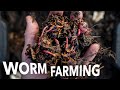
Describes a commercial vermicomposting wedge system using red wigglers in Arizona, feeding food waste and harvesting microbe-rich castings. Details watering, shade, and temperature management for opti
-
Details a DIY vermicomposting system using red wiggler worms to process food and paper waste into compost and liquid fertilizer. Key inputs include coffee grounds and shredded paper; avoid citrus and
-
Instructions for building a DIY worm farm using layers of lucerne hay, grassy hay, and cow manure. The process involves moistening layers, allowing the pile to cool after initial composting, adding ea
-
Explains vermicomposting using wormeries, highlighting that it does not generate high heat and worms indicate compost readiness. Produces high-value, soft, fluffy compost ideal for propagation mixes.
Community
-
This guide details vermicomposting using red wiggler worms to create nutrient-rich worm castings from food scraps. It covers bin construction, bedding, feeding guidelines, temperature control (55-77°F
Read more (opens in new window) ucanr.edu -
Guide to home vermicomposting with red wigglers (*Eisenia foetida*), detailing bin setup, bedding materials, worm feeding (avoiding meat/dairy), optimal temperatures (55-77°F), and harvesting worm cas
Read more (opens in new window) ucanr.edu -
Offers practical advice on indoor vermicomposting using recycled bins and red wrigglers to process food scraps, emphasizing smell-free operation and compost production for gardening. Worms consume ~1
Read more (opens in new window) permies.com -
Provides detailed instructions for introducing and sustaining earthworms (red wigglers, night crawlers) by supplying ample decaying vegetation and manure, using prepared bins and pits, and managing mo
Read more (opens in new window) permies.com
Research
-
Vermicompost in Organic Agriculture: Processes, Properties, and Agronomic Benefits (opens in new window)
This study found: Worm castings (vermicompost) enhance soil health and crop performance in organic farming by improving soil structure, boosting microbes, and increasing nutrient use. They also help crops tolerate stre
-
Vermicomposting, a key to sustainable agriculture: A review (opens in new window)
This study found: Worm composting turns organic waste into nutrient-rich vermicast, boosting plant growth, disease resistance, and soil health. It's a sustainable solution for waste management and improving crop yields
-
Effects of vermicomposting on the nutrient quality of organic fertilizers derived from organic waste: A systematic review (opens in new window)
This study found: Worm composting (vermicomposting) creates superior organic fertilizers, boosting soil fertility and reducing environmental impacts compared to traditional composting. Red wiggler worms are highly effe
-
A critical review on the vermicomposting of organic wastes as a strategy in circular bioeconomy: mechanism, performance, and future perspectives. (opens in new window)
This study found: Worm composting (vermicomposting) turns organic waste into valuable soil amendments and protein sources, fitting a circular economy. It cuts farming costs, reduces water use, boosts crop yields, and l
From the Web
-
Vermiculture using red wigglers creates vermicast, a soil amendment that improves water retention, reduces pests, and boosts microbial biodiversity. Methods like windrow and wedge systems are efficien
-
Vermiculture using Perionyx excavatus converts manure and crop residues into nutrient-rich compost and animal feed. It enhances soil health, reduces GHG emissions, offers diversified income, and requi
-
This section provides a comprehensive guide to earthworms and vermicompost, detailing their collection, characterization, and performance evaluation. It highlights their role in waste conversion, soil
-
Guide to setting up vermicomposting with red wigglers: use shredded newspaper bedding, add grit, maintain 55-80°F, and manage moisture carefully to prevent drowning.
4
Know the Debate
Vermicomposting offers significant soil health and economic benefits, especially for farms closing nutrient loops. However, outcomes and feasibilit...
Know the Debate
Vermicomposting offers significant soil health and economic benefits, especially for farms closing nutrient loops. However, outcomes and feasibilit...
Vermicomposting offers significant soil health and economic benefits, especially for farms closing nutrient loops. However, outcomes and feasibility vary by climate and scale. In humid regions, year-round production is possible managing heat, while arid areas need strict water and temperature control. Setup costs range from minimal for DIY bins to substantial for commercial operations requiring climate control. Consistent labor for feeding, moisture, and harvesting is essential, with timelines for observing significant results often stretching to 2-3 years of dedicated practice.
How long until significant soil improvement from vermicompost?
Noticeable benefits within 1 year
Institute and academic sources highlight that vermicompost rapidly boosts beneficial microbes and provides readily available nutrients, leading to visible plant health improvements and nutrient enhancements within a single growing season.
Sources behind this view
Sources behind this view
Research
-
Microbial diversity of vermicompost bacteria that exhibit useful agricultural traits and waste management potential (opens in new window)
This study found: Worm composting (vermicomposting) uses earthworms and beneficial microbes to break down organic waste into a rich fertilizer called vermicompost. This 'worm casting' material greatly improves soil health by increasing its ability to hold water, allowing for better air flow, and boosting the populations of helpful soil life. These microbes can directly help plants grow by producing growth hormones and indirectly by protecting them from pests and diseases. Using vermicompost is a key part of sustainable farming and also offers a way to safely manage various types of waste.
-
Vermicomposting, a key to sustainable agriculture: A review (opens in new window)
This study found: Worm composting, or vermicomposting, is a powerful way to turn organic waste like food scraps and manure into a valuable soil amendment called vermicast. This 'worm manure' is packed with natural plant growth boosters, beneficial enzymes, and helpful microbes that significantly improve plant growth and make them more resistant to diseases. With the world producing billions of tons of organic waste annually, worm composting offers an environmentally friendly way to create natural fertilizer. Earthworms act like tiny farmers, improving soil structure, making it easier for roots to grow, holding more water, and even helping to clean up contaminated soils. Using vermicompost can lead to bigger harvests and better quality fruits and vegetables. It also encourages a healthier soil ecosystem by increasing beneficial microbial activity. In short, worm composting is a smart solution for managing waste and building more sustainable farms.
From the Web
-
This section provides a comprehensive guide to earthworms and vermicompost, detailing their collection, characterization, and performance evaluation. It highlights their role in waste conversion, soil improvement, and sustainable agriculture, including methods for analyzing feedstocks, vermicompost, and vermiwash.
-
Vermicomposting diverts food and yard waste from landfills, creating a nutrient-rich soil amendment teeming with beneficial microbes that promotes plant growth.
Significant improvement takes 2-3+ years
Field reports from farmers and practitioners often indicate that while initial plant health improvements are seen, substantial and measurable changes in soil structure, organic matter, and water retention require 2-3 years or more of consistent vermicompost application.
Sources behind this view
Sources behind this view
Videos & Podcasts
-
Instructions for building a DIY worm farm using layers of lucerne hay, grassy hay, and cow manure. The process involves moistening layers, allowing the pile to cool after initial composting, adding earthworms, and harvesting castings to create a microbial inoculum that enhances soil health and plant immunity.
-
Vermicomposting provides nutrient-rich vermicast, a vital soil amendment for vegetable production, containing plant growth enzymes and beneficial microbes. It can be applied as a solid or liquid, supporting plant health and reducing reliance on synthetic nitrogen.
-
Details a DIY vermicomposting system using red wiggler worms to process food and paper waste into compost and liquid fertilizer. Key inputs include coffee grounds and shredded paper; avoid citrus and onions. The system is odorless, produces two valuable outputs, and is suitable for small spaces, promoting a closed-loop permaculture approach.
-
A guide to composting, detailing benefits for soil health and waste reduction. Explains the 'greens' and 'browns' ratio (2:1 browns to greens), layering, aeration, moisture management, and what materials to avoid. Compost is ready in months to a year when dark, crumbly, and earthy-smelling.
Making Sense of the Differences
The timeline for observing significant soil improvement from vermicompost varies due to differing measurement focuses and application consistency. Academic and institute sources often highlight rapid microbial boosts and nutrient availability, leading to early plant health benefits. Field observations, however, suggest that deeper soil structural changes, increased organic matter, and enhanced water retention may take 2-3 years of regular application to become measurably significant. Farmers should expect initial plant vigor but plan for longer-term investment to achieve comprehensive soil regeneration.
What organic inputs are suitable for regenerative vermicomposting?
Broad inputs: Any organic waste
Academic and institute sources commonly describe vermicomposting as a method to recycle various organic wastes, including kitchen scraps, agricultural residues, and manures, into beneficial vermicompost for sustainable agriculture.
Sources behind this view
Sources behind this view
Research
-
Microbial diversity of vermicompost bacteria that exhibit useful agricultural traits and waste management potential (opens in new window)
This study found: Worm composting (vermicomposting) uses earthworms and beneficial microbes to break down organic waste into a rich fertilizer called vermicompost. This 'worm casting' material greatly improves soil health by increasing its ability to hold water, allowing for better air flow, and boosting the populations of helpful soil life. These microbes can directly help plants grow by producing growth hormones and indirectly by protecting them from pests and diseases. Using vermicompost is a key part of sustainable farming and also offers a way to safely manage various types of waste.
-
Vermicomposting, a key to sustainable agriculture: A review (opens in new window)
This study found: Worm composting, or vermicomposting, is a powerful way to turn organic waste like food scraps and manure into a valuable soil amendment called vermicast. This 'worm manure' is packed with natural plant growth boosters, beneficial enzymes, and helpful microbes that significantly improve plant growth and make them more resistant to diseases. With the world producing billions of tons of organic waste annually, worm composting offers an environmentally friendly way to create natural fertilizer. Earthworms act like tiny farmers, improving soil structure, making it easier for roots to grow, holding more water, and even helping to clean up contaminated soils. Using vermicompost can lead to bigger harvests and better quality fruits and vegetables. It also encourages a healthier soil ecosystem by increasing beneficial microbial activity. In short, worm composting is a smart solution for managing waste and building more sustainable farms.
From the Web
-
Vermicomposting uses worms to rapidly convert organic waste into nutrient-dense compost (worm castings), offering a sustainable method for waste management and plant fertilization.
-
This section provides a comprehensive guide to earthworms and vermicompost, detailing their collection, characterization, and performance evaluation. It highlights their role in waste conversion, soil improvement, and sustainable agriculture, including methods for analyzing feedstocks, vermicompost, and vermiwash.
Narrow inputs: On-farm/local waste preferred
Field practitioners often emphasize using on-farm manures and crop residues for regenerative vermicomposting to ensure nutrient cycling within the operation and avoid potential contaminants or externalized costs associated with non-local waste streams.
Sources behind this view
Sources behind this view
Videos & Podcasts
-
Instructions for building a DIY worm farm using layers of lucerne hay, grassy hay, and cow manure. The process involves moistening layers, allowing the pile to cool after initial composting, adding earthworms, and harvesting castings to create a microbial inoculum that enhances soil health and plant immunity.
-
Vermicomposting is an accessible alternative for those unable to turn piles. It requires patience for microbial community development, but worms can reuse castings. Starting with pre-decomposed material or a static pile can speed up the process.
-
Vermicomposting provides nutrient-rich vermicast, a vital soil amendment for vegetable production, containing plant growth enzymes and beneficial microbes. It can be applied as a solid or liquid, supporting plant health and reducing reliance on synthetic nitrogen.
-
Details a DIY vermicomposting system using red wiggler worms to process food and paper waste into compost and liquid fertilizer. Key inputs include coffee grounds and shredded paper; avoid citrus and onions. The system is odorless, produces two valuable outputs, and is suitable for small spaces, promoting a closed-loop permaculture approach.
Making Sense of the Differences
The suitability of organic inputs for regenerative vermicomposting sparks discussion around 'closing the loop.' Broader definitions, supported by academic and institute literature, suggest using a wide range of organic wastes is effective for waste management and producing valuable vermicompost. However, field practitioners often advocate for prioritizing on-farm generated waste like manures and crop residues. This aligns with regenerative principles of internal nutrient cycling and avoiding potential contamination or externality costs associated with sourcing waste from non-regenerative operations. The choice impacts the degree to which the practice contributes to a fully closed-loop system.
5
HOW MUCH - Costs & Investment
Note: Costs shown in USD; multiply by local labor and material cost indices for your region. Labor costs vary significantly internationally. Vermicomposting costs can range from nearly free for DIY systems using salvaged materials to significant investments for...
Note: Costs shown in USD; multiply by local labor and material cost indices for your region. Labor costs vary significantly internationally. Vermicomposting costs can range from nearly free for DIY systems using salvaged materials to significant investments for...
HOW MUCH - Costs & Investment
Note: Costs shown in USD; multiply by local labor and material cost indices for your region. Labor costs vary significantly internationally. Vermicomposting costs can range from nearly free for DIY systems using salvaged materials to significant investments for...
Note: Costs shown in USD; multiply by local labor and material cost indices for your region. Labor costs vary significantly internationally. Vermicomposting costs can range from nearly free for DIY systems using salvaged materials to significant investments for...
Note: All costs are based on recent US economic data (2024–2026) and may vary substantially by region based on local labor rates, material costs, and regulatory requirements.
Infrastructure & System Housing
Small-scale operations (under 50 acres (20 ha)) generally utilize repurposed plastic bin systems or modular shelving, requiring a capital investment of $208–$1,042 to initiate. Mid-size operations (50–500 acres (20–202 ha)) typically shift to custom wooden troughs or commercial-grade vermicomposting beds, requiring an investment of $3,126–$15,630 for lumber, hardware, and essential site preparation. Large-scale commercial facilities (500+ acres) implement fully enclosed continuous-flow reactors or climate-controlled industrial hoop-house windrow systems, carrying infrastructure costs of $10,420–$67,730. These high-end systems necessitate significant investment in protective weather structures and automated climate control to ensure biological stability across larger footprints.
Biological Inputs & Feedstock
Starter worm populations represent a critical variable cost. Small operations require an initial investment of $52–$313 for kits containing 5–20 lbs (2.3–9.1 kg) of worms. Mid-size operations scale this to a $521–$2,084 investment in worm biomass to achieve effective processing throughput. Large-scale commercial operations leverage economies of scale for bulk purchasing, spending $2,605–$10,420 to adequately populate industrial reactors. Bedding material costs, including shredded cardboard, paper, or aged manure, average an initial $0.52–$2.08 per square foot, with recurring annual replenishment costs of approximately $0.21–$0.83 per square foot across all farm sizes.
Tooling & Labor Requirements
Basic tooling for small-scale systems, such as handheld moisture meters, temperature probes, and manual screening trays, remains affordable at $52–$261. Mid-size operations require powered screening equipment, dedicated aeration tools, and moisture management hardware, ranging from $1,563–$6,252. Large-scale facilities often modernize with mechanized front-end loaders or tractor-mounted windrow turners, requiring equipment packages costing $15,630–$52,100+. Labor costs are highly dependent on regional rates ($15–$35 per hour), with small operations requiring 1–3 hours of weekly oversight, while large-scale commercial facilities often commit 20–60 hours per week for comprehensive nutrient management, material hauling, and final product packaging.
Most Spend: Most agricultural operations fall within the middle 60% of these price ranges: $521–$834 for small systems, $6,773–$12,504 for mid-size implementations, and $26,050–$46,890 for large-scale commercial setups. These figures reflect the common purchase of mid-tier, professional-grade equipment and standard organic inputs rather than ultra-budget DIY methods or high-spec automated luxury systems.
Why the Range?: Cost variation is dictated primarily by the degree of integrated automation, particularly in climate-controlled temperature and moisture monitoring systems, which can swing baseline budgets by $2,084–$10,420. Additionally, sourcing logistics drive costs; farms that utilize on-site farm-waste feedstock experience significantly lower operational expenses compared to those that purchase or transport external materials, leading to annual variance in operating costs of 30–50%.
Sources behind this view
Videos & Podcasts
-
Describes a commercial vermicomposting wedge system using red wigglers in Arizona, feeding food waste and harvesting microbe-rich castings. Details watering, shade, and temperature management for opti
-
Provides detailed instructions for home worm composting: use bedding (straw, cardboard), add food waste (no meat/dairy) with carbon material (1:1 ratio), maintain moisture (like wrung sponge), and man
-
Instructions for building a DIY worm farm using layers of lucerne hay, grassy hay, and cow manure. The process involves moistening layers, allowing the pile to cool after initial composting, adding ea
-
Details a DIY vermicomposting system using red wiggler worms to process food and paper waste into compost and liquid fertilizer. Key inputs include coffee grounds and shredded paper; avoid citrus and
Community
-
This guide details vermicomposting using red wiggler worms to create nutrient-rich worm castings from food scraps. It covers bin construction, bedding, feeding guidelines, temperature control (55-77°F
Read more (opens in new window) ucanr.edu -
Guide to home vermicomposting with red wigglers (*Eisenia foetida*), detailing bin setup, bedding materials, worm feeding (avoiding meat/dairy), optimal temperatures (55-77°F), and harvesting worm cas
Read more (opens in new window) ucanr.edu -
Offers practical advice on indoor vermicomposting using recycled bins and red wrigglers to process food scraps, emphasizing smell-free operation and compost production for gardening. Worms consume ~1
Read more (opens in new window) permies.com -
Learn how to vermicompost with red wiggler worms (*Eisenia fetida*) by creating a layered bin with organic matter and kitchen scraps (excluding dairy/meat). Worms process waste into nutrient-rich cast
Read more (opens in new window) ucanr.edu
Research
-
A critical review on the vermicomposting of organic wastes as a strategy in circular bioeconomy: mechanism, performance, and future perspectives. (opens in new window)
This study found: Worm composting (vermicomposting) turns organic waste into valuable soil amendments and protein sources, fitting a circular economy. It cuts farming costs, reduces water use, boosts crop yields, and l
-
Vermicompost in Organic Agriculture: Processes, Properties, and Agronomic Benefits (opens in new window)
This study found: Worm castings (vermicompost) enhance soil health and crop performance in organic farming by improving soil structure, boosting microbes, and increasing nutrient use. They also help crops tolerate stre
-
Effects of vermicomposting on the nutrient quality of organic fertilizers derived from organic waste: A systematic review (opens in new window)
This study found: Worm composting (vermicomposting) creates superior organic fertilizers, boosting soil fertility and reducing environmental impacts compared to traditional composting. Red wiggler worms are highly effe
-
Low-Cost and Labour-Efficient Innovations in Household Recycling of Organic Wastes for Soil Improvement (opens in new window)
This study found: Review of low-cost innovations for household organic waste recycling to improve soil health in low-income countries, focusing on composting, anaerobic digestion, and pyrolysis for stabilized organic m
From the Web
-
Vermiculture using Perionyx excavatus converts manure and crop residues into nutrient-rich compost and animal feed. It enhances soil health, reduces GHG emissions, offers diversified income, and requi
-
Vermiculture, using earthworms to create nutrient-rich vermicompost from manure and crop residues, offers significant economic and environmental benefits for farms. It improves soil health, reduces wa
-
Vermicomposting uses earthworms to convert organic waste into nutrient-rich vermicompost, enhancing soil health and fertility. Key steps involve preparing a suitable environment for redworms, feeding
6
REWARDS AND RISKS - Economics & Risk Factors
REWARDS AND RISKS - Economics & Risk Factors
In a best-case economic scenario, a mid-size farm successfully integrates existing waste streams into their vermicomposting system with an $8,336 infrastructure layout. By processing 10 tons (9.1 tonnes) of waste to produce 5 tons (4.5 tonnes) of premium-grade castings, the farm generates $3,000 in annual gross revenue, complemented by $500 in avoided synthetic fertilizer costs, achieving a full capital break-even within 28 months. In a typical scenario, the operation manages consistent annual costs of $5,210 while primary internal usage of the castings correlates to a 10% crop yield improvement, historically valued at $2,084–$4,168 in net revenue gains. Conversely, a worst-case scenario involves suboptimal environmental control leading to 60–80% mortality in the worm population. Replacing this population costs $2,084–$5,210, while the resulting shortfall in nutrient availability leads to a $3,126 decline in projected synthetic savings, stretching the ROI timeline toward a 10-year horizon.
Market profitability is heavily influenced by the lack of commodity-level valuation for vermicompost. Producers mitigate this by obtaining laboratory testing for nutrient density, which effectively justifies a $200–$400 per ton price premium over raw compost. Another significant risk is feedstock contamination. The use of manure containing traces of residual herbicides can cause a total wipeout of the worm population; regular screening and testing of incoming organic matter adds $156–$521 to the annual budget but protects the $5,210–$20,840 value of the biological stock. Finally, market saturation risk is reduced by targeting high-value nursery, organic greenhouse, and boutique indoor-gardening markets, where retail pricing can exceed wholesale agricultural rates by 20–40%.
Transitioning a farm to vermicomposting involves an inevitable "maturation phase." During the first 12–18 months, biological inconsistency produces fluctuations in output quality of up to 20%. To mitigate this, farms should launch a pilot project at 25% of their ultimate capacity, allocating $1,042–$2,605 to test climate and feeding thresholds. Failure to follow this phased approach often leads to premature purchases of large machinery that remains underutilized due to slow biological maturation, resulting in as much as 30% wasted capital expenditure on equipment that exceeds actual throughput capacity.
Sources behind this view
Videos & Podcasts
-
Instructions for building a DIY worm farm using layers of lucerne hay, grassy hay, and cow manure. The process involves moistening layers, allowing the pile to cool after initial composting, adding ea
-
Vermicomposting provides nutrient-rich vermicast, a vital soil amendment for vegetable production, containing plant growth enzymes and beneficial microbes. It can be applied as a solid or liquid, supp
-
Provides a guide to home-scale vermicomposting with red wigglers, detailing bin setup, feeding (fruits/vegetables only), harvesting castings, and recommended resources like 'Worms Eat My Garbage'.
-
Discusses using bagged vs. fresh worm castings for extracts, emphasizing freshness and moisture for microbial activity. Highlights low cost and ease of vermicomposting, debunking odor myths, and recom
Community
-
This guide details vermicomposting using red wiggler worms to create nutrient-rich worm castings from food scraps. It covers bin construction, bedding, feeding guidelines, temperature control (55-77°F
Read more (opens in new window) ucanr.edu -
Guide to home vermicomposting with red wigglers (*Eisenia foetida*), detailing bin setup, bedding materials, worm feeding (avoiding meat/dairy), optimal temperatures (55-77°F), and harvesting worm cas
Read more (opens in new window) ucanr.edu -
Vermicomposting with red worms can significantly reduce pathogens like E. coli and Salmonella in humanure and biosolids, potentially achieving EPA Class A standards. A precautionary step of hot compos
Read more (opens in new window) permies.com -
Learn how to vermicompost with red wiggler worms (*Eisenia fetida*) by creating a layered bin with organic matter and kitchen scraps (excluding dairy/meat). Worms process waste into nutrient-rich cast
Read more (opens in new window) ucanr.edu
Research
-
Vermicompost in Organic Agriculture: Processes, Properties, and Agronomic Benefits (opens in new window)
This study found: Worm castings (vermicompost) enhance soil health and crop performance in organic farming by improving soil structure, boosting microbes, and increasing nutrient use. They also help crops tolerate stre
-
A critical review on the vermicomposting of organic wastes as a strategy in circular bioeconomy: mechanism, performance, and future perspectives. (opens in new window)
This study found: Worm composting (vermicomposting) turns organic waste into valuable soil amendments and protein sources, fitting a circular economy. It cuts farming costs, reduces water use, boosts crop yields, and l
-
Vermicomposting, a key to sustainable agriculture: A review (opens in new window)
This study found: Worm composting turns organic waste into nutrient-rich vermicast, boosting plant growth, disease resistance, and soil health. It's a sustainable solution for waste management and improving crop yields
-
Effects of vermicomposting on the nutrient quality of organic fertilizers derived from organic waste: A systematic review (opens in new window)
This study found: Worm composting (vermicomposting) creates superior organic fertilizers, boosting soil fertility and reducing environmental impacts compared to traditional composting. Red wiggler worms are highly effe
From the Web
-
Vermiculture using Perionyx excavatus converts manure and crop residues into nutrient-rich compost and animal feed. It enhances soil health, reduces GHG emissions, offers diversified income, and requi
-
Vermiculture, using earthworms to create nutrient-rich vermicompost from manure and crop residues, offers significant economic and environmental benefits for farms. It improves soil health, reduces wa
-
This section provides a comprehensive guide to earthworms and vermicompost, detailing their collection, characterization, and performance evaluation. It highlights their role in waste conversion, soil
-
Vermicomposting uses earthworms to convert organic waste into nutrient-rich vermicompost, enhancing soil health and fertility. Key steps involve preparing a suitable environment for redworms, feeding
7
COMPATIBLE PRACTICES - Integration Opportunities
Vermicomposting synergizes exceptionally well with other regenerative agriculture practices, amplifying their benefits and creating more resilient and efficient farm systems.
Vermicomposting synergizes exceptionally well with other regenerative agriculture practices, amplifying their benefits and creating more resilient and efficient farm systems.
COMPATIBLE PRACTICES - Integration Opportunities
Vermicomposting synergizes exceptionally well with other regenerative agriculture practices, amplifying their benefits and creating more resilient and efficient farm systems.
Vermicomposting synergizes exceptionally well with other regenerative agriculture practices, amplifying their benefits and creating more resilient and efficient farm systems.
Animal Manure Management
- Integration: Manures from livestock (cattle, sheep, poultry, rabbits) are ideal feedstocks for vermicomposting. Aged manure, often pasteurized by heat generated during initial decomposition, is highly suitable.
- Benefit: Closes nutrient loops by converting animal waste into valuable fertilizer for pastures or crops, reducing reliance on external nutrient inputs and managing waste effectively.
On-Farm Nutrient Cycling
- Integration: Vermicomposting is a direct mechanism for on-farm nutrient cycling, transforming waste into a usable resource.
- Benefit: Reduces the farm's external input dependency, lowers costs, and creates a more self-sufficient and ecologically sound system. It embodies the regenerative principle of closing nutrient loops.
Cover Cropping
- Integration: Vermicompost is an excellent amendment for improving the establishment and growth of diverse cover crop mixes. Cover crops, in turn, can provide high-quality feedstock for vermicomposting (e.g., aftermath growth).
- Benefit: Enhances soil organic matter, nutrient cycling, and water infiltration. Vermicompost "kick-starts" healthier plant growth, while cover crop residues can be fed to worms.
Reduced Tillage / No-Till Farming
- Integration: Vermicompost is applied to the soil surface or incorporated lightly, improving soil structure and biological activity without excessive disturbance.
- Benefit: Improves soil aggregation, water retention, and earthworm activity, which are crucial for maintaining soil health in no-till systems. It provides nutrients without the shocks associated with synthetic fertilizers, which can harm soil biology.
Integrated Pest Management (IPM)
- Integration: Healthy soils and plants promoted by vermicompost are more resistant to pests and diseases. The beneficial microbes in vermicompost can also antagonize certain pathogens.
- Benefit: Reduces the need for synthetic pesticides by fostering a more robust and resilient agroecosystem.
Water Conservation & Management
- Integration: Vermicompost's high organic matter and humic acid content significantly improve soil water-holding capacity.
- Benefit: Reduces water runoff, increases water infiltration, and enhances plant access to soil moisture, crucial in drought-prone regions or for optimizing irrigation efficiency.
Commercial Production & Sales
- Integration: For farms producing surplus vermicompost, developing it as a value-added product can provide a significant revenue stream.
- Benefit: Diversifies farm income, creates local economic opportunities, and promotes sustainable soil management practices through product sales to gardeners, landscapers, and other farmers.
For farms transitioning to regenerative agriculture, vermicomposting offers a practical and accessible method for improving soil health while simultaneously managing organic waste streams. Its integration with other regenerative practices can significantly accelerate the transition towards more sustainable and profitable farming systems. ```
Sources behind this view
Videos & Podcasts
-
Agro Bios Systems details compost extract applications: seed treatment, in-furrow, foliar, and residue digestion. Emphasizes economic benefits over synthetic starters, improved soil health (structure,
-
Details regenerative tobacco farming practices: lower-cost compost use, improved fertilization and pest management leading to fewer pests (7 vs 11 incidents) and reduced costs. Highlights ecosystem de
-
Vermicomposting provides nutrient-rich vermicast, a vital soil amendment for vegetable production, containing plant growth enzymes and beneficial microbes. It can be applied as a solid or liquid, supp
-
Explains the benefits, science (C:N ratio, moisture, oxygen, temperature), and methods (windrows, in-vessel) of manure composting. Highlights NRCS 317 standards, regulatory considerations, and the nee

Community
-
Vermicomposting with red wiggler worms in a simple two-tote bin system effectively reduces food waste (approx. 5 lbs/week) and produces valuable worm castings for garden soil amendment, while also mit
Read more (opens in new window) ucanr.edu -
Vermicomposting uses worms to convert food waste into nutrient-rich castings, an excellent plant fertilizer. Worms consume over half their body weight in organic matter daily.
Read more (opens in new window) ucanr.edu -
Vermicomposting uses worms to convert food waste and organic materials into nutrient-rich castings, an excellent plant fertilizer, with worms consuming over half their body weight daily.
Read more (opens in new window) ucanr.edu
Research
-
Vermicompost in Organic Agriculture: Processes, Properties, and Agronomic Benefits (opens in new window)
This study found: Worm castings (vermicompost) enhance soil health and crop performance in organic farming by improving soil structure, boosting microbes, and increasing nutrient use. They also help crops tolerate stre
-
Vermicomposting, a key to sustainable agriculture: A review (opens in new window)
This study found: Worm composting turns organic waste into nutrient-rich vermicast, boosting plant growth, disease resistance, and soil health. It's a sustainable solution for waste management and improving crop yields
-
A critical review on the vermicomposting of organic wastes as a strategy in circular bioeconomy: mechanism, performance, and future perspectives. (opens in new window)
This study found: Worm composting (vermicomposting) turns organic waste into valuable soil amendments and protein sources, fitting a circular economy. It cuts farming costs, reduces water use, boosts crop yields, and l
-
Vermicomposting: An Effective Option for Recycling Organic Wastes (opens in new window)
This study found: Worm composting (vermicomposting) effectively recycles organic waste into nutrient-rich vermicast, a beneficial alternative to chemical fertilizers for sustainable organic agriculture.
From the Web
-
Vermiculture using Perionyx excavatus converts manure and crop residues into nutrient-rich compost and animal feed. It enhances soil health, reduces GHG emissions, offers diversified income, and requi
-
Vermiculture using red wigglers creates vermicast, a soil amendment that improves water retention, reduces pests, and boosts microbial biodiversity. Methods like windrow and wedge systems are efficien
-
Vermiculture, using earthworms to create nutrient-rich vermicompost from manure and crop residues, offers significant economic and environmental benefits for farms. It improves soil health, reduces wa
-
This section provides a comprehensive guide to earthworms and vermicompost, detailing their collection, characterization, and performance evaluation. It highlights their role in waste conversion, soil