
Vertical Tillage
Vertical tillage uses specialized equipment to cut and fracture soil vertically, rather than turning or mixing it. Its core purpose is to alleviate severe soil compaction without complete inversion, aiming to improve water infiltration and root penetration. This practice is a transition tool, employed judiciously when biological methods alone haven't restored soil function, and is always followed immediately by diverse cover cropping and a commitment to permanent no-till management.
Read More: Complete Description
Vertical tillage is a specialized soil management practice employing equipment designed to cut and fracture soil vertically, rather than inverting or mixing it. Its primary purpose is to alleviate severe compaction that hinders water infiltration, root growth, and overall soil health. In the context of regenerative agriculture, vertical tillage is classified as a transition practice. It represents a temporary, calculated intervention when severe soil compaction has reached a point where it fundamentally impedes biological function, and existing regenerative efforts have failed to restore it over several years.
This practice explicitly violates the regenerative principle of minimizing soil disturbance. However, it can be considered a necessary "stepping backward to move forward" when compaction is so severe that it prevents the successful implementation of other regenerative principles. For instance, when water infiltration rates have dropped below 1.3 cm (0.5 inches) per hour due to dense hardpans, and attempts to establish diverse cover crops have failed due to poor root penetration, vertical tillage can create the initial pores necessary for roots to grow deep and for water to infiltrate. This allows for the subsequent establishment of diverse plant communities (Principle 2), keeping soil covered year-round (Principle 3), maintaining living roots deeper in the profile (Principle 4), and setting the stage for integrated livestock management without causing further compaction (Principle 5).
The critical regenerative aspect of vertical tillage lies in its application and aftermath. It is a "one-time only" intervention. It is not a rotational practice or a part of annual soil preparation. Instead, it's a last resort for severely degraded land where soil biology has been suppressed to the point of dysfunction. Immediately following vertical tillage, the land must be planted with a diverse mix of cover crops—including deep tap-rooted species—within 48 hours. This biological seeding ensures that the newly created pore spaces are immediately exploited by plant roots, promoting their stabilization and maintenance. The goal is to facilitate a rapid transition to true regenerative practices, primarily permanent no-till systems, within 2-3 years.
The effectiveness of vertical tillage hinges on a critical understanding: it creates a temporary window of opportunity. Without the immediate and robust establishment of living roots from cover crops, the fractured soil will quickly reseal, often returning to its previously compacted state and potentially becoming even more prone to erosion. Therefore, success is measured not by the act of tillage itself, but by the subsequent and sustained biological activity that rebuilds soil structure. Farms that have successfully transitioned using this method report initial yield increases in subsequent cash crops due to improved rooting and water availability, followed by the development of robust soil biological systems that maintain structure without further mechanical intervention.
Conventional tillage practices like moldboard plowing or heavy disking invert and thoroughly mix the soil, causing extensive damage to soil structure, microbial networks, and organic matter. Vertical tillage, by contrast, aims for vertical fracture with minimal surface disturbance, preserving some surface residue and reducing the overall biological disruption. However, it is still a disturbance. To maintain its regenerative context, it must be paired with an honest assessment of why the soil became so compacted in the first place. Was it ongoing heavy traffic? Improper grazing pressure? Lack of perennial root systems? Addressing these root causes is as crucial as the tillage operation itself to prevent the need for such interventions in the future.
In regions across the globe, from the wheat farms of Ukraine to the cattle ranches of Brazil and the mixed farming systems in Australia, severe soil compaction can be a limiting factor. Vertical tillage may be considered in these contexts. For example, in parts of the Canadian Prairies where heavy machinery is used for grain farming, or in the South American Pampas with intense cattle stocking on certain soils, compaction can become extreme. In such scenarios, a carefully planned, one-time vertical tillage operation, followed by immediate cover cropping and a commitment to long-term regenerative practices, can be a pragmatic pathway back to soil health. This practice is best understood not as a regenerative tool itself, but as a temporary bridge to enable a fully regenerative system on land that has been severely compromised.
Sources behind this view
Sources behind this view
 Videos & Podcasts
-
Achieving regenerative agriculture requires addressing soil compaction, which hinders gas exchange and biology. Deep compaction needs mechanical removal, followed by cover crops and biologicals to pre
-
Employs 'thoughtful tillage' with shallow plowing and tine harrowing, followed by horn manure (500 prep) application to remediate soil damage and improve structure, especially on challenging clay soil

-
Tillage degrades soil structure, causes compaction, erosion, and carbon release. Engaging soil microbes and adopting no-till practices, while adjusting other cultural methods like fertility programs,
-
Recommends mechanically addressing deep soil compaction (plow layer) once before transitioning to no-till, emphasizing its importance for water infiltration, soil structure, and earlier field access,
 Community
-
Goranson Farm in coastal Maine reduced tillage by adopting strip tillage, using Yeomans plows to break compaction and create seedbeds, preserving soil organic matter and reducing labor by 75%.
Read more (opens in new window) smallfarms.cornell.edu -
Advanced no-till methods for decompacting soil include subsoilers/keyline plows for deep slits, encouraging root colonization and organic matter. Integrating animals (pigs, cattle) and features like s
Read more (opens in new window) permies.com -
Minimizing tillage is crucial for soil health, as it preserves soil structure, protects soil biota, and enhances water infiltration by fostering biological processes like glomalin production by mycorr
Read more (opens in new window) permies.com -
Conservation tillage reduces costs and builds soil organic matter, while deep tillage breaks compaction layers to improve root exploration, water, and nutrient access. Economic viability and compactio
Read more (opens in new window) ucanr.edu
 Research
-
Технології Strip-till і Verti-till у контексті мінімізації обробітку ґрунту (opens in new window)
This study found: Strip-till and Verti-till are soil conservation technologies that save fuel, conserve moisture, reduce erosion, and boost soil life. They are effective in dry regions, increasing yields for crops like
-
Reclamation of an Ultisol Damaged by Mechanical Land Clearing (opens in new window)
This study found: Deep tillage (chisel plow, subsoiling) effectively reclaimed compacted Amazonian soil, dramatically increasing water infiltration and crop yields for rice, soybeans, and corn compared to no-till metho
-
Effects of Different Tillage Measures on Soil Physical Properties, Organic Carbon Sequestration and Crop Production in Reclaimed Farmland Filled with Foreign Soil (opens in new window)
This study found: On reclaimed farmland, deep tillage and alternating tillage methods improved soil structure, increased soil organic carbon, and boosted winter wheat yields compared to no-till over a 7-year study.
-
Rotational Tillage Practices to Deal with Soil Compaction in Carbon Farming (opens in new window)
This study found: Six-year study in Greece: No-till built soil organic matter but caused compaction. Rotating no-till with plowing managed compaction but released stored carbon, though it improved organic matter distri
 From the Web
-
Conservation tillage principles include reducing tillage, using crop rotations with cover crops to maintain soil surface biomass (especially cereal rye), and managing equipment. These practices enhanc
Key Points
What It Is
- One-time deep soil fracturing, not inversion
- Breaks hardpans at 30-45 cm depth
- Minimum disturbance to upper soil layers
- Temporary method to enable biological recovery
Why Do It
- Restores water infiltration on severely compacted soils
- Allows root penetration for improved plant growth
- Enables transition to permanent no-till systems
- Used only when biological recovery has failed
Know the Debate
- Vertical tillage is a one-time aid for severe compaction
- Benefits yield recovery and water infiltration
- Success relies on immediate, diverse cover cropping
- Transition to permanent no-till is essential post-tillage
Benefits - Financial
- Yield recovery of 20–40% achieved within three years post-implementation.
- Permanent annual fuel savings of 40–60% via reduced tillage passes.
- Irrigation cost reductions of $31–$73 per acre ($77–$180 per hectare) through improved infiltration.
- Improved soil health ratings increase long-term land equity by 5–10%.
Benefits - System
- Immediately enhances soil aeration for roots
- Critical enabler for diverse cover crop establishment
- Sets stage for robust soil biology restoration
- Supports Principles 2, 3, 4, and 5 post-tillage
Risks - Financial
- Initial direct implementation costs range from $104–$292 per acre ($257–$722 per hectare).
- Potential 15–20% yield decline during the 1–2 year transition window.
- Asset failure or poor establishment leads to $208–$417 per acre ($514–$1,030 per hectare) loss.
Risks - System
- Directly violates no-disturbance principle; one-time use
- Risk of recompaction if root causes not addressed
- Potential for temporary soil structure destruction
- Cover crop failure can negate benefits entirely
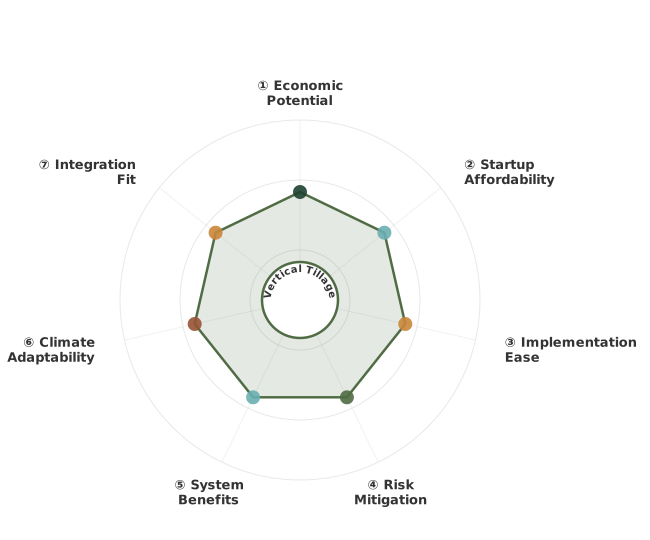
How These Traits Are Calculated
Trait dimensions are ordered clockwise starting from the top of the chart (12 o'clock position):
1. Economic Potential
Financial returns, annual value, and break-even timeline
WHAT: Evaluates financial viability by combining net annual value ($/ha from savings, income, and amortized harvests) with break-even timeline showing when practices pay for themselves.
WHY: Farmers need clear ROI understanding before committing resources. Fast payback (≤3 years) with strong returns (≥$300/ha) enables confident adoption, while long timelines (>10 years) restrict adoption to well-funded operations willing to wait for returns.
HOW: Calculated from net annual value in $/ha and break-even years. Exceptional (≥2.6): fast ROI ≤3 years + high value ≥$300/ha. Typical (1.8-2.5): moderate returns or longer timelines. Limited (<1.8): marginal economics or very long payback >10 years.
2. Startup Affordability
Initial investment costs and financial barrier to entry
WHAT: Measures financial barrier to entry through startup costs for equipment, infrastructure, consulting, and materials. Inverted scoring: lower costs = higher scores = more accessible adoption.
WHY: Affordability determines who can adopt. Low-cost practices (<$250/ha) enable widespread adoption across diverse scales, while high costs (>$2,500/ha) limit adoption to well-capitalized operations, creating barriers that slow regenerative transition.
HOW: Calculated from initial investment parsed from practice content. Inverted scoring: Exceptional (≥2.6): minimal investment <$250/ha. Typical (1.8-2.5): moderate costs $250-2,500/ha. Limited (<1.8): high barrier >$2,500/ha.
3. Implementation Ease
Learning curve and specialized knowledge required
WHAT: Measures how much learning, planning, and specialized knowledge a practice requires. Simpler practices with fewer steps score higher, while complex practices requiring extensive training or specialized resources score lower.
WHY: Complex practices create adoption barriers even when economically viable. Straightforward practices enable faster adoption and broader participation, while those requiring extensive training, timing precision, or specialized equipment limit who can succeed.
HOW: Evaluated by measuring documentation length and identifying complexity markers like location-specific requirements, seasonal timing windows, specialized skills, and dedicated equipment needs. Exceptional (≥2.6): straightforward practices with minimal prerequisites. Typical (1.8-2.5): moderate learning curve with some specialized needs. Limited (<1.8): steep learning curve requiring significant training or resources.
4. Risk Mitigation
Identified financial and ecological risk assessment
WHAT: Evaluates documented risks across financial (investment loss, market volatility) and ecological (crop failure, pest outbreaks) domains. Inverted scoring: fewer risks = higher scores.
WHY: Understanding risk exposure helps farmers make informed decisions. Low-risk practices allow confident implementation, while high-risk practices require careful planning and contingency resources. Risk transparency prevents costly failures.
HOW: Calculated from identified risks in practice content. Inverted scoring: Exceptional (≥2.6): ≤2 risks with manageable severity. Typical (1.8-2.5): 3-5 moderate risks. Limited (<1.8): 6+ risks or severe exposure.
5. System Benefits
How many ways the practice improves your land simultaneously
WHAT: Measures how many aspects of land health improve at once—carbon storage, soil quality, erosion control, water absorption, and biodiversity. Practices that improve multiple areas simultaneously create compounding benefits where each improvement reinforces the others.
WHY: The best practices solve multiple problems at once. For example, addressing erosion simultaneously builds carbon and improves water infiltration, creating a resilient system with positive feedback loops. Single-benefit approaches miss these compound transformation opportunities.
HOW: Evaluated across five key outcomes: carbon sequestration, soil organic matter increase, erosion reduction, water infiltration improvement, and biodiversity enhancement. Exceptional (≥2.6): high carbon storage (>8 t/ha/yr), improvements across 4-5 areas, transformative outcomes. Typical (1.8-2.5): moderate carbon (3-8 t/ha/yr), improvements across 2-3 areas. Limited (<1.8): modest impact (<3 t/ha/yr), single-area focus only.
6. Climate Adaptability
Geographic applicability across Köppen climate zones
WHAT: Evaluates geographic applicability by assessing how many Köppen climate zones successfully support a practice and what adaptation requirements are needed. Measures breadth of climates where farmers can implement with minimal to moderate modifications.
WHY: Universal practices working across diverse climates enable more farmers to adopt regenerative approaches. Practices limited to single climate types (only Mediterranean, only tropical) restrict adoption and slow global transition. Adaptability determines whether a practice serves niche regions or offers broad transformation.
HOW: LLM evaluation of regional success stories, Köppen zone coverage, and adaptation needs. Exceptional (≥2.6): 5+ zones or 4+ climate types, 3+ continents, minimal adaptation. Typical (1.8-2.5): 3-4 zones or 2-3 types, 2 continents, moderate adaptation. Limited (<1.8): 1-2 zones, single region, significant adaptation or highly specialized.
7. Integration Fit
How well this practice combines with others you're doing
WHAT: Measures how well a practice combines with other regenerative practices you might be doing. Some practices work as building blocks that make many other practices easier or more effective, while others work best on their own.
WHY: Practices that combine well with many others create more value on your farm. For example, cover cropping enables no-till, improves grazing, supports crop diversity, and helps water management—making all of them work better together. This helps you build a coherent system rather than juggling disconnected practices.
HOW: Evaluated by identifying which practices combine well and how strong those combinations are. 'Ideally Suited' means strong combinations where practices reinforce each other (practice A makes B easier, while B makes A more effective). 'Adequate' means complementary benefits that work well together. Exceptional (≥2.6): combines well with 6+ practices, serves as a building block. Typical (1.8-2.5): combines with 3-5 practices. Limited (<1.8): 1-2 practices or works best alone.
Going Deeper
1
WHY - The Benefits
Vertical tillage is a last-resort intervention designed to address a critical barrier to regenerative agriculture: severe soil compaction. This condition renders land unproductive and resistant to biological improvement. Understanding the benefits requires acknowledging...
Vertical tillage is a last-resort intervention designed to address a critical barrier to regenerative agriculture: severe soil compaction. This condition renders land unproductive and resistant to biological improvement. Understanding the benefits requires acknowledging its context: a temporary measure to initiate a process that organic matter and living roots will ultimately sustain.
WHY - The Benefits
Vertical tillage is a last-resort intervention designed to address a critical barrier to regenerative agriculture: severe soil compaction. This condition renders land unproductive and resistant to biological improvement. Understanding the benefits requires acknowledging...
Vertical tillage is a last-resort intervention designed to address a critical barrier to regenerative agriculture: severe soil compaction. This condition renders land unproductive and resistant to biological improvement. Understanding the benefits requires acknowledging its context: a temporary measure to initiate a process that organic matter and living roots will ultimately sustain.
Soil Health Benefits
The primary benefit of vertical tillage is the immediate and significant improvement in soil's physical structure. In severely compacted soils, water infiltration rates can be less than 0.5 inches per hour (1.3 cm/hour), leading to waterlogging, runoff, and erosion. Vertical tillage fractures these hardpans, drastically increasing infiltration rates, often to 1.5-2.5 inches per hour (4-6.5 cm/hour) or more, depending on soil type and depth of operation. This improved infiltration allows water to enter the soil profile rather than running off, reducing erosion and replenishing soil moisture reserves.
Root penetration is severely limited by compaction. Plant roots are often unable to grow through dense layers, restricting access to water and nutrients in deeper soil horizons. Vertical tillage creates channels that allow roots to penetrate these previously inaccessible depths. This deeper rooting architecture enhances plant drought resilience and nutrient uptake, contributing to improved crop performance. Research on field-scale trials has documented that after one-time vertical tillage and subsequent diverse cover cropping, crop root depth can increase from less than 15 cm (6 inches) to 60 cm (24 inches) or more within 2-3 years.
The improved aeration and water movement created by vertical tillage are crucial for the revival of soil biology. Compaction leads to anaerobic conditions, suppressing beneficial aerobic microorganisms, earthworms, and beneficial fungi like mycorrhizae. By fracturing the compacted layer, vertical tillage reintroduces oxygen and allows water to drain, creating a more hospitable environment. This is vital for the recolonization and proliferation of soil life. Earthworm populations, for example, can increase from negligible numbers in compacted soils to 5-10 per shovelful (approximately 55-110 per square meter) within 2-3 years post-tillage, provided cover crops are successfully established.
The long-term sustainability of this practice relies on its ability to enable the establishment of practices that build soil structure organically. Vertical tillage itself disrupts existing soil structure and can kill a significant portion of surface microbial communities and mycorrhizal networks. However, by allowing roots to penetrate deeper and cover crops to thrive, it sets the stage for biological processes to rebuild stable soil aggregates and pore networks. This transition from mechanical to biological structure building is the ultimate goal, making this a true transition practice.
Economic Benefits
The immediate economic return from vertical tillage is primarily through improved crop yields and reduced input costs in subsequent years. On fields suffering from severe compaction, yield losses can be 20-50% or more, even with optimal management. The improved water infiltration and root penetration typically lead to a 20-40% yield recovery within years 2-3 after the intervention, as plants can better access resources. This yield increase can be significantly higher in drought years when improved water holding capacity becomes paramount.
Reduced waterlogging and drought stress contribute to more stable and predictable crop performance, smoothing out the economic volatility often associated with weather extremes. Fields that previously suffered from late-season drought due to shallow root systems or waterlogged conditions during wet periods become more resilient. This can translate to more consistent harvests and greater predictability in farm income.
The reduction in erosion losses—a common consequence of poor infiltration on compacted soils—also provides an economic benefit by preserving topsoil fertility and reducing the need for costly soil remediation efforts in the future. While the direct cost of vertical tillage and cover cropping is an investment, the long-term gains from improved productivity and reduced input needs often lead to a break-even point within 1-3 years, depending on the severity of compaction and the subsequent success of regenerative practices.
The practice also supports the integration of livestock operations by improving pasture recovery rates and animal performance. On compacted pastures, forage production is limited, and animals may suffer from heat stress or limited access to nutrients. Vertical tillage followed by perennial pasture establishment or cover crops can revitalize these pastures, supporting higher stocking rates and improving animal health and productivity. This diversification of income streams is a key aspect of resilient farm economics.
Additionally, by enabling a transition to permanent no-till systems and building soil organic matter, vertical tillage indirectly contributes to carbon sequestration. While the initial tillage event releases some carbon, the subsequent establishment of perennial cover crops and no-till management draws down atmospheric carbon dioxide and stores it in the soil, contributing to a more sustainable and potentially climate-resilient agricultural system.
Regenerative Systems Fit
Vertical tillage's place in regenerative agriculture is that of a transition practice and a last resort. It serves as a critical bridge when severe soil degradation prevents the immediate adoption of core regenerative principles.
Principle 1 (Minimize Soil Disturbance): Vertical tillage directly violates this principle through mechanical soil fracturing. However, its regenerative application is defined by its one-time nature and the immediate follow-up with biological soil-building practices. The goal is to break severe compaction precisely so that future disturbance (tillage) is permanently avoided. It is a strategic disturbance to enable the cessation of all future disturbances.
Principle 2 (Maximize Crop Diversity): One of the most significant functions of vertical tillage within a regenerative framework is its ability to enable the establishment of diverse cover crops. On severely compacted land, only the hardiest, often monocultural, species can survive. Vertical tillage creates the necessary pore space and soil environment for a diverse mix of 10-20+ species, including deep tap-rooted plants, fibrous-rooted grasses, legumes, and forbs, to thrive. This botanical diversity is foundational for supporting a diverse soil microbiome.
Principle 3 (Keep Soil Covered): By improving infiltration and allowing for robust cover crop establishment, vertical tillage directly facilitates the principle of keeping soil covered. Severely compacted soils are often left bare, vulnerable to erosion. The improved conditions post-tillage allow for rapid and dense ground cover through cover crops and later cash crops, protecting the soil surface from wind and rain impact year-round.
Principle 4 (Maintain Living Roots): Compaction restricts root depth and extent. Vertical tillage breaks this barrier, allowing plants to establish deeper root systems. The subsequent diverse cover cropping ensures living roots are present in the soil profile for a significant portion of the year, feeding soil biology and maintaining soil structure through root exudates and channel formation.
Principle 5 (Integrate Livestock): While not directly an integration of livestock, vertical tillage can restore land to a state where livestock can be effectively integrated without causing further degradation. Once soil structure is improved and pastures or cover crops can establish robust root systems, livestock can be managed using regenerative grazing principles (e.g., rotational grazing) without leading to recompaction. This means vertical tillage can be a precursor to silvopasture or adaptive grazing systems on previously degraded land.
Transition Pathway: Vertical tillage is a tool for farms transitioning from severely degraded conventional systems. It allows for immediate improvements in soil function that would otherwise take many years of biological remediation alone. The timeline for graduating from this practice is typically 2-3 years, at which point the land should exhibit clear signs of biological recovery (increased earthworms, improved aggregate stability, deep root penetration), and a permanent no-till system should be firmly established. If recompaction occurs, it signifies a failure to address the root causes and a misapplication of this practice.
Sources behind this view
Videos & Podcasts
-
Provides actionable steps for regenerative agronomy: balanced N:C inputs (molasses, humates), microbial teas, yeast metabolites, calcium, and effective seed treatments. Emphasizes scalability, systems

-
Regenerative agriculture provides solutions for climate change, human health, and soil degradation, contrasting with industrial agriculture's harmful impacts, including glyphosate use. Practices like
-
Case studies of farmers like Duane Beck, Kofi Boa, David Brandt, and Gabe Brown demonstrate that regenerative agriculture (no-till, cover crops, diverse rotations) significantly increases soil health,

-
Regenerative farming, using no-till, cover crops, and diverse rotations, rapidly rebuilds soil organic matter and soil life. Examples from Ohio and Ghana show these practices increase profitability by

Community
-
Build healthy pasture soils by minimizing tillage, maintaining living roots and species diversity, and implementing proper grazing management. Livestock are essential for nutrient cycling and stimulat
Read more (opens in new window) smallfarms.cornell.edu -
Explains regenerative agriculture principles: no-till gardening to support soil microbiome and sequester carbon; using compost to reduce erosion and compaction; and planting diverse cover crops (grass
Read more (opens in new window) ucanr.edu -
Strategic use of one-time tillage on dense cover crops can accelerate soil regeneration to achieve 12 inches of rich soil in two years or less, enhancing microbial activity and organic matter, and can
Read more (opens in new window) permies.com -
Regenerative agriculture reverses soil harm by sequestering carbon through cover crops, no-till, compost, and crop rotation, improving soil health and resilience for both farms and home gardens.
Read more (opens in new window) ucanr.edu
Research
-
Regenerative Agriculture: Restoring Ecosystems¢ Resilience and Productivity: A Review (opens in new window)
This study found: Regenerative agriculture builds soil health and ecosystem services through practices like no-till, cover crops, and diverse rotations. It increases soil organic matter, improves water infiltration, bo
-
The Indigenous Roots of Regenerative Agriculture (opens in new window)
This study found: Modern regenerative agriculture practices are rooted in millennia of Indigenous land stewardship, offering profound knowledge and a crucial value system of respect and reciprocity for true transformat
-
Building Soil Health and Fertility through Organic Amendments and Practices: A Review (opens in new window)
This study found: Review of organic amendments (manures, compost, cover crops) and regenerative practices (no-till, crop diversity, agroecology) shows they restore soil health by increasing organic matter and beneficia
-
Regenerative farming and conservation tillage: economic benefits and ecological impacts in contemporary agriculture (opens in new window)
This study found: Regenerative farming with conservation tillage (no-till, strip-till) improves soil health, reduces emissions, and boosts farm profits by cutting costs and stabilizing yields. Requires farmer training
From the Web
-
Key regenerative agriculture methods include no-till farming, cover cropping, agroforestry, perennial crops, planned rotational grazing (Holistic Management), and compost application, all aimed at imp
-
Five steps to regenerative agriculture: Holistic Planned Grazing, no-till farming, planting diverse cover crops/interseeding, using compost/inoculants (with caution), and incorporating silvopasture/wo
2
WHERE - Regional Considerations
Successfully implementing vertical tillage requires careful consideration of soil type, climate, and the root causes of compaction. It is most effective in soils prone to developing hardpans, such as silty clays, clays, and loams, especially when subjected to heavy...
Successfully implementing vertical tillage requires careful consideration of soil type, climate, and the root causes of compaction. It is most effective in soils prone to developing hardpans, such as silty clays, clays, and loams, especially when subjected to heavy machinery or intensive grazing.
WHERE - Regional Considerations
Successfully implementing vertical tillage requires careful consideration of soil type, climate, and the root causes of compaction. It is most effective in soils prone to developing hardpans, such as silty clays, clays, and loams, especially when subjected to heavy...
Successfully implementing vertical tillage requires careful consideration of soil type, climate, and the root causes of compaction. It is most effective in soils prone to developing hardpans, such as silty clays, clays, and loams, especially when subjected to heavy machinery or intensive grazing.
Click Here to Look up your Region if you don't already know it
Arid and Semi-Arid Regions
Representative Locations: Western United States, North Africa, Central Asia, Interior Australia
Climate Context: Low annual precipitation (<40 cm or 15 inches), high temperatures, short and often unpredictable growing season. USDA Zones 7-9, Köppen BSh/BSk.
In arid and semi-arid regions, soil compaction exacerbates water scarcity by drastically reducing infiltration and increasing runoff. Vertical tillage can be particularly beneficial here by creating channels that allow precious rainfall to penetrate the soil profile, reducing evaporation losses from the surface. However, the risk of recompaction and soil drying is higher due to limited moisture for biological activity and potential for more intense surface evaporation. It is critical that vertical tillage in these regions is immediately followed by drought-tolerant cover crops or perennial pasture species that can exploit the improved moisture availability and actively work to maintain soil structure. The timing of tillage is crucial—ideally just before the onset of the rainy season or a period of expected moisture.
Mediterranean Regions
Representative Locations: California, Mediterranean basin (Spain, Italy, Greece), central Chile, southwestern Australia
Climate Context: Hot, dry summers and mild, wet winters. Annual precipitation 40-90 cm (15-35 inches), highly seasonal. USDA Zones 8-10, Köppen Csa/Csb.
Mediterranean climates often feature heavy clay soils that can become severely compacted during dry summers under machinery or livestock. The distinct wet and dry seasons mean soil is either prone to smearing when wet and trafficked, or becomes hard and impenetrable when dry. Vertical tillage can be highly effective here, particularly in the autumn as soils begin to moisten. The immediate planting of cool-season cover crops can capitalize on winter rains. The primary challenge is ensuring enough moisture for both tillage effectiveness and cover crop establishment. If tillage is done too late in the dry season, it may lead to excessive dust and soil loss. The long dry summer requires robust cover crop residue to protect the soil surface.
Humid Temperate Regions
Representative Locations: Southeastern United States, northern Europe (UK, Germany, Poland), eastern China, Japan
Climate Context: Warm to hot summers and cool to cold winters with moderate to high annual precipitation (75-150 cm or 30-60 inches) distributed relatively evenly. USDA Zones 6-8, Köppen Cfb/Cfa.
These regions often have soils prone to compaction due to high clay content and prolonged periods of wetness, exacerbated by heavy agricultural machinery. Vertical tillage is frequently considered here to break through persistent hardpans formed by years of crop production. The benefit is the immediate improvement in drainage, reducing yield losses from waterlogging. The ample rainfall generally supports robust cover crop growth, which is essential for rebuilding soil structure after tillage. However, operators must be exceptionally careful with soil moisture when performing tillage to avoid creating new compaction layers. The extended growing seasons in many of these climates offer flexibility in cover crop selection and management.
Cold Continental Regions
Representative Locations: Northern USA and Canada, Northern Europe, Northern Asia
Climate Context: Very short growing seasons, extreme summer heat, severe winter cold. USDA Zones 3-5, Köppen Dfa/Dfb.
In cold continental climates, the window for effective vertical tillage and subsequent cover crop establishment can be narrow. Soil moisture management is critical, as working wet soils in spring or fall can lead to severe recompaction and poor results. The short growing season may limit the biomass achievable by cover crops, impacting their effectiveness in rebuilding soil structure. Vertical tillage should be performed when soil conditions are optimal, typically in late spring or early fall, and followed by fast-growing, cold-tolerant cover crop species. The potential for soil freezing and thawing can aid in structure improvement, but this is less effective if soil is still compacted.
Tropical Regions
Representative Locations: Central America, Southeast Asia, East Africa, Northern Australia
Climate Context: High temperatures year-round, with distinct wet and dry seasons or consistent high rainfall. Köppen Af/Am/Aw.
Tropical soils, particularly those with high clay content, can become severely compacted under heavy rainfall and traffic. Vertical tillage here can alleviate compaction issues that restrict root growth and water infiltration, especially in areas with intense wet seasons. However, the prompt decomposition of organic matter in warm, humid conditions means that the soil structure re-established by tillage needs constant replenishment by living roots and organic inputs. Furthermore, working soils during the wet season carries a high risk of smearing and new compaction. Tillage ideally precedes the rainy season to allow immediate cover crop establishment. The risk of erosion is also high and must be managed through immediate and dense soil cover.
3
HOW - Implementation Process
Implementing vertical tillage requires meticulous planning and execution, with the understanding that it's a one-time intervention. Its success hinges entirely on the immediate follow-up actions.
Implementing vertical tillage requires meticulous planning and execution, with the understanding that it's a one-time intervention. Its success hinges entirely on the immediate follow-up actions.
HOW - Implementation Process
Implementing vertical tillage requires meticulous planning and execution, with the understanding that it's a one-time intervention. Its success hinges entirely on the immediate follow-up actions.
Implementing vertical tillage requires meticulous planning and execution, with the understanding that it's a one-time intervention. Its success hinges entirely on the immediate follow-up actions.
Prerequisites
Before considering vertical tillage, thoroughly assess the situation: 1. Quantify Compaction: Use a soil penetrometer to measure resistance. Readings consistently above 2 MPa (300 psi) at 15-30 cm (6-12 inches) depth indicate severe compaction. Alternatively, conduct water infiltration tests; rates below 1.3 cm (0.5 inches) per hour signal a problem. 2. Document Previous Efforts: After at least 2-3 years of earnest attempts using biological methods (cover cropping, rotational grazing, compost application, etc.), if infiltration and root penetration have not materially improved, then vertical tillage may be warranted. This means you've tried to fix it the regenerative way and it hasn't worked sufficiently. 3. Ensure Follow-Up Resources: Have diverse cover crop seed (10-20 species minimum) ready to plant immediately. Ensure you have seeding equipment (e.g., no-till drill) available and a plan for planting within 48 hours of tillage. 4. Commit to No Future Tillage: Make a firm commitment to permanent no-till management after this single intervention. Understand and plan to address the root causes of the original compaction (e.g., heavy equipment, livestock management).
If these prerequisites are not met, continue with further biological remediation efforts.
Phase 1: Timing and Equipment Selection
Timing: Soil moisture is paramount. The soil should be at field capacity – moist enough to form a ball when squeezed, but not so wet that it smears or creates new compaction layers. Avoid working soil that is too wet or too dry.
- Arid/Semi-Arid: Late summer or early fall, just before anticipated rains.
- Mediterranean: Autumn, as soils begin to moisten after summer dryness.
- Humid Temperate: Late spring or early autumn, ensuring soil is not saturated.
- Cold Continental: Late spring or early autumn, avoiding early/late freezes or saturated ground.
- Tropical: Just before the start of the wet season.
Equipment: Use a subsoiler or deep ripper with parabolic shanks spaced 30-45 cm (12-18 inches) apart. These shanks are designed to fracture soil at depths of 30-45 cm (12-18 inches) with minimal surface disturbance. Avoid moldboard plows or heavy disks, as their goal is inversion and mixing, which causes more biological disruption. The objective is a vertical fracture, not a complete overhaul.
Cost: Custom hiring a subsoiling operation typically costs $100-200 per hectare ($40-80 per acre), depending on depth, soil type, and local rates. If you own the equipment, the cost is primarily fuel and labor (estimated $50-100/ha or $20-40/acre). International costs will vary significantly based on local economic conditions, labor availability, and equipment import costs.
Phase 2: Execution of Tillage
- Operation: Pull the subsoiler through the field at the planned depth. Shanks should penetrate the compacted layer, creating fracture lines. The ideal speed is typically 5-8 km/h (3-5 mph).
- Check Fracturing: After every few passes, dig inspection holes to check the effectiveness of the fracture. The soil should show clean breaks extending from the shank lines, not just smeared or loosely broken clods. If it's not fracturing properly, adjust tractor speed, depth, or wait for optimal soil moisture.
- Minimize Surface Disturbance: The goal is to create vertical fissures, not to pulverize the topsoil. If the equipment is creating excessive surface looseness or disturbance, it might be a sign of incorrect depth or soil moisture.
Phase 3: Immediate Cover Cropping (Within 48 Hours)
This is the most critical step and must happen almost immediately after tillage.
- Seed Mix Selection: Choose a diverse mix of at least 10-20 species. Include:
- Deep Tap-Rooted Varieties: Daikon radish, forage turnips, vetch, or other deep-rooted legumes that can follow and stabilize the tillage fractures.
- Fibrous-Rooted Grasses: Annual ryegrass, oats, wheat, or cereal rye to create a dense mat of roots in the upper soil profile.
- Nitrogen Fixers: Legumes like crimson clover, hairy vetch, or field peas to add nitrogen and improve soil fertility.
- Forbs: Buckwheat, sunflower, or calendula can add diversity in root depth and exudate types.
- Seeding Method: Use a no-till drill for best seed-to-soil contact, ensuring seeds are placed at the correct depth. If a no-till drill is unavailable, broadcast the seed and lightly incorporate with a cultipacker or a very light harrow pass. Avoid further tillage.
- Seeding Rate: Use a higher seeding rate than normal for each species within the mix (1.5-2 times the recommended rate) to ensure robust establishment and rapid canopy development.
- Cost: Diverse cover crop seed mixes can cost $75-150 per hectare ($30-60 per acre), depending on species composition and local pricing.
Phase 4: Cover Crop Management and Transition (Months 1-24+)
- Establishment: Allow cover crops to grow undisturbed for the first 3-4 months. Avoid grazing or traffic to let roots penetrate deeply and create stable channels. Monitor establishment success closely.
- Winter/Dormancy: If using annual covers, allow them to die back naturally in winter, leaving residue as mulch. If using winter-hardy perennials, manage their growth through moderate grazing or strategic termination.
- Spring Termination: In the spring of the following year (8-12 months after planting covers), terminate the cover crop biomass. This can be done with a roller-crimper (ideal for creating a dense mulch mat), mowing, or, as a last resort if biological termination fails, limited use of herbicides. The residue must be left on the soil surface.
- Cash Crop or Next Cover Crop: Immediately plant the subsequent cash crop or another diverse cover crop mix using a no-till planter or drill.
- Permanent No-Till: All subsequent operations must be permanent no-till. Address the original cause of compaction (e.g., lighter equipment, controlled traffic, improved livestock management).
Transition Timeline & Phase-Out Strategy
This vertical tillage intervention is a one-time, temporary measure. The phase-out is the implementation of permanent regenerative practices over 2-3 years.
Year 0 (Tillage Year):
- Conduct thorough soil assessment documenting compaction severity.
- Perform one-time vertical tillage only if severe compaction exists and biological methods failed over 2+ years.
- Immediately seed a diverse cover crop mix (10-20 species).
- Signify and mentally commit to this being the last tillage event.
Year 1 (Recovery & Biological Rebuilding):
- Maintain living cover (cover crops or cash crops).
- Begin monitoring soil biological indicators: germination success, root depth, early signs of earthworm activity.
- Transition to lighter equipment if possible and avoid deep tillage equipment.
Year 2 (Consolidation):
- Continue permanent no-till management.
- Monitor soil health indicators: measure infiltration rates (target >1.5 inches/hour or 4 cm/hour), assess aggregate stability, and count earthworms.
- If cover crop biomass is thriving and soil structure is visibly improving, a transition to a higher proportion of perennial forages or a mature silvopasture system can be planned.
Year 3+ (Fully Regenerative):
- Soil indicators should show sustained improvement: infiltration >2 inches/hour (5 cm/hour), robust earthworm populations (5-10+/shovelful), visible root channels and aggregate formation.
- Continue permanent no-till and cover cropping.
- If compaction returns, it signifies that the root cause was not addressed or living root networks are insufficient, requiring management adjustments, not more tillage.
Graduation Criteria:
- No need or desire to till again.
- Soil functions consistently well without mechanical intervention.
- Root causes of original compaction are permanently managed.
- Permanent no-till and robust cover cropping are established practice.
Sources behind this view
Videos & Podcasts
-
Provides actionable steps for regenerative agronomy: balanced N:C inputs (molasses, humates), microbial teas, yeast metabolites, calcium, and effective seed treatments. Emphasizes scalability, systems
-
Achieving regenerative agriculture requires addressing soil compaction, which hinders gas exchange and biology. Deep compaction needs mechanical removal, followed by cover crops and biologicals to pre
-
Farmers discuss no-till benefits (soil health, water retention, weed control) and challenges (labor intensity, initial cost). Strategies include tarping, mulching, cover cropping, and careful planning

-
Preventing bare soil and addressing compaction are critical for healthy soil biology, gas exchange, and water infiltration. Deep ripping followed by biological applications and cover crops is recommen

Community
-
Advanced no-till methods for decompacting soil include subsoilers/keyline plows for deep slits, encouraging root colonization and organic matter. Integrating animals (pigs, cattle) and features like s
Read more (opens in new window) permies.com -
Goranson Farm in coastal Maine reduced tillage by adopting strip tillage, using Yeomans plows to break compaction and create seedbeds, preserving soil organic matter and reducing labor by 75%.
Read more (opens in new window) smallfarms.cornell.edu -
Strategic use of one-time tillage on dense cover crops can accelerate soil regeneration to achieve 12 inches of rich soil in two years or less, enhancing microbial activity and organic matter, and can
Read more (opens in new window) permies.com -
Explains regenerative agriculture principles: no-till gardening to support soil microbiome and sequester carbon; using compost to reduce erosion and compaction; and planting diverse cover crops (grass
Read more (opens in new window) ucanr.edu
Research
-
Reclamation of an Ultisol Damaged by Mechanical Land Clearing (opens in new window)
This study found: Deep tillage (chisel plow, subsoiling) effectively reclaimed compacted Amazonian soil, dramatically increasing water infiltration and crop yields for rice, soybeans, and corn compared to no-till metho
-
Building Soil Health and Fertility through Organic Amendments and Practices: A Review (opens in new window)
This study found: Review of organic amendments (manures, compost, cover crops) and regenerative practices (no-till, crop diversity, agroecology) shows they restore soil health by increasing organic matter and beneficia
-
Long-term impacts of no-till and organic material applications on soil biological indicators in organic vineyards. (opens in new window)
This study found: Ten-year study in organic vineyards shows no-till and organic amendments (broccoli, Antep radish, olive mill wastewater) significantly improve soil respiration, organic carbon, microbial biomass, and
-
Effects of Different Tillage Measures on Soil Physical Properties, Organic Carbon Sequestration and Crop Production in Reclaimed Farmland Filled with Foreign Soil (opens in new window)
This study found: On reclaimed farmland, deep tillage and alternating tillage methods improved soil structure, increased soil organic carbon, and boosted winter wheat yields compared to no-till over a 7-year study.
4
HOW MUCH - Costs & Investment
Note: Costs shown in USD; multiply by local labor and material cost indices for your region. Labor costs vary significantly internationally.
Note: Costs shown in USD; multiply by local labor and material cost indices for your region. Labor costs vary significantly internationally.
HOW MUCH - Costs & Investment
Note: Costs shown in USD; multiply by local labor and material cost indices for your region. Labor costs vary significantly internationally.
Note: Costs shown in USD; multiply by local labor and material cost indices for your region. Labor costs vary significantly internationally.
Note: All costs are based on recent US economic data (2024–2026) and may vary substantially by region based on local labor rates, material costs, and regulatory requirements.
Mechanical Operations (Vertical Tillage)
The economics of vertical tillage are dictated by machinery scale and ownership models. For small-scale operations under 50 acres (20 ha), custom hiring is the primary expenditure, typically ranging from $73 to $146 per acre ($180–$361/ha). This higher cost reflects mobilization fees and the inherent inefficiency of moving heavy implements onto smaller plots. Mid-size farms operating between 50 and 500 acres (20–202 ha) manage costs in the range of $52 to $115 per acre ($128–$284/ha) by leveraging regional equipment sharing or personal machinery ownership. Large-scale operations exceeding 500 acres (202 ha) achieve the lowest cost, between $42 and $83 per acre ($104–$205/ha), due to high field efficiency, wider equipment configurations often exceeding 40 feet (12.2 m), and lower fuel consumption per acre relative to total output. Owners must also budget for long-term maintenance, specifically blade replacement every 3,000 to 5,000 acres (1,214–2,023 ha), which adds an annual operating cost of $5.21 to $12.50 per acre ($13–$31/ha).
Biological Inputs (Diverse Cover Crop Seeding)
Vertical tillage is considered an incomplete practice unless paired with immediate, diverse cover crop seeding to anchor the soil structure and prevent recompaction. Small-scale producers purchasing premium, high-germination blended seeds (10–20 species) typically spend $63 to $104 per acre ($156–$257/ha). Mid-size operations utilizing bulk purchasing through farm cooperatives realize a cost reduction, ranging from $52 to $83 per acre ($128–$205/ha). Large-scale producers leveraging wholesale contracting and volume discounts navigate costs of $42 to $68 per acre ($104–$168/ha). The application method is an additional cost variable: mechanical drilling requires tractor time and fuel, costing $16 to $26 per acre ($40–$64/ha), while aerial overseeding or high-clearance broadcasting costs $13 to $21 per acre ($32–$52/ha), though broadcasting may require higher seeding rates to overcome lower establishment success in undisturbed residue.
Transition Opportunity Costs
The most significant financial burden is often found in the "invisible" transition costs during the first 24 months of site reclamation. Land diverted from primary cash crop production to cover crop stabilization results in foregone revenue of $104 to $313 per acre ($257–$773/ha), depending on regional commodity price baselines. During this transition phase, farmers frequently encounter a yield drag of 10% to 20% as soil microbial communities recalibrate to new tillage and water management practices. This equates to an implicit cost of $83 to $261 per acre ($205–$645/ha) each cycle. Factoring in these combined opportunity costs and the capital investment required for implementation, the total three-year financial commitment spans $208 to $938 per acre ($514–$2,318/ha).
Most Spend: The middle 60% of vertical tillage implementation costs generally fall between $350 and $650 per acre ($865–$1,606/ha). This range represents the intersection of standardized cover crop pricing for mid-size farms and the moderate yield-drag exposure seen in most standard soil types, excluding both the extreme diseconomies of very small fields and the extreme capital efficiencies of massive, consolidated operations.
Why the Range?: Cost variation is driven primarily by current soil bulk density, equipment width, and the specific composition of the cover crop seed mix. Higher costs are realized when poor moisture management necessitates "rescue" tillage passes or higher-than-average seeding densities due to poor initial establishment. Lower costs are achieved when farmers utilize multi-purpose tractors already available on-site and participate in regional seed-sourcing cooperatives that strip retail markups from the input procurement process.
Sources behind this view
Videos & Podcasts
-
Cover crops are an 'investment crop,' not an expense, offering low-cost fertility and soil health benefits. They are managed with a flail mower, minimal tillage, bed shaping, and tarping for two weeks

-
Utilize multi-species cover crops based on specific 'resource concerns' to improve soil health, nitrogen fixation, and water retention. Integrate livestock for grazing, calving, and overwintering, enh

-
Data shows cover crops significantly cool soil, improve water retention, increase soybean yields, enhance drought tolerance, and reduce erosion, potentially lowering fertilizer and pesticide needs.

-
Cover crops provide economic benefits through reduced seeding costs (optimizing rates, creative application), grazing (virtual fencing), nitrogen fixation from legumes, weed suppression (especially ce

Community
-
Details cover crop termination methods, nutrient cycling (N scavenging/fixing, P availability), bio-controls, weed/pest/disease management, and specific mix recommendations. Emphasizes soil testing, r
Read more (pp. 10-20) (opens PDF, pp. 10-20) efotg.sc.egov.usda.gov -
Seven strategies accelerate cover crop ROI: managing weeds, grazing, addressing compaction, transitioning to no-till, improving soil moisture, managing nutrients (using legumes like Hairy Vetch/Austri
Read more (opens in new window) sustainableagriculture.net -
Oregon State University research over six years, funded by SARE, developed a calculator for cover crop N contribution and cost savings, showing vetch can replace feather meal for broccoli, saving $500
Read more (opens in new window) smallfarms.cornell.edu -
A SARE project in north central Kansas quantified financial and environmental benefits of cover crops for grazing and haying. Hay yielded $19.40/acre net earnings, and grazing steers had a lower cost
Read more (opens in new window) sustainableagriculture.net
Research
-
Economic Impacts of Cover Crops for a Missouri Wheat–Corn–Soybean Rotation (opens in new window)
This study found: Missouri study: Cover crops in wheat-corn-soybean rotation initially reduced profits but became positive by year four. Improved soil health and carbon sequestration potential.
-
Economic Impacts of Cover Crops for a Missouri Wheat–Corn–Soybean Rotation (opens in new window)
This study found: Missouri study: Cover crops in wheat-corn-soybean rotation initially reduced profit but became positive by year 4. Break-even achieved with 35% higher cash crop revenue or 26% lower cover crop costs i
-
Optimizing cover crop practices as a sustainable solution for global agroecosystem services. (opens in new window)
This study found: Optimized cover crop strategies (long-term, no-till, legume/non-legume mix, residue mulch) significantly boost farm ecosystem services, including crop yields, carbon capture, and erosion control, whil
-
The Role of Cover Crops in North American Cropping Systems (opens in new window)
This study found: Cover crops offer multiple benefits in North American farming, including nitrogen fixation, erosion control, weed/pest management, and improved soil health through organic matter and reduced compactio
From the Web
-
Cover crops like cereal rye, turnips, and radishes are increasingly adopted, with selection based on climate and farm needs. They improve soil health, increase water retention, reduce fertilizer use b
-
Cover crops can provide first-year returns in drought, grazing, or weed management scenarios. Transitioning to no-till can break even by year two. Break-even is typically achieved within three years,
-
A budget analysis for cover crops with soybeans shows negative net returns in year one but positive returns by year three and five. Faster returns are possible when managing herbicide-resistant weeds,
-
Cover crop economics vary, with potential for profitability through reduced input costs (fertilizer, herbicides) and improved soil health. However, initial costs and management nuances, including till
5
REWARDS AND RISKS - Economics & Risk Factors
Economic Scenarios
Economic Scenarios
REWARDS AND RISKS - Economics & Risk Factors
Economic Scenarios
Economic Scenarios
Vertical tillage is a high-stakes mechanical intervention that promises significant resource efficiency if managed properly but carries severe financial penalties if the soil environment is not optimized for post-tillage cover crop growth.
Best Case Scenario ($156–$313 per acre ($385–$773/ha) ROI): In instances where soil is heavily compacted with poor water infiltration, vertical tillage acts as a regenerative trigger. By fracturing the soil profile and establishing deep-rooted cover crops, producers frequently observe a 30% increase in water retention and a 20% to 30% yield rebound by the third year. The initial capital investment is typically recouped within 24 months. Over a five-year horizon, the reduction in fertilizer runoff through improved water infiltration and the long-term decrease in irrigation water requirements provide an additional internal rate of return of 12% to 18%.
Typical Case Scenario ($52–$156 per acre ($128–$385/ha) ROI): The intervention successfully ruptures subsoil compaction layers, leading to a steady, moderate improvement in biological activity. Water infiltration rates typically stabilize at roughly 1.5 inches per hour. Yields demonstrate a reliable 15% to 20% gain as root zones expand. The operation achieves a financial break-even point in year three. By transitioning to a permanent no-till system following this initial intervention, farmers achieve a permanent reduction in fuel consumption for tillage by 40% to 60%, fundamentally lowering the operational overhead of the farm enterprise annually.
Worst Case Scenario (-$208 to -$417 per acre ($1,030/ha) loss): If the soil is too wet during the vertical tillage pass, the blades will cause "smearing," which seals the soil surface and effectively negates the intended benefits. If accompanying cover crops fail due to drought or improper seeding depth, the farmer loses the full cost of the mechanical pass and the seed investment. The result is a degraded surface, increased risk of lateral erosion, and a complete financial loss that often requires two additional growing seasons—using specialized bio-drilling species like deep-rooted radishes—to restore the soil’s pre-tillage baseline productivity.
Transition Period Risks: The "transition dip" is a known economic hurdle where the biological hierarchy of the soil shifts from tilled-state-dominance to no-till-resilience. During the first 12 to 18 months, farmers face a risk of yield reduction of up to 25% due to temporary nitrogen immobilization as organic matter starts breaking down in the renewed soil profile. To mitigate this risk, farmers must perform pre-tillage nitrogen tests and manage expectations for lower nutrient availability during the first two harvest cycles.
Market Factors and Mitigation: Property values and lending terms often rely on a field’s "Productivity Index." Improving soil tilth through vertical tillage can increase long-term land appraisals by 5% to 10% as infiltration and moisture-holding capacity improve. Risks can be actively mitigated through professional soil penetration testing—using tools costing approximately $50—to ensure optimal moisture conditions before starting the tractor. Furthermore, by accessing EQIP programs, farmers can offset 50% to 75% of cover crop implementation costs, effectively reducing the barrier to entry by $63 to $125 per acre ($156–$309/ha). Finally, implementing controlled traffic patterns on the farm prevents the rapid return of compaction, sheltering the initial capital investment from immediate degradation and protecting soil integrity for the long term.
Sources behind this view
Videos & Podcasts
-
Farmers discuss no-till benefits (soil health, water retention, weed control) and challenges (labor intensity, initial cost). Strategies include tarping, mulching, cover cropping, and careful planning
-
Strongly advocates for no-till combined with cover crops, detailing benefits like erosion control, water conservation, improved soil structure, and increased biological activity. Emphasizes uniform re

-
Recommends killing cover crops at full bloom using rolling or chain methods for low-till/no-till systems, as taught by Dr. Ron Morris (Virginia Tech). This maximizes organic matter, conserves soil moi

-
Utilize multi-species cover crops based on specific 'resource concerns' to improve soil health, nitrogen fixation, and water retention. Integrate livestock for grazing, calving, and overwintering, enh
Community
-
Holistic no-till farming with cover crops and rotational grazing improved productivity by 5% in three years on clay soils, with yields up 10% after 18 years.
Read more (opens in new window) permies.com -
In the 1980s, USDA protocols promoted no-till, chopped-and-dropped cover crops, and compost teas over heavy tillage and chemical inputs. Farmers adopting these regenerative practices saw reduced soil
Read more (opens in new window) permies.com -
Goranson Farm in coastal Maine reduced tillage by adopting strip tillage, using Yeomans plows to break compaction and create seedbeds, preserving soil organic matter and reducing labor by 75%.
Read more (opens in new window) smallfarms.cornell.edu -
Building healthy soil involves minimizing tillage (no-till) and keeping it covered year-round with living plants and cover crops. These practices enhance water retention, nutrient cycling, and soil re
Read more (opens in new window) smallfarms.cornell.edu
Research
-
Технології Strip-till і Verti-till у контексті мінімізації обробітку ґрунту (opens in new window)
This study found: Strip-till and Verti-till are soil conservation technologies that save fuel, conserve moisture, reduce erosion, and boost soil life. They are effective in dry regions, increasing yields for crops like
-
Conventional, Minimum/Reduced, and Zero Tillage: Implications for Soil and Water Conservation and Residue Management in Global and Indian Contexts (opens in new window)
This study found: Zero tillage, especially with Happy Seeders, improves soil structure, water retention, and yields by up to 17% while cutting costs and emissions. Success depends on local adaptation and integrated wee
-
No‐Till Legume Cover Crops Enhance Soil Carbon, Mitigate Greenhouse Gas Emissions, and Increase Yield in Dryland Wheat: A Global Meta‐Analysis (opens in new window)
This study found: Global meta-analysis shows no-till + legume cover crops significantly boost dryland wheat soil carbon (+28.5%), yield (+24.1%), and resource efficiency, while cutting GHG emissions. Long-term use yiel
-
Regenerative farming and conservation tillage: economic benefits and ecological impacts in contemporary agriculture (opens in new window)
This study found: Regenerative farming with conservation tillage (no-till, strip-till) improves soil health, reduces emissions, and boosts farm profits by cutting costs and stabilizing yields. Requires farmer training
From the Web
-
Conservation tillage principles include reducing tillage, using crop rotations with cover crops to avoid bare soil, and maximizing residue coverage on the soil surface. Traffic control and specialized
-
Conservation tillage principles include reducing tillage, using crop rotations with cover crops to maintain soil surface biomass (especially cereal rye), and managing equipment. These practices enhanc
-
A guide for selecting row crop tillage systems, evaluating 19 criteria including erosion control, water conservation, soil fertility, weed/pest management, and costs. It presents a decision matrix for
-
Transitioning to no-till vegetable farming is crucial for soil health, as tillage causes significant damage including soil structure deterioration and loss of soil life. While tillage has temporary be
6
COMPATIBLE PRACTICES - Integration Opportunities
Vertical tillage is not a standalone regenerative practice; its effectiveness depends on its integration with other management strategies that rebuild soil biology and structure.
Vertical tillage is not a standalone regenerative practice; its effectiveness depends on its integration with other management strategies that rebuild soil biology and structure.
COMPATIBLE PRACTICES - Integration Opportunities
Vertical tillage is not a standalone regenerative practice; its effectiveness depends on its integration with other management strategies that rebuild soil biology and structure.
Vertical tillage is not a standalone regenerative practice; its effectiveness depends on its integration with other management strategies that rebuild soil biology and structure.
Diverse Cover Cropping
- Integration: The immediate and most crucial complement to vertical tillage. A mix of 10-20+ species ensures a wide range of root depths, exudate chemistries, and nutrient cycling capabilities. This is what rebuilds the soil structure that tillage opened up.
- Benefit: Enables deep roots to stabilize fractures, fibrous roots to build upper soil structure, and legumes to add nitrogen, creating a fertile environment for future crops and biology.
Permanent No-Till Farming
- Integration: This is the direct outcome and goal of vertical tillage. After the initial operation, all future crop establishment must use no-till planters or drills.
- Benefit: Avoids further disturbance, allowing soil biology to build stable aggregates and pore networks undisturbed, maintaining the structure created by tillage and cover crops.
Controlled Traffic Farming (CTF)
- Integration: If heavy machinery was a cause of compaction, implementing CTF by designating permanent wheel tracks is vital to prevent recompaction.
- Benefit: Confines all traffic to a small percentage of the field, preventing the formation of new hardpans and allowing unfurrowed areas to develop robust, undisturbed soil structure.
Stockpile Management for Livestock
- Integration: If livestock will be reintroduced, manage grazing pressure carefully during the 2-3 year recovery period. Avoid grazing compacted areas when soil is wet.
- Benefit: Allows cover crops and sown pastures to establish robust root systems without being overgrazed or trampled into new compaction. Once soil health improves, adaptive grazing can be implemented.
Improved Drainage Systems
- Integration: In regions with persistent waterlogging, vertical tillage can be augmented with improved tile drainage or keyline design.
- Benefit: Helps manage excess moisture, reducing the likelihood of soil smearing and compaction caused by working saturated soils, and allows for more consistent cover crop and cash crop growth.
Vertical tillage serves as a catalyst, initiating the recovery process. The complementary practices are what ensure this recovery is sustained and leads to a fully regenerative system. Without these integrated practices, the benefits of vertical tillage will be short-lived.
Sources behind this view
Videos & Podcasts
-
Regenerative farming, using no-till, cover crops, and diverse rotations, rapidly rebuilds soil organic matter and soil life. Examples from Ohio and Ghana show these practices increase profitability by
-
Adopting regenerative practices should start small and incrementally, focusing on soil health over short-term yields. Collaboration, strategic nutrient sourcing, and leveraging resources like Continuu
-
Minimize tillage to retain carbon; strategic tillage leaving >50% roots intact is recommended. Incorporate green cover crops with plant herbal ferments ('f') to reduce carbon loss and increase nitroge

Community
-
Strategic use of one-time tillage on dense cover crops can accelerate soil regeneration to achieve 12 inches of rich soil in two years or less, enhancing microbial activity and organic matter, and can
Read more (opens in new window) permies.com -
Adopt no-till/minimum tillage to preserve soil health and prevent carbon loss. Enhance fertility organically with cover crops, crop rotation, compost, and mulching, while avoiding synthetic fertilizer
Read more (opens in new window) ucanr.edu -
Regenerative agriculture reverses soil harm by sequestering carbon through cover crops, no-till, compost, and crop rotation, improving soil health and resilience for both farms and home gardens.
Read more (opens in new window) ucanr.edu
Research
-
Технології Strip-till і Verti-till у контексті мінімізації обробітку ґрунту (opens in new window)
This study found: Strip-till and Verti-till are soil conservation technologies that save fuel, conserve moisture, reduce erosion, and boost soil life. They are effective in dry regions, increasing yields for crops like
-
Building Soil Health and Fertility through Organic Amendments and Practices: A Review (opens in new window)
This study found: Review of organic amendments (manures, compost, cover crops) and regenerative practices (no-till, crop diversity, agroecology) shows they restore soil health by increasing organic matter and beneficia
-
Regenerative farming and conservation tillage: economic benefits and ecological impacts in contemporary agriculture (opens in new window)
This study found: Regenerative farming with conservation tillage (no-till, strip-till) improves soil health, reduces emissions, and boosts farm profits by cutting costs and stabilizing yields. Requires farmer training
-
Conventional, Minimum/Reduced, and Zero Tillage: Implications for Soil and Water Conservation and Residue Management in Global and Indian Contexts (opens in new window)
This study found: Zero tillage, especially with Happy Seeders, improves soil structure, water retention, and yields by up to 17% while cutting costs and emissions. Success depends on local adaptation and integrated wee
From the Web
-
Conservation tillage principles include reducing tillage, using crop rotations with cover crops to maintain soil surface biomass (especially cereal rye), and managing equipment. These practices enhanc