
Water Cycle Restoration
Water cycle restoration is the practice of actively rebuilding the natural processes of water infiltration, retention, and regulated flow within an agricultural landscape. It involves implementing land management strategies that encourage water to soak into the soil rather than run off, reduce evaporation, and recharge groundwater, ultimately leading to healthier soils, more resilient crops, and improved watershed health.
Read More: Complete Description
Water cycle restoration is the intentional effort to mend and enhance the natural hydrological functions of an agricultural landscape. In conventional agriculture, practices like excessive tillage, monocropping, excessive use of synthetic inputs, and leaving soil bare have disrupted the delicate balance of the water cycle. This leads to increased runoff, soil erosion, reduced groundwater recharge, and decreased water-holding capacity in soils, making farms more vulnerable to both drought and excessive rainfall. Regenerative approaches re-establish these vital functions by working with nature rather than against it.
The core of water cycle restoration lies in increasing the soil's capacity to absorb and store water and to release it slowly and predictably. This is achieved primarily by building healthy soil structure through regenerative principles. Minimizing soil disturbance (Principle 1) prevents the destruction of soil aggregates and pore spaces, allowing water to infiltrate more easily. Maximizing crop diversity (Principle 2) introduces a variety of root structures that penetrate the soil at different depths, creating channels for water and air. Keeping soil covered (Principle 3) with living plants or residue acts like a sponge, slowing down rainfall, reducing evaporation, and preventing soil surface crusting. Maintaining living roots year-round (Principle 4) continuously feeds soil biology, which in turn builds soil structure and enhances water infiltration. Integrating livestock (Principle 5) strategically can improve pasture health and nutrient cycling, indirectly supporting better soil structure and water infiltration, especially when managed with well-designed grazing plans that allow for pasture recovery.
The benefits of restoring the water cycle are profound and far-reaching. Farmers experience increased resilience to extreme weather events—droughts become less severe as soils hold more moisture, and heavy rains result in less flooding and erosion due to improved infiltration. This resilience translates into more stable yields and reduced risk. Beyond the farm gate, healthier watersheds mean cleaner rivers and streams, reduced downstream flooding, and the replenishment of aquifers. Carbon sequestration is a significant co-benefit, as healthy, moist soils rich in organic matter are highly effective at drawing down atmospheric carbon dioxide. Biodiversity also flourishes, as diverse plant communities and a healthy soil food web create habitat for a wider array of beneficial insects, birds, and soil organisms.
Common misconceptions about water cycle restoration include the idea that it's solely about irrigation or water harvesting structures. While these can play a role, the foundational element is improving the soil's biological health and structure. Another misconception is that it requires extremely expensive or complex technology. Many restoration techniques, such as cover cropping, no-till farming, and rotational grazing, are cost-effective and accessible to farmers globally. The practice is not limited by climate; while specific techniques may vary, the principles apply from arid regions seeking to capture every drop of moisture to humid regions aiming to prevent waterlogging and erosion. For instance, on semi-arid cattle ranches in Queensland, Australia, landscape contouring and strategic grazing management are used to slow runoff and infiltrate water deeper into the soil profile. In humid temperate regions like Germany or France, planting diverse cover crop mixes on fallowed land prevents erosion and improves infiltration, mitigating the impact of intense summer storms.
The transition to water cycle restoration is about shifting perspective from managing water as a scarcity or a problem (runoff) to managing land to inherently improve water availability and function. It acknowledges that healthy soil is a sponge and a filter. The focus shifts from fighting water to working with its natural tendencies. By embracing practices that enhance soil aggregation, porosity, and organic matter content, regenerative agriculture actively rebuilds the soil's capacity to perform its critical role in the global water cycle, leading to more sustainable and resilient farming systems across all continents.
Sources behind this view
Sources behind this view
 Videos & Podcasts
-
Regenerative agriculture revives the water cycle by restoring soils to act as sponges, improving infiltration and reducing runoff to combat drought. Practices like soil cover, water retention, reduced
-
Regenerative agriculture restores the water cycle by transforming soils into sponges that infiltrate and retain water, enhancing resilience through diversification, water retention structures, and red
-
Regenerative agriculture provides solutions for climate change, human health, and soil degradation, contrasting with industrial agriculture's harmful impacts, including glyphosate use. Practices like

-
Restoring landscape hydration requires integrating biodiversity, especially beavers, to revive the water cycle and precipitation recycling. Groundwater depletion (from irrigation or ethanol plants) an

 Community
-
Regenerative agriculture rebuilds soil organic matter and biodiversity through practices like cover cropping, reduced tillage, minimal artificial fertilizers, and regenerative grazing, ultimately impr
Read more (pp. 8-9) (opens PDF, pp. 8-9) permies.com -
Restoring soil's 'sponge effect' through water harvesting is crucial for arid climates. Techniques slow water to enhance infiltration, invigorate plant life, reduce erosion, and increase landscape pro
Read more (pp. 3-9) (opens PDF, pp. 3-9) permies.com
 Research
-
Soil and Water Conservation Practices for Enhancing Productivity in Dryland Farming: A Review (opens in new window)
This study found: Dryland farming faces challenges from drought and soil degradation. Soil and water conservation practices like conservation tillage, cover crops, and rainwater harvesting improve soil moisture, health
-
Estrategias de agricultura regenerativa para mejorar la salud del suelo (opens in new window)
This study found: Review of research shows cover crops, composting, and crop rotation significantly improve soil health, carbon capture, and erosion resistance in regenerative agriculture.
-
Systematic review of regenerative farming: Addressing agricultural sustainability challenges (opens in new window)
This study found: Systematic review of 31 studies shows regenerative farming improves soil health, biodiversity, and carbon capture, aiding sustainability. Technology is key for adoption, but policy, farmer understandi
-
Regenerative Agriculture: Restoring Ecosystems¢ Resilience and Productivity: A Review (opens in new window)
This study found: Regenerative agriculture builds soil health and ecosystem services through practices like no-till, cover crops, and diverse rotations. It increases soil organic matter, improves water infiltration, bo
 From the Web
-
Farmers in Zimbabwe and Mexico use Holistic Planned Grazing to restore water cycles and green land. Revitalizing soils to increase carbon content enhances water retention, with each 1% soil carbon inc
-
Healthy soil, achieved through regenerative practices, significantly increases water retention, drought resilience, and farm profitability by acting like a sponge and reducing runoff.
Key Points
What It Is
- Rebuilding natural water infiltration and retention
- Enhancing soil's sponge-like properties
- Focus on soil biology and structure
- Holistic landscape approach, not just irrigation
Why Do It
- Increases drought resilience and flood mitigation
- Improves yield stability and reduces risk
- Recharges groundwater and improves water quality
- Supports all five regenerative agriculture principles
Know the Debate
- Restoration time varies: 2-3 years in humid, 5-10+ in arid.
- Infrastructure needs range from minimal to extensive earthworks.
- Key practices: soil cover, no-till, live roots, diverse planting.
- Benefits: drought resilience, flood reduction, cost savings.
- Labor shifts to observation, planning, and management.
Benefits - Financial
- Net income potential reaches $174-763 per acre ($430–$1,885 per hectare) once soil hydrology stabilizes
- Reduces annual irrigation expenses by 20-60% during water-stressed cycles
- Lowers synthetic input costs by 15-25% through improved nutrient cycling
Benefits - System
- Soil organic matter +0.5-2% per year
- Erosion reduction: 60-90% decrease
- Water infiltration +40-70% with healthy soil
- Biodiversity increase: 30-50% species count
Risks - Financial
- Initial structural investment ranges from $2,389-8,099 per acre ($5,903–$20,013 per hectare) for project completion
- Potential 10-20% yield depletion during the 1-3 year transition phase
Risks - System
- Cover crop failure in extreme conditions
- Recompaction if management is not consistent
- Slow progress on severely degraded lands
- Requires patience and long-term commitment
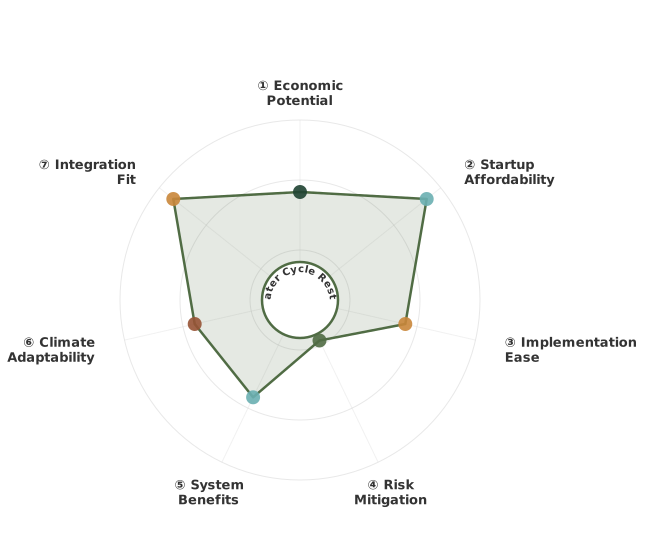
How These Traits Are Calculated
Trait dimensions are ordered clockwise starting from the top of the chart (12 o'clock position):
1. Economic Potential
Financial returns, annual value, and break-even timeline
WHAT: Evaluates financial viability by combining net annual value ($/ha from savings, income, and amortized harvests) with break-even timeline showing when practices pay for themselves.
WHY: Farmers need clear ROI understanding before committing resources. Fast payback (≤3 years) with strong returns (≥$300/ha) enables confident adoption, while long timelines (>10 years) restrict adoption to well-funded operations willing to wait for returns.
HOW: Calculated from net annual value in $/ha and break-even years. Exceptional (≥2.6): fast ROI ≤3 years + high value ≥$300/ha. Typical (1.8-2.5): moderate returns or longer timelines. Limited (<1.8): marginal economics or very long payback >10 years.
2. Startup Affordability
Initial investment costs and financial barrier to entry
WHAT: Measures financial barrier to entry through startup costs for equipment, infrastructure, consulting, and materials. Inverted scoring: lower costs = higher scores = more accessible adoption.
WHY: Affordability determines who can adopt. Low-cost practices (<$250/ha) enable widespread adoption across diverse scales, while high costs (>$2,500/ha) limit adoption to well-capitalized operations, creating barriers that slow regenerative transition.
HOW: Calculated from initial investment parsed from practice content. Inverted scoring: Exceptional (≥2.6): minimal investment <$250/ha. Typical (1.8-2.5): moderate costs $250-2,500/ha. Limited (<1.8): high barrier >$2,500/ha.
3. Implementation Ease
Learning curve and specialized knowledge required
WHAT: Measures how much learning, planning, and specialized knowledge a practice requires. Simpler practices with fewer steps score higher, while complex practices requiring extensive training or specialized resources score lower.
WHY: Complex practices create adoption barriers even when economically viable. Straightforward practices enable faster adoption and broader participation, while those requiring extensive training, timing precision, or specialized equipment limit who can succeed.
HOW: Evaluated by measuring documentation length and identifying complexity markers like location-specific requirements, seasonal timing windows, specialized skills, and dedicated equipment needs. Exceptional (≥2.6): straightforward practices with minimal prerequisites. Typical (1.8-2.5): moderate learning curve with some specialized needs. Limited (<1.8): steep learning curve requiring significant training or resources.
4. Risk Mitigation
Identified financial and ecological risk assessment
WHAT: Evaluates documented risks across financial (investment loss, market volatility) and ecological (crop failure, pest outbreaks) domains. Inverted scoring: fewer risks = higher scores.
WHY: Understanding risk exposure helps farmers make informed decisions. Low-risk practices allow confident implementation, while high-risk practices require careful planning and contingency resources. Risk transparency prevents costly failures.
HOW: Calculated from identified risks in practice content. Inverted scoring: Exceptional (≥2.6): ≤2 risks with manageable severity. Typical (1.8-2.5): 3-5 moderate risks. Limited (<1.8): 6+ risks or severe exposure.
5. System Benefits
How many ways the practice improves your land simultaneously
WHAT: Measures how many aspects of land health improve at once—carbon storage, soil quality, erosion control, water absorption, and biodiversity. Practices that improve multiple areas simultaneously create compounding benefits where each improvement reinforces the others.
WHY: The best practices solve multiple problems at once. For example, addressing erosion simultaneously builds carbon and improves water infiltration, creating a resilient system with positive feedback loops. Single-benefit approaches miss these compound transformation opportunities.
HOW: Evaluated across five key outcomes: carbon sequestration, soil organic matter increase, erosion reduction, water infiltration improvement, and biodiversity enhancement. Exceptional (≥2.6): high carbon storage (>8 t/ha/yr), improvements across 4-5 areas, transformative outcomes. Typical (1.8-2.5): moderate carbon (3-8 t/ha/yr), improvements across 2-3 areas. Limited (<1.8): modest impact (<3 t/ha/yr), single-area focus only.
6. Climate Adaptability
Geographic applicability across Köppen climate zones
WHAT: Evaluates geographic applicability by assessing how many Köppen climate zones successfully support a practice and what adaptation requirements are needed. Measures breadth of climates where farmers can implement with minimal to moderate modifications.
WHY: Universal practices working across diverse climates enable more farmers to adopt regenerative approaches. Practices limited to single climate types (only Mediterranean, only tropical) restrict adoption and slow global transition. Adaptability determines whether a practice serves niche regions or offers broad transformation.
HOW: LLM evaluation of regional success stories, Köppen zone coverage, and adaptation needs. Exceptional (≥2.6): 5+ zones or 4+ climate types, 3+ continents, minimal adaptation. Typical (1.8-2.5): 3-4 zones or 2-3 types, 2 continents, moderate adaptation. Limited (<1.8): 1-2 zones, single region, significant adaptation or highly specialized.
7. Integration Fit
How well this practice combines with others you're doing
WHAT: Measures how well a practice combines with other regenerative practices you might be doing. Some practices work as building blocks that make many other practices easier or more effective, while others work best on their own.
WHY: Practices that combine well with many others create more value on your farm. For example, cover cropping enables no-till, improves grazing, supports crop diversity, and helps water management—making all of them work better together. This helps you build a coherent system rather than juggling disconnected practices.
HOW: Evaluated by identifying which practices combine well and how strong those combinations are. 'Ideally Suited' means strong combinations where practices reinforce each other (practice A makes B easier, while B makes A more effective). 'Adequate' means complementary benefits that work well together. Exceptional (≥2.6): combines well with 6+ practices, serves as a building block. Typical (1.8-2.5): combines with 3-5 practices. Limited (<1.8): 1-2 practices or works best alone.
Going Deeper
1
WHY - The Benefits
Restoring the natural water cycle on farms is a foundational step toward building truly resilient and regenerative agricultural systems. It addresses fundamental ecological processes that undergird productivity and environmental health, offering quantifiable benefits...
Restoring the natural water cycle on farms is a foundational step toward building truly resilient and regenerative agricultural systems. It addresses fundamental ecological processes that undergird productivity and environmental health, offering quantifiable benefits...
WHY - The Benefits
Restoring the natural water cycle on farms is a foundational step toward building truly resilient and regenerative agricultural systems. It addresses fundamental ecological processes that undergird productivity and environmental health, offering quantifiable benefits...
Restoring the natural water cycle on farms is a foundational step toward building truly resilient and regenerative agricultural systems. It addresses fundamental ecological processes that undergird productivity and environmental health, offering quantifiable benefits...
Soil Health Benefits
The most direct and profound impact of water cycle restoration is on soil health. Healthy soils act like sponges: they absorb rainfall rapidly, reducing runoff and erosion, and store water deep within their structure, making it available to plants during dry periods. This is achieved by building soil organic matter, which has a remarkable capacity to hold water—up to 20 times its own weight. Under optimal conditions, regenerative practices that promote water infiltration and retention can lead to a 0.5-2% annual increase in soil organic matter over 5-10 years. This higher-end range depends heavily on management intensity, favorable climate, and initial soil condition.
Improved soil structure, characterized by well-formed aggregates, is crucial. Practices like no-till farming, cover cropping, and diverse perennial systems (as seen in silvopasture or perennial grain systems) create a continuous network of roots and fungal hyphae that bind soil particles together. This creates macropores and macropores that facilitate water and air movement, and resist compaction. This enhanced porosity can increase water infiltration rates by 40-70% compared to degraded soils. A soil that infiltrates well also suffers less from waterlogging during heavy rainfall, as excess water can drain through the profile. Erosion is dramatically reduced, with studies indicating 60-90% decreases in soil loss when effective soil cover and infiltration are maintained.
The biological activity within this improved soil ecosystem thrives. A healthy soil food web, comprising bacteria, fungi, earthworms, and other invertebrates, is essential for nutrient cycling and water management. Increased moisture and organic matter provide a rich habitat for these organisms, leading to a 30-50% increase in soil biodiversity within 5-7 years of implementing regenerative practices. Earthworm populations, key indicators of soil health and infiltration, can increase by 200-400%, creating natural burrows that further enhance water movement and aeration.
Economic Benefits
The economic advantages of restoring the water cycle are often realized through enhanced resilience and reduced input costs. Farms that effectively manage water on their land are less susceptible to the volatile impacts of extreme weather. For instance, in drought-prone regions like the southwestern United States or parts of South Africa, improved soil water-holding capacity can reduce the need for supplemental irrigation by 20-50%, leading to significant cost savings in water, energy, and labor.
Reduced reliance on external inputs is another major economic driver. When soil health improves, its nutrient-cycling capabilities increase, lessening the need for synthetic fertilizers. Similarly, healthy plants with robust root systems are better equipped to resist pests and diseases, potentially reducing pesticide applications. Over 3-7 years, farmers can expect a 15-30% reduction in input costs.
Yield stability is a critical economic benefit. While regenerative systems might not always achieve the highest peak yields of heavily managed conventional systems in ideal conditions, they deliver much more consistent yields across a wider range of climatic variability. This predictability de-risks farming operations and can lead to an overall increase in the value of production by 10-25% when averaged over several years, especially considering the reduced risk of catastrophic losses during extreme weather.
Furthermore, preventing erosion and nutrient runoff saves money by keeping valuable topsoil and fertility in place. Conservatively, a farm might save $50-200 per acre annually by avoiding soil loss, which can equate to thousands of dollars for larger operations. Diversifying farm income streams and building long-term productive capacity also contribute to the economic sustainability of the operation.
Carbon Cycling Benefits
Water cycle restoration is intrinsically linked to carbon cycling and sequestration. Healthy, moist soils with high organic matter content are potent carbon sinks. Practices that restore water infiltration create conditions conducive to carbon sequestration by promoting plant growth and supporting robust soil microbial communities.
When plant roots are active and healthy, they exude carbon compounds into the soil. As plant residues decompose, this carbon is incorporated into soil organic matter. The moisture retained by well-structured soil supports the microbial decomposition and transformation of organic materials into stable forms of humus, which can persist in the soil for decades to centuries. This process directly draws down atmospheric carbon dioxide.
Cover crops and perennial forages, key components of water cycle restoration, are particularly effective at sequestering carbon. Their continuous presence in the soil profile ensures ongoing carbon input. Estimates suggest that regenerative practices can sequester 1-5 tonnes of carbon per hectare per year, depending on climate, soil type, and management intensity. Over time, this builds soil carbon stocks, effectively acting as a long-term carbon storage solution. This not only contributes to climate change mitigation but also enhances soil fertility and water-holding capacity, creating a positive feedback loop.
Biodiversity Enhancement
The restoration of healthy soil ecosystems, driven by improved water cycles, directly translates into increased biodiversity above and below ground. As soil structure improves and water availability becomes more consistent, a wider array of plant species can thrive. This is particularly true when diverse cover crops or pasture mixes are used, creating varied habitats and food sources for insect pollinators, beneficial predators, and soil organisms. A typical increase in aboveground biodiversity observed in regenerating systems is 30-50% within 5-7 years.
Below ground, the impact is even more dramatic. A soil rich in organic matter and moisture supports a vast and complex soil food web. This includes mycorrhizal fungi, which form symbiotic relationships with plant roots, aiding in nutrient uptake and soil aggregation. A thriving community of bacteria, archaea, protozoa, nematodes, and arthropods plays vital roles in nutrient cycling, decomposition, and soil structure. The increased physical pore space created by improved infiltration and root channels also provides habitat for a greater diversity of soil fauna. This enhanced biodiversity is not merely an ecological nicety; it is fundamental to the resilience and functioning of the ecosystem, enabling functions like advanced nutrient cycling, disease suppression, and pest regulation that reduce the need for external inputs.
Water Cycle Benefits
At its heart, water cycle restoration aims to improve hydrology. In degraded landscapes, rainfall often runs off the surface, carrying soil and nutrients into waterways. This leads to flash floods, riverbank erosion, and sedimentation of reservoirs and aquatic ecosystems. When infiltration is improved, water is absorbed into the soil, reducing runoff volume and velocity. This lessens flood peaks and allows for slower, more consistent release of water into the landscape's hydrological system.
The water stored in the soil profile becomes a reservoir accessible to plants, extending the growing season and reducing drought stress. This stored water also gradually seeps into deeper soil layers, eventually recharging groundwater aquifers. In many regions, both surface and groundwater sources are under pressure; restoring infiltration helps replenish these vital resources. Furthermore, as water infiltrates through healthy soil, it is filtered, leading to cleaner outflow into streams and rivers, reducing pollution and improving water quality for downstream users and aquatic life. The reduction in surface runoff also means less transport of synthetic fertilizers and pesticides into water bodies, mitigating eutrophication and other pollution issues.
Regenerative Systems Fit
Water cycle restoration is not a standalone practice but rather a synergistic outcome of multiple regenerative principles. It directly supports and is supported by them:
- Principle 1 (Minimize Soil Disturbance): No-till or reduced tillage farming directly enhances infiltration and water retention by preserving soil structure, aggregates, and organic matter, which are the primary hosts for water.
- Principle 2 (Maximize Crop Diversity): Diverse root systems from varied cover crops, pastures, and intercropped systems create more channels for water infiltration and access different soil depths for moisture.
- Principle 3 (Keep Soil Covered): Maintaining living vegetation or mulch year-round intercepts rainfall, slows surface flow, reduces evaporation, and protects soil from crusting, all of which are crucial for infiltration.
- Principle 4 (Maintain Living Roots): Continuous root activity feeds soil biology, which builds structure necessary for water infiltration and retention over the long term.
- Principle 5 (Integrate Livestock): Strategic grazing, when managed properly with adequate rest periods, can improve pasture structure and health, leading to better infiltration, especially in systems like adaptive multi-paddock grazing.
When these principles are applied, water cycle restoration becomes an emergent property of a regenerative system. It's not about adding a single "water restoration" technique, but about implementing a suite of practices that fundamentally improve the soil's ability to interact with water. For farms transitioning from conventional systems, prioritizing practices that build soil organic matter and structure is the most effective pathway to restoring the water cycle, leading to greater resilience and reduced reliance on external inputs. The long-term economic and environmental benefits reinforce the value of this integrated, soil-centric approach.
Sources behind this view
Videos & Podcasts
-
Regenerative agriculture revives the water cycle by restoring soils to act as sponges, improving infiltration and reducing runoff to combat drought. Practices like soil cover, water retention, reduced
-
Multispecies farming boosts soil water-holding capacity (1% OM = 27k gal/acre) and infiltration through living roots, reduced tillage, and diverse biology. It improves water-use efficiency and drastic
-
Regenerative agriculture provides solutions for climate change, human health, and soil degradation, contrasting with industrial agriculture's harmful impacts, including glyphosate use. Practices like
-
Building soil carbon is key to managing water issues, increasing infiltration rates from 0.5 to 8 inches/hour. Improving soil porosity via biological activity, especially fungi, enhances resilience to
Community
-
Regenerative agriculture rebuilds soil organic matter and biodiversity through practices like cover cropping, reduced tillage, minimal artificial fertilizers, and regenerative grazing, ultimately impr
Read more (pp. 8-9) (opens PDF, pp. 8-9) permies.com -
Restoring soil's 'sponge effect' through water harvesting is crucial for arid climates. Techniques slow water to enhance infiltration, invigorate plant life, reduce erosion, and increase landscape pro
Read more (pp. 3-9) (opens PDF, pp. 3-9) permies.com -
Regenerative agriculture reverses soil harm by sequestering carbon through cover crops, no-till, compost, and crop rotation, improving soil health and resilience for both farms and home gardens.
Read more (opens in new window) ucanr.edu
Research
-
Regenerative Agriculture: Restoring Ecosystems¢ Resilience and Productivity: A Review (opens in new window)
This study found: Regenerative agriculture builds soil health and ecosystem services through practices like no-till, cover crops, and diverse rotations. It increases soil organic matter, improves water infiltration, bo
-
Soil and Water Conservation Practices for Enhancing Productivity in Dryland Farming: A Review (opens in new window)
This study found: Dryland farming faces challenges from drought and soil degradation. Soil and water conservation practices like conservation tillage, cover crops, and rainwater harvesting improve soil moisture, health
-
Estrategias de agricultura regenerativa para mejorar la salud del suelo (opens in new window)
This study found: Review of research shows cover crops, composting, and crop rotation significantly improve soil health, carbon capture, and erosion resistance in regenerative agriculture.
-
Systematic review of regenerative farming: Addressing agricultural sustainability challenges (opens in new window)
This study found: Systematic review of 31 studies shows regenerative farming improves soil health, biodiversity, and carbon capture, aiding sustainability. Technology is key for adoption, but policy, farmer understandi
From the Web
-
Regenerative organic farming improves water quality by increasing soil organic matter through practices like cover cropping and diverse crop rotations, which reduce runoff, erosion, and nitrogen pollu
-
Regenerative organic agriculture, using practices like cover crops, no-till, and crop rotation, improves soil health and water quality while increasing farm profitability by reducing input costs and e
-
Agricultural practices like perennial crops, cover crops, and planned grazing significantly improve soil water infiltration (up to 59%), helping farms and communities manage floods and droughts. These
-
Healthy soil, achieved through regenerative practices, significantly increases water retention, drought resilience, and farm profitability by acting like a sponge and reducing runoff.
2
WHERE - Regional Considerations
Successfully implementing water cycle restoration hinges on aligning specific techniques with local climate, soil types, and historical land use. While the fundamental principles of improving soil health for water management are universal, the emphasis and methods will...
Successfully implementing water cycle restoration hinges on aligning specific techniques with local climate, soil types, and historical land use. While the fundamental principles of improving soil health for water management are universal, the emphasis and methods will...
WHERE - Regional Considerations
Successfully implementing water cycle restoration hinges on aligning specific techniques with local climate, soil types, and historical land use. While the fundamental principles of improving soil health for water management are universal, the emphasis and methods will...
Successfully implementing water cycle restoration hinges on aligning specific techniques with local climate, soil types, and historical land use. While the fundamental principles of improving soil health for water management are universal, the emphasis and methods will...
Click Here to Look up your Region if you don't already know it
Humid Temperate Regions
Representative Locations: Southeastern United States, northern Europe (UK, Germany, Poland), eastern China, Japan, New Zealand
Climate Context: Warm to hot summers and cool to cold winters with moderate to high annual precipitation (75-150 cm or 30-60 inches) distributed relatively evenly. USDA Zones 6-8, Köppen Cfb/Cfa.
Restoration Focus: While water is generally abundant, the primary focus in these regions is on preventing excessive runoff and erosion during intense rainfall events, managing waterlogging, and improving soil's ability to retain moisture to buffer against summer dry spells. Practices like diverse cover cropping, no-till, and contour farming are paramount to mitigate soil loss and maintain soil health. Building soil organic matter is key to transforming soils that may be prone to becoming saturated.
Mediterranean Regions
Representative Locations: California, Mediterranean basin (Spain, Italy, Greece), central Chile, southwestern Australia, Western Cape South Africa
Climate Context: Hot, dry summers and mild, wet winters. Annual precipitation 40-90 cm (15-35 inches), highly seasonal. USDA Zones 8-10, Köppen Csa/Csb.
Restoration Focus: Here, water cycle restoration is heavily geared towards maximizing water retention and infiltration during the critical winter rains. Preventing erosion from intense winter storms is crucial. Practices like deep-rooted cover crops that penetrate shallow soils, mulching to reduce evaporation during dry spells, contour plowing, swales, and strategically placed check dams become vital. Enhancing soil organic matter is paramount for holding limited rainfall.
Arid and Semi-Arid Regions
Representative Locations: Western USA, North Africa, Central Asia, Interior Australia, parts of the Sahel in Africa
Climate Context: Low annual precipitation (<40 cm or 15 inches), high temperatures, short and often unpredictable growing season. USDA Zones 7-9, Köppen BSh/BSk.
Restoration Focus: In these water-scarce environments, every drop counts. Water cycle restoration focuses intensely on maximizing capture, infiltration, and storage. Techniques like keyline design, water harvesting earthworks (swales, contour bunds), increasing cover crop duration and density where possible, utilizing drought-tolerant perennial species, and adaptive grazing management to promote healthy perennial grasses are critical. Enhancing soil organic matter is vital for its water-holding capacity, turning the soil into a more effective reservoir.
Cold Continental Regions
Representative Locations: Northern USA and Canada, Northern Europe, Northern Asia (Siberia)
Climate Context: Very short growing seasons, extreme summer heat, severe winter cold. USDA Zones 3-5, Köppen Dfa/Dfb.
Restoration Focus: The challenge here is managing water within a short, intense growing season and understanding the impact of freeze-thaw cycles. Preventing spring runoff and erosion as snowmelt occurs is a priority. Maintaining soil cover with winter-hardy cover crops or residues minimizes overland flow and protects soil from wind erosion. Improving infiltration within the short window of liquid water availability is key, often achieved through no-till practices that preserve soil structure, allowing meltwater to soak in rather than run off. Building soil organic matter enhances its ability to store moisture for the dry summer period.
Subtropical Regions
Representative Locations: Southeastern USA, Southern China, Southern Brazil, Eastern Australia
Climate Context: Hot, humid summers and mild winters with generally ample rainfall. USDA Zones 9-11, Köppen Cfa/Cwa.
Restoration Focus: Similar to humid temperate regions, the focus is on managing heavy rainfall to prevent erosion and waterlogging while also building soil resilience against periodic dry spells common in many subtropical areas. Diverse cover cropping, no-till, and agroforestry systems which provide multi-layered soil cover are highly effective. Maintaining soil structure is crucial to prevent issues like hardpans and anaerobic conditions that can occur with high moisture and some heavy soils. Long-term soil health improvement through organic matter addition is a key strategy.
Tropical Regions
Representative Locations: Central America, Southeast Asia, East Africa, Northern Australia, Northern South America
Climate Context: High temperatures year-round, with distinct wet and dry seasons or consistent high rainfall. Köppen Af/Am/Aw.
Restoration Focus: Tropical regions present unique challenges due to high rainfall intensity and temperatures, which can accelerate organic matter decomposition. Restoration emphasizes maintaining continuous soil cover with diverse cropping systems or agroforestry to intercept intense rains and prevent nutrient leaching. Building soil organic matter is crucial for its water-holding capacity during the dry season and for moderating soil temperature during high-heat periods. Practices like intercropping, cover cropping with nitrogen-fixing species, and silvopasture are highly beneficial for stabilizing soil and improving water infiltration. In regions with pronounced wet/dry seasons, mimicking natural plant cover to manage water effectively is key during both periods.
3
HOW - Implementation Process
Restoring the water cycle is an integrated process, not a single technique. It involves a suite of regenerative practices that collectively enhance the soil's ability to manage water. The implementation typically follows a phased approach, starting with foundational...
Restoring the water cycle is an integrated process, not a single technique. It involves a suite of regenerative practices that collectively enhance the soil's ability to manage water. The implementation typically follows a phased approach, starting with foundational...
HOW - Implementation Process
Restoring the water cycle is an integrated process, not a single technique. It involves a suite of regenerative practices that collectively enhance the soil's ability to manage water. The implementation typically follows a phased approach, starting with foundational...
Restoring the water cycle is an integrated process, not a single technique. It involves a suite of regenerative practices that collectively enhance the soil's ability to manage water. The implementation typically follows a phased approach, starting with foundational...
Prerequisites
Before embarking on full-scale water cycle restoration, consider these foundational elements:
- Soil Assessment: Understand your baseline soil health. Conduct tests for organic matter content, soil structure (e.g., aggregate stability), infiltration rates, and compaction. This provides a benchmark to measure progress.
- Observation: Learn your land's water dynamics. Identify areas prone to erosion, waterlogging, or persistent dryness. Observe how water moves across your fields during rainfall events.
- Commitment to Soil Health: Recognize that water cycle restoration is achieved through building healthy, living soil. This requires a long-term commitment to regenerative principles.
- Education and Peer Learning: Connect with farmers who have successfully implemented these practices. Attend workshops, read case studies, and join regenerative agriculture networks.
Phase 1: Ground Cover Establishment & Minimal Disturbance
This phase is about ensuring the soil is never left bare and minimizing disturbance.
- Practice: Implement cover cropping and no-till/reduced tillage. Objective: Keep soil covered year-round and preserve soil structure.
- Cover Cropping: Select diverse mixes of species (legumes, grasses, brassicas) suited to your climate and primary cash crop or livestock enterprise. Plant them during fallow periods or interseeded between cash crops. Aim for at least 150-200 days of continuous living cover annually.
- No-Till/Reduced Till: Eliminate or drastically reduce plowing and deep cultivation. Use planters or drills designed for no-till planting directly into residue. This preserves soil aggregates, fungal networks, and stores carbon.
- International Considerations:
- Arid/Semi-Arid: Focus on drought-tolerant cover crops (e.g., certain millets, sorghum, cowpeas, adapted legumes) and longer periods of cover establishment to maximize moisture capture and reduce evaporation.
- Humid/Tropical: Diverse, fast-growing cover crops that can be terminated easily (e.g., through roller-crimping or grazing) are essential. No-till is critical to prevent erosion from intense rainfall.
- Cold Climates: Utilize winter-hardy cover crops (e.g., cereal rye, hairy vetch) that can survive frost and provide early spring ground cover.
- Equipment/Labor: Requires appropriate no-till planters/drills, cover crop seed, and potentially roller-criminers. Labor involves planning mixes, seeding, and termination management. Costs vary: No-till drills can be $30,000-100,000+ USD, but custom hiring is an option. Cover crop seed costs $50-200/ha ($20-80/acre) annually.
Phase 2: Enhancing Soil Structure and Biological Activity
Once consistent cover is established, focus on deeper soil improvements.
- Practice: Increase plant diversity more intentionally and consider integrating livestock if applicable. Objective: Build soil carbon, create deeper root channels, and stimulate biological activity.
- Diverse Pasture/Forage Mixes: If grazing, use complex mixtures of grasses, legumes, and forbs. Avoid monocultures. In cropping systems, utilize multi-species cover crops or intercropping if feasible.
- Integrate Livestock (Rotational/Adaptive Grazing): If you run livestock, use well-managed rotational grazing systems. This involves moving animals frequently between paddocks, allowing each pasture adequate rest and recovery. Livestock manure distributes fertility and their grazing stimulates plant growth and root development. Ensure adequate rest periods (30-60+ days) to prevent soil compaction.
- Agroforestry/Silvopasture: For long-term landscape integration, consider planting trees or shrubs within pastures or fields. Tree roots improve deep soil structure and water infiltration, while their canopies can moderate microclimates and reduce evaporation.
- International Considerations:
- Pastoral Systems (Africa, Australia, South America): Focus on adaptive grazing that mimics natural herd movements, ensuring sufficient rest periods and diverse forage species. Water harvesting earthworks (swales, check dams) are highly effective in these regions to capture sparse rainfall.
- Cropping Systems (Europe, North America, Asia): Focus on multi-species cover cropping, cover crop cocktails, and companion planting. Integrating small, mobile poultry or swine in crop rotations can provide fertility and pest control.
- Tropical Systems: Utilize intercropping and agroforestry with fast-growing species and deep-rooted trees. Ensure continuous ground cover to manage intense rainfall.
- Equipment/Labor: Livestock require fencing (permanent or electric), water systems, and skillful grazing management. Agroforestry requires tree stock, planting tools, and potentially tree guards. Some earthworks can be done with modest equipment (e.g., loaders, excavators), others are scale-dependent.
Phase 3: Fine-Tuning and Advanced Water Management
As soil health improves, introduce more targeted water management techniques.
- Practice: Implement water harvesting and contour farming. Objective: Maximize water capture, slow runoff, and direct water to infiltration zones.
- Contour Farming: Plowing or planting across slopes, perpendicular to the direction of water flow, creates small berms that slow runoff and allow water to infiltrate.
- Water Harvesting Earthworks: On slopes, contour swales, level terraces, or check dams can intercept runoff, allowing it to pool and sink into the soil. In drier regions, these are critical for capturing scarce rainfall.
- Keyline Design: A systematic approach to earthworks that identifies the "key point" on a landscape to manage water flow across contour lines, distributing water most efficiently for infiltration.
- Riparian Zone Restoration: Protecting and restoring buffer strips along waterways helps filter runoff, stabilize banks, and promote infiltration.
- Irrigation Efficiency (if applicable): If irrigation is necessary, transition to highly efficient methods like drip irrigation, timed based on soil moisture monitoring rather than calendar schedules.
- International Considerations:
- Arid/Semi-Arid: Keyline design, contour bunds, and swales are essential for survival and productivity. Focus on deep-rooted, drought-tolerant perennial crops and livestock.
- Humid Regions: Contour farming and well-designed buffer strips are crucial for erosion control during intense downpours. Ensure adequate drainage to prevent waterlogging; over-application of water harvesting can be detrimental.
- Rice Paddies (Asia): Restoring the natural water cycle here involves improving water retention in bunds, managing water flow for irrigation, and enhancing soil health to reduce leaching of nutrients.
- Equipment/Labor: Contour farming requires standard plows/planters but with specialized guidance. Water harvesting earthworks can range from simple DIY with basic farm equipment to large-scale machinery for professional installation. Requires specialized knowledge in landscape hydrology. Costs vary from minimal for DIY earthworks to tens of thousands of USD for engineered systems.
Transition Timeline & Phase-Out Strategy
Water cycle restoration is a progressive journey. While synthetic inputs are not directly the focus, transitioning away from practices that degrade soil health (like tillage and monoculture) aligns with moving towards a regenerative system.
-
Years 1-3 (Foundation Building):
- Focus: Implementing cover crops and no-till. Eliminating annual tillage.
- Phase-Out: Begin reducing synthetic fertilizer application by 10-20% annually as soil health improves and biological activity increases. If irrigation is used, start monitoring soil moisture more closely and reduce applications where possible.
- Indicators of Success: Increased infiltration rates (e.g., visibly faster water absorption), reduced runoff evidence, improved soil aggregate stability in tests.
-
Years 4-7 (Structure & Diversity):
- Focus: Increasing plant diversity in cover crops and pastures, integrating livestock strategically (if applicable), considering agroforestry.
- Phase-Out: Continue reducing synthetic inputs by another 20-30%. Transition to highly efficient irrigation methods if still needed. Start phasing out synthetic pesticides by adopting integrated pest management.
- Indicators of Success: Measurable increases in soil organic matter, improved earthworm populations, consistent visible soil structure, more resilient crop/pasture growth during dry spells.
-
Years 8+ (System Integration & Resilience):
- Focus: Implementing advanced water management like keyline design or contour swales, optimizing livestock grazing plans, fully integrating perennial systems.
- Phase-Out: Aim for near-elimination of synthetic inputs. Focus on nutrient cycling by livestock and biological nitrogen fixation. Water management is largely dictated by soil's inherent capacity, with irrigation used only for supplemental, highly efficient applications if absolutely necessary.
- Indicators of Success: Significant yield stability across variable weather, reduced need for external inputs, improved water quality downstream, thriving biodiversity, functioning of soil as a sponge and filter.
The phase-out of problematic practices is gradual, guided by soil biology's response and increasing farm resilience, rather than an abrupt cut-off. Success looks like a landscape that naturally manages water, rather than relying on external, input-intensive interventions.
Sources behind this view
Videos & Podcasts
-
Implementing the six soil health principles (living root, cover crops, diversity, minimize disturbance) over 3-5 years can dramatically improve soil function, aggregation, and water cycles, reducing t

-
After 4 years of intervention including contours and crash grazing, multi-species pastures with deep-rooting plants are crucial for addressing aluminum toxicity and low pH. This approach improves soil

-
Learn practical, human-scale water management techniques like 'water bars' and 'silt traps' to slow, spread, and sink water, preventing erosion and retaining soil. Use observation to guide incremental
-
Advocates for a gradual transition to regenerative practices, emphasizing soil health, diverse crop rotations, livestock integration, and smart nutrient management. Stresses the need for farmers to 'e

Community
-
Recommends a sequential, cost-effective approach to soil restoration starting with holistic grazing management, followed by biofertilizers, cover cropping, and finally Keyline plowing, emphasizing obs
Read more (opens in new window) permies.com -
Regenerative agriculture principles, including pasture-based systems, cover cropping, and livestock integration, are discussed for improving soil health and water infiltration in arid African climates
Read more (opens in new window) permies.com -
Prioritized sequence for soil restoration: 1. Shepherded grazing, 2. Planned grazing with fencing/water, 3. Biofertilizer/compost tea, 4. Cocktail covercropping, 5. Compost application, 6. Keyline cul
Read more (opens in new window) permies.com
Research
-
Soil and Water Conservation Practices for Enhancing Productivity in Dryland Farming: A Review (opens in new window)
This study found: Dryland farming faces challenges from drought and soil degradation. Soil and water conservation practices like conservation tillage, cover crops, and rainwater harvesting improve soil moisture, health
-
Building Soil Health and Fertility through Organic Amendments and Practices: A Review (opens in new window)
This study found: Review of organic amendments (manures, compost, cover crops) and regenerative practices (no-till, crop diversity, agroecology) shows they restore soil health by increasing organic matter and beneficia
-
Building Soil Health and Fertility through Organic Amendments and Practices: A Review (opens in new window)
This study found: Using organic amendments (manures, composts, cover crops) and regenerative practices (no-till, crop diversity) restores soil health by increasing organic matter and beneficial microbes, leading to mor
-
In-situ Soil and Water Conservation for Sustainable Agriculture (opens in new window)
This study found: On-site conservation practices like cover crops, crop rotation, and organic amendments improve soil moisture, farm resilience, and prevent land degradation, supported by mapping tools for better water
4
Know the Debate
The effectiveness of water cycle restoration is highly dependent on your specific environment and resources. In humid regions with reliable rainfal...
Know the Debate
The effectiveness of water cycle restoration is highly dependent on your specific environment and resources. In humid regions with reliable rainfal...
The effectiveness of water cycle restoration is highly dependent on your specific environment and resources. In humid regions with reliable rainfall, noticeable improvements in soil infiltration and resilience can emerge within 2-3 years using foundational regenerative practices. However, semi-arid rangelands require a longer commitment, often 5-10 years or more, with intensive management and strategic water harvesting earthworks to rebuild deep soil moisture. Entry costs can range from minimal soil-building practices hired out ($75-200/ha annually) to substantial investments in earthworks ($1,000-10,000+/ha) or no-till equipment ($30,000+). Ongoing labor shifts from repetitive field operations to observation and adaptive management, typically 1-2 hours daily for livestock moves or strategic planning.
How fast does water cycle restoration improve farm resilience?
Rapid improvements (2-3 years)
Field practitioners report visible improvements in soil infiltration and reduced runoff within 2-3 years with intensive regenerative practices, leading to enhanced drought resilience.
Sources behind this view
Sources behind this view
Videos & Podcasts
-
Regenerative agriculture restores the water cycle by transforming soils into sponges that infiltrate and retain water, enhancing resilience through diversification, water retention structures, and reduced tillage, while also addressing pesticide impacts on rainfall-generating bacteria.
-
Regenerative agriculture revives the water cycle by restoring soils to act as sponges, improving infiltration and reducing runoff to combat drought. Practices like soil cover, water retention, reduced tillage, and biodiversity enhancement are key, with research also linking soil bacteria to rainfall patterns.
-
Steve Kenyon explains how to fix the broken water cycle in agriculture by minimizing runoff and evaporation through soil armor (plant residue) and maximizing infiltration and plant utilization. He emphasizes that healthy soil holds moisture, preventing drought impacts.

Gradual benefits (5-10+ years)
Academic reviews suggest significant improvements in soil health and water retention take 5-10 years for noticeable changes, especially in arid or degraded conditions requiring long-term organic matter buildup.
Sources behind this view
Sources behind this view
Research
-
Estrategias de agricultura regenerativa para mejorar la salud del suelo (opens in new window)
This study found: This study reviewed scientific research to find the best ways regenerative farming can fix damaged soils. It found that using cover crops, composting, and rotating different crops significantly improves soil structure, fertility, and the life within the soil, as well as its ability to hold water. These practices also help capture carbon and prevent soil erosion. The research highlights that combining these methods and tailoring them to local conditions works best. Regenerative agriculture is presented as a practical and environmentally sound way to farm, but its success relies on consistent application, local adaptation, and support from policies and new farming techniques.
-
Integrating eco-friendly farming techniques to combat soil degradation (opens in new window)
This study found: This research reviewed many studies to see how eco-friendly farming practices can help fix damaged soils, a major global problem. The review found that several techniques significantly improve soil health: reducing tillage (like no-till) boosted soil carbon by 23%, planting cover crops cut soil erosion by 31% and helped soil absorb 17% more water. Leaving crop residues on the surface increased soil microbes by 42%. Growing a variety of crops kept soil nitrogen 27% higher and reduced soil diseases by 35% compared to planting just one crop. Farming systems that include trees (agroforestry) were the most effective, cutting erosion by 45%, increasing soil organic matter by 37%, and improving the overall variety of life in the soil by 29%. However, farmers face challenges like initial lower yields, needing more resources, labor shortages, and not knowing enough about these methods. The study suggests that to get more farmers to use these practices, we need better government support, financial help, farmer networks, and ways to manage whole landscapes together.
From the Web
-
Sustainable agriculture practices like no-till, cover crops, and diverse rotations improve soil health and water retention by increasing soil organic matter, reducing irrigation needs and pollution. These methods are context-dependent and require supply chain collaboration.
Making Sense of the Differences
The perceived speed of water cycle restoration varies due to starting soil health, climate, and management intensity. Humid regions with consistent rainfall and good cover crop adoption see quicker improvements in infiltration and resilience within 2-3 years. Arid or heavily degraded lands require longer periods (5-10+ years) for substantial soil organic matter buildup and to re-establish deep hydrological functions, often needing more intensive water harvesting techniques.
What infrastructure is truly required for water cycle restoration?
Minimalist/DIY infrastructure
Field practitioners often emphasize using existing farm equipment for contour farming or basic earthworks, alongside adaptable electric fencing for livestock, keeping initial infrastructure costs low ($1,000-2,000/ha).
Sources behind this view
Sources behind this view
Videos & Podcasts
-
Learn practical, human-scale water management techniques like 'water bars' and 'silt traps' to slow, spread, and sink water, preventing erosion and retaining soil. Use observation to guide incremental shovel work, creating S-curves in the landscape and enhancing soil fertility.
-
Increase soil water storage by adding organic matter, promoting mycorrhizal fungi, using rotational grazing, and implementing earthworks like swales and check dams. Rainwater harvesting is also crucial.

-
Recharge groundwater by planting riparian buffers with food plants and capturing runoff. Avoid chemical fertilizers/herbicides near wells. Techniques are detailed in 'Water for Any Farm.'

Integrated infrastructure (equipment + earthworks)
Academic and institute perspectives often highlight the need for specialized equipment like no-till drills ($30k+) and efficient irrigation ($2.5k-8k/ha), alongside engineered earthworks ($1k-10k+/ha for mid to large scale).
Sources behind this view
Sources behind this view
Videos & Podcasts
-
Soil restoration in arid regions requires rebuilding water-holding capacity through increased organic matter and soil biology, alongside land shaping techniques like ponds and planting water-conserving vegetation to manage the water cycle.
Research
-
Optimized Water Management Strategies in Regenerative Agriculture for Resilience and Efficiency (opens in new window)
This study found: Farmers are facing increasing challenges with water scarcity and the need for more sustainable farming practices. This research looks at different ways to manage water in regenerative agriculture, moving beyond traditional methods that often use a lot of water without being very efficient. The study reviewed techniques like collecting rainwater, using drip irrigation, managing soil moisture, planting water-efficient crops, and contour farming. It found that drip irrigation significantly boosts water efficiency by 40% and crop yields by 35% compared to older methods, by delivering water straight to plant roots. While other methods like rainwater harvesting and soil moisture management are also discussed, drip irrigation is highlighted as the most effective for saving water and increasing harvests, helping to meet long-term goals for nature and food production.
From the Web
-
Offers practical methods to improve soil health for better water infiltration and retention, including reducing tillage, using cover crops, integrating livestock, adding organic matter, and landforming. Emphasizes NRCS soil health principles.
-
Offers practical methods to improve soil's water-holding capacity and infiltration by enhancing soil health through reduced tillage, cover crops, livestock integration, and organic matter addition. Also covers reducing evaporation and compaction.
Making Sense of the Differences
The required infrastructure for water cycle restoration varies greatly with scale, climate, and operational goals. Small farms or those prioritizing minimal investment can leverage existing equipment, custom hiring, and strategic use of portable fencing and basic earthworks. Larger or more intensely managed operations, particularly in arid areas or those focused on precision irrigation, may require significant upfront investment in specialized no-till machinery, extensive water harvesting earthworks, and efficient irrigation systems (e.g., drip). The necessity of specific infrastructure depends on a farm's scale, existing resources, and its commitment to capturing and retaining every available drop of water.
5
HOW MUCH - Costs & Investment
Note: Costs shown in USD; multiply by local labor and material cost indices for your region. Labor costs vary significantly internationally. Infrastructure costs can be highly variable based on existing farm setup and geographical location.
Note: Costs shown in USD; multiply by local labor and material cost indices for your region. Labor costs vary significantly internationally. Infrastructure costs can be highly variable based on existing farm setup and geographical location.
HOW MUCH - Costs & Investment
Note: Costs shown in USD; multiply by local labor and material cost indices for your region. Labor costs vary significantly internationally. Infrastructure costs can be highly variable based on existing farm setup and geographical location.
Note: Costs shown in USD; multiply by local labor and material cost indices for your region. Labor costs vary significantly internationally. Infrastructure costs can be highly variable based on existing farm setup and geographical location.
Note: All costs are based on recent US economic data (2024–2026) and may vary substantially by region based on local labor rates, material costs, and regulatory requirements.
Biological Foundation & Soil Conditioning
Establishing the biological foundation for hydrological restoration requires a persistent, multi-year commitment to soil health. For small-scale operations under 50 acres (20 ha), the focus is on manual or compact-tractor seeding of complex, multi-species cover crops to initiate deep-root infiltration. These producers often allocate $120–$300 per acre ($297–$741/ha) annually for certified non-GMO seed mixes and labor costs associated with specialized precision drills. Mid-size operations ranging from 50–500 acres (20–202 ha) typically capture efficiencies by coordinating with custom farm-scale equipment suppliers, which reduces individual per-acre seed costs due to wholesale purchasing power. Annual operational costs for this bracket, including maintenance of soil microbial conditioners and humic acid inputs, usually fall between $95–$250 per acre ($235–$618/ha). Large-scale operations exceeding 500 acres (202 ha) leverage economies of scale in bulk seed procurement but encounter higher management overhead; these producers spend roughly $85–$210 per acre ($210–$519/ha) annually, with the primary expense shifting toward professional agronomic consulting and satellite-linked sensor arrays used to manage precision nutrient and moisture cycling across varied terrain.
Mechanical Earthworks & Hydrological Modification
This category represents the core capital-intensive component of water cycle restoration, involving the physical restructuring of the landscape. The total investment range for structural hydrological modification—including pond construction, contour swales, and landscape-level damming—ranges from $2,389–$8,099 per acre ($5,903–$20,013/ha). Small-scale farms frequently utilize rented or entry-level equipment to construct localized infiltration basins, spending at the lower to mid-range of this capital outlay, typically balancing these expenses with personal labor. Mid-size operations, often needing engineered contour terracing and professional site surveying, require sustained capital allocation toward heavy machinery and diesel fuel, which accounts for $2,537–$12,531 per acre ($6,269–$30,965/ha) in operational fuel and equipment usage costs. Large-scale landscape designs, which may span thousands of acres, require high-capacity, satellite-guided earthmovers. While these projects offer the highest potential efficiency for water distribution, the added costs of permitting and specialized engineering fees generally push these operators toward the upper bounds of the total infrastructure investment bracket.
Most Spend: The middle 60% of expenditures for the majority of producers centers on $4,200–$6,800 per acre ($10,378–$16,803/ha). This bracket reflects those implementing combination strategies: moderate heavy-equipment modification of the landscape for water catchment, paired with a consistent baseline of biological soil conditioning using multi-species cover crops.
Why the Range?: The extreme variance in costs is driven primarily by the existing topography and baseline soil health. Sites requiring significant geological reshaping and large-scale water storage ponds demand heavy capital investment in earthmoving, whereas farms with gentle slopes or high existing soil organic matter require far less structural modification.
6
REWARDS AND RISKS - Economics & Risk Factors
REWARDS AND RISKS - Economics & Risk Factors
The return on investment for water cycle restoration functions as a long-term capital improvement. In best-case scenarios, where site implementation effectively mitigates regional drought impacts, producers can see a net income potential of $174–$763 per acre ($430–$1,885/ha) by year 6 as the system fully synchronizes with local weather patterns. In these instances, producers report significant reductions in supplemental irrigation needs and a resilient "yield floor" that protects revenue during severe heat or dry spells. Typical case scenarios see a longer horizon for capital recovery, generally spanning the 6–10 year timeframe. Financial stability is reached through a combination of sustained input cost reductions—specifically regarding synthetic fertilizer volume and expensive water pumping fees—and the systematic leveraging of federal conservation programs. Many producers utilize USDA programs such as the Environmental Quality Incentives Program (EQIP) to defray approximately 40% to 75% of the mechanical earthwork outlays, which is critical for accelerating the break-even timeline.
Worst-case scenarios involve aggressive landscape modification without corresponding, long-term biological soil preparation. In these instances, poorly managed cover crop residue can cause "moisture robbing," a situation where high-carbon organic material ties up nitrogen or pulls residual moisture away from crop root zones during germination, leading to significant crop stunting. If catastrophic soil capping (crusting) occurs due to improper cover crop species selection, the farm risks losing the $2,389–$8,099 per acre ($5,903–$20,013/ha) initial investment without achieving the intended yield gains, creating severe liquidity strain. Market factors influencing profitability now include a rising "water scarcity premium" in major agricultural regions. Farms that successfully restore their water cycle possess an institutional "yield insurance" that is increasingly recognized by land appraisers during refinancing or sale.
Risk mitigation strategies must prioritize professional hydrological planning. Integrating comprehensive engineering assessments prior to starting field-scale construction can avoid design failures that cost thousands in remediation. Budgeting for specialized training for tractor operators to master contour farming patterns is also essential to avoid equipment misuse, which currently accounts for an annual $2,500–$6,000 in diagnostic and mechanical repair costs for mid-sized operations.
Transition Period Risks: 1. Yield Dip (Years 1–3): The shift from conventional, chemical-dependent systems to biological, water-restorative systems often results in a 10–20% depletion of yield as soil microbial communities reconcile with new management practices. Producers should mitigate this by implementing changes on only 15–25% of acreage as a "pilot zone" to buffer overall farm revenue. 2. Timeline to Recovery: While moisture retention improves incrementally, true hydrological stability is rarely achieved before year 5. Producers must budget for at least 6 years of operating expenses before anticipating a positive cumulative cash flow. 3. Equipment Learning Curve: Mismatching seeding equipment to thick, high-residue layers can lead to stand failure and increased costs. Investing $600–$1,200 annually in custom agronomic consultations can help operators calibrate equipment to ensure optimal seed-to-soil contact.
Sources behind this view
Videos & Podcasts
-
Transitioning to regenerative agriculture is a human/psychological process requiring trials to reduce risk and build trust. Increased consumer awareness of ecology and health would drive demand for re

-
Gradual transition to regenerative systems is advised, prioritizing knowledge sharing. Increased soil organic matter (0.1% increase = 16,000 L/ha water holding) builds resilience against drought and w
-
Case studies of farmers like Duane Beck, Kofi Boa, David Brandt, and Gabe Brown demonstrate that regenerative agriculture (no-till, cover crops, diverse rotations) significantly increases soil health,

-
Soil Capital's strategy for regenerative transition: 1) Optimize agrochemical/pesticide use for 10-40% savings. 2) Invest savings in multi-species cover crops and crop rotation diversification (oats,

Community
-
Advocates for converting conventional land to permaculture, recommending a gradual transition with cover crops and farmer collaboration, aiming to reduce chemical inputs over 3 years as soil heals.
Read more (opens in new window) permies.com
Research
-
Regenerative Agriculture: Restoring Ecosystems¢ Resilience and Productivity: A Review (opens in new window)
This study found: Regenerative agriculture builds soil health and ecosystem services through practices like no-till, cover crops, and diverse rotations. It increases soil organic matter, improves water infiltration, bo
-
Systematic review of regenerative farming: Addressing agricultural sustainability challenges (opens in new window)
This study found: Systematic review of 31 studies shows regenerative farming improves soil health, biodiversity, and carbon capture, aiding sustainability. Technology is key for adoption, but policy, farmer understandi
-
Transition to Regenerative Farming (opens in new window)
This study found: A 5-year case study shows a farm successfully transitioned to regenerative practices, reducing soil erosion and increasing wildlife by using cover crops, diversified rotations, and reduced tillage. Pr
-
Regenerative Agriculture in the 21st Century: A Systematic Review of Environmental, Agronomic, and Socio-Economic Outcomes (opens in new window)
This study found: Systematic review finds Regenerative Agriculture boosts environment but faces yield gaps (16-21%) and socio-economic barriers. Advocates for resilience over maximum yields, needing financial support a
From the Web
-
Regenerative agriculture shifts focus from yield to net profit, reducing input costs by leveraging nature's free resources. This requires new financial and observational skills, potentially culling li
-
Regenerative agriculture restores degraded soils by working with nature, enhancing soil health and profitability. Key practices reduce input costs, improve resilience, and benefit the environment thro
-
Regenerative agriculture improves soil health, forage, and resilience, but adoption faces practical, political, and personal barriers, requiring education, adaptation, and a mindset shift.
7
WHO - Labor & Expertise
Restoring the water cycle through regenerative agriculture often involves a shift in labor and expertise requirements compared to conventional systems. While initial investment in education and planning is necessary, the ongoing labor can become more efficient and...
Restoring the water cycle through regenerative agriculture often involves a shift in labor and expertise requirements compared to conventional systems. While initial investment in education and planning is necessary, the ongoing labor can become more efficient and...
WHO - Labor & Expertise
Restoring the water cycle through regenerative agriculture often involves a shift in labor and expertise requirements compared to conventional systems. While initial investment in education and planning is necessary, the ongoing labor can become more efficient and...
Restoring the water cycle through regenerative agriculture often involves a shift in labor and expertise requirements compared to conventional systems. While initial investment in education and planning is necessary, the ongoing labor can become more efficient and...
Skill Requirements
- Soil Biology Understanding: A fundamental grasp of how soil microbes, fungi, and invertebrates contribute to soil structure and water infiltration is critical. This knowledge helps in selecting appropriate cover crop mixes and managing grazing.
- Agronomy & Plant Science: Understanding plant physiology, nutrient cycling, and diverse plant needs is essential for selecting effective cover crops, forages, and cash crops that maximize soil health benefits. Knowledge of plant allelopathy and species interactions can also prevent unintended consequences.
- Hydrology & Landscape Observation: The ability to read the land, understand water flow patterns, identify erosion-prone areas, and assess the effectiveness of water management structures (swales, contour lines) is crucial. This requires keen observational skills and an understanding of basic landscape engineering principles.
- Livestock Management (if integrated): If livestock are part of the system, expertise in adaptive rotational grazing, understanding animal behavior, and monitoring pasture health is required. This ensures that livestock contribute positively to soil structure and water infiltration rather than causing compaction.
- Equipment Operation & Maintenance: While the goal is to minimize tillage, operating no-till drills, roller-criminers, or specialized water harvesting equipment requires trained personnel. Maintenance of farm machinery, especially no-till equipment, is also crucial to ensure its effectiveness and longevity.
- Record Keeping & Data Analysis: Tracking soil testing results, yield data, input usage, weather patterns, and management changes allows for informed decision-making and continuous improvement.
Labor Considerations
- Increased Planning & Observation Labor (Early Years): The initial transition years often require more time spent planning cover crop mixes, observing system performance, monitoring soil conditions, and adapting management strategies. This shifts labor from repetitive mechanical tasks to cognitive and observational tasks.
- Reduced Tillage & Mechanical Field Operations: As conventional tillage is phased out, the labor associated with plowing, disking, and cultivating is eliminated. This can free up time and reduce labor costs.
- Cover Crop Management: Seeding, termination, and managing cover crops requires labor, but it's often integrated into existing crop cycles or managed with less intensive equipment.
- Livestock Management: Adaptive grazing requires more frequent pasture moves than continuous grazing, demanding more daily attention from herders or managers. However, improved animal health and reduced need for supplemental feed can offset some labor intensity.
- Water Infrastructure Maintenance: Earthworks like swales or terraces may require periodic maintenance (e.g., clearing debris) to remain functional. Drip irrigation systems require regular checks and repairs.
- International Labor Cost Variation: In regions with lower labor costs, hiring skilled farmhands or custom operators for specialized tasks (e.g., no-till seeding, earthworks) might be more economical than owning some equipment. In regions with higher labor costs, efficiency and automation become more important.
Expertise Acquisition & Assistance
- Peer-to-Peer Learning: Engaging with farmer networks (e.g., RFI, Carbon Farmer Technology, local regenerative agriculture groups) provides invaluable practical knowledge and troubleshooting support.
- Consultants & Specialists: Hiring soil health consultants, agronomists experienced in regenerative systems, or landscape hydrologists can provide expert guidance, especially for designing complex systems or large-scale water harvesting solutions. Fees vary but can be a strategic investment.
- Extension Services: Local and national agricultural extension services, university research programs, and government conservation agencies often offer resources, training, and sometimes technical assistance.
- Online Resources: Numerous webinars, online courses, and publications from organizations like the Rodale Institute, Soil Health Partnership, and regional research bodies offer accessible learning opportunities.
The labor and expertise shifted towards understanding ecological processes and managing adaptive systems, often leading to more engaging and fulfilling farm management roles. While initial learning curves exist, the adoption of regenerative practices that restore the water cycle ultimately leads to a more resilient and less input-dependent farm system.
Sources behind this view
Videos & Podcasts
-
Case studies of farmers like Duane Beck, Kofi Boa, David Brandt, and Gabe Brown demonstrate that regenerative agriculture (no-till, cover crops, diverse rotations) significantly increases soil health,
-
Advocates for a gradual transition to regenerative practices, emphasizing soil health, diverse crop rotations, livestock integration, and smart nutrient management. Stresses the need for farmers to 'e
-
Gradual transition to regenerative systems is advised, prioritizing knowledge sharing. Increased soil organic matter (0.1% increase = 16,000 L/ha water holding) builds resilience against drought and w
-
Adopting regenerative practices should start small and incrementally, focusing on soil health over short-term yields. Collaboration, strategic nutrient sourcing, and leveraging resources like Continuu
Research
-
Regenerative Agriculture: Restoring Ecosystems¢ Resilience and Productivity: A Review (opens in new window)
This study found: Regenerative agriculture builds soil health and ecosystem services through practices like no-till, cover crops, and diverse rotations. It increases soil organic matter, improves water infiltration, bo
-
Systematic review of regenerative farming: Addressing agricultural sustainability challenges (opens in new window)
This study found: Systematic review of 31 studies shows regenerative farming improves soil health, biodiversity, and carbon capture, aiding sustainability. Technology is key for adoption, but policy, farmer understandi
-
Soil and Water Conservation Practices for Enhancing Productivity in Dryland Farming: A Review (opens in new window)
This study found: Dryland farming faces challenges from drought and soil degradation. Soil and water conservation practices like conservation tillage, cover crops, and rainwater harvesting improve soil moisture, health
-
The Indigenous Roots of Regenerative Agriculture (opens in new window)
This study found: Modern regenerative agriculture practices are rooted in millennia of Indigenous land stewardship, offering profound knowledge and a crucial value system of respect and reciprocity for true transformat
8
EQUIPMENT - Tools & Infrastructure
The equipment and infrastructure required for water cycle restoration through regenerative agriculture are often characterized by a shift away from intensive tillage machinery towards tools that build soil health and manage water flow more effectively. Many practices can...
The equipment and infrastructure required for water cycle restoration through regenerative agriculture are often characterized by a shift away from intensive tillage machinery towards tools that build soil health and manage water flow more effectively. Many practices can...
EQUIPMENT - Tools & Infrastructure
The equipment and infrastructure required for water cycle restoration through regenerative agriculture are often characterized by a shift away from intensive tillage machinery towards tools that build soil health and manage water flow more effectively. Many practices can...
The equipment and infrastructure required for water cycle restoration through regenerative agriculture are often characterized by a shift away from intensive tillage machinery towards tools that build soil health and manage water flow more effectively. Many practices can...
Key Equipment Categories
- Soil Cover & No-Till Seeding Equipment:
- No-Till Planters/Drills: Essential for planting crops and cover crops directly into undisturbed soil. These have specialized row units that cut through residue, create a furrow, place seed and fertilizer, and close the row without prior tillage. Widths vary from 3 meters (10 ft) for small farms to 18+ meters (60+ ft) for large operations.
- Roller-Crimpers: Used to terminate cover crops at their peak biomass and reproductive stage by creating a mechanical crimp, forming a dense mulch mat without chemicals. These are attached to the three-point hitch of a tractor.
- Seed Hoppers/Spreaders: For broadcasting cover crop seed mixes efficiently over existing residue, often followed by light incorporation.
- Cultipackers: Can be used for roller-crimping in smaller operations or for firming seed-to-soil contact after broadcasting.
-
Cost: No-till drills can range from $30,000 to $300,000+ USD depending on size and features. Roller-crimpers are typically $5,000-$50,000+. Custom hiring services are a viable option for farms not ready to invest in ownership.
-
Livestock Management Infrastructure (If Integrating Livestock):
- Electric Fencing: Portable electric fencing systems (posts, insulators, energizers, tape/wire) are crucial for strip grazing and creating high-intensity, short-duration paddocks required for adaptive grazing.
- Water Systems: Reliable water access is key. This includes portable water troughs, poly pipe for temporary water lines, or more permanent setups with wells, pumps, and water storage tanks connected to distribution lines.
- Herd Rotation Systems: While not always equipment, the management system requires the infrastructure to move animals safely and efficiently between paddocks.
-
Cost: Electric fencing components are relatively affordable ($0.50-$2.00 USD per meter installed). Water troughs range from $50-$500 USD. Portable water tanks and pipe systems can be $1,000-$10,000+ USD depending on scale and complexity.
-
Water Management & Earthworks Equipment:
- Earthmoving Equipment: For constructing swales, terraces, or check dams, standard farm machinery like front-end loaders, backhoes, skid steers, or even appropriately sized tractors with box blades can be used for smaller-scale DIY projects. Larger, engineered earthworks may require professional earthmoving contractors with bulldozers and excavators.
- Contouring Tools: Specialized plows or planters with contour guides can be used for traditional contour farming.
- Piping & Water Storage: Poly pipe, tanks, culverts, and concrete for check dams are materials needed for more advanced water management structures.
-
Cost: DIY earthworks can cost $50-$200/ha in labor and fuel. Hiring contractors can be $500-$5,000+/ha for significant earthworks, highly dependent on scale and complexity. Drip irrigation systems are a larger investment, typically $2,500-$8,000/ha.
-
Soil Health Assessment Tools:
- Soil Probes/Penetrometers: For measuring compaction depth and resistance. ($50-$400 USD)
- Infiltration Rings: For measuring water infiltration rates. ($50-$200 USD)
- Soil Test Kits: For basic nutrient and pH analysis, or sending samples to professional labs. ($20-$100 USD for basic kits, lab analysis $20-50+ per sample).
- Spades/Shovels: For visual assessment of soil structure and root penetration. (Standard farm tool)
- Cost: Essential diagnostic tools are generally low-cost and accessible.
Infrastructure Adaptations
- Field Layout: Reconfiguring field boundaries or internal fencing might be necessary to facilitate efficient water flow management and rotational grazing systems.
- Water Distribution: Extending existing water lines or installing new, efficient systems (e.g., solar-powered pumps, efficient storage) to provide water for livestock or irrigation pivots/drip systems across larger areas.
- Buffer Strips: Establishing and maintaining vegetated buffer zones along waterways may require altering land use at field edges.
- Controlled Traffic Farming (CTF): For farms employing CTF, designated permanent wheel tracks are established to prevent compaction in growing zones, requiring precise field layout and equipment matching.
Sourcing and Maintenance
- Local Suppliers: For cover crop seed, fencing supplies, and simple water system components, local agricultural suppliers are typically the first stop.
- Specialized Manufacturers: No-till drills, roller-crimpers, and advanced earthmoving equipment are sourced from agricultural equipment manufacturers globally. Used equipment markets can offer significant cost savings.
- Rental Services: Many regions offer equipment rental services for specialized tools like no-till drills or larger earthmoving machinery, reducing upfront capital outlay for smaller operations.
- Maintenance: No-till equipment requires diligent cleaning and maintenance to prevent wear and ensure proper functioning, especially in residue-heavy conditions. Electric fencing requires regular checks. Earthworks require periodic clearing of debris.
The transition to regenerative water cycle restoration often involves investing in tools that are robust and designed for working with the soil rather than disrupting it. The emphasis is on efficiency, long-term soil health, and integrating multiple farm enterprises (crops, livestock, trees) to create a synergistic system.
Sources behind this view
Videos & Podcasts
-
Provides actionable steps for regenerative agronomy: balanced N:C inputs (molasses, humates), microbial teas, yeast metabolites, calcium, and effective seed treatments. Emphasizes scalability, systems

-
Regenerative agriculture provides solutions for climate change, human health, and soil degradation, contrasting with industrial agriculture's harmful impacts, including glyphosate use. Practices like
-
Case studies of farmers like Duane Beck, Kofi Boa, David Brandt, and Gabe Brown demonstrate that regenerative agriculture (no-till, cover crops, diverse rotations) significantly increases soil health,
-
Gradual transition to regenerative systems is advised, prioritizing knowledge sharing. Increased soil organic matter (0.1% increase = 16,000 L/ha water holding) builds resilience against drought and w
Research
-
Regenerative Agriculture: Restoring Ecosystems¢ Resilience and Productivity: A Review (opens in new window)
This study found: Regenerative agriculture builds soil health and ecosystem services through practices like no-till, cover crops, and diverse rotations. It increases soil organic matter, improves water infiltration, bo
-
Systematic review of regenerative farming: Addressing agricultural sustainability challenges (opens in new window)
This study found: Systematic review of 31 studies shows regenerative farming improves soil health, biodiversity, and carbon capture, aiding sustainability. Technology is key for adoption, but policy, farmer understandi
-
Transition to Regenerative Farming (opens in new window)
This study found: A 5-year case study shows a farm successfully transitioned to regenerative practices, reducing soil erosion and increasing wildlife by using cover crops, diversified rotations, and reduced tillage. Pr
-
Building Soil Health and Fertility through Organic Amendments and Practices: A Review (opens in new window)
This study found: Review of organic amendments (manures, compost, cover crops) and regenerative practices (no-till, crop diversity, agroecology) shows they restore soil health by increasing organic matter and beneficia
9
COMPATIBLE PRACTICES - Integration Opportunities
Water cycle restoration is not a standalone practice but a principle that underpins and is enhanced by a suite of compatible regenerative agriculture practices. Integrating these optimizes outcomes and builds a resilient, self-sustaining farming system.
Water cycle restoration is not a standalone practice but a principle that underpins and is enhanced by a suite of compatible regenerative agriculture practices. Integrating these optimizes outcomes and builds a resilient, self-sustaining farming system.
COMPATIBLE PRACTICES - Integration Opportunities
Water cycle restoration is not a standalone practice but a principle that underpins and is enhanced by a suite of compatible regenerative agriculture practices. Integrating these optimizes outcomes and builds a resilient, self-sustaining farming system.
Water cycle restoration is not a standalone practice but a principle that underpins and is enhanced by a suite of compatible regenerative agriculture practices. Integrating these optimizes outcomes and builds a resilient, self-sustaining farming system.
No-Till Farming
- Integration: Directly supports water infiltration by preserving soil structure, aggregates, and organic matter, preventing surface crusting. Eliminates tillage-induced breakdown of structure.
- Synergy: No-till is the cornerstone of soil health that allows water retention to flourish. The two are synergistic; no-till makes water infiltration efficient, and good water management facilitates effective no-till planting.
Cover Cropping
- Integration: Provides year-round living cover that intercepts rainfall, reduces runoff velocity, prevents evaporation, feeds soil biology, and enhances root channels for infiltration. Diverse mixes improve soil structure at different depths.
- Synergy: Enhances the benefits of no-till by adding organic matter and root activity. Reduces erosion risks often associated with farming bare soil between cash crops.
Maximizing Crop Diversity (including Pollinator/Beneficial Insect Habitat)
- Integration: Diverse root structures improve soil porosity at multiple depths. Different plant types contribute varied organic matter compounds, feeding a broader soil food web. Habitat plantings support beneficial insects that can aid in nutrient cycling and pest control.
- Synergy: Creates a more robust and resilient soil ecosystem capable of managing water effectively. Diverse roots break up compaction that hinders water movement.
Integrating Livestock (Adaptive Grazing)
- Integration: Managed grazing can stimulate perennial plant growth, improve pasture structure, and redistribute nutrients through manure. Well-managed rest periods allow pastures to recover and build biomass, enhancing infiltration.
- Synergy: Livestock provide manure fertility that fuels soil biology, which is essential for building soil organic matter for water retention. Strategic grazing prevents over-compaction that can occur with continuous or poorly timed grazing.
Agroforestry/Silvopasture
- Integration: Trees sequester carbon, improve deep soil structure with their roots, intercept rainfall with canopies, and can protect soil from wind and sun, reducing evaporation. Their presence creates microclimates that can moderate soil temperature and moisture.
- Synergy: Provides a multi-layered system of soil cover and root activity, significantly enhancing water infiltration and storage capacity across different soil profiles. Combines timber/nut production with livestock/crop income.
Keyline Design / Water Harvesting Earthworks
- Integration: These earthworks (swales, terraces, contour bunds) are designed to slow, spread, and sink surface runoff, actively managing water where it falls and directing it to infiltration zones or storage.
- Synergy: Amplifies the effectiveness of cover crops and improved soil structure by ensuring that water captured by these practices is effectively absorbed and utilized by the soil and plants, rather than lost as runoff.
Reduced Synthetic Inputs
- Integration: As soil health improves and water infiltration increases, the reliance on synthetic fertilizers and pesticides typically decreases because soil biology handles nutrient cycling and pest regulation more effectively.
- Synergy: Reduced chemical load protects soil microbes and fungi, allowing them to rebuild soil structure and enhance water management functions more efficiently.
Contour Farming
- Integration: Plowing and planting along contour lines creates mini-terraces that slow water flow, reducing erosion and allowing more time for infiltration.
- Synergy: Complements the ground cover of no-till and cover crops by physically slowing surface runoff and directing it into the soil profile.
Implementing these practices in conjunction with a focus on water cycle restoration creates a powerful, regenerative system that enhances farm productivity, environmental health, and long-term resilience. The synergy between these practices means that the whole system's benefit is greater than the sum of its individual parts.
Sources behind this view
Videos & Podcasts
-
Regenerative agriculture provides solutions for climate change, human health, and soil degradation, contrasting with industrial agriculture's harmful impacts, including glyphosate use. Practices like
-
Multispecies farming boosts soil water-holding capacity (1% OM = 27k gal/acre) and infiltration through living roots, reduced tillage, and diverse biology. It improves water-use efficiency and drastic
-
Regenerative agriculture revives the water cycle by restoring soils to act as sponges, improving infiltration and reducing runoff to combat drought. Practices like soil cover, water retention, reduced
-
Adopts regenerative agriculture principles: minimize disturbance, keep living roots, use soil armor, integrate animals (livestock grazing, multi-species), and increase biodiversity. These practices bu

Community
-
Jon from Wild Roots Farm in Vermont advocates for regenerative practices like limited tillage, crop rotations, and rotational grazing to build resilience in food systems. He explains how these methods
Read more (opens in new window) smallfarms.cornell.edu -
Regenerative agriculture principles, including pasture-based systems, cover cropping, and livestock integration, are discussed for improving soil health and water infiltration in arid African climates
Read more (opens in new window) permies.com -
Regenerative agriculture reverses soil harm by sequestering carbon through cover crops, no-till, compost, and crop rotation, improving soil health and resilience for both farms and home gardens.
Read more (opens in new window) ucanr.edu
Research
-
Regenerative Agriculture: Restoring Ecosystems¢ Resilience and Productivity: A Review (opens in new window)
This study found: Regenerative agriculture builds soil health and ecosystem services through practices like no-till, cover crops, and diverse rotations. It increases soil organic matter, improves water infiltration, bo
-
Systematic review of regenerative farming: Addressing agricultural sustainability challenges (opens in new window)
This study found: Systematic review of 31 studies shows regenerative farming improves soil health, biodiversity, and carbon capture, aiding sustainability. Technology is key for adoption, but policy, farmer understandi
-
The Indigenous Roots of Regenerative Agriculture (opens in new window)
This study found: Modern regenerative agriculture practices are rooted in millennia of Indigenous land stewardship, offering profound knowledge and a crucial value system of respect and reciprocity for true transformat
-
Estrategias de agricultura regenerativa para mejorar la salud del suelo (opens in new window)
This study found: Review of research shows cover crops, composting, and crop rotation significantly improve soil health, carbon capture, and erosion resistance in regenerative agriculture.
From the Web
-
Agricultural practices like perennial crops, cover crops, and planned grazing significantly improve soil water infiltration (up to 59%), helping farms and communities manage floods and droughts. These
-
Healthy soil, achieved through regenerative practices, significantly increases water retention, drought resilience, and farm profitability by acting like a sponge and reducing runoff.