
Wicking Beds
Wicking beds are self-watering garden containers or beds that utilize a built-in water reservoir beneath the soil. This reservoir delivers water to plant roots via capillary action, ensuring consistent moisture from below. They significantly reduce watering frequency, conserve water, and promote healthier root growth by preventing waterlogged or overly dry conditions.
Read More: Complete Description
Wicking beds, also known as sub-irrigation planters, are a highly effective method for managing soil moisture, particularly in garden settings, horticultural operations, and areas with limited water availability. At their core, these systems consist of a waterproof container or lined bed filled with soil, which sits above an underground water reservoir. A mechanism, typically a perforated pipe or a wicking chamber filled with a porous material like gravel or sand, connects the reservoir to the main soil mass. This connection facilitates capillary action, drawing water upwards into the root zone as plants and soil dry out.
The principle behind wicking beds is based on the natural phenomenon of capillary action, which allows water to move upwards against gravity through small pores in soil or other porous media. When plants absorb water from the soil, or when soil begins to dry, the water potential gradient causes water to be drawn up from the reservoir. This creates a self-regulating system that provides plants with a consistent and readily available supply of moisture. Unlike surface or overhead irrigation, wicking beds deliver water directly to the root zone, minimizing water loss through evaporation and reducing the risk of foliar diseases caused by prolonged leaf wetness.
From a regenerative agriculture perspective, wicking beds can offer several benefits when viewed through the lens of sustainable land management. While not a primary regenerative practice in the same vein as cover cropping or adaptive grazing, they can be a valuable tool in certain contexts. They help in Keeping Soil Covered (Principle 3) by maintaining a moist root zone that supports continuous plant life, or when used in conjunction with mulch on the soil surface above the wicking bed. By providing consistent moisture, they can support the Maintenance of Living Roots (Principle 4) for longer periods, especially in arid or drought-prone regions, potentially extending growing seasons or enabling the use of highly diverse plant species that might otherwise struggle. Furthermore, they can minimize Soil Disturbance (Principle 1) in the sense that planting beds, once constructed, require minimal to no further tilling, preserving soil structure.
However, it's crucial to acknowledge the context-dependent nature of wicking beds and their relationship with regenerative principles. They are not inherently regenerative but can be applied regeneratively. If a wicking bed is used to grow monocultures with synthetic inputs, it is extractive. If it's used to grow diverse vegetable crops, perennial herbs, or fruit bushes with organic amendments, and if the water source is sustainable (e.g., rainwater harvesting), then it aligns better with regenerative goals. The construction itself may involve materials that have an environmental footprint, and the water reservoir requires management. Their primary contribution to regenerative systems is through water use efficiency and the potential for reduced soil disturbance once established.
The complexity of designing and building wicking beds varies. Simple designs can be DIY projects using readily available materials like food-grade plastic bins or IBC totes for smaller scales, or readily available lumber and pond liners for larger garden beds. For commercial operations, more robust construction with specialized liners and integrated irrigation systems might be employed. The key components are a watertight reservoir, a wicking medium, a soil column, and a way to fill and potentially drain the reservoir. Effective design also includes overflow mechanisms to prevent waterlogging during heavy rainfall and mechanisms to allow for aeration of the soil above the reservoir, preventing anaerobic conditions that can harm plant roots.
Wicking beds are particularly beneficial in regions with hot, dry climates, or where water restrictions are common. For example, in arid agricultural zones like parts of Australia, the Middle East, or the southwestern United States, where every drop of water counts, wicking beds can drastically reduce irrigation needs by 50-70% compared to conventional methods. They are also valuable in areas with poor soil quality or extreme soil temperatures, as the constant moisture helps buffer plants against heat stress and provides a stable root environment. In countries with a strong horticultural tradition and small-scale farming, such as parts of Europe or Southeast Asia, wicking beds can be adopted for intensive vegetable production.
Common misconceptions about wicking beds include assuming they are only for small gardens or that they are overly complicated to build. In reality, the principles can be scaled up to market gardens and even small commercial plots. Another myth is that they are prone to waterlogging; proper design with an overflow outlet and adequate drainage within the wicking medium prevents this. The system's simplicity lies in its passive operation—once filled, it relies on natural physics rather than complex pumps or timers, making it robust and user-friendly once established.
The long-term benefits of a well-designed wicking bed system include enhanced plant health, increased yields due to consistent moisture, dramatic water savings, and reduced labor associated with frequent watering. They are ideal for perennial vegetables, herbs, and fruits, as well as for ensuring reliable crop production in challenging climates. While the initial setup requires an investment of time and materials, the ongoing savings in water, labor, and potential for increased harvest quality make them a worthwhile consideration for many growers.
Sources behind this view
Sources behind this view
 Videos & Podcasts
-
Wicking beds are explained as a method to harvest water within a garden bed, wicking moisture up from a gravel reservoir. This avoids groundwater issues near basements, unlike swales, but requires rem

-
Details construction and watering improvements for wicking beds using IBC totes or lumber. Recommends alternating bottom and top watering, and using weeping tile for efficient filling, to maintain soi

-
Wicking beds are self-watering garden beds using capillary action from a gravel reservoir. They are drought-proof and suitable for rooftops, contaminated soils, or near foundations. Key components are
-
Detailed instructions for building a wicking bed using a water tank or IBC, featuring a gravel reservoir, filling pipe, and geomat to provide consistent soil moisture and conserve water for vegetable
 Community
-
Sub-irrigated planters (SIPs) and wicking beds offer easy, consistent watering. Simple constructions using buckets or drums are effective, with a preference for durable materials over flimsy plastics.
Read more (opens in new window) permies.com -
Wicking beds are a water-efficient technique for vegetable gardens during drought, reducing water use by storing water from wetter periods (like spring) for summer use.
Read more (opens in new window) permies.com -
Details wicking garden construction using repurposed drums and straw bales, emphasizing improved soil mix and watering techniques for water efficiency and successful plant establishment.
Read more (opens in new window) permies.com -
Wicking beds are highly effective, especially in heat, and can be integrated with worm bins or aquaculture systems. Managing excess water is crucial, and pond liner is a durable material for construct
Read more (opens in new window) permies.com
 Research
-
Evaluating the Efficiency of Wicking Bed Irrigation Systems for Small-Scale Urban Agriculture (opens in new window)
This study found: Wicking beds for urban gardens proved as effective or better than precision surface irrigation for tomatoes, improving water efficiency, yield, and fruit quality while reducing labor.
Key Points
What It Is
- Self-watering garden bed system
- Reservoir provides sub-surface moisture
- Uses capillary action for water delivery
- Significantly reduces watering frequency
Why Do It
- Conserves water by 50-70%
- Promotes healthier, deeper root growth
- Reduces labor for irrigation
- Stable moisture reduces plant stress
Know the Debate
- Establishment costs vary by scale, $20-90/yd
- Water use reduced 50-70%
- Labor savings of 3-5 hrs/week
- Yields potentially increase 15-30%
Benefits - Financial
- Irrigation water usage reduced by 50–70% after system stabilization
- Farm-gate revenue increases 15–30% through improved crop quality
- Labor costs cut by 3–5 hours per week on irrigation monitoring
Benefits - System
- Keeps soil moist, supporting living roots (Principle 4)
- Reduces surface evaporation, thus soil disturbance (Principle 1)
- Can enable diverse plantings with consistent moisture
- Improves water use efficiency in arid regions
Risks - Financial
- Initial implementation costs range from $78 to $307 per linear foot
- Liner failure and repairs can exceed 25% of total initial investment
- Potential yield dips of 5–10% during initial soil biological acclimation
Risks - System
- Waterlogging if overflow is blocked/missing
- Anaerobic conditions if reservoir stays flooded
- Potential for salinity buildup if water source is saline
- Construction errors can lead to reservoir failure
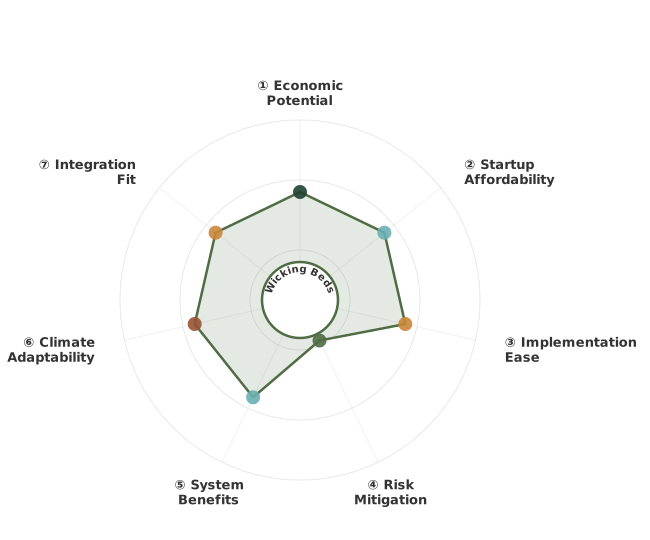
How These Traits Are Calculated
Trait dimensions are ordered clockwise starting from the top of the chart (12 o'clock position):
1. Economic Potential
Financial returns, annual value, and break-even timeline
WHAT: Evaluates financial viability by combining net annual value ($/ha from savings, income, and amortized harvests) with break-even timeline showing when practices pay for themselves.
WHY: Farmers need clear ROI understanding before committing resources. Fast payback (≤3 years) with strong returns (≥$300/ha) enables confident adoption, while long timelines (>10 years) restrict adoption to well-funded operations willing to wait for returns.
HOW: Calculated from net annual value in $/ha and break-even years. Exceptional (≥2.6): fast ROI ≤3 years + high value ≥$300/ha. Typical (1.8-2.5): moderate returns or longer timelines. Limited (<1.8): marginal economics or very long payback >10 years.
2. Startup Affordability
Initial investment costs and financial barrier to entry
WHAT: Measures financial barrier to entry through startup costs for equipment, infrastructure, consulting, and materials. Inverted scoring: lower costs = higher scores = more accessible adoption.
WHY: Affordability determines who can adopt. Low-cost practices (<$250/ha) enable widespread adoption across diverse scales, while high costs (>$2,500/ha) limit adoption to well-capitalized operations, creating barriers that slow regenerative transition.
HOW: Calculated from initial investment parsed from practice content. Inverted scoring: Exceptional (≥2.6): minimal investment <$250/ha. Typical (1.8-2.5): moderate costs $250-2,500/ha. Limited (<1.8): high barrier >$2,500/ha.
3. Implementation Ease
Learning curve and specialized knowledge required
WHAT: Measures how much learning, planning, and specialized knowledge a practice requires. Simpler practices with fewer steps score higher, while complex practices requiring extensive training or specialized resources score lower.
WHY: Complex practices create adoption barriers even when economically viable. Straightforward practices enable faster adoption and broader participation, while those requiring extensive training, timing precision, or specialized equipment limit who can succeed.
HOW: Evaluated by measuring documentation length and identifying complexity markers like location-specific requirements, seasonal timing windows, specialized skills, and dedicated equipment needs. Exceptional (≥2.6): straightforward practices with minimal prerequisites. Typical (1.8-2.5): moderate learning curve with some specialized needs. Limited (<1.8): steep learning curve requiring significant training or resources.
4. Risk Mitigation
Identified financial and ecological risk assessment
WHAT: Evaluates documented risks across financial (investment loss, market volatility) and ecological (crop failure, pest outbreaks) domains. Inverted scoring: fewer risks = higher scores.
WHY: Understanding risk exposure helps farmers make informed decisions. Low-risk practices allow confident implementation, while high-risk practices require careful planning and contingency resources. Risk transparency prevents costly failures.
HOW: Calculated from identified risks in practice content. Inverted scoring: Exceptional (≥2.6): ≤2 risks with manageable severity. Typical (1.8-2.5): 3-5 moderate risks. Limited (<1.8): 6+ risks or severe exposure.
5. System Benefits
How many ways the practice improves your land simultaneously
WHAT: Measures how many aspects of land health improve at once—carbon storage, soil quality, erosion control, water absorption, and biodiversity. Practices that improve multiple areas simultaneously create compounding benefits where each improvement reinforces the others.
WHY: The best practices solve multiple problems at once. For example, addressing erosion simultaneously builds carbon and improves water infiltration, creating a resilient system with positive feedback loops. Single-benefit approaches miss these compound transformation opportunities.
HOW: Evaluated across five key outcomes: carbon sequestration, soil organic matter increase, erosion reduction, water infiltration improvement, and biodiversity enhancement. Exceptional (≥2.6): high carbon storage (>8 t/ha/yr), improvements across 4-5 areas, transformative outcomes. Typical (1.8-2.5): moderate carbon (3-8 t/ha/yr), improvements across 2-3 areas. Limited (<1.8): modest impact (<3 t/ha/yr), single-area focus only.
6. Climate Adaptability
Geographic applicability across Köppen climate zones
WHAT: Evaluates geographic applicability by assessing how many Köppen climate zones successfully support a practice and what adaptation requirements are needed. Measures breadth of climates where farmers can implement with minimal to moderate modifications.
WHY: Universal practices working across diverse climates enable more farmers to adopt regenerative approaches. Practices limited to single climate types (only Mediterranean, only tropical) restrict adoption and slow global transition. Adaptability determines whether a practice serves niche regions or offers broad transformation.
HOW: LLM evaluation of regional success stories, Köppen zone coverage, and adaptation needs. Exceptional (≥2.6): 5+ zones or 4+ climate types, 3+ continents, minimal adaptation. Typical (1.8-2.5): 3-4 zones or 2-3 types, 2 continents, moderate adaptation. Limited (<1.8): 1-2 zones, single region, significant adaptation or highly specialized.
7. Integration Fit
How well this practice combines with others you're doing
WHAT: Measures how well a practice combines with other regenerative practices you might be doing. Some practices work as building blocks that make many other practices easier or more effective, while others work best on their own.
WHY: Practices that combine well with many others create more value on your farm. For example, cover cropping enables no-till, improves grazing, supports crop diversity, and helps water management—making all of them work better together. This helps you build a coherent system rather than juggling disconnected practices.
HOW: Evaluated by identifying which practices combine well and how strong those combinations are. 'Ideally Suited' means strong combinations where practices reinforce each other (practice A makes B easier, while B makes A more effective). 'Adequate' means complementary benefits that work well together. Exceptional (≥2.6): combines well with 6+ practices, serves as a building block. Typical (1.8-2.5): combines with 3-5 practices. Limited (<1.8): 1-2 practices or works best alone.
Going Deeper
1
WHY - The Benefits
Wicking beds offer a compelling suite of benefits, primarily centered on efficient water management and improved plant health, which translate into tangible economic and environmental advantages. Their passive, self-regulating nature makes them a robust solution for a...
Wicking beds offer a compelling suite of benefits, primarily centered on efficient water management and improved plant health, which translate into tangible economic and environmental advantages. Their passive, self-regulating nature makes them a robust solution for a...
WHY - The Benefits
Wicking beds offer a compelling suite of benefits, primarily centered on efficient water management and improved plant health, which translate into tangible economic and environmental advantages. Their passive, self-regulating nature makes them a robust solution for a...
Wicking beds offer a compelling suite of benefits, primarily centered on efficient water management and improved plant health, which translate into tangible economic and environmental advantages. Their passive, self-regulating nature makes them a robust solution for a...
Soil Health Benefits
While wicking beds don't directly "build soil health" in the way that cover cropping or composting does, they create stable conditions that favor healthy soil biology. By maintaining consistent moisture in the root zone, they prevent the extreme wet-dry cycles that can stress and kill beneficial microbes and fungi. This stable environment supports a more consistent active microbial life throughout the soil column above the reservoir.
The reduction in surface watering minimizes the disruption of soil aggregates by water impact, thus reducing surface erosion. While the lower reservoir is typically filled with inert material like gravel, the upper soil layer receives consistent moisture, promoting the development of healthy root systems. These roots, in turn, contribute organic matter to the soil profile as they grow and die, feeding soil life. The absence of frequent surface watering also helps to keep soil surface organisms undisturbed.
Furthermore, by providing water from below, wicking beds encourage deeper root growth. Plants naturally send roots down in search of moisture, and the availability of water in the reservoir prompts roots to grow into the lower soil layers. This deeper rooting can improve overall plant resilience and access to subsoil nutrients, contributing to a healthier and more robust ecosystem within the bed. A healthy root system is the foundation of healthy soil.
Economic Benefits
The economic advantages of wicking beds are significant, primarily driven by water conservation and labor savings. In regions with high water costs or strict water rationing, wicking beds can reduce irrigation water usage by 50-70% compared to overhead or flood irrigation. This direct saving on water bills can be substantial, especially for commercial growers. For example, a market garden using wicking beds might see a 50% reduction in their irrigation water expenditure, amounting to hundreds or even thousands of dollars per year depending on the scale of operation and water prices.
Labor savings are another major economic driver. With conventional irrigation, growers often spend significant time moving hoses, setting up sprinklers, or monitoring moisture levels. Wicking beds, once filled, self-regulate, meaning growers only need to refill the reservoir periodically (perhaps once a week to every few weeks, depending on climate and plant needs). This frees up labor for other critical tasks such as planting, harvesting, pest management, or marketing. For a small farm, this could mean saving 3-5 hours of labor per week, which on an annual basis, translates to a considerable economic value.
Crop yield and quality can also see improvements. By preventing water stress, wicking beds ensure plants receive optimal moisture, leading to more consistent growth, potentially higher yields (15-30% increase reported in some studies), and improved produce quality. Reduced incidence of drought-related crop failure also contributes to economic stability and predictability for the grower. The reduced prevalence of foliar diseases from avoiding wet leaves can also lower the need for costly disease management interventions.
Regenerative Systems Fit
Wicking beds are best understood as a tool that supports regenerative principles rather than a foundational regenerative practice itself. Their integration into a regenerative system depends heavily on how they are constructed, managed, and what is grown within them.
Principle 1 (Minimize Soil Disturbance): Wicking beds significantly minimize soil disturbance once established. The initial construction may involve some disturbance (e.g., digging, shaping), but the beds themselves are designed for minimal or no-till planting. The soil column is consistently amended and planted, avoiding the inversion or disruption typically associated with annual tillage. This preservation of soil structure is a key benefit.
Principle 2 (Maximize Crop Diversity): Wicking beds are excellent platforms for increasing crop diversity, especially in contexts where it's otherwise difficult. Their controlled moisture environment allows for the successful cultivation of a wider range of species, including those with different water requirements or rooting depths. A farmer could grow a diverse mix of vegetables, herbs, cover crops, or even small fruit bushes in a single wicking bed, enhancing biodiversity above and below ground within the system.
Principle 3 (Keep Soil Covered): By providing a consistent moisture supply, wicking beds encourage continuous plant growth, thereby keeping the soil surface covered for extended periods. This is especially valuable in regions with short growing seasons or intermittent rainfall, where bare soil can be exposed. If mulch is also applied to the soil surface above the wicking reservoir, the soil remains covered year-round, protecting it from erosion, temperature extremes, and moisture loss.
Principle 4 (Maintain Living Roots): Wicking beds directly support the maintenance of living roots for longer periods. The consistent water availability encourages active root growth and function. In arid climates, this can extend the growing season for annual crops or allow perennial species to thrive, ensuring continuous photosynthetic activity and root exudation, which fuels soil biology.
Principle 5 (Integrate Livestock): Direct integration of livestock with wicking beds is uncommon, as they are typically used for horticultural purposes rather than large-scale pasture management. However, they can be part of a diversified farm that also integrates livestock. For instance, produce grown in wicking beds could feed livestock, or animal manure could be composted and used to amend the soil in wicking beds (though care must be taken with nutrient levels and potential pathogens).
Transition Pathway: For farms transitioning to regenerative practices, wicking beds can be a valuable stepping stone. They can be used to reliably produce high-value crops, generating income that supports further regenerative practices. They also allow for intensive vegetable production without the need for frequent irrigation that could lead to soil compaction or water waste. If the water source for the wicking beds is rainwater harvesting, this further aligns with regenerative principles of resource independence.
Sources behind this view
Videos & Podcasts
-
Wicking beds are explained as a method to harvest water within a garden bed, wicking moisture up from a gravel reservoir. This avoids groundwater issues near basements, unlike swales, but requires rem
-
Details construction and watering improvements for wicking beds using IBC totes or lumber. Recommends alternating bottom and top watering, and using weeping tile for efficient filling, to maintain soi
-
Wicking beds are water-efficient, self-watering, and good for drainage, but costly and require constant compost due to disconnection from subsoils. Overwatering can cause anaerobic conditions; drying
-
Demonstrates building a wicking bed, a water-conserving vegetable garden system ideal for desert climates, in South Australia with community volunteers. The process is presented as simple and achievab
Community
-
Details wicking garden construction using repurposed drums and straw bales, emphasizing improved soil mix and watering techniques for water efficiency and successful plant establishment.
Read more (opens in new window) permies.com -
Wicking beds are a water-efficient technique for vegetable gardens during drought, reducing water use by storing water from wetter periods (like spring) for summer use.
Read more (opens in new window) permies.com -
Wicking beds are highly effective, especially in heat, and can be integrated with worm bins or aquaculture systems. Managing excess water is crucial, and pond liner is a durable material for construct
Read more (opens in new window) permies.com -
A wicking bed system is presented as an accessible organic gardening method, similar to hugelkultur, offering immediate plant growth, pest/weed resistance, and space efficiency, especially for urban s
Read more (opens in new window) permies.com
Research
-
Evaluating the Efficiency of Wicking Bed Irrigation Systems for Small-Scale Urban Agriculture (opens in new window)
This study found: Wicking beds for urban gardens proved as effective or better than precision surface irrigation for tomatoes, improving water efficiency, yield, and fruit quality while reducing labor.
2
WHERE - Regional Considerations
The effectiveness and suitability of wicking beds are strongly influenced by regional climate, water availability, and common agricultural practices. They are particularly advantageous in areas characterized by water scarcity, high temperatures, or where precise moisture...
The effectiveness and suitability of wicking beds are strongly influenced by regional climate, water availability, and common agricultural practices. They are particularly advantageous in areas characterized by water scarcity, high temperatures, or where precise moisture...
WHERE - Regional Considerations
The effectiveness and suitability of wicking beds are strongly influenced by regional climate, water availability, and common agricultural practices. They are particularly advantageous in areas characterized by water scarcity, high temperatures, or where precise moisture...
The effectiveness and suitability of wicking beds are strongly influenced by regional climate, water availability, and common agricultural practices. They are particularly advantageous in areas characterized by water scarcity, high temperatures, or where precise moisture...
Click Here to Look up your Region if you don't already know it
Arid and Semi-Arid Regions
Representative Locations: Southwestern United States (e.g., California, Arizona), Mediterranean basin (e.g., Spain, Israel), parts of Australia (e.g., Western Australia, South Australia), parts of North Africa and the Middle East. Climate Context: Low annual precipitation (<40 cm or 15 inches), high temperatures, intense solar radiation, often short and unpredictable growing seasons. USDA Zones 7-9, Köppen BSh/BSk. Suitability: Extremely high. Wicking beds dramatically reduce water needs, making cultivation feasible where it would otherwise be impossible or prohibitively expensive. They buffer plants against extreme heat and drought, ensuring consistent yields. Any crop production in these regions benefits immensely.
Mediterranean Regions
Representative Locations: California, Mediterranean basin (Spain, Italy, Greece), central Chile, southwestern Australia, Western Cape South Africa. Climate Context: Hot, dry summers and mild, wet winters. Annual precipitation 40-90 cm (15-35 inches), highly seasonal. USDA Zones 8-10, Köppen Csa/Csb. Suitability: High. Summer droughts are common, making wicking beds ideal for extending growing seasons and ensuring reliable crop production during dry months. They are well-suited for vegetables, herbs, and fruit trees during the hot, dry summer.
Humid Subtropical Regions
Representative Locations: Southeastern United States (e.g., Florida, Georgia), Southern China, Eastern Australia, parts of South America (e.g., southern Brazil). Climate Context: Hot, humid summers and mild to cool winters. Ample rainfall distributed throughout the year, but can experience dry spells or heavy downpours. USDA Zones 8-11, Köppen Cfa/Cwa. Suitability: Moderate to High. While rainfall is generally sufficient, wicking beds offer enhanced control over soil moisture, preventing waterlogging during heavy rains and ensuring consistent hydration during dry spells. They are excellent for intensive vegetable production and can improve harvest quality.
Temperate Regions (with Dry Spells)
Representative Locations: Central Europe, parts of the Midwestern United States, Northern China, UK. Climate Context: Warm to cool summers and cold winters, moderate to ample rainfall, but can experience dry periods in summer. USDA Zones 5-7, Köppen Cfb/Dfb. Suitability: Moderate. In regions with reliable rainfall, the primary benefit is labor savings and more consistent moisture for critical growth stages. They are particularly useful for high-value crops or in situations where growers want to ensure optimal conditions throughout the season.
Tropical and Equatorial Regions
Representative Locations: Southeast Asia, Central Africa, Northern South America, Northern Australia. Climate Context: High temperatures year-round with distinct wet and dry seasons or consistent high rainfall and humidity. Köppen Af/Am/Aw. Suitability: Moderate. In regions with high year-round rainfall, the advantage of wicking beds shifts from water conservation to prevention of waterlogging and maintaining optimal root zone moisture. They can be beneficial for specific crops requiring constant moisture or in areas with unpredictable rainfall patterns.
Boreal and Cold Regions
Representative Locations: Northern Canada, Scandinavia, Siberia. Climate Context: Very short, cool summers and long, harsh winters. Suitability: Low, for outdoor use. Wicking beds are primarily suited for above-ground applications. In cold climates, their use would be limited to heated greenhouses or as indoor containers where temperatures can be regulated and the growing season extended. Outdoor construction would be impractical due to frost and short seasons.
3
HOW - Implementation Process
Constructing and managing wicking beds involves several key steps, from choosing the right materials to setting up the irrigation and planting. The process can be adapted for various scales, from small home gardens to larger market garden operations.
Constructing and managing wicking beds involves several key steps, from choosing the right materials to setting up the irrigation and planting. The process can be adapted for various scales, from small home gardens to larger market garden operations.
HOW - Implementation Process
Constructing and managing wicking beds involves several key steps, from choosing the right materials to setting up the irrigation and planting. The process can be adapted for various scales, from small home gardens to larger market garden operations.
Constructing and managing wicking beds involves several key steps, from choosing the right materials to setting up the irrigation and planting. The process can be adapted for various scales, from small home gardens to larger market garden operations.
Prerequisites
- Water source: Reliable access to water for refilling the reservoir. Rainwater harvesting is ideal for regenerative systems.
- Location: Sunny spot with adequate drainage around the bed itself.
- Materials: Waterproof liner (pond liner, food-grade plastic), permeable fill material for reservoir (gravel, crushed rock, volcanic rock), soil, container material (wood, plastic, metal), wicking medium (e.g., geotextile, sand, perforated pipes).
- Tools: Shovel, trowel, level, measuring tape, saw (if using wood), utility knife, potentially a drill.
- Basic understanding of soil moisture: To gauge when to refill and to recognize signs of over/under-watering.
Phase 1: Bed Construction (External Structure)
For Raised Beds (Wood/Metal/Plastic): 1. Determine Size and Shape: Decide on the dimensions of your wicking bed. Length can be almost anything; width generally should not exceed 1.2 meters (4 feet) to allow easy reach from both sides. Height should be at least 30-45 cm (12-18 inches) to accommodate soil depth and reservoir. 2. Build the Frame: Construct a sturdy frame using lumber (untreated hardwood like cedar or redwood is best, or treated lumber specifically rated for garden use), galvanized steel, or heavy-duty plastic. Ensure all corners are securely joined. 3. Install Liner: Line the inside of the frame with a waterproof material. Heavy-duty pond liner (EPDM or PVC) is a good choice for durability. Overlap seams by at least 15-20 cm (6-8 inches) and secure them. Fold liner neatly at corners. Consider a double layer for extra security against leaks, especially for larger beds.
For Container Gardens (Bins/Totes): 1. Select Containers: Use food-grade plastic bins, IBC totes (cut in half), or large buckets. Ensure they have no pre-existing drainage holes in the bottom. 2. Prepare Containers: Clean thoroughly. If using IBC totes, cut them to the desired height, ensuring the bottom section can hold water.
Phase 2: Reservoir Construction & Wicking Mechanism
-
Create Reservoir Space:
- For Raised Beds: At the bottom of the lined frame, designate a space for the reservoir, typically 10-15 cm (4-6 inches) deep. You can achieve this by supporting the soil column above the reservoir or by creating a false bottom.
- Method A (Support Frame): Install a frame or support grid (e.g., heavy-duty plastic grids, inverted buckets, PVC pipes) within the lined bed to hold the soil layer above the reservoir space. Ensure this support is strong enough to hold the weight of the soil and plants.
- Method B (False Bottom): In some designs, the entire bottom of the lined frame acts as the reservoir. The soil is then built up on a permeable layer.
- For Container Gardens: The bottom of the container is the reservoir. You'll create a false bottom within it to separate the water layer from the soil.
- For Raised Beds: At the bottom of the lined frame, designate a space for the reservoir, typically 10-15 cm (4-6 inches) deep. You can achieve this by supporting the soil column above the reservoir or by creating a false bottom.
-
Install Wicking Mechanism: This is how water moves from the reservoir to the soil.
- Perforated Pipes: Lay perforated drainage pipes (e.g., Agri drain pipe) horizontally or vertically in the reservoir space. Ensure they are open to the water reservoir and extend up into the soil column. Pack gravel around them.
- Wicking Chamber: Create a central chamber extending from the reservoir up into the soil. This can be a PVC pipe with holes drilled in it, or a section filled with gravel/rocks.
- Geotextile Fabric: A layer of permeable geotextile fabric can be placed between the reservoir fill and the soil, allowing water to wick through while preventing soil from entering the reservoir.
- Fill Material: Fill the reservoir space with a clean, porous material like washed gravel, crushed rock, perlite, or lava rock. This material should not break down and should allow water to flow freely.
-
Install Fill Pipe and Overflow Outlet:
- Fill Pipe: Insert a vertical pipe from the top edge of the bed down into the reservoir. This is how you'll add water. It keeps the soil from washing into the reservoir when filling. A snug fit is important.
- Overflow Outlet: Crucially, install an outlet pipe near the top of the reservoir level. This prevents overfilling and waterlogging of the soil, which can suffocate roots. Position it at the intended maximum water level.
Phase 3: Soil Filling and Planting
- Add Soil: Fill the bed above the reservoir support with a high-quality potting mix or a custom blend. Avoid heavy garden soil that can compact. A mix rich in organic matter (compost, coir) with good aeration (perlite, vermiculite) is ideal. Ensure the soil consolidates well onto the wicking mechanism.
- Water Wicking Mechanism: Once soil is added, water thoroughly from the top. This helps settle the soil and initiate capillary action, drawing water up from the reservoir.
- Planting: Plant seeds or seedlings as usual. Roots will naturally grow down towards the moisture.
- Mulch: Apply a layer of organic mulch (straw, wood chips, compost) to the soil surface. This insulates the soil, conserves moisture, suppresses weeds, and feeds soil life.
Phase 4: Management and Maintenance
- Filling the Reservoir: Monitor the water level via the fill pipe. Refill when the level is low. Avoid overfilling, relying on the overflow outlet. Frequency depends on climate, plant needs, and reservoir size.
- Monitoring Moisture: While self-watering, occasional checking of soil moisture in the upper root zone is wise, especially with new plantings or during extreme weather. A simple finger test can suffice.
- Periodic Reservoir Cleaning: Depending on water quality and liner integrity, reservoirs may need occasional flushing or cleaning (every 2-5 years) to remove settled debris and prevent anaerobic conditions.
- Nutrient Management: Over time, nutrients can become depleted. Amend the soil top layer with compost annually or as needed. Avoid direct fertilization into the reservoir.
Transition Timeline & Phase-Out Strategy
Wicking beds themselves are not "transition practices" in the sense of phasing out non-regenerative inputs. However, their use can facilitate a transition to more regenerative practices by providing reliable production and water savings.
- If using non-potable water (e.g., treated graywater): Ensure compliance with local regulations for safe agricultural reuse. This is a transition step towards water independence and resource cycling.
- If using municipal or treated water: Aim to gradually transition to rainwater harvesting for reservoir filling. This reduces reliance on external, potentially resource-intensive water sources.
- If using synthetic fertilizers: Gradually replace with compost and organic amendments as soil biology becomes healthier. Monitor plant health and soil tests to guide this transition.
The "phase-out" is not of the wicking bed itself but of any compromised inputs or practices associated with its operation. The goal is to ensure the water source is sustainable and soil amendments are organic and beneficial to soil biology.
Sources behind this view
Videos & Podcasts
-
Wicking beds are explained as a method to harvest water within a garden bed, wicking moisture up from a gravel reservoir. This avoids groundwater issues near basements, unlike swales, but requires rem
-
Details construction and watering improvements for wicking beds using IBC totes or lumber. Recommends alternating bottom and top watering, and using weeping tile for efficient filling, to maintain soi
-
Detailed instructions for building a wicking bed using a water tank or IBC, featuring a gravel reservoir, filling pipe, and geomat to provide consistent soil moisture and conserve water for vegetable
-
Wicking beds are self-watering garden beds using capillary action from a gravel reservoir. They are drought-proof and suitable for rooftops, contaminated soils, or near foundations. Key components are
Community
-
Describes building a plastic-free wicking bed in Central Texas using a bentonite clay and topsoil liner for water efficiency. Initially used terra cotta ollas for water distribution, later switching t
Read more (opens in new window) permies.com -
Detailed construction of a wicking bed using recycled plastic buckets and gabion baskets, incorporating a functional overflow system and discussing the development of a water level indicator, with a f
Read more (opens in new window) permies.com -
Details wicking garden construction using repurposed drums and straw bales, emphasizing improved soil mix and watering techniques for water efficiency and successful plant establishment.
Read more (opens in new window) permies.com -
Sub-irrigated planters (SIPs) and wicking beds offer easy, consistent watering. Simple constructions using buckets or drums are effective, with a preference for durable materials over flimsy plastics.
Read more (opens in new window) permies.com
Research
-
Evaluating the Efficiency of Wicking Bed Irrigation Systems for Small-Scale Urban Agriculture (opens in new window)
This study found: Wicking beds for urban gardens proved as effective or better than precision surface irrigation for tomatoes, improving water efficiency, yield, and fruit quality while reducing labor.
4
HOW MUCH - Costs & Investment
Note: Costs are presented in USD equivalent and can vary significantly by region due to local material availability, labor rates, currency exchange, and import/export duties. It is crucial to research local pricing for accurate budgeting.
Note: Costs are presented in USD equivalent and can vary significantly by region due to local material availability, labor rates, currency exchange, and import/export duties. It is crucial to research local pricing for accurate budgeting.
HOW MUCH - Costs & Investment
Note: Costs are presented in USD equivalent and can vary significantly by region due to local material availability, labor rates, currency exchange, and import/export duties. It is crucial to research local pricing for accurate budgeting.
Note: Costs are presented in USD equivalent and can vary significantly by region due to local material availability, labor rates, currency exchange, and import/export duties. It is crucial to research local pricing for accurate budgeting.
Note: All costs are based on recent US economic data (2024–2026) and may vary substantially by region based on local labor rates, material costs, and regulatory requirements.
Structural Materials and Waterproofing
For small-scale home installations (1–10 beds), lumber framing costs range from $10.42 to $26.05 per linear foot, while HDPE or EPDM pond liners range from $5.21 to $12.50 per linear foot. Mid-size market garden operations (10–50 beds) utilizing modular or prefabricated framing require an investment of $15.63 to $36.47 per linear foot, including necessary structural bracing components. Large-scale commercial installations (50+ beds) leverage industrial-grade galvanized steel or pre-cast concrete siding, which ranges from $26.05 to $62.52 per linear foot. Professional-grade, UV-resistant liners for these expansive layouts cost between $10.42 and $18.76 per linear foot. These structural investments generally account for 40% to 55% of the total project budget.
Reservoir and Internal Plumbing
The reservoir layer is essential for capillary function, requiring roughly 0.15 cubic yards of aggregate per linear foot. Home setups typically use pea gravel at $3.13 to $8.34 per linear foot. Market garden operations sourcing bulk drainage rock face costs of $5.21 to $12.50 per linear foot. Commercial projects requiring industrial drainage conduits and manifold systems invest $8.34 to $20.84 per linear foot. Internal plumbing—comprising fill pipes, standpipes, and overflow valves—functions as a fixed cost per bed section: $10.42 to $26.05 for home units, $20.84 to $46.89 for market garden installations, and $41.68 to $78.15 for commercial arrays to accommodate high-pressure fittings and monitoring sensors.
Growing Media and Soil Blends
High-quality growing media represents the largest recurring operational expenditure. Since a standard 4-foot (1.2 m)-wide by 1.5-foot (0.5 m)-deep bed requires approximately 0.22 cubic yards of soil per linear foot, the cost adds up quickly. Home gardeners often rely on premium bagged blends ranging from $62.52 to $125.04 per cubic yard. Market gardens sourcing bulk compost-soil mixes experience costs of $41.68 to $83.36 per cubic yard. Large commercial operations, through bulk procurement and custom aggregate-humus blending, reduce these expenditures to $31.26 to $62.52 per cubic yard. For a 100-foot (30.5 m) system, soil media alone can range from $1,355 to $2,709.
Most Spend: $145–$230 per linear foot. This range captures the middle 60% of professional market garden and smaller-scale commercial installations, covering quality lumber or steel framing, durable liners, and high-porosity screened soil blends tailored for optimal wicking performance.
Why the Range?: Costs fluctuate significantly based on the structural durability of the materials chosen and the logistics of soil delivery. Remote operations face higher delivery premiums for bulk aggregates and soil, while proximity to urban centers may decrease material shipping costs but increase skilled labor installation rates.
5
REWARDS AND RISKS - Economics & Risk Factors
REWARDS AND RISKS - Economics & Risk Factors
Best Case Scenario: A market garden installs 200 linear feet of wicking beds at a total capital cost of $26,050. Optimized water delivery eliminates evaporative loss, saving $834 annually on water utilities. Consistent soil moisture improves crop quality, yielding a 30% increase in revenue—approximately $4,689—and cutting irrigation-related labor costs by 75%. The operation realizes a total annual benefit of $6,252, resulting in a payback period of approximately 4.2 years.
Typical Scenario: A mid-size organic farm invests $10,420 in a 100-foot (30.5 m) system. Water savings average $313 annually, while labor efficiency gains from reduced hand-watering allow for two additional work hours per week to be reinvested into higher-value tasks, contributing $1,250 in value. A 15% yield increase adds $1,876, creating a total annual benefit of $3,439. The break-even point is achieved in approximately 3 years post-installation.
Worst Case Scenario: A large-scale project costing $156,300 experiences poor soil-to-reservoir interface design, causing anaerobic root rot and total crop failure. Remediation—including drainage repair and total soil replacement—adds $46,890 in unforeseen capital outlay. If failure persists, the loss of the initial $156,300, plus remediation, results in a catastrophic financial write-off. This scenario emphasizes the need for engineering oversight on projects exceeding 500 linear feet.
Market Factors: Profitability is tightly coupled with water costs. In regions with Tier 3 or Tier 4 water pricing (exceeding $8.34 per 1,000 gallons (3,785 L)), ROI is accelerated by up to 18 months. In water-abundant regions, the economic driver shifts entirely to crop quality premiums and labor-hour redirection.
Risk Mitigation: Liner integrity is protected by investing an additional $2.08 to $5.21 per linear foot in geotextile underlayment to prevent root penetration. For drainage, installing secondary emergency overflow ports at $52 to $156 per system prevents saturation during extreme weather events. Commercial operations should mandate a 3-year design liability warranty from installers.
Transition Period Risks: Soils require 1–2 seasons to stabilize microbiologically in the new wicking environment. Growers may experience a 5–10% yield dip during the first year of establishment as nitrogen cycling adjusts to the modified moisture profile. Mitigation involves using mature, high-quality compost or biochar-infused media to accelerate biological colonization from day one.
Sources behind this view
Videos & Podcasts
-
Wicking beds are explained as a method to harvest water within a garden bed, wicking moisture up from a gravel reservoir. This avoids groundwater issues near basements, unlike swales, but requires rem
-
Details construction and watering improvements for wicking beds using IBC totes or lumber. Recommends alternating bottom and top watering, and using weeping tile for efficient filling, to maintain soi
-
Wicking beds are water-efficient, self-watering, and good for drainage, but costly and require constant compost due to disconnection from subsoils. Overwatering can cause anaerobic conditions; drying
-
Offers tips for wicking bed maintenance: use thick sugarcane mulch to retain moisture (combating transpiration), keep seedling roots moist from the top, and utilize high-quality worm casting compost.

Community
-
Details wicking garden construction using repurposed drums and straw bales, emphasizing improved soil mix and watering techniques for water efficiency and successful plant establishment.
Read more (opens in new window) permies.com -
Sub-irrigated planters (SIPs) and wicking beds offer easy, consistent watering. Simple constructions using buckets or drums are effective, with a preference for durable materials over flimsy plastics.
Read more (opens in new window) permies.com -
Wicking beds are highly effective, especially in heat, and can be integrated with worm bins or aquaculture systems. Managing excess water is crucial, and pond liner is a durable material for construct
Read more (opens in new window) permies.com
Research
-
Evaluating the Efficiency of Wicking Bed Irrigation Systems for Small-Scale Urban Agriculture (opens in new window)
This study found: Wicking beds for urban gardens proved as effective or better than precision surface irrigation for tomatoes, improving water efficiency, yield, and fruit quality while reducing labor.
6
WHO - Labor & Expertise
The labor and expertise required for wicking beds vary significantly with scale and complexity, but the core principles are accessible to most growers.
The labor and expertise required for wicking beds vary significantly with scale and complexity, but the core principles are accessible to most growers.
WHO - Labor & Expertise
The labor and expertise required for wicking beds vary significantly with scale and complexity, but the core principles are accessible to most growers.
The labor and expertise required for wicking beds vary significantly with scale and complexity, but the core principles are accessible to most growers.
Skill Requirements
- Basic Construction Skills: For DIY home gardeners, skills such as measuring, cutting wood (if applicable), joining materials securely, and basic DIY plumbing (for fill/overflow pipes) are beneficial. This is achievable with online tutorials and moderate manual dexterity.
- Understanding Soil Moisture: Knowing when to refill the reservoir and recognizing signs of over- or under-watering is crucial. This develops with experience and observation.
- Horticultural Knowledge: Understanding plant needs (water, nutrients, light) and selecting appropriate crops for the system enhances success.
Labor Considerations
- Initial Setup: Building larger beds can be labor-intensive. For a home gardener, a single 3m (10ft) bed might take 4-8 hours of DIY labor. For a market garden, constructing 50 linear meters could take 30-60 hours of focused work, potentially requiring multiple people or hired help.
- Ongoing Maintenance: This is where wicking beds shine. Once established, the labor for watering is drastically reduced, often to less than 1 hour per week for a substantial garden area, compared to daily watering needed for traditional beds without sub-irrigation. Refilling the reservoir might be needed weekly to less frequently.
- Soil Amendments: Periodically adding compost to the top soil layer requires usual gardening labor.
- Pest/Disease Management: Remains similar to other forms of gardening.
Hiring Considerations
- For Construction: If DIY skills are limited or time is scarce, hiring a handyman, landscape contractor, or specialized irrigation installer is an option. Costs will increase significantly. In regions with lower labor costs, hiring might become more economical than dedicating extensive personal time.
- For Design: For complex commercial systems, consulting with a horticultural engineer or irrigation designer can prevent costly mistakes and optimize performance.
7
COMPATIBLE PRACTICES - Integration Opportunities
Wicking beds integrate well into a variety of horticultural and broader regenerative farming systems, enhancing their efficiency and effectiveness.
Wicking beds integrate well into a variety of horticultural and broader regenerative farming systems, enhancing their efficiency and effectiveness.
COMPATIBLE PRACTICES - Integration Opportunities
Wicking beds integrate well into a variety of horticultural and broader regenerative farming systems, enhancing their efficiency and effectiveness.
Wicking beds integrate well into a variety of horticultural and broader regenerative farming systems, enhancing their efficiency and effectiveness.
Rainwater Harvesting Systems
- Integration: Collecting rainwater in tanks or cisterns and using it to fill the wicking bed reservoirs.
- Benefit: Creates a closed-loop water system, reducing reliance on municipal or well water, enhancing water independence and sustainability.
Composting and Organic Soil Amendments
- Integration: Using high-quality compost and other organic matter (e.g., well-rotted manure, leaf mold) to fill the soil column of the wicking beds.
- Benefit: Provides nutrients for plant growth, improves soil structure, enhances water retention in the upper soil layers, and feeds beneficial soil biology, making the wicking beds truly regenerative.
Mulching
- Integration: Applying a layer of organic mulch (straw, wood chips, shredded leaves) to the soil surface above the wicking bed.
- Benefit: Further conserves moisture by reducing evaporation from the soil surface, suppresses weeds, insulates soil from temperature extremes, and adds organic matter as it decomposes, further supporting soil health.
Crop Rotation and Diversity
- Integration: Implementing planned crop rotations within wicking beds and growing a diverse range of crops over time.
- Benefit: Maximizes the potential of the controlled moisture environment to grow varied species, prevents nutrient depletion of specific elements, disrupts pest and disease cycles, and promotes broad soil biological activity.
Drip Irrigation (Supplement)
- Integration: While wicking beds are self-watering, a supplemental drip irrigation system can be useful for delivering specific liquid organic fertilizers directly to the root zone or for establishing seedlings quickly before capillary action is fully established.
- Benefit: Offers targeted delivery for specific needs, but can increase complexity and water use compared to the passive wicking system alone.
Greenhouse or Hoop House Production
- Integration: Building wicking beds inside controlled environments.
- Benefit: Maximizes growing season length, protects crops from extreme weather, and allows for precise control over watering, further enhancing the efficiency and productivity of wicking beds.
Whole Farm Water Management/Keyline Design
- Integration: If wicking beds are part of a larger farm, their water use should align with broader landscape water management strategies, such as contouring to capture runoff and directing it towards storage.
- Benefit: Wicking beds can be a component of a holistic water management plan, ensuring water is used effectively where needed, while other parts of the landscape capture and store excess.
Wicking beds thrive when integrated with practices that enhance their water use efficiency, soil health, and crop diversity. They are not an isolated solution but a valuable component that can amplify the benefits of other regenerative techniques.
Sources behind this view
Videos & Podcasts
-
Wicking beds are explained as a method to harvest water within a garden bed, wicking moisture up from a gravel reservoir. This avoids groundwater issues near basements, unlike swales, but requires rem
-
Wicking beds are water-efficient, self-watering, and good for drainage, but costly and require constant compost due to disconnection from subsoils. Overwatering can cause anaerobic conditions; drying
Community
-
Details wicking garden construction using repurposed drums and straw bales, emphasizing improved soil mix and watering techniques for water efficiency and successful plant establishment.
Read more (opens in new window) permies.com -
Wicking beds are highly effective, especially in heat, and can be integrated with worm bins or aquaculture systems. Managing excess water is crucial, and pond liner is a durable material for construct
Read more (opens in new window) permies.com -
Discusses integrating sub-irrigated wicking beds with surrounding soil via pipes for nutrient/microbial exchange, with potential water loss concerns and practical implementation ideas.
Read more (opens in new window) permies.com
Research
-
Evaluating the Efficiency of Wicking Bed Irrigation Systems for Small-Scale Urban Agriculture (opens in new window)
This study found: Wicking beds for urban gardens proved as effective or better than precision surface irrigation for tomatoes, improving water efficiency, yield, and fruit quality while reducing labor.