Transitioning from a mechanical hay harvest model to an Adaptive Multi-Paddock (AMP) grazing system represents a fundamental pivot from capital-intensive dependency on equipment to a biological model focused on per-acre profitability. This shift is not merely a change in farm practices, but a total re-allocation of your financial resources. Over the initial 3 to 5 years, you should anticipate a total investment ranging from $156-417/acre ($385–$1,030/ha). While this initial capital outlay may feel significant, it is critical to view this as trading depreciating, high-maintenance machinery for appreciating biological capital that grows in value as your soil health and forage resilience improve.
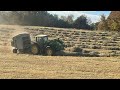
The most immediate financial relief comes from the wholesale elimination of mechanical harvesting costs—a "stop spending" exercise that yields rapid, measurable results. In a conventional hay operation, you are essentially burning capital every time you mow, rake, and bale. By moving to in-situ livestock grazing, you eliminate the fuel-related expenses that typically drain $69-208/acre ($171–$514/ha) from your annual operating budget. When you remove the need for tractors, balers, and transporters to move material out of the field and back in for feeding, you also eliminate the corresponding costs of equipment maintenance, insurance, and replacement parts, which often represent 10-25% of your total overhead.
Beyond fuel and maintenance, you will significantly reduce or eliminate your reliance on industrial synthetic fertilizers. In a conventional system, these inputs often cost $42-125/acre ($104–$309/ha) annually just to maintain baseline hay yields. In an AMP system, you leverage livestock to cycle nutrients directly onto the pasture through manure and urine, supplemented by diverse forage species that naturally fix nitrogen and mine deeper soil minerals. As your soil biology matures over the first 2-4 years, these avoided costs become significant, effectively keeping money that used to flow straight to chemical input suppliers in your own operating budget.
Your establishment costs are front-loaded, primarily during the first 18-24 months of the transition. The "start spending" priorities include installing high-tensile, intensive electric fencing systems to facilitate the paddock subdivisions necessary for AMP grazing, which generally requires an investment of $100-300/acre ($247–$741/ha). Water infrastructure is the second pillar of this investment, requiring an allocation of $200-1,000 per paddock to install solar-powered pumps or permanent pipelines that ensure livestock have consistent access to high-quality water at every move. These infrastructure costs are essential to achieve the high stocking densities required to stimulate the plant regrowth that drives your profitability.
Managing the transition also involves acquiring the right livestock for your new environment. You should plan to invest $200-600 per head for foundation stock that is adapted to high-density grazing. Once the transition is stabilized, the financial reward is realized through increased net income potential, which currently tracks at $94-282/acre ($232–$697/ha) depending on your management efficiency and marketing strategy. Unlike the hay market, where your revenue is at the mercy of weather-driven harvest windows and global price volatility, an AMP grazing system provides you with a higher-value product—livestock—that is mobile and less sensitive to the immediate timing issues of traditional hay baling.
Breakeven analysis for this transition suggests a favorable trajectory for diligent managers. For most operations, the total cumulative capital recovery occurs within 2-3 years. This timeline is primarily driven by the immediate cessation of high-cost industrial inputs and the reduction in repair bills. By year three, the majority of the "startup" structural and biological costs have been absorbed, meaning that every dollar of revenue above your variable livestock costs acts as pure margin. This is a stark contrast to the mechanical hay model, where profitability is constantly undermined by the compounding costs of machine depreciation.
Geographic economic variability plays a major role in these figures, as topography, soil type, and regional climate significantly dictate the cost of water installation and forage establishment. Operations in arid regions, for instance, may see the high end of the infrastructure investment range due to the complexity of hauling or pumping water across large pastures. Conversely, regions with high rainfall may see more rapid returns on biological establishment, as increased biomass production reduces the recovery period for perennial grasses, potentially hitting the $94-282/acre ($232–$697/ha) net income target sooner than operations in more challenging or drought-prone environments.
Government programs offer critical support to offset these costs, and timing is key to leveraging available capital. Programs like the EQIP (Environmental Quality Incentives Program) or CSP (Conservation Stewardship Program) often provide cost-share assistance for high-tensile fencing, livestock water distribution systems, and even native seeding. Applications should be submitted in the late summer or autumn preceding your year-one transition start date to ensure funding is aligned with your construction schedule. If managed correctly, these grants can reduce your out-of-pocket establishment costs by 25-50% in the first two years.
Small operations (under 100 acres (40 ha)): Focus on low-cost, portable watering solutions and temporary fencing to keep initial capital risk under $200/acre ($494/ha); prioritize niche marketing of livestock products to maximize margins.
Mid-size operations (100-1,000 acres (40–405 ha)): Balance infrastructure automation with labor efficiency; invest in permanent water pipelines ($500-1,000 per unit) to reduce daily labor costs and scale effectively toward the $282/acre ($697/ha) net income ceiling.
Large operations (1,000+ acres): Invest heavily in automated water systems and high-specification fencing infrastructure; focus on economies of scale to keep total per-acre investment at the lower end of the $156-417/acre ($385–$1,030/ha) range.
Sources behind this view
-
If economic analysis shows poor results, evaluate enterprise performance over time. Focus on improving cost structures, revenue capture, or considering strategic changes like adding species, custom grazing, or optimizing cow value.
-
Explains cost-benefit analysis for agricultural investments like tractors and irrigation systems. Uses examples to show how to calculate return on investment, emphasizing the role of gross margin and considering financing costs and equipment lifespan for informed decision-making.
-
Tyler Tobalt details the ROI of cover crops for his beef operation, emphasizing significant savings on silage and hay, reduced labor, and freed-up land. The most valuable ROI, however, is the time saved, enabling better farm management and family life, alongside improved livestock gains and soil health.

-
Small farmers must weigh the high costs and labor of making hay against buying it or hiring custom services, considering livestock needs (3 lbs dry hay/100 lbs body weight/day) and personal resources.
-
Alternatives to haying include 'chop and drop' for soil building, renting for livestock grazing (using cows or chickens/ducks) with electric fences and mineral supplements, or selling the hay crop. Grazing animals act as natural mowers and fertility recyclers.
-
Transitioning to regenerative management should reduce costs by focusing on detailed record-keeping and working with existing resources, as demonstrated by Red River Ranch's shift from haying to diverse grazing, saving expenses and improving soil health.
-
Guides a financial analysis of PV solar investments using a farm example, contrasting simple payback with NPV and LCOE, and highlighting the impact of aggressive vs. conservative assumptions using the SAM model for accurate decision-making.