This guide is for conventional vegetable growers looking to transition to a regenerative system, prioritizing soil health, biological diversity, and reduced environmental impact. It's designed to help you understand the journey, the potential rewards, and the practical steps involved in shifting from intensive tillage and synthetic inputs to a more ecological approach.

Read More: Complete Description

The agricultural landscape is constantly evolving, and many vegetable producers are finding themselves at a crossroads. The conventional approach, characterized by intensive tillage, reliance on synthetic fertilizers and pesticides, periods of bare soil, and a singular focus on maximizing yield through brute force inputs, has served its purpose but faces increasing challenges. Escalating input costs, soil degradation, declining beneficial insect populations, water scarcity, and a growing consumer demand for sustainably produced food are strong motivators for change. This guide outlines a pathway to a regenerative vegetable production system – one that rebuilds soil biology, enhances nutrient cycling, fosters biodiversity, improves water management, and ultimately, creates a more resilient and profitable farming operation. The end state is not just about soil health; it's about a harmonious integration of crop production with natural biological processes, where the soil is alive, teeming with beneficial organisms, and capable of feeding your crops naturally while sequestering carbon and enhancing ecosystem services. This transition is a journey, not an overnight fix, requiring patience, observation, and a willingness to learn from the land.

Key Points

Scale

Adaptable to all scales, but requires significant adjustments in equipment and management strategies for larger operations.

Breakeven

2-4 years for operational costs to stabilize and match previous conventional profitability levels

Difficulty

High complexity in management and learning curve, especially in the first 1-3 years; requires unlearning ingrained practices.

Destination

Reduced tillage or no-till systems with living soil biology, biological pest management through beneficial insect habitat, diverse cover crop rotations, compost-based fertility, and water management that builds soil structure.

Starting Point

Conventional vegetable operation relying on intensive tillage, synthetic fertilizers and pesticides, bare soil between crops, and irrigation management focused on yield maximization.

Investment Range

$150-800/acre ($371–$1,977/ha) over 3-5 years, mitigated by input savings

Typical Timeline

3-5 years for primary system transformation; 7-10+ years for mature soil development.

Know the Debate

  • Soil biology recovery ranges from 3-5 to 7-10+ years
  • Equipment needs vary from adapted to specialized, $150-800+/acre
  • Breakeven 2-4 years (optimistic) vs 5+ years (realistic)
  • Biological pest control sufficiency debated; habitat alone challenged

Going Deeper

1

WHERE YOU ARE NOW

You've built a successful conventional vegetable operation. This means you understand crop cycles, market demands, labor management, and the...

You've built a successful conventional vegetable operation. This means you understand crop cycles, market demands, labor management, and the...

You've built a successful conventional vegetable operation. This means you understand crop cycles, market demands, labor management, and the efficiency of established farming practices. You probably have a good grasp of pest and disease identification and the most effective synthetic products for controlling them. You likely manage irrigation meticulously to ensure consistent growth and high yields, and tillage is a familiar, almost instinctive, part of preparing your seedbeds for optimal germination and root development. This deep knowledge of conventional agronomy is a significant asset; it means you're not starting from scratch. You understand critical factors like soil moisture, nutrient availability, and the impact of timely operations. Your understanding of logistics, supply chains, and customer relationships is robust. You're likely proficient with your current equipment and aware of its capabilities. The goal of this transition isn't to discard this expertise but to reframe it through a biological lens, leveraging your operational acumen to foster a healthier, more resilient system. You've wrestled with weather variability, pest outbreaks, and market fluctuations, and you have a proven track record of problem-solving within the existing paradigm. You know what it takes to get a crop in the ground and to harvest.

At different scales:

200-5,000 acres: You manage a significant volume of land, likely with multiple fields and crop rotations. Mechanization is crucial, and efficiency in operations like tillage, planting, and harvest is paramount. You might have dedicated staff for specific tasks and established relationships with input suppliers and equipment dealers.

5,000+ acres: Your operation is a robust enterprise, prioritizing bulk production and streamlined logistics. Equipment is large-scale and highly specialized. Managing soil health across vast acreages presents unique challenges, and decisions are often driven by optimizing efficiency and minimizing risk over large geographic areas.

Small (under 100 acres/40 ha): Your familiarity with your soil likely extends to knowing individual field characteristics intimately. You may be using a smaller, multi-purpose tractor for tillage, and your decisions about planting dates and species are often driven by highly localized weather patterns and personal observations.

Mid-size (100–500 acres/40–200 ha): You are likely accustomed to managing crop rotations across diverse fields and rely on mechanized operations for efficiency, perhaps using a cultivator or disc harrow for seedbed preparation. Establishing new practices, like cover cropping, will require careful planning for equipment integration and potentially investing in tools like a no-till drill or specialized planter for wider adoption.

Large (500+ acres/200+ ha): Your operation prioritizes large-scale mechanization, where tillage efficiency for hundreds of acres is a primary concern, often involving heavy disc harrows or plows. Transitioning to reduced tillage or no-till will necessitate a significant re-evaluation of your equipment fleet and potentially substantial capital investment in modern planters and residue management technology.

Sources behind this view

Videos & Podcasts
Community
  • Discusses regenerative grazing with cattle, sheep, and goats, emphasizing high-density impact and long recovery periods for soil health and ecosystem restoration in arid regions. Debates overgrazing, hoof impact, and the ecological role of livestock in diverse environments.

  • Adopts a holistic grazing management approach emphasizing diverse perennial pastures, higher residuals (4"), and longer rest periods (avg. 45 days) to build soil health, increase organic matter (3.4% to 4.6%), and enhance farm resilience against unpredictable weather.

    Read more (opens in new window) smallfarms.cornell.edu
Research
From the Web
  • Guille Yearwood of Ellett Valley Beef Company in Virginia uses rotational grazing with daily moves and 70-90 day recovery for South Poll cattle, achieving fertilizer-free, profitable production and high forage yield through adaptive management.

  • Organic farming and rotational grazing are presented as solutions, enhancing soil health, sequestering carbon, and preventing erosion. Managed grazing boosts plant roots, improving soil fertility and water retention, potentially mitigating agriculture's carbon footprint.

2

WHERE THIS LEADS

The journey to regenerative vegetable production leads to a profound shift in how you manage your land and crops. You'll move from a system that...

The journey to regenerative vegetable production leads to a profound shift in how you manage your land and crops. You'll move from a system that...

The journey to regenerative vegetable production leads to a profound shift in how you manage your land and crops. You'll move from a system that masks nutrient deficiencies or pest pressures with synthetic inputs to one that builds soil health, fostering natural fertility and resilience. This means transitioning away from frequent, intensive tillage to reduced-tillage or no-till methods, creating a stable soil structure that resists erosion and improves water infiltration. Bare soil periods between cash crops will be replaced by a continuous living root system, with diverse cover crops protecting the soil, feeding soil microbes, and cycling nutrients. Pest management evolves from broad-spectrum application of pesticides to fostering a balanced ecosystem where beneficial insects and natural predators keep pest populations in check, often supported by the habitat provided by diverse cover crops and border plantings. Irrigation strategies will shift from simply delivering water for yield to managing soil structure for optimal water retention and efficient use.

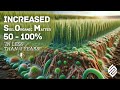
Typical production metrics can see an initial period of adjustment, followed by a stabilization and even increase in yields as soil health improves. Many growers report that once soil biology is re-established, nutrient cycling becomes more efficient, reducing the need for external fertilizer inputs. This leads to a reduction in input costs, which is a significant economic driver. Gains range from 10-15% in modestly improved systems to 40-120% in well-executed operations. This bimodal distribution suggests outcomes are highly sensitive to management quality and local conditions. Soil organic matter increases vary: modest operations see 0.2-0.4 percentage point gains by years 2-3, while well-managed systems document 1.5-2.5+ percentage points over 5-7 years.

Beyond production metrics, practitioners document reduced stress from physically demanding tillage and spraying operations, improved mental health from spending more time observing and working with natural systems, and in some cases reduced medical costs associated with lower operational stress. This is a tangible, measurable outcome for many operators. Bird populations and species diversity often increase measurably within 2-3 years as forage structure and diversity improve, providing both an ecological indicator and a quality-of-life enhancement. You'll start noticing more pollinators, beneficial insects, and a richer tapestry of life in and around your fields.

At different scales:

200-5,000 acres: You'll be implementing reduced tillage or no-till equipment designed for continuous cover. Your cover crop mixes will be strategic, balancing soil-building benefits with cash crop needs. The benefits will manifest as more resilient crops that withstand drought or excessive rainfall better, leading to more stable yields and reduced input costs across a larger area.

5,000+ acres: Your transition will focus on strategic implementation, perhaps starting with specific fields or crop types to test new equipment and management practices. The goal will be to achieve system-wide benefits such as reduced erosion, improved water infiltration across the landscape, and a demonstrable reduction in reliance on synthetic fertilizers and pesticides, which can lead to significant cost savings and environmental stewardship recognition.

Small (under 100 acres/40 ha): You can efficiently manage diverse cover crop mixes with existing equipment, potentially using broadcast seeding or a small drill. Focus on multi-species cocktails that are easily terminated or incorporated, such as oats, peas, and vetch, costing around $30-50/acre ($74-124/ha). Your personal observation of soil tilth, earthworm populations, and weed pressure will be key indicators of progress in achieving better water infiltration and soil structure.

Mid-size (100–500 acres/40–200 ha): Investing in a dedicated no-till planter or a high-speed disc capable of minimizing soil disturbance for $50,000-150,000 allows for more precise cover crop planting and reduced soil compaction. Strategic cover crop selection, like legumes for nitrogen fixation and radishes for breaking up compaction, becomes critical, with costs around $25-40/acre ($62-99/ha). You'll see noticeable improvements in pest resilience and reduced irrigation needs within 2-3 years as soil organic matter increases by 0.5-1%.

Large (500+ acres/200+ ha): Full adoption of no-till systems may require significant capital investment in specialized equipment upgrades, like large-width planters and residue managers, potentially costing $200,000+. Optimizing cover crop mixes for specific soil types and cash crop rotations across vast acreages is essential, with potential cost savings through bulk seed purchasing. You will experience pronounced economic benefits from reduced fertilizer and pesticide applications, coupled with enhanced drought resilience, leading to more stable yields and reduced operational stress across the entire farm.

Sources behind this view

Videos & Podcasts
Community
  • Regenerative pig farming on forested, sloped land involves sustainable logging for pasture creation, planting diverse forages (grasses, legumes, brassicas), and using robust electric fencing with high-tensile wire. Supplementing with homegrown produce and by-products is key.

  • Sheep grazing on degraded glacial till land dramatically increased soil depth by over two feet in a few years, demonstrating significant soil regeneration and growth (2-4 inches/year) through managed grazing.

Research
From the Web
  • Regenerative farming combines no-till, cover crops, and complex rotations, often with livestock grazing, to boost profitability by reducing input costs and increasing soil organic matter. Studies show these practices lead to higher yields, fewer pests, and positive economic returns within years.

  • Regenerative agriculture practices at Paicines Ranch, California, include potent compost use, no-till soil management for water retention and infiltration, and diverse cover crop mixes. Gabe Brown reported 20-60% profit increases through photosynthesis-driven soil fertility and carbon cycling, achieving high animal gains and profits per acre.

3

THE MONEY

The financial transformation of a regenerative vegetable operation involves a shift from high-volume, high-input cycling to a focus on building asset...

The financial transformation of a regenerative vegetable operation involves a shift from high-volume, high-input cycling to a focus on building asset...

The transition to a regenerative vegetable production system represents a fundamental shift in business model: you are moving away from an asset-depleting strategy focused on high-input yield maximization and toward an asset-building strategy focused on soil biological capital. This economic transition requires an initial investment of $150-800 per acre ($371–$1,977/ha), which covers new machinery, specialized seeds, and soil-amending biological inputs. While the upfront costs can seem daunting, this capital expenditure is an investment in the long-term resilience of your operation. By prioritizing soil structure and water-holding capacity, you fundamentally lower the cost of production over the long haul, trading expensive synthetic annual inputs for biological processes that build inherent value in your land.

To finance this shift, you must clearly identify the expenses you are eliminating. In a conventional system, synthetic nitrogen, phosphorus, and potassium applications often cost $50-150 per acre ($124–$371/ha) annually. Under regenerative management, those costs drop by 30-60% as soil biology takes over nutrient cycling. You also stop spending $100-300 per acre ($247–$741/ha) on heavy pesticide and herbicide programs as biological diversity creates a farm ecosystem that naturally suppresses pests and diseases. By aggressively cutting these variable costs, you free up cash flow that can be redirected toward the biological labor—compost, cover crop seeds, and beneficial habitat insects—required to build your new system.

Establishment costs are the most significant hurdle in the first 1-3 years. You will likely need to acquire or modify equipment to facilitate reduced tillage or no-till operations, such as roller-crimpers, no-till precision seeders, or specialized compost spreaders, which can run $150-600 per acre ($371–$1,483/ha) when amortized over the transition period. Additionally, you will start paying $40-120 per acre ($99–$297/ha) for diverse cover crop seed mixes, and potentially $200-500 per acre ($494–$1,236/ha) for high-quality compost or biological inoculants during the early "prime-the-pump" phase. These start-up investments are necessary to jumpstart the soil microbiome, which is currently dormant or stressed by years of conventional tillage and synthetic chemical reliance.

The ongoing cost structure evolves as you progress. In Year 1, your variable costs may actually increase while you troubleshoot equipment and source new amendments. By Year 2, costs begin to normalize as you refine your cover crop rotation and optimize equipment usage. By Year 3 and beyond, your variable costs for synthetic fertilizers and chemical pesticides should stabilize at 40-70% lower than your pre-transition baseline. The ongoing annual maintenance costs for your new system—primarily seed for covers and minor equipment repairs—usually settle into a range of $80-200 per acre ($198–$494/ha). These ongoing expenses are consistently lower than the historical cost of conventional inputs, creating a permanent improvement in your profit margins.

Breakeven analysis for this transition generally falls in the 2-4 year window. During Year 1, you should expect reduced yields or even a net loss as the soil adjusts to the withdrawal of synthetic inputs. By Year 2, yields typically recover as soil structure improves, and by Year 3, the cumulative savings from reduced inputs usually offset the initial equipment and establishment capital expenditures. The transition is not a linear path to profitability; it is often a "J-curve" where you absorb early costs and learning-curve yield impacts, followed by a rapid rise in net profitability as variable input expenses fall and soil resilience buffers your crops against extreme weather events.

Government programs offer critical support during this transition. In the United States, programs like the USDA-NRCS Environmental Quality Incentives Program (EQIP) and the Conservation Stewardship Program (CSP) provide cost-share payments for practices like no-till seeding, cover cropping, and nutrient management planning. These payments can range from $50-200 per acre ($124–$494/ha), significantly lowering your barrier to entry. It is essential to engage your local NRCS district conservationist early—12-18 months before you intend to break ground—to ensure your transition plan aligns with the application cycles for these cost-share funds, which often prioritize early-adopter farmers.

Economic viability remains heavily influenced by geography and local supply chains. Regions with dry climates may face higher costs for specialized planting equipment designed to penetrate residues, while areas with high rainfall may see higher costs for weed management if their cover crop timing is off. Conversely, if you are located near urban centers with significant food waste streams, you may source compost for $20-50 per ton, whereas remote operations may face $80-150 per ton in logistics and shipping costs. Similarly, the availability of high-quality cover crop seeds varies by region, with regional blends costing $30-70 per acre ($74–$173/ha), while specialized, high-diversity custom mixes can climb to $120+ per acre.

Scaling your transition requires careful logistical planning based on acreage. Small operations (under 100 acres (40 ha)) have the advantage of higher-value, direct-to-consumer revenue, allowing for higher per-acre investment in hand tools and intensive biological amendments, typically $500-800 per acre ($1,236–$1,977/ha). Mid-size operations (100-1,000 acres (40–405 ha)) must focus on equipment efficiency, such as upgrading existing planters to handle higher residue levels, with transition strategies costing $300-500 per acre ($741–$1,236/ha). Large operations (1,000+ acres) rely on economies of scale to justify high-tech equipment like specialized no-till drills or large-scale biological application rigs, keeping transition costs to $150-300 per acre ($371–$741/ha) through bulk input purchasing and mechanical automation.

Sources behind this view

Videos & Podcasts
Community
  • Details how to scale regenerative agriculture through robust business models, financial modeling, tax incentives, and leveraging programs like CRP, exemplified by a successful Alcoa agroforestry project.

  • A commercial farm trial on 250 acres of soybeans and wheat showed regenerative methods (cover crops, compost tea, no-till) increased yields by 5-25 bu/acre and saved $9,000 in the first year compared to conventional practices, leading to wider adoption.

Research
From the Web
  • Regenerative farming combines no-till, cover crops, and complex rotations, often with livestock grazing, to boost profitability by reducing input costs and increasing soil organic matter. Studies show these practices lead to higher yields, fewer pests, and positive economic returns within years.

  • Darin Williams transformed his farm near Waverly, Kansas, using regenerative practices: diverse cover crops (sorghum, mung beans, radishes) and British white cattle grazing. This reduced herbicide use by 75%, fertilizer by 45%, and increased soil organic matter from 2% to 3.5%.

4

Know the Debate

The transition to regenerative vegetable production offers a pathway to greater resilience and reduced input costs, but outcomes vary significantly...

The transition to regenerative vegetable production offers a pathway to greater resilience and reduced input costs, but outcomes vary significantly based on your context. In regions with consistent rainfall and mild winters, soil biology responds more rapidly, often showing measurable improvements within 3-5 years. Operations in drier climates or those starting with severely degraded soils may require 7-10 years or more for mature soil development. Your initial investment in equipment and management can range from $150-800+ per acre, with the need for specialized no-till or cover crop implements often debated. The labor commitment is high, particularly in the first 1-3 years due to the steep learning curve for observation-based management and equipment adaptation.

How long does soil biology recovery take?

Faster gains (3-5 years)

Experienced practitioners report significant improvements in soil biology and tilth within 3-5 years through intensive cover cropping and compost management. Early gains are observable and measurable, challenging prolonged timelines for meaningful transformation.

Extended timeline (7-10+ years)

Guides and academic literature suggest a 7-10+ year timeframe for mature soil development due to the slow nature of building complex soil biology and organic matter from depleted conventional land.

Making Sense of the Differences

The timeline for soil biology recovery depends on starting soil conditions, climate, and management intensity. Significant improvements can be seen in 3-5 years with diligent practices, while reaching a mature, complex soil ecosystem may require 7-10+ years. Farmers inheriting severely degraded land may experience slower progress than those transitioning from moderately managed systems.

What equipment is essential for reduced tillage transition?

Adapted/Lower-cost equipment feasible

Many practitioners transition using adapted existing equipment or affordable modifications, proving specialized tools aren't always essential. Diligent residue management and soil structure building can achieve results with less upfront capital.

Specialized equipment recommended/necessary

Transitioning to reduced tillage typically requires specialized implements like no-till planters and roller-crimpers for effective residue management and precise seed placement, estimating costs of $150-800+ per acre.

Making Sense of the Differences

The necessity of specialized reduced-tillage equipment varies by farm scale, existing machinery, and risk tolerance. While dedicated tools offer precision, especially for large operations, smaller farms may adapt conventional equipment or utilize rentals. The true requirement often lies in the management skill to handle residue and soil structure effectively, rather than solely the equipment.

What is the economic breakeven timeline?

Longer breakeven (5+ years)

Field reports suggest breakeven can extend beyond 4 years, reaching 5-7 years due to learning curves, initial yield lags, and ongoing investments in soil building practices like compost and diverse cover crops.

Shorter breakeven (2-4 years)

Guides project breakeven in 2-4 years, driven by significant input cost reductions (fertilizers, pesticides) as soil health improves and efficient cover crop integration is achieved.

Making Sense of the Differences

The economic breakeven timeline for regenerative vegetable transition ranges from 2-4 years (optimistic) to 5+ years (realistic). Shorter timelines occur with strong initial input savings and rapid yield stabilization, while longer periods account for learning curves and ongoing soil-building investments. Local soil resilience, climate, market premiums, and risk tolerance significantly influence the realization of profitability.

Can biological pest management replace synthetics?

Habitat insufficient alone; target controls needed

Field practitioners often find that biological pest management through habitat alone is insufficient for severe pest pressure in intensive systems. A transition period may require supplemental biological controls or careful interventions.

Habitat supports biological controls

Academic studies suggest enhancing beneficial insect habitat through diverse plantings and reduced pesticide use can significantly suppress pest populations by promoting natural predators.

Making Sense of the Differences

The ability of biological pest management to replace synthetics depends on ecosystem maturity and pest pressure. Established regenerative systems with high biodiversity can significantly suppress pests. However, during transition or with severe infestations, farmers may need to supplement habitat strategies with targeted biological controls or integrated approaches.

5

THE SEQUENCE

The transition to regenerative vegetable production is best approached systematically to minimize risk and maximize learning. Rushing into...

The transition to regenerative vegetable production is best approached systematically to minimize risk and maximize learning. Rushing into...

The transition to regenerative vegetable production is best approached systematically to minimize risk and maximize learning. Rushing into significant changes without understanding the principles can be counterproductive. The key is iterative learning and gradual implementation.

Before any major infrastructure investment: Attend workshops and field days focused on regenerative vegetable production and cover cropping. There's no substitute for seeing these systems in action and hearing directly from experienced practitioners. This education phase is consistently ranked as the highest-value investment among practitioners, saving 12-18 months of trial-and-error learning. Understand the biological principles at play: how plant roots feed soil microbes, how diverse residues decompose, and how biological interactions manage pests and diseases.

Start small and learn. If you have an underutilized or less critical field, start there rather than disrupting your main operation. Some practitioners begin by designating 5-10% of their acreage to cover crops and reduced tillage, leaving a comparable area as a conventional control strip for direct comparison. This allows you to experiment with cover crop mixes, planting and termination techniques, and planting into residue without jeopardizing your primary income. Observe the differences in soil structure, moisture infiltration, weed pressure, and early signs of beneficial insect activity.

Phased equipment adoption. As you gain confidence and see positive results in your pilot areas, you can gradually invest in equipment. This might start with modifying your existing planter with no-till attachments, or investing in a good quality roller-crimper for terminating cover crops. If cost is a major barrier, consider renting specialized equipment for a season or two before committing to a purchase.

Build soil organic matter incrementally. Focus on getting cover crops in the ground consistently after cash crops. Initially, simple mixes like cereal rye and hairy vetch can provide significant benefits. As you become more comfortable, explore more complex mixes that include broadleaves, grasses, and legumes to maximize the diversity of soil biological activity and nutrient cycling. Understand the timing: planting cover crops as soon as possible after cash crop harvest, and terminating them at the optimal window before planting the next cash crop.

Adapt irrigation practices. Once you start building soil structure with cover crops and reduced tillage, you'll notice changes in water management. Soil with higher organic matter and better aggregation holds more water. You may find you need 20-30% less irrigation in drought periods. This requires observation; learn to assess soil moisture by feel rather than relying solely on pre-set irrigation schedules. Consider transitioning to drip irrigation if it's not already in place, as it's highly compatible with no-till systems and conserves water effectively.

Integrate biological pest management. As you increase the diversity of your landscape with cover crops and hedgerows, you'll naturally attract beneficial insects. Learn to identify these beneficials and understand their roles. This might involve adjusting your spraying practices to avoid harming them, or even strategically planting flowers or habitat strips to attract them.

At different scales:

200-5,000 acres: Consider establishing your pilot on 10-20% of your total acreage, perhaps focusing on a rotation where cover crops offer the greatest immediate benefit (e.g., preceding a high-demand crop like corn). You may need to invest in a few key pieces of equipment like a dedicated no-till planter or a roller-crimper sooner rather than later to manage cover crops effectively over these acreages.

5,000+ acres: Your pilot phase will likely involve 2-3 specific fields or a particular crop rotation, chosen for their management complexity or variability. You might partner with equipment manufacturers to trial new implements. Building relationships with cover crop seed suppliers for bulk discounts will be important early on.

Small (under 100 acres/40 ha): Begin by dedicating 5-10 acres (2-4 ha) to intensive cover cropping and reduced tillage as a learning plot. This allows you to experiment with a borrowed or rented roller-crimper and simple planter modifications without disrupting your primary production.

Mid-size (100–500 acres/40–200 ha): Invest in a dedicated roller-crimper and a cover crop no-till drill, budgeting $25,000-50,000 ($37,000-74,000 CAD) for these key pieces of equipment. Phase in cover crops, aiming for 20-30% of your acreage annually, and observe their impact on soil health and pest pressure in comparison fields.

Large (500+ acres/200+ ha): Leverage your scale for efficiency by purchasing equipment like a high-speed disc with no-till capabilities and a toolbar for inter-seeding cover crops. Consider implementing multi-species cover crops on 10-15% of your acreage each year, focusing on long-term soil organic matter build-up across your entire operation.

Sources behind this view

Videos & Podcasts
Community
  • Details a regenerative rotational cropping system using no-till, mulching, and integrated livestock (chicken tractors). Crops rotate through seedling, cover crop, legume, grain, and hay phases over successive years to prevent pests/diseases, with fertilizer from animal waste and legumes.

  • A three-year farmstead development plan: Year 1 for observation, soil building with cover crops, and basic infrastructure; Year 2 for major earthworks (water/access) and planting; Year 3 for establishing early cash flow enterprises and minimizing expenses.

Research
From the Web
  • Regenerative farming combines no-till, cover crops, and complex rotations, often with livestock grazing, to boost profitability by reducing input costs and increasing soil organic matter. Studies show these practices lead to higher yields, fewer pests, and positive economic returns within years.

  • Regenerative agriculture practices at Paicines Ranch, California, include potent compost use, no-till soil management for water retention and infiltration, and diverse cover crop mixes. Gabe Brown reported 20-60% profit increases through photosynthesis-driven soil fertility and carbon cycling, achieving high animal gains and profits per acre.

6

THE HARD PARTS

The transition to regenerative vegetable production is undeniably rewarding, but it's also challenging. Moving away from decades of conventional...

The transition to regenerative vegetable production is undeniably rewarding, but it's also challenging. Moving away from decades of conventional...

The transition to regenerative vegetable production is undeniably rewarding, but it's also challenging. Moving away from decades of conventional practice requires unlearning deeply ingrained habits and confronting new agronomic realities. Honest assessment of these difficulties is vital for success.

The predominant challenge is the management learning curve, particularly in the first 1-3 years. You're moving from a system of predictable chemical interventions to one guided by observation and biological interplay. This requires a fundamental shift in thinking. Instead of asking "What do I spray?", you'll be asking "What is the soil telling me? What do the plants need biologically? What predators are present?" This observational skill takes time to develop. You'll experience periods of uncertainty and doubt as you learn to interpret new signs of health and stress in your fields and crops.

Expect a learning period for equipment operation, especially with reduced tillage or no-till systems. Your conventional planter, designed for tilled ground, will likely struggle with the residue and uneven surface of a cover-cropped field. Problems like "hairpinning" (where disc openers push soil and residue into the seed groove, impeding seed-to-soil contact) are common, leading to poor and uneven germination. This can result in a 5-15% reduction in cash crop yield during the first season as you recalibrate your equipment, adjust planter settings (downforce, row cleaners, disc opener angle), and learn to manage residue levels. This yield drag is temporary; with practice and correct equipment setup, yields typically recover and can surpass previous levels by years 2-3.

Termination timing for cover crops poses a significant learning challenge. Terminating too early means you miss out on the full benefits of biomass production, nutrient scavenging, and weed suppression. Terminating too late, especially for annual crops like corn or squash, can lead to nutrient tie-up (nitrogen immobilization) as the cover crop decomposes, or it can deplete soil moisture that the cash crop desperately needs. Mastering this window requires careful observation of cover crop maturity, soil moisture, and cash crop planting dates tailored to your specific region and the cash crop's needs. Mistakes here can lead to a visible, temporary yellowing or stunting of your cash crop.

Weed pressure can be misleading during the transition. Initially, you might see an increase in weed numbers or types as the soil microbiome shifts and long-dormant weed seeds are brought to the surface or stimulated by new conditions. This phase can feel unnerving. However, the goal of regenerative practices is not necessarily to eliminate every weed but to manage them within a system. Healthy, vigorously growing cash crops in biologically active soil will outcompete many weeds. Furthermore, diverse cover crops can outcompete weeds during the off-season, and practices like roller-crimping can create a mulch layer that suppresses germination. Patience and continued observation are key here; the goal is ecosystem balance, not sterile fields.

Finally, there's the social and psychological aspect. Your fields will look different. They'll have more crop residue, potentially more weeds, and perhaps less uniform rows if you're experimenting with no-till. Neighbors, advisors, and even family may express skepticism or concern. You're deviating from the well-trodden path, and that can feel isolating. It's important to find support networks, connect with other regenerative practitioners, and trust the process evidenced by your own observations and data.

Sources behind this view

Videos & Podcasts
Community
  • Details Ben Hartman's lean farming methods for vegetable production, covering planning, bed preparation, compost making, seed starting, transplanting, direct seeding, weed/pest control, and sales, with case studies on specific crops.

    Read more (opens in new window) smallfarms.cornell.edu
  • Extensive user-contributed data on 'food pump' crops like sunchokes, walking onions, kale, potatoes, sweet potatoes, and various perennials, detailing their performance, harvest windows, resilience, and suitability across different climates and challenges like deer pressure and soil types.

Research
From the Web
  • Regenerative agriculture practices at Paicines Ranch, California, include potent compost use, no-till soil management for water retention and infiltration, and diverse cover crop mixes. Gabe Brown reported 20-60% profit increases through photosynthesis-driven soil fertility and carbon cycling, achieving high animal gains and profits per acre.
  • Regenerative farming combines no-till, cover crops, and complex rotations, often with livestock grazing, to boost profitability by reducing input costs and increasing soil organic matter. Studies show these practices lead to higher yields, fewer pests, and positive economic returns within years.

7

HOW TO KNOW IT'S WORKING

Your ability to assess whether the system is working depends directly on record quality. Without baseline data and consistent tracking, it's nearly...

Your ability to assess whether the system is working depends directly on record quality. Without baseline data and consistent tracking, it's nearly...

Your ability to assess whether the system is working depends directly on record quality. Without baseline data and consistent tracking, it's nearly impossible to separate actual productivity changes from year-to-year weather variability or management errors. Before you begin, meticulously document your current practices, inputs, yields, and soil test results for at least two previous years. This is your benchmark. Accurate records of labor, equipment use, and all inputs (seeds, fertilizers, pesticides, compost) are non-negotiable.

At 6 Months: Early Observational Indicators Get out of the tractor. Walk your fields.

  • Soil Structure: Dig a spade into your cover-cropped area and a conventional area. Is the cover-cropped soil more granular, crumbly, and alive with earthworms and fungal hyphae? Does it resist slaking in water (perform a slake test)? Compare how quickly water infiltrates.
  • Beneficial Insects: Spend time observing your fields. Are you seeing more ladybugs, lacewings, predatory wasps, or pollinators? This indicates the habitat and food sources are beginning to appeal to them.
  • Cover Crop Health: Is your cover crop stand uniform and vigorous? This reflects how well you managed establishment and termination of the previous cash crop.

At 1 Year: First Measurable Comparisons Compare your first full year of cover-cropped data against your baseline.

  • Yield Data: Analyze cash crop yields and quality from cover-cropped acres versus conventional control strips. Expect potential variability; don't be discouraged by a slight dip if root development or soil tilth shows improvement.
  • Input Use: Track any reduction in fertilizer or pesticide applications on the cover-cropped areas. Even minor adjustments are significant.
  • Water Use: Note any changes in irrigation frequency or duration required for cover-cropped areas compared to controls.

At 3 Years: Quantitative Evidence By this stage, you should have strong quantitative data supporting the transition.

  • Soil Tests: Re-test soil organic matter in the exact same locations as your baseline samples. Look for gains of 0.3-0.6 percentage points over your baseline. Track changes in aggregate stability and water infiltration rates.
  • Economic Records: Compare total input costs for cover-cropped acres vs. conventional. Are the savings from reduced synthetic inputs offsetting the cost of cover crop seeds and compost? You should be approaching or achieving cost parity.
  • Pest and Disease Pressure: Compare the incidence and severity of pests and diseases, and the cost of their management, between your regenerative and conventional plots.

At 5 Years: System Maturity Indicators Your regenerative system should be demonstrating resilience and biological function.

  • Yield Stability: Your cover-cropped acres should be performing at least as well as, if not better than, your conventional acres, particularly in challenging weather conditions (drought, excessive rain).
  • Reduced Labor Intensity: You should be spending less time on activities like tillage and spraying, and more time on observation and planning.
  • Soil Biology Indicators: Continued increases in soil organic matter (aiming for 0.5-1.0+ percentage point gains total by years 7-10), visible fungal networks, and a thriving invertebrate population are signs of a robust soil ecosystem. Early soil gains are modest (0.05-0.15 percentage points in 3 years); sustained management yields 0.3-0.6 percentage points by years 7-10.

Wildlife Indicators: Bird populations and species diversity often increase measurably within 2-3 years as forage structure and diversity improve, providing both an ecological indicator and a quality-of-life enhancement. The presence of a wider array of insects, amphibians, and other wildlife is a strong sign of a functioning ecosystem.

Sources behind this view

Videos & Podcasts
Community
  • Recent improvements in agriculture include widespread use of cover crops (hairy vetch, clovers) and gin trash compost, driven by cost savings on inputs. Practices like nitrogen fixation by legumes and nematode control with mustards are gaining traction, with books by Greg Judy showing increased farmer interest.

  • A commercial farm trial on 250 acres of soybeans and wheat showed regenerative methods (cover crops, compost tea, no-till) increased yields by 5-25 bu/acre and saved $9,000 in the first year compared to conventional practices, leading to wider adoption.

Research
From the Web
  • Provides a practical guide to measuring soil health using field indicators and lab tests, emphasizing consistency, context-specific interpretation, and tracking functional improvements over time. Links regenerative organic practices to measurable soil gains, economic benefits, and ecosystem services.

  • Regenerative farming combines no-till, cover crops, and complex rotations, often with livestock grazing, to boost profitability by reducing input costs and increasing soil organic matter. Studies show these practices lead to higher yields, fewer pests, and positive economic returns within years.

8

THE EVIDENCE

Practitioners consistently report a wide array of benefits from transitioning to regenerative vegetable production, often centered on improved soil...

Practitioners consistently report a wide array of benefits from transitioning to regenerative vegetable production, often centered on improved soil...

Practitioners consistently report a wide array of benefits from transitioning to regenerative vegetable production, often centered on improved soil health, reduced input costs, and enhanced resilience. Many growers express a profound satisfaction from working with, rather than against, natural processes. They observe increased microbial activity, better soil aggregation, and a noticeable reduction in the need for synthetic fertilizers and pesticides.

Research largely supports these practitioner claims, particularly regarding soil health. Studies consistently demonstrate that reduced tillage and cover cropping increase soil organic matter over time, improve soil structure, and enhance water infiltration and retention. Research also highlights the role of diverse cover crops in suppressing certain weeds and providing essential nutrients for cash crops through nitrogen fixation and mineralization. The biological pest management aspect is also increasingly supported, with evidence showing that increased biodiversity and healthy soil biology can lead to better natural suppression of some common pests and diseases.

However, the evidence is not always unanimous, and there are instances where research findings diverge from enthusiastic practitioner accounts, or where data is still emerging. For instance, while many growers experience stabilized or increased cash crop yields, some research protocols, particularly those using very short timeframes or less than optimal management, have documented initial yield dips or less dramatic gains. Gains range from 10-15% in modestly improved systems to 40-120% in well-executed operations. This bimodal distribution suggests outcomes are highly sensitive to management quality and local conditions.

The timeline for significant soil improvement is another area where consensus is crucial. Early soil gains are modest (0.05-0.15 percentage points in 3 years); sustained management yields 0.3-0.6 percentage points by years 7-10. While practitioners may see immediate improvements in soil tilth and water infiltration, substantial increases in soil organic matter take many years of consistent practice. Furthermore, the economic benefits are strongly tied to region and specific farming systems. While many practitioners report significant cost savings, the magnitude and speed of these savings can vary considerably based on local input prices, availability of cost-share programs, and market premiums for regeneratively grown produce.

There are still areas where evidence is limited. While the principles of biological pest management are widely accepted, specific research detailing the efficacy of various beneficial insect habitats or biological control agents tailored to diverse vegetable cropping systems on a large scale could be expanded. Similarly, while anecdotally many practitioners report improved operator well-being, more systematic studies documenting this aspect of regenerative agriculture would be valuable.

The key takeaway is that while the potential of regenerative vegetable production is immense, it requires diligent management, patience, and a commitment to continuous learning. The evidence points towards a system that is both environmentally beneficial and economically viable, but its successful implementation is deeply intertwined with individual farm context and management skill.

Sources behind this view

Videos & Podcasts
Community
  • Recent improvements in agriculture include widespread use of cover crops (hairy vetch, clovers) and gin trash compost, driven by cost savings on inputs. Practices like nitrogen fixation by legumes and nematode control with mustards are gaining traction, with books by Greg Judy showing increased farmer interest.

  • A commercial farm trial on 250 acres of soybeans and wheat showed regenerative methods (cover crops, compost tea, no-till) increased yields by 5-25 bu/acre and saved $9,000 in the first year compared to conventional practices, leading to wider adoption.

Research
From the Web
  • Regenerative farming combines no-till, cover crops, and complex rotations, often with livestock grazing, to boost profitability by reducing input costs and increasing soil organic matter. Studies show these practices lead to higher yields, fewer pests, and positive economic returns within years.

  • Regenerative agriculture practices at Paicines Ranch, California, include potent compost use, no-till soil management for water retention and infiltration, and diverse cover crop mixes. Gabe Brown reported 20-60% profit increases through photosynthesis-driven soil fertility and carbon cycling, achieving high animal gains and profits per acre.
9

SUPPORT & PROGRAMS

Navigating the transition to regenerative vegetable production can feel like a solo mission, but there's a growing network of support and resources...

Navigating the transition to regenerative vegetable production can feel like a solo mission, but there's a growing network of support and resources...

Navigating the transition to regenerative vegetable production can feel like a solo mission, but there's a growing network of support and resources available. Tapping into these can significantly ease the learning curve and financial burden.

Educational Opportunities are Crucial. Before investing heavily in infrastructure, attend workshops, field days, and multi-day courses focused on cover cropping, soil biology, no-till, and compost management. These are consistently ranked as the highest-value educational investments by practitioners, saving valuable time and preventing costly mistakes. Look for programs offered by local universities, established regenerative agriculture organizations (like Rodale Institute, IFOAM, or regional equivalents), experienced grower networks, and specialized consultants. These opportunities provide both theoretical understanding and practical, on-the-ground insights.

Government Programs and Cost-Share Opportunities. Many regions offer government agricultural programs that can provide financial assistance for adopting regenerative practices. In the United States, the Natural Resources Conservation Service (NRCS) offers programs like the Environmental Quality Incentives Program (EQIP) and Conservation Stewardship Program (CSP) that provide cost-share for cover cropping, no-till equipment, compost application, and establishing beneficial insect habitat. Similar programs exist in other countries. These programs often require applications to be submitted 6-12 months in advance of practice implementation, so early engagement with your local agricultural extension office or relevant government agency is essential. Don't underestimate the power of these programs to significantly offset your initial investment.

Peer Networks and Farmer-to-Farmer Learning. Connecting with other farmers who are on a similar path, or who have weathered the transition, is invaluable. Seek out farmer-led groups, establish farm-to-farm tours, and participate in online forums or local meetups dedicated to regenerative agriculture. These networks offer practical advice, shared problem-solving, and moral support. Many experienced regenerative farmers are generous with their knowledge and willing to share their successes and failures – this direct experience is gold.

Low-Risk Transition Strategies. Leverage programs and planning to minimize risk. Consider cost-share stacking by combining multiple programs if eligible. Plan for a phased approach, starting with smaller pilot areas as discussed in "The Sequence" section. Some regions may also offer grants specifically for farmers transitioning to organic or more sustainable practices, which can often align with regenerative goals.

At different scales:

200-5,000 acres: You'll benefit from comprehensive educational programs and may be eligible for larger cost-share allocations for specialized no-till equipment or extensive compost application through government programs. Connecting with regional organizations that facilitate farmer P2P learning is vital for navigating the complexities of larger-scale implementation.

5,000+ acres: You'll need to engage proactively with agricultural agencies about conservation programs months in advance. Educational opportunities that focus on large-scale equipment efficiency, landscape management, and economic modeling for regenerative systems will be most impactful. Consider partnerships with research institutions to document your transition and outcomes.

Small (under 100 acres/40 ha): Focus on educational workshops and local farmer-to-farmer networks, as these are often low-cost or free. Leverage NRCS EQIP for cost-share on small equipment purchases like a roller-crimper, which can cost around $2,000-5,000 USD (approx. €1,800-4,600), or compost application. Seek mentorship from experienced growers in your immediate area for tailored advice.

Mid-size (100–500 acres/40–200 ha): Invest in formalized training courses and consider hiring a consultant for a transition plan. Cost-share programs like CSP can cover a significant portion of investments in new equipment such as no-till seeders ($20,000-60,000 USD / €18,000-55,000) or compost turners. Building relationships with other mid-sized regenerative farms for equipment-sharing or bulk input purchases becomes economically viable.

Large (500+ acres/200+ ha): Establish strategic partnerships with research institutions or universities for larger-scale trials on new practices, potentially attracting grant funding. Explore bulk purchasing agreements for compost inputs and specialized cover crop seed blends, aiming for discounts of 15-25% through high volume. Dedicate staff time to navigating complex conservation programs and to training crews on new equipment and techniques.

Sources behind this view

Videos & Podcasts
Community
  • CDFA awards over $1.5M for 7 projects by UC Cooperative Extension and UC Davis to improve nitrogen fertilization efficiency and BMPs in California agriculture, focusing on organic vegetables, nuts, cherry, and wheat.

  • SARE-funded projects showcase farmer innovation: Green Cover Seed developed a cover crop calculator in Nebraska; Letterbox Farm created a bulk purchasing program in NY; NCAT provided business training in AR; ALBA educated on food safety for CA farms.

    Read more (opens in new window) sustainableagriculture.net
Research
From the Web
  • Regenerative farming combines no-till, cover crops, and complex rotations, often with livestock grazing, to boost profitability by reducing input costs and increasing soil organic matter. Studies show these practices lead to higher yields, fewer pests, and positive economic returns within years.

  • Learn about funding opportunities from NRCS, Organic Farmers Association, Iroquois Valley, and Mad Capital to support organic transition, farm profitability, and access flexible capital.

10

PRACTICES INVOLVED

Understanding these practices will help guide your decision-making during this transition:

Understanding these practices will help guide your decision-making during this transition:

Understanding these practices will help guide your decision-making during this transition:

The core practices central to this transition are: Cover Cropping, Reduced Tillage/No-Till Vegetable Production, and Biological Pest Management. These form the pillars of the regenerative approach, directly addressing the issues of bare soil, soil degradation, and reliance on synthetic pesticides. Crop Rotation is foundational; while already practiced conventionally, its regenerative application emphasizes diversity and ecological function over simple commodity cycling. Compost Application serves as a crucial bridge, providing readily available organic matter and microbial inoculants to kickstart soil biology, especially in the initial stages. Drip Irrigation Management aligns with the goals of soil structure building and water conservation, inherently working well with reduced-till systems to deliver water precisely and minimize surface disturbance.

These practices are not necessarily used in isolation. For example, a well-designed cover crop mix (Cover Cropping) can suppress weeds, thus reducing reliance on herbicides (part of Reduced Tillage and Biological Pest Management). The enhanced soil structure from Reduced Tillage and Compost Application naturally improves water infiltration, complementing and potentially optimizing Drip Irrigation Management. The goal is to weave these individual practices into a cohesive system where they amplify each other, creating a self-reinforcing cycle of soil health and ecological resilience. Some practitioners may find certain practices are more critical for their specific climate or crop types, and the emphasis can shift, but a holistic integration yields the most significant benefits.

View Full Document (Printable single-page version)