Engaging with USDA programs, particularly through NRCS, offers a tangible pathway to enhance your operation beyond its current scope. The outcomes are not just about completing paperwork; they are about leveraging financial and technical assistance to integrate practices that build ecological capital and economic resilience. You’ll move from operating without external support to having a formalized conservation plan that guides your land management, backed by a collaborative relationship with local conservation professionals.
The production metrics you can achieve are diverse and often measurable. For example, implementing prescribed grazing or improved rotational grazing can lead to outcomes ranging from a 15-30% increase in carrying capacity over 2-3 years in semi-arid environments, to 20-40% more grazing days per hectare in humid regions, compared to your baseline. Changes in soil health indicators are more gradual but profound; modest operations might see 0.2-0.4 percentage point gains in soil organic matter by years 2-3, while well-managed systems implementing comprehensive cover cropping and reduced tillage can document 1.5-2.5+ percentage points over 5-7 years. These gains in soil organic matter directly translate to improved water holding capacity, nutrient cycling, and resilience to extreme weather, typically improving infiltration rates by 20-50% within 3-5 years.
Economic outcomes vary by region. US and Australian studies generally show positive returns, but research from other contexts has documented higher costs and lower profitability, suggesting local conditions significantly influence viability. Successful adoption of program-supported practices often leads to reduced input costs, particularly for purchased feed, synthetic fertilizers, and pesticides. Payments from programs like EQIP for infrastructure (fencing, water systems) or CSP for management practices can significantly offset upfront investments, leading to breakeven points often within 1-3 years for infrastructure projects, and quicker returns through operational efficiencies.
Beyond production metrics, practitioners document reduced stress from proactive water management during droughts, improved mental health from spending more time observing livestock and land health, and in some cases reduced medical costs. The process of creating a conservation plan and working with a conservationist fosters a deeper connection to the land and a sense of accomplishment in stewardship. Wildlife populations and species diversity often increase measurably within 2-3 years as forage structure and diversity improve, providing both an ecological indicator and a quality-of-life enhancement. The presence of more diverse plant communities, better water sources, and improved habitat structure attracts beneficial insects, pollinators, and a wider array of bird species, creating a more vibrant and functional ecosystem on your farm.
At different scales:
200-5,000 acres: You'll likely implement practices across key areas of your operation. This could involve comprehensive cover cropping on all your arable land, installing a large-scale water system to support rotational grazing across a significant pasture complex, or undertaking a multi-year plan for silvopasture development. Programs can help fund the infrastructure and provide technical assistance to manage these larger, integrated changes.
5,000+ acres: Your approach might be to pilot practices on a portion of your operation, using program funds to cover infrastructure and management costs for a specific watershed or pasture unit. For example, a CSP contract might support a 5-10 year plan to transition 20% of your pasture to adaptive multi-paddock grazing, generating data and demonstrating benefits before potentially scaling up.
Small (under 100 acres/40 ha): Implementing prescribed grazing on your smaller acreage means focusing on intensified rotational management with temporary electric fencing, potentially costing $100-300 per paddock setup. This can lead to noticeable improvements in forage quality and soil moisture retention within 1-2 years, directly impacting your livestock's health and feed costs.
Mid-size (100–500 acres/40–200 ha): Significant gains in carrying capacity (20-40% more grazing days) can be achieved by investing in more permanent infrastructure like interior cross-fencing and multiple water points, potentially costing $5,000-15,000. These investments enable more strategic grazing rotations, directly contributing to a 0.2-0.4 percentage point increase in soil organic matter within 2-3 years.
Large (500+ acres/200+ ha): At this scale, comprehensive conservation plans become essential for managing diverse landscapes and optimizing resource allocation. Investing in a combination of permanent fencing, upgraded water systems, and potentially custom-built rotational grazing setups ($20,000-$50,000+) can unlock larger production gains and soil health improvements, often seeing a 1.5-2.5+ percentage point increase in soil organic matter over 5-7 years.
Sources behind this view
-
A 5-year case study in Mississippi transformed a degraded farm using adaptive grazing, bale grazing, and plant diversity. Soil organic matter, water infiltration, and forage species increased dramatically, while stocking rates improved significantly, demonstrating the power of regenerative practices.

-
Utilize multi-species cover crops based on specific 'resource concerns' to improve soil health, nitrogen fixation, and water retention. Integrate livestock for grazing, calving, and overwintering, enhancing profitability and resilience. This regenerative, diverse, no-till approach, exemplified by the speaker's North Dakota operation, contrasts with conventional methods and is globally applicable.
-
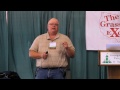
Livestock impact, cover crops, and extended grazing are key to soil health and profitability, reducing tillage and hay feeding. Metrics include soil organic matter, infiltration, Brix levels, and stocking rates. Mentorship and trying new approaches are crucial for progress.
-
Regenerative pig farming on forested, sloped land involves sustainable logging for pasture creation, planting diverse forages (grasses, legumes, brassicas), and using robust electric fencing with high-tensile wire. Supplementing with homegrown produce and by-products is key.
-
Practical experiences with year-round grazing for pigs, chickens, cattle, sheep, and horses across various climates (PNW, Zone 5, NM) using heritage breeds, diverse forages (bamboo, native grasses), and strategic planting (persimmon, sea buckthorn) to minimize supplemental feed and improve soil.
-
Regenerative Livestock Farming as a Socioeconomic Model for Sustainable Agribusiness in Latin America (opens in new window)
Regenerative livestock farming in Latin America improved soil carbon, biodiversity, and water quality, while boosting farmer income and quality of life. Government support is key for wider adoption.
-
A 100-Year Review: A century of change in temperate grazing dairy systems. (opens in new window)
Dairy grazing systems evolved over 100 years from random grazing to intensive, high-output systems driven by research, technology, and breeding. Managed grazing, better genetics, and supplementary feeds increased productivity, while future challenges include labor, environment, and animal welfare.
-
Economic benefits of sustainable, forage-based cattle systems in Colombia and Nicaragua (opens in new window)
Using improved pasture plants and sustainable practices in cattle systems in Colombia and Nicaragua significantly boosted profitability and reduced costs, making them economically viable despite higher initial investments.
-
Guille Yearwood of Ellett Valley Beef Company in Virginia uses rotational grazing with daily moves and 70-90 day recovery for South Poll cattle, achieving fertilizer-free, profitable production and high forage yield through adaptive management.
-
JT Land & Cattle in New Mexico achieved improved land health and cattle performance (higher weaning weights, rebreeding rates) through adaptive grazing, cowpie analysis, and conservation programs, demonstrating a commitment to stewardship.