
How is climate-smart agriculture different from regenerative?
Climate-smart agriculture (CSA) is a framework focused on sustainably increasing productivity and incomes, adapting to climate change, and reducing greenhouse gas emissions. Regenerative agriculture is an outcome-based philosophy and set of practices that prioritize rebuilding soil health, biodiversity, and ecological function, which inherently enhances adaptation and mitigation. While CSA is more of a strategic approach that can encompass various practices, regenerative agriculture is a foundational system-building methodology that aims to heal and improve the land. Regenerative practices are widely recognized as a powerful way to achieve CSA's goals.
Read More: Complete Description
Sources behind this view
Sources behind this view
 Research
-
Climate Smart Agriculture in the African Context (opens in new window)
This study found: Climate-Smart Agriculture in Africa boosts farm production, builds climate resilience, and reduces emissions. It's context-specific, requiring tailored strategies, farmer adoption support, policy alig
-
Climate-Smart Agriculture in Practice: Evidence from Adaptive Farming Systems (opens in new window)
This study found: Climate-Smart Agriculture (CSA) integrates farming productivity with climate adaptation and environmental protection. Practices like conservation agriculture, agroforestry, and water-efficient irrigat
-
CLIMATE-SMART AGRICULTURE: EMPHASIS ON PRINCIPLES AND PRACTICES OF SOIL MANAGEMENT (opens in new window)
This study found: Climate-smart agriculture (CSA) aims for productive, resilient farms that reduce emissions. Key soil management practices include erosion control, INM, organic farming, conservation agriculture, bioch
-
A Global Framework for Carbon-Smart Agricultural Systems: Evaluating the Role of Regenerative Practices in Carbon Sequestration and Emissions Mitigation (opens in new window)
This study found: Global study shows regenerative practices like cover crops, agroforestry, and no-till significantly boost soil carbon and cut GHG emissions, with integrated approaches yielding strongest results.
 From the Web
-
Climate Smart Agriculture (CSA) aims to achieve food security by increasing productivity, enhancing adaptation to climate change, and mitigating greenhouse gas emissions. CSA practices are context-spe
-
Regenerative agriculture, not 'Climate-Smart Agriculture,' is needed to feed the world and cool the planet by drawing down atmospheric carbon through soil restoration and photosynthesis, unlike indust
-
Climate-smart agriculture (CSA) boosts productivity, resilience, and reduces emissions through practices like conservation agriculture, agroforestry, mulching, and improved water management, offering
-
Regenerative agriculture is a holistic, principles-based approach, distinct from climate-smart agriculture, that considers the entire farm system to improve health and resilience, unlike simply adding
Key Points
Core Concept
- CSA: Sustainable productivity, adaptation, and emission reduction.
- Regenerative: Rebuilds soil health and ecological function.
- CSA is a framework; regenerative is a system-building philosophy.
- Regenerative practices often achieve CSA goals naturally.
- CSA can include non-regenerative but climate-beneficial methods.
Key Mechanisms
- CSA: Strategic adoption of climate-resilient technologies and practices.
- Regenerative: Enhancing soil biology, carbon sequestration, and biodiversity.
- CSA: Focus on output efficiency and risk management.
- Regenerative: Focus on ecological health and natural processes.
- CSA: Integration of climate data into farm planning.
Where It Applies
- CSA: Globally, applied through national adaptation plans.
- Regenerative: Diverse climates—temperate, tropical, arid, humid.
- CSA: Driven by policy, food security, and climate goals.
- Regenerative: Applicable to farms, ranches, and smallholdings worldwide.
- CSA: Encourages context-specific technology adoption.
Management Actions
- CSA: May use precision agriculture, optimized synthetic inputs.
- Regenerative: Employs cover crops, no-till, diverse rotations.
- CSA: Focus on reducing climate footprint and vulnerability.
- Regenerative: Aims to create self-sustaining, resilient ecosystems.
- CSA: Farmers adapt strategies based on climate forecasts.
Know the Debate
- CSA is strategic; regenerative is ecological system-building.
- Regenerative practices achieve CSA climate goals naturally.
- CSA can include non-regenerative climate-beneficial methods.
- Institutional support is debated for both approaches.
Going Deeper
1
Why This Matters: Intersecting Goals for a Resilient Future
The distinction between climate-smart agriculture (CSA) and regenerative agriculture is crucial for understanding how we can best address the interconnected challenges of food security, climate change, and environmental degradation. CSA, as a framework, directs efforts...
Why This Matters: Intersecting Goals for a Resilient Future
The distinction between climate-smart agriculture (CSA) and regenerative agriculture is crucial for understanding how we can best address the interconnected challenges of food security, climate change, and environmental degradation. CSA, as a framework, directs efforts...
The distinction between climate-smart agriculture (CSA) and regenerative agriculture is crucial for understanding how we can best address the interconnected challenges of food security, climate change, and environmental degradation. CSA, as a framework, directs efforts towards achieving climate resilience, mitigating greenhouse gas emissions, and ensuring sustainable productivity. Its strength lies in its ability to integrate climate considerations into a broad spectrum of agricultural development, encouraging a strategic approach to farming. This has led to programs supporting farmers in various regions, such as Ethiopia, to adopt irrigation efficiency techniques and climate-resilient crop varieties, thereby boosting yields by 10-20% and reducing water usage by 15-25% within 3-5 years.
Regenerative agriculture, conversely, offers a foundational solution rooted in rebuilding ecological health. By focusing on restoring soil organic matter, enhancing biodiversity, and improving natural water cycles, it creates inherently resilient and productive systems. As an illustrative example, farmers in Canada's Prairies adopting regenerative practices like diverse cover cropping and reduced tillage have reported a 0.5-1.0% annual increase in soil organic carbon (SOC) over a decade, contributing significantly to carbon sequestration. Such rates are highly context-dependent. This proactive ecological enhancement naturally addresses many of CSA's objectives. The integrated nature of regenerative agriculture means that actions taken to improve soil health directly contribute to climate mitigation and adaptation, offering a holistic pathway to sustainability that goes beyond simply managing for climate outcomes.
Sources behind this view
Sources behind this view
 Videos & Podcasts
-
Regenerative agriculture provides solutions for climate change, human health, and soil degradation, contrasting with industrial agriculture's harmful impacts, including glyphosate use. Practices like

-
Adopts regenerative agriculture principles: minimize disturbance, keep living roots, use soil armor, integrate animals (livestock grazing, multi-species), and increase biodiversity. These practices bu

-
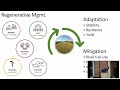
Regenerative Agriculture practices like minimizing tillage, maximizing crop and species diversity, keeping soil covered, and maintaining living roots build system stability and resilience, supported b
-
Adopting regenerative agriculture requires convincing farmers through risk mitigation, mindset change, and demonstrating results via trials and monitoring. Benefits include reduced costs, improved soi

Research
-
Systematic review of regenerative farming: Addressing agricultural sustainability challenges (opens in new window)
This study found: Systematic review of 31 studies shows regenerative farming improves soil health, biodiversity, and carbon capture, aiding sustainability. Technology is key for adoption, but policy, farmer understandi
-
Climate Smart Agriculture in the African Context (opens in new window)
This study found: Climate-Smart Agriculture in Africa boosts farm production, builds climate resilience, and reduces emissions. It's context-specific, requiring tailored strategies, farmer adoption support, policy alig
-
Regenerative Agriculture and Soil Conservation: A Comprehensive Review (opens in new window)
This study found: Regenerative Agriculture and soil conservation practices significantly improve soil health, carbon sequestration, and farm resilience by minimizing disturbance, using organic inputs, and integrating d
-
A Global Framework for Carbon-Smart Agricultural Systems: Evaluating the Role of Regenerative Practices in Carbon Sequestration and Emissions Mitigation (opens in new window)
This study found: Global study shows regenerative practices like cover crops, agroforestry, and no-till significantly boost soil carbon and cut GHG emissions, with integrated approaches yielding strongest results.
From the Web
-
Regenerative agriculture builds ecological and economic resilience through practices like soil carbon sequestration, perennial farming, and climate-friendly livestock management, offering a pathway to
-
Regenerative agriculture enhances water retention, nutrient density, resilience to climate change, and provides significant economic and social benefits, empowering local communities and small farmers
-
Regenerative agriculture, not 'Climate-Smart Agriculture,' is needed to feed the world and cool the planet by drawing down atmospheric carbon through soil restoration and photosynthesis, unlike indust
-
Climate-smart agriculture (CSA) boosts productivity, resilience, and reduces emissions through practices like conservation agriculture, agroforestry, mulching, and improved water management, offering
2
How Regenerative Practices Achieve Climate-Smart Goals
Regenerative agriculture's core practices are powerful engines for achieving climate-smart agriculture (CSA) objectives. Take, for instance, the principle of building soil health. Practices like cover cropping and reduced or no-till farming directly increase soil organic...
How Regenerative Practices Achieve Climate-Smart Goals
Regenerative agriculture's core practices are powerful engines for achieving climate-smart agriculture (CSA) objectives. Take, for instance, the principle of building soil health. Practices like cover cropping and reduced or no-till farming directly increase soil organic...
Regenerative agriculture's core practices are powerful engines for achieving climate-smart agriculture (CSA) objectives. Take, for instance, the principle of building soil health. Practices like cover cropping and reduced or no-till farming directly increase soil organic matter. This not only improves soil structure, water infiltration, and nutrient cycling—all crucial for enhancing agricultural productivity and resilience to drought and extreme rainfall—but also sequesters atmospheric carbon dioxide. Field studies in the Midwestern U.S. have shown that increasing soil organic matter by just 0.5% can sequester approximately 6-8 metric tons of CO2e per hectare (2.4-3.2 metric tons of CO2e per acre) over 5-10 years.
Integrating livestock through rotational grazing is another key regenerative practice that supports CSA. Well-managed grazing can stimulate plant growth, incorporate manure into the soil—acting as a natural fertilizer and enhancing soil biology—and break up soil compaction. This system's ability to cycle nutrients reduces the need for synthetic fertilizers, thereby lowering the greenhouse gas emissions associated with their production and application (a significant source of nitrous oxide, N2O). Farmers in Argentina have observed improved pasture health and increased stocking rates by 15-20% within 2-3 years of implementing well-planned rotational grazing, demonstrating enhanced productivity and resilience.
Agroforestry, integrating trees and shrubs into arable or pastoral systems, provides multiple benefits that align with CSA. Trees protect crops from wind and excessive sun, improve soil fertility through nitrogen fixation and leaf litter decomposition, enhance water retention, and can provide additional income through fruit, nut, or timber production. This multifaceted approach built into the landscape diversifies farm output, buffers against climate shocks, and offers significant carbon sequestration potential in both biomass and soil. Experiments in the humid tropics of Brazil have shown that integrated agroforestry systems can sequester 2-5 metric tons of CO2e per hectare per year more than monoculture systems, alongside improved crop yields.
Sources behind this view
Sources behind this view
Videos & Podcasts
-
Regenerative agriculture provides solutions for climate change, human health, and soil degradation, contrasting with industrial agriculture's harmful impacts, including glyphosate use. Practices like
-
Regenerative agriculture can mitigate climate change by rebuilding soil carbon. Key practices include using cover crops, minimizing tillage, increasing crop rotations, and optimizing inputs to enhance

-
Regenerative agriculture, particularly holistic management with cattle, restores degraded land, sequesters soil carbon, and increases water retention. This approach is profitable for ranchers by reduc

-
Adopts regenerative agriculture principles: minimize disturbance, keep living roots, use soil armor, integrate animals (livestock grazing, multi-species), and increase biodiversity. These practices bu
 Community
-
Reducing tillage, crop rotation, and perennial livestock systems enhance soil organic matter, water holding capacity, and carbon sequestration while reducing nitrous oxide and methane emissions.
Read more (opens in new window) sustainableagriculture.net -
Regenerative agriculture rebuilds soil organic matter and biodiversity through practices like cover cropping, reduced tillage, minimal artificial fertilizers, and regenerative grazing, ultimately impr
Read more (pp. 8-9) (opens PDF, pp. 8-9) permies.com -
Carbon farming builds soil organic matter, increasing water retention by 25,000 gallons/hectare per 1% increase, enhancing drought resilience and flood prevention, while also boosting biodiversity and
Read more (opens in new window) sustainableagriculture.net -
Well-designed small gardens create balanced ecosystems, reducing fossil fuel use and sequestering carbon via no-till, hugelkultur, and rainwater catchment to control runoff and improve soil health.
Read more (opens in new window) permies.com
Research
-
A Global Framework for Carbon-Smart Agricultural Systems: Evaluating the Role of Regenerative Practices in Carbon Sequestration and Emissions Mitigation (opens in new window)
This study found: Global study shows regenerative practices like cover crops, agroforestry, and no-till significantly boost soil carbon and cut GHG emissions, with integrated approaches yielding strongest results.
-
Potential regenerative agricultural practices for different ecosystems to rebuild soil health and ensure food security: A comprehensive review (opens in new window)
This study found: Regenerative agriculture practices boost soil health, increase crop yields by up to 18%, and cut greenhouse gas emissions by up to 5% across tropical and temperate regions, with specific strategies ne
-
A Review of Soil Organic Carbon Dynamics under Regenerative Agricultural Practices (opens in new window)
This study found: Regenerative agriculture practices like cover crops and reduced tillage significantly increase soil organic carbon (0.2-1.5 Mg C ha⁻¹ yr⁻¹), improving soil health and resilience. Challenges include co
-
Assessing the Role of Regenerative Practices in Enhancing Soil Carbon Sequestration in Farmlands: A Review (opens in new window)
This study found: Regenerative farming practices like cover crops, reduced tillage, and agroforestry effectively store soil carbon (0.2-2.5 Mg C ha⁻¹ yr⁻¹), improving soil health and reducing emissions, especially in t
From the Web
-
Regenerative agriculture utilizes methods like no-till, agroforestry, perennial crops, planned rotational grazing (Holistic Management), compost application, and pasture cropping to improve soil healt
-
Regenerative agriculture, especially increasing soil organic carbon through methods like BEAM and holistic grazing, can sequester significant atmospheric CO2, offering a solution to climate change.
-
Regenerative agriculture in the Gran Chaco involves planting native species between soybean crops to improve soil and biodiversity, and grazing cattle in forests to fertilize ecosystems. Traceability
-
U.S. agriculture can become carbon-negative by adopting climate-smart practices like cover crops and managed grazing, which improve soil health, sequester carbon, and enhance farm resilience.
3
Climate-Smart Agriculture: A Strategic Framework
Climate-smart agriculture (CSA) is not a fixed set of practices but rather a decision-making framework designed to guide agricultural systems toward three interlocking goals: increasing productivity and incomes, adapting to climate change impacts, and reducing greenhouse...
Climate-Smart Agriculture: A Strategic Framework
Climate-smart agriculture (CSA) is not a fixed set of practices but rather a decision-making framework designed to guide agricultural systems toward three interlocking goals: increasing productivity and incomes, adapting to climate change impacts, and reducing greenhouse...
Climate-smart agriculture (CSA) is not a fixed set of practices but rather a decision-making framework designed to guide agricultural systems toward three interlocking goals: increasing productivity and incomes, adapting to climate change impacts, and reducing greenhouse gas (GHG) emissions. It encourages farmers and policymakers to evaluate interventions based on their performance against these targets. For example, a farmer in India might assess whether adopting a new drought-resistant rice variety (adaptation), improving irrigation efficiency (both adaptation and productivity), and optimizing fertilizer application (emission reduction) offers the best overall climate-smart solution for their specific farm and regional challenges.
The framework's strength lies in its adaptability. In arid regions, CSA might prioritize water harvesting technologies, drought-tolerant crops, and efficient irrigation. In flood-prone areas, it might focus on flood-resistant crops, improved drainage, and soil health practices that increase water infiltration to reduce runoff. The Global Center on Agricultural Research (GCARD) often showcases projects where farmers in sub-Saharan Africa have adopted improved seed varieties and expanded access to market information, leading to a 15-25% increase in yields and enhanced resilience to unpredictable rainfall patterns, all within the CSA paradigm.
Crucially, CSA emphasizes the integration of these goals, acknowledging that they are not always mutually exclusive. Increasing productivity can sometimes lead to higher emissions, and adaptation measures might have economic trade-offs. CSA seeks a balanced approach, aiming for synergy. For instance, adopting conservation tillage (which reduces soil disturbance, conserves moisture, and decreases fuel use) can enhance soil health, increase yields by 5-10% over 3-5 years, and lower GHG emissions, thus serving all three CSA objectives. However, it's important to note that not all CSA practices necessarily rebuild ecological health to the same degree as regenerative agriculture.
Sources behind this view
Sources behind this view
Videos & Podcasts
-
Climate-smart agriculture focuses on building soil health through cover cropping and reduced tillage. These practices enhance organic matter, water retention, and reduce erosion, leading to improved c
Community
-
Climate Smart Agriculture (CSA) promotes practices to increase soil carbon, reduce greenhouse gas emissions, and improve farm efficiency. Key programs include SWEEP (efficient irrigation, up to $200k)
Read more (opens in new window) ucanr.edu -
Climate Smart Agriculture (CSA) in California integrates adaptation and mitigation to boost farm productivity, build resilience, and reduce GHG emissions, supported by programs like SWEEP, HSP, and AM
Read more (opens in new window) ucanr.edu -
USDA launches Partnership for Climate-Smart Commodities to fund pilot projects using climate-smart practices, measure GHG benefits, and support diverse farming systems like cover crops, composting, an
Read more (opens in new window) sustainableagriculture.net -
The Climate Smart Agriculture Program in California provides technical assistance for SWEEP, HSP, and AMMP grants, helping growers adopt practices that save water, sequester carbon, and reduce emissio
Read more (opens in new window) ucanr.edu
Research
-
Climate Smart Agriculture in the African Context (opens in new window)
This study found: Climate-Smart Agriculture in Africa boosts farm production, builds climate resilience, and reduces emissions. It's context-specific, requiring tailored strategies, farmer adoption support, policy alig
-
Innovative Technologies for Climate-Smart Agriculture for Pioneering Resilience Through Climate Adaptation and Mitigation in Farming Systems (opens in new window)
This study found: Climate-Smart Agriculture (CSA) in India uses new technologies to boost food production, build resilience to climate change, and cut emissions. Challenges like cost and awareness hinder adoption, requ
-
Climate-Smart Agriculture in Practice: Evidence from Adaptive Farming Systems (opens in new window)
This study found: Climate-Smart Agriculture (CSA) integrates farming productivity with climate adaptation and environmental protection. Practices like conservation agriculture, agroforestry, and water-efficient irrigat
-
CLIMATE-SMART AGRICULTURE: EMPHASIS ON PRINCIPLES AND PRACTICES OF SOIL MANAGEMENT (opens in new window)
This study found: Climate-smart agriculture (CSA) aims for productive, resilient farms that reduce emissions. Key soil management practices include erosion control, INM, organic farming, conservation agriculture, bioch
From the Web
-
Climate-Smart Agriculture (CSA) sustainably increases productivity, enhances resilience, and reduces GHG emissions through practices like land husbandry, water harvesting, and climate-resilient crops,
-
Climate-smart agriculture aims for a 'triple win' (productivity, resilience, mitigation) through integrated approaches like agroforestry and conservation agriculture. Research focuses on soil health,
-
Climate-Smart Agriculture (CSA) practices enhance soil carbon, reduce water use, and improve efficiency. UC ANR and CDFA provide technical assistance for soil health, manure management, and water effi
Source: ucanr.edu (opens in new window) -
Presents global 2021 case studies of Climate-Smart Agriculture (CSA) by FAO, focusing on increasing productivity, building resilience, and reducing emissions, with emphasis on smallholder farmers and
4
Regenerative Agriculture: Building Ecological Capital
Regenerative agriculture is a foundational philosophy and set of practices centered on rebuilding and enhancing the biological health of the land. It views the farm not as an isolated production unit, but as part of an interconnected ecosystem. The core aim is to move...
Regenerative Agriculture: Building Ecological Capital
Regenerative agriculture is a foundational philosophy and set of practices centered on rebuilding and enhancing the biological health of the land. It views the farm not as an isolated production unit, but as part of an interconnected ecosystem. The core aim is to move...
Regenerative agriculture is a foundational philosophy and set of practices centered on rebuilding and enhancing the biological health of the land. It views the farm not as an isolated production unit, but as part of an interconnected ecosystem. The core aim is to move beyond sustainability (maintaining the current state) towards restoration and enhancement of natural capital, particularly soil health and biodiversity. This shift is driven by the understanding that healthy ecosystems are naturally more productive, resilient, and carbon-rich. Farmers practicing regenerative agriculture actively work to mimic natural ecological processes.
Central to this approach is the concept of fostering a vibrant soil food web. Practices such as cover cropping with diverse species, the use of compost and other organic amendments, and minimal soil disturbance (no-till or direct seeding) are employed to feed microbes, fungi, and other soil organisms. These organisms are vital for nutrient cycling, disease suppression, and creating good soil structure. Farmers in Europe have reported that implementing diverse cover crop cocktails for 2-4 years can improve soil aggregation by 10-15% and reduce weed pressure, contributing to a more robust and self-regulating system.
Integrating livestock is another cornerstone of regenerative agriculture. Rotational grazing, where animals are moved frequently through pastures, stimulates plant vigor, redistributes fertility through manure, and contributes to soil carbon sequestration. This reintegration of animal impact, historically a key element of natural ecosystems, helps to create a more balanced and functional farm system. For example, ranchers in the U.S. Southwest have seen significant improvements in grassland health and water retention within 3-6 years of adopting high-density, short-duration grazing, leading to deeper soil profiles and increased forage yields. Regenerative agriculture, therefore, is about creating a farm that heals the land.
Sources behind this view
Sources behind this view
Videos & Podcasts
-
Regenerative agriculture provides solutions for climate change, human health, and soil degradation, contrasting with industrial agriculture's harmful impacts, including glyphosate use. Practices like
-
Adopts regenerative agriculture principles: minimize disturbance, keep living roots, use soil armor, integrate animals (livestock grazing, multi-species), and increase biodiversity. These practices bu
-
Regenerative agriculture regenerates the environment through animal integration, building soil, biodiversity, and resilience, while promoting local food systems and a less perfectionist, more connecte
Community
-
Regenerative agriculture rebuilds soil organic matter and biodiversity through practices like cover cropping, reduced tillage, minimal artificial fertilizers, and regenerative grazing, ultimately impr
Read more (pp. 8-9) (opens PDF, pp. 8-9) permies.com -
Regenerative strategy for degraded land: 1. Install earthworks (swales, hugelkultur) for water management. 2. Plant multi-species cover crops for a year-round living root. 3. Implement mob grazing wit
Read more (opens in new window) permies.com -
Build healthy pasture soils by minimizing tillage, maintaining living roots and species diversity, and implementing proper grazing management. Livestock are essential for nutrient cycling and stimulat
Read more (opens in new window) smallfarms.cornell.edu -
Jon from Wild Roots Farm in Vermont advocates for regenerative practices like limited tillage, crop rotations, and rotational grazing to build resilience in food systems. He explains how these methods
Read more (opens in new window) smallfarms.cornell.edu
Research
-
Regenerative Agriculture: Restoring Ecosystems¢ Resilience and Productivity: A Review (opens in new window)
This study found: Regenerative agriculture builds soil health and ecosystem services through practices like no-till, cover crops, and diverse rotations. It increases soil organic matter, improves water infiltration, bo
-
The Indigenous Roots of Regenerative Agriculture (opens in new window)
This study found: Modern regenerative agriculture practices are rooted in millennia of Indigenous land stewardship, offering profound knowledge and a crucial value system of respect and reciprocity for true transformat
-
Regenerative agriculture for sustainable crop productivity: A comprehensive review (opens in new window)
This study found: Regenerative Agriculture revitalizes soil by minimizing disturbance, maximizing living roots, fostering diversity, and reducing synthetic inputs. It improves soil health, carbon sequestration, and cro
-
Restoration Through Regeneration: a Scientific and Political Lens into Regenerative Agriculture in the United States (opens in new window)
This study found: Regenerative agriculture builds soil health and resilience using practices like no-till and cover crops, contrasting with industrial farming. Current U.S. policies hinder its adoption, requiring refor
From the Web
-
Regenerative agriculture regenerates topsoil, increases biodiversity, and improves carbon/water cycles through methods like minimal tillage, soil cover, diversity, and animal integration, boosting pro
-
Regenerative agriculture builds ecological and economic resilience through practices like soil carbon sequestration, perennial farming, and climate-friendly livestock management, offering a pathway to
-
Regenerative agriculture, rooted in agroecology and the Four Principles of Organic Agriculture (Health, Ecology, Fairness, Care), aims to improve systems by increasing soil organic matter through prac
-
Regenerative agriculture restores soil health through practices like cover cropping and crop rotation, leading to carbon sequestration, increased resiliency, and reduced reliance on off-farm inputs, b
5
Common Misconceptions: CSA vs. Regenerative
A common misconception is that climate-smart agriculture (CSA) and regenerative agriculture are interchangeable or that CSA inherently implies regenerative practices. While regenerative practices are excellent tools for achieving CSA goals, CSA itself is a broader...
Common Misconceptions: CSA vs. Regenerative
A common misconception is that climate-smart agriculture (CSA) and regenerative agriculture are interchangeable or that CSA inherently implies regenerative practices. While regenerative practices are excellent tools for achieving CSA goals, CSA itself is a broader...
A common misconception is that climate-smart agriculture (CSA) and regenerative agriculture are interchangeable or that CSA inherently implies regenerative practices. While regenerative practices are excellent tools for achieving CSA goals, CSA itself is a broader strategic framework that can encompass a wider range of interventions. For instance, a farmer might optimize the use of synthetic nitrogen fertilizers through precision application to reduce emissions and improve efficiency. This practice aligns with CSA's goals of productivity and GHG mitigation but isn't inherently regenerative, as it doesn't necessarily focus on building soil biology or organic matter.
Another misconception is that either CSA or regenerative agriculture requires a complete overhaul or abandonment of current practices overnight. Both approaches are often adopted gradually. For CSA, this might involve a phased implementation of new technologies or improved management techniques. Regenerative agriculture often involves a transition period of 3-7 years where farmers strategically introduce practices like cover crops and reduced tillage. This period can involve a temporary yield dip or increased management burden as biological systems mature and the farm weans off previous inputs. During this transition, farmers might continue using some synthetic inputs while working towards fully biological fertility management. The emphasis is on continuous improvement and adaptation, not absolute rules.
Furthermore, there's a misunderstanding that these approaches are solely for large-scale commercial farms. Both CSA and regenerative agriculture are applicable across a wide range of scales and systems. Smallholder farmers in Asia are adopting CSA by improving water management, planting climate-resilient crops, and integrating trees into their farming systems, often with governmental or NGO support. Similarly, regenerative principles can be applied to smallholdings, kitchen gardens, and community farms, focusing on soil building, biodiversity enhancement, and closed-loop nutrient cycles. The core principles are universal, adaptable to local resources and constraints.
Sources behind this view
Sources behind this view
Videos & Podcasts
-
Adopting regenerative practices should start small and incrementally, focusing on soil health over short-term yields. Collaboration, strategic nutrient sourcing, and leveraging resources like Continuu
-
To transition to regenerative agriculture, start small, increase diversity, reduce expenses, and focus on profit over yield. Avoid product-based 'regenerative' solutions and be wary of conventional mo

-
The biggest challenge in regenerative agriculture is the mindset shift required for a graceful transition, moving away from dogma and judgment towards iterative, context-specific practices that build

-
Regenerative agriculture aims to improve ecological systems. Certifications exist for both conventional and organic farms. Organic farming embeds regenerative practices like crop rotation and cover cr

Research
-
A Global Framework for Carbon-Smart Agricultural Systems: Evaluating the Role of Regenerative Practices in Carbon Sequestration and Emissions Mitigation (opens in new window)
This study found: Global study shows regenerative practices like cover crops, agroforestry, and no-till significantly boost soil carbon and cut GHG emissions, with integrated approaches yielding strongest results.
-
Regenerative agriculture for sustainable crop productivity: A comprehensive review (opens in new window)
This study found: Regenerative Agriculture revitalizes soil by minimizing disturbance, maximizing living roots, fostering diversity, and reducing synthetic inputs. It improves soil health, carbon sequestration, and cro
-
Regenerative Agriculture: Restoring Ecosystems¢ Resilience and Productivity: A Review (opens in new window)
This study found: Regenerative agriculture builds soil health and ecosystem services through practices like no-till, cover crops, and diverse rotations. It increases soil organic matter, improves water infiltration, bo
-
Regenerative Agriculture: Insights and Challenges in Farmer Adoption (opens in new window)
This study found: Review of 7 regenerative agriculture practices (no-till, crop rotation, cover crops, etc.) highlights benefits and key adoption challenges like cost, farm size, and institutional barriers for scalable
From the Web
-
Regenerative agriculture, not 'Climate-Smart Agriculture,' is needed to feed the world and cool the planet by drawing down atmospheric carbon through soil restoration and photosynthesis, unlike indust
6
Regional Variations and Adaptations
The implementation of both climate-smart agriculture (CSA) and regenerative agriculture principles varies significantly across different regions, dictated by local climactic conditions, soil types, available resources, and socio-economic contexts. In the arid and...
Regional Variations and Adaptations
The implementation of both climate-smart agriculture (CSA) and regenerative agriculture principles varies significantly across different regions, dictated by local climactic conditions, soil types, available resources, and socio-economic contexts. In the arid and...
The implementation of both climate-smart agriculture (CSA) and regenerative agriculture principles varies significantly across different regions, dictated by local climactic conditions, soil types, available resources, and socio-economic contexts. In the arid and semi-arid regions of Australia, for instance, CSA often emphasizes water efficiency through improved irrigation techniques, the adoption of drought-tolerant crop varieties, and practices that maximize soil moisture retention, such as stubble retention and minimal tillage. Regenerative approaches in these areas focus heavily on building soil organic matter to improve water-holding capacity by 10-20% over 5-8 years, making farms more resilient to prolonged dry spells.
In the humid tropics of South America, such as Brazil or Colombia, CSA might focus on reducing deforestation associated with agricultural expansion, improving the resilience of perennial cropping systems to extreme weather, and managing pests and diseases that are exacerbated by warmer temperatures. Regenerative agriculture here often involves agroforestry systems, where diverse perennial crops are integrated with trees, enhancing biodiversity, soil fertility, and carbon sequestration. Farmers are seeing increased yields of coffee or cacao by 15-30% when integrated into shaded systems within 4-6 years, coupled with greater resistance to extreme heat and rainfall.
In temperate regions of North America and Europe, CSA strategies frequently address nutrient management to reduce the emissions of nitrous oxide from synthetic fertilizers, alongside practices that build soil carbon and improve water infiltration to manage both drought and heavy rainfall events. Regenerative agriculture in these climates heavily emphasizes diverse cover cropping, no-till farming, and the integration of livestock for nutrient cycling. Farmers in the U.S. Midwest have reported substantial improvements in soil health metrics, including a 1-2% increase in soil organic matter and a 20-40% improvement in water infiltration rates, over 5-10 years of consistent regenerative management.
Sources behind this view
Sources behind this view
Videos & Podcasts
-
Regenerative agriculture encompasses holistic grazing and pasture cropping, where edible cereals and canola are drilled into native grasslands and grazed to stimulate soil ecology. This method, often

-
Adopting regenerative practices should start small and incrementally, focusing on soil health over short-term yields. Collaboration, strategic nutrient sourcing, and leveraging resources like Continuu
-
Regenerative agriculture can mitigate climate change by rebuilding soil carbon. Key practices include using cover crops, minimizing tillage, increasing crop rotations, and optimizing inputs to enhance
-
Regenerative agriculture addresses climate change by maximizing plant photosynthesis for carbon sequestration and enhancing the water cycle (hydrosphere) for planetary cooling, contrasting with indust

Research
-
Potential regenerative agricultural practices for different ecosystems to rebuild soil health and ensure food security: A comprehensive review (opens in new window)
This study found: Regenerative agriculture practices boost soil health, increase crop yields by up to 18%, and cut greenhouse gas emissions by up to 5% across tropical and temperate regions, with specific strategies ne
-
A Global Framework for Carbon-Smart Agricultural Systems: Evaluating the Role of Regenerative Practices in Carbon Sequestration and Emissions Mitigation (opens in new window)
This study found: Global study shows regenerative practices like cover crops, agroforestry, and no-till significantly boost soil carbon and cut GHG emissions, with integrated approaches yielding strongest results.
-
Regenerative Agriculture: Restoring Ecosystems¢ Resilience and Productivity: A Review (opens in new window)
This study found: Regenerative agriculture builds soil health and ecosystem services through practices like no-till, cover crops, and diverse rotations. It increases soil organic matter, improves water infiltration, bo
-
Climate Smart Agriculture in the African Context (opens in new window)
This study found: Climate-Smart Agriculture in Africa boosts farm production, builds climate resilience, and reduces emissions. It's context-specific, requiring tailored strategies, farmer adoption support, policy alig
From the Web
-
Climate-smart agriculture (CSA) integrates adaptation and mitigation through practices like conservation agriculture (minimum tillage, soil cover, crop rotation) and agroforestry to boost food product
-
Climate-Smart Agriculture (CSA) integrates productivity, adaptation, and mitigation to achieve food security under climate change. In Argentina, no-tillage, diversified rotations, and precise fertiliz
7
Measuring Success: Beyond Yield
Measuring the success of climate-smart agriculture (CSA) and regenerative agriculture requires looking beyond simple yield increases. For CSA, success is often evaluated against its three core goals: 1) Productivity and Income: This includes not only crop or livestock...
Measuring Success: Beyond Yield
Measuring the success of climate-smart agriculture (CSA) and regenerative agriculture requires looking beyond simple yield increases. For CSA, success is often evaluated against its three core goals: 1) Productivity and Income: This includes not only crop or livestock...
Measuring the success of climate-smart agriculture (CSA) and regenerative agriculture requires looking beyond simple yield increases. For CSA, success is often evaluated against its three core goals: 1) Productivity and Income: This includes not only crop or livestock output but also economic resilience, reduced input costs, and stable or increased farm profitability over time. For example, a project might track a 10-15% increase in net income for farmers adopting CSA practices over a 5-year period. 2) Climate Change Adaptation and Resilience: Metrics could include reduced crop losses during extreme weather events, improved water availability, or increased biodiversity that supports pollination and pest control. Farmers in water-scarce regions might measure a 25% reduction in irrigation needs. 3) Greenhouse Gas (GHG) Emissions Reduction: This involves quantifying reductions in emissions of CO2, methane (CH4), and nitrous oxide (N2O) through practices like improved fertilizer management, reduced tillage, and better manure handling. A 10-20% reduction in the farm's overall carbon footprint within 3-5 years is a common target.
Regenerative agriculture's success metrics are deeply tied to ecological health and long-term system viability. Key indicators include: 1) Soil Health: This is paramount and measured through soil organic matter content (aiming for an annual increase of 0.2-1.0% over time), soil aggregate stability, water infiltration rates (e.g., increasing from 1 cm/hour to 5 cm/hour over 5-7 years), and increased microbial biomass and diversity. 2) Biodiversity: Monitoring the presence and abundance of beneficial insects, pollinators, birds, and soil organisms provides evidence of a thriving ecosystem. 3) Water Cycle Enhancement: This is assessed by improved water infiltration, reduced runoff and erosion, and increased soil moisture retention, leading to reduced irrigation needs or greater drought resilience. 4) Nutrient Cycling Efficiency: Reduced reliance on synthetic fertilizers and improved availability of nutrients from biological sources, reflected in tissue analysis and reduced input costs. Farmers in New Zealand have reported a 30-50% reduction in synthetic fertilizer needs within 5-7 years by focusing on soil biology and diverse pastures. Success in regenerative agriculture is often seen as the farm's increasing ability to function like a vibrant, natural ecosystem.
Sources behind this view
Sources behind this view
Videos & Podcasts
-
Case studies of farmers like Duane Beck, Kofi Boa, David Brandt, and Gabe Brown demonstrate that regenerative agriculture (no-till, cover crops, diverse rotations) significantly increases soil health,

-
Regenerative practices lead to exponential soil health improvements (e.g., 15-inch aggregate depth in 4 years) and significant ecological benefits (4x GHG sink, 3x birds, 2.3x water infiltration) comp

-
Measure the impact of regenerative actions using metrics like sap or Haney analysis, quantifying results in dollars and cents, to track true success and profitability over time.

-
Five key success metrics are used: cattle cost of gain, soil organic matter (crucial for pH stabilization and soil health), water filtration, water retention, and microbial activity measured by Haney

Research
-
Regenerative Agriculture: Restoring Ecosystems¢ Resilience and Productivity: A Review (opens in new window)
This study found: Regenerative agriculture builds soil health and ecosystem services through practices like no-till, cover crops, and diverse rotations. It increases soil organic matter, improves water infiltration, bo
-
Systematic review of regenerative farming: Addressing agricultural sustainability challenges (opens in new window)
This study found: Systematic review of 31 studies shows regenerative farming improves soil health, biodiversity, and carbon capture, aiding sustainability. Technology is key for adoption, but policy, farmer understandi
-
Regenerative Agriculture in the 21st Century: A Systematic Review of Environmental, Agronomic, and Socio-Economic Outcomes (opens in new window)
This study found: Systematic review finds Regenerative Agriculture boosts environment but faces yield gaps (16-21%) and socio-economic barriers. Advocates for resilience over maximum yields, needing financial support a
-
Potential regenerative agricultural practices for different ecosystems to rebuild soil health and ensure food security: A comprehensive review (opens in new window)
This study found: Regenerative agriculture practices boost soil health, increase crop yields by up to 18%, and cut greenhouse gas emissions by up to 5% across tropical and temperate regions, with specific strategies ne
From the Web
-
Regenerative agriculture improves soil health, biodiversity, and farm profitability by working with nature. Success is measured by outcomes like nutrient-dense food, resilient ecosystems, and carbon s
8
Know the Debate
Climate-smart agriculture (CSA) and regenerative agriculture share common goals but differ in approach. CSA is a strategic framework focused on pro...
Know the Debate
Climate-smart agriculture (CSA) and regenerative agriculture share common goals but differ in approach. CSA is a strategic framework focused on pro...
Climate-smart agriculture (CSA) and regenerative agriculture share common goals but differ in approach. CSA is a strategic framework focused on productivity, adaptation, and emissions reduction, often driven by policy and employing optimized inputs. Regenerative agriculture is a foundational philosophy rebuilding soil health and ecological function, inherently delivering climate benefits. While regenerative practices strongly support CSA, CSA can include methods that pragmatically reduce climate impact without necessarily restoring full ecological health. The debate on institutional support highlights whether top-down guidance or farmer-led innovation best fosters these agricultural transformations.
Are CSA and regenerative agriculture fundamentally compatible?
CSA as broader strategic framework
Climate-smart agriculture (CSA) is a strategic approach to boost productivity, adapt to climate change, and reduce emissions, often utilizing optimized synthetic inputs and precision agriculture.
Sources behind this view
Sources behind this view
Research
-
CLIMATE-SMART AGRICULTURE: EMPHASIS ON PRINCIPLES AND PRACTICES OF SOIL MANAGEMENT (opens in new window)
This study found: Climate-smart agriculture (CSA) is a way of farming that helps us deal with climate change while still producing enough food. It focuses on three main goals: keeping farms productive and profitable, making them more resilient to extreme weather, and reducing greenhouse gas emissions from farming. This article highlights how managing our soil is key to CSA. Practices like preventing soil erosion, using nutrients wisely (combining organic and synthetic sources), organic farming, conservation tillage, using biochar, and integrating trees into farms (agroforestry) are all important. Good soil management for CSA needs new ideas, careful long-term planning, and supportive policies.
-
A Review of Climate-smart Agriculture is a New Approach to Farming System (opens in new window)
This study found: This review looks at 'Climate-Smart Agriculture' (CSA), a farming approach that emerged to address food needs, population growth, climate change, and resource issues. The study suggests that while CSA encourages a broad, team-based approach to farming, it can also operate in a way that focuses only on increasing crop yields, potentially overlooking deeper issues of power and inequality in the food system. The review highlights that CSA works well with 'Sustainable Intensification,' which means producing more food more efficiently while reducing environmental impact. Key aspects of CSA include creating food systems, farms, and soils that are resilient to climate change.
-
A Global Framework for Carbon-Smart Agricultural Systems: Evaluating the Role of Regenerative Practices in Carbon Sequestration and Emissions Mitigation (opens in new window)
This study found: A global study analyzed research on regenerative farming practices like planting cover crops, integrating livestock, using trees on farms (agroforestry), and no-till farming. The findings show that all these methods help store more carbon in the soil and reduce greenhouse gas emissions compared to conventional farming. Practices that combined different methods, such as using trees alongside other regenerative techniques, showed the strongest benefits. While these practices are powerful tools for fighting climate change and ensuring food security, their exact impact can vary depending on local soil and weather conditions. The researchers developed a flexible framework to help policymakers and farmers evaluate these practices in different regions.
Regenerative as ecological system-building
Regenerative agriculture is a philosophy focused on rebuilding soil health and ecological function, inherently achieving climate goals through practices that often reduce or replace synthetic inputs.
Sources behind this view
Sources behind this view
Videos & Podcasts
-
Regenerative agriculture (no-till, crop rotation, lower inputs) is a cost-effective, win-win climate solution for soil health and carbon sequestration, contrasting with expensive technologies like direct air capture.

-
Regenerative agriculture actively mitigates climate change by covering bare soil with vegetation, reducing temperatures, sequestering carbon, and improving water cycles, with the ambitious potential to impact entire landscapes like the Sahara Desert.

Research
-
Regenerative Agriculture: Integrating Soil Health, Carbon Management and Socio-ecological Outcomes (opens in new window)
This study found: Regenerative agriculture is a farming approach that focuses on improving soil health, storing carbon, and building stronger communities. It uses practices like planting cover crops, reducing plowing, and growing a variety of crops. These methods help build better soil structure, boost beneficial soil microbes, and improve nutrient flow. By storing carbon in the soil, regenerative agriculture also helps stabilize the climate. Beyond environmental benefits, it aims to create more resilient rural communities by supporting farmers and fair resource use. This approach offers a sustainable path for food production that benefits both the environment and people.
-
Why Regenerative Agriculture? (opens in new window)
This study found: Regenerative agriculture is more than just a set of farming methods; it's a mindset focused on rebuilding and maintaining healthy, fertile soil, boosting nature's diversity, protecting water, and making farms more resilient both ecologically and economically. It works by creating the right conditions for life above and below ground, taking inspiration from how nature has always grown things. A major benefit is its ability to pull carbon dioxide from the air and store it in the soil through plant processes like photosynthesis. This makes regenerative agriculture a practical and affordable way to help combat climate change, while also producing healthier food and preparing us for a more unstable climate.
Making Sense of the Differences
While CSA offers a crucial framework for climate action, its broad scope can sometimes overlook deep ecological restoration. Regenerative agriculture, by contrast, inherently builds ecological capital, making it a powerful strategy for achieving CSA's objectives. The key lies in adopting regenerative practices within the CSA framework, ensuring that climate-smart strategies actively rebuild soil health and biodiversity, rather than merely optimizing existing systems for reduced impact.
Do CSA or regenerative systems require institutional support?
CSA often requires institutional guidance
Climate-smart agriculture (CSA) frequently relies on institutional support, including governmental programs, extension services, and policy alignment, to drive adoption and provide technical assistance for optimizing yields, resilience, and emissions reduction.
Sources behind this view
Sources behind this view
Research
-
Climate Smart Agriculture in the African Context (opens in new window)
This study found: Climate-Smart Agriculture (CSA) is an approach for farming in Africa that aims to achieve three main goals: boost farm production and incomes, help farms cope with and become more resilient to climate change impacts, and reduce greenhouse gas emissions from farming. What works as 'climate-smart' depends entirely on the local conditions – the weather, soil, economy, and development needs of a specific area. To make CSA successful in Africa, key actions are needed: gather more evidence to guide choices, help farmers adopt the right technologies, build systems that support CSA from the farm to the landscape level, manage different viewpoints between farmers and policymakers, improve skills and knowledge, ensure government policies and investments support CSA, and create ways to share risks. The core idea is that there's no one-size-fits-all solution; practices must be chosen based on what fits the local context best.
-
Innovative Technologies for Climate-Smart Agriculture for Pioneering Resilience Through Climate Adaptation and Mitigation in Farming Systems (opens in new window)
This study found: Farming in India is very vulnerable to changing weather and extreme events. Climate-Smart Agriculture (CSA) offers a way to make farming more sustainable by increasing food production, making farms more resilient to climate impacts, and reducing pollution. This approach uses new technologies like precision farming (using data to manage fields precisely), remote sensing (like satellite imagery), and biotechnology. Global agreements, like the Paris Agreement, recognize CSA's role in ensuring we have enough food and a sustainable future. India has started programs like Climate-Smart Villages to help farmers adopt these practices. However, challenges like lack of awareness, high costs, and poor infrastructure slow down adoption. Overcoming these issues through teamwork, government support, and investment is key to making CSA widespread and ensuring farming can thrive long-term.
-
Climate-Smart Agriculture Legal Strategies for Enhancing Environmental Sustainability in Farming Production (opens in new window)
This study found: This paper looks at how laws and policies can help farmers adopt 'climate-smart' practices that are better for the environment and more resilient to climate change. It reviews rules at different government levels that encourage techniques like conservation agriculture (keeping soil healthy), agroforestry (mixing trees with crops), and precision farming (using technology). The study explains how these laws can give farmers reasons to use climate-friendly methods, manage land sustainably, and adopt new farming technologies. It also points out the difficulties and chances in putting these legal approaches into action, emphasizing the need for clear policies, involving everyone, and building knowledge.
Regenerative agriculture emphasizes farmer-led innovation
Regenerative agriculture champions farmer-led innovation, direct market relationships, and peer learning, suggesting that top-down institutional frameworks may impose standardization and hinder context-specific adaptation crucial for ecological restoration.
Sources behind this view
Sources behind this view
Videos & Podcasts
-
Regenerative agriculture is crucial for preserving natural capital and food system resilience. It contrasts with growth-focused policies that degrade resources. Farmers can access a growing market for quality foods by collaborating in groups to meet scale demands.

-
Regenerative agriculture aims to improve ecological systems. Certifications exist for both conventional and organic farms. Organic farming embeds regenerative practices like crop rotation and cover cropping. A phased transition to organic farming is recommended for conventional farmers.
-
Regenerative agriculture relies on universal principles, but practices must be locally adapted to the farm's specific context (climate, resources, etc.) for successful transformation.

Making Sense of the Differences
The need for institutional support differs between climate-smart agriculture and regenerative agriculture. CSA often integrates with established policy and extension frameworks for broader implementation and standardization. Regenerative agriculture, conversely, often thrives on farmer autonomy and peer-to-peer learning networks, aiming for context-specific adaptation. While institutional programs can support regenerative goals, there's a debate about whether they risk over-standardizing practices or hindering the deeply adaptive management that defines true regeneration.