
How does regenerative agriculture prevent soil erosion?
Regenerative agriculture prevents soil erosion by building soil health, increasing organic matter, and diversifying plant cover. Practices like cover cropping, no-till farming, and integrating livestock create a living root system that binds soil particles together, while enhancing water infiltration and reducing surface runoff. This active management of soil biology and structure creates resilience against wind and water forces, safeguarding topsoil and farm productivity across diverse global climates.
Read More: Complete Description
Sources behind this view
Sources behind this view
 Videos & Podcasts
-
Adopts regenerative agriculture principles: minimize disturbance, keep living roots, use soil armor, integrate animals (livestock grazing, multi-species), and increase biodiversity. These practices bu

-
Conservation agriculture relies on three principles: minimal disturbance (no-till), cover crops, and crop diversity, which build soil fertility, reduce erosion, and are the opposite of conventional ti

-
Three key regenerative principles for agriculture are: minimal soil disturbance (no-till), keeping ground covered with cover crops, and growing a diversity of crops. These practices build soil fertili

-
Regenerative agriculture increases diversity and reduces disturbance through practices like no-till, cover crops, and integrated animals. This fosters biodiversity, which replaces costly agrochemicals

 Community
-
Regenerative agriculture rebuilds soil organic matter and biodiversity through practices like cover cropping, reduced tillage, minimal artificial fertilizers, and regenerative grazing, ultimately impr
Read more (pp. 8-9) (opens PDF, pp. 8-9) permies.com -
Regenerative agriculture reverses soil harm by sequestering carbon through cover crops, no-till, compost, and crop rotation, improving soil health and resilience for both farms and home gardens.
Read more (opens in new window) ucanr.edu -
Integrates cover crops and biodiversity for soil health and farm income, focusing on wind erosion control, wildlife habitat, and sustainable practices for cumulative benefits.
Read more (p. 1) (opens PDF, p. 1) efotg.sc.egov.usda.gov
 Research
-
Regenerative Agriculture: Restoring Ecosystems¢ Resilience and Productivity: A Review (opens in new window)
This study found: Regenerative agriculture builds soil health and ecosystem services through practices like no-till, cover crops, and diverse rotations. It increases soil organic matter, improves water infiltration, bo
-
Estrategias de agricultura regenerativa para mejorar la salud del suelo (opens in new window)
This study found: Review of research shows cover crops, composting, and crop rotation significantly improve soil health, carbon capture, and erosion resistance in regenerative agriculture.
-
Regenerative Agriculture and Soil Conservation: A Comprehensive Review (opens in new window)
This study found: Regenerative Agriculture and soil conservation practices significantly improve soil health, carbon sequestration, and farm resilience by minimizing disturbance, using organic inputs, and integrating d
-
Regenerative agriculture for sustainable crop productivity: A comprehensive review (opens in new window)
This study found: Regenerative Agriculture revitalizes soil by minimizing disturbance, maximizing living roots, fostering diversity, and reducing synthetic inputs. It improves soil health, carbon sequestration, and cro
 From the Web
-
Regenerative agriculture utilizes methods like no-till, agroforestry, perennial crops, planned rotational grazing (Holistic Management), compost application, and pasture cropping to improve soil healt
-
Regenerative agriculture restores soil health through practices like cover cropping and crop rotation, leading to carbon sequestration, increased resiliency, and reduced reliance on off-farm inputs, b
-
Regenerative practices like no-till, cover crops, crop rotations, compost, and well-managed grazing build soil fertility and biodiversity, enhance carbon sequestration, and improve ecosystem health, c
-
Regenerative agriculture restores degraded soils by building organic matter and biodiversity, enhancing drought/flood resilience and capturing carbon. Key principles include covering soil, minimizing
Key Points
Rural Vitality
- Sustains agricultural productivity over generations.
- Reduces on-farm input costs.
- Enhances farm resilience to climate shocks.
- Improves water quality for rural communities.
- Preserves land value and productive capacity.
Water Security
- Enhances water infiltration, reduces runoff.
- Increases soil water-holding capacity.
- Recharges groundwater aquifers.
- Reduces sediment pollution in waterways.
- Mitigates flood risk during heavy rains.
Soil As Foundation
- Builds stable soil aggregates, reducing detachment.
- Increases organic matter, enhancing soil structure.
- Protects soil surface with living cover and residue.
- Forms biological 'glue' for soil particles.
- Restores degraded land, reversing erosion.
Food System Resilience
- Maintains topsoil fertility for consistent yields.
- Creates more reliable food production.
- Reduces vulnerability to drought and flooding.
- Supports biodiversity crucial for agriculture.
- Mitigates climate change impacts on food supply.
Know the Debate
- Cover & aggregation both prevent erosion, timing varies by goal.
- Visible erosion control in 1-3 years, full resilience 5-10 years.
- Focus on soil health builds long-term resilience.
- Practices adapt to diverse regional climates.
- Regenerative success hinges on land stewardship.
- Economic benefits compound with sustained soil health.
Going Deeper
1
Environmental Impact: Safeguarding Topsoil and Waterways
The prevention of soil erosion through regenerative agriculture has profound environmental consequences, directly safeguarding the fertile topsoil essential for plant growth and protecting aquatic ecosystems. Erosion by water washes away nutrient-rich topsoil, carrying...
Environmental Impact: Safeguarding Topsoil and Waterways
The prevention of soil erosion through regenerative agriculture has profound environmental consequences, directly safeguarding the fertile topsoil essential for plant growth and protecting aquatic ecosystems. Erosion by water washes away nutrient-rich topsoil, carrying...
The prevention of soil erosion through regenerative agriculture has profound environmental consequences, directly safeguarding the fertile topsoil essential for plant growth and protecting aquatic ecosystems. Erosion by water washes away nutrient-rich topsoil, carrying sediment, phosphorus, and nitrogen into rivers, lakes, and oceans. This sediment smothers aquatic habitats, reduces water clarity, and contributes to eutrophication. Regenerative practices, by keeping soil in place, dramatically reduce these off-farm impacts. For example, widespread adoption of cover cropping and no-till farming in the Mississippi River Basin has been estimated to reduce sediment and nutrient loads entering the Gulf of Mexico by 10-25% over a decade, improving water quality and aquatic life. In regions prone to landslides or debris flows, such as parts of the Himalayas or the Andes, robust soil cover from perennial pastures or agroforestry systems significantly stabilizes slopes, reducing the risk of catastrophic events. Similarly, in the semi-arid regions of the Sahel in Africa, farmer-led initiatives like the implementation of "zai pits" (small planting pits that capture water and nutrients) combined with scattered tree planting have halted desertification and reduced topsoil loss due to wind and flash floods, reclaiming degraded land over 5-15 years. This environmental safeguarding is not just about protecting the land; it's about maintaining the ecological services upon which all life depends.
Sources behind this view
Sources behind this view
Videos & Podcasts
-
Regenerative agriculture awareness is growing. Restoring land and biodiversity, aided by livestock and soil organisms (beavers, earthworms), improves water cycles and creates habitat. Soil restoration

-
Rebuilding soil properties like cover, diversity, carbon, structure, and rooting depth enhances water availability, purifies water, and restores surface flow. Specific grass rotations on irrigated lan

-
Three key regenerative principles for agriculture are: minimal soil disturbance (no-till), keeping ground covered with cover crops, and growing a diversity of crops. These practices build soil fertili
-
Regenerative agriculture benefits ecosystems by improving soil health, biodiversity, water quality, and wildlife habitats, while also enhancing farm worker conditions and community well-being.

Community
-
Conservation agriculture, specifically no-tillage and cover crops, significantly improves soil health by increasing biodiversity, water infiltration, and soil carbon, while reducing water and fertiliz
Read more (opens in new window) ucanr.edu
Research
-
Degraded land: Assessment, impact, restoration, and challenges. (opens in new window)
This study found: Over 120 million hectares in India are degraded. Restoration methods like agroforestry and terracing improve soil health, increase yields, and reduce erosion by up to 80%, while also building soil car
-
Systematic review of regenerative farming: Addressing agricultural sustainability challenges (opens in new window)
This study found: Systematic review of 31 studies shows regenerative farming improves soil health, biodiversity, and carbon capture, aiding sustainability. Technology is key for adoption, but policy, farmer understandi
-
Soil erosion in the humid tropics: A systematic quantitative review (opens in new window)
This study found: In humid tropics, soil erosion is driven by bare soil, not land use. Good practices like no-till and contour planting can reduce soil loss by up to 99%, protecting vital ecosystem services.
-
The Imperative for Regenerative Agriculture (opens in new window)
This study found: Regenerative agriculture is vital for food security, climate change mitigation, and soil health. It improves soil organic carbon, water retention, and reduces erosion. Localized and urban food product
From the Web
-
Farmers can reduce soil erosion by following six soil health principles: know context, cover soil, minimize disturbance, practice diversity, maintain living roots, and integrate livestock. These regen
2
Mechanism Deep Dive: The Role of Soil Structure and Biology
Regenerative agriculture prevents erosion primarily by enhancing the soil's physical structure and fostering a vibrant soil biology. Unlike conventional tillage, which pulverizes soil and breaks down aggregates, regenerative practices promote the formation of stable soil...
Mechanism Deep Dive: The Role of Soil Structure and Biology
Regenerative agriculture prevents erosion primarily by enhancing the soil's physical structure and fostering a vibrant soil biology. Unlike conventional tillage, which pulverizes soil and breaks down aggregates, regenerative practices promote the formation of stable soil...
Regenerative agriculture prevents erosion primarily by enhancing the soil's physical structure and fostering a vibrant soil biology. Unlike conventional tillage, which pulverizes soil and breaks down aggregates, regenerative practices promote the formation of stable soil aggregates. These are clumps of soil particles bound together by organic matter, fungal hyphae, and beneficial bacteria. A well-aggregated soil is porous, allowing water to infiltrate rapidly rather than running off the surface. This rapid infiltration is crucial for preventing erosion. The increase in soil organic matter, often by 0.2-1.0% annually with consistent regenerative practices, provides the "glue" that holds these aggregates together. For instance, farmers practicing no-till and cover cropping in the Midwestern United States have observed a 15-30% increase in aggregate stability within 3-7 years. The living roots of cover crops and perennial plants continuously cycle nutrients and exude beneficial compounds that feed soil microbes, further enhancing soil structure and binding. In the temperate regions of Europe, fields under continuous no-till and cover cropping have demonstrated significantly higher water infiltration rates, sometimes double that of conventionally tilled fields, meaning less water is available to cause erosion. This biological dynamism builds a resilient soil matrix that can withstand the forces of wind and water.
Sources behind this view
Sources behind this view
Videos & Podcasts
-
Restoring soil health requires feeding soil biology, minimally disturbing soil (no-till), and using cover crops for soil armor. Transitioning to no-till cover crops rapidly increases microbial biomass

-
Regenerative agriculture is crucial for environmental resilience. It focuses on understanding soil microbiology, carbon and water cycles, and building aggregate structure. Healthy soil acts like a spo

-
Explains the science of soil health, emphasizing how cover crops and no-till practices improve infiltration and the water cycle by enhancing soil structure and organic matter, contrasting this with co

-
Demonstrates improved soil structure, aggregation, and organic matter from no-till, strip-till, and cover crops (alfalfa, radish, rye). Benefits include increased water infiltration, reduced erosion,

Community
-
Minimizing tillage is crucial for soil health, as it preserves soil structure, protects soil biota, and enhances water infiltration by fostering biological processes like glomalin production by mycorr
Read more (opens in new window) permies.com -
Soil structure and fertility are built by soil biology (microbes, fungi), not just mineral particles. Healthy soil life makes nutrients available, improves structure, and prevents disease, contrasting
Read more (opens in new window) permies.com -
Explains regenerative agriculture principles: no-till gardening to support soil microbiome and sequester carbon; using compost to reduce erosion and compaction; and planting diverse cover crops (grass
Read more (opens in new window) ucanr.edu -
Conserve soil moisture by minimizing disturbance and tilling, as reduced-disturbance methods with cover crops retain more water. Encourage biodiversity above and below ground through diverse plantings
Read more (opens in new window) ucanr.edu
Research
-
Regenerative Agriculture: Restoring Ecosystems¢ Resilience and Productivity: A Review (opens in new window)
This study found: Regenerative agriculture builds soil health and ecosystem services through practices like no-till, cover crops, and diverse rotations. It increases soil organic matter, improves water infiltration, bo
-
Soil Microbial Dynamics in Regenerative Agriculture Systems: A Data-Driven Synthesis for Soil Health, Pest Suppression, and Yield Sustainability in the Western Canadian Prairies (opens in new window)
This study found: Regenerative farming in Western Canada boosts soil microbes (up to 86%), fungi (up to 60%), and carbon, improving soil health and water retention. This leads to more stable yields and reduced syntheti
-
Building Soil Health and Fertility through Organic Amendments and Practices: A Review (opens in new window)
This study found: Review of organic amendments (manures, compost, cover crops) and regenerative practices (no-till, crop diversity, agroecology) shows they restore soil health by increasing organic matter and beneficia
-
A Review of Soil Organic Carbon Dynamics under Regenerative Agricultural Practices (opens in new window)
This study found: Regenerative agriculture practices like cover crops and reduced tillage significantly increase soil organic carbon (0.2-1.5 Mg C ha⁻¹ yr⁻¹), improving soil health and resilience. Challenges include co
From the Web
-
Regenerative practices like no-till, cover crops, crop rotations, compost, and well-managed grazing build soil fertility and biodiversity, enhance carbon sequestration, and improve ecosystem health, c
-
Explains humification (slow, fungal digestion of residue for stable soil carbon) and mineralization (rapid, bacterial breakdown of carbohydrates for plant minerals). Regenerative practices and specifi
-
Minimizing soil disturbance, by reducing tillage and overgrazing, is crucial for preserving soil health, biodiversity, and structure, leading to improved carbon sequestration, water infiltration, and
3
Economic Implications: Long-Term Productivity and Reduced Costs
Preventing soil erosion through regenerative agriculture translates into significant long-term economic benefits for farmers and land managers. The loss of topsoil is a direct loss of fertility and water-holding capacity, leading to reduced crop yields and increased...
Economic Implications: Long-Term Productivity and Reduced Costs
Preventing soil erosion through regenerative agriculture translates into significant long-term economic benefits for farmers and land managers. The loss of topsoil is a direct loss of fertility and water-holding capacity, leading to reduced crop yields and increased...
Preventing soil erosion through regenerative agriculture translates into significant long-term economic benefits for farmers and land managers. The loss of topsoil is a direct loss of fertility and water-holding capacity, leading to reduced crop yields and increased reliance on external inputs like synthetic fertilizers and irrigation. By preserving topsoil, regenerative systems maintain or enhance natural fertility and water retention, leading to more stable and predictable yields over time. For example, farmers in Brazil's Cerrado region who adopted no-till and cover cropping for soybean and corn production reported a 5-15% increase in yield stability and a 10-20% reduction in fuel and labor costs associated with tillage within 5-10 years. While there may be initial transition costs, such as investment in specialized no-till equipment (estimated at $50-200/acre or $120-500/ha for new drills), these are often offset by savings in fuel, labor, and reduced input needs over the long term. Furthermore, healthy soils are more resilient to extreme weather events like droughts and heavy rainfall, reducing crop losses and the economic risks associated with climate variability. Protecting soil also protects the long-term productive capacity of agricultural land, preventing degradation that could render it unusable and decrease land values, which can be a substantial asset for any farm or ranch. For smallholding farmers in Kenya, adopting techniques like mulching with crop residue and simple water harvesting structures on slopes has been shown to reduce soil loss and increase maize yields by 15-30%, significantly boosting household income and food security within 2-4 years.
Sources behind this view
Sources behind this view
Videos & Podcasts
-
Case studies of farmers like Duane Beck, Kofi Boa, David Brandt, and Gabe Brown demonstrate that regenerative agriculture (no-till, cover crops, diverse rotations) significantly increases soil health,

-
Regenerative farming, using no-till, cover crops, and diverse rotations, rapidly rebuilds soil organic matter and soil life. Examples from Ohio and Ghana show these practices increase profitability by

-
Regenerative farming increases farm profitability by reducing costs for fertilizer, diesel, and pesticides through practices like building soil organic matter, enhancing nutrient cycling, and no-till,

-
Conservation agriculture, based on no-till, cover crops, and diverse rotations, restores soil fertility and profitability. Farmers adopting these principles can increase yields, reduce input costs (di

Community
-
Conservation agriculture, specifically no-tillage and cover crops, significantly improves soil health by increasing biodiversity, water infiltration, and soil carbon, while reducing water and fertiliz
Read more (opens in new window) ucanr.edu -
Sustainable soil management practices like reducing tillage, planting cover crops, and improving crop rotations enhance soil health and drought resilience. No-till systems drastically reduce water run
Read more (opens in new window) sustainableagriculture.net -
Explains the benefits of no-till/strip-till, cover crops, and nutrient management for reducing soil erosion, improving soil health, increasing water infiltration, and mitigating nutrient loss and gree
Read more (opens in new window) sustainableagriculture.net -
NRCS Code 329 (No-Till/Strip-Till/Direct Seed) significantly reduces soil erosion, builds organic matter, decreases compaction, and enhances water infiltration. These practices also lower greenhouse g
Read more (pp. 1-2) (opens PDF, pp. 1-2) efotg.sc.egov.usda.gov
Research
-
Sustainable Soil Management Practices in Modern Agriculture: A Systematic Review (opens in new window)
This study found: A review of Indian agriculture (2015-2024) found combined sustainable practices like reduced tillage, cover crops, and precision farming significantly improve soil health, reduce erosion, and boost ca
-
Regenerative Agriculture: Restoring Ecosystems¢ Resilience and Productivity: A Review (opens in new window)
This study found: Regenerative agriculture builds soil health and ecosystem services through practices like no-till, cover crops, and diverse rotations. It increases soil organic matter, improves water infiltration, bo
-
Regenerative farming and conservation tillage: economic benefits and ecological impacts in contemporary agriculture (opens in new window)
This study found: Regenerative farming with conservation tillage (no-till, strip-till) improves soil health, reduces emissions, and boosts farm profits by cutting costs and stabilizing yields. Requires farmer training
-
Conventional, Minimum/Reduced, and Zero Tillage: Implications for Soil and Water Conservation and Residue Management in Global and Indian Contexts (opens in new window)
This study found: Zero tillage, especially with Happy Seeders, improves soil structure, water retention, and yields by up to 17% while cutting costs and emissions. Success depends on local adaptation and integrated wee
From the Web
-
Regenerative farming combines no-till, cover crops, and complex rotations, often with livestock grazing, to boost profitability by reducing input costs and increasing soil organic matter. Studies show
-
Improving soil health on agricultural lands offers substantial benefits, including carbon sequestration and reduced input costs. Adopting soil health practices can yield billions in economic and envir
-
Soil health practices like conservation tillage and cover crops increase net farm income by an average of $52/acre for corn and $45/acre for soybeans, while enhancing crop resilience to extreme weathe
4
Ecosystem Services: Water Regulation and Carbon Sequestration
Regenerative agriculture's erosion prevention is intrinsically linked to enhancing critical ecosystem services, particularly water regulation and carbon sequestration. By improving soil structure and increasing organic matter, these systems enhance the soil's capacity to...
Ecosystem Services: Water Regulation and Carbon Sequestration
Regenerative agriculture's erosion prevention is intrinsically linked to enhancing critical ecosystem services, particularly water regulation and carbon sequestration. By improving soil structure and increasing organic matter, these systems enhance the soil's capacity to...
Regenerative agriculture's erosion prevention is intrinsically linked to enhancing critical ecosystem services, particularly water regulation and carbon sequestration. By improving soil structure and increasing organic matter, these systems enhance the soil's capacity to absorb and store water. This means more water infiltrates the soil, replenishing groundwater aquifers and reducing surface runoff that causes flooding. In dryland agricultural regions, efficient water infiltration can mean the difference between crop survival and failure during periods of low rainfall. For instance, in parts of Australia's Murray-Darling Basin, increased soil organic matter from regenerative practices has led to improved soil water storage, extending the effective growing season by 1-3 weeks. Simultaneously, the increased soil organic matter is a direct result of increased carbon sequestration. As plants grow vigorously and their roots penetrate the soil, they draw down atmospheric carbon dioxide and store it as stable organic carbon below ground. This process not only improves soil health but also acts as a powerful climate change mitigation strategy. Studies on carbon sequestration rates in regenerative systems typically show an increase of 1.1-3.4 metric tons of CO2e per hectare (0.5-1.5 tons of CO2e per acre) annually, depending on climate and management. In Europe, farms transitioning to cover cropping and reduced tillage have been found to increase soil carbon stocks by 1-2% over 10 years, contributing to national climate goals and creating a valuable sink for atmospheric carbon.
Sources behind this view
Sources behind this view
Videos & Podcasts
-
Regenerating the soil carbon sponge is crucial for climate cooling and food security. It involves maximizing photosynthesis and converting biomass to stable soil carbon, which improves soil health, hy

-
Multispecies farming boosts soil water-holding capacity (1% OM = 27k gal/acre) and infiltration through living roots, reduced tillage, and diverse biology. It improves water-use efficiency and drastic
-
Martin Royds details how regenerative agriculture, through soil carbon sequestration and biodiversity, enhances water retention (77,000 L/acre/% carbon), providing resilience to droughts and floods. H

-
Regenerative agriculture can significantly increase soil carbon (from 1% to 3-4%), sequestering atmospheric CO2 equivalent to industrial emissions, while also benefiting farmers by reducing reliance o

Community
-
Carbon farming builds soil organic matter, increasing water retention by 25,000 gallons/hectare per 1% increase, enhancing drought resilience and flood prevention, while also boosting biodiversity and
Read more (opens in new window) sustainableagriculture.net -
Reducing tillage, crop rotation, and perennial livestock systems enhance soil organic matter, water holding capacity, and carbon sequestration while reducing nitrous oxide and methane emissions.
Read more (opens in new window) sustainableagriculture.net -
Regenerative agriculture rebuilds soil organic matter and biodiversity through practices like cover cropping, reduced tillage, minimal artificial fertilizers, and regenerative grazing, ultimately impr
Read more (pp. 8-9) (opens PDF, pp. 8-9) permies.com -
Regenerative agriculture reverses soil harm by sequestering carbon through cover crops, no-till, compost, and crop rotation, improving soil health and resilience for both farms and home gardens.
Read more (opens in new window) ucanr.edu
Research
-
Regenerative Agriculture: Restoring Ecosystems¢ Resilience and Productivity: A Review (opens in new window)
This study found: Regenerative agriculture builds soil health and ecosystem services through practices like no-till, cover crops, and diverse rotations. It increases soil organic matter, improves water infiltration, bo
-
A Review of Soil Organic Carbon Dynamics under Regenerative Agricultural Practices (opens in new window)
This study found: Regenerative agriculture practices like cover crops and reduced tillage significantly increase soil organic carbon (0.2-1.5 Mg C ha⁻¹ yr⁻¹), improving soil health and resilience. Challenges include co
-
Assessing the Role of Regenerative Practices in Enhancing Soil Carbon Sequestration in Farmlands: A Review (opens in new window)
This study found: Regenerative farming practices like cover crops, reduced tillage, and agroforestry effectively store soil carbon (0.2-2.5 Mg C ha⁻¹ yr⁻¹), improving soil health and reducing emissions, especially in t
-
Carbon Sequestration Potential of Agronomic Practices in Agricultural Soil: A Review (opens in new window)
This study found: Farming practices like cover crops, reduced tillage, and organic amendments can significantly increase soil carbon storage (0.2-1.0 Mg C ha⁻¹ yr⁻¹). These methods improve soil health but face adoption
From the Web
-
Regenerative agriculture utilizes methods like no-till, agroforestry, perennial crops, planned rotational grazing (Holistic Management), compost application, and pasture cropping to improve soil healt
-
Regenerative agriculture, especially increasing soil organic carbon through methods like BEAM and holistic grazing, can sequester significant atmospheric CO2, offering a solution to climate change.
-
Regenerative agricultural soils, especially grasslands, can sequester significant carbon through practices like holistic grazing, which enhances soil health, biodiversity, and water retention. Researc
-
Regenerative agriculture sequesters carbon through plant photosynthesis and soil organism activity, forming humus and utilizing mycorrhizae to bind soil, thus combating global warming, unlike conventi
5
Connected Systems: Climate Resilience and Food Security
The ability of regenerative agriculture to prevent soil erosion is a cornerstone of building resilient food systems that can withstand the challenges of climate change and ensure long-term food security. Soil erosion exacerbates climate impacts: degraded soils hold less...
Connected Systems: Climate Resilience and Food Security
The ability of regenerative agriculture to prevent soil erosion is a cornerstone of building resilient food systems that can withstand the challenges of climate change and ensure long-term food security. Soil erosion exacerbates climate impacts: degraded soils hold less...
The ability of regenerative agriculture to prevent soil erosion is a cornerstone of building resilient food systems that can withstand the challenges of climate change and ensure long-term food security. Soil erosion exacerbates climate impacts: degraded soils hold less water, making farms more vulnerable to drought, and can contribute to dust storms. Conversely, healthy soils, rich in organic matter and well-aggregated, act like sponges, absorbing rainfall and reducing the risk of floods and drought impacts. This enhanced water regulation means more reliable crop production, even in the face of increasing weather volatility. Farmers in India's Deccan Plateau, by adopting techniques like intercropping and contour bunding, have not only reduced soil erosion on their cereal and pulse crops but have also seen a marked improvement in their ability to cope with erratic monsoon patterns. This directly supports food security at the household and regional levels. Furthermore, preventing the loss of fertile topsoil ensures that land remains productive for future generations. In regions where land degradation due to erosion has historically led to food shortages and displacement, such as parts of the Middle East or North Africa, the restoration of soil health through regenerative practices becomes a critical factor in stabilizing communities and ensuring sustainable food production. This connection between soil health, erosion control, and food security is universal, underpinning the stability of human societies.
Sources behind this view
Sources behind this view
Videos & Podcasts
-
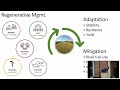
Regenerative Agriculture practices like minimizing tillage, maximizing crop and species diversity, keeping soil covered, and maintaining living roots build system stability and resilience, supported b
-
Regenerative practices build soil resilience against climate chaos, fire, and drought by strengthening soil biology, which in turn supports plant health and farm sustainability.

-
Soil is crucial for climate change mitigation and food security. Regenerative agriculture, through practices like cover cropping and composting, can sequester carbon, improve water retention, and reve
-
Resilience in food systems, contrasted with pure efficiency, requires building local/regional markets, processing infrastructure, and transportation networks. Regenerative agriculture's place-specific

Research
-
The Imperative for Regenerative Agriculture (opens in new window)
This study found: Regenerative agriculture is vital for food security, climate change mitigation, and soil health. It improves soil organic carbon, water retention, and reduces erosion. Localized and urban food product
-
The Imperative for Regenerative Agriculture (opens in new window)
This study found: Regenerative agriculture is vital for food security, addressing soil erosion and fossil fuel dependence. It improves soil health, increases soil organic carbon, and helps mitigate climate change, floo
-
The Revolutionary Impact of Regenerative Agriculture on Ecosystem Restoration and Land Vitality: A Review (opens in new window)
This study found: Regenerative agriculture in India enhances soil health, biodiversity, and carbon capture, offering solutions to degradation and climate change. Community and policy support are vital for its widesprea
-
Systematic review of regenerative farming: Addressing agricultural sustainability challenges (opens in new window)
This study found: Systematic review of 31 studies shows regenerative farming improves soil health, biodiversity, and carbon capture, aiding sustainability. Technology is key for adoption, but policy, farmer understandi
6
Global Applications: Diverse Regions, Common Solutions
Regenerative agriculture's approach to erosion prevention is remarkably adaptable and effective across a wide range of global environments and farming systems. In the humid tropics of Brazil, where intense rainfall can lead to severe erosion on sloping lands used for...
Global Applications: Diverse Regions, Common Solutions
Regenerative agriculture's approach to erosion prevention is remarkably adaptable and effective across a wide range of global environments and farming systems. In the humid tropics of Brazil, where intense rainfall can lead to severe erosion on sloping lands used for...
Regenerative agriculture's approach to erosion prevention is remarkably adaptable and effective across a wide range of global environments and farming systems. In the humid tropics of Brazil, where intense rainfall can lead to severe erosion on sloping lands used for cattle ranching, integrating pastures with trees (agroforestry) and implementing rotational grazing not only protects the soil but also enhances biodiversity and soil carbon. Farmers in these regions have observed a reduction in runoff by 30-50% and a significant improvement in soil cover within 3-5 years. In North America, from the vast prairies of Canada to the plains of the US and the agricultural belts of Mexico, cover cropping and no-till are widely adopted to combat wind and water erosion on grain and legume crops, with millions of hectares now managed under these systems, leading to measurable improvements in soil organic matter and water infiltration. In Europe, farmers across diverse climates—from the Mediterranean to Scandinavia—are using cover crops, reduced tillage, and organic amendments to build soil resilience against erosion, particularly on steep vineyards and vegetable farms. For example, vineyards in France have seen reduced soil loss and improved water retention with consistent cover cropping, reducing the need for irrigation during dry summers. Even in arid and semi-arid regions like parts of China, where historical soil degradation has been severe, efforts to introduce conservation tillage and drought-resistant cover crops are showing promise in halting erosion and rehabilitating degraded land over 7-15 years. This widespread applicability underscores the universality of working with biological processes to build soil health and prevent erosion.
Sources behind this view
Sources behind this view
Videos & Podcasts
-
Global case studies from Ghana, Ohio, and North Dakota illustrate how conservation agriculture (no-till, cover crops, diverse rotations, integrated livestock) dramatically improves soil health, triple
-
Soil improvement in dry climates requires context-specific methods like green manure and minimum tillage, alongside holistic livestock grazing integrated into ecosystem-based watershed management, emp

-
Conservation agriculture principles—no-till, permanent soil cover (cover crops), and diverse rotations—are presented as key to rebuilding soil health, increasing yields, reducing inputs, and boosting

-
Conservation planning solutions require balancing economics, agronomy, and environment. Key practices include no-till, cover crops, grass waterways, contour buffers, terraces, and buffers, each with b

Community
-
Conservation agriculture, specifically no-tillage and cover crops, significantly improves soil health by increasing biodiversity, water infiltration, and soil carbon, while reducing water and fertiliz
Read more (opens in new window) ucanr.edu
Research
-
Soil erosion in the humid tropics: A systematic quantitative review (opens in new window)
This study found: In humid tropics, soil erosion is driven by bare soil, not land use. Good practices like no-till and contour planting can reduce soil loss by up to 99%, protecting vital ecosystem services.
-
Sustainable Soil Management Practices in Modern Agriculture: A Systematic Review (opens in new window)
This study found: A review of Indian agriculture (2015-2024) found combined sustainable practices like reduced tillage, cover crops, and precision farming significantly improve soil health, reduce erosion, and boost ca
-
Integrating eco-friendly farming techniques to combat soil degradation (opens in new window)
This study found: Review of studies shows eco-friendly farming (no-till, cover crops, agroforestry) significantly improves soil health, reducing erosion and increasing carbon, nitrogen, and soil life, despite farmer ad
-
Soil Health, Crop Yield and Carbon Footprint Trade‐Offs Between Conservation and Conventional Farming: A Case Study (opens in new window)
This study found: Conservation farming in Central Europe improved soil health by 7% and cut GHG emissions by 43% over 8 years, maintaining crop yields. Key practices include reduced tillage, diverse rotations, and cove
From the Web
-
Farmers can reduce soil erosion by following six soil health principles: know context, cover soil, minimize disturbance, practice diversity, maintain living roots, and integrate livestock. These regen
7
What's at Stake: The Cost of Inaction
The unchecked continuation of soil erosion poses a profound threat to global food security, ecological health, and economic stability. When topsoil erodes, it takes with it the fertility, water-holding capacity, and biological life that underpin agricultural...
What's at Stake: The Cost of Inaction
The unchecked continuation of soil erosion poses a profound threat to global food security, ecological health, and economic stability. When topsoil erodes, it takes with it the fertility, water-holding capacity, and biological life that underpin agricultural...
The unchecked continuation of soil erosion poses a profound threat to global food security, ecological health, and economic stability. When topsoil erodes, it takes with it the fertility, water-holding capacity, and biological life that underpin agricultural productivity. This loss directly reduces crop yields, increasing food prices and contributing to hunger and malnutrition, particularly in vulnerable regions. Globally, estimates suggest that erosion can reduce crop productivity by 1-10% per decade in severely affected areas. Beyond agriculture, eroded sediment pollutes rivers and lakes, harming aquatic ecosystems and increasing the cost of water treatment. Degraded land is also less able to absorb water, exacerbating flood risks during heavy rains and increasing vulnerability to drought. This diminishing capacity to withstand climate shocks threatens the resilience of communities worldwide. Furthermore, the loss of productive land can lead to social instability, migration, and conflict over scarce resources. The economic cost of erosion is staggering, measured in billions of dollars annually due to lost productivity, increased input costs, and the expense of mitigating flood damage and water pollution. Inaction means progressively surrendering the foundational resource for human well-being—healthy soil—to degradation, jeopardizing the future prosperity and stability of the planet.
Sources behind this view
Sources behind this view
Research
-
Soil Erosion Impact on Agronomic Productivity and Environment Quality (opens in new window)
This study found: Soil erosion severely impacts crop yields and environmental quality globally, with significant economic costs. More research is needed in tropical regions. Controlling erosion can boost food productio
-
Mechanisms of soil erosion/degradation (opens in new window)
This study found: Soil erosion by water degrades soil health, reducing fertility, water retention, and nutrients, which harms crop growth and farmer livelihoods. Climate change will worsen these impacts, increasing the
-
Environmental and Economic Costs of Soil Erosion and Conservation Benefits (opens in new window)
This study found: Soil erosion is a major threat, causing significant loss of arable land globally. This exacerbates food security issues as population grows and per capita food productivity declines.
-
Environmental and Economic Costs of Soil Erosion and Conservation Benefits (opens in new window)
This study found: Soil erosion is a major threat to agriculture, with a third of global arable land lost in 40 years. This loss continues as population grows and food productivity declines.
From the Web
-
Soil erosion degrades topsoil, reducing crop yields and economic productivity globally. It exacerbates climate change by limiting carbon sequestration and can cause severe flooding. Global economic lo
8
Paths Forward: Systemic Change and Farmer Empowerment
Addressing soil erosion effectively requires a multi-faceted approach that empowers farmers, fosters supportive policies, and promotes interconnected regenerative practices. At the farm level, continuing to explore and refine practices like diverse cover cropping,...
Paths Forward: Systemic Change and Farmer Empowerment
Addressing soil erosion effectively requires a multi-faceted approach that empowers farmers, fosters supportive policies, and promotes interconnected regenerative practices. At the farm level, continuing to explore and refine practices like diverse cover cropping,...
Addressing soil erosion effectively requires a multi-faceted approach that empowers farmers, fosters supportive policies, and promotes interconnected regenerative practices. At the farm level, continuing to explore and refine practices like diverse cover cropping, integrated livestock systems, and adapted no-till methods is crucial. Farmer-to-farmer learning networks are invaluable for sharing context-specific knowledge and building confidence in these approaches. Governments and research institutions have a critical role in supporting this transition through accessible extension services, providing incentives for adopting soil-health-building practices, and funding research into regional regenerative solutions. For example, programs that reward ecosystem services, such as carbon sequestration or watershed protection, can help offset transitional costs. International collaboration is also vital, sharing best practices and investing in research for regions where erosion is a major challenge. Financial institutions can develop lending products that recognize the long-term asset building nature of regenerative agriculture. Ultimately, safeguarding our soils from erosion is a shared responsibility that hinges on valuing and investing in the long-term health of the land, recognizing that healthy soil is the bedrock of a sustainable and secure future for all.
Sources behind this view
Sources behind this view
Videos & Podcasts
-
A mindset shift and comprehensive education are crucial for adopting regenerative agriculture, as incentives alone are insufficient. Understanding soil biology, aggregate formation, and water infiltra

-
Adopting regenerative agriculture requires convincing farmers through risk mitigation, mindset change, and demonstrating results via trials and monitoring. Benefits include reduced costs, improved soi
-
Transitioning to regenerative agriculture requires a whole-systems mindset, focusing on soil health principles: reduce tillage/compaction, increase diversity (plants, animals), eliminate bio-cides/fer

-
Adopting regenerative practices should start small and incrementally, focusing on soil health over short-term yields. Collaboration, strategic nutrient sourcing, and leveraging resources like Continuu
Research
-
Systematic review of regenerative farming: Addressing agricultural sustainability challenges (opens in new window)
This study found: Systematic review of 31 studies shows regenerative farming improves soil health, biodiversity, and carbon capture, aiding sustainability. Technology is key for adoption, but policy, farmer understandi
-
Transforming to a regenerative U.S. agriculture: the role of policy, process, and education (opens in new window)
This study found: Shifting U.S. agriculture to regenerative practices requires policy, education, and fostering supportive values. Farmer networks and social learning are key to overcoming challenges like climate chang
-
FORAGES AND PASTURES SYMPOSIUM: COVER CROPS IN LIVESTOCK PRODUCTION: WHOLE-SYSTEM APPROACH: Managing grazing to restore soil health and farm livelihoods1 (opens in new window)
This study found: Regenerative grazing management is key to sustainable, climate-resilient farms. It restores soil health, enhances ecosystem services like carbon capture and water infiltration, and improves farm profi
-
The Imperative for Regenerative Agriculture (opens in new window)
This study found: Regenerative agriculture is vital for food security, climate change mitigation, and soil health. It improves soil organic carbon, water retention, and reduces erosion. Localized and urban food product
9
Quick Profile
{ "soil_as_foundation": [ "Builds stable soil aggregates, reducing detachment.", "Increases organic matter, enhancing soil structure.", "Protects soil surface with living cover and residue.", "Forms biological 'glue' for soil particles.", "Restores degraded land,...
Quick Profile
{ "soil_as_foundation": [ "Builds stable soil aggregates, reducing detachment.", "Increases organic matter, enhancing soil structure.", "Protects soil surface with living cover and residue.", "Forms biological 'glue' for soil particles.", "Restores degraded land,...
{
  "soil_as_foundation": [
    "Builds stable soil aggregates, reducing detachment.",
    "Increases organic matter, enhancing soil structure.",
    "Protects soil surface with living cover and residue.",
    "Forms biological 'glue' for soil particles.",
    "Restores degraded land, reversing erosion."
  ],
  "water_security": [
    "Enhances water infiltration, reduces runoff.",
    "Increases soil water-holding capacity.",
    "Recharges groundwater aquifers.",
    "Reduces sediment pollution in waterways.",
    "Mitigates flood risk during heavy rains."
  ],
  "rural_vitality": [
    "Sustains agricultural productivity over generations.",
    "Reduces on-farm input costs.",
    "Enhances farm resilience to climate shocks.",
    "Improves water quality for rural communities.",
    "Preserves land value and productive capacity."
  ],
  "food_system_resilience": [
    "Maintains topsoil fertility for consistent yields.",
    "Creates more reliable food production.",
    "Reduces vulnerability to drought and flooding.",
    "Supports biodiversity crucial for agriculture.",
    "Mitigates climate change impacts on food supply."
  ]
}
Sources behind this view
10
Know the Debate
Regenerative agriculture's success in preventing erosion depends critically on where you farm and how you manage the land. In humid temperate regio...
Know the Debate
Regenerative agriculture's success in preventing erosion depends critically on where you farm and how you manage the land. In humid temperate regio...
Regenerative agriculture's success in preventing erosion depends critically on where you farm and how you manage the land. In humid temperate regions with ample rainfall, soil biology responds quickly, leading to significant improvements within 2-5 years. Conversely, in semi-arid or highly degraded environments, building sufficient aggregate stability and plant cover may take 7-15 years of consistent effort. Entry costs for key practices like no-till drills or cover crop seed range from $50-200 per acre annually, with more significant infrastructure investments (e.g., for managed grazing) required for larger operations. While the core principles remain consistent, context dictates the pace of change and the specific optimal practices.
What matters most for erosion control: cover or aggregates?
Immediate cover, faster results.
Farmers often prioritize maintaining surface cover through residue and cover crops for immediate erosion protection within 1-3 years. This approach provides visible results quickly and is crucial for preventing topsoil loss in unpredictable weather.
Sources behind this view
Sources behind this view
Videos & Podcasts
-
Regenerative farming reduces tillage to preserve soil carbon and water absorption, increases biodiversity through crop rotation and diversification, replenishes nutrients with compost and dung, and manages grazing livestock to prevent soil degradation.

-
Three key regenerative principles for agriculture are: minimal soil disturbance (no-till), keeping ground covered with cover crops, and growing a diversity of crops. These practices build soil fertility and combat erosion, contrasting with traditional intensive tillage methods.
-
Regenerative agriculture principles include covering soil, no-till, organic inputs, diversity, and holistic grazing. These practices improve soil health, sequester carbon, increase water retention, reduce chemical use, and save farmers money.

Long-term resilience through aggregation.
Academic and institute research emphasizes building stable soil aggregates over 5-10 years as the foundation for long-term erosion resistance. This deeper structural improvement enhances water infiltration and minimizes soil detachment by wind and water.
Sources behind this view
Sources behind this view
Research
-
Estrategias de agricultura regenerativa para mejorar la salud del suelo (opens in new window)
This study found: This study reviewed scientific research to find the best ways regenerative farming can fix damaged soils. It found that using cover crops, composting, and rotating different crops significantly improves soil structure, fertility, and the life within the soil, as well as its ability to hold water. These practices also help capture carbon and prevent soil erosion. The research highlights that combining these methods and tailoring them to local conditions works best. Regenerative agriculture is presented as a practical and environmentally sound way to farm, but its success relies on consistent application, local adaptation, and support from policies and new farming techniques.
-
Regenerative Agriculture: Restoring Ecosystems¢ Resilience and Productivity: A Review (opens in new window)
This study found: Regenerative agriculture is a farming approach that views farms as living ecosystems, moving away from the 'take-make-dispose' model of conventional farming. Instead of relying heavily on outside inputs, it focuses on building up the farm's natural resources and services. Key practices include disturbing the soil as little as possible (like no-till or reduced tillage), planting cover crops, rotating different crops, integrating livestock in a managed way, using compost, reducing synthetic fertilizers and pesticides, and incorporating trees. The approach is tailored to each farm's specific conditions. Farmers monitor soil health indicators like organic matter, how well soil holds water, and the amount of life in the soil. Studies show that regenerative practices can significantly increase soil organic matter (by 0.5-2% in 3-5 years), improve water infiltration (2-10 times better), boost soil microbial life (30-50% more), and increase beneficial insects (60-80% more). Farms can also capture 0.5 to 3 tons of carbon per hectare annually. Economically, these farms often have 20-40% lower input costs and can be more profitable in the long run, becoming more productive and stable over time.
From the Web
-
Regenerative agriculture restores degraded soils by building organic matter and biodiversity, enhancing drought/flood resilience and capturing carbon. Key principles include covering soil, minimizing disturbance, increasing diversity, continuous living plants, and integrating livestock through planned grazing.
-
Regenerative Agriculture rebuilds soil organic matter and restores biodiversity to reverse climate change, enhance crop resilience, and improve water cycles through photosynthesis and carbon sequestration.
Making Sense of the Differences
The debate highlights different timelines and approaches to erosion control. Farmers often see immediate benefits from maintaining soil cover, which is crucial for short-term protection. Academic and institute research, however, emphasizes the long-term, deeper resilience built by improving soil aggregation over 5-10 years. Both are important; effective erosion prevention integrates the prompt protection of cover with the lasting strength of robust soil structure, especially as systems mature.
How quickly does regenerative farming reduce erosion?
Rapid reduction (1-3 years)
Farmers often observe significant visual reductions in erosion, particularly surface runoff and wind drift, within 1-3 years of implementing practices like cover cropping and no-till. This noticeable improvement provides early validation and encourages continued adoption.
Sources behind this view
Sources behind this view
Videos & Podcasts
-
Regenerative agriculture restores soil health and ecosystems through practices like no-till and cover crops, improving water cycles, reducing emissions, and increasing food nutrient density. It's practiced globally to combat climate change and ensure sustainable food supplies.
-
Regenerative farming reduces tillage to preserve soil carbon and water absorption, increases biodiversity through crop rotation and diversification, replenishes nutrients with compost and dung, and manages grazing livestock to prevent soil degradation.
-
Three key regenerative principles for agriculture are: minimal soil disturbance (no-till), keeping ground covered with cover crops, and growing a diversity of crops. These practices build soil fertility and combat erosion, contrasting with traditional intensive tillage methods.
-
Adopts regenerative agriculture principles: minimize disturbance, keep living roots, use soil armor, integrate animals (livestock grazing, multi-species), and increase biodiversity. These practices build soil organic matter, sequester carbon, and enhance system resilience.
Long-term resilience (5-10+ years)
Academic and institute sources suggest that building deep soil structure, enhancing aggregate stability, and achieving full ecosystem resilience against severe erosion often takes 5-10 years or longer of consistent regenerative management.
Sources behind this view
Sources behind this view
Research
-
Regenerative Agriculture: Restoring Ecosystems¢ Resilience and Productivity: A Review (opens in new window)
This study found: Regenerative agriculture is a farming approach that views farms as living ecosystems, moving away from the 'take-make-dispose' model of conventional farming. Instead of relying heavily on outside inputs, it focuses on building up the farm's natural resources and services. Key practices include disturbing the soil as little as possible (like no-till or reduced tillage), planting cover crops, rotating different crops, integrating livestock in a managed way, using compost, reducing synthetic fertilizers and pesticides, and incorporating trees. The approach is tailored to each farm's specific conditions. Farmers monitor soil health indicators like organic matter, how well soil holds water, and the amount of life in the soil. Studies show that regenerative practices can significantly increase soil organic matter (by 0.5-2% in 3-5 years), improve water infiltration (2-10 times better), boost soil microbial life (30-50% more), and increase beneficial insects (60-80% more). Farms can also capture 0.5 to 3 tons of carbon per hectare annually. Economically, these farms often have 20-40% lower input costs and can be more profitable in the long run, becoming more productive and stable over time.
-
La agricultura regenerativa como solución para la degradación del suelo a través de investigaciones recientes (opens in new window)
This study found: This review of recent studies shows that regenerative farming practices like using cover crops, compost, and no-till methods are effective solutions for soil degradation. These techniques help soil hold more water and nutrients, build up organic matter, and increase the diversity of beneficial soil life. This makes farms more resilient and helps capture carbon from the atmosphere. However, farmers face challenges like the upfront costs of switching and a lack of clear guidelines. More support through policies and better ways to measure the benefits are needed for widespread adoption.
From the Web
-
Farmers can reduce soil erosion by following six soil health principles: know context, cover soil, minimize disturbance, practice diversity, maintain living roots, and integrate livestock. These regenerative practices are proving successful.
-
Regenerative agriculture restores degraded soils by building organic matter and biodiversity, enhancing drought/flood resilience and capturing carbon. Key principles include covering soil, minimizing disturbance, increasing diversity, continuous living plants, and integrating livestock through planned grazing.
Making Sense of the Differences
The timeline for seeing results in erosion prevention varies depending on what aspect is being measured. Farmers often observe rapid improvements in surface cover and a reduction in visible erosion within 1-3 years due to cover crops and residue. However, achieving deep soil structural resilience, which provides the greatest long-term protection against severe erosion, takes 5-10 years or more of consistent practice. This phased improvement highlights the need for patience while recognizing the early benefits.