
How does regenerative agriculture affect food system resilience?
Regenerative agriculture builds resilience in food systems by enhancing soil health, increasing biodiversity, and diversifying farm economies. Healthier soils act like sponges, better absorbing water to withstand floods and droughts, while diverse ecosystems offer natural pest control and pollination. This shift strengthens local food availability, reduces reliance on unstable global supply chains, and fosters more adaptable, secure food production for communities worldwide.
Read More: Complete Description
Sources behind this view
Sources behind this view
 Videos & Podcasts
-
Regenerative agriculture provides solutions for climate change, human health, and soil degradation, contrasting with industrial agriculture's harmful impacts, including glyphosate use. Practices like

-
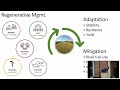
Regenerative Agriculture practices like minimizing tillage, maximizing crop and species diversity, keeping soil covered, and maintaining living roots build system stability and resilience, supported b
-
Regenerative agriculture increases diversity and reduces disturbance through practices like no-till, cover crops, and integrated animals. This fosters biodiversity, which replaces costly agrochemicals

 Community
-
Regenerative agriculture rebuilds soil organic matter and biodiversity through practices like cover cropping, reduced tillage, minimal artificial fertilizers, and regenerative grazing, ultimately impr
Read more (pp. 8-9) (opens PDF, pp. 8-9) permies.com -
Regenerative agriculture reverses soil harm by sequestering carbon through cover crops, no-till, compost, and crop rotation, improving soil health and resilience for both farms and home gardens.
Read more (opens in new window) ucanr.edu
 Research
-
Systematic review of regenerative farming: Addressing agricultural sustainability challenges (opens in new window)
This study found: Systematic review of 31 studies shows regenerative farming improves soil health, biodiversity, and carbon capture, aiding sustainability. Technology is key for adoption, but policy, farmer understandi
-
Regenerative Agriculture: Restoring Ecosystems¢ Resilience and Productivity: A Review (opens in new window)
This study found: Regenerative agriculture builds soil health and ecosystem services through practices like no-till, cover crops, and diverse rotations. It increases soil organic matter, improves water infiltration, bo
-
The Imperative for Regenerative Agriculture (opens in new window)
This study found: Regenerative agriculture is vital for food security, climate change mitigation, and soil health. It improves soil organic carbon, water retention, and reduces erosion. Localized and urban food product
-
Restoration Through Regeneration: a Scientific and Political Lens into Regenerative Agriculture in the United States (opens in new window)
This study found: Regenerative agriculture builds soil health and resilience using practices like no-till and cover crops, contrasting with industrial farming. Current U.S. policies hinder its adoption, requiring refor
 From the Web
-
Regenerative agriculture builds ecological and economic resilience through practices like soil carbon sequestration, perennial farming, and climate-friendly livestock management, offering a pathway to
-
Regenerative agriculture restores soil health through practices like cover cropping and crop rotation, leading to carbon sequestration, increased resiliency, and reduced reliance on off-farm inputs, b
-
Regenerative Agriculture rebuilds soil health and biodiversity through four principles: no tillage, continuous soil cover, increased plant diversity, and livestock integration. This approach aims for
-
Regenerative agriculture enhances water retention, nutrient density, resilience to climate change, and provides significant economic and social benefits, empowering local communities and small farmers
Key Points
Rural Vitality
- Diversified farm income streams (e.g., direct marketing, value-added products).
- Reduced input costs by $100-300 per hectare ($40-120 per acre) annually.
- Enhanced farmer well-being through ecological connection.
- Created local employment opportunities in diverse farming systems.
Water Security
- Increased soil water-holding capacity by up to 15-20%.
- Reduced surface runoff and improved water quality.
- Lowered demand for irrigation in arid/semi-arid regions.
- Enhanced groundwater recharge rates.
Soil As Foundation
- Increased soil organic matter by 0.2-1.0% annually.
- Enhanced water infiltration, reducing drought vulnerability.
- Improved soil structure to resist erosion.
- Boosted soil microbial diversity and function.
Food System Resilience
- Stabilized yields across varied weather conditions.
- Reduced reliance on external inputs (e.g., 50% reduction in synthetic fertilizers over 5 years).
- Increased on-farm biodiversity (e.g., 30% rise in insect populations).
- Strengthened local food availability and supply chains.
Know the Debate
- Resilience timeline: 3-5 years for soil, 7-15 years for full benefits
- Farm diversity builds resilience, but systemic factors matter
- Viable scale varies: small for inputs, larger for full system regeneration
Going Deeper
1
Environmental Impact: Adapting to Climate Extremes
Regenerative agriculture fundamentally transforms the environmental profile of food production, directly bolstering resilience against climate change impacts. By drawing down atmospheric carbon dioxide through increased soil organic matter, farms become carbon sinks...
Environmental Impact: Adapting to Climate Extremes
Regenerative agriculture fundamentally transforms the environmental profile of food production, directly bolstering resilience against climate change impacts. By drawing down atmospheric carbon dioxide through increased soil organic matter, farms become carbon sinks...
Regenerative agriculture fundamentally transforms the environmental profile of food production, directly bolstering resilience against climate change impacts. By drawing down atmospheric carbon dioxide through increased soil organic matter, farms become carbon sinks rather than sources. Studies in the Canadian Prairies have shown increases of 1-2% in soil organic carbon over 5-10 years with consistent cover cropping and no-till systems, effectively sequestering 10-20 metric tons of CO2 per hectare (4-8 tons per acre) over that period. This process not only mitigates climate change but also builds soil fertility and structure.
Furthermore, the enhanced soil health translates to water resilience. Farms in the corn-belt of the United States practicing cover crops and reduced tillage report a 30-50% reduction in soil erosion and a significant increase in water infiltration, often improving by 10-20 cm/hour (4-8 inches/hour) over 5 years. This means soils can absorb and store more water, making crops more resistant to drought. Conversely, this improved infiltration also reduces the risk of flooding and associated nutrient runoff during extreme rainfall events, protecting waterways and downstream communities. For instance, a study in the Yangtze River Delta, China, demonstrated that integrated farming systems with increased organic matter reduced flood damage by up to 40%.
Biodiversity acts as a natural buffer. Increasing crop and habitat diversity on-farm through practices like intercropping, hedgerows, and pollinator strips supports a complex web of life. This includes beneficial insects for pest control and pollination services, and a more diverse soil microbiome that aids nutrient cycling and disease suppression. Research in Western Australia has documented a doubling of native bee species diversity within 3 years of establishing flower strips and reduced pesticide use, leading to more reliable pollination for diverse crops and improved farm yields. This ecological complexity reduces the farm's dependence on external, often synthetic, inputs for pest management and fertilization, thus making the system less vulnerable to supply chain disruptions or price volatility of those inputs.
Sources behind this view
Sources behind this view
Videos & Podcasts
-
Regenerative agriculture provides solutions for climate change, human health, and soil degradation, contrasting with industrial agriculture's harmful impacts, including glyphosate use. Practices like
-
Increasing crop diversity (aiming for ~20 species) and incorporating practices like double cropping, biofumigation (Sudan sorghum hybrid), and integrating animals builds farm resilience against climat

-
Regenerative agriculture increases diversity and reduces disturbance through practices like no-till, cover crops, and integrated animals. This fosters biodiversity, which replaces costly agrochemicals
-
Cover crops attract beneficial insects and pollinators, suppress pests, and improve soil biology. Mimicking nature's integration of animals and plants, alongside practices like no-till and diversity,

Community
-
Building healthy soil involves minimizing tillage (no-till) and keeping it covered year-round with living plants and cover crops. These practices enhance water retention, nutrient cycling, and soil re
Read more (opens in new window) smallfarms.cornell.edu -
Farmers can modify microclimates and build resilience through practices like agroforestry, no-till, and cover crops, which improve soil health, water availability, and crop resistance to climate chall
Read more (opens in new window) smallfarms.cornell.edu -
Reducing tillage, crop rotation, and perennial livestock systems enhance soil organic matter, water holding capacity, and carbon sequestration while reducing nitrous oxide and methane emissions.
Read more (opens in new window) sustainableagriculture.net -
Regenerative agriculture, including reduced tillage and diverse cover crops, builds soil health in California's Central Valley, improving water retention, sequestering carbon, and enhancing climate re
Read more (opens in new window) ucanr.edu
Research
-
Soil Microbial Dynamics in Regenerative Agriculture Systems: A Data-Driven Synthesis for Soil Health, Pest Suppression, and Yield Sustainability in the Western Canadian Prairies (opens in new window)
This study found: Regenerative farming in Western Canada boosts soil microbes (up to 86%), fungi (up to 60%), and carbon, improving soil health and water retention. This leads to more stable yields and reduced syntheti
-
Managing soil health for climate resilience and crop productivity in a changing environment. (opens in new window)
This study found: Climate change and poor farming degrade soil, reducing yields and resilience. Improving soil health through diverse practices like conservation agriculture and beneficial microbes, tailored to local c
-
Spotlight on agroecological cropping practices to improve the resilience of farming systems: a qualitative review of meta-analytic studies (opens in new window)
This study found: Agroecological practices like crop diversification and ecological soil management are key to farm resilience. Cover crops, no-till, and organic matter addition are vital. Outcomes are site-specific, r
-
Regenerative Agriculture: Restoring Ecosystems¢ Resilience and Productivity: A Review (opens in new window)
This study found: Regenerative agriculture builds soil health and ecosystem services through practices like no-till, cover crops, and diverse rotations. It increases soil organic matter, improves water infiltration, bo
From the Web
-
Sustainable practices include crop rotation, cover cropping (e.g., hairy vetch, cereal rye), reduced/no-till, IPM, livestock integration, and agroforestry to build soil health, control erosion, and en
-
Soil health practices like cover crops and increased soil organic matter enhance resilience to extreme weather, drought, and flooding, reducing crop insurance payouts and improving yields.
-
Regenerative organic agriculture enhances crop resilience to extreme weather, yielding up to 40% higher during drought or flood, by prioritizing soil health and a thriving microbiome.
-
Regenerative agriculture enhances water retention, nutrient density, resilience to climate change, and provides significant economic and social benefits, empowering local communities and small farmers
3
Economic Implications: Building a Stable Foundation for Agriculture
Regenerative agriculture contributes to food system resilience by fostering a more stable, less volatile agricultural economy. On-farm, the reduction in synthetic input use is a primary driver of economic resilience. Over a 3-7 year transition, as soil biology improves,...
Economic Implications: Building a Stable Foundation for Agriculture
Regenerative agriculture contributes to food system resilience by fostering a more stable, less volatile agricultural economy. On-farm, the reduction in synthetic input use is a primary driver of economic resilience. Over a 3-7 year transition, as soil biology improves,...
Regenerative agriculture contributes to food system resilience by fostering a more stable, less volatile agricultural economy. On-farm, the reduction in synthetic input use is a primary driver of economic resilience. Over a 3-7 year transition, as soil biology improves, the need for costly fertilizers, pesticides, and herbicides diminishes significantly. Farmers in the Midwestern United States, for instance, have reported savings of $200-500 per hectare ($80-200 per acre) annually by phasing out synthetic fertilizers and relying on cover crops for nitrogen fixation and enhanced nutrient cycling. These savings directly improve net farm income and provide a buffer against fluctuations in input prices.
Beyond individual farm economics, regenerative agriculture strengthens regional and national economies by reducing reliance on global supply chains for agricultural inputs. This insulates economies from geopolitical shifts, trade disputes, or global supply disruptions that can dramatically impact input availability and cost. A country with a robust regenerative agricultural sector is less vulnerable to external shocks affecting its food production capacity. Furthermore, healthier agricultural landscapes can reduce the need for costly public spending on mitigating environmental degradation, such as water purification or flood control infrastructure, which are often downstream consequences of conventional, extractive farming practices.
The long-term economic viability of agriculture is directly tied to the health of its natural resources. Regenerative agriculture’s focus on rebuilding soil health, improving water cycles, and enhancing biodiversity ensures that agricultural land remains productive and capable of future yields. This is a stark contrast to systems that deplete resources, leading to declining yields and the eventual abandonment of farmland, which carries immense economic and social costs. Investing in regenerative practices is an investment in the long-term economic security of food production and rural economies, fostering a more sustainable and predictable agricultural sector for generations to come.
Sources behind this view
Sources behind this view
Videos & Podcasts
-
Regenerative agriculture provides solutions for climate change, human health, and soil degradation, contrasting with industrial agriculture's harmful impacts, including glyphosate use. Practices like
-
Case studies of farmers like Duane Beck, Kofi Boa, David Brandt, and Gabe Brown demonstrate that regenerative agriculture (no-till, cover crops, diverse rotations) significantly increases soil health,

Research
-
Systematic review of regenerative farming: Addressing agricultural sustainability challenges (opens in new window)
This study found: Systematic review of 31 studies shows regenerative farming improves soil health, biodiversity, and carbon capture, aiding sustainability. Technology is key for adoption, but policy, farmer understandi
-
Regenerative Agriculture: Restoring Ecosystems¢ Resilience and Productivity: A Review (opens in new window)
This study found: Regenerative agriculture builds soil health and ecosystem services through practices like no-till, cover crops, and diverse rotations. It increases soil organic matter, improves water infiltration, bo
-
Restoration Through Regeneration: a Scientific and Political Lens into Regenerative Agriculture in the United States (opens in new window)
This study found: Regenerative agriculture builds soil health and resilience using practices like no-till and cover crops, contrasting with industrial farming. Current U.S. policies hinder its adoption, requiring refor
-
The Imperative for Regenerative Agriculture (opens in new window)
This study found: Regenerative agriculture is vital for food security, climate change mitigation, and soil health. It improves soil organic carbon, water retention, and reduces erosion. Localized and urban food product
From the Web
-
Regenerative agriculture regenerates topsoil, increases biodiversity, and improves carbon/water cycles through methods like minimal tillage, soil cover, diversity, and animal integration, boosting pro
-
Regenerative agriculture, combining minimal disturbance, cover cropping, and diversified rotations, rebuilds soil fertility, significantly reduces input costs (fertilizers, pesticides, diesel), and ma
-
Regenerative Agriculture rebuilds soil health and biodiversity through four principles: no tillage, continuous soil cover, increased plant diversity, and livestock integration. This approach aims for
-
Regenerative agriculture restores soil health through practices like cover cropping and crop rotation, leading to carbon sequestration, increased resiliency, and reduced reliance on off-farm inputs, b
4
Ecosystem Services: Enhancing Nature's Contributions to Food Production
Regenerative agriculture is a powerful engine for enhancing vital ecosystem services that directly contribute to food system resilience. Foremost among these is carbon sequestration. By promoting practices that increase soil organic matter, regenerative farms actively...
Ecosystem Services: Enhancing Nature's Contributions to Food Production
Regenerative agriculture is a powerful engine for enhancing vital ecosystem services that directly contribute to food system resilience. Foremost among these is carbon sequestration. By promoting practices that increase soil organic matter, regenerative farms actively...
Regenerative agriculture is a powerful engine for enhancing vital ecosystem services that directly contribute to food system resilience. Foremost among these is carbon sequestration. By promoting practices that increase soil organic matter, regenerative farms actively draw down atmospheric carbon dioxide, helping to mitigate climate change while simultaneously building healthier, more fertile soils. Between 3-7 years of implementing practices like cover cropping, no-till, and compost application, farms in North America have been documented to increase their soil carbon sequestration rates by 0.5-1.5% annually, storing an estimated 2.2-6.7 metric tons of CO2e per hectare (1.0-3.0 tons per acre) each year, depending on climate, soil type, and management intensity.
Water regulation and purification are also critical services significantly improved by regenerative practices. Healthier soils with high organic matter act like sponges, absorbing rainfall and releasing it slowly. This increases drought resilience and reduces the risk of flash floods, a phenomenon exacerbated by soil degradation. Farms in the Murray-Darling Basin, Australia, have seen substantial improvements in soil water retention, leading to a 15-25% reduction in irrigation needs over a 5-year period in some cases. This improved infiltration also filters water, reducing nutrient and sediment runoff into waterways, thus enhancing water quality for both agricultural and human use.
Pollination and pest regulation services are bolstered by the increased biodiversity inherent in regenerative systems. By creating diverse habitats and reducing synthetic pesticide use, farms attract and support a wider array of beneficial insects, birds, and soil organisms. This natural pest control reduces crop losses and the need for costly interventions. For instance, a 3-year study on farms in the Mediterranean Basin showed that wildflower strips and reduced pesticide use increased natural enemy populations by 40%, leading to a 10-15% reduction in aphid infestations on key crops. These improved, naturally provided services reduce external input reliance and contribute to more stable, predictable crop yields, enhancing overall food system resilience.
Sources behind this view
Sources behind this view
Videos & Podcasts
-
Regenerative agriculture provides solutions for climate change, human health, and soil degradation, contrasting with industrial agriculture's harmful impacts, including glyphosate use. Practices like
-
Regenerative agriculture benefits ecosystems by improving soil health, biodiversity, water quality, and wildlife habitats, while also enhancing farm worker conditions and community well-being.

-
Advocates for regenerative practices to restore ecosystem connections, providing essential services like nutrient supply, pest control, pollination, and weather protection. Enhancing biodiversity abov

-
Regenerative agriculture increases diversity and reduces disturbance through practices like no-till, cover crops, and integrated animals. This fosters biodiversity, which replaces costly agrochemicals
Community
-
Regenerative agriculture rebuilds soil organic matter and biodiversity through practices like cover cropping, reduced tillage, minimal artificial fertilizers, and regenerative grazing, ultimately impr
Read more (pp. 8-9) (opens PDF, pp. 8-9) permies.com -
Carbon farming builds soil organic matter, increasing water retention by 25,000 gallons/hectare per 1% increase, enhancing drought resilience and flood prevention, while also boosting biodiversity and
Read more (opens in new window) sustainableagriculture.net -
Regenerative agriculture reverses soil harm by sequestering carbon through cover crops, no-till, compost, and crop rotation, improving soil health and resilience for both farms and home gardens.
Read more (opens in new window) ucanr.edu
Research
-
Regenerative Agriculture: Restoring Ecosystems¢ Resilience and Productivity: A Review (opens in new window)
This study found: Regenerative agriculture builds soil health and ecosystem services through practices like no-till, cover crops, and diverse rotations. It increases soil organic matter, improves water infiltration, bo
-
Systematic review of regenerative farming: Addressing agricultural sustainability challenges (opens in new window)
This study found: Systematic review of 31 studies shows regenerative farming improves soil health, biodiversity, and carbon capture, aiding sustainability. Technology is key for adoption, but policy, farmer understandi
-
Regenerative Almond Production Systems Improve Soil Health, Biodiversity, and Profit (opens in new window)
This study found: Regenerative almond farms in California doubled profits and improved soil health and biodiversity by combining practices like cover crops, compost, and reduced synthetic inputs, with no yield loss.
-
The Imperative for Regenerative Agriculture (opens in new window)
This study found: Regenerative agriculture is vital for food security, climate change mitigation, and soil health. It improves soil organic carbon, water retention, and reduces erosion. Localized and urban food product
From the Web
-
Regenerative agriculture regenerates topsoil, increases biodiversity, and improves carbon/water cycles through methods like minimal tillage, soil cover, diversity, and animal integration, boosting pro
-
Regenerative agriculture restores soil health through practices like cover cropping and crop rotation, leading to carbon sequestration, increased resiliency, and reduced reliance on off-farm inputs, b
-
Regenerative agriculture enhances water retention, nutrient density, resilience to climate change, and provides significant economic and social benefits, empowering local communities and small farmers
-
Regenerative agriculture is presented as a solution to industrial farming's soil degradation, focusing on soil health and nutrient-dense food. Key drivers for regeneration include technology, nutrient
5
Connected Systems: The Web of Food, Climate, and Health
The resilience implications of regenerative agriculture are inextricably linked to broader issues of climate stability, public health, and global food security. By directly addressing greenhouse gas emissions through carbon sequestration in soils and reduced reliance on...
Connected Systems: The Web of Food, Climate, and Health
The resilience implications of regenerative agriculture are inextricably linked to broader issues of climate stability, public health, and global food security. By directly addressing greenhouse gas emissions through carbon sequestration in soils and reduced reliance on...
The resilience implications of regenerative agriculture are inextricably linked to broader issues of climate stability, public health, and global food security. By directly addressing greenhouse gas emissions through carbon sequestration in soils and reduced reliance on energy-intensive synthetic inputs, regenerative agriculture acts as a critical component in climate change mitigation efforts. Each metric ton of soil carbon built up represents atmospheric CO2 removed, contributing to a more stable climate, which in turn reduces the frequency and intensity of climate-related disruptions (droughts, floods, extreme temperatures) that threaten food production. Many farms in Europe are now exploring soil carbon markets, creating economic incentives for this climate-positive practice.
The connection to public health is profound. Regenerative agriculture's emphasis on building biologically active, nutrient-dense soils often translates into more nutrient-rich foods. While research is ongoing, studies have indicated that crops grown in healthier soils can have higher levels of certain vitamins and minerals compared to those grown in depleted soils. Furthermore, by minimizing or eliminating the use of synthetic pesticides and herbicides, regenerative farming protects farm workers, rural communities, and consumers from potential health risks associated with these chemicals. Reducing chemical runoff also improves the quality of drinking water sources for communities downstream.
Globally, the resilience fostered by regenerative agriculture enhances food security by decentralizing and stabilizing food production. Moves towards diversified, localized food systems reduce vulnerability to disruptions in long-distance supply chains, which are increasingly susceptible to geopolitical events, pandemics, or climate disasters. For example, initiatives promoting regenerative rice-fish farming systems in Southeast Asia not only boost yields and reduce chemical inputs but also provide diversified nutrition and income for rural families, strengthening their ability to withstand economic and environmental shocks. This systemic approach, integrating ecological health with human well-being, is essential for a truly resilient global food future.
Sources behind this view
Sources behind this view
Videos & Podcasts
-
Regenerative agriculture provides solutions for climate change, human health, and soil degradation, contrasting with industrial agriculture's harmful impacts, including glyphosate use. Practices like
-
Healthy soil from regenerative agriculture reduces chronic diseases and healthcare costs through 'food as medicine.' The discussion covers incentives for young farmers, policy models for carbon seques

-
Regenerative Agriculture practices like minimizing tillage, maximizing crop and species diversity, keeping soil covered, and maintaining living roots build system stability and resilience, supported b
-
Regenerative agriculture builds resilience against climate shocks and market volatility by improving soil health, reducing input reliance, and fostering farmer-to-farmer learning. Examples include red

Community
-
Jon from Wild Roots Farm in Vermont advocates for regenerative practices like limited tillage, crop rotations, and rotational grazing to build resilience in food systems. He explains how these methods
Read more (opens in new window) smallfarms.cornell.edu
Research
-
Systematic review of regenerative farming: Addressing agricultural sustainability challenges (opens in new window)
This study found: Systematic review of 31 studies shows regenerative farming improves soil health, biodiversity, and carbon capture, aiding sustainability. Technology is key for adoption, but policy, farmer understandi
-
The Imperative for Regenerative Agriculture (opens in new window)
This study found: Regenerative agriculture is vital for food security, climate change mitigation, and soil health. It improves soil organic carbon, water retention, and reduces erosion. Localized and urban food product
-
The Imperative for Regenerative Agriculture (opens in new window)
This study found: Regenerative agriculture is vital for food security, addressing soil erosion and fossil fuel dependence. It improves soil health, increases soil organic carbon, and helps mitigate climate change, floo
-
The Revolutionary Impact of Regenerative Agriculture on Ecosystem Restoration and Land Vitality: A Review (opens in new window)
This study found: Regenerative agriculture in India enhances soil health, biodiversity, and carbon capture, offering solutions to degradation and climate change. Community and policy support are vital for its widesprea
From the Web
-
Regenerative agriculture builds ecological and economic resilience through practices like soil carbon sequestration, perennial farming, and climate-friendly livestock management, offering a pathway to
-
A global movement promotes regenerative agriculture to reverse climate change and enhance food security by restoring soil health, which can sequester atmospheric CO2 and reduce water needs, countering
-
Regenerative agriculture enhances water retention, nutrient density, resilience to climate change, and provides significant economic and social benefits, empowering local communities and small farmers
-
Regenerative agriculture improves water quality/quantity, farm profitability, and human health by sequestering carbon and enhancing ecosystem function. It calls for collective action from farmers, bus
6
The Evidence Base: Growing Understanding, Ongoing Research
The understanding of how regenerative agriculture enhances food system resilience is built upon a growing body of scientific research and practical farmer experience, though specific metrics can vary significantly by region and management practices. Field trials...
The Evidence Base: Growing Understanding, Ongoing Research
The understanding of how regenerative agriculture enhances food system resilience is built upon a growing body of scientific research and practical farmer experience, though specific metrics can vary significantly by region and management practices. Field trials...
The understanding of how regenerative agriculture enhances food system resilience is built upon a growing body of scientific research and practical farmer experience, though specific metrics can vary significantly by region and management practices. Field trials consistently demonstrate improvements in key soil health indicators. For instance, studies across North America and Europe show that implementing cover crops and reducing tillage can increase soil organic matter by 0.2-1.0% annually, leading to improvements in soil aggregation and water infiltration rates within 3-5 years. These physical improvements are directly linked to greater resilience against both drought and heavy rainfall.
Research into biodiversity impacts also provides compelling evidence. Farms that transition to regenerative practices often see a significant increase in above- and below-ground biodiversity. For example, trials in the UK have documented a 20-50% increase in earthworm populations within 2-3 years of adopting reduced tillage and increased organic matter inputs. Similarly, insect biodiversity, including beneficial predators and pollinators, has been shown to increase by 30-60% on farms implementing diverse crop rotations and habitat enhancements over a 3-5 year period. This enhanced biodiversity provides critical ecosystem services like natural pest control and pollination, reducing dependency on external inputs and enhancing yield stability.
Economically, the evidence points towards enhanced resilience through cost reduction and income diversification. While full transition times vary from 3-7 years for synthetic input reduction and soil rebuilding, initial savings on certain purchased inputs like synthetic fertilizers can begin within the first 1-2 years. Farmers in various contexts, from smallholdings in Kenya to large ranches in Argentina, report not only cost savings but also improved profitability as soil health allows for more consistent yields with fewer interventions. The economic resilience is further strengthened by the increased market power and direct consumer relationships that often accompany regenerative farming models.
Sources behind this view
Sources behind this view
Videos & Podcasts
-
Regenerative agriculture provides solutions for climate change, human health, and soil degradation, contrasting with industrial agriculture's harmful impacts, including glyphosate use. Practices like
-
Case studies of farmers like Duane Beck, Kofi Boa, David Brandt, and Gabe Brown demonstrate that regenerative agriculture (no-till, cover crops, diverse rotations) significantly increases soil health,
-
Regenerative trials show dramatic improvements in soil aggregate depth (up to 15 inches in 4 years), increased microbial and plant diversity (123% in pastures without new seed), enhanced water infiltr
-
Regenerative farming, using no-till, cover crops, and diverse rotations, rapidly rebuilds soil organic matter and soil life. Examples from Ohio and Ghana show these practices increase profitability by

Community
-
Adopting no-till farming and non-GMO seeds improves soil health, reduces input costs (fuel, fertilizer, herbicides), and increases yields and profitability, leading to farmer adoption within 4-5 years
Read more (opens in new window) permies.com -
Regenerative agriculture reverses soil harm by sequestering carbon through cover crops, no-till, compost, and crop rotation, improving soil health and resilience for both farms and home gardens.
Read more (opens in new window) ucanr.edu
Research
-
Systematic review of regenerative farming: Addressing agricultural sustainability challenges (opens in new window)
This study found: Systematic review of 31 studies shows regenerative farming improves soil health, biodiversity, and carbon capture, aiding sustainability. Technology is key for adoption, but policy, farmer understandi
-
Soil Microbial Dynamics in Regenerative Agriculture Systems: A Data-Driven Synthesis for Soil Health, Pest Suppression, and Yield Sustainability in the Western Canadian Prairies (opens in new window)
This study found: Regenerative farming in Western Canada boosts soil microbes (up to 86%), fungi (up to 60%), and carbon, improving soil health and water retention. This leads to more stable yields and reduced syntheti
-
Regenerative Agriculture: Restoring Ecosystems¢ Resilience and Productivity: A Review (opens in new window)
This study found: Regenerative agriculture builds soil health and ecosystem services through practices like no-till, cover crops, and diverse rotations. It increases soil organic matter, improves water infiltration, bo
-
Impact of Organic Farming Practices on Crop Productivity and Soil Health: A Review (opens in new window)
This study found: Organic farming practices boost soil health, increase crop resilience to drought, and enhance nutritional quality, though initial yields may be lower. Long-term benefits include carbon sequestration a
From the Web
-
Regenerative farming combines no-till, cover crops, and complex rotations, often with livestock grazing, to boost profitability by reducing input costs and increasing soil organic matter. Studies show
-
Regenerative agriculture restores soil health through practices like cover cropping and crop rotation, leading to carbon sequestration, increased resiliency, and reduced reliance on off-farm inputs, b
-
Regenerative agriculture can be profitable despite potential initial yield decreases, driven by reduced input costs and access to premium markets. Research shows comparable yields after transition, im
-
Regenerative agriculture restores degraded soils by working with nature, enhancing soil health and profitability. Key practices reduce input costs, improve resilience, and benefit the environment thro
7
Know the Debate
Regenerative agriculture enhances food system resilience by rebuilding soil health, increasing biodiversity, and diversifying economies. Outcomes v...
Know the Debate
Regenerative agriculture enhances food system resilience by rebuilding soil health, increasing biodiversity, and diversifying economies. Outcomes v...
Regenerative agriculture enhances food system resilience by rebuilding soil health, increasing biodiversity, and diversifying economies. Outcomes vary significantly by climate, scale, and management intensity. In humid regions, tangible soil benefits appear within 3-5 years, while full economic and yield stability may take 7-15 years, especially in arid areas or complex systems. While practices like cover cropping can work at any scale, full system regeneration often requires larger operations (500+ acres) to be economically viable due to labor and infrastructure demands. Understanding these context-specific factors is crucial for effectively implementing regenerative practices and achieving desired resilience.
How long until regenerative agriculture shows tangible food system resilience?
Early Soil Improvements (3-5 years)
Tangible benefits like increased carbon sequestration and improved soil structure appear within 3-5 years. Research shows measurable gains in water infiltration and microbial activity.
Full System Resilience (7-15 years)
Observable benefits like yield stabilization, reduced input reliance, and significant biodiversity increases often take 7-15 years to fully manifest, particularly in diversified systems or arid regions.
Making Sense of the Differences
The timeline for observing regenerative agriculture's resilience benefits varies significantly based on initial soil health, climate, and management intensity. Rapid improvements in soil structure and water infiltration can occur within 3-5 years, especially in humid regions. However, substantial economic gains, yield stabilization against extreme weather, and broad biodiversity impacts typically require 7-15 years, particularly in diversified systems or arid climates. Farmers should anticipate gradual improvements that become more pronounced over time, planning for long-term transition.
Does farm-level diversity truly create food system resilience?
Farm Diversity Strengthens Local Supply
Farm-level diversification (crop variety, livestock, direct marketing) significantly enhances individual farm resilience. This resilience aggregates to create a more robust local food supply, reducing reliance on unstable markets.
Systemic Resilience Requires More Than Farm Diversity
While farm diversity builds local capacity, true food system resilience also depends on market infrastructure, supply chain robustness, and geographic diversification to buffer against regional shocks.
Making Sense of the Differences
Farm-level diversity is essential for strengthening individual operations and building a robust local food supply. However, for true food system resilience, this must be coupled with strong market infrastructure and diversified supply chains to mitigate risks from regional shocks. While local systems offer advantages, they must be part of a larger network that includes geographic risk diversification.
What is the minimum scale for regenerative agriculture to be economically viable?
Adaptable to Small Scale (Input Savings)
Practices like cover cropping and reduced tillage are cost-effective on smaller operations, offering early savings on external inputs like synthetic fertilizers.
Requires Larger Scale for Full System (100+ acres)
Full system regeneration, especially integrating livestock and complex management, often needs 100+ acres to justify infrastructure, labor, and observation-based adaptation.
Making Sense of the Differences
The economic viability of regenerative agriculture varies with scale. Practices like cover cropping offer cost savings even on smaller farms. However, full system regeneration, including livestock integration and intensive management, often requires larger scales (100-500+ acres) to effectively manage infrastructure, labor, and observation-based adaptations. Farmers should assess their goals and resources to choose practices suited to their operation size.
2
Social Dimensions: Strengthening Communities and Livelihoods
The resilience that regenerative agriculture builds extends far beyond ecological stability; it profoundly impacts the social fabric of communities and the economic security of farmers, smallholders, and ranchers globally. By focusing on ecosystem regeneration and...
The resilience that regenerative agriculture builds extends far beyond ecological stability; it profoundly impacts the social fabric of communities and the economic security of farmers, smallholders, and ranchers globally. By focusing on ecosystem regeneration and reducing reliance on expensive external inputs, regenerative practices can significantly lower operational costs. For example, farmers in Europe transitioning to regenerative methods have reported an average reduction in synthetic input expenditures by $150-300 per hectare ($60-120 per acre) annually over a 3-7 year transition period, freeing up capital and increasing profit margins, particularly for those operating on thinner margins.
This economic benefit directly translates to greater farmer and household stability. Diversified farm enterprises, often a hallmark of regenerative systems through integrated livestock, agroforestry, and niche crop production, create multiple income streams. This diversification cushions against market shocks for any single commodity. Farmers in India practicing integrated pest management and organic fertility building, for example, have seen their net incomes increase by 20-30% within 5 years, while also improving soil fertility and reducing water usage by up to 25%. This resilience in income is crucial for rural community vitality, reducing out-migration and supporting local economies.
Furthermore, regenerative agriculture fosters stronger connections to the land and to consumers. Direct marketing models, such as Community Supported Agriculture (CSA) or farm-gate sales, which are often naturally integrated with diversified regenerative farms, build trust and transparency in the food system. This direct connection helps consumers appreciate the value of sustainably produced food and provides farmers with a more stable market, insulated from the volatility of commodity markets. In parts of South America, the revival of traditional, biodiverse farming systems with improved soil health practices has not only secured food for local communities but also led to the re-emergence of vibrant local food cultures and economies, demonstrating a powerful link between ecological and social resilience.
Sources behind this view
Sources behind this view
Regenerative agriculture provides solutions for climate change, human health, and soil degradation, contrasting with industrial agriculture's harmful impacts, including glyphosate use. Practices like
Farmers are advised to join regenerative farming communities, engage with impact investors, and focus on value-adding and regional food systems. Food and agriculture are presented as key solutions to
Regenerative Agriculture practices like minimizing tillage, maximizing crop and species diversity, keeping soil covered, and maintaining living roots build system stability and resilience, supported b
Regenerative agriculture builds resilience against climate shocks and market volatility by improving soil health, reducing input reliance, and fostering farmer-to-farmer learning. Examples include red
This study found: Regenerative livestock farming in Latin America improved soil carbon, biodiversity, and water quality, while boosting farmer income and quality of life. Government support is key for wider adoption.
This study found: Modern regenerative agriculture practices are rooted in millennia of Indigenous land stewardship, offering profound knowledge and a crucial value system of respect and reciprocity for true transformat
This study found: Systematic review of 31 studies shows regenerative farming improves soil health, biodiversity, and carbon capture, aiding sustainability. Technology is key for adoption, but policy, farmer understandi
This study found: Regenerative agriculture builds soil health and ecosystem services through practices like no-till, cover crops, and diverse rotations. It increases soil organic matter, improves water infiltration, bo
Regenerative Agriculture rebuilds soil health and biodiversity through four principles: no tillage, continuous soil cover, increased plant diversity, and livestock integration. This approach aims for
Regenerative agriculture empowers farmers through increased sovereignty and community rebuilding by fostering farmer-to-farmer relationships and reducing reliance on external inputs, creating a health
Regenerative agriculture enhances water retention, nutrient density, resilience to climate change, and provides significant economic and social benefits, empowering local communities and small farmers
Regenerative agriculture is driven by principles like building soil health, promoting biodiversity, and enhancing climate resilience, adapted to local ecosystems, rather than a checklist of practices.