
How do grazing animals improve pastures?
Grazing animals, when managed holistically, are powerful agents of pasture improvement by stimulating plant growth, enhancing soil organic matter, and increasing biodiversity. Controlled grazing regimes break long rest periods with short, intense grazing followed by ample recovery, encouraging deeper root systems, improving water infiltration, and building soil structure. This process enriches the soil microbiome, boosts nutrient cycling, and creates a more resilient ecosystem that supports greater forage production and animal health without reliance on synthetic inputs.
Read More: Complete Description
Sources behind this view
Sources behind this view
 Videos & Podcasts
-
Impact grazing in the Montado uses electric fences to create tight herds, mimicking natural grazing to stimulate perennial plants and deeper root growth. This method enhances soil microbiome activity
-
Non-selective grazing with high stock density maximizes leaf-to-stem ratio, boosting photosynthesis and pumping liquid carbon sugars into soil to build humus and fertility. This approach rapidly impro
-
Holistic grazing, with high-density short grazing (2-3 days) and long rest periods (3-4 months), dramatically increases pasture diversity, eliminates pests like grasshoppers, and boosts livestock prod
-
Regenerative grazing (adaptive multi-paddock) uses high-density, short-duration grazing with long recovery to stimulate soil health, increase biomass, and improve water infiltration, mimicking natural
 Community
-
Manage rotational grazing by setting recovery (15-40+ days, adapting to region/season) and grazing periods (2-3 days). Aim to 'take half, leave half' for livestock and soil microbes. High stocking den
Read more (opens in new window) smallfarms.cornell.edu -
Effective grazing management uses intensity, stocking method, and timing to prevent pasture damage and ensure livestock nutrition. Rotational and mob grazing systems are superior to continuous grazing
Read more (opens in new window) ucanr.edu -
High-density planned grazing uses cattle to regenerate soil and manage forage by leaving ample residual plant material, promoting ecological health and increasing farm productivity.
Read more (p. 7) (opens PDF, p. 7) smallfarms.cornell.edu
 Research
-
Principle, technique and application of grassland improvement. (opens in new window)
This study found: Grassland improvement strategies, combining techniques like managed grazing and overseeding, significantly boost plant growth (17-38%) and diversity (2-24%) in pastures, enhancing ecosystem services.
-
FORAGES AND PASTURES SYMPOSIUM: Improving soil health and productivity on grasslands using managed grazing of livestock. (opens in new window)
This study found: Managed grazing on grasslands can boost plant diversity, soil organic matter, and water infiltration. While results vary, integrating livestock and ecological goals is key for optimal grassland manage
-
Managing Grazing to Restore Soil Health, Ecosystem Function, and Ecosystem Services (opens in new window)
This study found: Properly managed grazing animals can reverse environmental damage. Regenerative practices, like Adaptive Multi-Paddock (AMP) grazing, boost soil health, increase soil carbon, reduce erosion, and enhan
-
Impacts of holistic planned grazing with bison compared to continuous grazing with cattle in South Dakota shortgrass prairie (opens in new window)
This study found: Managed grazing with bison in South Dakota's shortgrass prairie significantly improved soil health, water infiltration, forage, and plant composition compared to continuous cattle grazing over a decad
 From the Web
-
Adaptive grazing, emphasizing longer paddock rest periods, promotes pasture diversity and soil health. This leads to improved livestock nutrition, milk/meat quality, and extended grazing seasons, as d
-
Managed grazing, guided by Holistic Management, improves soil by softening, seeding, mulching, and fertilizing. Hoof action, pruning, and rest periods stimulate plant growth, enhance water/mineral cyc
Key Points
System Regulation
- Promotes diverse plant species in swards.
- Enables control of less desirable species.
- Creates habitat for beneficial insects.
- Supports a balanced, resilient pasture ecosystem.
Chemical Processes
- Recycles nutrients through dung and urine deposition.
- Boosts nutrient availability via microbial activity.
- Reduces need for synthetic fertilizers over 3-7 years.
- Increases soil carbon sequestration by 0.2-1.0% annually.
Physical Processes
- Deepens plant root systems by 30-50% (1-1.5 ft).
- Improves soil structure and water infiltration rates.
- Reduces soil compaction with strategic rest periods.
- Enhances drought resilience and reduces erosion.
Biological Processes
- Stimulates plant growth hormones for increased vigor.
- Enhances soil microbial diversity and activity.
- Increases earthworm populations and activity.
- Builds soil organic matter through root exudates and litter.
Know the Debate
- Carbon gains vary (0.2-3+ tons/ha/yr) by management and climate.
- Richer soils and better rainfall boost sequestration rates.
- Long-term soil health is a reliable indicator.
Going Deeper
1
Primary Mechanisms: Plant Physiology and Animal Interaction
The improvement of pastures by grazing animals is a dynamic interplay governed by plant physiology and animal behavior. When animals graze, they remove aboveground biomass, primarily leaves and stems. This defoliation triggers a physiological response in the plant....
Primary Mechanisms: Plant Physiology and Animal Interaction
The improvement of pastures by grazing animals is a dynamic interplay governed by plant physiology and animal behavior. When animals graze, they remove aboveground biomass, primarily leaves and stems. This defoliation triggers a physiological response in the plant....
The improvement of pastures by grazing animals is a dynamic interplay governed by plant physiology and animal behavior. When animals graze, they remove aboveground biomass, primarily leaves and stems. This defoliation triggers a physiological response in the plant. Hormones, such as cytokinins produced in the roots, signal to the shoot to initiate new growth. The plant redirects stored carbohydrates and nutrients from its roots and crown to fuel the rapid production of new leaf tissue. In a continuous, overgrazed system, this drainage of reserves can weaken the plant, leading to reduced root mass and eventual decline. However, in a managed regenerative system, the short, intense grazing followed by a prolonged rest period is key. The brief grazing period stimulates growth, and the extended rest allows the plant to fully recover, regrow its canopy, and importantly, replenish and even expand its root system for future growth cycles. This expansion of root biomass is a critical component of soil building.
The selective nature of grazing also plays a significant role. Animals will preferentially consume the most palatable and nutritious plants. In a well-managed, diverse pasture, this selective grazing can be used to manage the competition between species, preventing aggressive, less nutritious plants from dominating and allowing desirable perennial grasses and legumes to thrive. The trampling action of hooves, especially in concentrated grazing scenarios like mob grazing, also serves multiple functions. It helps to break down tough plant organic matter, pushing it into contact with the soil surface where microbes can access it more readily, thereby accelerating decomposition and nutrient release. It also aerates the soil, opening up pores for water and air infiltration.
Sources behind this view
Sources behind this view
Videos & Podcasts
-
Non-selective grazing with high stock density maximizes leaf-to-stem ratio, boosting photosynthesis and pumping liquid carbon sugars into soil to build humus and fertility. This approach rapidly impro
-
Optimizes grazing by managing grass height to maximize photosynthesis and root exudates, feeding soil microbes and enhancing plant vigor. Advocates for harvest efficiency over trampling, using techniq
-
Impact grazing in the Montado uses electric fences to create tight herds, mimicking natural grazing to stimulate perennial plants and deeper root growth. This method enhances soil microbiome activity
-
Effective grazing requires managing time over space. Short grazing periods (max 3 days in productive areas, 7-10 days in semi-arid) minimize negative impacts like reduced photosynthesis and compaction

Community
-
Manage rotational grazing by setting recovery (15-40+ days, adapting to region/season) and grazing periods (2-3 days). Aim to 'take half, leave half' for livestock and soil microbes. High stocking den
Read more (opens in new window) smallfarms.cornell.edu -
Build healthy pasture soils by minimizing tillage, maintaining living roots and species diversity, and implementing proper grazing management. Livestock are essential for nutrient cycling and stimulat
Read more (opens in new window) smallfarms.cornell.edu -
Pasture restoration involves rotational grazing as a foundational technique. Faster results can be achieved with soil fertility management based on soil analysis, or through aggressive methods like ha
Read more (opens in new window) permies.com -
Effective grazing management uses intensity, stocking method, and timing to prevent pasture damage and ensure livestock nutrition. Rotational and mob grazing systems are superior to continuous grazing
Read more (opens in new window) ucanr.edu
Research
-
Defoliation and patchy nutrient return drive grazing effects on plant and soil properties in a dairy cow pasture (opens in new window)
This study found: Dairy cows in Finland maintained pasture plant diversity and altered soil fauna. Defoliation drove plant changes, while grazing, manure, and trampling affected soil. Spatial nutrient patches from cows
-
Managing Grazing to Restore Soil Health, Ecosystem Function, and Ecosystem Services (opens in new window)
This study found: Properly managed grazing animals can reverse environmental damage. Regenerative practices, like Adaptive Multi-Paddock (AMP) grazing, boost soil health, increase soil carbon, reduce erosion, and enhan
-
Principle, technique and application of grassland improvement. (opens in new window)
This study found: Grassland improvement strategies, combining techniques like managed grazing and overseeding, significantly boost plant growth (17-38%) and diversity (2-24%) in pastures, enhancing ecosystem services.
-
Quantitative Effects of Grazing on Vegetation and Soils Over a Global Range of Environments (opens in new window)
This study found: Global study of 236 sites shows grazing impacts on plants depend on productivity and grazing history. Grazing can increase plant growth in some cases, and soil/root responses are mixed, challenging sp
From the Web
-
Explains how grazing animals, particularly ruminants in brittle environments, are crucial for plant decay and soil replenishment through dung and urine. Holistic Planned Grazing uses animal impact and
-
Advanced grazing practices can enhance plant photosynthesis and forage productivity by managing the four dimensions of grazing (timing, duration, frequency, intensity). Proper recovery periods are cru
2
Supporting Evidence: Field Observations and Research
Numerous field observations and scientific studies across continents consistently demonstrate the positive impacts of managed grazing on pasture health. In extensive trials conducted across the Midwest United States, the adoption of adaptive multi-paddock (AMP) grazing...
Supporting Evidence: Field Observations and Research
Numerous field observations and scientific studies across continents consistently demonstrate the positive impacts of managed grazing on pasture health. In extensive trials conducted across the Midwest United States, the adoption of adaptive multi-paddock (AMP) grazing...
Numerous field observations and scientific studies across continents consistently demonstrate the positive impacts of managed grazing on pasture health. In extensive trials conducted across the Midwest United States, the adoption of adaptive multi-paddock (AMP) grazing has shown a 5-15% increase in perennial grass cover and a reduction in annual weed species by 10-25% over a 5-10 year period. These changes are correlated with improved soil organic matter levels, often rising by 0.3-0.8% per year in the top 15 cm (6 in). In Eastern Europe, particularly in countries prioritizing ecological farming like Poland and the Czech Republic, research on traditional mixed-pasture systems with cattle and sheep has highlighted that these systems support higher biodiversity of native flora and fauna compared to heavily monocultured or continuously grazed lands. Farmers report an observable increase in insect diversity and pollinator activity within 2-4 years of implementing well-planned grazing rotations.
In Chile, on the Mediterranean-climate agricultural frontiers, studies have quantified the impact of rotational grazing on soil hydrology. Pastures managed with planned grazing periods of 7-14 days of grazing followed by 45-60 days of rest showed a 25% increase in soil moisture retention capacity within 5 years. This is attributed to both improved root structure and a thicker litter layer resulting from less frequent, less intense grazing pressure. Similarly, in India's arid and semi-arid regions, where livestock are central to many smallholding economies, controlled grazing and deferred grazing practices have been employed for decades to allow perennial grasses to recover and set seed. Local land managers observe a tangible increase in forage availability, often doubling yields from year to year, enabling higher animal stocking densities without degrading the pasture by 2-3 years.
Sources behind this view
Sources behind this view
Videos & Podcasts
-
Laura Payne details how managed grazing enhances soil health, water quality, and wildlife habitat, citing research on reduced erosion, improved stream health, and support for grassland birds. Key prin
-
Global research (Canada, US, Argentina, Namibia) confirms adaptive multi-paddock (AMP) grazing significantly increases soil carbon, infiltration, root depth (especially native grasses), and microbiolo

-
Adaptive grazing with daily cattle moves on 8-acre paddocks in California has led to rapid improvements in forage production, soil health, and wildlife within seven months, without additional seeding.
-
Adaptive grazing, emphasizing high stock density, flexibility, and frequent movement/rest, rapidly builds soil organic matter and microbial populations. A Mississippi case study showed dramatic improv

Community
-
Manage rotational grazing by setting recovery (15-40+ days, adapting to region/season) and grazing periods (2-3 days). Aim to 'take half, leave half' for livestock and soil microbes. High stocking den
Read more (opens in new window) smallfarms.cornell.edu -
Managed grazing transformed sandy soil in Willsboro, NY, into productive pasture for beef cattle over five years. Techniques improved soil moisture retention, increased organic matter, diversified gra
Read more (opens in new window) smallfarms.cornell.edu -
Advocates for rotational/mob grazing by dividing 12.5 acres into 30 sub-pastures for daily moves, promoting a 40% legume, 40% grass, 10% medicinal, 10% weed pasture mix for soil health and parasite co
Read more (opens in new window) permies.com -
Prescribed grazing is a controlled harvest of vegetation by animals to improve plant health, animal productivity, water quality, and soil conditions. Key components include resource inventory, balanci
Read more (pp. 1-2) (opens PDF, pp. 1-2) efotg.sc.egov.usda.gov
Research
-
Adaptive multi-paddock grazing management’s influence on soil food web community structure for: increasing pasture forage production, soil organic carbon, and reducing soil respiration rates in southeastern USA ranches (opens in new window)
This study found: Adaptive multi-paddock grazing in the southeastern US increased pasture growth by 46%, improved soil food webs, reduced soil respiration by 19.5%, and boosted soil organic carbon by 20.6% compared to
-
Integrated crop and livestock systems increase both climate change adaptation and mitigation capacities. (opens in new window)
This study found: Combining crops with beef cattle grazing in Brazil boosted farm productivity and soil carbon over 18 years. Moderate grazing levels were best for resilience and climate change adaptation/mitigation.
-
Emerging land use practices rapidly increase soil organic matter. (opens in new window)
This study found: Management-intensive grazing in the southeastern US rapidly built soil organic matter (8 tons/acre/year), increasing nutrient and water holding capacity by 95% and 34% respectively, returning soil car
-
Impacts of holistic planned grazing with bison compared to continuous grazing with cattle in South Dakota shortgrass prairie (opens in new window)
This study found: Managed grazing with bison in South Dakota's shortgrass prairie significantly improved soil health, water infiltration, forage, and plant composition compared to continuous cattle grazing over a decad
From the Web
-
Adaptive multi-paddock and holistic planned grazing significantly enhance soil carbon and nitrogen stocks, improve grassland resilience, and can make farms net carbon sinks. Studies show these methods
-
Adaptive grazing, emphasizing longer paddock rest periods, promotes pasture diversity and soil health. This leads to improved livestock nutrition, milk/meat quality, and extended grazing seasons, as d
-
Controlled grazing, including holistic planned and adaptive multi-paddock systems, significantly improves grassland ecology and soil health. Studies show enhanced soil organic carbon, water content, i
-
Adaptive grazing (AMP, ASG, RG) with high stock densities and flexible management improves vegetation, soil health, soil carbon, and animal production over continuous grazing. Research shows short gra
3
Conditions for Success: Timing, Intensity, and Rest
The efficacy of grazing animals in improving pastures is highly dependent on the management decisions made by the land manager. Three critical factors—timing, intensity, and rest—dictate the outcome. Timing refers to when grazing commences in relation to plant phenology...
Conditions for Success: Timing, Intensity, and Rest
The efficacy of grazing animals in improving pastures is highly dependent on the management decisions made by the land manager. Three critical factors—timing, intensity, and rest—dictate the outcome. Timing refers to when grazing commences in relation to plant phenology...
The efficacy of grazing animals in improving pastures is highly dependent on the management decisions made by the land manager. Three critical factors—timing, intensity, and rest—dictate the outcome. Timing refers to when grazing commences in relation to plant phenology (growth stages) and seasonal rainfall patterns. Grazing too early in the growing season when plants are just emerging can severely deplete their reserves. Intensity relates to the number of animals on the land and the duration of their stay. High intensity (dense animals, short duration) followed by long rest is generally more beneficial than low intensity (few animals, long duration of stay), which leads to selective overgrazing. The ideal intensity depends on the forage type and goals, but it typically involves achieving a certain level of defoliation (e.g., removing 30-50% of aboveground biomass) without compromising the plant's ability to recover.
Rest is arguably the most crucial element. The period of recovery allows plants to regrow, photosynthesize, and rebuild root reserves. Without adequate rest, plants cannot adapt and improve; they simply become stressed and weakened. The length of the rest period is dictated by plant species, climate conditions (temperature, rainfall), and the desired outcome—promoting specific species, increasing biomass, or enhancing soil health. For instance, in cooler temperate climates, rest periods of 60-90 days might be necessary in the main growing season, while in hotter, faster-growing tropical systems, shorter rest periods of 20-40 days might suffice, depending on rainfall. The adaptive multi-paddock (AMP) grazing and mob grazing systems emphasize short grazing periods (hours to a few days) with very long rest periods (weeks to months).
Sources behind this view
Sources behind this view
Videos & Podcasts
-
Effective grazing requires managing time over space. Short grazing periods (max 3 days in productive areas, 7-10 days in semi-arid) minimize negative impacts like reduced photosynthesis and compaction
-
Transitioning from 30-40 day rotational grazing to adaptive grazing with extended rest periods (beyond 35-40 days) significantly increases species diversity and improves forage quality and cattle perf
-
Optimal paddock rest periods vary by goal (regrowth vs. parasite control) and season. Frequent movement (ideally every 5 days) is key to prevent stunting new growth and promote regrowth, with longer r
-
Implement adaptive multi-paddock (AMP) grazing with short (1-3 day) grazing periods and long recovery (90-120+ days) to prevent overgrazing. Focus on plant recovery, soil health, and consistent livest
Community
-
Manage rotational grazing by setting recovery (15-40+ days, adapting to region/season) and grazing periods (2-3 days). Aim to 'take half, leave half' for livestock and soil microbes. High stocking den
Read more (opens in new window) smallfarms.cornell.edu -
Explains core grazing management principles: timing, intensity, duration, and frequency, with specific recommendations for rest periods, stubble heights, utilization, and management of diverse vegetat
Read more (pp. 17-32) (opens PDF, pp. 17-32) efotg.sc.egov.usda.gov -
Grazing management mistake: insufficient pasture recovery. Longer rest needed for slow growth, shorter for fast. Leave more leaves to speed recovery; focus on building capacity, not just utilization.
Read more (opens in new window) smallfarms.cornell.edu -
Determining livestock rest times for pasture management depends on animal type (sheep vs. cattle), season (shorter rest in fast growth, longer in slow growth), and grazing intensity (avoid grazing bel
Read more (opens in new window) permies.com
Research
-
Enabling Regenerative Agriculture Using Remote Sensing and Machine Learning (opens in new window)
This study found: High-intensity sheep grazing with short rest periods (3-6 months) increased pasture organic matter and potentially soil carbon in Tasmania, Australia, even during wet weather. Satellite imagery and AI
-
Grazing rest during spring regreening period promotes the ecological restoration of degraded alpine meadow vegetation through enhanced plant photosynthesis and respiration (opens in new window)
This study found: Resting degraded alpine meadows from grazing in spring boosts grass photosynthesis and respiration, improving vegetation health. Benefits increase with longer rest periods.
-
Improved grazing management may increase soil carbon sequestration in temperate steppe (opens in new window)
This study found: Continuous moderate grazing in temperate grasslands maximized soil carbon storage by boosting root growth and decay. Optimal management involves ~5 animals/ha and ~40% vegetation utilization for best
-
Effect of stocking rate and rainfall on rangeland dynamics and cattle performance in a semi‐arid savanna, South Africa (opens in new window)
This study found: A 10-year study in South Africa showed rainfall and grazing intensity both impact savanna grasslands and cattle weight gain. While rain drives major changes, stocking rate influences plant species ove
From the Web
-
Effective grazing management for grass-based dairies relies on forage diversity and plant recovery periods (14-50 days based on species/season). Legumes fix nitrogen, and rotational grazing with contr
-
Designing intensive grazing requires balancing paddock grazing (1-2 days for quality, parasite control) and pasture recovery (20-35 days for species-specific needs). This maximizes forage production a
-
Adaptive grazing with 60+ day rest periods revitalizes pasture diversity (from 15 to 60+ species), improving plant establishment and increasing milk production and components per acre.
-
Adaptive grazing, emphasizing longer paddock rest periods, promotes pasture diversity and soil health. This leads to improved livestock nutrition, milk/meat quality, and extended grazing seasons, as d
4
Interaction Effects: Integration with Soil Biology and Water Cycles
Managed grazing does not operate in isolation; it powerfully interacts with and enhances other regenerative processes. The introduction of dung and urine provides a direct, localized source of nutrients, stimulating microbial activity within the soil. This microbial...
Interaction Effects: Integration with Soil Biology and Water Cycles
Managed grazing does not operate in isolation; it powerfully interacts with and enhances other regenerative processes. The introduction of dung and urine provides a direct, localized source of nutrients, stimulating microbial activity within the soil. This microbial...
Managed grazing does not operate in isolation; it powerfully interacts with and enhances other regenerative processes. The introduction of dung and urine provides a direct, localized source of nutrients, stimulating microbial activity within the soil. This microbial community then processes these nutrients, making them available to plants in a slow-release form, thus feeding the entire soil food web. The increased root exudation from healthier, actively growing plants, stimulated by grazing, provides energy for beneficial soil microbes, fostering symbiotic relationships like mycorrhizal fungi. These fungi extend the plant's root system, improving nutrient and water uptake, further enhancing the plant's resilience.
The impact on water cycles is also profound. As grazing managers improve soil structure through biological activity and reduced compaction (due to planned rest), the soil's infiltration rate increases significantly. This means that when rain falls, more water penetrates the soil rather than running off the surface. This reduces erosion, replenishes groundwater, and makes more water available to plants during dry periods. A study in Argentina's Pampas region found that pastures managed with 90-day grazing rotations exhibited infiltration rates 2-3 times higher than continuously grazed pastures, demonstrating a clear link between managed grazing and improved hydrological function over a 5-year transition.
Sources behind this view
Sources behind this view
Videos & Podcasts
-
Regenerative grazing (adaptive multi-paddock) uses high-density, short-duration grazing with long recovery to stimulate soil health, increase biomass, and improve water infiltration, mimicking natural
-
Non-selective grazing with high stock density maximizes leaf-to-stem ratio, boosting photosynthesis and pumping liquid carbon sugars into soil to build humus and fertility. This approach rapidly impro
-
Impact grazing in the Montado uses electric fences to create tight herds, mimicking natural grazing to stimulate perennial plants and deeper root growth. This method enhances soil microbiome activity
-
Effective grazing requires managing time over space. Short grazing periods (max 3 days in productive areas, 7-10 days in semi-arid) minimize negative impacts like reduced photosynthesis and compaction
Community
-
Manage rotational grazing by setting recovery (15-40+ days, adapting to region/season) and grazing periods (2-3 days). Aim to 'take half, leave half' for livestock and soil microbes. High stocking den
Read more (opens in new window) smallfarms.cornell.edu -
High-density planned grazing, part of Holistic Management, uses cattle timing and density to regenerate soil, enhance forage, and improve animal health. Key is leaving residual forage (40-70%) and mai
Read more (opens in new window) smallfarms.cornell.edu -
A NRCS network diagram maps how conservation practices like controlled grazing and manure management impact soil health, water quality, air quality, wildlife, and farm income, illustrating interconnec
Read more (p. 1) (opens PDF, p. 1) efotg.sc.egov.usda.gov -
A network diagram from NRCS shows how conservation practices like grazing management and manure distribution positively impact soil health, water quality, and livestock production, while mitigating er
Read more (p. 1) (opens PDF, p. 1) efotg.sc.egov.usda.gov
Research
-
Managing Grazing to Restore Soil Health, Ecosystem Function, and Ecosystem Services (opens in new window)
This study found: Properly managed grazing animals can reverse environmental damage. Regenerative practices, like Adaptive Multi-Paddock (AMP) grazing, boost soil health, increase soil carbon, reduce erosion, and enhan
-
Managing grazing lands to improve soils and promote climate change adaptation and mitigation: a global synthesis (opens in new window)
This study found: Global review shows grazing management (longer rest, fewer animals, complex patterns) boosts soil water infiltration by ~59% and often improves soil carbon, with a call for more research.
-
Emerging land use practices rapidly increase soil organic matter. (opens in new window)
This study found: Management-intensive grazing in the southeastern US rapidly built soil organic matter (8 tons/acre/year), increasing nutrient and water holding capacity by 95% and 34% respectively, returning soil car
-
FORAGES AND PASTURES SYMPOSIUM: Improving soil health and productivity on grasslands using managed grazing of livestock. (opens in new window)
This study found: Managed grazing on grasslands can boost plant diversity, soil organic matter, and water infiltration. While results vary, integrating livestock and ecological goals is key for optimal grassland manage
From the Web
-
Adaptive grazing, emphasizing longer paddock rest periods, promotes pasture diversity and soil health. This leads to improved livestock nutrition, milk/meat quality, and extended grazing seasons, as d
-
Properly managed grass-fed livestock enhance carbon drawdown via photosynthesis and root exudation, improve biodiversity by creating habitats, and significantly increase soil water-holding capacity, c
-
Advanced livestock management, including intense grazing and mixed-species herds, enhances soil health by accelerating nutrient cycling, stimulating root growth via hoof action, and improving water re
-
Regenerative cropping and grazing management, particularly adaptive multi-paddock (AMP) grazing, are crucial for agroecosystem sustainability. AMP grazing enhances soil health, water infiltration, bio
5
Measuring the Effect: Practical Indicators
Land managers can observe several tangible indicators that demonstrate pasture improvement due to managed grazing. Forage availability and quality are primary metrics; an increase in the total biomass of desirable grasses and legumes and a reduction in unpalatable...
Measuring the Effect: Practical Indicators
Land managers can observe several tangible indicators that demonstrate pasture improvement due to managed grazing. Forage availability and quality are primary metrics; an increase in the total biomass of desirable grasses and legumes and a reduction in unpalatable...
Land managers can observe several tangible indicators that demonstrate pasture improvement due to managed grazing. Forage availability and quality are primary metrics; an increase in the total biomass of desirable grasses and legumes and a reduction in unpalatable species signal improved health. Plant height and tiller density increase with good management, showing more robust growth. Root depth and mass can be assessed by excavating plant samples; deeper, more fibrous root systems indicate better soil health and drought tolerance. Soil structure is observable through aggregate stability (how well soil particles clump together), porosity, and the presence of earthworms and other soil fauna.
Water infiltration rates can be crudely measured by observing how quickly water soaks into the soil after rain or irrigation; faster infiltration signifies better soil structure. Finally, soil organic matter content can be periodically tested through soil sampling. An annual increase in soil organic matter of 0.1-0.5% within the top 10-15 cm (4-6 in) is a strong indicator of successful soil building, with rates up to 1.0% possible under ideal conditions. Observing an increase in biodiversity, from ground-dwelling insects to bird species visiting the pastures, also points to a healthier, more functional ecosystem.
Sources behind this view
Sources behind this view
Videos & Podcasts
-
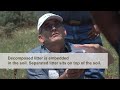
Details a practical monitoring protocol for grazing management, focusing on measuring perennial bunch grass distance and diameter, and assessing litter presence and decomposition as indicators of anim
-
Documents improvements in soil health and native grass species composition over five years using soil tests and transects, showing a tenfold increase in mycorrhizal fungi and a shift away from weed sp
-
Improving soil health through grazing management shows a 3-year lag time before production increases, but results in better water infiltration, reduced grasshopper issues, and increased forage yield.
-
Soil monitoring guided by healthy soil principles shows biochar and compost increase phosphorus and aggregate stability. Bale grazing in West Texas increased infiltration rates, despite low rainfall (
Research
-
Long-term in situ moisture conservation in horti-pasture system improves biological health of degraded land. (opens in new window)
This study found: Combining trees, pasture, and on-site water conservation (contour trenches) in India significantly boosted soil organic matter and beneficial microbes on degraded land, improving soil health and yield
-
Tracking Soil Health Changes in a Management-Intensive Grazing Agroecosystem (opens in new window)
This study found: Intensive rotational grazing on irrigated Colorado pasture improved soil biology but increased compaction over 5-6 years. Overall soil health improved, but managing trampling is key.
-
Managing grazing lands to improve soils and promote climate change adaptation and mitigation: a global synthesis (opens in new window)
This study found: Global review shows grazing management (longer rest, fewer animals, complex patterns) boosts soil water infiltration by ~59% and often improves soil carbon, with a call for more research.
-
Relative contribution of soil, management and traits to co-variations of multiple ecosystem properties in grasslands. (opens in new window)
This study found: French grassland study found livestock farm intensification compatible with soil health. Management and plant traits are key drivers of ecosystem services, with timing of grazing/mowing impacting biod
6
Regional Variation: Climate, Soil, and Species Diversity
The specific management strategies and the pace of improvement when using grazing animals for pasture enhancement vary significantly by region. In temperate climates like those found in the United Kingdom or Canada, the growing season is shorter, and plant growth is...
Regional Variation: Climate, Soil, and Species Diversity
The specific management strategies and the pace of improvement when using grazing animals for pasture enhancement vary significantly by region. In temperate climates like those found in the United Kingdom or Canada, the growing season is shorter, and plant growth is...
The specific management strategies and the pace of improvement when using grazing animals for pasture enhancement vary significantly by region. In temperate climates like those found in the United Kingdom or Canada, the growing season is shorter, and plant growth is seasonal. This necessitates longer rest periods during the peak growing season (late spring to early summer) and careful planning around shoulder seasons (early spring, late autumn). The dominant perennial grasses and legumes respond well to managed defoliation cycles that balance growth stimulation with recovery.
In tropical and subtropical regions, such as parts of Australia's Queensland or Sub-Saharan Africa, the growing season can be much longer, influenced heavily by rainfall patterns, particularly monsoons. Plants often grow much faster, allowing for shorter grazing periods but potentially requiring equally short rest periods during peak growth, or strategic droughts where grazing must be carefully managed to prevent overgrazing stressed vegetation. The species composition will also differ, with a greater prevalence of C4 grasses which have different growth and nutrient requirements than C3 grasses common in temperate zones.
Arid and semi-arid environments, like regions of Spain's Andalusia or the American Southwest, present unique challenges and opportunities. Rainfall is scarce and unpredictable, making drought resilience paramount. Managed grazing in these areas focuses on maximizing the use of infrequent rainfall events by ensuring pastures have adequate rest to recover and regrow after rain, and by avoiding overgrazing during dry spells. Strategic deferral of grazing to allow certain plant species to set seed and regenerate is vital. The land manager’s skill in reading the landscape and adapting grazing plans to highly variable conditions is critical for success in these challenging environments.
Sources behind this view
Sources behind this view
Videos & Podcasts
-
Adapt grazing management to land condition, animal needs, and environmental factors. Strategic rest periods, leaving residue, and adapting rotation speed are key for drought resilience and soil health
-
Increase grazing density and use smaller, more frequent pasture breaks (twice daily moves) for better forage utilization and plant regrowth. Focus on leaf-to-stem ratio and adapted genetics, with stra
-
In arid zones, grazing is managed by rainfall events, spelling paddocks until significant rain allows regrowth. This, with efficient yards and trained cattle, ensures low-stress, labor-efficient manag
-
Effective grazing requires adequate rest periods and observation, not just fixed timelines. Stock stocking rates based on worst-drought capacity, using yearlings/custom grazing for good years. Frequen
Community
-
Explains core grazing management principles: timing, intensity, duration, and frequency, with specific recommendations for rest periods, stubble heights, utilization, and management of diverse vegetat
Read more (pp. 17-32) (opens PDF, pp. 17-32) efotg.sc.egov.usda.gov -
Manage rotational grazing by setting recovery (15-40+ days, adapting to region/season) and grazing periods (2-3 days). Aim to 'take half, leave half' for livestock and soil microbes. High stocking den
Read more (opens in new window) smallfarms.cornell.edu -
Farming with nature involves understanding succession and climate brittleness. Practices like polyculture and rotational grazing mimic natural systems to improve soil health, plant diversity, and supp
Read more (opens in new window) smallfarms.cornell.edu -
Effective grazing management uses intensity, stocking method, and timing to prevent pasture damage and ensure livestock nutrition. Rotational and mob grazing systems are superior to continuous grazing
Read more (opens in new window) ucanr.edu
Research
-
Effect of stocking rate and rainfall on rangeland dynamics and cattle performance in a semi‐arid savanna, South Africa (opens in new window)
This study found: A 10-year study in South Africa showed rainfall and grazing intensity both impact savanna grasslands and cattle weight gain. While rain drives major changes, stocking rate influences plant species ove
-
Testing the limits of resistance: a 19‐year study of Mediterranean grassland response to grazing regimes (opens in new window)
This study found: A 19-year study in Israel showed Mediterranean grasslands are highly resistant to cattle grazing and rainfall variability, maintaining plant diversity even under intense grazing.
-
Improved grazing management may increase soil carbon sequestration in temperate steppe (opens in new window)
This study found: Continuous moderate grazing in temperate grasslands maximized soil carbon storage by boosting root growth and decay. Optimal management involves ~5 animals/ha and ~40% vegetation utilization for best
-
Enabling Regenerative Agriculture Using Remote Sensing and Machine Learning (opens in new window)
This study found: High-intensity sheep grazing with short rest periods (3-6 months) increased pasture organic matter and potentially soil carbon in Tasmania, Australia, even during wet weather. Satellite imagery and AI
7
Research Gaps: Long-Term Economic Integration and Complex Ecosystems
While the ecological benefits of managed grazing are well-documented, research continues to explore the long-term economic viability and integration of these practices into diverse farming systems globally. More granulated data on the specific economic returns over...
Research Gaps: Long-Term Economic Integration and Complex Ecosystems
While the ecological benefits of managed grazing are well-documented, research continues to explore the long-term economic viability and integration of these practices into diverse farming systems globally. More granulated data on the specific economic returns over...
While the ecological benefits of managed grazing are well-documented, research continues to explore the long-term economic viability and integration of these practices into diverse farming systems globally. More granulated data on the specific economic returns over multiple decades, factoring in variability of weather and commodity prices, is needed to provide even greater confidence to land managers considering the transition. Furthermore, understanding the complex interactions between managed grazing, other regenerative practices (like cover cropping, no-till, or agroforestry), and specific regional ecosystem services (e.g., water quality protection, carbon sequestration potential benchmarks) requires ongoing investigation. Quantifying the precise mechanisms by which livestock's physical presence (hoof action) influences soil microbial community composition across various soil types and climates also remains an active area of research.
Sources behind this view
Sources behind this view
Research
-
Regenerative Livestock Farming as a Socioeconomic Model for Sustainable Agribusiness in Latin America (opens in new window)
This study found: Regenerative livestock farming in Latin America improved soil carbon, biodiversity, and water quality, while boosting farmer income and quality of life. Government support is key for wider adoption.
-
Managing Grazing to Restore Soil Health, Ecosystem Function, and Ecosystem Services (opens in new window)
This study found: Properly managed grazing animals can reverse environmental damage. Regenerative practices, like Adaptive Multi-Paddock (AMP) grazing, boost soil health, increase soil carbon, reduce erosion, and enhan
-
Multi-paddock grazing on rangelands: why the perceptual dichotomy between research results and rancher experience? (opens in new window)
This study found: Ranchers often see benefits from multi-paddock grazing that scientific studies don't always confirm. This review explores the gap, highlighting rancher-led adaptive management principles and suggestin
-
FORAGES AND PASTURES SYMPOSIUM: COVER CROPS IN LIVESTOCK PRODUCTION: WHOLE-SYSTEM APPROACH: Managing grazing to restore soil health and farm livelihoods1 (opens in new window)
This study found: Regenerative grazing management is key to sustainable, climate-resilient farms. It restores soil health, enhances ecosystem services like carbon capture and water infiltration, and improves farm profi
8
Connecting Science to Practice: Adaptive Management Principles
The science behind how grazing animals improve pastures underscores the need for adaptive management. Understanding that plant physiology responds to defoliation and rest means that managers must actively observe their pastures and livestock, making adjustments as...
Connecting Science to Practice: Adaptive Management Principles
The science behind how grazing animals improve pastures underscores the need for adaptive management. Understanding that plant physiology responds to defoliation and rest means that managers must actively observe their pastures and livestock, making adjustments as...
The science behind how grazing animals improve pastures underscores the need for adaptive management. Understanding that plant physiology responds to defoliation and rest means that managers must actively observe their pastures and livestock, making adjustments as needed. This means moving beyond rigid scheduling and embracing flexibility. For instance, if rainfall is unexpectedly abundant, a rest period might need to be shortened to utilize the flush of growth before it becomes unpalatable, or the herd might be moved more frequently to prevent overgrazing. Conversely, if rainfall is scarce, rest periods must be extended, and stocking densities reduced to protect the fragile vegetation. This dynamic approach, informed by ecological principles, is the hallmark of successful regenerative grazing. Land managers are encouraged to use tools like plant phenology, soil moisture indicators, and animal behavior as guides, rather than solely relying on predetermined calendar dates for grazing rotations.
Sources behind this view
Sources behind this view
Videos & Podcasts
-
Adaptive grazing, emphasizing high stock density, flexibility, and frequent movement/rest, rapidly builds soil organic matter and microbial populations. A Mississippi case study showed dramatic improv
-
Advanced grazing management focuses on plant physiology and carbohydrate flow, using first principles to time grazing based on plant signals for optimal vegetative growth, not arbitrary rules, leading
-
Adaptive grazing, focusing on stock density and frequent livestock movement with rest, rapidly improves soil health, organic matter, and microbial biomass. This approach simulates nature and yields si
-
Adaptive grazing requires adequate recovery periods to build soil armor, improve moisture infiltration, and increase forage quality. Investing in water distribution infrastructure is critical for graz
Community
-
Explains core grazing management principles: timing, intensity, duration, and frequency, with specific recommendations for rest periods, stubble heights, utilization, and management of diverse vegetat
Read more (pp. 17-32) (opens PDF, pp. 17-32) efotg.sc.egov.usda.gov
Research
-
Managing Grazing to Restore Soil Health, Ecosystem Function, and Ecosystem Services (opens in new window)
This study found: Properly managed grazing animals can reverse environmental damage. Regenerative practices, like Adaptive Multi-Paddock (AMP) grazing, boost soil health, increase soil carbon, reduce erosion, and enhan
-
Multi-paddock grazing on rangelands: why the perceptual dichotomy between research results and rancher experience? (opens in new window)
This study found: Ranchers often see benefits from multi-paddock grazing that scientific studies don't always confirm. This review explores the gap, highlighting rancher-led adaptive management principles and suggestin
-
FORAGES AND PASTURES SYMPOSIUM: COVER CROPS IN LIVESTOCK PRODUCTION: WHOLE-SYSTEM APPROACH: Managing grazing to restore soil health and farm livelihoods1 (opens in new window)
This study found: Regenerative grazing management is key to sustainable, climate-resilient farms. It restores soil health, enhances ecosystem services like carbon capture and water infiltration, and improves farm profi
-
Impacts of grazing management on hill country pastures: principles and practices (opens in new window)
This study found: Smart grazing on hilly pastures balances animal needs with grass availability. Managing livestock numbers and types, and grazing at the right time, improves pasture quality and quantity for better far
From the Web
-
Adaptive grazing enhances soil and water cycles through diversity and resilience. Dr. Allen Williams advocates for extended pasture rest between high stock-density grazing periods to boost forage and
-
Adaptive grazing management, a regenerative practice, emphasizes flexible strategies based on timing, frequency, intensity, duration, and rest, adapting to seasonal and soil moisture conditions to imp
-
Adaptive multi-paddock grazing requires flexible paddock design based on goals, animal species, grazing period, recovery, stock density, and animal impact. Key factors include vegetation types, biome,
-
Adaptive grazing uses high stock density and extended rest periods on diverse pastures to regenerate soil and water cycles, improving forage availability and land resilience. It emphasizes flexibility
9
Know the Debate
While managed grazing is widely recognized for its benefits to pasture health and soil carbon, the exact amount of carbon sequestered varies signif...
Know the Debate
While managed grazing is widely recognized for its benefits to pasture health and soil carbon, the exact amount of carbon sequestered varies signif...
While managed grazing is widely recognized for its benefits to pasture health and soil carbon, the exact amount of carbon sequestered varies significantly. Factors like climate, soil type, and grazing intensity play a crucial role. In regions with reliable rainfall and fertile soils, the potential for higher sequestration rates is greater, while arid lands may see more modest gains. Management intensity, particularly the balance between grazing impact and recovery periods, also dictates the outcome, influencing the plant-soil carbon feedback loop.
How much carbon does managed grazing sequester?
Modest gains (0.2-2 tons/ha/yr)
Studies in temperate grasslands and diverse agricultural systems indicate moderate carbon sequestration potential, generally ranging from 0.2 to 2 tons of carbon per hectare per year. These outcomes are achieved through improved root growth and organic matter input, often under continuous or well-managed rotational grazing practices.
Sources behind this view
Sources behind this view
Research
-
Improved grazing management may increase soil carbon sequestration in temperate steppe (opens in new window)
This study found: This three-year study in a temperate grassland found that how you manage grazing livestock significantly impacts soil health and its ability to store carbon. Continuous moderate grazing led to the most root growth and decay, which built up the most soil carbon. While resting pastures at certain times (deferred grazing) stored less carbon, they resulted in more root mass, better plant diversity, and kept more nitrogen in the soil. Heavy, continuous grazing damaged plant growth, led to nitrogen loss, and reduced the carbon going into the soil. The research suggests that managing stocking rates to about 5 animals per hectare and aiming for around 40% of the grass to be eaten can maximize carbon storage. This shows that adjusting grazing practices can improve soil carbon sequestration in these grasslands.
-
Diversification and ecosystem services for conservation agriculture: Outcomes from pastures and integrated crop–livestock systems (opens in new window)
This study found: Farming practices that minimize soil disturbance, keep the soil covered, and boost soil life can improve the environment. This paper looks at how having more diverse plants in pastures and combining crops with livestock can lead to better 'ecosystem services' – the natural benefits farms provide. While diverse pastures can improve grass growth and reduce weeds, they don't always boost animal production. Managing plant diversity requires careful planning for different farm areas. Integrated systems use smart crop rotations and ecological methods. Mixing crops and livestock makes management more complex but can create a more resilient and sustainable farm that stores carbon in the soil, recycles nutrients naturally, and supports wildlife.
From the Web
-
Managed grazing, particularly multi-paddock systems, can increase soil organic matter and sequester up to 2 tons of carbon per hectare per year, offsetting livestock emissions.
Significant sequestration (3+ tons/ha/yr)
Holistic planned grazing and adaptive multi-paddock systems are claimed to significantly boost carbon sequestration, with potential estimates exceeding 3 tons per hectare annually. This is attributed to enhanced plant growth, intense animal impact, and accelerated biological activity leading to substantial soil organic matter increases.
Sources behind this view
Sources behind this view
Videos & Podcasts
-
Holistic planned grazing mimics natural herd behavior to regenerate grasslands, improve ecosystem function, and sequester carbon. It involves matching forage to livestock needs and monitoring grass recovery, leading to healthier land and livelihoods.
-
Holistic planned grazing (HPG), also called adaptive multi-paddock grazing, significantly improves soil carbon (3 tons/ha/yr more than continuous grazing), water infiltration, and ecological function by managing for microbial activity, earthworms, and dung beetles. HPG contrasts with continuous grazing, which degrades soil, and requires short grazing periods with long recovery times.
Research
-
How Biodiversity-Friendly Is Regenerative Grazing? (opens in new window)
This study found: This review looked at 58 studies to see how regenerative grazing, which involves moving dense herds of livestock frequently through pastures with long rest periods, affects biodiversity. The goal is to mimic natural grazing to improve soil and wildlife. Studies show that regenerative grazing can boost soil life, including more beneficial microbes and fungi, and improve soil structure through hoof action. However, the impact on plants is mixed: while grasses might do well, shrubs and wildflowers can sometimes be reduced by trampling. Similarly, some insects like dung beetles benefit from hoof action, but others are harmed. Bird populations can also see mixed results, with some benefiting from foraging opportunities and nesting sites, while others lose food sources during winter. While regenerative grazing doesn't automatically increase all types of biodiversity, it can be managed to create more varied habitats that support a wider range of plants and animals.
From the Web
-
Adaptive multi-paddock and holistic planned grazing significantly enhance soil carbon and nitrogen stocks, improve grassland resilience, and can make farms net carbon sinks. Studies show these methods increase soil organic matter, water infiltration, and reduce greenhouse gas emissions compared to continuous grazing.
Making Sense of the Differences
The range in reported carbon sequestration rates for managed grazing is largely driven by climate, soil type, and management intensity. Humid regions with fertile soils and long growing seasons, combined with intense mob grazing and long rest periods, tend to see higher sequestration rates. Arid or degraded land managed with continuous or less-intense rotational grazing will likely achieve more modest gains. Farmers should focus on consistent management practices and monitor soil organic matter over time, as gains are cumulative and context-dependent.