The transition from a pure livestock operation to an integrated crop-livestock system represents a fundamental shift in capital allocation, requiring a planned investment of $42–208 per acre ($104–$514/ha) over the first 2–4 years. This investment is not primarily about acquiring massive, new-market machinery; rather, it is a strategic deployment of capital toward the "intellectual infrastructure" of your operation and the biological priming of your soil. By focusing on intelligent modifications of existing assets, you avoid the heavy debt loads that often cripple conventional farm expansions. Most successful producers budget a cumulative seed-to-yield fund of $104–521 per acre ($257–$1,287/ha) to manage the steep learning curve and cash flow volatility associated with retooling for complexity. Financial discipline during the first 24 months is paramount, as you balance the immediate cash outlays of the cropping system against the long-term compounding gains of integrated soil health.
A core component of the transition’s financial viability is what you stop spending. By integrating legumes and diverse cover crops, you can realistically target a 10–30% reduction in synthetic nitrogen fertilizer spending within the first 3–5 years as biological nitrogen cycling activates. Simultaneously, the increased system diversity allows for a 15–30% reduction in annual herbicide expenditure, as better canopy coverage and soil structural health suppress common weed pressures. Furthermore, your livestock operation gains immediate relief; by growing high-quality annual forages or utilizing standing covers, you can save $52–208 per head annually on commercial feed, hay, and supplements. These avoided costs—often totaling $150–400 per acre ($371–$988/ha) in equivalent value—frequently serve as the primary engine that funds further development in the cropping cycle.
Establishment costs represent the primary barrier to entry. Budget for an initial outlay of $26–104 per acre ($64–$257/ha) for diverse seed blends, biological soil stimulants, and soil testing to establish your baseline. Beyond biology, hardware retrofitting is an unavoidable expense; you should plan to spend $521–5,210 per implement to adapt your existing drills or planters with specialized no-till coulters or closing wheels. While a second-hand no-till drill might represent a significant capital expenditure of $10,420–31,260, many producers successfully mitigate this by utilizing local equipment sharing pools or leasing high-spec machinery. This keeps your capital expenditure focused on soil health and management rather than tying it up in depreciating fixed assets that only see use for a few weeks a year.
Ongoing costs will shift from the simple maintenance of pastures to a more active operational cycle of $78–261 per acre ($193–$645/ha) annually, covering seed, fuel for multi-pass management, and the increased labor demands of intensive crop rotations. As the system matures, the efficiency of your nutrient cycling improves, leading to a projected 5–15% annual reduction in fuel use as tillage is reduced and the soil develops a structure that requires less horsepower to manage. This "fuel dividend" is a direct result of managing for soil organic matter rather than just yield. Your operational budget should account for this transition phase as a shift from buying external inputs to investing in internal biological cycles that maintain high levels of production without the constant reliance on off-farm suppliers.
The breakeven analysis for this transition occurs in two stages. First, the recovery of input costs—primarily through feed savings and synthetic fertilizer reductions—typically occurs within 1–3 years of the initial implementation. Second, the point of significant profit growth and meaningful soil equity accumulation generally requires a 7–10 year horizon. During this period, the compounding effects of increased biological activity and soil moisture retention allow for more consistent crop yields and better livestock carrying capacity. To ensure you hit these targets, you must prioritize "intellectual infrastructure." Investing $313–1,042 per person for grazing schools, cover crop management workshops, or formal soil health certifications is often the highest-yielding decision you can make, drastically reducing the cost of trial-and-error mistakes.
Government programs offer a critical buffer for these financial risks. The USDA’s Environmental Quality Incentives Program (EQIP) and Conservation Stewardship Program (CSP) provide essential cost-share opportunities for transitioners. Producers often secure cost-share payments ranging from 50–75% of expenses for cover crop establishment and adaptive grazing fencing. It is vital to consult with your local NRCS office at least 6–12 months before your planned start date, as application windows are competitive and funding pools for "integrated crop-livestock" initiatives are often exhausted quickly. Aligning your transition plan with these programs can effectively reduce your net capital expenditure by $25–150 per acre ($62–$371/ha) in the first three years of the program.
Geographic economic variability dictates the ultimate success of your cropping choices. In the arid West, establishment costs for dryland cropping systems might skew toward the higher end of the $42–208 per acre ($104–$514/ha) spectrum due to increased risks of germination failure and the need for more specialized moisture-management equipment. Conversely, in the humid Midwest or Southeast, where biomass potential is higher, the ROI on cover crops is often faster, allowing for more aggressive recovery of the $104–521 per acre ($257–$1,287/ha) seed-to-yield fund. Regional access to grain storage, local milling markets, or contract grazing arrangements also influences how quickly you can pivot from subsistence-level cropping to professional-grade commercial production.
Small operations (under 100 acres (40 ha)): Focus on low-capital entry by utilizing custom-hire harvesting or seed-drill rentals to avoid the $10,420–31,260 cost of purchasing primary equipment. Prioritize high-value specialty crops that fit within a 10–20 acre (4.0–8.1 ha) rotation to maximize margins.
Mid-size operations (100-1,000 acres (40–405 ha)): Emphasize equipment retrofits within the $521–5,210 range to optimize existing assets. Use these operations to transition one field at a time to mitigate cash flow risks, maintaining 75–80% of pasture in stable, high-production livestock forage until the cropping segments are profitable.
Large operations (1,000+ acres): Leverage economies of scale to negotiate bulk seed pricing, potentially reducing establishment costs by $15–30 per acre ($37–$74/ha). Focus on the integration of large-scale, adaptive high-density grazing to reduce fertilizer procurement costs by 20–30% across the entirety of the acreage.
Sources behind this view
-
Tyler Tobalt details the ROI of cover crops for his beef operation, emphasizing significant savings on silage and hay, reduced labor, and freed-up land. The most valuable ROI, however, is the time saved, enabling better farm management and family life, alongside improved livestock gains and soil health.

-
Explains cost-benefit analysis for agricultural investments like tractors and irrigation systems. Uses examples to show how to calculate return on investment, emphasizing the role of gross margin and considering financing costs and equipment lifespan for informed decision-making.
-
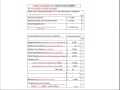
The Pasture Project Grazing Calculator offers a user-friendly tool to compare financial returns of cow-calf ($309/acre), finishing ($119/acre), and direct marketing ($155/acre before post-harvest costs) operations in the Upper Midwest, emphasizing pasture cost savings and conservative financial projections.
-
Advocates for 'Lean Farming' by prioritizing expense reduction, particularly winter feed costs for pigs, as the most direct path to profitability. It emphasizes analyzing farm resources and identifying cost-saving strategies before scaling production.
-
Focus on market analysis and multiple income streams for profitability. Pastured animals and polyculture orchards are options, but regulatory environment, skills, and market demand are critical. Synergies between enterprises are key to saving money and increasing profit.
-
Gabe Brown and Shane New illustrate how livestock grazing cover crops in eastern Kansas can generate $40.81/acre net profit by mid-June, enhancing soil fertility and farm resilience amidst a depressed cattle market.
-
This article presents a decision support tool (Excel spreadsheet) to evaluate the economics of grazing cornstalks in Nebraska. It details how to calculate income (rental or reduced feed costs) and costs (transport, care, supplemental feed, nutrients, lime, water, weeds) associated with grazing, considering impacts on soil health, water conservation, and weed pressure. The tool supports 'what-if' analysis for economic decision-making.