This guide is for certified organic farmers and ranchers ready to deepen their commitment to ecological health by transitioning to a fully regenerative system. If you've already eliminated synthetic inputs but are looking to move beyond conventional organic practices towards a system that actively builds soil biology, enhances ecosystem function, and integrates livestock, this guide outlines the pathway.

Read More: Complete Description

The journey from certified organic to a fully regenerative model is one of increasing focus on living systems and ecosystem services. Many farmers achieve organic certification because they want to avoid synthetic chemicals, improve their product's market appeal, or respond to consumer and regulatory pressure. This often leads to a system that is "less bad" but not necessarily "more good" in terms of ecological impact. Intensive tillage, reliance on purchased amendments, and monoculture remain common practices within organic systems, even if synthetic inputs are absent. The drive to transition to regenerative agriculture stems from recognizing the inherent limitations of these practices when it comes to truly enhancing soil biology, building long-term soil health, improving water cycles, and increasing biodiversity.

The destination isn't just a set of practices; it's a fundamental shift in philosophy and management approach. This transition aims to create a self-reinforcing ecosystem on your farm, where ecological processes actively contribute to productivity and resilience. It means embracing practices like no-till or reduced tillage to protect soil structure and biology, utilizing diverse multi-species cover crop cocktails for fertility and soil building rather than purchased amendments, and integrating livestock to cycle nutrients and stimulate plant growth. The goal is to create a system that is not only sustainable (maintaining current conditions) but regenerative (actively improving soil health, biodiversity, and ecosystem function beyond baseline levels). This transition maintains your organic certification, allowing you to leverage its market benefits while simultaneously moving towards a more ecologically advanced system.

Key Points

Scale

Applicable across all scales, with adaptations in equipment, infrastructure, and management intensity.

Breakeven

2-4 years for most operations

Difficulty

Moderate to High — requires significant learning and unlearning, particularly around tillage cessation and livestock integration.

Destination

Regenerative organic system with no-till/reduced tillage, multi-species cover crops for fertility, integrated livestock, and a focus on building soil biology beyond organic standards.

Starting Point

Certified organic operation with synthetic input elimination, but potentially relying on intensive tillage, purchased amendments, limited crop diversity, and no livestock integration.

Investment Range

$60-250/acre ($148–$618/ha) over 3-5 years

Typical Timeline

2-4 years for tillage reduction and cover crop integration; 3-5 years for livestock integration. Organic certification is maintained throughout.

Know the Debate

  • Tillage cessation vs strategic disruption timeline varies by starting soil health.
  • Livestock integration offers fertility benefits but requires significant planning.
  • Cover crop costs are offset by reduced amendment use over 2-4 years.
  • Yield can stabilize initially, with modest increases over 5-7 years.

Going Deeper

1

WHERE YOU ARE NOW

You've already made a significant commitment by achieving and maintaining certified organic status. This means you've successfully eliminated...

You've already made a significant commitment by achieving and maintaining certified organic status. This means you've successfully eliminated...

You've already made a significant commitment by achieving and maintaining certified organic status. This means you've successfully eliminated synthetic pesticides, herbicides, and fertilizers, and you understand the value of building soil health through approved organic inputs. Your fields are likely showing some improvements in soil biology compared to conventional systems, with better soil structure and increased microbial activity. You've learned to manage pests and fertility through crop rotation, approved organic amendments, and mechanical weeding. This foundation is invaluable, providing a deep understanding of the principles of organic farming that directly supports your next steps toward a regenerative approach.

You understand the market advantages and consumer trust that organic certification provides. You're comfortable managing crop rotations and likely have protocols in place for pest and disease management that rely on observation and intervention rather than routine synthetic application. The fact that you are exploring this transition suggests you're already looking for ways to increase the resilience, diversity, and overall ecological function of your farm. You're not just content with a system that is "less bad" but are actively seeking one that is "more good"—one that actively regenerates the land.

However, even within organic frameworks, certain standard practices can limit the potential for full ecosystem regeneration. Intensive tillage, while effective for weed control and seedbed preparation, disrupts soil structure, harms microbial communities, and leads to organic matter loss. Reliance on purchased organic amendments, while necessary for fertility, represents an external input loop and doesn't fully leverage the on-farm nutrient cycling potential. Limited crop diversity, often driven by market demands or established rotations, can restrict the beneficial symbiotic relationships between plants, fungi, and microbes. The absence of livestock, a cornerstone of natural ecosystems, means a critical component of nutrient cycling and landscape management is missing. These are the areas where the transition to a regenerative system offers the greatest gains.

At different scales:

200-5,000 acres: You operate a more structured organic farm, likely with defined crop rotations and acreage for commodities or specialty crops. You’re accustomed to managing equipment for tillage and perhaps have invested in machinery for organic weed control. The transition to reduced tillage may involve significant equipment recalibration or partial upgrades, and integrating livestock will require careful site-specific planning for infrastructure and grazing management.

5,000+ acres: Your large-scale organic enterprise relies on efficient, often higher-horsepower equipment for tillage and seedbed preparation. Achieving organic certification at this scale often necessitates simplified rotations and a focus on maximizing yield from each commodity crop. The prospect of reducing tillage and introducing complex cover crop mixes and livestock integration across vast areas presents substantial logistical and equipment challenges, often requiring phased implementation.

Small (under 100 acres/40 ha): Your existing organic practices may involve significant hand-weeding or reliance on single-pass flail mowing, leading to disrupted soil structure. You likely have fewer external input loops to break, making incremental shifts like introducing cover crops or less disruptive tillage tools (e.g., tine weeders) more manageable for soil health.

Mid-size (100–500 acres/40–200 ha): While you might possess equipment for conventional organic weed control, transitioning away from intensive tillage may require investing in new implements or recalibrating existing ones for reduced disturbance. You have the acreage to experiment with more diverse rotations and the potential to integrate small livestock enterprises, like poultry or sheep, as a pilot for nutrient cycling.

Large (500+ acres/200+ ha): Your operation likely relies on heavy tillage equipment for efficient weed control and seedbed preparation, representing a substantial hurdle to reduced tillage transitions. Consider a phased approach, perhaps converting a significant portion of your acreage to no-till or strip-till over 3-5 years, and leveraging your buying power for bulk cover crop seed mixes.

Sources behind this view

Videos & Podcasts
Community
  • Adopts a holistic grazing management approach emphasizing diverse perennial pastures, higher residuals (4"), and longer rest periods (avg. 45 days) to build soil health, increase organic matter (3.4% to 4.6%), and enhance farm resilience against unpredictable weather.

    Read more (opens in new window) smallfarms.cornell.edu
  • Discusses regenerative grazing with cattle, sheep, and goats, emphasizing high-density impact and long recovery periods for soil health and ecosystem restoration in arid regions. Debates overgrazing, hoof impact, and the ecological role of livestock in diverse environments.

Research
From the Web
  • Organic farming and rotational grazing are presented as solutions, enhancing soil health, sequestering carbon, and preventing erosion. Managed grazing boosts plant roots, improving soil fertility and water retention, potentially mitigating agriculture's carbon footprint.

  • Key regenerative agriculture methods include no-till farming, cover cropping, agroforestry, perennial crops, planned rotational grazing (Holistic Management), and compost application, all aimed at improving soil health and sequestering carbon.

2

WHERE THIS LEADS

The destination you're moving towards is a farm that actively functions as a thriving ecosystem, producing food and fiber while improving its own...

The destination you're moving towards is a farm that actively functions as a thriving ecosystem, producing food and fiber while improving its own...

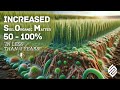
The destination you're moving towards is a farm that actively functions as a thriving ecosystem, producing food and fiber while improving its own capacity for productivity and resilience year after year. This transition is not just about avoiding problems; it's about cultivating abundance through ecological processes. You'll see tangible improvements in your farm's biological engine – the soil. Soil organic matter increases will become measurable, often in the range of 0.2-0.5 percentage points per year in well-managed systems, leading to enhanced water-holding capacity, improved aeration, and better nutrient availability. Expect infiltration rates to improve by 20-50% as soil structure aggregates more effectively.

Production metrics will begin to stabilize and, in many cases, increase, but the nature of those gains shifts. Instead of relying on external inputs, you'll increasingly leverage on-farm resources. Yields might not always dramatically outpace your best organic years initially, but they will likely become more consistent, showing less year-to-year variability due to weather extremes. This stability is a significant economic and operational benefit. You’ll notice a reduction in pest and disease pressure, as a more balanced ecosystem fosters beneficial insects and a more robust plant immune system, lessening the need for interventions.

Economic outcomes are projected to improve as you reduce reliance on purchased amendments and potentially synthetic inputs (even organic ones can be costly). Over time, the trend is towards lower input costs and greater profitability margins. Studies from various regions indicate that regenerative systems can achieve yield parity or modest gains with significantly lower input expenditures. However, it's crucial to acknowledge that economic outcomes vary by region. US and Australian studies generally show positive returns, but research from other contexts has documented higher costs and lower profitability, suggesting local conditions significantly influence viability.

Beyond production and financial metrics, practitioners document reduced stress from managing fewer external inputs and a more robust system. There's an improved mental health state derived from spending more time observing and working with the land's natural processes, rather than fighting against perceived limitations. In some cases, practitioners report reduced medical costs. Wildlife and biodiversity indicators often improve measurably within 2-3 years as forage structure and diversity increase, providing both an ecological measure and a quality-of-life enhancement through increased bird populations and beneficial insect activity. The improved ecosystem function also translates to better water quality leaving your farm.

Many well-executed operations exhibit bimodal outcome distributions. Gains range from 10-15% in modestly improved systems to 40-120% in well-executed operations. This suggests outcomes are highly sensitive to management quality and local conditions, emphasizing the importance of continuous learning and adaptation.

At different scales:

200-5,000 acres: You’ll observe increasing soil organic matter and improved water infiltration on your cover-cropped acres. Reduced expenditure on amendments and an increase in nitrogen fixation from clover-type cover crops will begin to offset the costs of new seed and potentially new equipment. Livestock integration, even on a small scale, will demonstrate its nutrient cycling benefits across pasture and croplands, leading to more resilient crop yields and improved forage quality for grazing animals.

5,000+ acres: Initial changes will be most pronounced in pilot areas where you are experimenting with no-till drilling, cover crops, and livestock integration. You’ll see lower soil organic matter losses due to reduced tillage. The economic benefits will manifest as stabilized yields alongside a projected reduction in amendment costs over time. Observing the resilience of cover-cropped fields during challenging weather will be a key indicator that the system is building long-term capacity, even if widespread adoption takes longer.

Small (under 100 acres/40 ha): Visible improvements in water infiltration, perhaps from 0.5 to 1 inch per hour (12-25 mm/hr), will quickly demonstrate the value of increased soil organic matter, potentially reducing runoff and erosion on a smaller, more intensely managed footprint.

Mid-size (100–500 acres/40–200 ha): Gains in soil organic matter of 0.2-0.4% per year across larger areas can lead to substantial increases in water-holding capacity, potentially reducing irrigation needs by 15-30% and improving drought resilience across diverse crop rotations.

Large (500+ acres/200+ ha): Systematic monitoring of soil health indicators across vast acreages will reveal significant improvements in infiltration rates, with potential gains of 1-2 inches per hour (25-50 mm/hr) over 5-10 years, meaning less water lost to runoff and better groundwater recharge.

Sources behind this view

Videos & Podcasts
Community
  • Advocates for Soil Foodweb principles and Holistic Management, emphasizing land leasing and custom grazing/growing over labor-intensive methods. Focuses on soil restructuring for water availability and fertility through animal inputs and diverse pasture mixes.

  • Key takeaways for scaling regenerative agriculture include consistent certification standards, secure data sharing, long-term investment and financing, supply chain transparency, and collaborative efforts involving farmers, institutions, and communities.

Research
From the Web
  • Organic farming and rotational grazing are presented as solutions, enhancing soil health, sequestering carbon, and preventing erosion. Managed grazing boosts plant roots, improving soil fertility and water retention, potentially mitigating agriculture's carbon footprint.

  • Key regenerative agriculture methods include no-till farming, cover cropping, agroforestry, perennial crops, planned rotational grazing (Holistic Management), and compost application, all aimed at improving soil health and sequestering carbon.
3

THE MONEY

The financial landscape of transitioning from organic to regenerative agriculture is complex but offers significant long-term rewards, primarily...

The financial landscape of transitioning from organic to regenerative agriculture is complex but offers significant long-term rewards, primarily...

Transitioning a certified organic operation to a regenerative model is a strategic reallocation of capital rather than a simple expense. You should anticipate a cumulative investment range of $60-250/acre ($148–$618/ha) spread over your 3-5 year transition timeline. This budget is dedicated to shifting from an "input-replacement" strategy—where you purchase expensive organic fertilizers to fix systemic problems—to a "biological-activation" strategy that leverages soil ecology. By investing in multi-species cover crops and integrated livestock, you are building long-term soil equity that effectively revalues your land asset, as opposed to purchasing annual amendments that vanish after a single harvest.

The most immediate financial relief comes from eliminating redundant expenditures. Certified organic systems often rely heavily on high-cost organic amendments like blood meal, high-grade compost, or mined rock phosphate, which can drain $100-300/acre ($247–$741/ha) annually from your operating budget. Transitioning to regenerative, no-till practices allows you to slash these purchases by 40-80% within the first four years as cover crops begin to fix atmospheric nitrogen and mobilize dormant phosphorous. Furthermore, you will stop paying the "tillage tax"—the heavy fuel consumption costs of $5-15/acre ($12–$37/ha) per pass and the massive associated wear on iron—which cumulatively reduces annual repair and maintenance budgets by 20-50%.

Establishing this system requires upfront liquidity. You need to budget $15-60/acre ($37–$148/ha) annually for high-quality, diverse cover crop seed mixes, specifically tailored to your cash crop rotation. If your current operation lacks a no-till drill or crimper, expect an initial equipment capital expenditure of $25-150/acre ($62–$371/ha), which can often be mitigated through equipment sharing or retrofitting existing implements. For producers integrating livestock—the catalyst for rapid soil biology transformation—infrastructure costs represent your most significant initial hurdle. Mobile fencing systems, high-tensile wire, and solar-powered water infrastructure typically require a capital layout of $100-500/acre ($247–$1,236/ha), though these assets provide durable utility for 10-20 years.

The financial trajectory follows a consistent pattern during the transition. In the first 12-24 months, you will face high variable costs due to equipment modifications, specialized consultant fees, and the steeper learning curve associated with managing soil biology. However, by year 4, you should see these expenditures plateau as functional biological cycles take over. By consistently fostering fungal dominance in the soil and increasing organic matter by 0.5-2.0%, you effectively reduce your recurring need for organic inputs. While your variable costs for biomass production and livestock management may increase by $10-30/acre ($25–$74/ha), your system-wide savings usually outweigh these costs by a factor of 2:1 compared to traditional input-heavy organic regimes.

Breakeven on these capital investments typically occurs in an impressive 2-4 year window. In the first year, your Return on Investment (ROI) may be compressed by entry-level transition costs, but by year 3, the cumulative reduction in fuel, labor, and purchased amendments—usually totaling $80-160/acre ($198–$395/ha) in annual savings—tends to fully offset the infrastructure and seed costs incurred during the establishment phase. This analysis assumes that yields remain stable; however, many producers see a 5-15% increase in moisture retention and drought resilience by year 4, which acts as a profound insurance policy, preventing the catastrophic revenue losses that plague conventional or input-dependent operations during climate volatility.

Navigating governmental support is critical to de-risking your investment. Programs like the Environmental Quality Incentives Program (EQIP) or the Conservation Stewardship Program (CSP) administered by the NRCS can provide essential cost-share assistance. For example, producers can often recoup 50-75% of the costs associated with multi-species cover cropping, prescribed grazing, and fencing installation. Application windows typically open in the fall or early winter; securing a contract early is vital, with total contract payments for mid-sized regenerative projects often ranging from $5,000-50,000 depending on the scope of the conservation plan. Always initiate contact 6-12 months before major infrastructure projects to ensure funding availability.

Economic viability is heavily influenced by geography and existing infrastructure. In the humid Southeast, for example, your primary expense is managing excessive biomass, which may require higher fuel spending of $10-25/acre ($25–$62/ha) for termination, while in drier Western regions, water infrastructure reliability to support cover crop establishment adds $30-70/acre ($74–$173/ha) to your overhead. Furthermore, the availability of specialized no-till equipment rentals varies wildly by region, impacting your annual cost variance by ±$20-50/acre ($49–$124/ha). It is imperative to perform a localized cost-benefit analysis, as the optimal cover crop mix for your specific soil type might range from $15/acre ($37/ha) in cereal-dominant areas to $60/acre ($148/ha) for complex, multi-species legume mixes in high-demand zones.

Scale significantly changes the economic footprint of your regenerative transition. Small operations (under 100 acres (40 ha)): Focus on high-value, direct-to-consumer markets to offset the $200-250/acre ($494–$618/ha) transition investment; utilize shared equipment pools or cooperative tool ownership to keep machinery-related costs below $50/acre ($124/ha). Mid-size operations (100-1,000 acres (40–405 ha)): Rely on efficiency through automation and enterprise integration; target $30-60/acre ($74–$148/ha) for cover crop seed and prioritize cost-share applications for permanent grazing fencing, keeping upfront infrastructure investment under $150/acre ($371/ha). Large operations (1,000+ acres): Focus on economies of scale in seed procurement, pushing costs down to $15-30/acre ($37–$74/ha) for cover crops; utilize precise GPS-guided no-till planting to reduce fuel consumption by $10-15/acre ($25–$37/ha) across total acreage, ensuring the ROI on machinery upgrades is achieved within 3 years due to high operational volume.

Sources behind this view

Videos & Podcasts
Community
  • Details how to scale regenerative agriculture through robust business models, financial modeling, tax incentives, and leveraging programs like CRP, exemplified by a successful Alcoa agroforestry project.

  • Adopting organic and sustainable farming offers benefits like seed cost savings, improved soil health, and higher yields, but faces challenges including certification costs, patent infringement risks, and market access barriers.

    Read more (opens in new window) sustainableagriculture.net
Research
From the Web
  • Regenerative farming combines no-till, cover crops, and complex rotations, often with livestock grazing, to boost profitability by reducing input costs and increasing soil organic matter. Studies show these practices lead to higher yields, fewer pests, and positive economic returns within years.

  • Regenerative agriculture aligns environmental and financial goals by improving soil health, leading to cost savings and better plant nutrition. This approach demonstrates economic viability, encouraging farmer and landowner adoption.

4

Know the Debate

Transitioning towards regenerative agriculture from an organic baseline involves shifting from minimal chemical intervention to actively building e...

Transitioning towards regenerative agriculture from an organic baseline involves shifting from minimal chemical intervention to actively building ecological function. This means moving beyond routine tillage and purchased amendments, and embracing practices like diverse cover cropping and livestock integration. The journey prioritizes soil health and ecosystem services, with outcomes heavily influenced by your starting soil condition, climate, scale of operation, and management intensity. Expect gradual improvements with cost savings beginning within 2-3 years, but acknowledge the learning curve for new practices especially around tillage, cover crop termination, and livestock management.

Tillage or No-Tillage in Organic to Regenerative Transition?

Permanent No-Till (Best Practice)

Never till, even during transition, to protect soil biology and structure. Focus on cover crops for residue management and nutrient cycling.

Strategic Single Tillage Disturbance (Contextual)

A single, shallow tillage event may be necessary for severely compacted organic soils to enable cover crop establishment, followed by permanent no-till.

Making Sense of the Differences

The choice between permanent no-till and strategic disturbance largely depends on baseline soil health and the severity of compaction inherited from past organic practices. Organic farms with healthy soil structure and good infiltration rates can transition directly to no-till. Farms with severe compaction or a history of intensive organic tillage may find better long-term outcomes by enabling cover crop establishment with a single, shallow tillage event. Both approaches aim for permanent no-till eventually, but the path depends on starting conditions.

Livestock Integration Challenges for Organic Farmers?

Animals Essential for Full Regeneration

Integrating livestock is crucial for complete nutrient cycling, soil disturbance, and ecosystem function, making it a necessary step for true regenerative outcomes.

Livestock Optional: Compost & Cover Crops Sufficient

Compost and complex cover cropping can provide necessary nutrients and soil health benefits, making livestock integration non-essential for regenerative outcomes.

Making Sense of the Differences

The necessity of livestock integration in transitioning organic farms depends on definitions of 'regenerative' and farm context. While animals offer unique nutrient cycling and soil stimulation benefits, complex organic systems can achieve significant soil health gains with sophisticated cover cropping and compost management. Farms under 200 acres might find small livestock integration feasible and immediately beneficial, while larger operations may prioritize plant-based strategies due to logistical and infrastructure constraints.

Cover Crop Seeding vs. Amendment Savings Transition?

Cover Crops Significantly Reduce Amendment Needs

Investing in diverse cover crop mixes (e.g., $15-60/acre) directly replaces costly organic amendments, leading to significant net savings within 2-4 years.

Cover Crop Costs May Exceed Savings Initially

While cover crops offer benefits, early years may see higher net costs due to seed expenses and potential need for some supplements while the system matures.

Making Sense of the Differences

The economic argument for transition hinges on the balance between cover crop input costs ($15-60/acre) and reduced organic amendment expenses. Within 2-4 years, most organic operations see net savings as cover crops reduce reliance on purchased fertilizers and fertility products. However, initial investment in seed, understanding optimal mixes for specific goals, and potential temporary need for supplements can mean costs remain high or slightly increase in the first 1-2 years, particularly for smaller farms or those seeking rapid, high-input cover crop strategies.

5

THE SEQUENCE

The transition from an established organic system to a regenerative one is best approached systematically, prioritizing learning and low-risk...

The transition from an established organic system to a regenerative one is best approached systematically, prioritizing learning and low-risk...

The transition from an established organic system to a regenerative one is best approached systematically, prioritizing learning and low-risk experimentation before widespread adoption. Education before infrastructure is almost universally cited as the highest-value investment strategy among practitioners, saving 12-18 months of trial-and-error learning. Attend workshops, field days, and engage with experienced regenerative farmers in your region or beyond. Understand the principles of soil biology, cover cropping, and integrated livestock management before making significant capital outlays.

If you have underutilized land or specific areas of your farm that are marginal, start there rather than disrupting your main, productive operation. Some practitioners begin by implementing no-till and cover crops on a small portion of their acreage – perhaps 5-10% – for 1-2 years. Use this pilot phase to learn about seeding rates, termination methods, their impact on subsequent cash crops, and equipment calibration. This allows you to gain confidence and refine your techniques without jeopardizing your entire farm's output.

Year 1: Deep Dive into Cover Crops and Reduced Tillage

  • Education: Attend 1-2 intensive cover cropping workshops or regenerative agriculture conferences. Identify local mentors.
  • Pilot: Select a small, representative field. Experiment with a diverse cover crop mix (e.g., cereal rye, vetch, radish, clover – depending on your climate and goals) planted immediately after harvest of your current crop. Invest in learning termination strategies.
  • Tillage Reduction: Begin reducing tillage passes on your chosen pilot field. If you normally till twice for a cash crop, try it once. Observe the soil structure and weed pressure.

Year 2-3: Expanding Cover Crops and Initial Tillage Reduction

  • Refine: Based on Year 1 learnings, adjust cover crop mixes and termination timing. Start to understand the nitrogen contribution of legumes and the carbon contribution of grasses.
  • Expand: Increase the acreage of reduced tillage and cover cropping significantly, perhaps to 25-50% of your farm. If you were only reducing tillage, aim to transition to true no-till on these acres.
  • Observe: Monitor weed pressure, soil moisture, and cash crop performance closely. Begin tracking input costs and yields against conventional organic practices.

Year 3-5: Integrating Livestock and Consolidating Practices

  • Livestock Integration (Optional but highly recommended): If livestock is part of your plan, begin by leasing or borrowing animals. Integrate them into your cover crop or pasture rotation. This could start with grazing cover crops after harvest or introducing a small herd onto pastures that are underutilized. Learn about adaptive multi-paddock grazing principles from experienced practitioners or mentors.
  • Full Cycle Tillage Reduction: Aim for no-till or minimal tillage on the majority of your farm by this stage, using cover crops to manage fertility and weeds.

The exact sequence will vary greatly depending on your current resources, climate, and crop types. For example, a fruit and vegetable grower will have a different timeline and set of challenges than a large-scale grain producer. Always remember to start with what you have and build from there.

At different scales:

200-5,000 acres: A phased approach is essential. Focus on implementing no-till and diverse cover crops on 20-30% of your acreage in year 1, expanding to 50% by year 2-3. Livestock integration may involve incorporating existing livestock into cover cropping regimes or developing rotational grazing plans on pasture acres first, before considering their role in cash crop rotations. Education and farm-specific planning will be paramount.

5,000+ acres: Implement pilot programs on 5-10% of your acreage for 2-3 years, focusing intensely on understanding the agronomic and equipment adjustments required for no-till cover cropping. Livestock integration will require careful planning and potentially significant new infrastructure, making it a longer-term endeavor (3-5 years) that may start on designated grazing areas before being woven into crop rotations.

Small (under 100 acres/40 ha): With limited acreage, focus your initial pilot on 5-10 acres (2-4 ha) of your most challenging or low-productivity ground. Investing in a cover crop roller-crimper second-hand for $3,000-7,000 can quickly pay for itself in reduced labor and equipment wear.

Mid-size (100–500 acres/40–200 ha): Designate 10-20% of your farm (10-100 acres/4-40 ha) for your initial transition pilot. Consider purchasing or leasing a dedicated no-till drill or a high-clearance spreader for cover crops, costing $25,000-60,000, to avoid disrupting existing tillage equipment.

Large (500+ acres/200+ ha): You have the capacity to run multiple pilot fields across diverse soil types, representing 5-10% of your total acreage (25-50+ acres / 10-20+ ha). Explore specialized equipment such as aerial seeding systems or large-scale roller-crimpers to efficiently manage larger areas.

Sources behind this view

Videos & Podcasts
Community
  • Regenerative strategy for degraded land: 1. Install earthworks (swales, hugelkultur) for water management. 2. Plant multi-species cover crops for a year-round living root. 3. Implement mob grazing with livestock for one day per paddock. 4. Apply thick layers of wood chips to build soil carbon and fertility.

  • The 'Scale of Permanence' guides permaculture implementation: Climate, Landshaping, Water (swales/berms), Roads, Trees, Buildings, Subdivisions, and Soils. Prioritizing water and land shaping is crucial for long-term success.

Research
From the Web
  • Key regenerative agriculture methods include no-till farming, cover cropping, agroforestry, perennial crops, planned rotational grazing (Holistic Management), and compost application, all aimed at improving soil health and sequestering carbon.
  • Ethan Soloviev outlines career development in regenerative agriculture, recommending PDC, REX, and holistic management training, alongside essential on-farm experience and participation in communities of practice like Carol Sanford Institute for paradigm shifts.

6

THE HARD PARTS

Transitioning to regenerative agriculture, even from an organic baseline, is not without its significant challenges. The steepest learning curve...

Transitioning to regenerative agriculture, even from an organic baseline, is not without its significant challenges. The steepest learning curve...

Transitioning to regenerative agriculture, even from an organic baseline, is not without its significant challenges. The steepest learning curve often comes from unlearning established habits and beliefs. For decades, tillage has been the default method for weed control and seedbed preparation in conventional and a significant portion of organic farming. Letting go of that reactive approach and embracing the slower, more observational pace of no-till or reduced tillage requires a mental shift.

A major hurdle is cover crop termination. Getting this right involves timing, method, and understanding the specific species' biology. Terminating too early leaves the benefits of the living cover incomplete. Terminating too late can result in a massive amount of residue that hinders cash crop establishment or the loss of valuable soil moisture and locked-up nitrogen. Expect 1-2 seasons of learning the nuances of termination for your specific climate and crops. This is where a 5-15% reduction in cash crop yield during the first year of intensive cover cropping, especially for a demanding crop like corn following a cereal rye, is a real possibility. This isn't necessarily a failure of the system, but an indicator that your planter, fertility strategy, or timing was not yet optimized for the new residue environment.

Another challenge is equipment adaptation. While you may have robust tillage equipment as an organic farmer, transitioning to no-till or reduced tillage might require investment or modification. A standard planter designed for a clean, tilled seedbed can struggle with the volume of residue left by cover crops. Issues like "hairpinning"—where the opener pushes residue into the seed trench instead of cutting through it—can lead to poor seed-to-soil contact and uneven stands. Modifications such as heavy-duty, sharp disc openers, aggressive row cleaners, and additional downforce kits can cost $500-2,000 per row unit and require careful calibration for your soil types.

The social and psychological aspect can be surprisingly difficult. Your fields will look different – perhaps messier or "weedy" to the untrained eye. Neighbors accustomed to seeing clean-tilled fields might express concern or skepticism. The slower pace of observation-based management, especially with early-stage livestock integration, can feel less productive than the active, interventionist approach many farmers are used to. Battling these external perceptions and your own internal doubts requires confidence in the long-term vision.

Sources behind this view

Videos & Podcasts
Community
  • Adopting organic and sustainable farming offers benefits like seed cost savings, improved soil health, and higher yields, but faces challenges including certification costs, patent infringement risks, and market access barriers.

    Read more (opens in new window) sustainableagriculture.net
  • Compares conventional 'mining' agriculture with organic and permaculture approaches. Advocates for complexing ionic nutrients organically before application for balanced nutrition, reduced pesticide use, and improved soil health, highlighting humic acid's crucial role.

Research
From the Web
  • Regenerative agriculture, as practiced by Yosef Camire at Ahava Farm in Peyton, Colorado, USA, goes beyond organic by aiming for carbon/water negativity and soil restoration. Camire learned through extensive reading and trial-and-error. Key challenges for small-scale regenerative farmers are financial support and infrastructure, necessitating greater global backing for bio-intensive farming models.

  • Develops organic operations strategies including crop rotation, livestock management, and processing, adhering to NOP standards. Emphasizes detailed recordkeeping, risk management, and potential yield penalties during transition.

7

HOW TO KNOW IT'S WORKING

Your ability to assess whether this transition is working depends directly on record quality. Without baseline data and consistent tracking, it's...

Your ability to assess whether this transition is working depends directly on record quality. Without baseline data and consistent tracking, it's...

Your ability to assess whether this transition is working depends directly on record quality. Without baseline data and consistent tracking, it's nearly impossible to separate actual productivity changes from year-to-year weather variability. Years before you begin this transition, ensure you have comprehensive data: detailed soil tests (including organic matter), every input application record, planting and harvest dates, field maps, and yield monitors if available. This data forms your critical reference point.

At 6 months: Focus on observational and qualitative indicators. Walk your fields frequently. Is the cover crop stand healthy and diverse? Perform a spade test: dig up a soil core. Are you seeing more earthworms? Is the soil crumbly or cloddy? Get a feel for the soil structure. Conduct a simple slake test: take dry soil clods from your cover-cropped field and a tilled control strip, drop them into separate jars of water, and observe which holds its structure longer. Measure initial water infiltration rates. These are early signs, not definitive proof, but they indicate biological activity.

At 1 year: Begin quantitative comparisons against your baseline and any control plots you may have established. Analyze your records for the previous season. Did your cover crop successfully suppress weeds? Was termination effective? How did the cash crop perform compared to your control acres? Were there any yield differences, and crucially, can you diagnose them (e.g., planter issue, nutrient tie-up)? Review your input spending – have you started to reduce purchased amendments on cover-cropped acres?

At 2-3 years: The evidence should become more robust and quantitative. Your soil tests should start showing slight increases in organic matter (0.1-0.3 percentage points typically) and improved nutrient availability indicators. Financial records should reflect some tangible cost savings, perhaps realizing a 10-20% reduction in amendment costs on acres that have been in cover crops for multiple seasons. Examine your harvest data – are you seeing yield stabilization or even slight increases compared to your baseline organic practices? The quality of your cash crop produce may also show subtle but important differences.

At 5 years: You should see significant maturation of the system. Soil organic matter increases should be more pronounced (0.5-1.0+ percentage points over baseline, depending on your starting point and management). Your finances should reflect substantial input savings, potentially offsetting the cost of cover crops and equipment investments. Yield stability in diverse weather conditions is a key indicator; your cover-cropped fields should perform better than conventional organic fields during drought or excessive rainfall years. Livestock integration will show measurable impacts on nutrient cycling and pasture quality.

Timeline Honesty for Soil Building: Remember that most significant soil health improvements, particularly concerning substantial increases in organic matter (e.g., reaching 4-6% organic matter from a starting point of 2-3%), occur over 7-10 years of sustained, high-quality management. Early gains are encouraging, but true transformation takes time and consistent effort.

Sources behind this view

Videos & Podcasts
Community
  • Key takeaways for scaling regenerative agriculture include consistent certification standards, secure data sharing, long-term investment and financing, supply chain transparency, and collaborative efforts involving farmers, institutions, and communities.

  • Adopting organic and sustainable farming offers benefits like seed cost savings, improved soil health, and higher yields, but faces challenges including certification costs, patent infringement risks, and market access barriers.

    Read more (opens in new window) sustainableagriculture.net
Research
From the Web
  • Provides a practical guide to measuring soil health using field indicators and lab tests, emphasizing consistency, context-specific interpretation, and tracking functional improvements over time. Links regenerative organic practices to measurable soil gains, economic benefits, and ecosystem services.

  • Regenerative agriculture, guided by Holistic Management and Ecological Outcome Verification (EOV), focuses on net-positive land health outcomes like soil health and biodiversity, moving beyond sustainability with data-driven insights.

8

THE EVIDENCE

What Practitioners Report: Farmers and ranchers who have committed to regenerative organic practices consistently report improved soil health,...

What Practitioners Report: Farmers and ranchers who have committed to regenerative organic practices consistently report improved soil health,...

What Practitioners Report: Farmers and ranchers who have committed to regenerative organic practices consistently report improved soil health, increased resilience to weather extremes, reduced input costs, and enhanced farm profitability. They speak of soils that are more alive, darker, and hold more water. Many describe a profound sense of connection to their land and a reduction in the stress associated with conventional farming practices. The integration of livestock, in particular, is often hailed for its ability to "wake up" the soil and drive nutrient cycles.

What Research Shows: Academic research is increasingly validating many of these practitioner claims, though the pace of research often lags behind on-farm innovation. Studies consistently demonstrate that no-till and cover cropping practices improve soil aggregation, increase water infiltration, and enhance soil organic matter over time. Research also shows potential for increased soil microbial biomass and diversity. Evidence for reduced synthetic input needs (even organic ones) is growing, as biological functioning improves. However, research findings on yield impacts can be mixed, with some studies showing immediate yield increases, others reporting a temporary yield drag, and many highlighting that outcomes are highly site-specific and management-dependent.

Reconciling Different Evidence Types: The divergence between broad practitioner enthusiasm and sometimes cautious or context-specific research findings is common in many agricultural innovations. Practitioners often operate with a deep, intuitive understanding of their specific landscapes, experimenting and adapting with a trial-and-error approach that can lead to rapid, localized breakthroughs. Research, by necessity, often seeks to control variables and identify general principles, which can make it slower to capture the full spectrum of outcomes or the nuances of complex biological systems under diverse environmental and management conditions. For instance, research might document a specific nitrogen release rate from a cover crop species, while a farmer might observe that the combination of that species with others, grazed by specific livestock at a particular time, achieves a synergistic effect not easily replicated in controlled plots.

The evidence base for regenerative agriculture is still developing. While practices like cover cropping and no-till are well-studied, the synergistic effects of integrating them with livestock, building multi-species diversity, and focusing on biological tillage are less comprehensively documented. While no-till, cover crops, and crop-livestock integration are widely discussed as core pillars, specific case studies documenting the long-term, quantified impacts of combining all three holistically across diverse global climates are still limited to consult local practitioners with 5+ years experience who have experimented with these approaches. This gap highlights the ongoing importance of farmer-led innovation, detailed record-keeping, and knowledge sharing between researchers and practitioners. The bimodal outcome distributions observed in many studies also underscore that the "how" of implementation is as critical as the "what."

Sources behind this view

Videos & Podcasts
Community
  • Adopting organic and sustainable farming offers benefits like seed cost savings, improved soil health, and higher yields, but faces challenges including certification costs, patent infringement risks, and market access barriers.

    Read more (opens in new window) sustainableagriculture.net
  • Explains regenerative agriculture principles: continuous soil cover, diverse cover crops, no-till, and building soil health through microbial activity and carbon sequestration, citing Gabe Brown.

Research
From the Web
  • Regenerative agriculture, guided by Holistic Management and Ecological Outcome Verification (EOV), focuses on net-positive land health outcomes like soil health and biodiversity, moving beyond sustainability with data-driven insights.

  • Driven by organic farming's neglect of soil health and high certification costs, regenerative agriculture, emphasizing soil organic matter and carbon sequestration, is presented as a farmer-centric, nature-based alternative.

9

SUPPORT & PROGRAMS

Navigating the transition from certified organic to fully regenerative agriculture is a journey best undertaken with a strong support network and an...

Navigating the transition from certified organic to fully regenerative agriculture is a journey best undertaken with a strong support network and an...

Navigating the transition from certified organic to fully regenerative agriculture is a journey best undertaken with a strong support network and an understanding of available programs. High-value education is paramount. Prioritize attending workshops, field days, and conferences dedicated to regenerative agriculture, no-till farming, cover cropping, and integrated crop-livestock systems. Seek out seasoned regenerative farmers and ranchers as mentors. Many practitioners overstate the impact of infrastructure improvements versus the impact of education, which consistently ranks as the highest-value investment, saving 12-18 months of trial-and-error learning. Institutions like the Rodale Institute, Savory Institute, and local university extension services often provide valuable resources.

Government and non-governmental organizations offer crucial financial and technical assistance. In many countries, programs exist to support conservation practices, including cover cropping, no-till, and improved grazing management. Look into programs like the Environmental Quality Incentives Program (EQIP) through the USDA’s Natural Resources Conservation Service (NRCS) in the United States, or equivalent initiatives in your region (e.g., grants for soil health or biodiversity stewardship). These programs often provide cost-share opportunities to offset the expense of cover crop seed, specialized equipment, or fencing for rotational grazing. Critically, understand that application windows for these programs often open 6-12 months in advance of the planned activity, so proactive research and application are vital.

Peer-to-peer learning is an indispensable component of the support structure. Join or form farmer-led networks and discussion groups. Organize farm tours where you can see regenerative practices in action and ask candid questions of those implementing them. Sharing challenges and successes with peers who understand the practical realities of farming can provide invaluable encouragement and innovative solutions. These networks are often the most agile source of information on what is working locally.

Lower-risk transition strategies are also supported by various programs and networks. Experimenting with cover crops on a small percentage of your land, or integrating livestock into existing pastures before attempting complex crop-livestock rotations, can be supported by cost-share programs that allow for phased implementation. These approaches minimize financial risk while maximizing learning opportunities.

At different scales:

200-5,000 acres: Access to technical advisors through government conservation agencies (like NRCS) will be critical for planning complex cover crop sequences and livestock infrastructure. Larger-scale cost-share programs can significantly offset investments in no-till drills, specialized planters, or extensive fencing. Regional farmer networks and conferences become vital for connecting with peers managing similar scales.

5,000+ acres: Government programs are essential for underwriting the substantial capital investments required for large-scale no-till adoption and livestock integration infrastructure. Collaboration with agricultural research institutions may be beneficial for optimizing practices across vast and varied landscapes. Participation in large farmer-led organizations or cooperatives can provide collective bargaining power for input purchases and access to larger, more complex educational initiatives.

Small (under 100 acres/40 ha): Leverage local conservation district resources and farmer-led networks for low-cost or free technical advice on cover cropping and simple grazing rotations. Utilize USDA EQIP to cover 75% of costs for basic fencing or cover crop seed, often an affordable way to experiment with new practices.

Mid-size (100–500 acres/40–200 ha): Formalize your consulting relationships, potentially through a fee-for-service advisor specializing in regenerative systems, which can help navigate complex grant applications. Consider regional grazing coalitions for shared equipment resources like portable water tanks or electric fencing, reducing individual capital outlay.

Large (500+ acres/200+ ha): Invest in a dedicated farm consultant or team with expertise in whole-farm regenerative design to optimize cover crop blends and integrated livestock systems for your specific soil types and climate. Seek out large-scale grants and private investment opportunities that support significant infrastructure, such as advanced rotational grazing setups or multi-species cover cropping programs.

Sources behind this view

Videos & Podcasts
Community
  • Experienced farmers advise using specific 'wording' to align with NRCS guidelines for funding, highlighting the need for CNMPs and suggesting FSA as an alternative if NRCS is unsupportive.

  • The Organic Initiative funds conservation measures for certified/transitioning organic producers, with over 1,660 producers enrolled and millions obligated annually since 2009.

    Read more (opens in new window) sustainableagriculture.net
Research
From the Web
  • Learn about funding opportunities from NRCS, Organic Farmers Association, Iroquois Valley, and Mad Capital to support organic transition, farm profitability, and access flexible capital.

  • Organic certification requires adherence to USDA NOP regulations, including a 36-month land transition, a detailed Organic System Plan (OSP), and third-party inspections. Farmers must maintain meticulous records and manage practices to prevent contamination, with annual re-certification and potential unannounced inspections.

10

PRACTICES INVOLVED

Understanding these practices will help guide your decision-making during this transition:

Understanding these practices will help guide your decision-making during this transition:

Understanding these practices will help guide your decision-making during this transition:

The core practices driving this transition from an organic baseline to a regenerative system are no-till or reduced tillage, multi-species cover cropping, and integrated livestock. No-till or reduced tillage is fundamental to protecting soil structure, preserving soil biology, and reducing erosion, directly countering the impacts of intensive tillage still prevalent in some organic operations. Cover crop cocktails are the primary tool for replacing purchased organic amendments, building soil organic matter, improving soil structure, and providing fertility through biological processes like nitrogen fixation and nutrient scavenging.

Integrated crop-livestock systems are foundational to mimicking natural ecosystems and achieving closed-loop nutrient cycling. Livestock provide manure for fertility, their grazing impact can stimulate plant growth and manage residue, and their disturbance can help prepare seedbeds for cover crops in certain systems. Practices like Holistic Management offer a framework for making complex, whole-farm decisions that integrate ecological, social, and economic factors. Composting, while a common organic practice, can be adapted and intensified within a regenerative framework to create high-quality biological inoculants and soil amendments. Biological tillage refers to using earthworms, fungi, and microbial activity to aerate and improve soil structure, often a direct outcome of reduced mechanical tillage and the presence of long-term cover crops.

Not all these practices are mutually exclusive, nor must every single one be adopted immediately. The pathway to regenerative agriculture is flexible, and the optimal combination of practices will depend on your specific agroecological context, farming goals, and available resources. The key is a focus on building soil health and ecosystem function beyond what organic certification typically requires.

View Full Document (Printable single-page version)