
What is soil health and why does it matter?
Soil health is the continued capacity of the soil to function as a vital living ecosystem that sustains plants, animals, and humans. It encompasses the physical, chemical, and biological integrity of the soil, measuring its ability to infiltrate and retain water, support diverse life, cycle nutrients, and resist erosion. Improving soil health is fundamental to regenerative agriculture, leading to increased farm resilience, reduced input needs, and enhanced environmental stewardship across diverse global farming systems.
Read More: Complete Description
Sources behind this view
Sources behind this view
 Videos & Podcasts
-
Soil health is defined as the capacity of soil to function as a vital ecosystem, evaluated by functions like water, carbon, and nutrient cycling. It's a holistic and contextual concept, requiring asse

-
Soil health is the capacity of soil to function as a vital living system. It is driven by four principles: maximize continuous living roots, minimize disturbances, maximize biodiversity, and maximize

-
Soil health is fundamental to agriculture, impacting water quality, groundwater, and community well-being. Implementing soil health practices, starting small, leads to improvements like better water i

-
Soil health is defined by its ecosystem functions: water regulation, habitat provision, nutrient cycling, carbon sequestration, and structural support. It's measured by physical, chemical, and biologi
 Community
-
Promotes soil health by reducing tillage, increasing diversity, maintaining living roots with cover crops and rotations, and integrating livestock. These practices improve soil structure, organic matt
Read more (opens in new window) smallfarms.cornell.edu -
Soil health is defined by its capacity to support ecological functions and is improved by increasing carbon inputs through crop residues, cover crops, and compost, while reducing tillage. These practi
Read more (opens in new window) ucanr.edu -
Healthy soil is a living ecosystem benefiting farms and the environment through nutrient cycling, pollution filtering, and drought resilience. Cover crops improve soil health, reduce erosion, and boos
Read more (opens in new window) sustainableagriculture.net -
Soil health is the capacity of soil to function as a living ecosystem supporting life, with guidance on soil management available.
Read more (opens in new window) ucanr.edu
 Research
-
Soil health: looking for suitable indicators. What should be considered to assess the effects of use and management on soil health? (opens in new window)
This study found: Soil health is a functioning ecosystem requiring integrated physical, chemical, and biological indicators. Rapidly responding indicators are best. Restoring degraded soils with organic amendments and
-
SUSTAINABLE SOIL HEALTH MANAGEMENT (opens in new window)
This study found: Soil health management integrates physical, chemical, and biological soil properties to ensure sustainable productivity. Key practices include minimal disturbance, crop rotation, cover crops, and orga
-
Applying Soil Health Indicators to Encourage Sustainable Soil Use: The Transition from Scientific Study to Practical Application (opens in new window)
This study found: Healthy soil, measured by biological indicators like earthworms, is key to sustainable farming. This review discusses soil food webs and practical challenges in monitoring soil health.
-
Soil health in agricultural systems (opens in new window)
This study found: Soil health is an integrative property supporting agriculture and ecosystem services, driven by four key functions: carbon, nutrients, structure, and pest/disease regulation, all managed by diverse so
 From the Web
-
Improving soil health involves six principles: know context, cover soil, minimize disturbance, increase plant diversity, maintain living roots, and integrate livestock, guided by ecological principles
-
Healthy soil supports maximum plant productivity and is rich in microbial life (bacteria, fungi) that form organic matter, aiding nutrient/water absorption, disease resistance, and carbon sequestratio
-
Soil health is defined as a soil's capacity to function as a vital living ecosystem, sustaining production, water/air quality, and health. It enhances nutrient cycling, water retention, carbon sequest
-
Defines soil health and quality, emphasizing eco-agriculture's role in fostering biological function and minimizing disruptive inputs. Links soil health to nutrient-dense foods and human health, refer
Key Points
Core Concept
- Soil as a living ecosystem, not inert material.
- Continual capacity to sustain life.
- Integrates physical, chemical, and biological functions.
- Encompasses resilience to stresses.
- Foundation for regenerative agriculture.
Key Mechanisms
- Nurturing soil food web and microbial diversity.
- Building soil organic matter through decomposition.
- Enhancing soil aggregation and pore space.
- Improving nutrient cycling and availability.
- Increasing water infiltration and retention.
Where It Applies
- All climates: temperate, tropical, arid regions.
- All farm sizes: smallholdings to large operations.
- Diverse systems: row crops, livestock, horticulture.
- Degraded soils and previously unproductive lands.
- Farms managing ecological transitions.
Management Actions
- Minimize soil disturbance (tillage).
- Keep soil covered with living plants or mulch.
- Increase plant diversity above and below ground.
- Integrate livestock to cycle nutrients.
- Add compost and organic amendments.
Going Deeper
1
Why This Matters: The Regenerative Imperative
Soil health is not merely an optional add-on in regenerative agriculture; it is the central objective and the primary driver of successful outcomes. When soil is healthy, it functions as a robust, self-regulating system, significantly reducing the need for external...
Why This Matters: The Regenerative Imperative
Soil health is not merely an optional add-on in regenerative agriculture; it is the central objective and the primary driver of successful outcomes. When soil is healthy, it functions as a robust, self-regulating system, significantly reducing the need for external...
Soil health is not merely an optional add-on in regenerative agriculture; it is the central objective and the primary driver of successful outcomes. When soil is healthy, it functions as a robust, self-regulating system, significantly reducing the need for external inputs and mitigating risks associated with environmental variability. For instance, soils with higher organic matter (e.g., 4-6%) and improved aggregation can withstand heavy rain events with minimal erosion, a crucial benefit in regions prone to monsoons like parts of South Asia or in areas experiencing increased storm intensity globally, potentially saving 10-20% of topsoil that might otherwise be lost.
A key aspect is resilience. Healthy soils with abundant microbial life and good structure can better adapt to climate extremes. During droughts, their enhanced water-holding capacity can keep crops alive longer. A commonly cited estimate suggests each 1% increase in soil organic matter can help soil hold an additional 20,000 gallons of water per acre, though the actual amount varies widely with soil type. Conversely, during floods, the increased porosity from good aggregation (e.g., 20-50% pore space) allows water to infiltrate quickly, reducing surface ponding and waterlogging. This resilience translates directly into more stable yields and dependable farm incomes, as observed by farmers in the Great Plains of the United States who report significantly reduced irrigation needs and crop loss during dry spells.
Furthermore, healthy soil is a critical component of climate change mitigation and adaptation. Soils rich in organic matter act as significant carbon sinks. For every 1% increase in soil organic matter, an estimated 15-20 tonnes of carbon dioxide equivalent (CO2e) can be sequestered per hectare (6-8 tonnes per acre) in the top 15 cm (6 in). Practices like cover cropping and no-till, common in Europe and North America, are demonstrably increasing soil organic carbon at rates typically between 0.1-0.5% annually in many agricultural contexts, though higher rates up to 1.0% are possible under ideal conditions. This not only helps sequester atmospheric carbon but also improves soil fertility and structure.
Sources behind this view
Sources behind this view
Videos & Podcasts
-
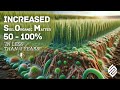
No-till and residue retention have increased soil organic matter significantly (e.g., from 0.75% to 2.3-2.4%), enhancing water-holding capacity and nutrient cycling. This builds resilience against flo

-
Provides actionable steps for regenerative agronomy: balanced N:C inputs (molasses, humates), microbial teas, yeast metabolites, calcium, and effective seed treatments. Emphasizes scalability, systems
-
Building soil organic matter through regenerative practices like composting and regenerative grazing is key to sequestering carbon, increasing resilience, improving water retention, and boosting yield

-
Regenerative agriculture provides solutions for climate change, human health, and soil degradation, contrasting with industrial agriculture's harmful impacts, including glyphosate use. Practices like
Community
-
Reducing tillage, crop rotation, and perennial livestock systems enhance soil organic matter, water holding capacity, and carbon sequestration while reducing nitrous oxide and methane emissions.
Read more (opens in new window) sustainableagriculture.net -
Soil organic matter is key to water retention and soil function; living plants feed soil microbes, while tilling harms soil structure and erosion. Nutrient deficiencies are often due to lack of soil l
Read more (opens in new window) permies.com -
Build healthy soil for carbon sequestration by protecting it with cover, mulch, or roots; reducing tilling; using compost; and avoiding pesticides and leaf blowers. Practices are key for plant growth
Read more (opens in new window) ucanr.edu -
Carbon and soil organic matter are key to soil health, controlling 90% of functions and doubling water holding capacity from 1-3% organic matter. Soil microbes thrive on living plant roots, dead roots
Read more (opens in new window) permies.com
Research
-
A Review of Soil Organic Carbon Dynamics under Regenerative Agricultural Practices (opens in new window)
This study found: Regenerative agriculture practices like cover crops and reduced tillage significantly increase soil organic carbon (0.2-1.5 Mg C ha⁻¹ yr⁻¹), improving soil health and resilience. Challenges include co
-
Soil Microbial Dynamics in Regenerative Agriculture Systems: A Data-Driven Synthesis for Soil Health, Pest Suppression, and Yield Sustainability in the Western Canadian Prairies (opens in new window)
This study found: Regenerative farming in Western Canada boosts soil microbes (up to 86%), fungi (up to 60%), and carbon, improving soil health and water retention. This leads to more stable yields and reduced syntheti
-
Regenerative Agriculture: Restoring Ecosystems¢ Resilience and Productivity: A Review (opens in new window)
This study found: Regenerative agriculture builds soil health and ecosystem services through practices like no-till, cover crops, and diverse rotations. It increases soil organic matter, improves water infiltration, bo
-
Potential regenerative agricultural practices for different ecosystems to rebuild soil health and ensure food security: A comprehensive review (opens in new window)
This study found: Regenerative agriculture practices boost soil health, increase crop yields by up to 18%, and cut greenhouse gas emissions by up to 5% across tropical and temperate regions, with specific strategies ne
From the Web
-
Soil restoration hinges on year-round green cover for photosynthesis, enhancing soil carbon and nutrient density. Practices like multi-species cover crops, strategic grazing, and promoting microbial d
-
Soil health is crucial for sustainable agriculture, with practices like cover cropping, reduced tillage, and compost application building organic matter. Agroecology and carbon farming leverage natura
-
Effective soil organic matter management is crucial for sustainability, requiring regular additions of diverse organic materials (crop residues, manures, composts, cover crops) and minimizing soil dis
-
Good soil management, particularly increasing soil organic carbon through methods like conservation tillage and cover cropping, is vital for climate change mitigation, improving soil health, and enhan
2
How It Works: The Living Soil Ecosystem
The vitality of soil health hinges on the biological activity within the soil. Billions of microorganisms – bacteria, fungi, archaea, and protozoa – along with larger organisms like nematodes, mites, springtails, earthworms, and insects, form the soil food web. These...
How It Works: The Living Soil Ecosystem
The vitality of soil health hinges on the biological activity within the soil. Billions of microorganisms – bacteria, fungi, archaea, and protozoa – along with larger organisms like nematodes, mites, springtails, earthworms, and insects, form the soil food web. These...
The vitality of soil health hinges on the biological activity within the soil. Billions of microorganisms – bacteria, fungi, archaea, and protozoa – along with larger organisms like nematodes, mites, springtails, earthworms, and insects, form the soil food web. These organisms are not passive inhabitants; they are active participants in nutrient cycling and soil structure formation. For example, bacteria and fungi decompose plant residues, releasing essential nutrients like nitrogen, phosphorus, and sulfur in plant-available forms. A healthy soil can have upwards of 2-5 billion bacteria and fungal hyphae extending for kilometers per teaspoon (cubic centimeter) of soil.
Earthworms play a crucial role in creating macro-aggregates and burrows that improve aeration and water infiltration. Their castings are rich in nutrients and beneficial microbes, often 2-5 times higher in available nutrients than the surrounding soil. Field trials in North America have shown that areas with active earthworm populations can exhibit improved drainage by up to 10-20% compared to similar soils devoid of these organisms. Fungi, particularly mycorrhizal fungi, form symbiotic relationships with plant roots, extending the root system's reach for water and nutrients while receiving sugars from the plant. This partnership can improve nutrient uptake by 10-30% for key elements like phosphorus.
The physical structure of the soil is a direct result of this biological activity. Organic matter acts as a glue, binding soil particles together into stable aggregates. These aggregates create a complex network of pores that vary in size, facilitating the movement of air, water, and roots. Soils with well-developed aggregates are less prone to compaction, crusting, and erosion. For example, soils with aggregate stability measured at over 70% in water-stable aggregates are considered structurally sound and are commonly found in established pastures or forests, and farmers employing practices like cover cropping and minimal tillage aim to reach similar levels in agricultural settings, often seeing improvements from 30-50% to 60-80% in 3-5 years.
Sources behind this view
Sources behind this view
Videos & Podcasts
-
Explains building soil organic matter through a systems approach: cover crops, balanced N:C inputs (molasses, humates), microbial teas, yeast metabolites, and avoiding synthetic fungicides. Tropical c
-
Soil restoration relies on nurturing the soil microbiome, a complex ecosystem of bacteria and fungi. The rhizosphere facilitates symbiotic exchange, with microbes providing nutrients and hormones in r

-
Soil biology, especially microbes and mycorrhizal fungi, is crucial for nutrient access and soil aggregation, enabling water storage. Industrial practices destroy this life, while regenerative methods

-
Soil health is driven by a diverse, living microbial ecosystem (bacteria, fungi, protozoa, etc.) essential for nutrient cycling and plant function. Many agricultural soils are depleted, leading to poo

Community
-
Carbon and soil organic matter are key to soil health, controlling 90% of functions and doubling water holding capacity from 1-3% organic matter. Soil microbes thrive on living plant roots, dead roots
Read more (opens in new window) permies.com -
Soil organic matter is key to water retention and soil function; living plants feed soil microbes, while tilling harms soil structure and erosion. Nutrient deficiencies are often due to lack of soil l
Read more (opens in new window) permies.com -
The soil food web, driven by microbial life, cycles nutrients, builds structure, and holds water. Keep soil covered with mulch/plants, avoid tilling, and feed microbes with organic matter to maintain
Read more (opens in new window) ucanr.edu -
Healthy soil is a living ecosystem requiring organic matter, microbes, and minimal disturbance. Practices like adding compost, leaving roots in the ground, mulching, diverse planting, crop rotation, a
Read more (opens in new window) ucanr.edu
Research
-
Soil as an extended composite phenotype of the microbial metagenome. (opens in new window)
This study found: Soil management shapes soil structure, influencing microbial communities and nutrient delivery. Carbon movement, not just total carbon, is proposed as the key driver of soil health.
-
Role of Soil Microbiota in Enhancing Soil Fertility and Carbon Sequestration under Changing Climate Conditions (opens in new window)
This study found: Soil microbes are vital for soil health, fertility, and carbon storage, especially with climate change. Organic matter and diverse crop rotations boost microbial activity, improving nutrient cycling a
-
Exogenous carbon turnover within the soil food web strengthens soil carbon sequestration through microbial necromass accumulation. (opens in new window)
This study found: After 11 years of no-till, soil food webs were found to significantly increase stable soil carbon storage by turning added organic matter into microbial remains, locking up about a third of it.
-
Soil Health and Related Ecosystem Services in Organic Agriculture (opens in new window)
This study found: Organic farming relies on soil microbes to break down minerals and organic matter, releasing nutrients slowly for plant growth and building soil structure. Holistic nutrient management is key to soil
From the Web
-
The soil food web, comprising bacteria, fungi, protozoa, and nematodes, is crucial for soil health, nutrient cycling, and plant vitality. Agricultural chemicals and tillage damage this web, leading to
-
Healthy soil structure, essential for water infiltration, gas exchange, and soil life, is built through practices like reduced tillage, diverse crop rotations, multi-species cover crops, and adaptive
-
Soils teem with millions of undescribed bacteria and fungi in the rhizosphere, forming a plant's "immune system." Practices like cover cropping, reduced tillage, compost, and balanced fertility build
-
Healthy soil structure, formed by microbial activity and plant roots, is vital for water infiltration, gas exchange, and resilience. Practices like reduced tillage, diverse cover crops, and perennial
3
Common Misconceptions
A persistent misconception is that soil is simply a sterile medium that needs artificial inputs to perform. This "dirt" mentality overlooks the dynamic, living nature of soil, which is teeming with microbial life essential for nutrient cycling and plant health. The...
Common Misconceptions
A persistent misconception is that soil is simply a sterile medium that needs artificial inputs to perform. This "dirt" mentality overlooks the dynamic, living nature of soil, which is teeming with microbial life essential for nutrient cycling and plant health. The...
A persistent misconception is that soil is simply a sterile medium that needs artificial inputs to perform. This "dirt" mentality overlooks the dynamic, living nature of soil, which is teeming with microbial life essential for nutrient cycling and plant health. The reality is that healthy soil provides many of these functions naturally. For instance, nitrogen fixation by free-living soil bacteria or symbiotic rhizobia in legumes can, depending on species and conditions, supply 50-200 kg of nitrogen per hectare per year (45-180 lbs per acre), significantly reducing or eliminating the need for synthetic nitrogen inputs that can cost $50-$150/acre ($120-$370/ha) annually.
Another is the belief that synthetic fertilizers magically "feed" plants without consequence. While they provide readily available nutrients, they often bypass or can even damage the soil food web over time. The continuous use of synthetic nitrogen, for example, can lead to imbalances in soil microbial communities and a decline in soil organic matter over years. Farmers who transition from high synthetic input systems to regenerative practices often report that over a 3-10 year period, the soil's inherent capacity to supply nutrients recovers. This leads to reduced fertilizer bills, with savings ranging from 15-70% depending on the starting point and management intensity, along with corresponding improvements in soil structure and water infiltration.
Lastly, some believe that improving soil health means abandoning all machinery or traditional practices. While regenerative agriculture emphasizes minimizing disturbance, it doesn't outlaw using tools. The focus is on using equipment in ways that support, rather than harm, soil life and structure. For instance, specialized no-till planters are designed to penetrate the soil surface with minimal disruption, precisely placing seeds while leaving crop residue intact. This approach allows for a gradual transition, accommodating diverse farm realities and enabling farmers globally to adopt soil-health building practices pragmatically.
Sources behind this view
Sources behind this view
Videos & Podcasts
-
Biological farming eliminates synthetic toxins, relying on microbial translocation for natural fertilization. Plants feed microbes sugar, and microbes provide nutrients. This system is vulnerable to c

-
Excessive fertilizer causes 'yield drag' in healthy soils. Regenerating soil biology reduces fertilizer needs, but existing knowledge and misuse of tools hinder adoption. Understanding soil as a biolo
-
Regenerative farming reduces synthetic fertilizer and pesticide costs (30-50% and up to 75% respectively, per USDA) by building soil organic matter, improving soil chemistry, and enhancing microbial d
-
Gabe Brown's key change for farms is continuous soil cover with living plants, leading to significantly deeper A horizons (28-29 inches vs. 4-5 inches) and higher nutrient availability through photosy
Community
-
Adopt no-till/minimum tillage to preserve soil health and prevent carbon loss. Enhance fertility organically with cover crops, crop rotation, compost, and mulching, while avoiding synthetic fertilizer
Read more (opens in new window) ucanr.edu
Research
-
Regenerative Agriculture: Restoring Ecosystems¢ Resilience and Productivity: A Review (opens in new window)
This study found: Regenerative agriculture builds soil health and ecosystem services through practices like no-till, cover crops, and diverse rotations. It increases soil organic matter, improves water infiltration, bo
-
Building Soil Health and Fertility through Organic Amendments and Practices: A Review (opens in new window)
This study found: Using organic amendments (manures, composts, cover crops) and regenerative practices (no-till, crop diversity) restores soil health by increasing organic matter and beneficial microbes, leading to mor
-
Building Soil Health and Fertility through Organic Amendments and Practices: A Review (opens in new window)
This study found: Review of organic amendments (manures, compost, cover crops) and regenerative practices (no-till, crop diversity, agroecology) shows they restore soil health by increasing organic matter and beneficia
-
Sustainable Agriculture and Soil Health: A Comprehensive Review of Bio-Inputs (opens in new window)
This study found: Sustainable farming with natural biological inputs (biofertilizers, compost) is key to restoring soil health, reducing chemical use, and increasing soil carbon. These inputs improve nutrient uptake an
4
Regional Considerations: Adapting to Context
The principles of soil health are universal, but their implementation and the specific indicators of success can vary significantly across different climates and agricultural systems. In the arid and semi-arid regions of North Africa and the Western United States, water...
Regional Considerations: Adapting to Context
The principles of soil health are universal, but their implementation and the specific indicators of success can vary significantly across different climates and agricultural systems. In the arid and semi-arid regions of North Africa and the Western United States, water...
The principles of soil health are universal, but their implementation and the specific indicators of success can vary significantly across different climates and agricultural systems. In the arid and semi-arid regions of North Africa and the Western United States, water management is paramount. Building soil organic matter becomes critical for increasing water infiltration and retention, where even a 0.5% increase in soil organic matter can improve plant-available water by an additional 10 mm (0.4 in) per 30 cm (1 ft) of soil depth. Practices like using drought-tolerant cover crops, mulching, and carefully timed grazing are adapted to conserve precious moisture.
In the humid tropics of Southeast Asia and the Amazon Basin, challenges often revolve around high rainfall, intense heat, and rapid decomposition of organic matter. Here, maintaining continuous soil cover with diverse perennial crops, agroforestry systems, and cover crops is key to preventing nutrient leaching and soil erosion. Farmers in these regions often observe rapid soil improvements when implementing systems that mimic the forest floor, with earthworm activity and fungal networks becoming more dominant. Focusing on building soil structure and increasing the diversity of root exudates helps create more stable aggregates that resist rapid breakdown.
Temperate regions, like the prairie provinces of Canada or much of Europe, often deal with a broader range of conditions, including freeze-thaw cycles in winter and potential for both drought and excess moisture. Farmers in these areas often find success with cover crop mixes that provide season-long protection, combined with rotations that include deep-rooted crops and managed livestock grazing. The goal is to build a resilient soil structure that can withstand the rigues of seasonal changes while continuously feeding the soil food web and sequestering carbon, with observed increases in soil organic matter of 0.1-1.0% over 5-10 years being common targets.
Sources behind this view
Sources behind this view
Videos & Podcasts
-
Increasing soil organic matter via carbon cycling, cover crops, and livestock grazing enhances water infiltration and storage, building resilience against drought. Intentional practices are key to pro
-
Implementing the six soil health principles (living root, cover crops, diversity, minimize disturbance) over 3-5 years can dramatically improve soil function, aggregation, and water cycles, reducing t

-
Regenerative agriculture in northern regions requires a holistic system approach and mindset shift, focusing on all soil health principles like keeping land green, increasing diversity, and integratin

-
Soil health has dramatically improved in two years due to diverse cover cropping, no-till, and adherence to soil health principles, evidenced by easy soil penetration, abundant earthworms, and better

Community
-
Building healthy soil involves minimizing tillage (no-till) and keeping it covered year-round with living plants and cover crops. These practices enhance water retention, nutrient cycling, and soil re
Read more (opens in new window) smallfarms.cornell.edu -
Adopt regenerative principles: keep living roots, cover soil, minimize disturbance, and avoid tillage. Integrate livestock carefully (mob grazing), use biomass (wood chips, mulch) for carbon and humus
Read more (opens in new window) permies.com -
Prioritize soil improvement and water retention through organic matter, mulch, and water-harvesting structures for food forests in arid climates. Mimic nature, observe carefully, and be patient for su
Read more (opens in new window) permies.com -
Conserve soil moisture by minimizing disturbance and tilling, as reduced-disturbance methods with cover crops retain more water. Encourage biodiversity above and below ground through diverse plantings
Read more (opens in new window) ucanr.edu
Research
-
Soil Health Assessment and Management Framework for Water-Limited Environments: Examples from the Great Plains of the USA (opens in new window)
This study found: Review of soil health strategies for dry climates (Great Plains, USA). Recommends integrating tillage, residue, organic amendments, and crop diversification to build soil organic matter and resilience
-
Soil and crop management practices and the water regulation functions of soils: a qualitative synthesis of meta-analyses relevant to European agriculture (opens in new window)
This study found: Review of many studies shows organic matter and continuous living cover improve European soil water management by enhancing soil structure and infiltration, though reduced tillage benefits are less cl
-
The pros and cons of increasing soil organic matter in dryland cropping systems (opens in new window)
This study found: Review of strategies to increase soil organic matter in drylands, balancing benefits (soil health, resilience) with costs (economic, environmental). Highlights context-specific optima and unique dryla
-
Soil Health, Crop Yield and Carbon Footprint Trade‐Offs Between Conservation and Conventional Farming: A Case Study (opens in new window)
This study found: Conservation farming in Central Europe improved soil health by 7% and cut GHG emissions by 43% over 8 years, maintaining crop yields. Key practices include reduced tillage, diverse rotations, and cove
5
Historical Context: From Soil Conservation to Soil Health
The understanding of soil health has evolved through distinct historical phases. Early soil conservation efforts, particularly prominent in the mid-20th century in response to devastating dust bowls in North America and soil degradation elsewhere, primarily focused on...
Historical Context: From Soil Conservation to Soil Health
The understanding of soil health has evolved through distinct historical phases. Early soil conservation efforts, particularly prominent in the mid-20th century in response to devastating dust bowls in North America and soil degradation elsewhere, primarily focused on...
The understanding of soil health has evolved through distinct historical phases. Early soil conservation efforts, particularly prominent in the mid-20th century in response to devastating dust bowls in North America and soil degradation elsewhere, primarily focused on preventing soil loss due to erosion. Practices like contour plowing, terracing, and crop rotation were promoted to keep soil in place. While critically important, this approach often viewed soil as a passive resource to be protected from physical loss, rather than a vibrant ecosystem to be actively nurtured.
The organic farming movement and subsequent ecological research in the late 20th and early 21st centuries began to champion the idea of soil as a living system and emphasized building soil organic matter. This era saw a stronger focus on the soil food web and its role in fertility and disease suppression. Concepts like Humus theory and the critical function of microbial decomposition gained prominence. This shift marked a move from merely conserving soil to actively regenerating its biological functions.
More recently, regenerative agriculture synthesizes these historical lessons with a systems-thinking approach. It recognizes that while preventing erosion (conservation) and building biological activity (organic principles) are vital, the ultimate goal is a fully functioning, resilient ecosystem that can provide multiple ecological and economic services. This includes carbon sequestration, improved water cycles, and enhanced biodiversity, all stemming from a fundamentally healthy soil. This integrated perspective frames soil health not as an end in itself, but as the foundation upon which a resilient and prosperous agricultural future is built, influencing everything from water quality to food nutrition globally.
Sources behind this view
Sources behind this view
Videos & Podcasts
-
Dr. Sorab Dos explains the vital role of soil health for ecosystem services, highlighting soil's carbon sequestration potential and the severe impacts of soil degradation. He outlines key regenerative

-
Implementing the six soil health principles (living root, cover crops, diversity, minimize disturbance) over 3-5 years can dramatically improve soil function, aggregation, and water cycles, reducing t
-
Advocates for a principle-based, community-driven approach to soil health using microscopy and integrated testing within a shared database to achieve regenerative science, emphasizing accuracy, replic

-
Soil degradation includes loss of organic matter; regenerative practices like no-till, cover crops, diverse rotations, composting, and mulching rebuild soil fertility by fostering soil life, as demons

Community
-
Promotes soil health by reducing tillage, increasing diversity, maintaining living roots with cover crops and rotations, and integrating livestock. These practices improve soil structure, organic matt
Read more (opens in new window) smallfarms.cornell.edu -
California organic farmers are pioneering a natural systems agriculture with year-round soil cover, reduced tillage, and integrated grazing, leading to improved soil health, carbon storage, and nutrie
Read more (opens in new window) ucanr.edu -
Healthy soil is a living ecosystem benefiting farms and the environment through nutrient cycling, pollution filtering, and drought resilience. Cover crops improve soil health, reduce erosion, and boos
Read more (opens in new window) sustainableagriculture.net -
Soil health and fertility are crucial for farm success, profitability, and sustainability, requiring a holistic approach to soil stewardship.
Read more (opens in new window) smallfarms.cornell.edu
Research
-
Building Soil Health and Fertility through Organic Amendments and Practices: A Review (opens in new window)
This study found: Using organic amendments (manures, composts, cover crops) and regenerative practices (no-till, crop diversity) restores soil health by increasing organic matter and beneficial microbes, leading to mor
-
Building Soil Health and Fertility through Organic Amendments and Practices: A Review (opens in new window)
This study found: Review of organic amendments (manures, compost, cover crops) and regenerative practices (no-till, crop diversity, agroecology) shows they restore soil health by increasing organic matter and beneficia
-
Soil Health Indicators, Management Practices, and Farmer Adoption: A Systems-Based Review for Sustainable Agriculture (opens in new window)
This study found: Review synthesizes research on soil health indicators, farming practices, and farmer adoption. Highlights importance of integrated approach combining science, management, and socio-economic factors fo
-
Unraveling the nexus of organic agriculture and soil health: A review (opens in new window)
This study found: This review explores how organic farming practices boost soil health, covering physical, chemical, and biological aspects. It highlights benefits and challenges, advocating for integrated sustainable
From the Web
-
Soil health is crucial for sustainable agriculture, with practices like cover cropping, reduced tillage, and compost application building organic matter. Agroecology and carbon farming leverage natura
-
Explains the historical evolution and growing importance of soil health, moving from fertility to a multi-functional living system concept, driven by land degradation and climate concerns, leading to
-
Healthy soil supports maximum plant productivity and is rich in microbial life (bacteria, fungi) that form organic matter, aiding nutrient/water absorption, disease resistance, and carbon sequestratio
-
Improving soil health involves six principles: know context, cover soil, minimize disturbance, increase plant diversity, maintain living roots, and integrate livestock, guided by ecological principles
6
Connections to Other Concepts: A Web of Interactions
Soil health is intrinsically linked to, and often a prerequisite for, other key regenerative agriculture concepts. One of the most direct connections is with Soil Organic Matter Management. Soil organic matter (SOM) is not just a passive component but a crucial food...
Connections to Other Concepts: A Web of Interactions
Soil health is intrinsically linked to, and often a prerequisite for, other key regenerative agriculture concepts. One of the most direct connections is with Soil Organic Matter Management. Soil organic matter (SOM) is not just a passive component but a crucial food...
Soil health is intrinsically linked to, and often a prerequisite for, other key regenerative agriculture concepts. One of the most direct connections is with Soil Organic Matter Management. Soil organic matter (SOM) is not just a passive component but a crucial food source and habitat for soil organisms, a binder for soil aggregates, and a reservoir of plant nutrients. Increasing SOM through practices like cover cropping and composting directly enhances the biological and physical components of soil health. For example, farms that increase their SOM by 1-2% over 5-10 years (e.g., from 3% to 4-5%) often report a doubling of their soil's water infiltration rate from 2 cm/hr to 4 cm/hr.
Soil Aggregation is another concept profoundly influenced by and contributing to soil health. Healthy soil, with abundant microbial activity and organic matter, naturally forms stable aggregates. These aggregates create the pore spaces essential for air and water movement, root penetration, and the habitat of beneficial soil organisms. Conversely, degraded soils with poor aggregation are prone to compaction, waterlogging, and erosion, undermining overall soil health. Farmers focused on building soil health often see improvements in aggregate stability, moving from say, 30% stable aggregates to over 60% within 3-5 years of implementing cover crops and reduced tillage.
The Soil Food Web is the engine driving soil health. Its diversity and activity directly determine how well the soil can cycle nutrients, decompose organic matter, and build soil structure. Practices aimed at building soil health, such as maintaining continuous living roots and diverse organic inputs, directly feed and support the soil food web. A thriving soil food web, in turn, can help manage plant diseases and pests naturally, reducing the need for external chemical interventions. For instance, increased populations of beneficial fungi and bacteria in healthy soils can suppress soil-borne pathogens, improving crop emergence and stand establishment by 5-15%.
Finally, Cover Cropping is a cornerstone practice for building soil health. By keeping the soil covered and continuously feeding the soil biology with diverse root exudates and decaying plant material, cover crops directly enhance SOM, improve aggregation, and support the soil food web. Whether in the temperate plains of North America or the vineryards of France, well-managed cover crops can significantly boost soil health indicators, contributing to better water management and nutrient cycling. Many farmers report a noticeable difference in soil tilth and moisture retention within 1-2 seasons of consistent cover cropping.
Sources behind this view
Sources behind this view
Videos & Podcasts
-
Implementing the six soil health principles (living root, cover crops, diversity, minimize disturbance) over 3-5 years can dramatically improve soil function, aggregation, and water cycles, reducing t
-
Demonstrates improved soil structure, aggregation, and organic matter from no-till, strip-till, and cover crops (alfalfa, radish, rye). Benefits include increased water infiltration, reduced erosion,

-
Reducing chemical and mechanical disturbance is key to soil health. Adding compost inoculates soil with diverse microorganisms, improving aggregation, water infiltration, and plant resilience via myco

-
Cover crops attract beneficial insects and pollinators, suppress pests, and improve soil biology. Mimicking nature's integration of animals and plants, alongside practices like no-till and diversity,

Community
-
Promotes soil health by reducing tillage, increasing diversity, maintaining living roots with cover crops and rotations, and integrating livestock. These practices improve soil structure, organic matt
Read more (opens in new window) smallfarms.cornell.edu -
Soil health is defined by its capacity to support ecological functions and is improved by increasing carbon inputs through crop residues, cover crops, and compost, while reducing tillage. These practi
Read more (opens in new window) ucanr.edu -
House hearing emphasizes soil health practices like cover cropping, no-till, and rotational grazing. NRCS and SARE programs promote these methods, which increase yields, reduce risk, and improve soil
Read more (opens in new window) sustainableagriculture.net -
Healthy soil is a living ecosystem requiring organic matter, microbes, and minimal disturbance. Practices like adding compost, leaving roots in the ground, mulching, diverse planting, crop rotation, a
Read more (opens in new window) ucanr.edu
Research
-
Building Soil Health and Fertility through Organic Amendments and Practices: A Review (opens in new window)
This study found: Review of organic amendments (manures, compost, cover crops) and regenerative practices (no-till, crop diversity, agroecology) shows they restore soil health by increasing organic matter and beneficia
-
Applying Soil Health Indicators to Encourage Sustainable Soil Use: The Transition from Scientific Study to Practical Application (opens in new window)
This study found: Healthy soil, measured by biological indicators like earthworms, is key to sustainable farming. This review discusses soil food webs and practical challenges in monitoring soil health.
-
On‐Farm Assessment of Long‐Term Impacts of Regenerative Management on Vineyard Soil Health (opens in new window)
This study found: Long-term cover cropping and livestock integration significantly improved soil health in California vineyards, highlighting the need for region-specific soil health assessments and practices.
-
Building Soil Health and Fertility through Organic Amendments and Practices: A Review (opens in new window)
This study found: Using organic amendments (manures, composts, cover crops) and regenerative practices (no-till, crop diversity) restores soil health by increasing organic matter and beneficial microbes, leading to mor
From the Web
-
Key soil health principles include keeping soil covered, minimizing disturbance, continuous plant growth, and diversification. Cover crops, crop rotations, and livestock manure are vital for building
-
Healthy soil is foundational to farming, with cover crops, conservation tillage, crop rotation, compost, and pasture management being key practices. Cover crops improve soil structure, water quality,
-
Soil health is driven by soil biology, impacting crop growth and nutrient/water cycles. Cover crops significantly improve soil health, with further resources available from SARE, NRCS, and the Soil He
7
Measuring and Monitoring Progress
Assessing soil health requires a multi-faceted approach, moving beyond traditional chemical fertility tests to include biological and physical indicators. Visual field assessment is a crucial starting point for any farmer. Observing soil structure, noting the presence of...
Measuring and Monitoring Progress
Assessing soil health requires a multi-faceted approach, moving beyond traditional chemical fertility tests to include biological and physical indicators. Visual field assessment is a crucial starting point for any farmer. Observing soil structure, noting the presence of...
Assessing soil health requires a multi-faceted approach, moving beyond traditional chemical fertility tests to include biological and physical indicators. Visual field assessment is a crucial starting point for any farmer. Observing soil structure, noting the presence of earthworms (e.g., averaging 2-5 per square foot, or 20-50 per square meter, on a healthy plot), assessing the depth of the topsoil, and feeling the soil's tilth (friability) provide immediate qualitative insights. Easy root penetration and the absence of strong, unpleasant odors (like hydrogen sulfide) are also positive signs.
Quantitative measurements are essential for tracking progress over time. Soil organic matter (SOM) content is a key benchmark. Increases of 0.1-0.5% per year are achievable with consistent regenerative practices. For example, a farm in Iowa, USA, starting at 3.5% SOM, could aim for 4.5-5.5% within 5-10 years of integrated management. Aggregate stability can be measured through techniques like the slake test, where the percentage of soil that remains intact after immersion in water indicates structural integrity. Farmers often aim for aggregate stability values above 70%.
Biological indicators are also gaining traction. Microbial biomass carbon (MBC), which represents the total mass of microbes in the soil, is an indicator of the active life within the soil. Higher MBC values, for instance, exceeding 500-1000 µg C/g soil in temperate regions, generally signify a more robust soil food web. Earthworm counts and the presence of other beneficial invertebrates offer another biological assessment. Farmers in regions like the UK or New Zealand might track earthworm populations, aiming for 5-10 earthworms per sampling unit (e.g., 0.1 m² or 1 ft²) over time.
While not a direct measure of health, water infiltration and retention are critical functional outcomes. Measuring how quickly water penetrates the soil surface (e.g., target rates of 2-5 cm/hour, or 0.8-2 in/hour) and its water-holding capacity provides an indication of physical structure and organic matter content. These functional tests demonstrate the practical impact of soil health improvements on farm resilience, especially in regions prone to drought or heavy rainfall. For instance, farms in the drier parts of South Australia may prioritize improving water infiltration to capture every drop of rain, seeing a measurable difference within 2-3 years of improved practices.
Sources behind this view
Sources behind this view
Videos & Podcasts
-
Practical soil assessment methods include using a spade for structure, infiltration tests with aluminum rings, PLFA analysis for biology, and Haney analysis. These tools help farmers understand soil h
-
NRCS is standardizing laboratory methods and indicators for soil health assessment, focusing on organic matter, aggregation, respiration, enzymes, carbon, nitrogen, and microbial diversity. These indi

-
Recommended soil tests for graziers include the root sheath test (soil on roots), slake test (wet aggregate stability), and visual evaluation, offering quick feedback on soil health and biology within

Community
-
Soil health is defined by its capacity to support ecological functions and is improved by increasing carbon inputs through crop residues, cover crops, and compost, while reducing tillage. These practi
Read more (opens in new window) ucanr.edu -
Healthy soil features good structure, organic matter, and biological activity, supporting plant growth and water retention. Diagnostics include field checks for compaction and infiltration, alongside
Read more (opens in new window) ucanr.edu -
Distinguishes between fixed inherent soil quality and improvable dynamic soil quality (soil life). Recommends advanced soil tests (Morgan, Haney, Mehlich III) and plant tissue tests to monitor soil he
Read more (opens in new window) permies.com
Research
-
Applying Soil Health Indicators to Encourage Sustainable Soil Use: The Transition from Scientific Study to Practical Application (opens in new window)
This study found: Healthy soil, measured by biological indicators like earthworms, is key to sustainable farming. This review discusses soil food webs and practical challenges in monitoring soil health.
-
Soil Health Indicators, Management Practices, and Farmer Adoption: A Systems-Based Review for Sustainable Agriculture (opens in new window)
This study found: Review synthesizes research on soil health indicators, farming practices, and farmer adoption. Highlights importance of integrated approach combining science, management, and socio-economic factors fo
-
On‐Farm Assessment of Long‐Term Impacts of Regenerative Management on Vineyard Soil Health (opens in new window)
This study found: Long-term cover cropping and livestock integration significantly improved soil health in California vineyards, highlighting the need for region-specific soil health assessments and practices.
-
Interaction of soil health indicators to different regenerative farming practices on mineral soils (opens in new window)
This study found: Florida study found organic amendments, especially with cover crops, significantly improved soil health indicators like water retention and nutrient holding. Compacted soil was linked to lower organic
From the Web
-
Provides a practical guide to measuring soil health using field indicators and lab tests, emphasizing consistency, context-specific interpretation, and tracking functional improvements over time. Link
-
Soil assessment involves historical research, soil mapping, direct observation (ponding, crusting, compaction), and soil testing. Key indicators include earthworms, root health, and soil tilth. Organi
-
Assessing soil health involves general field observations (yields, root health, erosion) and detailed field indicators like soil cover, aggregate stability, and earthworm presence. Soil health is best
-
Seven key soil health indicators are detailed: soil cover (bare soil is bad), color (darker is better, indicates organic matter), structure (aggregation for pore space), biological activity (earthworm
8
Current Research and Emerging Understandings
Current research is rapidly expanding our understanding of soil health, particularly in the area of soil microbiology and its complex interactions. Scientists are increasingly mapping the soil microbiome, identifying key microbial groups and their functions in nutrient...
Current Research and Emerging Understandings
Current research is rapidly expanding our understanding of soil health, particularly in the area of soil microbiology and its complex interactions. Scientists are increasingly mapping the soil microbiome, identifying key microbial groups and their functions in nutrient...
Current research is rapidly expanding our understanding of soil health, particularly in the area of soil microbiology and its complex interactions. Scientists are increasingly mapping the soil microbiome, identifying key microbial groups and their functions in nutrient cycling, disease suppression, and carbon sequestration. Studies are revealing that specific microbial communities are highly effective at converting soil organic matter into plant-available nutrients, with ongoing research aiming to link specific microbial profiles to enhanced crop yields or plant defense mechanisms. For example, recent work in Europe is exploring the potential of inoculating soils with specific beneficial bacteria and fungi to improve phosphorus uptake by crops, potentially reducing phosphorus fertilizer needs by 10-20%.
There is also a growing focus on the role of soil-plant-microbial interactions in overall ecosystem health. The concept of the "rhizosphere" – the tiny volume of soil directly influenced by plant roots – is being intensely studied. Plant roots exude a complex cocktail of organic compounds that feed specific microbes, which in turn can provide nutrients to the plant or protect it from stress. Research is actively investigating how to manage agricultural systems to foster these beneficial symbiotic relationships. For instance, experiments in the humid tropics are testing how agroforestry systems, with their diverse root systems and organic matter inputs, create a more stable and beneficial rhizosphere environment for improved crop performance.
Furthermore, research is refining our ability to measure soil health, moving beyond traditional lab tests to develop more accessible and holistic field-based assessments. This includes developing better indicators for biological activity, such as measuring enzyme activity in situ or using portable spectroscopic tools to estimate soil organic matter and clay content rapidly. The aim is to provide farmers with real-time data to guide their management decisions. Efforts are underway in North America and Australia to develop standardized, regionally relevant soil health testing kits that combine physical, chemical, and biological assessments, making monitoring more practical for a wider range of land managers.
Finally, significant research is being dedicated to understanding the carbon sequestration potential of different agricultural practices on a global scale. Scientists are using advanced modeling techniques and field experiments across continents to quantify how much carbon can be stored in soils under various management regimes, such as cover cropping, reduced tillage, and rotational grazing. This research is crucial for informing climate policy and developing carbon markets that reward farmers for their role in climate change mitigation, with ongoing studies in Latin America and Africa contributing vital data on how these processes function in diverse tropical and subtropical soils.
Sources behind this view
Sources behind this view
Videos & Podcasts
-
Explains building soil organic matter through a systems approach: cover crops, balanced N:C inputs (molasses, humates), microbial teas, yeast metabolites, and avoiding synthetic fungicides. Tropical c
-
Explores soil microbiology, detailing the roles of bacteria and fungi in soil structure, nutrient cycling, and plant health. Discusses how management practices and inputs like synthetic fertilizers an

-
Argues that current agricultural science and education are incomplete by neglecting the soil microbiome's critical role in plant physiology, photosynthesis, and carbon sequestration, advocating for a
-
Highlights the crucial role of soil microorganisms, especially mycorrhizae fungi, in nutrient cycling (phosphorus, potassium, sulfur), soil structure (glomalin), and overall soil health, contrasting w
Community
-
Soil health is defined by its capacity to support ecological functions and is improved by increasing carbon inputs through crop residues, cover crops, and compost, while reducing tillage. These practi
Read more (opens in new window) ucanr.edu -
Regenerative agriculture principles, including pasture-based systems, cover cropping, and livestock integration, are discussed for improving soil health and water infiltration in arid African climates
Read more (opens in new window) permies.com -
Carbon and soil organic matter are key to soil health, controlling 90% of functions and doubling water holding capacity from 1-3% organic matter. Soil microbes thrive on living plant roots, dead roots
Read more (opens in new window) permies.com -
Healthy soils leverage plant-microbe symbiosis for nutrient-dense produce, carbon sequestration, water retention, and resilience, achievable through low-cost compost extracts and teas at any scale.
Read more (opens in new window) ucanr.edu
Research
-
Advances in soil carbon monitoring and management: tools and strategies for climate-smart and sustainable agriculture. (opens in new window)
This study found: Review of advanced tools and practices for managing soil carbon to boost farm health and fight climate change. Highlights cover crops, conservation tillage, organic matter, and new monitoring tech, ad
-
Soil Microbiome and Nutrient Cycling: Implications for Sustainable Agriculture (opens in new window)
This study found: Recent research (2019-2025) highlights how soil microbes drive nutrient cycles (C, N, P) crucial for farm productivity. New tech reveals how farming practices impact microbes, and explores engineered
-
LEVERAGING SOIL MICROBES FOR CLIMATE-SMART AGRICULTURE: STRATEGIES FOR OPTIMIZING SOIL HEALTH AND RESILIENCE (opens in new window)
This study found: Soil microbes are vital for climate-smart farming, helping store carbon and reduce greenhouse gases. They also boost crop drought tolerance and nutrient use. Practices like conservation tillage and or
-
Plant–soil–microbiome interactions: mechanisms, advances, and challenges in sustainable agriculture and healthy agroecosystems (opens in new window)
This study found: Soil microbes are key to plant health and soil quality, aiding nutrient cycling and disease defense. Biofertilizers can boost these microbes, improving plant resilience to stress and climate change. A
From the Web
-
Soil microbes (bacteria, fungi) are crucial for biological soil health, regulating nutrients, and improving soil structure. Researchers are developing indicators like soil protein to measure these pro
-
AoW 3 aims to enhance soil health and reverse land degradation by developing and promoting resilient soil ecosystems and practices, with over 500,000 farmers implementing targeted practices by 2030.