
How do farms adapt to climate change?
Farms adapt to climate change by building resilience through regenerative practices that enhance soil health, support biodiversity, and optimize water cycles. These methods increase a farm's ability to withstand extreme weather, such as droughts and floods, and fluctuating temperatures. By fostering healthy soils, farms can sequester more carbon, improve water infiltration, increase nutrient availability, and reduce the need for external inputs, making them more economically and ecologically robust systems for future challenges.
Read More: Complete Description
Sources behind this view
Sources behind this view
 Videos & Podcasts
-
Farmers must build resiliency to adapt to extreme weather from climate change. Understanding local climate potentials, increasing soil organic matter, using shade or high tunnels, and developing a res

-
To combat climate change and extreme weather, the farm has planted over a mile of hedgerows, uses block rotation with cover crops, and heavily invests in rebuilding soil organic matter with manure, co

-
Focus on soil health as the core of regenerative transitions and resilience. Connect with other farmers, implement step-by-step improvements annually, and start as soon as possible.

 Community
-
Farmers can modify microclimates and build resilience through practices like agroforestry, no-till, and cover crops, which improve soil health, water availability, and crop resistance to climate chall
Read more (opens in new window) smallfarms.cornell.edu -
Northeast farmers can adapt to flooding, drought, heat stress, and freeze risk by increasing soil organic matter, using cover crops, reduced tillage, improving irrigation, selecting resistant varietie
Read more (opens in new window) smallfarms.cornell.edu -
Organic farmers can build climate resilience by assessing climate risk and using ecosystem-based adaptive management tools, learning from successful strategies for managing weather variability and ext
Read more (opens in new window) permies.com -
A Central Iowa farm built climate resilience through no-till planting, rigorous cover cropping, infrastructure improvements, and diversified systems, preventing damage from extreme weather events.
Read more (opens in new window) smallfarms.cornell.edu
 Research
-
Managing soil health for climate resilience and crop productivity in a changing environment. (opens in new window)
This study found: Climate change and poor farming degrade soil, reducing yields and resilience. Improving soil health through diverse practices like conservation agriculture and beneficial microbes, tailored to local c
-
Spotlight on agroecological cropping practices to improve the resilience of farming systems: a qualitative review of meta-analytic studies (opens in new window)
This study found: Agroecological practices like crop diversification and ecological soil management are key to farm resilience. Cover crops, no-till, and organic matter addition are vital. Outcomes are site-specific, r
-
LEVERAGING SOIL MICROBES FOR CLIMATE-SMART AGRICULTURE: STRATEGIES FOR OPTIMIZING SOIL HEALTH AND RESILIENCE (opens in new window)
This study found: Soil microbes are vital for climate-smart farming, helping store carbon and reduce greenhouse gases. They also boost crop drought tolerance and nutrient use. Practices like conservation tillage and or
-
Carbon Farming as a Tool for Climate Resilience in Smallholder Agriculture (opens in new window)
This study found: Carbon farming, using practices like agroforestry and cover crops, helps small farms build climate resilience by storing carbon in soil, improving fertility, and reducing emissions, though adoption fa
 From the Web
-
Climate change impacts agriculture with extreme weather and new pests; solutions include agroforestry and perennial pastures to build resilience and reduce greenhouse gas emissions.
Key Points
System Regulation
- Natural enemies control pest outbreaks.
- Diverse crops offer resistance to diseases.
- Holistic grazing manages pasture and soil health.
- Balanced farm ecosystems deter invasive species.
- Reduced reliance on external chemical controls.
Chemical Processes
- Greater nutrient availability through microbial breakdown.
- Reduced leaching of nitrates and phosphates.
- Sustainable nutrient cycling through manure integration.
- pH buffering capacity increases with organic matter.
- More stable plant nutrient uptake.
Physical Processes
- Higher water infiltration rates reduce runoff and erosion.
- Improved soil aggregation enhances water-holding capacity.
- Reduced soil compaction aids root penetration.
- Increased soil porosity improves drainage in wet periods.
- Buffering against extreme soil temperature fluctuations.
Biological Processes
- Enhanced soil microbial diversity supports nutrient cycling.
- Increased soil organic matter acts as a carbon sink.
- Diverse plant roots improve soil structure and aeration.
- Beneficial insect populations increase with habitat diversity.
- Improved livestock digestion with varied forage diets.
Know the Debate
- Resilience timelines range from 2-5 years to 7-15 years.
- Adaptation requires knowledge and often significant capital.
- Soil health and integrated systems build resilience.
- Practice effectiveness varies by region and farm context.
Going Deeper
1
Primary Mechanisms: Building Soil Health for Resilience
The cornerstone of climate adaptation in agriculture is the enhancement of soil health, which is the soil's capacity to function as a vital living ecosystem. By focusing on practices that build soil organic matter (SOM) and foster a diverse soil microbiome, farms can...
Primary Mechanisms: Building Soil Health for Resilience
The cornerstone of climate adaptation in agriculture is the enhancement of soil health, which is the soil's capacity to function as a vital living ecosystem. By focusing on practices that build soil organic matter (SOM) and foster a diverse soil microbiome, farms can...
The cornerstone of climate adaptation in agriculture is the enhancement of soil health, which is the soil's capacity to function as a vital living ecosystem. By focusing on practices that build soil organic matter (SOM) and foster a diverse soil microbiome, farms can improve water infiltration, increase water-holding capacity, enhance nutrient cycling, and reduce erosion. These functions are critical for buffering against climate extremes like drought and heavy rainfall. For a detailed explanation of these mechanisms, see What is soil health and why does it matter?
Sources behind this view
Sources behind this view
Videos & Podcasts
-
Healthy soils are vital for climate change adaptation and mitigation. Organic practices improve soil organic matter, microbiome, and structure, enhancing resilience to extreme heat and reducing greenh

-
Regenerative practices build soil resilience against climate chaos, fire, and drought by strengthening soil biology, which in turn supports plant health and farm sustainability.

-
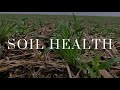
Soil health practices like cover crops, reduced tillage, and livestock integration boost soil biology, increase organic matter, improve water infiltration, reduce erosion and compaction, and enhance n
-
Soil health principles enhance farm profitability by reducing input/labor costs and significantly increasing resilience to weather variability, acting as a natural insurance policy against floods and

Community
-
Building healthy soil involves minimizing tillage (no-till) and keeping it covered year-round with living plants and cover crops. These practices enhance water retention, nutrient cycling, and soil re
Read more (opens in new window) smallfarms.cornell.edu -
Enhance soil health by increasing organic matter with compost, keeping soil covered, using water judiciously, avoiding chemicals, planting cover crops and diverse species, practicing no-till, and prev
Read more (opens in new window) ucanr.edu -
Enhance soil health through Dr. Redhawk's soil series and Gabe Brown's mob-grazing principles to build resilience against weather extremes. Biochar from waste streams can improve water retention and c
Read more (opens in new window) permies.com -
Strategies for enhancing soil health to build resilience against hotter, meaner weather conditions associated with climate change are discussed by Cornell Extension specialists.
Read more (opens in new window) smallfarms.cornell.edu
Research
-
Managing soil health for climate resilience and crop productivity in a changing environment. (opens in new window)
This study found: Climate change and poor farming degrade soil, reducing yields and resilience. Improving soil health through diverse practices like conservation agriculture and beneficial microbes, tailored to local c
-
LEVERAGING SOIL MICROBES FOR CLIMATE-SMART AGRICULTURE: STRATEGIES FOR OPTIMIZING SOIL HEALTH AND RESILIENCE (opens in new window)
This study found: Soil microbes are vital for climate-smart farming, helping store carbon and reduce greenhouse gases. They also boost crop drought tolerance and nutrient use. Practices like conservation tillage and or
-
Impact of Climate Change on Soil Health and Nutrient Cycling: Implications for Sustainable Agriculture (opens in new window)
This study found: Climate change harms soil health and crop yields. Farmers can adapt using practices like reduced tillage, biochar, organic amendments, and beneficial microbes for climate-resilient agriculture.
-
Spotlight on agroecological cropping practices to improve the resilience of farming systems: a qualitative review of meta-analytic studies (opens in new window)
This study found: Agroecological practices like crop diversification and ecological soil management are key to farm resilience. Cover crops, no-till, and organic matter addition are vital. Outcomes are site-specific, r
From the Web
-
Key factors for climate resiliency include building soil biology, improving soil aggregate structure for water infiltration, increasing plant species diversity, and integrating adaptive grazing with a
-
Eight ways soil health fights climate change, primarily through carbon sequestration by building organic matter via regenerative practices, and by improving water retention and reducing reliance on sy
-
Soil health is crucial for agricultural resilience against climate challenges. Practices supporting soil health transform farms ecologically and financially, requiring investment and integration into
2
Supporting Evidence: Field Observations and Research
Empirical evidence from diverse agricultural landscapes worldwide consistently demonstrates the adaptive capacity conferred by regenerative practices. In the rain-fed cropping systems of Western India, the adoption of intercropping maize with legumes and incorporating...
Supporting Evidence: Field Observations and Research
Empirical evidence from diverse agricultural landscapes worldwide consistently demonstrates the adaptive capacity conferred by regenerative practices. In the rain-fed cropping systems of Western India, the adoption of intercropping maize with legumes and incorporating...
Empirical evidence from diverse agricultural landscapes worldwide consistently demonstrates the adaptive capacity conferred by regenerative practices. In the rain-fed cropping systems of Western India, the adoption of intercropping maize with legumes and incorporating farmyard manure has shown a 15-20% increase in yield stability across varying monsoon patterns over a 5-year period, compared to monoculture systems. Farmers have reported reduced crop damage from waterlogging due to improved soil porosity. Similarly, in the Mississippi River Delta region of the United States, farms that transitioned from conventional tillage to no-till and cover cropping systems over 7-10 years have documented a 50-75% reduction in soil erosion rates, alongside a 0.5-1.0% annual increase in soil organic matter. These observed improvements translate to more predictable harvests and reduced inputs over time. Research from the University of Eldoret in Kenya highlights that smallholders integrating livestock and crop residues into their soil management programs experience a 30-40% improvement in soil moisture retention, enabling them to plant earlier and harvest more consistently in drought-prone areas, often with upfront investment in manure management systems costing around $100-300/ha.
Sources behind this view
Sources behind this view
Videos & Podcasts
-
Case studies of farmers like Duane Beck, Kofi Boa, David Brandt, and Gabe Brown demonstrate that regenerative agriculture (no-till, cover crops, diverse rotations) significantly increases soil health,

-
Multispecies farming boosts soil water-holding capacity (1% OM = 27k gal/acre) and infiltration through living roots, reduced tillage, and diverse biology. It improves water-use efficiency and drastic
-
Regenerative farming, using no-till, cover crops, and diverse rotations, rapidly rebuilds soil organic matter and soil life. Examples from Ohio and Ghana show these practices increase profitability by

-
Global case studies from Ghana, Ohio, and North Dakota illustrate how conservation agriculture (no-till, cover crops, diverse rotations, integrated livestock) dramatically improves soil health, triple

Community
-
Conservation agriculture, specifically no-tillage and cover crops, significantly improves soil health by increasing biodiversity, water infiltration, and soil carbon, while reducing water and fertiliz
Read more (opens in new window) ucanr.edu -
Sustainable soil management practices like reducing tillage, planting cover crops, and improving crop rotations enhance soil health and drought resilience. No-till systems drastically reduce water run
Read more (opens in new window) sustainableagriculture.net -
Long-term research at UC West Side Research and Extension Center shows cover crops and no-till practices significantly increase soil carbon (up to 74%) and nitrogen (up to 59%), improving water retent
Read more (opens in new window) ucanr.edu
Research
-
Soil Microbial Dynamics in Regenerative Agriculture Systems: A Data-Driven Synthesis for Soil Health, Pest Suppression, and Yield Sustainability in the Western Canadian Prairies (opens in new window)
This study found: Regenerative farming in Western Canada boosts soil microbes (up to 86%), fungi (up to 60%), and carbon, improving soil health and water retention. This leads to more stable yields and reduced syntheti
-
Sustainable Soil Management Practices in Modern Agriculture: A Systematic Review (opens in new window)
This study found: A review of Indian agriculture (2015-2024) found combined sustainable practices like reduced tillage, cover crops, and precision farming significantly improve soil health, reduce erosion, and boost ca
-
Co-implementation of precision nutrient management in long-term conservation agriculture-based systems: A step towards sustainable energy-water-food nexus (opens in new window)
This study found: Conservation agriculture (permanent beds, no-till) with precision nutrient management significantly boosted corn-wheat-mungbean yields, water use, soil carbon, and profits in India, while reducing env
-
Managing precipitation use in sustainable dryland agroecosystems (opens in new window)
This study found: Intensified no-till dryland farming in Colorado boosted yields by 75-100% and profits by 25-45% over 12 years. Soil organic carbon increased, compaction decreased, and soil structure improved, regardl
From the Web
-
Numerous studies confirm regenerative, organic, and agroecological systems achieve equal or higher yields than industrial agriculture, especially in droughts, through practices like cover cropping, cr
-
Adopting climate-smart agricultural practices can increase productivity by ~24% and improve yield stability, but also carries production risks. Bundling practices, like improved varieties with agronom
3
Conditions for Success: Context Matters
The effectiveness of specific adaptation strategies is highly context-dependent, influenced by climate zone, soil type, farming system, and socioeconomic factors. For farms in arid or semi-arid regions, water harvesting techniques (e.g., contour bunds, micro-catchments)...
Conditions for Success: Context Matters
The effectiveness of specific adaptation strategies is highly context-dependent, influenced by climate zone, soil type, farming system, and socioeconomic factors. For farms in arid or semi-arid regions, water harvesting techniques (e.g., contour bunds, micro-catchments)...
The effectiveness of specific adaptation strategies is highly context-dependent, influenced by climate zone, soil type, farming system, and socioeconomic factors. For farms in arid or semi-arid regions, water harvesting techniques (e.g., contour bunds, micro-catchments) combined with drought-tolerant crop varieties and deep-rooted cover crops are paramount. For example, farmers in the Sahel region of Africa employ stone lines to slow runoff and increase water infiltration, boosting crop yields by an average of 10-15% during ephemeral rains, with costs for materials and labor ranging from $50-150/ha. In regions prone to heavy precipitation and flooding, like the humid tropics of Brazil or parts of Southeast Asia, maintaining robust soil structure through cover cropping, reduced tillage, and agroforestry systems that establish perennial vegetation is key. These systems intercept rainfall, slow water flow, and increase soil's capacity to absorb water before it can cause damage or waterlog roots. The establishment of agroforestry systems, such as integrating fruit trees or nitrogen-fixing trees into fields, can take 3-7 years to provide significant ecological and economic benefits but offers long-term stability against extreme weather and diversifies income streams.
Sources behind this view
Sources behind this view
Videos & Podcasts
-
Plan farm sites for extreme weather: implement drainage (swales, soil deepening, tiles) for excess rain and water retention (keyline design, dams) for drought. Fast crops aid recovery from losses.
-
Farmer adaptability is crucial due to unpredictable weather, contrasting wet and dry climate challenges. Success requires observation, record-keeping, and context-specific problem-solving, as no singl
-
Adapting to unstable climates requires multiple water sources and efficient irrigation for drought, drainage solutions and soil organic matter for torrential rain, and windbreaks for wind. Seed adapta
-
Resiliency strategies include conservation tillage, cover crops, perennialization, genetic improvements, and precision water management. Planning must move beyond historical data, with a '50/50 by 205

Community
-
Farmers can modify microclimates and build resilience through practices like agroforestry, no-till, and cover crops, which improve soil health, water availability, and crop resistance to climate chall
Read more (opens in new window) smallfarms.cornell.edu -
To manage drought, collect and store surplus water using ponds, tanks, swales, and mulch. Reduce irrigation, avoid water-intensive crops, and improve soil health to increase water retention. Perennial
Read more (opens in new window) www.permaculture.org.uk -
Farming in arid climates requires predictability, utilizing dry farming, runoff agriculture, and drought-adapted plant varieties. Soil amendments and mulch are vital for water retention, with drip irr
Read more (opens in new window) permies.com
Research
-
Soil and Water Conservation Practices for Enhancing Productivity in Dryland Farming: A Review (opens in new window)
This study found: Dryland farming faces challenges from drought and soil degradation. Soil and water conservation practices like conservation tillage, cover crops, and rainwater harvesting improve soil moisture, health
-
Soil and Water Management, and Fertility Enhancement Through Land Modification and Integrated Farming System: A Case Study from Flood-Prone Lowlands of Eastern India (opens in new window)
This study found: Eastern India case study: Land reshaping and integrated farming in flood-prone lowlands improved soil structure, water use efficiency (2.1x), and yield stability over 6 years, reducing chemical input
-
Soil and crop management practices and the water regulation functions of soils: a qualitative synthesis of meta-analyses relevant to European agriculture (opens in new window)
This study found: Review of many studies shows organic matter and continuous living cover improve European soil water management by enhancing soil structure and infiltration, though reduced tillage benefits are less cl
-
Implementing Climate Resilient Soil Management Systems to Mitigate Drought and Flood Impacts in Agriculture (opens in new window)
This study found: Climate-resilient soil practices boost crop yields by 34% in Africa, mitigating drought/flood impacts. Extension services are key to adoption, outperforming farmer knowledge and policy alone.
4
Interaction Effects: Synergies Within the System
Climate adaptation strategies are most effective when viewed as interconnected components of a larger agricultural system, rather than isolated tactics. For instance, implementing diverse cover crop mixes (including legumes, grasses, and brassicas) not only enhances soil...
Interaction Effects: Synergies Within the System
Climate adaptation strategies are most effective when viewed as interconnected components of a larger agricultural system, rather than isolated tactics. For instance, implementing diverse cover crop mixes (including legumes, grasses, and brassicas) not only enhances soil...
Climate adaptation strategies are most effective when viewed as interconnected components of a larger agricultural system, rather than isolated tactics. For instance, implementing diverse cover crop mixes (including legumes, grasses, and brassicas) not only enhances soil organic matter but also fixes atmospheric nitrogen, providing fertility for the subsequent cash crop, thus reducing the need for synthetic nitrogen inputs. This biological nitrogen fixation is a chemical process that directly contributes to reducing greenhouse gas emissions associated with synthetic fertilizer production and use. Integrating livestock into cropping systems, through well-managed grazing that allows for adequate plant recovery (such as rotational or adaptive multi-paddock grazing), significantly amplifies soil health benefits. In contrast, poorly managed grazing like continuous set stocking can degrade soil health. Animal manure provides nutrients and carbon, while grazing can stimulate grass growth and nutrient cycling. This integration creates a positive feedback loop: healthier pastures support more productive livestock, which in turn generates more fertility for crops and further builds soil health. Over a 3-5 year period, integrated systems can reduce synthetic nitrogen fertilizer needs by 40-60%, saving farmers $100-300/ha annually. Similarly, agroforestry provides shade, which can reduce crop stress during heatwaves, while also sequestering carbon above and below ground, contributing to climate change mitigation.
Sources behind this view
Sources behind this view
Videos & Podcasts
-
Healthy soils are vital for climate change adaptation and mitigation. Organic practices improve soil organic matter, microbiome, and structure, enhancing resilience to extreme heat and reducing greenh
-
Regenerative agriculture, including no-till, cover crops (like beans), and livestock grazing (mob grazing), sequesters carbon, fixes nitrogen, suppresses weeds, and reduces greenhouse gas emissions. T
-
Farmers manage ecosystems by focusing on water, energy, mineral cycles, and community dynamics. Cover crops and livestock are key tools for enhancing rotations, capturing carbon, fixing nitrogen, and

Community
-
Reducing tillage, crop rotation, and perennial livestock systems enhance soil organic matter, water holding capacity, and carbon sequestration while reducing nitrous oxide and methane emissions.
Read more (opens in new window) sustainableagriculture.net -
Enhance soil health through plant diversity, continuous soil cover (living plants/residues), and livestock integration. Manage carbon-to-nitrogen ratios of residues and adopt no-till practices to impr
Read more (opens in new window) permies.com -
USDA report outlines adaptation and mitigation strategies for Midwest/Northeast farmers, emphasizing practices like cover crops, reduced tillage, and diversified rotations that improve soil health and
Read more (opens in new window) sustainableagriculture.net -
Farmers can modify microclimates and build resilience through practices like agroforestry, no-till, and cover crops, which improve soil health, water availability, and crop resistance to climate chall
Read more (opens in new window) smallfarms.cornell.edu
Research
-
Optimizing cover crop practices as a sustainable solution for global agroecosystem services. (opens in new window)
This study found: Optimized cover crop strategies (long-term, no-till, legume/non-legume mix, residue mulch) significantly boost farm ecosystem services, including crop yields, carbon capture, and erosion control, whil
-
Soil carbon sequestration and its role in reducing global carbon footprints: strategies, challenges and policy implications (opens in new window)
This study found: Farming contributes to emissions; strategies like conservation agriculture, agroforestry, and regenerative practices can reduce environmental impact and sequester soil carbon, with policy support for
-
LEVERAGING SOIL MICROBES FOR CLIMATE-SMART AGRICULTURE: STRATEGIES FOR OPTIMIZING SOIL HEALTH AND RESILIENCE (opens in new window)
This study found: Soil microbes are vital for climate-smart farming, helping store carbon and reduce greenhouse gases. They also boost crop drought tolerance and nutrient use. Practices like conservation tillage and or
-
Soil-Atmosphere Exchange of Carbon, Nitrogen and Methane in Croplands: A Synthesis of Field Evidence (opens in new window)
This study found: Combining practices like reduced tillage, cover crops, and smart fertilizer management is key for climate benefits in croplands, balancing soil carbon gains with greenhouse gas reductions across diver
From the Web
-
Agriculture can be a climate solution through mitigation (reducing emissions, sequestering carbon via cover cropping, agroforestry, reduced till) and adaptation (improving soil health, water capacity,
-
Climate-smart agriculture offers solutions for adaptation and mitigation, including resilient crops, water management, conservation agriculture, agroforestry, and improved livestock practices. These s
-
Cover crops and integrated farming systems are proven tools for climate action and soil health, increasing soil organic carbon (e.g., ~0.61 Mg C ha-1 yr-1 in Mediterranean trials) and nitrogen fixatio
5
Measuring the Effect: Indicators of Enhanced Resilience
Farmers can observe and measure the impact of their adaptation efforts through several key indicators. Changes in soil texture, appearance after rain (less muddy, more clumpy), and the presence of earthworms and other soil fauna are qualitative signs of improved soil...
Measuring the Effect: Indicators of Enhanced Resilience
Farmers can observe and measure the impact of their adaptation efforts through several key indicators. Changes in soil texture, appearance after rain (less muddy, more clumpy), and the presence of earthworms and other soil fauna are qualitative signs of improved soil...
Farmers can observe and measure the impact of their adaptation efforts through several key indicators. Changes in soil texture, appearance after rain (less muddy, more clumpy), and the presence of earthworms and other soil fauna are qualitative signs of improved soil structure and biology. Quantifiable metrics include monitoring soil organic matter content through regular soil testing, which can show an annual increase of 0.1-1.0%, with rates of 0.1-0.5% being common and higher rates possible under ideal conditions. Water infiltration rates can be assessed using simple field tests, like the double-ring infiltrometer method, with observed improvements often doubling infiltration capacity within 3-5 years of implementing regenerative practices. Yield stability and crop performance during stressful weather events (droughts, heatwaves, or waterlogging) are direct economic indicators of resilience; farms typically report a 10-25% improvement in resilience of key crops within 5-7 years. Reduced reliance on external inputs, tracked through farm records, demonstrates economic adaptation. Farmers often see a 15-70% decrease in input costs for fertilizers and pesticides over 3-10 years, with the specific amount and timeline depending heavily on the initial farming system, management intensity, and regional market factors.
Sources behind this view
Sources behind this view
Videos & Podcasts
-
Soil health principles enhance farm profitability by reducing input/labor costs and significantly increasing resilience to weather variability, acting as a natural insurance policy against floods and
Research
-
Implementing Climate Resilient Soil Management Systems to Mitigate Drought and Flood Impacts in Agriculture (opens in new window)
This study found: Climate-resilient soil practices boost crop yields by 34% in Africa, mitigating drought/flood impacts. Extension services are key to adoption, outperforming farmer knowledge and policy alone.
-
Substantial and Rapid Increase in Soil Health across Crops with Conversion from Conventional to Regenerative Practices (opens in new window)
This study found: Switching to regenerative practices like cover cropping and compost rapidly improved soil organic matter, soil structure, and beneficial soil microbes on a working farm over nine years.
-
Regenerative Agriculture: Restoring Ecosystems¢ Resilience and Productivity: A Review (opens in new window)
This study found: Regenerative agriculture builds soil health and ecosystem services through practices like no-till, cover crops, and diverse rotations. It increases soil organic matter, improves water infiltration, bo
-
Assessing the Resilience of Regenerative Agricultural Systems to Climate Change: A Scenario-Based Systemic Analysis Framework (opens in new window)
This study found: Regenerative farming practices alone aren't enough for climate resilience. Farms need systems to track and prove environmental benefits to access financial support and withstand climate shocks.
6
Regional Variation: Global Examples of Adaptation
Climate adaptation strategies in agriculture vary significantly across continents, reflecting diverse ecological and socio-economic contexts. In the temperate plains of the United States' Midwest, large-scale adoption of no-till farming and cover cropping has become a...
Regional Variation: Global Examples of Adaptation
Climate adaptation strategies in agriculture vary significantly across continents, reflecting diverse ecological and socio-economic contexts. In the temperate plains of the United States' Midwest, large-scale adoption of no-till farming and cover cropping has become a...
Climate adaptation strategies in agriculture vary significantly across continents, reflecting diverse ecological and socio-economic contexts. In the temperate plains of the United States' Midwest, large-scale adoption of no-till farming and cover cropping has become a primary adaptation tool, with farms showing improved water infiltration and reduced erosion, leading to more consistent yields even with increased rainfall variability. Success is typically measured by a 0.5-1.0% annual increase in soil organic matter over 5-10 years. Across the drier pastoral regions of Western Australia, farmers are integrating perennial pastures and strategic destocking during droughts into their sheep and cattle operations, enhancing landscape function and soil cover to combat desertification and improve water retention, often seeing a 5-10% improvement in stocking rate capacity over 8-12 years. In the highlands of Ethiopia, smallholders are increasingly using traditional water harvesting techniques like Zai pits and Fanya juu terraces, combined with dense tree planting (agroforestry), to combat soil degradation and erratic rainfall, reporting a 20-30% increase in crop yields of cereals and vegetables within 3-5 years and improved microclimate buffering. These examples underscore that while the goal of adaptation is universal, the pathway is highly localized.
Sources behind this view
Sources behind this view
Community
-
USDA report outlines adaptation and mitigation strategies for Midwest/Northeast farmers, emphasizing practices like cover crops, reduced tillage, and diversified rotations that improve soil health and
Read more (opens in new window) sustainableagriculture.net
Research
-
Soil and crop management practices and the water regulation functions of soils: a qualitative synthesis of meta-analyses relevant to European agriculture (opens in new window)
This study found: Review of many studies shows organic matter and continuous living cover improve European soil water management by enhancing soil structure and infiltration, though reduced tillage benefits are less cl
-
Trade-offs and synergies of climate change adaptation strategies among smallholder farmers in sub-Saharan Africa: A systematic review (opens in new window)
This study found: Small farmers in Africa face trade-offs and synergies when adapting to climate change. Combining strategies can boost productivity and resilience, but some methods, like no-till, have more downsides.
-
A systematic review of climate change adaptation in vegetable farming systems in Africa (opens in new window)
This study found: Review of 60 studies shows African vegetable farmers primarily adapt to water issues using technology. Urban agriculture and institutional support need more focus for climate resilience.
-
LEVERAGING SOIL MICROBES FOR CLIMATE-SMART AGRICULTURE: STRATEGIES FOR OPTIMIZING SOIL HEALTH AND RESILIENCE (opens in new window)
This study found: Soil microbes are vital for climate-smart farming, helping store carbon and reduce greenhouse gases. They also boost crop drought tolerance and nutrient use. Practices like conservation tillage and or
From the Web
-
Climate change adaptation in agriculture involves adopting drought-resistant crops, modifying irrigation, conserving soil moisture via residue retention and zero-tillage, improving water management, a
-
Climate change adaptation in East African agriculture involves adopting drought-tolerant crops, improving irrigation and water harvesting, adjusting crop calendars, and integrating livestock systems,
-
Practical farmer-led adaptations include crop diversification, climate-adapted seed selection, integrated water management, agroforestry, soil conservation, livestock adjustments, agroecology, and ear
-
Locally led adaptation empowers farmers to use their knowledge and practices to build resilience against climate change through strategies like crop diversification, water management, agroforestry, an
7
Research Gaps: Navigating Climate Change Uncertainty
While regenerative agriculture offers a robust framework for climate adaptation, several areas require further research and farmer-led innovation. The precise interactions between specific soil microbial communities, diverse plant symbioses (like mycorrhizal fungi), and...
Research Gaps: Navigating Climate Change Uncertainty
While regenerative agriculture offers a robust framework for climate adaptation, several areas require further research and farmer-led innovation. The precise interactions between specific soil microbial communities, diverse plant symbioses (like mycorrhizal fungi), and...
While regenerative agriculture offers a robust framework for climate adaptation, several areas require further research and farmer-led innovation. The precise interactions between specific soil microbial communities, diverse plant symbioses (like mycorrhizal fungi), and their direct impact on crop performance under a wider range of extreme weather scenarios still require deeper understanding. For instance, we know that increased diversity of arbuscular mycorrhizal fungi enhances nutrient and water uptake, but quantifying its precise buffering effect against a 4°C (7.2°F) temperature rise or prolonged multi-year droughts remains an active research frontier. Furthermore, developing regionally specific models that accurately predict the synergistic outcomes of various practice combinations (e.g., cover crops plus rotational grazing plus silvopasture) across different soil types and future climate projections is essential. More data is also needed on the long-term economic viability and scalability of these systems in all global contexts, particularly for smallholder farmers who may face unique challenges in accessing knowledge, capital, and markets. Understanding the role of landscape-level connectivity and biodiversity corridors in supporting farm resilience is another emerging area of inquiry that warrants more investigation.
Sources behind this view
Sources behind this view
Research
-
Decision-making to diversify farm systems for climate change adaptation (opens in new window)
This study found: A 7-step guide helps farmers diversify crops, pasture, and agroforestry for climate adaptation, addressing risk aversion and information gaps. Farmer networks are key to developing resilient systems f
-
LEVERAGING SOIL MICROBES FOR CLIMATE-SMART AGRICULTURE: STRATEGIES FOR OPTIMIZING SOIL HEALTH AND RESILIENCE (opens in new window)
This study found: Soil microbes are vital for climate-smart farming, helping store carbon and reduce greenhouse gases. They also boost crop drought tolerance and nutrient use. Practices like conservation tillage and or
-
Geospatial Assessment of Climate Variability Impacts on Agricultural Systems and Carbon Sequestration under Regenerative Farming Practices: A Systematic Review (opens in new window)
This study found: Review of 61 studies shows regenerative farming enhances soil carbon and resilience despite climate variability. Effectiveness is context-specific, with a need for more integrated, field-validated, an
-
Spotlight on agroecological cropping practices to improve the resilience of farming systems: a qualitative review of meta-analytic studies (opens in new window)
This study found: Agroecological practices like crop diversification and ecological soil management are key to farm resilience. Cover crops, no-till, and organic matter addition are vital. Outcomes are site-specific, r
8
Connecting Science to Practice: Management Decisions for Resilience
Translating the scientific understanding of soil health and ecosystem function into practical farm management decisions is critical for effective climate adaptation. Farmers need to develop flexible management plans that prioritize building soil organic matter through...
Connecting Science to Practice: Management Decisions for Resilience
Translating the scientific understanding of soil health and ecosystem function into practical farm management decisions is critical for effective climate adaptation. Farmers need to develop flexible management plans that prioritize building soil organic matter through...
Translating the scientific understanding of soil health and ecosystem function into practical farm management decisions is critical for effective climate adaptation. Farmers need to develop flexible management plans that prioritize building soil organic matter through continuous cover, diversification of crops and livestock, and minimizing soil disturbance. For example, a farmer might select a cover crop mix based on anticipated weather patterns: deep-rooted species like sorghum-sudangrass for drought resilience and weed suppression, or nitrogen-fixing legumes and forbs for fertility and pollinator support in wetter periods. Decisions about grazing intensity and timing should be informed by pasture growth rates and soil moisture monitoring to prevent overgrazing, which compromises soil cover and structure. When considering new investments, whether for water harvesting infrastructure or introducing livestock, farmers should weigh the long-term resilience benefits against the upfront costs, recognizing that these are investments in future productivity and stability. This requires a shift from short-term yield maximization to a long-term vision of farm system health and resilience.
Sources behind this view
Sources behind this view
Videos & Podcasts
-
Building resilience involves enhancing soil resilience through integrated farming systems that promote nutrient and water cycling, climate regulation, and carbon sequestration by diversifying from mon

-
Investing in soil organic matter and microbial communities builds resilience and buffers against challenges. This holistic approach, unlike chemical-based systems, creates reserves and pays long-term
-
Soil health principles enhance farm profitability by reducing input/labor costs and significantly increasing resilience to weather variability, acting as a natural insurance policy against floods and
-
Panelists discuss managing soil health under climate change, emphasizing resilience through soil biology, organic matter, and balanced approaches, while addressing specific challenges like sea level r

Community
-
Farmers can modify microclimates and build resilience through practices like agroforestry, no-till, and cover crops, which improve soil health, water availability, and crop resistance to climate chall
Read more (opens in new window) smallfarms.cornell.edu -
Farmers must build resilience to intensifying climate change by using information tools for planning planting, irrigation, and harvesting, and by implementing management strategies to enhance soil hea
Read more (opens in new window) smallfarms.cornell.edu
Research
-
Spotlight on agroecological cropping practices to improve the resilience of farming systems: a qualitative review of meta-analytic studies (opens in new window)
This study found: Agroecological practices like crop diversification and ecological soil management are key to farm resilience. Cover crops, no-till, and organic matter addition are vital. Outcomes are site-specific, r
-
Managing soil health for climate resilience and crop productivity in a changing environment. (opens in new window)
This study found: Climate change and poor farming degrade soil, reducing yields and resilience. Improving soil health through diverse practices like conservation agriculture and beneficial microbes, tailored to local c
-
FORAGES AND PASTURES SYMPOSIUM: COVER CROPS IN LIVESTOCK PRODUCTION: WHOLE-SYSTEM APPROACH: Managing grazing to restore soil health and farm livelihoods1 (opens in new window)
This study found: Regenerative grazing management is key to sustainable, climate-resilient farms. It restores soil health, enhances ecosystem services like carbon capture and water infiltration, and improves farm profi
-
BASICS OF AGRONOMY AND SOIL SCIENCE (opens in new window)
This study found: A comprehensive guide to sustainable farming, covering crop science, soil health, climate adaptation, conservation practices, and precision technologies to enhance food security and environmental sust
9
Know the Debate
Farms adapt to climate change by enhancing ecological resilience, primarily through regenerative practices that build soil health. While academic s...
Know the Debate
Farms adapt to climate change by enhancing ecological resilience, primarily through regenerative practices that build soil health. While academic s...
Farms adapt to climate change by enhancing ecological resilience, primarily through regenerative practices that build soil health. While academic sources suggest noticeable improvements occur within 3-5 years, field practitioners often note that significant buffer against extreme weather can take 7-15 years, particularly in tougher climates or with complex systems. Effective adaptation necessitates not only soil enrichment but also biodiversity, diverse planting, strategic water management, and substantial investment in knowledge and infrastructure, all tailored to specific regional challenges.
How fast do regenerative practices build farm resilience?
Early improvements (2-5 years)
Academic and some institute sources suggest noticeable yield stability and reduced input needs within 3-5 years, especially in favorable climates and with timely management focusing on soil matter and biological activity.
Sources behind this view
Sources behind this view
Research
-
Spotlight on agroecological cropping practices to improve the resilience of farming systems: a qualitative review of meta-analytic studies (opens in new window)
This study found: This review looked at many studies (meta-analyses) to see how different farming practices help farms withstand challenges like extreme weather. It found that two main approaches are crucial for making farms more resilient: planting a variety of crops and managing soil ecologically. Practices like planting cover crops, rotating crops, intercropping, and using no-till farming significantly boost resilience. Adding organic matter to the soil is also key. The research shows that what works best depends a lot on the specific farm and location. More research is needed to understand how combining different crop and soil practices can best help farmers adapt to climate change and implement these strategies effectively.
-
Determinants of Farmers’ Adaptation Strategies Towards Climate-resilient Agriculture in Haryana, India (opens in new window)
This study found: Farmers in Haryana, India, are facing significant challenges from climate change, including unpredictable weather and resource shortages. A study of 120 farmers in Hisar and Sonipat districts found that the most common ways farmers are adapting are by increasing irrigation, applying more fertilizer, and changing their planting dates. Other strategies like crop insurance, soil and water conservation, and intercropping are also being used. The research identified that farmers with larger farms, higher education, and better access to climate information are more likely to adopt these adaptation methods. Older farmers, however, were less likely to adopt new strategies. The study suggests that providing farmers with better climate information, education, and financial support is crucial for building resilience and ensuring sustainable agriculture.
From the Web
-
Fruit grower Steve Ela in Hotchkiss, Colorado, enhances farm resilience to climate change by using wind machines for frost protection, diversifying crops, and adopting direct marketing to manage risks from variable weather.
Longer-term resilience (7-15 years)
Field observations often indicate significant resilience to extreme weather and yield stability take 7-15 years, particularly in degraded soils or when implementing complex systems like agroforestry.
Sources behind this view
Sources behind this view
Videos & Podcasts
-
To combat climate change and extreme weather, the farm has planted over a mile of hedgerows, uses block rotation with cover crops, and heavily invests in rebuilding soil organic matter with manure, compost, and wood chips, while also using hoop houses for crop protection.
-
The farm's initial strategy focused on sustainability and climate adaptation, using trial and error to improve soil cultivability by mixing regenerative and biodynamic techniques over two years.

-
A farmer-scientist stresses building soil water-holding capacity through increased organic matter, cover cropping, and agroforestry to address climate change impacts of hotter summers and intense rainfall, improving infiltration and resilience.

-
Regenerative agriculture practices, focusing on soil moisture retention and eliminating bare earth with cover crops, have significantly improved the farm's drought resilience over three years.

Making Sense of the Differences
The timeline for regenerative adaptation varies by starting soil health, climate, and complexity of strategies. Farms in drier regions or with degraded soils may need 7–15 years for full resilience, while favorable conditions might show gains in 2–5 years. Building soil organic matter and integrating diverse systems are key to achieving long-term buffering against extreme weather.
What investment is needed for farm climate adaptation?
Primarily knowledge and adaptive management
Academic discussions emphasize investments in understanding local conditions, farmer education, and adaptive management strategies as crucial for climate resilience.
Sources behind this view
Sources behind this view
Research
-
Spotlight on agroecological cropping practices to improve the resilience of farming systems: a qualitative review of meta-analytic studies (opens in new window)
This study found: This review looked at many studies (meta-analyses) to see how different farming practices help farms withstand challenges like extreme weather. It found that two main approaches are crucial for making farms more resilient: planting a variety of crops and managing soil ecologically. Practices like planting cover crops, rotating crops, intercropping, and using no-till farming significantly boost resilience. Adding organic matter to the soil is also key. The research shows that what works best depends a lot on the specific farm and location. More research is needed to understand how combining different crop and soil practices can best help farmers adapt to climate change and implement these strategies effectively.
-
Implications of climate change predictions for UK cropping and prospects for possible mitigation: a review of challenges and potential responses (opens in new window)
This study found: This review looks at how climate change, like hotter weather, less rain, and more extreme storms, will affect farming in the UK, especially for growing food crops. Farmers will need to adapt by changing how they manage their soil, including how they fertilize and till their land. They might also need to grow different types of crops or new varieties. Some changes, like adjusting fertilizer use or crop types, can be made relatively quickly. However, developing and planting new crop varieties or significantly changing cultivation methods will require more time and investment. The unpredictability of future weather makes it hard for farmers to plan for stable and sustainable production. To create farming systems that can withstand these challenges, the UK needs better weather forecasts and long-term financial support.
-
DECISION-MAKING PERSPECTIVE ON DIVERSIFYING FARM SYSTEMS FOR CLIMATE CHANGE ADAPTATION AND PROMOTING ORGANIC AGRICULTURE (opens in new window)
This study found: This paper discusses how farmers can adapt to climate change, such as dealing with floods or unpredictable rain. It points out that understanding how these adaptations affect farm yields is important but can be difficult. The authors suggest that farmers learning from each other through social networks could be a good way to evaluate these adaptation strategies. They believe that 'climate-smart agriculture,' which means adjusting to changing weather, can boost farm production. The key idea is that diversifying farm systems – using a mix of crops and livestock – makes farms more resilient to climate change impacts. This approach also supports organic farming practices.
Significant capital for infrastructure and equipment
Field experiences often highlight substantial upfront costs for specialized equipment and infrastructure as necessary for managing extreme weather and soil conditions.
Sources behind this view
Sources behind this view
Videos & Podcasts
-
To combat climate change and extreme weather, the farm has planted over a mile of hedgerows, uses block rotation with cover crops, and heavily invests in rebuilding soil organic matter with manure, compost, and wood chips, while also using hoop houses for crop protection.
-
Resiliency strategies include conservation tillage, cover crops, perennialization, genetic improvements, and precision water management. Planning must move beyond historical data, with a '50/50 by 2050' approach proposed for nutrient reduction.
-
Adapting to unstable climates requires multiple water sources and efficient irrigation for drought, drainage solutions and soil organic matter for torrential rain, and windbreaks for wind. Seed adaptation and supporting local seed purveyors are crucial for plant resilience.
-
To manage climate extremes, farmers should prioritize improving soil organic matter for water retention and drainage, conduct thorough site preparation with drainage and irrigation, and plan for risks like high winds and wildfires.

Making Sense of the Differences
Adapting farms involves both intellectual and financial capital. Academic sources emphasize knowledge and adaptive management, while field reports stress the need for significant upfront investment in specialized equipment and infrastructure for managing extreme weather and soil conditions.
How do regenerative practices build farm resilience?
Primarily through enhanced soil health
Academic literature focuses on soil health—organic matter, microbial diversity, water infiltration—as the core mechanism building resilience to drought, floods, and heat.
Sources behind this view
Sources behind this view
Research
-
Spotlight on agroecological cropping practices to improve the resilience of farming systems: a qualitative review of meta-analytic studies (opens in new window)
This study found: This review looked at many studies (meta-analyses) to see how different farming practices help farms withstand challenges like extreme weather. It found that two main approaches are crucial for making farms more resilient: planting a variety of crops and managing soil ecologically. Practices like planting cover crops, rotating crops, intercropping, and using no-till farming significantly boost resilience. Adding organic matter to the soil is also key. The research shows that what works best depends a lot on the specific farm and location. More research is needed to understand how combining different crop and soil practices can best help farmers adapt to climate change and implement these strategies effectively.
-
Organic Farming: As a Climate Change Adaptation and Mitigation Strategy (opens in new window)
This study found: Organic farming offers a practical and sustainable way for farms to adapt to and help reduce the impacts of climate change. By carefully managing soil nutrients and increasing the amount of carbon stored in the soil, organic practices can help farms cope with changing weather patterns and slow down global warming. This approach supports a wider variety of life on the farm, reduces reliance on fossil fuels, and builds resilience for the future. More research is needed to fully understand its potential for reducing climate change effects and storing carbon, as well as to support its adoption through better policies and systems.
-
Impact of Climate Change on Soil Health and Nutrient Cycling: Implications for Sustainable Agriculture (opens in new window)
This study found: This article explains how climate change, with its rising temperatures, unpredictable rain, and extreme weather, is negatively affecting our soils. These changes harm soil health, reduce crop yields, and threaten our food supply. The paper discusses how climate change impacts soil's physical, chemical, and biological parts, like its organic matter, structure, and the tiny organisms within it. It suggests ways farmers can adapt, such as using practices like reduced tillage, adding biochar (a type of charcoal for soil), using compost and manure, and introducing beneficial microbes. The authors stress that a combined approach, using both old farming wisdom and new technology, is key to building farming systems that can withstand climate challenges and remain productive long-term.
-
Cover Crops: Role in Agriculture Sustainability and Climate Change (opens in new window)
This study found: This study reviews how cover crops help make farming more sustainable and combat climate change. Planting cover crops improves soil by making it less dense, better structured, and better at holding water. They also boost soil nitrogen and organic matter, making more nutrients available for crops. Cover crops build resilience to climate change by preventing soil erosion, holding more water, and storing carbon in the soil. However, challenges like high initial costs, varying local climates, and a lack of farmer knowledge can slow their adoption. More research, financial incentives, and education are needed to help farmers use cover crops more widely, leading to healthier soils and more resilient farms.
Through integrated systems of soil, biodiversity, and management
Field practitioners highlight resilience stems from an integrated system balancing soil health, biodiversity (plants, animals), and adaptive management for a self-regulating ecosystem.
Sources behind this view
Sources behind this view
Videos & Podcasts
-
Focus on soil health as the core of regenerative transitions and resilience. Connect with other farmers, implement step-by-step improvements annually, and start as soon as possible.
-
Regenerative practices build soil resilience against climate chaos, fire, and drought by strengthening soil biology, which in turn supports plant health and farm sustainability.
-
Ecological farming builds farm resilience against climate extremes (droughts, floods) by improving soil health and diversity. This leads to stable yields, reduced input costs, and better profitability compared to stressed conventional systems.

-
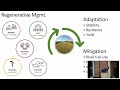
Regenerative Agriculture practices like minimizing tillage, maximizing crop and species diversity, keeping soil covered, and maintaining living roots build system stability and resilience, supported by 30 years of data from the Wisconsin Integrated Cropping Systems Trial.
Making Sense of the Differences
The difference in understanding how regenerative practices build resilience centers on whether soil health is the sole driver or part of a broader integrated system. Academic views focus on soil health's role in water and nutrient management, while field experience emphasizes a holistic approach combining soil, biodiversity, and adaptive management for maximum stability against climate extremes.