
How is regenerative different from conventional farming?
Regenerative agriculture focuses on improving the entire ecosystem—soil health, biodiversity, water cycles, and carbon sequestration—by working with natural processes. Conventional agriculture, in contrast, often emphasizes maximizing yield through intensive tillage, synthetic inputs, and monocultures, which can deplete resources over time. Regenerative systems build on-farm resilience and fertility organically, reducing reliance on external inputs, while conventional systems typically depend on them to maintain productivity levels.
Read More: Complete Description
Sources behind this view
Sources behind this view
 Videos & Podcasts
-
Regenerative agriculture increases diversity and reduces disturbance through practices like no-till, cover crops, and integrated animals. This fosters biodiversity, which replaces costly agrochemicals

-
A study comparing regenerative and conventional agriculture showed regenerative systems had fewer pests, higher profits, and improved soil health in both corn and almond production, despite similar yi

 Community
-
Regenerative agriculture rebuilds soil organic matter and biodiversity through practices like cover cropping, reduced tillage, minimal artificial fertilizers, and regenerative grazing, ultimately impr
Read more (pp. 8-9) (opens PDF, pp. 8-9) permies.com -
Regenerative agriculture reverses soil harm by sequestering carbon through cover crops, no-till, compost, and crop rotation, improving soil health and resilience for both farms and home gardens.
Read more (opens in new window) ucanr.edu
 Research
-
Regenerative Agriculture: Restoring Ecosystems¢ Resilience and Productivity: A Review (opens in new window)
This study found: Regenerative agriculture builds soil health and ecosystem services through practices like no-till, cover crops, and diverse rotations. It increases soil organic matter, improves water infiltration, bo
-
Restoration Through Regeneration: a Scientific and Political Lens into Regenerative Agriculture in the United States (opens in new window)
This study found: Regenerative agriculture builds soil health and resilience using practices like no-till and cover crops, contrasting with industrial farming. Current U.S. policies hinder its adoption, requiring refor
-
Systematic review of regenerative farming: Addressing agricultural sustainability challenges (opens in new window)
This study found: Systematic review of 31 studies shows regenerative farming improves soil health, biodiversity, and carbon capture, aiding sustainability. Technology is key for adoption, but policy, farmer understandi
-
Regenerative agriculture for sustainable crop productivity: A comprehensive review (opens in new window)
This study found: Regenerative Agriculture revitalizes soil by minimizing disturbance, maximizing living roots, fostering diversity, and reducing synthetic inputs. It improves soil health, carbon sequestration, and cro
 From the Web
-
Regenerative agriculture restores soil health through practices like cover cropping and crop rotation, leading to carbon sequestration, increased resiliency, and reduced reliance on off-farm inputs, b
-
Regenerative agriculture, rooted in agroecology and the Four Principles of Organic Agriculture (Health, Ecology, Fairness, Care), aims to improve systems by increasing soil organic matter through prac
-
Regenerative agriculture builds soil and ecosystem health, enabling farms to produce 3-6x more food per acre through diverse crop rotations and multiple livestock species, without reliance on damaging
-
Regenerative agriculture revitalizes soil through practices like conservation tillage, cover crops, and crop rotation, producing nutrient-dense food and improving land quality, unlike conventional met
Key Points
Core Concept
- Builds soil health and ecosystem function.
- Increases natural biodiversity above and below ground.
- Works with natural processes, not against them.
- Reduces reliance on synthetic inputs over time.
- Enhances resilience to climate and market shocks.
Key Mechanisms
- Increasing soil organic matter through cover crops and reduced tillage.
- Fostering soil microbial life and nutrient cycling.
- Enhancing water infiltration and retention in soils.
- Promoting diverse plant and animal communities.
- Integrating livestock for nutrient cycling and pasture health.
Where It Applies
- All agroecosystems: temperate, tropical, arid, and humid.
- Smallholdings to large commercial farms and ranches.
- Crops, livestock, and integrated farming systems.
- Areas facing land degradation and water scarcity.
- Farms seeking to reduce input costs and increase resilience.
Management Actions
- Minimize soil disturbance (no-till, min-till).
- Keep soil covered with living plants or mulch.
- Maximize plant and animal biodiversity.
- Integrate livestock into cropping or grazing systems.
- Rotate crops and cover crops for soil building.
Know the Debate
- Yield recovery takes 2-7+ years based on conditions
- Synthetic input reduction timelines vary by farm context
Going Deeper
1
Why This Matters: Building Long-Term Farm Viability
The foundational difference between regenerative and conventional agriculture lies in their ultimate objective and, consequently, their long-term impact on farm viability. Conventional agriculture, while achieving significant short-term yield gains, often operates on a...
Why This Matters: Building Long-Term Farm Viability
The foundational difference between regenerative and conventional agriculture lies in their ultimate objective and, consequently, their long-term impact on farm viability. Conventional agriculture, while achieving significant short-term yield gains, often operates on a...
The foundational difference between regenerative and conventional agriculture lies in their ultimate objective and, consequently, their long-term impact on farm viability. Conventional agriculture, while achieving significant short-term yield gains, often operates on a linear model of resource consumption. It takes inputs (seeds, fertilizers, pesticides, water, energy) and produces outputs (crops, livestock), with the byproducts being resource depletion and potential environmental degradation. This necessitates ever-increasing inputs to maintain productivity as the soil and ecosystem degrade.
Regenerative agriculture, conversely, operates on a circular, biological model. It views the farm as an integrated ecosystem where outputs from one component become inputs for another, driven by healthy soil biology. The focus on building soil health means that fertility, water-holding capacity, and pest resistance are generated within the system. This not only leads to more stable yields over time but also creates a unique economic advantage. Farmers in regions like the US Midwest have reported saving $30-70/acre ($75-175/ha) annually from reduced tillage operations alone, coupled with significant ongoing reductions in synthetic fertilizer and pesticide costs, often realizing these savings within 3-5 years of dedicated practice.
Moreover, regenerative systems build resilience. Soils with higher organic matter (aiming for an annual increase of 0.2-1.0%) retain more water, making farms more resilient to drought, and their improved structure reduces the risk of erosion from heavy rains. This ecological resilience translates directly into economic resilience, protecting livelihoods against the increasing volatility of weather patterns and unpredictable market conditions. By investing in the farm's natural capital, regenerative agriculture offers a pathway to enduring profitability and a more secure future for land managers.
Sources behind this view
Sources behind this view
Videos & Podcasts
-
Case studies of farmers like Duane Beck, Kofi Boa, David Brandt, and Gabe Brown demonstrate that regenerative agriculture (no-till, cover crops, diverse rotations) significantly increases soil health,

-
Regenerative farming, using no-till, cover crops, and diverse rotations, rapidly rebuilds soil organic matter and soil life. Examples from Ohio and Ghana show these practices increase profitability by

-
Adopting regenerative practices should start small and incrementally, focusing on soil health over short-term yields. Collaboration, strategic nutrient sourcing, and leveraging resources like Continuu
Community
-
Adopting no-till farming and non-GMO seeds improves soil health, reduces input costs (fuel, fertilizer, herbicides), and increases yields and profitability, leading to farmer adoption within 4-5 years
Read more (opens in new window) permies.com -
Regenerative agriculture reverses soil harm by sequestering carbon through cover crops, no-till, compost, and crop rotation, improving soil health and resilience for both farms and home gardens.
Read more (opens in new window) ucanr.edu
Research
-
Regenerative Agriculture: Restoring Ecosystems¢ Resilience and Productivity: A Review (opens in new window)
This study found: Regenerative agriculture builds soil health and ecosystem services through practices like no-till, cover crops, and diverse rotations. It increases soil organic matter, improves water infiltration, bo
-
Systematic review of regenerative farming: Addressing agricultural sustainability challenges (opens in new window)
This study found: Systematic review of 31 studies shows regenerative farming improves soil health, biodiversity, and carbon capture, aiding sustainability. Technology is key for adoption, but policy, farmer understandi
-
Restoration Through Regeneration: a Scientific and Political Lens into Regenerative Agriculture in the United States (opens in new window)
This study found: Regenerative agriculture builds soil health and resilience using practices like no-till and cover crops, contrasting with industrial farming. Current U.S. policies hinder its adoption, requiring refor
-
The Indigenous Roots of Regenerative Agriculture (opens in new window)
This study found: Modern regenerative agriculture practices are rooted in millennia of Indigenous land stewardship, offering profound knowledge and a crucial value system of respect and reciprocity for true transformat
From the Web
-
Regenerative farming combines no-till, cover crops, and complex rotations, often with livestock grazing, to boost profitability by reducing input costs and increasing soil organic matter. Studies show
-
Regenerative agriculture regenerates topsoil, increases biodiversity, and improves carbon/water cycles through methods like minimal tillage, soil cover, diversity, and animal integration, boosting pro
-
Regenerative agriculture, combining minimal disturbance, cover cropping, and diversified rotations, rebuilds soil fertility, significantly reduces input costs (fertilizers, pesticides, diesel), and ma
-
Regenerative Agriculture rebuilds soil health and biodiversity through four principles: no tillage, continuous soil cover, increased plant diversity, and livestock integration. This approach aims for
2
How It Works: The Soil-Centric Ecosystem
The engine of regenerative agriculture is the soil ecosystem. Unlike conventional approaches that often view soil as an inert medium to be manipulated, regenerative agriculture recognizes soil as a living entity teeming with billions of microorganisms—bacteria, fungi,...
How It Works: The Soil-Centric Ecosystem
The engine of regenerative agriculture is the soil ecosystem. Unlike conventional approaches that often view soil as an inert medium to be manipulated, regenerative agriculture recognizes soil as a living entity teeming with billions of microorganisms—bacteria, fungi,...
The engine of regenerative agriculture is the soil ecosystem. Unlike conventional approaches that often view soil as an inert medium to be manipulated, regenerative agriculture recognizes soil as a living entity teeming with billions of microorganisms—bacteria, fungi, protozoa, nematodes—along with earthworms, insects, and plant roots. These organisms are not passive bystanders; they actively decompose organic matter, unlock nutrients for plants, build soil structure, and cycle water.
Conventional practices, such as heavy tillage, can disrupt this complex web. Tilling exposes organic matter to oxygen, accelerating its decomposition and releasing carbon and nutrients rapidly, but also destroying fungal hyphae and soil aggregates that create pore spaces for air and water. The exclusive use of synthetic fertilizers can also bypass the soil’s natural nutrient cycling mechanisms, potentially making plants dependent on these external inputs and reducing the activity of nutrient-mobilizing microbes.
Regenerative practices actively foster this living soil. No-till farming protects soil structure and the habitat for soil organisms by eliminating plowing. Cover crops provide continuous living roots in the soil, feeding microbes and preventing erosion. Crop diversity provides varied food sources for soil life and reduces pest and disease pressure. Livestock integration, through managed grazing, adds manure and urine—rich in nutrients and beneficial microbes—and their trampling can help incorporate organic matter and stimulate plant growth. These practices work synergistically, creating a self-reinforcing cycle of soil health and ecosystem function. For example, farmers on the Canterbury Plains in New Zealand have observed a steady increase in soil fungal networks and improved water infiltration rates after transitioning to minimum tillage and diverse cover cropping strategies over 5-8 years.
Sources behind this view
Sources behind this view
Videos & Podcasts
-
Regenerative agriculture provides solutions for climate change, human health, and soil degradation, contrasting with industrial agriculture's harmful impacts, including glyphosate use. Practices like
-
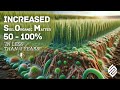
Provides actionable steps for regenerative agronomy: balanced N:C inputs (molasses, humates), microbial teas, yeast metabolites, calcium, and effective seed treatments. Emphasizes scalability, systems
-
Adopts regenerative agriculture principles: minimize disturbance, keep living roots, use soil armor, integrate animals (livestock grazing, multi-species), and increase biodiversity. These practices bu

-
Regenerative crop transition involves leaving root structures intact, removing above-ground biomass, adding compost, and transplanting new crops quickly, all without disturbing the soil to support soi

Community
-
Gabe Brown's regenerative practices emphasize no-till, polyculture (ideally 7-20 species), and minimizing bare soil to build soil health and organic matter. These methods reduce water needs, increase
Read more (opens in new window) permies.com -
Build healthy pasture soils by minimizing tillage, maintaining living roots and species diversity, and implementing proper grazing management. Livestock are essential for nutrient cycling and stimulat
Read more (opens in new window) smallfarms.cornell.edu -
Regenerative agriculture principles, including pasture-based systems, cover cropping, and livestock integration, are discussed for improving soil health and water infiltration in arid African climates
Read more (opens in new window) permies.com -
Regenerative gardening principles include minimizing soil disruption (avoiding excessive tilling), keeping soil covered with plants or organic matter, promoting plant diversity through crop rotation a
Read more (opens in new window) ucanr.edu
Research
-
Regenerative Agriculture: Restoring Ecosystems¢ Resilience and Productivity: A Review (opens in new window)
This study found: Regenerative agriculture builds soil health and ecosystem services through practices like no-till, cover crops, and diverse rotations. It increases soil organic matter, improves water infiltration, bo
-
Building Soil Health and Fertility through Organic Amendments and Practices: A Review (opens in new window)
This study found: Review of organic amendments (manures, compost, cover crops) and regenerative practices (no-till, crop diversity, agroecology) shows they restore soil health by increasing organic matter and beneficia
-
The Indigenous Roots of Regenerative Agriculture (opens in new window)
This study found: Modern regenerative agriculture practices are rooted in millennia of Indigenous land stewardship, offering profound knowledge and a crucial value system of respect and reciprocity for true transformat
-
Building Soil Health and Fertility through Organic Amendments and Practices: A Review (opens in new window)
This study found: Using organic amendments (manures, composts, cover crops) and regenerative practices (no-till, crop diversity) restores soil health by increasing organic matter and beneficial microbes, leading to mor
From the Web
-
Key regenerative agriculture methods include no-till farming, cover cropping, agroforestry, perennial crops, planned rotational grazing (Holistic Management), and compost application, all aimed at imp
-
Regenerative agriculture utilizes methods like no-till, agroforestry, perennial crops, planned rotational grazing (Holistic Management), compost application, and pasture cropping to improve soil healt
-
Regenerative agriculture restores soil health through practices like cover cropping and crop rotation, leading to carbon sequestration, increased resiliency, and reduced reliance on off-farm inputs, b
-
Soil Capital's regenerative approach optimizes agro-chemicals for cost savings, reinvesting in trials for composting, cover crops, and no-till. Key principles include minimal disturbance, soil cover,
3
Common Misconceptions Addressed
A frequent misunderstanding is that regenerative agriculture is simply a synonym for organic agriculture or that it involves completely abandoning all modern tools. While regenerative agriculture shares common ground with organic principles by prioritizing natural...
Common Misconceptions Addressed
A frequent misunderstanding is that regenerative agriculture is simply a synonym for organic agriculture or that it involves completely abandoning all modern tools. While regenerative agriculture shares common ground with organic principles by prioritizing natural...
A frequent misunderstanding is that regenerative agriculture is simply a synonym for organic agriculture or that it involves completely abandoning all modern tools. While regenerative agriculture shares common ground with organic principles by prioritizing natural processes and reducing synthetic inputs, it is a broader framework focused on improving ecosystem function, not just avoiding prohibited substances. A farmer might be conventionally managed and transition to regenerative practices gradually, starting with no-till and cover crops, and then strategically phasing out synthetic fertilizers and pesticides over 3-7 years as soil health improves. Organic certification, while a valuable standard, doesn't inherently guarantee ecosystem regeneration; some organic systems can still involve tillage or lack diverse integration.
Another misconception is that regenerative agriculture necessarily means lower yields. While there can be a transition period where yields might fluctuate, long-term studies and farmer testimonials consistently show that regenerative systems can achieve comparable or even superior yields to conventional systems, especially when considering yield stability across varying weather conditions. For example, field trials in Western Australia have demonstrated that regenerative cropping systems, focusing on soil organic matter building, can achieve yields comparable to conventional systems after 5-10 years, with significantly lower input costs and improved soil resilience.
Finally, some believe regenerative agriculture is only for small-scale or hobby farms. In reality, the principles are scalable and are being successfully implemented on large commercial operations across the globe, from the vast grain farms of North America to the cattle ranches of Argentina and the mixed farms in Europe. The focus on efficiency through closed-loop systems and reduced input costs makes it economically attractive for all scales of operation. For instance, large-scale cattle operations in the US Southern Plains are using rotational grazing to significantly improve pasture health and carrying capacity.
Sources behind this view
Sources behind this view
Videos & Podcasts
-
Regenerative agriculture provides solutions for climate change, human health, and soil degradation, contrasting with industrial agriculture's harmful impacts, including glyphosate use. Practices like
-
Case studies of farmers like Duane Beck, Kofi Boa, David Brandt, and Gabe Brown demonstrate that regenerative agriculture (no-till, cover crops, diverse rotations) significantly increases soil health,
-
Adopting regenerative practices should start small and incrementally, focusing on soil health over short-term yields. Collaboration, strategic nutrient sourcing, and leveraging resources like Continuu
Community
-
Regenerative agriculture rebuilds soil organic matter and biodiversity through practices like cover cropping, reduced tillage, minimal artificial fertilizers, and regenerative grazing, ultimately impr
Read more (pp. 8-9) (opens PDF, pp. 8-9) permies.com
Research
-
Regenerative Agriculture: Restoring Ecosystems¢ Resilience and Productivity: A Review (opens in new window)
This study found: Regenerative agriculture builds soil health and ecosystem services through practices like no-till, cover crops, and diverse rotations. It increases soil organic matter, improves water infiltration, bo
-
The Indigenous Roots of Regenerative Agriculture (opens in new window)
This study found: Modern regenerative agriculture practices are rooted in millennia of Indigenous land stewardship, offering profound knowledge and a crucial value system of respect and reciprocity for true transformat
-
Restoration Through Regeneration: a Scientific and Political Lens into Regenerative Agriculture in the United States (opens in new window)
This study found: Regenerative agriculture builds soil health and resilience using practices like no-till and cover crops, contrasting with industrial farming. Current U.S. policies hinder its adoption, requiring refor
-
Regenerative Agriculture: Insights and Challenges in Farmer Adoption (opens in new window)
This study found: Review of 7 regenerative agriculture practices (no-till, crop rotation, cover crops, etc.) highlights benefits and key adoption challenges like cost, farm size, and institutional barriers for scalable
From the Web
-
Key regenerative agriculture methods include no-till farming, cover cropping, agroforestry, perennial crops, planned rotational grazing (Holistic Management), and compost application, all aimed at imp
-
Regenerative agriculture restores soil health through practices like cover cropping and crop rotation, leading to carbon sequestration, increased resiliency, and reduced reliance on off-farm inputs, b
-
Regenerative agriculture restores degraded soils by working with nature, enhancing soil health and profitability. Key practices reduce input costs, improve resilience, and benefit the environment thro
-
Regenerative agriculture improves soil health, forage, and resilience, but adoption faces practical, political, and personal barriers, requiring education, adaptation, and a mindset shift.
4
Regional Considerations: Adapting Principles Globally
The universal principles of regenerative agriculture—building soil health, increasing biodiversity, promoting water cycles, and integrating livestock—are applied differently based on regional climates, soil types, and existing agricultural systems. This adaptability is...
Regional Considerations: Adapting Principles Globally
The universal principles of regenerative agriculture—building soil health, increasing biodiversity, promoting water cycles, and integrating livestock—are applied differently based on regional climates, soil types, and existing agricultural systems. This adaptability is...
The universal principles of regenerative agriculture—building soil health, increasing biodiversity, promoting water cycles, and integrating livestock—are applied differently based on regional climates, soil types, and existing agricultural systems. This adaptability is key to its global accessibility.
In the Mediterranean basin, with its characteristic dry summers, regenerative strategies focus heavily on water conservation and drought resilience. Practices include extensive use of drought-tolerant cover crops like legumes and grasses, incorporation of perennial vegetation, and minimal soil disturbance to prevent erosion and retain precious soil moisture. Farmers in Southern Spain and Italy are observing improved water infiltration and reduced irrigation needs after implementing these strategies over 5-10 years, often with a gradual phase-out of synthetic water-retaining amendments.
In the humid tropics of Southeast Asia and South America, regenerative agriculture often involves agroforestry systems. Integrating trees with crops and perennial commodities (like coffee, cocoa, or rubber) sequesters carbon, enhances biodiversity, improves soil structure under heavy rainfall, and provides multiple income streams. Farmers in regions of Brazil and Malaysia are successfully combining perennial cash crops with cover crops and managed livestock grazing, aiming to increase the overall biomass and soil organic matter content by 0.5-1.5% annually, thereby reducing reliance on synthetic fertilizers common in monoculture plantations.
In temperate grasslands, like the prairie provinces of Canada or the steppes of Eastern Europe, regenerative approaches prioritize building soil organic matter and enhancing soil biological activity through diverse crop rotations and no-till systems. Managing residue and maintaining continuous soil cover are critical for preventing erosion and building resilience against both drought and extreme rainfall events. Farmers in these regions often aim to increase soil organic matter levels by 0.3-0.8% per year, leading to documented improvements in nutrient availability and water retention within 4-7 years of consistent practice.
Even in regions with established conventional intensive agriculture, like parts of Western Europe, regenerative principles are gaining traction. Farmers are exploring reduced tillage, cover cropping between cash crops, and the integration of livestock back into cropping systems, often leveraging existing infrastructure. While the transition may occur over a slightly longer timeframe (up to 7 years for full phase-out of synthetics) due to different regulatory and market structures, the focus remains on improving the farmer's ecological and economic resilience.
Sources behind this view
Sources behind this view
Videos & Podcasts
-
Regenerative agriculture provides solutions for climate change, human health, and soil degradation, contrasting with industrial agriculture's harmful impacts, including glyphosate use. Practices like
-
Regenerative agriculture in northern regions requires a holistic system approach and mindset shift, focusing on all soil health principles like keeping land green, increasing diversity, and integratin

-
Adopts regenerative agriculture principles: minimize disturbance, keep living roots, use soil armor, integrate animals (livestock grazing, multi-species), and increase biodiversity. These practices bu
-
Case studies of farmers like Duane Beck, Kofi Boa, David Brandt, and Gabe Brown demonstrate that regenerative agriculture (no-till, cover crops, diverse rotations) significantly increases soil health,
Community
-
Regenerative agriculture rebuilds soil organic matter and biodiversity through practices like cover cropping, reduced tillage, minimal artificial fertilizers, and regenerative grazing, ultimately impr
Read more (pp. 8-9) (opens PDF, pp. 8-9) permies.com -
Regenerative gardening principles include minimizing soil disruption (avoiding excessive tilling), keeping soil covered with plants or organic matter, promoting plant diversity through crop rotation a
Read more (opens in new window) ucanr.edu -
Regenerative agriculture reverses soil harm by sequestering carbon through cover crops, no-till, compost, and crop rotation, improving soil health and resilience for both farms and home gardens.
Read more (opens in new window) ucanr.edu
Research
-
The Indigenous Roots of Regenerative Agriculture (opens in new window)
This study found: Modern regenerative agriculture practices are rooted in millennia of Indigenous land stewardship, offering profound knowledge and a crucial value system of respect and reciprocity for true transformat
-
Regenerative Agriculture: Restoring Ecosystems¢ Resilience and Productivity: A Review (opens in new window)
This study found: Regenerative agriculture builds soil health and ecosystem services through practices like no-till, cover crops, and diverse rotations. It increases soil organic matter, improves water infiltration, bo
-
Regenerative Livestock Farming as a Socioeconomic Model for Sustainable Agribusiness in Latin America (opens in new window)
This study found: Regenerative livestock farming in Latin America improved soil carbon, biodiversity, and water quality, while boosting farmer income and quality of life. Government support is key for wider adoption.
-
Soil Microbial Dynamics in Regenerative Agriculture Systems: A Data-Driven Synthesis for Soil Health, Pest Suppression, and Yield Sustainability in the Western Canadian Prairies (opens in new window)
This study found: Regenerative farming in Western Canada boosts soil microbes (up to 86%), fungi (up to 60%), and carbon, improving soil health and water retention. This leads to more stable yields and reduced syntheti
From the Web
-
Key regenerative agriculture methods include no-till farming, cover cropping, agroforestry, perennial crops, planned rotational grazing (Holistic Management), and compost application, all aimed at imp
-
Regenerative Agriculture rebuilds soil health and biodiversity through four principles: no tillage, continuous soil cover, increased plant diversity, and livestock integration. This approach aims for
-
Regenerative agriculture restores degraded soils by building organic matter and biodiversity, enhancing drought/flood resilience and capturing carbon. Key principles include covering soil, minimizing
-
Regenerative agriculture, including managed grazing, minimal tillage, permanent ground cover, and agroforestry, can restore and enhance European agricultural soil health by addressing erosion, density
5
Historical Context: A Return to Ecological Understanding
Modern conventional agriculture, particularly since the mid-20th century, represents a departure from the more ecologically integrated farming systems of the past. Before the widespread adoption of synthetic fertilizers, pesticides, and intensive tillage, farmers relied...
Historical Context: A Return to Ecological Understanding
Modern conventional agriculture, particularly since the mid-20th century, represents a departure from the more ecologically integrated farming systems of the past. Before the widespread adoption of synthetic fertilizers, pesticides, and intensive tillage, farmers relied...
Modern conventional agriculture, particularly since the mid-20th century, represents a departure from the more ecologically integrated farming systems of the past. Before the widespread adoption of synthetic fertilizers, pesticides, and intensive tillage, farmers relied on practices that built soil fertility, managed pests, and conserved water through careful observation and mimicry of natural cycles. These included practices like crop rotation (including legumes for nitrogen fixation), green manures, animal manuring, fallowing, and the use of draught animals for plowing.
The Green Revolution significantly advanced crop yields through high-input strains of wheat, rice, and maize, coupled with synthetic fertilizers and pesticides. This led to a paradigm shift where land management became more about intervening with chemistry and mechanics to control nature rather than working with it. While undeniably successful in averting widespread famine and increasing food availability, this approach began to reveal unintended consequences: soil degradation, water contamination, biodiversity loss, and increasing farmer dependency on external inputs.
Regenerative agriculture is not entirely new; it is a modern interpretation and re-application of timeless ecological principles, informed by contemporary scientific understanding of soil biology, ecology, and climate science. It draws from indigenous farming knowledge and the wisdom of early 20th-century soil scientists like Sir Albert Howard, who advocated for composting and understanding the "living soil." The resurgence of interest in regenerative practices is a response to the sustainability challenges posed by conventional agriculture, seeking to restore the ecological functions that underpin long-term food security and environmental health.
Sources behind this view
Sources behind this view
Videos & Podcasts
-
Regenerative agriculture provides solutions for climate change, human health, and soil degradation, contrasting with industrial agriculture's harmful impacts, including glyphosate use. Practices like
-
Adopts regenerative agriculture principles: minimize disturbance, keep living roots, use soil armor, integrate animals (livestock grazing, multi-species), and increase biodiversity. These practices bu
-
Drew Smith of Rodale Institute contrasts true regenerative agriculture with US practices like no-till, which often still rely on synthetic inputs and pose health risks. Data from Rodale's trial shows
-
Regenerative agriculture offers a solution to soil degradation by combining minimal disturbance, cover crops, and diversified rotations. This approach reduces input costs (fertilizer, pesticides, dies
Community
-
Regenerative agriculture reverses soil harm by sequestering carbon through cover crops, no-till, compost, and crop rotation, improving soil health and resilience for both farms and home gardens.
Read more (opens in new window) ucanr.edu
Research
-
The Indigenous Roots of Regenerative Agriculture (opens in new window)
This study found: Modern regenerative agriculture practices are rooted in millennia of Indigenous land stewardship, offering profound knowledge and a crucial value system of respect and reciprocity for true transformat
-
Systematic review of regenerative farming: Addressing agricultural sustainability challenges (opens in new window)
This study found: Systematic review of 31 studies shows regenerative farming improves soil health, biodiversity, and carbon capture, aiding sustainability. Technology is key for adoption, but policy, farmer understandi
-
Regenerative Agriculture: Restoring Ecosystems¢ Resilience and Productivity: A Review (opens in new window)
This study found: Regenerative agriculture builds soil health and ecosystem services through practices like no-till, cover crops, and diverse rotations. It increases soil organic matter, improves water infiltration, bo
-
Restoration Through Regeneration: a Scientific and Political Lens into Regenerative Agriculture in the United States (opens in new window)
This study found: Regenerative agriculture builds soil health and resilience using practices like no-till and cover crops, contrasting with industrial farming. Current U.S. policies hinder its adoption, requiring refor
From the Web
-
Regenerative agriculture, rooted in agroecology and the Four Principles of Organic Agriculture (Health, Ecology, Fairness, Care), aims to improve systems by increasing soil organic matter through prac
-
Regenerative agriculture, combining minimal disturbance, cover cropping, and diversified rotations, rebuilds soil fertility, significantly reduces input costs (fertilizers, pesticides, diesel), and ma
-
Regenerative Agriculture, guided by a holistic management framework and a 'holistic context,' is proposed to regenerate soils, economies, and environments. It reintroduces livestock as a key tool and
-
Regenerative agriculture restores soil health through practices like cover cropping and crop rotation, leading to carbon sequestration, increased resiliency, and reduced reliance on off-farm inputs, b
6
Measuring and Monitoring: Tracking Progress Beyond Yield
While yield remains an important economic indicator, regenerative agriculture necessitates a broader suite of monitoring tools to assess true progress. The goal is not just to produce food, but to improve the land's capacity to do so. This involves tracking changes in...
Measuring and Monitoring: Tracking Progress Beyond Yield
While yield remains an important economic indicator, regenerative agriculture necessitates a broader suite of monitoring tools to assess true progress. The goal is not just to produce food, but to improve the land's capacity to do so. This involves tracking changes in...
While yield remains an important economic indicator, regenerative agriculture necessitates a broader suite of monitoring tools to assess true progress. The goal is not just to produce food, but to improve the land's capacity to do so. This involves tracking changes in soil health, biodiversity, and water cycles.
Soil organic matter (SOM) is a key metric. Farmers aim for an annual increase, typically ranging from 0.2% to 1.0%, depending on the system and environment. This is often monitored through laboratory soil tests, costing approximately $20-60 per sample, or by observing changes in soil structure (e.g., aggregation, tilth upon digging). Increased SOM directly correlates with improved water-holding capacity, nutrient availability, and carbon sequestration.
Soil biology indicators are also gaining importance. This can include measuring microbial biomass carbon, fungal-to-bacterial ratios, or the presence and abundance of beneficial organisms like earthworms. While more advanced, these tests (often costing $50-150 per sample) provide direct insight into the health of the soil's living component. Simple field observations, such as the rate of residue decomposition or the presence of diverse invertebrate life (e.g., ground beetles, spiders), also serve as valuable, qualitative indicators.
Water infiltration rate is crucial. Farms transition their focus to measuring how quickly water penetrates the soil. This can be done with simple, low-cost tools like a double-ring infiltrometer. Improved infiltration (e.g., from 2 cm/hour to 10 cm/hour, or more, over several years) signifies reduced runoff, better drought resistance, and less erosion.
Biodiversity assessments can range from simple observations of beneficial insect populations, bird diversity, or the presence of native plant species in field margins and hedgerows, to more formal surveys. A farmer in the UK might track an increase in pollinator species by 10-20% over 5 years by monitoring their fields.
These metrics, often tracked over 3-10 year periods, provide a more holistic picture of farm health and the success of regenerative practices, moving beyond the purely quantitative measure of crop output to acknowledge the qualitative improvements in ecosystem services being generated.
Sources behind this view
Sources behind this view
Videos & Podcasts
-
Five key success metrics are used: cattle cost of gain, soil organic matter (crucial for pH stabilization and soil health), water filtration, water retention, and microbial activity measured by Haney
-
Regenerative practices lead to exponential soil health improvements (e.g., 15-inch aggregate depth in 4 years) and significant ecological benefits (4x GHG sink, 3x birds, 2.3x water infiltration) comp

-
Soil Heroes platform monitors carbon sequestration and biodiversity through detailed soil sampling (every 3-5 years), field mapping, and practice input. Biodiversity payments require a minimum of five

-
Increasing soil organic matter (SOM) through regenerative practices boosts water retention (20,000 gal/acre/%), provides free nitrogen (30 lbs/acre/% SOM), increases yields and farmland value, and red
Research
-
Regenerative Agriculture: Restoring Ecosystems¢ Resilience and Productivity: A Review (opens in new window)
This study found: Regenerative agriculture builds soil health and ecosystem services through practices like no-till, cover crops, and diverse rotations. It increases soil organic matter, improves water infiltration, bo
-
Substantial and Rapid Increase in Soil Health across Crops with Conversion from Conventional to Regenerative Practices (opens in new window)
This study found: Switching to regenerative practices like cover cropping and compost rapidly improved soil organic matter, soil structure, and beneficial soil microbes on a working farm over nine years.
-
On‐Farm Assessment of Long‐Term Impacts of Regenerative Management on Vineyard Soil Health (opens in new window)
This study found: Long-term cover cropping and livestock integration significantly improved soil health in California vineyards, highlighting the need for region-specific soil health assessments and practices.
-
Defining and validating regenerative farm systems using a composite of ranked agricultural practices. (opens in new window)
This study found: A new scoring system for regenerative farming practices shows higher soil health, water infiltration, plant/insect diversity, and farm profits, even with slightly lower corn yields.
From the Web
-
Provides a practical guide to measuring soil health using field indicators and lab tests, emphasizing consistency, context-specific interpretation, and tracking functional improvements over time. Link
7
Know the Debate
Regenerative agriculture's success hinges on its adaptive nature, with farmers prioritizing soil health and biodiversity. The exact outcomes and ti...
Know the Debate
Regenerative agriculture's success hinges on its adaptive nature, with farmers prioritizing soil health and biodiversity. The exact outcomes and ti...
Regenerative agriculture's success hinges on its adaptive nature, with farmers prioritizing soil health and biodiversity. The exact outcomes and timelines for transitions vary significantly by region and management scale. In humid climates with rich soil biology, results can be faster, perhaps within 3-5 years. Conversely, semi-arid areas or farms starting with heavily degraded land may require 7-10 years for full recovery. Entry costs can range from under $1,000 for basic cover cropping and no-till equipment on small farms to $20,000+ for advanced setups on large acreages. Labor needs fluctuate, often requiring intensive upfront effort for infrastructure and learning, settling into 2-3 hours per acre weekly for soil monitoring and cover crop management.
How long does the transition yield gap last?
Recovery within 2-3 years
Academic research and university trials suggest the yield gap closes within 2-3 years with optimal management. These studies often reflect well-controlled conditions and rapid soil biological improvements.
Recovery takes 5-7+ years
Many experienced farmers report yield dips persisting for 5-7 years, especially in challenging climates or starting from severely degraded soils. They emphasize the long learning curve and equipment adjustments needed.
Making Sense of the Differences
The timeline for yield recovery after transitioning to regenerative agriculture varies significantly based on starting soil health, climate, and management intensity. Regions with severe degradation or arid conditions may require 5-7+ years. Optimized systems in favorable climates, especially with strong soil biology, may see recovery within 2-3 years. Farmers should budget for a potentially longer transition period, especially if adapting to new equipment and management strategies.
Can synthetic inputs be phased out within 3-7 years?
Achievable within 3-7 years
Academic and extension guidance suggest a 3-7 year timeframe for reducing and potentially eliminating synthetic fertilizers and pesticides as soil health improves. This timeframe is linked to recovery of natural nutrient cycling and pest resistance.
Often takes longer than 7 years
Experienced farmers often find phasing out all synthetics takes longer than 7 years, especially in complex systems or challenging climates. Intermittent targeted applications may still be used, requiring ongoing soil monitoring.
Making Sense of the Differences
The complete phase-out of synthetic inputs typically takes between 3-7 years in ideal conditions, as supported by academic and extension guides. However, many farmers find this process extends to 7-10 years or longer in practice, especially in challenging environments or when integrating complex crop rotations. Factors influencing this include the initial soil condition, climate variability, and the farmer's experience level. A gradual, monitored approach based on soil biology is often more pragmatic than adhering to a strict deadline.