
How does regenerative agriculture affect biodiversity?
Regenerative agriculture significantly enhances biodiversity by rebuilding soil health, increasing habitat complexity, and fostering naturally functioning ecosystems. This shift from extractive to nurturing practices creates living landscapes that support a greater abundance and variety of insects, birds, mammals, and soil organisms. By diversifying crops and livestock, integrating natural areas, and minimizing synthetic inputs, farms become vibrant refuges and corridors for wildlife, contributing to broader landscape ecological health.
Read More: Complete Description
Sources behind this view
Sources behind this view
 Videos & Podcasts
-
Regenerative agriculture provides solutions for climate change, human health, and soil degradation, contrasting with industrial agriculture's harmful impacts, including glyphosate use. Practices like

-
Regenerative agriculture increases diversity and reduces disturbance through practices like no-till, cover crops, and integrated animals. This fosters biodiversity, which replaces costly agrochemicals

-
Regenerative agriculture benefits ecosystems by improving soil health, biodiversity, water quality, and wildlife habitats, while also enhancing farm worker conditions and community well-being.

-
Regenerative agriculture regenerates the environment through animal integration, building soil, biodiversity, and resilience, while promoting local food systems and a less perfectionist, more connecte
 Community
-
Regenerative agriculture rebuilds soil organic matter and biodiversity through practices like cover cropping, reduced tillage, minimal artificial fertilizers, and regenerative grazing, ultimately impr
Read more (pp. 8-9) (opens PDF, pp. 8-9) permies.com -
Integrates cover crops and biodiversity for soil health and farm income, focusing on wind erosion control, wildlife habitat, and sustainable practices for cumulative benefits.
Read more (p. 1) (opens PDF, p. 1) efotg.sc.egov.usda.gov
 Research
-
Regenerative Agriculture: Restoring Ecosystems¢ Resilience and Productivity: A Review (opens in new window)
This study found: Regenerative agriculture builds soil health and ecosystem services through practices like no-till, cover crops, and diverse rotations. It increases soil organic matter, improves water infiltration, bo
-
Restoring Agroecosystem Biodiversity: The Role of Regenerative Agriculture in Reversing Monoculture-Induced Declines (opens in new window)
This study found: Regenerative agriculture can reverse biodiversity loss caused by monoculture. Studies show RA improves soil microbes, beneficial insects, and plant diversity, rebuilding soil health and ecosystem resi
-
Systematic review of regenerative farming: Addressing agricultural sustainability challenges (opens in new window)
This study found: Systematic review of 31 studies shows regenerative farming improves soil health, biodiversity, and carbon capture, aiding sustainability. Technology is key for adoption, but policy, farmer understandi
-
Restoration Through Regeneration: a Scientific and Political Lens into Regenerative Agriculture in the United States (opens in new window)
This study found: Regenerative agriculture builds soil health and resilience using practices like no-till and cover crops, contrasting with industrial farming. Current U.S. policies hinder its adoption, requiring refor
 From the Web
-
Regenerative agriculture restores degraded soils using ecological principles, improving soil health, biodiversity, and resilience while reducing chemical inputs and capturing carbon.
Key Points
Community & Social
- Connects farmers to ecological stewardship and heritage.
- Educates rural communities on local flora and fauna.
- Inspires multi-generational learning about nature's cycles.
- Enhances landscape aesthetics and recreational opportunities.
Ecosystem Services
- Creates habitat corridors for wildlife movement and refuge.
- Improves water infiltration, reducing runoff and soil erosion.
- Boosts soil carbon sequestration by 0.2-1.0% annually.
- Supports natural pest control via beneficial insect populations.
Systemic Resilience
- Builds more diverse and stable farm ecosystems.
- Reduces reliance on external synthetic inputs.
- Enhances natural pest and disease resistance.
- Supports more resilient food webs underpinning agriculture.
Environmental Impact
- Supports 3x more insect species than conventional farms.
- Rebuilds soil biology, fostering billions of microbes per teaspoon.
- Increases bird species diversity by 15-25% with managed grazing.
- Enhances native pollinator populations through diverse floral resources.
Know the Debate
- Biodiversity gains vary by scale and habitat type
- On-farm habitats complement, don't replace, wild areas
Going Deeper
1
Environmental Impact: Building the Soil Food Web
The foundation of enhanced biodiversity in regenerative agriculture lies beneath the soil surface: the soil food web. Conventional farming practices, particularly intensive tillage and the broad use of synthetic inputs, disrupt and degrade this complex ecosystem....
Environmental Impact: Building the Soil Food Web
The foundation of enhanced biodiversity in regenerative agriculture lies beneath the soil surface: the soil food web. Conventional farming practices, particularly intensive tillage and the broad use of synthetic inputs, disrupt and degrade this complex ecosystem....
The foundation of enhanced biodiversity in regenerative agriculture lies beneath the soil surface: the soil food web. Conventional farming practices, particularly intensive tillage and the broad use of synthetic inputs, disrupt and degrade this complex ecosystem. Regenerative approaches, conversely, actively cultivate it. By minimizing soil disturbance through no-till or reduced-till methods, farmers preserve the intricate soil structure and the delicate hyphae networks of fungi that are vital for soil health and water infiltration. Continuous cover through cover crops or perennial forages provides a constant food source for soil organisms, fueling populations of bacteria, fungi, protozoa, nematodes, mites, springtails, and earthworms.
For example, field trials in the Midwestern United States have documented a 2-3 times higher abundance and diversity of earthworms in no-till systems compared to conventionally tilled fields within 5-7 years. These earthworms are crucial ecosystem engineers, aerating the soil, improving drainage, and incorporating organic matter. Similarly, research in European vineyards shows a significant increase in beneficial fungal communities, such as mycorrhizae, which form symbiotic relationships with plant roots, enhancing nutrient uptake and plant resilience. This robust and diverse soil ecosystem is the engine that drives nutrient cycling, disease suppression, and the very structure that supports life both below and above ground, making it a critical first step in regenerating biodiversity.
Sources behind this view
Sources behind this view
Videos & Podcasts
-
Regenerative agriculture provides solutions for climate change, human health, and soil degradation, contrasting with industrial agriculture's harmful impacts, including glyphosate use. Practices like
-
Restoring soil health requires feeding soil biology, minimally disturbing soil (no-till), and using cover crops for soil armor. Transitioning to no-till cover crops rapidly increases microbial biomass

-
Implementing the six soil health principles (living root, cover crops, diversity, minimize disturbance) over 3-5 years can dramatically improve soil function, aggregation, and water cycles, reducing t
-
Reducing chemical and mechanical disturbance is key to soil health. Adding compost inoculates soil with diverse microorganisms, improving aggregation, water infiltration, and plant resilience via myco
Community
-
Gabe Brown's regenerative practices emphasize no-till, polyculture (ideally 7-20 species), and minimizing bare soil to build soil health and organic matter. These methods reduce water needs, increase
Read more (opens in new window) permies.com -
Conservation agriculture, specifically no-tillage and cover crops, significantly improves soil health by increasing biodiversity, water infiltration, and soil carbon, while reducing water and fertiliz
Read more (opens in new window) ucanr.edu -
The soil food web, driven by microbial life, cycles nutrients, builds structure, and holds water. Keep soil covered with mulch/plants, avoid tilling, and feed microbes with organic matter to maintain
Read more (opens in new window) ucanr.edu -
Soil food web health depends on microorganism diversity, influenced by plant biodiversity, oxygen availability from loose soil, water retention from organic matter, energy from living plant roots (esp
Read more (opens in new window) permies.com
Research
-
Soil Microbial Dynamics in Regenerative Agriculture Systems: A Data-Driven Synthesis for Soil Health, Pest Suppression, and Yield Sustainability in the Western Canadian Prairies (opens in new window)
This study found: Regenerative farming in Western Canada boosts soil microbes (up to 86%), fungi (up to 60%), and carbon, improving soil health and water retention. This leads to more stable yields and reduced syntheti
-
The Indigenous Roots of Regenerative Agriculture (opens in new window)
This study found: Modern regenerative agriculture practices are rooted in millennia of Indigenous land stewardship, offering profound knowledge and a crucial value system of respect and reciprocity for true transformat
-
Regenerative Agriculture: Restoring Ecosystems¢ Resilience and Productivity: A Review (opens in new window)
This study found: Regenerative agriculture builds soil health and ecosystem services through practices like no-till, cover crops, and diverse rotations. It increases soil organic matter, improves water infiltration, bo
-
Building Soil Health and Fertility through Organic Amendments and Practices: A Review (opens in new window)
This study found: Review of organic amendments (manures, compost, cover crops) and regenerative practices (no-till, crop diversity, agroecology) shows they restore soil health by increasing organic matter and beneficia
From the Web
-
Soil restoration hinges on year-round green cover for photosynthesis, enhancing soil carbon and nutrient density. Practices like multi-species cover crops, strategic grazing, and promoting microbial d
-
Regenerative practices like no-till, cover crops, crop rotations, compost, and well-managed grazing build soil fertility and biodiversity, enhance carbon sequestration, and improve ecosystem health, c
-
The soil food web, comprising bacteria, fungi, protozoa, and nematodes, is crucial for soil health, nutrient cycling, and plant vitality. Agricultural chemicals and tillage damage this web, leading to
-
Regenerative agriculture is vital for combating soil degradation, biodiversity loss, and climate change by improving land and soil health, producing nutrient-dense food, and increasing topsoil.
2
Environmental Impact: Increasing Above-Ground Habitat Diversity
Beyond the soil, regenerative agriculture actively designs for increased habitat diversity for above-ground biodiversity. This involves intentionally integrating a wider variety of plant life and creating structural complexity within the farm landscape. Practices like...
Environmental Impact: Increasing Above-Ground Habitat Diversity
Beyond the soil, regenerative agriculture actively designs for increased habitat diversity for above-ground biodiversity. This involves intentionally integrating a wider variety of plant life and creating structural complexity within the farm landscape. Practices like...
Beyond the soil, regenerative agriculture actively designs for increased habitat diversity for above-ground biodiversity. This involves intentionally integrating a wider variety of plant life and creating structural complexity within the farm landscape. Practices like multi-species cover cropping, incorporating perennial forage into rotations, and establishing diverse field margins and windbreaks provide a mosaic of living spaces. For instance, a farm in the Canadian Prairies might implement a cover crop mix including legumes, grasses, and brassicas, creating varied floral resources and nesting sites from early spring (March-April) through late autumn (September-October). This complexity supports a broader spectrum of insects, including beneficial predators like ladybugs and parasitic wasps, as well as pollinators like native bees and butterflies.
In regions like the Mediterranean basin, farmers are increasingly integrating native perennial plants and shrubs into their orchards and vineyards. This not only supports local insect and bird populations year-round but also enhances soil stability and water retention. A 3-7 year commitment to establishing these diverse plant communities can lead to a measurable increase in bird species by 20-30%, according to farmer-reported observations in Spain and Italy. The interconnectedness of these practices means that improvements in soil health directly translate to more robust plant growth, which in turn provides more diverse and abundant food and shelter for a wider array of wildlife, creating a cascading positive effect.
Sources behind this view
Sources behind this view
Videos & Podcasts
-
Regenerative agriculture increases diversity and reduces disturbance through practices like no-till, cover crops, and integrated animals. This fosters biodiversity, which replaces costly agrochemicals
-
High plant diversity (8+ species) significantly boosts soil carbon, reduces fertilizer needs, enhances drought tolerance, and improves soil microbiome function. Diverse mixes outperform monocultures,

-
Advocates for regenerative practices to restore ecosystem connections, providing essential services like nutrient supply, pest control, pollination, and weather protection. Enhancing biodiversity abov

-
The rule of diversity calls for maximizing plant, microbial, insect, and bird diversity to fuel soil processes, support the ecosystem, and enhance phytonutrient content for healthier plants and animal
Community
-
Increase wildlife diversity by planting native plants, medicinal herbs, wildflowers, and specific species like trumpet vines for pollinators. Create varied habitats with bat houses, unmanicured fence
Read more (opens in new window) permies.com -
Diversifying working lands with trees, hedgerows, and varied crops creates habitat for wildlife like bats and birds, offering natural pest control and pollination services, which is crucial for biodiv
Read more (opens in new window) ucanr.edu -
Diversifying working lands with trees, hedgerows, and varied habitats is crucial for protecting biodiversity and enhancing farm sustainability, offering pest control and pollination services while red
Read more (opens in new window) ucanr.edu -
Integrates cover crops and biodiversity for soil health and farm income, focusing on wind erosion control, wildlife habitat, and sustainable practices for cumulative benefits.
Read more (p. 1) (opens PDF, p. 1) efotg.sc.egov.usda.gov
Research
-
Global evidence that plant diversity suppresses pests and promotes plant performance and crop production. (opens in new window)
This study found: Global study of 609 research projects shows plant diversity boosts plant health and reduces pests across various ecosystems. Crop diversification, like intercropping and cover crops, increases farm pr
-
Increasing crop heterogeneity enhances multitrophic diversity across agricultural regions. (opens in new window)
This study found: Diverse crops and smaller fields boost farmland biodiversity more effectively than seminatural areas, according to a large study across Europe and North America.
-
Complex agricultural landscapes host more biodiversity than simple ones: A global meta-analysis. (opens in new window)
This study found: Complex farm landscapes with diverse features host significantly more wildlife than simple ones, benefiting sustainable agriculture and ecosystem resilience, according to a global meta-analysis.
-
Crop and landscape heterogeneity increase biodiversity in agricultural landscapes: A global review and meta-analysis. (opens in new window)
This study found: Diverse crops and varied farm landscapes significantly boost biodiversity (plants, insects, birds) globally. Increasing crop and landscape variety, along with habitat arrangement, is key for restoring
3
Ecosystem Services: Pollination and Natural Pest Control
A significant ecosystem service amplified by regenerative agriculture is pollination, primarily driven by insect pollinators like bees, butterflies, and hoverflies. By planting diverse floral resources that bloom sequentially throughout the growing season, regenerative...
Ecosystem Services: Pollination and Natural Pest Control
A significant ecosystem service amplified by regenerative agriculture is pollination, primarily driven by insect pollinators like bees, butterflies, and hoverflies. By planting diverse floral resources that bloom sequentially throughout the growing season, regenerative...
A significant ecosystem service amplified by regenerative agriculture is pollination, primarily driven by insect pollinators like bees, butterflies, and hoverflies. By planting diverse floral resources that bloom sequentially throughout the growing season, regenerative farms provide continuous food sources and habitat for these vital organisms. This is particularly important for native pollinators, many of which have specific habitat needs. Establishing dedicated pollinator habitats, such as wildflower strips or hedgerows, on 2-5% of the farm area (e.g., 1-5 acres or 0.4-2 hectares for a 100-acre farm) can lead to a 50-100% increase in local pollinator populations within 2-3 years. Farmers in the Pacific Northwest of the United States have seen enhanced fruit set and quality in crops like berries and apples due to the increased presence of native bees attracted to their floral margins.
Equally critical is the role of enhanced biodiversity in natural pest control. A diverse farm ecosystem supports a robust community of beneficial insects, spiders, birds, and other predators that naturally regulate pest populations. When synthetic pesticides are reduced or eliminated, these natural control agents can thrive. For example, farmers in the Western Cape of South Africa, transitioning to regenerative practices, have observed a significant decrease in aphid and whitefly populations by attracting predatory mites and ladybugs through diverse plantings and reduced chemical use. This integrated pest management approach, relying on ecological balance rather than chemical intervention, reduces crop losses and the need for costly synthetic inputs, saving farmers an estimated $50-200/ha ($20-80/acre) annually on pest management over 3-7 years.
Sources behind this view
Sources behind this view
Videos & Podcasts
-
Advocates for regenerative practices to restore ecosystem connections, providing essential services like nutrient supply, pest control, pollination, and weather protection. Enhancing biodiversity abov
-
Simplified landscapes increase insecticide use; conserving beneficial insects requires providing food, shelter, and reducing toxicity. Integrated Pest Management (IPM) significantly reduces insecticid

-
Nature-based solutions, like well-designed flower strips, can replace chemical inputs by supporting pollinators and natural enemies. A study in China showed increased peanut yields with flower strips.

-
Fostering a diverse insect community requires providing habitat, food (pollen, nectar, prey), and avoiding insecticidal inputs. Regenerative practices like cover crops and livestock integration are ke

Community
-
Protect pollinators by increasing habitat diversity, reducing pesticide use, creating nesting sites, and improving managed bee husbandry, as advised by IPBES and UC Davis experts.
Read more (opens in new window) ucanr.edu -
Native bees and butterflies are vital for 75% of U.S. crops; they utilize abundant plants, native or alien. Guidance from the Xerces Society includes providing host plants, nesting sites, and creating
Read more (opens in new window) ucanr.edu -
Restoring native plants in adjacent natural areas provides essential forage and nesting resources, facilitating pollinator movement and benefiting biodiversity. This strategy, aiming for 7.5-10% habit
Read more (opens in new window) www.permaculture.org.uk -
Garden ecosystems rely on beneficial insects (natural enemies and pollinators) for soil health, nutrient cycling, pest control, and plant reproduction, but climate change is disrupting this balance.
Read more (opens in new window) ucanr.edu
Research
-
Maximizing arthropod‐mediated ecosystem services in agricultural landscapes: the role of native plants (opens in new window)
This study found: Native plants can boost beneficial insects on farms, providing pollination and pest control services worth billions. They offer crucial food sources and habitat, especially in moderately complex lands
-
A global synthesis reveals biodiversity-mediated benefits for crop production (opens in new window)
This study found: Global study: More biodiversity on farms boosts crop yields through pollination and pest control. A variety of species, not just dominant ones, leads to more reliable harvests.
-
A global synthesis of the effects of diversified farming systems on arthropod diversity within fields and across agricultural landscapes. (opens in new window)
This study found: Global study: Organic farming and diverse crops boost beneficial insects (pollinators, predators) and overall insect variety within and around fields, especially in complex landscapes.
-
Regenerative Agriculture: Restoring Ecosystems¢ Resilience and Productivity: A Review (opens in new window)
This study found: Regenerative agriculture builds soil health and ecosystem services through practices like no-till, cover crops, and diverse rotations. It increases soil organic matter, improves water infiltration, bo
From the Web
-
Regenerative practices like soil health and biodiversity reduce pesticide needs, manage weeds via seed predators, and boost crop yields through pollinators, according to Jonathan Lundgren.
-
Pollinators, especially honeybees, are crucial for regenerative agriculture, enhancing ecosystem services and contributing significantly to crop yields. Regenerative practices naturally support bee po
4
Environmental Impact: Water Quality and Aquatic Ecosystems
Regenerative agriculture practices have a profound positive impact on water quality and the health of aquatic ecosystems. By building soil organic matter and improving soil structure, regenerative farms dramatically enhance water infiltration and reduce surface runoff....
Environmental Impact: Water Quality and Aquatic Ecosystems
Regenerative agriculture practices have a profound positive impact on water quality and the health of aquatic ecosystems. By building soil organic matter and improving soil structure, regenerative farms dramatically enhance water infiltration and reduce surface runoff....
Regenerative agriculture practices have a profound positive impact on water quality and the health of aquatic ecosystems. By building soil organic matter and improving soil structure, regenerative farms dramatically enhance water infiltration and reduce surface runoff. Healthy soils act like natural sponges, absorbing rainfall and slowly releasing it, which minimizes erosion and the transport of sediments, nutrients, and pesticides into nearby waterways. Practices like cover cropping and the implementation of riparian buffers—strips of permanent vegetation along streams, rivers, and lakes—are critical. For instance, well-established riparian buffers on farms in the Mississippi River watershed in North America, typically 10-30 meters (33-100 ft) wide, have been shown to be highly effective at removing sediment and nutrients. Wider buffers provide even greater filtration and wildlife benefits from drainage water before it reaches the main river system.
The reduction in synthetic fertilizer and pesticide application inherent in regenerative agriculture further protects aquatic life. These chemicals can be toxic to fish, amphibians, and invertebrates, leading to reduced biodiversity and ecosystem function in rivers and lakes. Farmers in low-lying agricultural regions of Europe, such as the Netherlands, are investing in extensive buffer zones and drainage wetland restoration, observing a return of aquatic species like trout and dragonflies within 5-10 years as water quality improves. This commitment to protecting water resources not only benefits local wildlife but also contributes to cleaner drinking water supplies downstream, demonstrating the far-reaching environmental significance of on-farm biodiversity regeneration.
Sources behind this view
Sources behind this view
Videos & Podcasts
-
Regenerative agriculture benefits ecosystems by improving soil health, biodiversity, water quality, and wildlife habitats, while also enhancing farm worker conditions and community well-being.
-
Regenerative agriculture revives the water cycle by restoring soils to act as sponges, improving infiltration and reducing runoff to combat drought. Practices like soil cover, water retention, reduced

-
Anhydrous ammonia application is linked to nitrate contamination in water wells. Regenerative practices like cover cropping and avoiding tillage improve soil microbiome function, acting as filters to

-
Regenerative agriculture awareness is growing. Restoring land and biodiversity, aided by livestock and soil organisms (beavers, earthworms), improves water cycles and creates habitat. Soil restoration

Research
-
Systematic review of regenerative farming: Addressing agricultural sustainability challenges (opens in new window)
This study found: Systematic review of 31 studies shows regenerative farming improves soil health, biodiversity, and carbon capture, aiding sustainability. Technology is key for adoption, but policy, farmer understandi
-
Regenerative Agriculture: Restoring Ecosystems¢ Resilience and Productivity: A Review (opens in new window)
This study found: Regenerative agriculture builds soil health and ecosystem services through practices like no-till, cover crops, and diverse rotations. It increases soil organic matter, improves water infiltration, bo
-
The Revolutionary Impact of Regenerative Agriculture on Ecosystem Restoration and Land Vitality: A Review (opens in new window)
This study found: Regenerative agriculture in India enhances soil health, biodiversity, and carbon capture, offering solutions to degradation and climate change. Community and policy support are vital for its widesprea
-
Managing Grazing to Restore Soil Health, Ecosystem Function, and Ecosystem Services (opens in new window)
This study found: Properly managed grazing animals can reverse environmental damage. Regenerative practices, like Adaptive Multi-Paddock (AMP) grazing, boost soil health, increase soil carbon, reduce erosion, and enhan
From the Web
-
Regenerative organic agriculture, using practices like cover crops, no-till, and crop rotation, improves soil health and water quality while increasing farm profitability by reducing input costs and e
-
Regenerative organic farming improves water quality by increasing soil organic matter through practices like cover cropping and diverse crop rotations, which reduce runoff, erosion, and nitrogen pollu
-
Regenerative agriculture, through limited soil disturbance, living roots, and soil armor, is presented as the solution to protect drinking water quality by preventing runoff of sediments, nutrients, p
6
Systemic Resilience: A Foundation for Food Security
The biodiversity fostered by regenerative agriculture is a critical component of systemic resilience within our global food systems. By replicating and enhancing natural ecological processes, regenerative systems build inherent stability that can buffer against...
Systemic Resilience: A Foundation for Food Security
The biodiversity fostered by regenerative agriculture is a critical component of systemic resilience within our global food systems. By replicating and enhancing natural ecological processes, regenerative systems build inherent stability that can buffer against...
The biodiversity fostered by regenerative agriculture is a critical component of systemic resilience within our global food systems. By replicating and enhancing natural ecological processes, regenerative systems build inherent stability that can buffer against environmental shocks and stresses. A farm with a high degree of biodiversity—from the soil microbes to a variety of field crops, livestock, and surrounding habitats—is less vulnerable to single-point failures, such as a widespread pest outbreak or an extreme weather event. This complexity means that if one component of the system is stressed, others can compensate, maintaining overall productivity and function.
For example, a diversified farm in the semi-arid regions of Kenya or India, incorporating drought-tolerant cover crops, multi-species livestock, and agroforestry elements, is far better equipped to handle prolonged dry spells than a monoculture system. Such diverse systems can utilize water more efficiently and maintain soil cover, reducing further moisture loss. This inherent adaptability, driven by biodiversity, is essential for ensuring consistent food production in the face of climate change. Over time, this reduced dependence on external inputs and increased self-sufficiency reduces the cost and volatility associated with food production, thereby enhancing long-term food security at both local and global scales. It shifts the paradigm from fragile, input-dependent systems to robust, biodiverse ecosystems capable of sustained productivity.
Sources behind this view
Sources behind this view
Videos & Podcasts
-
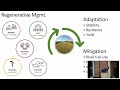
Regenerative Agriculture practices like minimizing tillage, maximizing crop and species diversity, keeping soil covered, and maintaining living roots build system stability and resilience, supported b
-
Regenerative agriculture increases diversity and reduces disturbance through practices like no-till, cover crops, and integrated animals. This fosters biodiversity, which replaces costly agrochemicals
-
Resilience in food systems, contrasted with pure efficiency, requires building local/regional markets, processing infrastructure, and transportation networks. Regenerative agriculture's place-specific

-
Regenerative practices build soil resilience against climate chaos, fire, and drought by strengthening soil biology, which in turn supports plant health and farm sustainability.

Research
-
Realizing Resilient Food Systems (opens in new window)
This study found: Building resilient food systems requires integrating gender equity, using ecological processes over external inputs, fostering local food networks, and linking nutrition and agriculture policies to ad
-
Agricultural Biodiversity Is Essential for a Sustainable Improvement in Food and Nutrition Security (opens in new window)
This study found: Agricultural biodiversity is vital for sustainable food security, enhancing farm productivity, resilience, soil health, and climate adaptation. Diverse farms offer better nutrition and require a cross
-
Reviving Vavilov's vision: The tragedy of biodiversity governance and principles for reform. (opens in new window)
This study found: Using wild plant diversity historically improved crops and food security. New laws hinder this. Proposed principles and funding aim to reform biodiversity governance for better conservation, research,
-
Leveraging agrobiodiversity to create sustainable food systems for healthier diets (opens in new window)
This study found: Increasing farm biodiversity (agrobiodiversity) is vital for sustainable food systems and healthier diets. It boosts yields, reduces chemical inputs, enhances resilience, and supports nutritious food
7
Know the Debate
Regenerative agriculture actively fosters biodiversity by rebuilding soil health, increasing habitat complexity, and minimizing synthetic inputs. D...
Know the Debate
Regenerative agriculture actively fosters biodiversity by rebuilding soil health, increasing habitat complexity, and minimizing synthetic inputs. D...
Regenerative agriculture actively fosters biodiversity by rebuilding soil health, increasing habitat complexity, and minimizing synthetic inputs. Diverse plants and careful management create living landscapes that support a wider array of life both above and below ground. However, the scale at which these on-farm biodiversity enhancements contribute to broader landscape conservation remains a point of discussion. The practice's effectiveness hinges on context: climate, soil type, and specific habitat interventions. While farms can become vibrant refuges, their role as true conservation areas versus essential complements to wild spaces is debated.
How much do on-farm habitats contribute to landscape conservation?
Significant local & corridor support
Academic research demonstrates that on-farm habitat creation, such as wildflower strips and riparian buffers, significantly boosts local insect and bird diversity and provides crucial corridors for wildlife movement.
Beneficial but not a substitute for wild areas
Field experience suggests on-farm habitats offer local benefits but do not fully replicate the complexity of intact native ecosystems and should not be seen as a replacement for protecting core wildland areas.
Making Sense of the Differences
The core of this discussion lies in the scale and ecological role of managed farm habitats versus natural reserves. Research validates their local benefits and connectivity functions, while conservation perspectives caution against viewing them as a panacea that can wholly replace the need for protecting large, intact wild areas. Both are valuable for biodiversity, but their contributions are best understood as complementary.
How do regenerative farms impact broader biodiversity metrics?
Measurable gains in local species richness
Studies show regenerative practices like reduced tillage and diverse plantings lead to a 2-4x increase in insect species and 15-30% higher bird diversity in controlled farm settings.
Gains are localized; landscape-scale impact uncertain
Farmer observations note more beneficial insects and birds, but question if improvements translate to landscape-wide conservation or are solely confined to created habitats.
Making Sense of the Differences
The debate hinges on how 'biodiversity impact' is measured. Research quantifies specific gains within farm boundaries and habitats, showing significant increases in localized populations. Field observations confirm these effects but raise questions about the broader landscape implications, suggesting on-farm enhancements are crucial but perhaps not sufficient to fully restore lost wildland biodiversity.
5
Social Dimensions: Farmer Well-being and Community Connection
The enhancement of biodiversity on farms through regenerative practices is not solely an ecological phenomenon; it also carries significant social dimensions, positively impacting farmer well-being and strengthening rural communities. As farms become more ecologically...
The enhancement of biodiversity on farms through regenerative practices is not solely an ecological phenomenon; it also carries significant social dimensions, positively impacting farmer well-being and strengthening rural communities. As farms become more ecologically vibrant, farmers often report a renewed sense of connection to their land and its inhabitants. Witnessing the return of songbirds, butterflies, and other wildlife can be deeply rewarding, fostering a sense of stewardship and accomplishment that transcends mere economic return. This psychological benefit is particularly valuable in regions where agriculture faces economic pressures. Farmers in Australia implementing regenerative grazing, for instance, have noted increased job satisfaction and reduced stress levels, often attributing it to the visible signs of ecosystem health and the reduced reliance on costly external inputs.
Farm-based biodiversity projects can also become anchors for community engagement and education. Schools might visit farms to learn about pollinators or the soil food web, fostering ecological literacy in younger generations. Conservation groups may partner with farmers to implement specific habitat restoration projects, building bridges between agricultural producers and environmental advocates. In regions like the Andes Mountains of Peru, traditional farming communities are reviving ancient polyculture systems that inherently support local biodiversity, strengthening cultural heritage and providing a model for sustainable food production that benefits both the environment and community resilience. These social dividends contribute to a more robust and engaged rural fabric.
Sources behind this view
Sources behind this view
Regenerative agriculture awareness is growing. Restoring land and biodiversity, aided by livestock and soil organisms (beavers, earthworms), improves water cycles and creates habitat. Soil restoration
A four-year study in England involving farmer clusters found regenerative agriculture practices improve soil health (carbon in aggregates, earthworms) and biodiversity (spiders, wasps, pollination), t
Regenerative agriculture benefits ecosystems by improving soil health, biodiversity, water quality, and wildlife habitats, while also enhancing farm worker conditions and community well-being.
Advocates for regenerative practices to restore ecosystem connections, providing essential services like nutrient supply, pest control, pollination, and weather protection. Enhancing biodiversity abov
This study found: Regenerative livestock farming in Latin America improved soil carbon, biodiversity, and water quality, while boosting farmer income and quality of life. Government support is key for wider adoption.
This study found: Systematic review of 31 studies shows regenerative farming improves soil health, biodiversity, and carbon capture, aiding sustainability. Technology is key for adoption, but policy, farmer understandi
This study found: Farms can be designed to support wildlife and improve sustainability ('ecoagriculture'). This approach offers co-benefits for production, biodiversity, and people, requiring more research, policy supp
This study found: Regenerative agriculture builds soil health and ecosystem services through practices like no-till, cover crops, and diverse rotations. It increases soil organic matter, improves water infiltration, bo